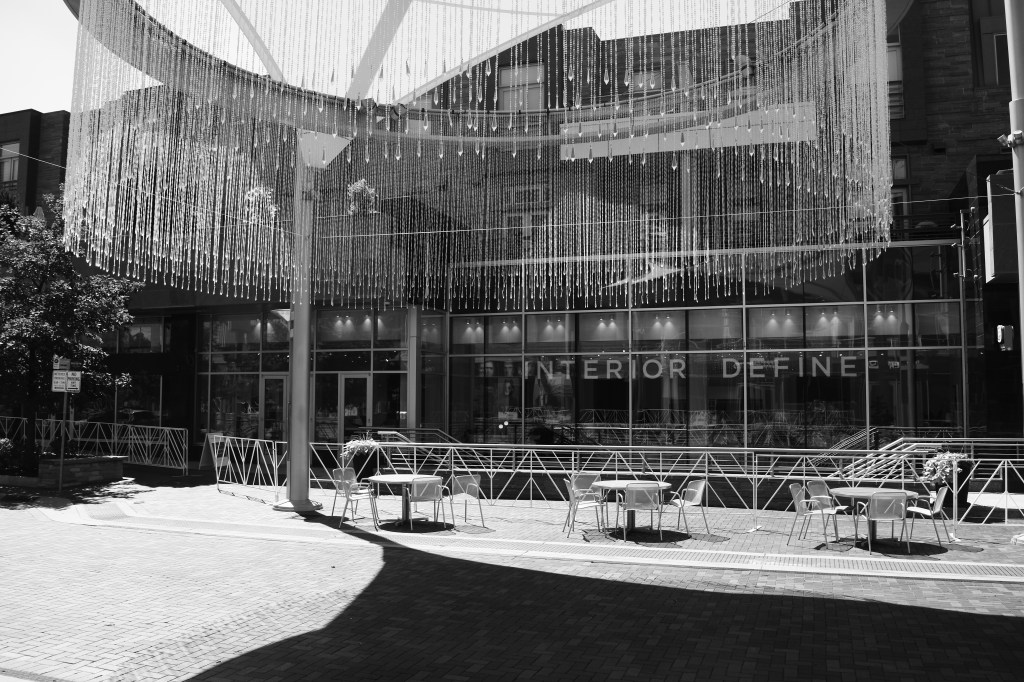
Capitol Hill, Denver’s First Bohemian Neighborhood

Capitol Hill was originally home to Denver’s elite who constructed many elaborate mansions here. When the Denver economy crashed after the Silver Crash of 1893,  Capitol Hill’s housing transition to more modest homes and apartment buildings.  The neighborhood remained  middle-class until the 50s. At that time Capitol Hill became pretty seedily with lots of transients. Colfax Avenue also suffered in the 50s & 60s with the construction of I-70 and went into a downward spiral.

Fortunately Capitol Hill’s fabric remained intact and its  affordability, urban character and eclectic architecture appealed to young bohemians, artists, musicians leading to a gradual gentrification that reached its height during the 2000s. Rents have increased significantly over the past decade but Capitol Hill still retains many of its moderately priced rentals and condos thanks to more many dated mid-century multi-family bldgs. While Colfax Ave has certainly improved, it still retains much of its historic grittiness and some blight. Many urban in-fill opportunities exist along Colfax Ave.

Capitol Hill is one of Denver’s most dense neighborhoods and is conveniently located about 1.5 miles from Downtown. This has created a very mixed-use and culturally vibrant community where one can get around easily by any mode of transit. The two main areas I’d especially like to see improve are better schools and a larger multi-generational population. Capitol Hill is very much a young professional district. There are also some surface lots on the western edge that need urban in-fill and park amenities could be better.
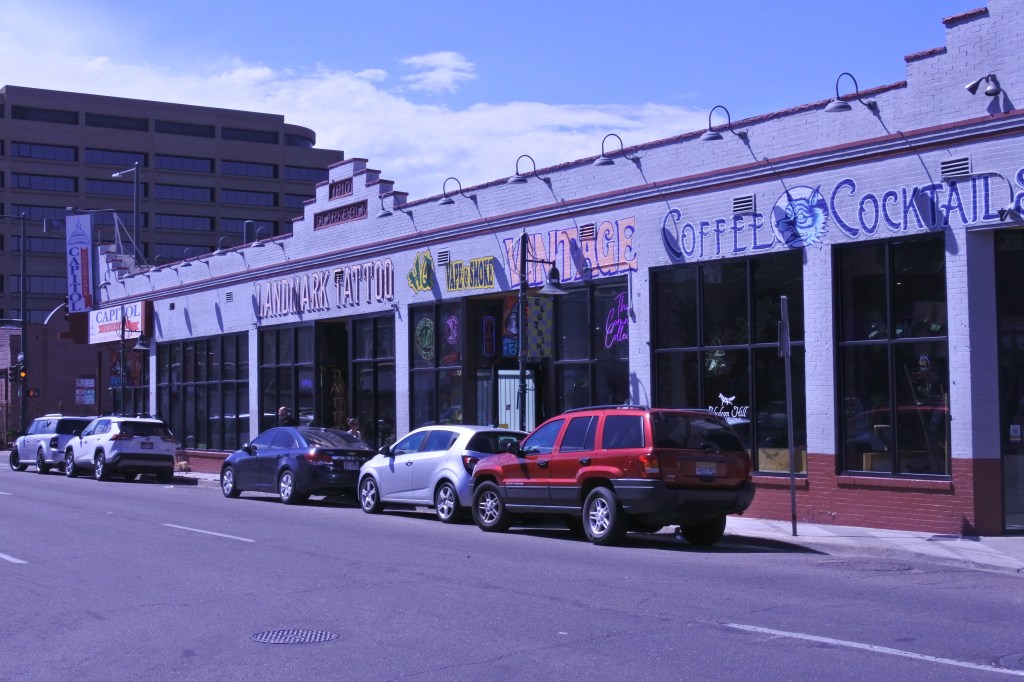
Click here to view my Capitol Hill neighborhood on Flickr

URBAN STRENGTHS:

* One of Denver’s most dense districts.
* Overall excellent ADA infrastructure.
* Excellent public transit close to Colfax. Decent further south in the neighborhood.
* Great connectivity in the street grid.
* Good array of bike shares but only one dedicated bike lane in the neighborhood.
* Very convenient access to Dwtn across all modes of transportation.
* Great economic diversity. Decent racial diversity.
* Hsg on the pricey but a ton of moderately price condos. Studios & 1 beds sell anywhere btwn 200K-700K, 2-beds 250K-low 1Ms, 3 & 4 beds btwn 350-1.5M with condos being on the cheaper end.
* Tons of rentals and comparatively moderately priced comparted to other Denver neighborhoods. Studios 1-beds lease anywhere in the 1Ks, 2-beds 1.5K to 2.5K, 3-beds are limited and lease around 3K. Good # of dedicated aff. hsg here.
* Great cultural amenities including many food & beverage businesses, several art galleries, plenty of night clubs, a couple local theaters, lot of live music venues, tons of museums and historic homes (esp. when you include the Golden Triangle).
* Good retail amenities including a couple grocery stores & drug stores, several boutiques, home good & creative stores, a bookstore, some banks, and gyms, & dessert venues. There is also a Children’s hospital and many churches here.
* Great mixed-use fabric including lots of office space near dwtn.
* Overall quality urban architecture both old and new.
* Some auto centric spots along Colfax, Lincoln, and Broadway but overall very good urban form

URBAN WEAKNESSES:

* Generational diversity is limited. Most residents are childless young adults.
* Good # of schools here but very mixed ratings.
* Parks are limited to a couple parkettes, the State House/Civic Center Park, and decent access to Cheesman Park.
* Generally a safe district but it does have some grit and sketchy spots on Colfax and 13th Street.
* Decent tree canopy but below average for Denver.
* Some surface parking lots on the western edge of Capitol Hill.
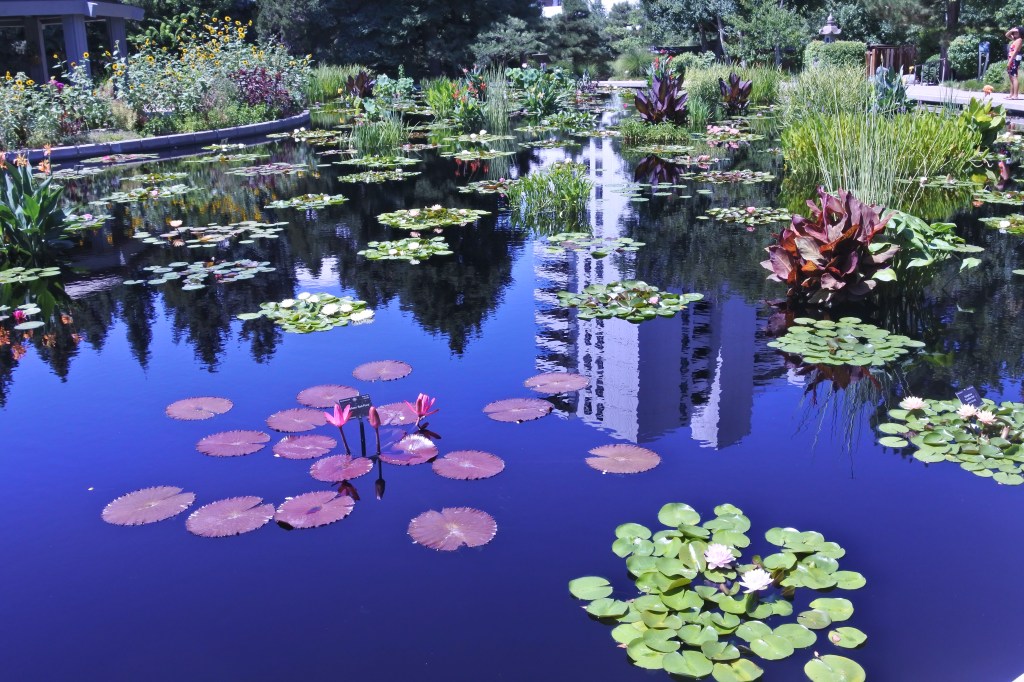
Cheesman Park- An solid urban district surrounding its namesake park and the Denver Botanic Garden

The Cheesman Park neighborhood is one Denver’s older districts with City plats dating as far back as 1868. By 1883 the district was annexed into Denver and the neighborhood was filled in by about 1910.  The neighborhood revolves around its namesake Cheesman Park, which was completed by 1915. The park and the Denver Botanic Gardens replaced the old Prospect Hill Cemetery. Thanks to this great asset many mansions where built here for the City’s elite yet by the 1930s many apartment buildings were constructed and replaced the historic mansions. The densification of the district continued into the 1960s as more and more apartments were constructed.

Because of the construction of many apartment buildings between 1930s-1960s, Cheesman Park hosts many affordable apartments and condos buildings that mix in well with higher end single family homes. The district also has great access to Dwtn and good public transit access. Areas that could improve include better ADA and bike infrastructure, more racial and generational density, better schools access, and urban infill along Colfax Avenue, which feels rather auto centric and lacks retail amenities.

Click here to view my Cheesman Park album on Flickr

URBAN STRENGTHS:

* Excellent urban density.
* Convenient access to Dwtn.
* Great connectivity here.
* Wonderful economic diversity here.
* Hsg on the pricey but a good amount of moderately price condos. Studios & 1 beds sell anywhere btwn 200K-700K, 2-beds 300K-1M, 3 & 4 beds btwn 450-2M with condos being on the cheaper end.
* Decent # of rentals and comparatively moderately expensive to other Denver neighborhoods. 1-beds lease anywhere in the 1ks, 2-beds 1.5K to 2.5K, 3-beds in the 4 & 5Ks but few of them.
* Wonderful access to park amenities as Cheesman park sits in the middle of the district and comprises about 1/3 of the neighborhood. The park has very diverse amenities too. City Park is also not too far away.
* Good cultural amenities including a good array of restaurants, bars, night clubs, and cafes. There is also a performing arts center, indie theater, a couple historic homes, and the Denver Botanical Garden.
* Good but not great retail amenities including a supermarket, a couple pharmacies, a bookstore, a couple antiques stores, several banks, several dessert & gyms and a local post office. A couple major hospitals are only 1/2 mile north of here.
* Very attractive historic architecture and generally good urban in-fill with the modern towers.
* Excellent tree canopy.

URBAN WEAKNESSES:

* Good but not great ADA infrastructure as only 1/2 of the curb cuts are up to modern standards.
* Good but not great public transit access. Much better in the northern half than southern half.
* A bit of a dead spot for bike infrastructure in the Inner City. Few dedicated bike lanes. Decent access to the City’ bike share.
* Limited racial and generational diversity.
* Generally a very safe community although some crime appears to occur in the park itself.
* No schools within Cheesman Park but a couple good ones on nearby.
* Colfax Avenue is pretty autocentric along its stretch touching Cheesman Park.

Congress Park- a solid Denver Urban District located south of City Park

I included the small neighborhood between Colfax and City Park in the Congress Park neighborhood as this area is too small to evaluate on its own.

By the late 1880s, the air quality in Denver had pushed the population to the outskirts of town and cable car improvements made the eastern sections of the Capitol Hill neighborhood more accessible to the middle class. Congress Park was platted into more than ten subdivisions between 1887 and 1888 as part of this growth and incorporated into the City of Denver. While originally known as Capitol Heights, the Congress Park name has been used since the 1970s.

This is a solid district from an urban perspective with its 3 commercial districts along Colfax, Colorado Blvd. and the very mixed-use 12th Avenue. Congress Park also has solid public transit & bike access, good parks, great cultural and good retail amenities, and a good amount of affordable apartments and condos thanks to its numerous mid-century buildings.

Major deficiencies in Congress Park include a lack of racial and generational diversity, some autocentric gaps along Colfax & Colorado Blvd. and lacking a walkable public library.

Click here to view my Congress Park album on my Flickr page

URBAN STRENGTHS:

* Great sidewalk and good ADA infrastructure although with a fair amount of outdated curb cuts.
* Wonderfully connected street network.
* Good economic diversity.
* Over a very safe community.
* Decent # of walkable schools here or nearby and well rated.
* Decent # of rentals and comparatively moderately expensive to other Denver neighborhoods. 1-beds lease anywhere in the 1ks, 2-beds low 1Ks to 3K, 3-beds in the high 2Ks to 4K.
* Hsg on the pricey but a good amount of moderately price condos. Studios & 1 beds sell anywhere btwn 200K-1M, 2-beds 300K-1M, 3 & 4 beds btwn 500-2M with condos being on the cheaper end.
* Good park amenities with City Park on the northern border, Chessman park on the western and Congress park filled with athletic courts and a pool.
* Great tree canopy.
* Great cultural amenities including many restaurants, cafes, & bars, a couple breweries and art galleries, a major cineplex & and an indie theater, and several music venues. Also good access to several museums in City Park and the Denver Botanical Gardens to the west.
* Good retail amenities too including a Trader’s Joe and a couple grocerias, a couple drug stores, several boutiques & creative stores a bookstore, a hardware store, a post office, and several dessert and gyms stores. There is also a major hospital here.

URBAN WEAKNESSES:

* No public library in Congress Park.
* So  racial and generational diversity.
* Generally good modern in-fill but still some autocentric development along Colorado Blvd. and Colfax.
* Good but not great public transit access. Same with bike infrastructure as there are a couple dedicated bike lanes and some bike shares available.

Cherry Creek- Denver’s High-End City Neighborhood Shopping District

The Cherry Creek area was originally called Harman, which was annexed into Denver in 1895. The low lying area around the Cherry Creek was the legacy of black homesteaders,. By the 20s Cherry Creek was considered a suburb and still largely African-American.  In 1950 a couple of major improvements occurred: a dam was built, which significantly reduced regular flooding and the neighborhood dump was removed and redeveloped as the first edition of the Cherry Creek Mall. By 1990, the mall was replaced with high-end outlets and department stores that upped the area’s prestige. Cherry Creek also began to densify in the 1990s especially along the main commercial centers of First, Second, and Third Avenues becoming more mixed-use medium sized structures. Most of the older single family homes have also been rebuilt as a mix of very high end SF homes and townhomes.

From an urban perspective, I generally view Cherry Creek’s densification as a positive force but unfortunately this came with limited new affordable housing creating a pretty homogenous high-end community. But Cherry Creek does host some of the best cultural and retail amenities outside of Dwtn plus solid bike & public transit access along with quality park amenities. From an urban form perspective Cherry Creek does well but still has some pretty autocentric stretches that should be redeveloped.

Click here to view my Cherry Creek Album on Flickr

URBAN STRENGTHS:

* Good public transit access and pretty convenient access to Dwtn among all modes of transit.
* Great connectivity in the street grid.
* Quality bike infrastructure here.
* This is a very safe community.
* Solid park amenities include recreational trails along Cherry Creek, the multi-faceted Pulaski Park, and James Manley Park.
* Sidewalk infrastructure is good but about 1/3 of curb cuts are outdated.
* Great cultural amenities including tons of restaurants, night clubs, bars, cafes, plenty of art galleries, a cineplex, and some live music venues.
* Some of the best retail amenities in a Denver neighborhood including the extensive Cherry Creek Shopping Center that includes tons and shops and several dept stores, a couple supermarkets, a couple drug stores, lots of boutiques, home goods, &  clothing stores, plenty of banks, gyms, & dessert joints, and a large medical center.. There is also a suburb shopping mall on the SE edge of the district with a Target & lots of other stores.
* Most of the neighborhood is built after WWII and the architecture is generally urban.
* Very mixed-use district.

URBAN WEAKNESSES:

* Decent density.
* Diversity is pretty low across all indicators especially generational and economic.
* Hsg is certainly on the expensive end. Wide range of pricing for 1-bed condos selling anywhere from 225K-1.4M, 2-beds 375K-2 M., 3 & 4 beds 700K-5M even with some more expensive product.
* Rentals are all very expensive. Studios & 1-beds lease btwn 1.5K- mid 3Ks, 2-beds 2K-4K, 3 -beds 3K-6K.
* Better walkable schools access than most Denver neighborhoods including several well rated schools. But not great.
* Limited historic architecture.
* Generally good urban massing but a fair amount of auto centric stretches too.