Paris’ 14th Arrondissement- Home to Gare Montparnasse and one of Paris’ more Affordable Districts

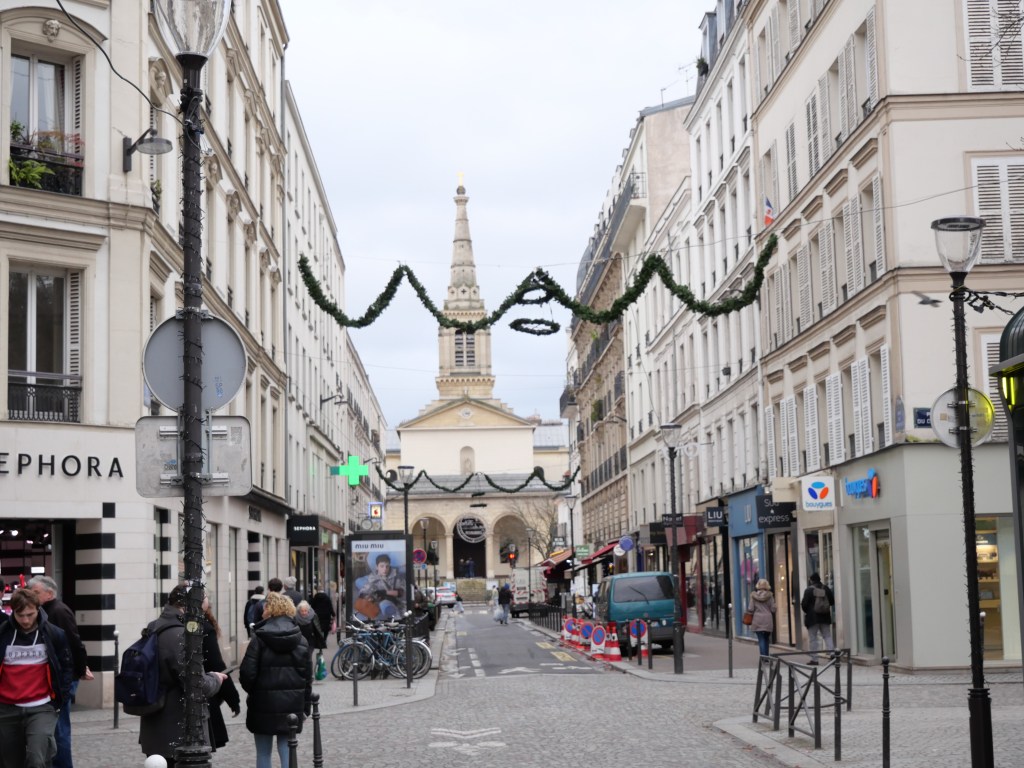
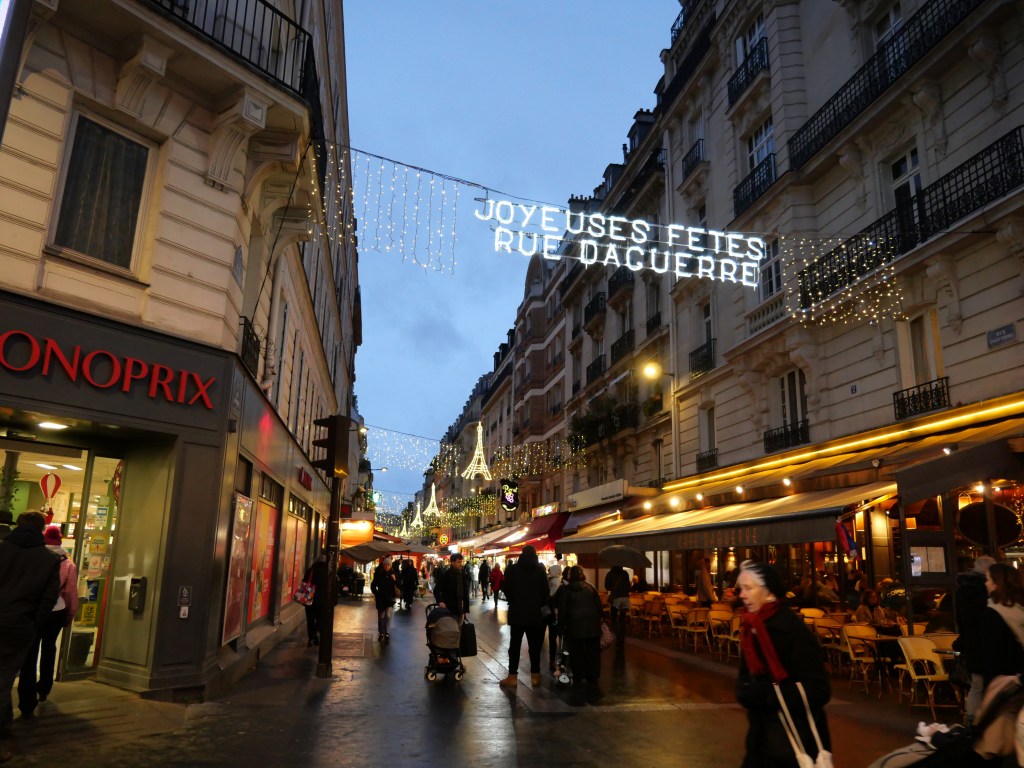
The 14th Arrondissement is officially named Arrondissement de l’Observatoire as its host Paris’ Observatory. Like many Paris Districts the 14th’s population peaked in the 1950s at 1854K. Its now down to around 135K-140K, which it has been since the 1980s. The district has traditionally been home to many artists as well as a significant Breton community, which arrived at the beginning of the 20th century when Gare Montparnasse was built. The most recognizable part of the 14th is its northern border formed by Blvd du Montparnasse. Here one finds the Gare Montparnasse, Le Tour Montparnasse, Cimetière du Montparnasse, L’Observatoire de Paris, the Market set up regularly along Blvd Edgar Quintet, Les Catacombes de Paris and the vibrant Rue Daguerre commercial district, which is a quasi-pedestrian street. The southern edge of the 14th also hosts some welcome known sites at least for Parisians (i.e. Parc Mountsouris, Cité Internationale Universitaire de Paris and Les Puces de Vanves).

The 14th Arrondissement is a solid urban neighborhood, which is more affordable than most Parisian districts. The district is well served by neighborhood parks, metro systems, bike infrastructure, several excellent biz districts, plenty of mixed use fabric and solid cultural and retail amenities especially concentrated around Gare Montparnasse. The only neighborhood attribute that I find a bit lacking with the 14th Arrondissement is a lack of more distinctive subdistricts that help distinguish smaller pockets from the larger Arrondissement. These subdistricts feel more prevalent in most Paris Districts.

Click here to view my 14th Arrondissment Album on Flickr

URBAN STRENGTHS:

* Great array of large and interesting parcs (Montsouris, Montparnasse Cemetery, Pl. de Catalogne, Petite Ceinture du 14e, Jardin Atlantique). Plenty of other small & medium parks well distributed through the district.
* Lots of quaint villagelike streets (
* Lots of attractive commercial streets including: Rue des Thermopyles, Sq. de Montsouris, Rue Daguerre, Blvd Edgar Quinet, Ave du Maine, Av. du Général Leclerc, Rue Didot, Rue Raymond Losserand, Rue de l’Ouest, Boulevard du Montparnasse,  Rue Brézin. Plenty of mixed-use fabric outside of these notable biz districts.
* Several notable landmarks: Cité Internationale Universitaire de Paris, Montparnesse, Gare Montparnasse, Observatoire de Paris, Les Catacombes (underground), the 14th arrondissement Townhall, Church of Saint-Pierre-de-Montrouge, Church of Our Lady of Labour, Réservoir de Montsouris
* Solid historic architecture with lots Haussman buildings and more intimate but less ornate  late 18th/early 19th styles. Also some more creative late 19th/early 20th century styles more in the Art Nouveau style and some post WWII in-fill.
* Not a very touristy district, esp. outside of Montparnasse Cemetery and Garde Montparnasse.
* Great system of dedicated bike lanes.
* Much more affordable/accessible neighborhood than the right bank districts. Medium incomes are 13th of Paris’ 20 Arrondissements.
* Solid cultural amenities with a strong concentration around Gare Montparnasse. Excellent retail amenities really throughout the district.
* Solid density at just under 63K residents per square mile. Also a solid number of jobs at around 70K. 

URBAN WEAKNESSES:

* Tree canopy is fine but outside of the southern edge of the district where there are larger block apartment buildings, it feels a bit limited.
* Does not have as strong of sub-districts with their own unique character as most other Paris Arrondissements. 

Paris’ 13th Arrondissement- Home to Paris’s largest Asian Population and a solid Urban District off the beaten path of most tourists

Paris 13th Arrondissement I sense is one of the least traveled by tourists in the City. Yet this is a very solid urban district which would blow almost any American neighborhood away measured by urbanists metrics. The Arrondissement also has several interesting sub neighborhoods including Le Quartier Asiatique along Avenue d’Ivry and  Avenue de Choisy, Butte-aux-Caillesa (a wonderful mixed-use district with mostly narrow streets), several more intimate village like streets along Quartiers des Peupliers, La Cite Fleurie, and Cite Florale and the modern district of Paris Rive Gauche.

Thanks to the Quartier Asiatique the 13th arrondissement is one of the few Paris neighborhoods that is still growing in population. During the late 1970s and early 1980s, the first wave of Vietnamese refugees from the Vietnam War settled in the district. This eventually diversified to include Vietnamese immigrants with Chinese descent and immigrants from Laos and Cambodia. In the present day the district as a strong Chinatown feel as most of the original Vietnamese immigrants have assimilated across Paris (while still maintaining a large business presence). The 13th arrondissement is also growing as a major Parisian job center thanks to the completely new Paris Rive Gauche District which runs along the Seine. The heart of the district is truly The Place d’Italie where many major Parisian Boulevards converge and the district serves as a major nightlife and shopping district. It takes its name from its proximity to the Avenue d’Italie, which, traditionally, has been the point of departure on the road that links Paris and Italy.

Click here to view my 13th Arrondissment Album on Flickr

URBAN STRENGTHS:
* Several great biz districts like the Av. de France (part of a modern Paris Rive Gauche district), Bd Vincent Auriol with its elevated subway line running down the middle, Ave d’Ivry, Av. de Choisy, Rue de Tolbiac,  Avenue des Gobelins, and Blvd Arago/St. Marcel. Also plenty of mixed-use areas as well even where the streets are primarily residential.
* Lots of smaller and medium parks. Only a handful of larger more formidable parks (i.e. Parc Kellerman and Parc de Choisy). Also really solid waterfront parks and plazas along the Seine on the Port de la Gare.
* More modern styles of architecture than your average Parisian district, esp. when you include Paris Rive Gauche, which is a textbook on how to build a new urban district. Lots of modern high rises in the Chinatown district as well.
* Solid tree canopy.
* One of the least touristy Paris Districts.
* Much more affordable/accessible neighborhood than the right bank districts.
* Solid density at 66K residents per square mile.

URBAN WEAKNESSES:

  • Great metro access like all Paris neighborhoods but subway coverage is a bit limited in the southwestern quadrant of the district. Same goes for bike infrastructure coverage.
  • Compared to most Parisian districts, esp. the right bank, the historical architecture here is a bit sub par. Still plenty of Haussman style apartments and pockets of intimate village like rowhouses.
  • Only a handful of museums which is very limited compared to the rest of Paris.
  • This also has an effect on the district’s lack of landmarks where I would really only include The François-Mitterrand Library, Manufacture des Gobelins, the 13th arrondissement townhall”

Richmond- Home of the Historic Richmond Palace turned Fashionable London Commuter 19th Century Suburb

Richmond was founded following the completion of Richmond Palace in the early 16th century. Richmond remained mostly agricultural until the 18th century when several large mansions were constructed and the district began to become fashionable. Development expanded with the late 18th century with the construction of the Richmond Bridge connecting the two banks of the Thames, adding many Georgian terraces to the neighborhood, particularly around Richmond Green and on Richmond Hill. By the mid 19th century Richmond was connected to Central London via the Richmond Railway, leading to further densification and development, especially along Kew/George St, Richmond Green, and Hill St.  Richmond continued to fill in throughout the late 19th and early 20th centuries leading to several additional business districts and nodes (Sheed Rd, Friar Stile, Sandy Combe/Kew Gardens). Southern Richmond is the newest part of the district and was mostly built post-war and has a distinctively suburban character compared to the rest of Richmond.

From an urban perspective, Central Richmond is the most urban and mixed-use. Richmond Square is actually where many scenes from Ted Lasso were filmed and has a couple quaint pedestrian commercial streets feeding into it along with convenient access to the main George/Kew Rd biz district and several other commercial streets. This is also where the Richmond Station is located and many 18th century mansions. The district around Kew Gardens is a comfortable late 19th century London district but nothing particularly unique about it other than its proximity to Kew Gardens, arguably the best Botanical Garden complex in the World. Richmond excels with a high concentration of Museums, historic homes, theaters, restaurants & bars and excellent retail amenities. The district also hosts a solid bike network, great tree canopy, and excellent parks. The biggest downsides of Richmond includes its distances from Central London (50 min-60 mins via the tube), several highly tracked roads, and lower density in pockets creating some parts of the neighborhood that are particularly walkable. 

Click here to view my Richmond Album on Flickr

URBAN STRENGTHS:

  • George/Kew Rd is the most extensive biz district running north-south in Central Richmond. Sheen Rd, Friar Stile, Hill Street, King St are solid secondary biz district in Central Richmond. Paved Ct and Brewers Ln are lovely alleyway biz districts that feed into Richmond Green featured in the Ted Lasso series.
  • Sandycombe and the node around Kew Gardens station comprise the main biz districts of northern Richmond.
  • Several iconic landmarks and destinations fill Richmond including: Kew Gardens, Richmond Green, Ham House and Garden, Richmond Palace, Trumpeter’s House, Museum of Richmond, the National Archives, the King’s Observatory, and Richmond Theatre.
  • Solid cultural amenities especially in Central Richmond including Kew Gardens, several museums (including many historic mansions), several theatres and cinemas, plenty of bars, restaurants, and cafes, a handful of art galleries.
  • Great retail amenities especially concentrated in Central Richmond including tons of clothing stores/boutiques, dessert joins, plenty of supermarkets & drug stores, plenty of bookstores and floral shops. Also larger big box stores in the suburban style Kew Retail Park along the northern edge of Richmond
  • Great park access in Richmond including several large parks: North Sheen Cemetery, Richmond Park, Hams Land, Beaufort Court, Ham Common, Richmond Cemetery and several other small-medium park spaces.
  • Good bike & recreational lane infrastructure especially along the Thames River.
  • Lovely array of late 19th-early 20th century architecture styles (duplexes, rowhouses, townhouses, apts, and single family homes detached esp. in the northern and southern Richmond subdistricts. Also some post War housing mixed in (esp. in Southern Richmond) and a major redevelopment site along the northern edge of Richmond running along the Thames.
  • Great tree canopy.

URBAN WEAKNESSES:

  • Good transit access in the northern half of Richmond include two tube stations and two regional rail stations. The southern half of Richmond however has no train access and it shows with the neighborhood’s more suburban character.
  • Southern Richmond is newer with lower density than the rest of Richmond and really no well defined biz nodes nor corridors. Some walkable retail in Northern Richmond but much more limited than Central Richmond.
  • Lower Richmond Rd is basically a stroad and very car friendly.
  • So so population density at just over 10K residents per square mile.
  • About a 1 hour train ride to get to the City of London. A bit closer to the West End.”

Southwark- the Original South London Neighborhood

The district, which is the oldest part of South London, developed due to its position at the southern end of the early versions of London Bridge, for centuries the only dry crossing on the river. Around 43 AD, the Romans found the geographic features of the south bank in Southwark suitable for the City’s first bridge. By the 12th century Southwark had been incorporated as an ancient borough. West of the Bridge was the Liberty of Clink manor, which was never controlled by the city, but was held under the Bishop of Winchester’s authority. This lack of oversight helped the area become the entertainment district for London with the Globe Theatre being one such venue.

Other than a handful of buildings (prisons, board houses, fishing sheds, and Bothels), Southwark did not become a proper district until the 16th century. Same incremental expansions occurred in Southwark thru the early 19th century with a much larger expansion of the district in the 1820s and 1830s thanks to the railroads and industrialization of London. By 1840 Southwark was filled in down to New Kent Rd. Southwark was heavily bombed during WWII thanks to its port and industrial nature. Much of the district, especially the western and southern edges, was rebuilt. The heart of Southwark around Borough Market thankfully retains its layered history and character and hosts buildings from all eras. The look and feel and street grid of Southwark share many similarities to the City of London given its medieval roots, helping make it one of London’s most interesting districts. While the population density is only about 17K souls per square mile, Southwark is an incredibly vibrant district thanks to a very mixed-use character housing Borough Market and all its interesting shops, restaurants, and bars, several museums and theaters near the Thames River, modern office buildings running along Southwark Ave and Blackfriars Rd and the vibrant biz districts along Borough High and Tower Bridge Rd. South of Borough Station the district becomes more residential and quieter. Southwark, while well connected to the Tube system and a convenient walk to the City of London across the River, is also just a 10 min walk to Waterloo, an important Regional Train Station. It also hosts a respectable bike system network and a good system of smaller public parks. Given its convenient location and great mixed-use fabric, I would like to see its population at least double. 

Click here to view my Album on Flickr

URBAN STRENGTHS:

  • Southwark is the great main street cutting west to east through the district. Other decent biz districts include Borough High St, Union Street (which includes a nice small pedestrian segment), several segments of Tower Bridge Rd.
  • Layers and layers of history in Southwark with an incredible mix of architectural styles and eras. The overhead railroad viaducts also create a distinctiveness to the district where it feels its operating on multiple levels.
  • Several major landmarks here including: the Globe Theater, Southwark Cathedral, the Borough Market, the Shard, London Bridge Station, the Tate Modern, the London & Tower Bridge, Bermondsey St.,
  • Culturally the district has a great array of museums, performing art theaters, cinemas, live music venues, bars & restaurants (especially near the Borough Market) and a good number of cafes and art galleries.
  • Good tree canopy in the southern half of the district (where all the post War housing projects are located) but not the older parts of Southwark near the Thames.
  • Surprisingly much better dedicated bike lanes than the City of London and most inner city London districts. Safe seperated lanes run along Blackfriars and Southwark Bridge.
  • Good subway access including 4 stations and 4 metro lines. Waterloo is also a 10 min walk west of Southwark.
  • Solid retail amenities but mostly concentrated in Borough market, the main arteries and the northern edge along the Thames river. No real department stores in Southwark like in Central or West London.
  • Lots of nice smaller parks but no larger parks like Hyde or Regent’s Parks.

URBAN WEAKNESSES:

* Large post war housing complexes build here that don’t have the best urban form and mixed-use fabric especially in the western and southern edges of the district.
* Parts of the district especially along the river and Borough Market can get very touristy.
* At about 17K residents per square mile, this really isn’t a very dense neighborhood. But Southwark still feels busy due to all the tourists and workers here.
* Parts of New Kent feel like a minor highway especially at the intersection with Tower Bridge Rd. 

Kensington- West London District where Queen Victoria Grew up and an Upscale District Emerged during Her Reign

It was during the late 17th century when Kensington began rising to prominence, with William III and Mary II transforming the modest Nottingham House, into Kensington Palace. This was also where Queen Victoria was born, the last sovereign who lived here before the royal court moved to Buckingham Palace. Thanks to the location of Kensington Palace, the neighborhood saw sporadic suburban style development spring up housing the British nobility during the Georgian Era mostly in the 18th century. This consisted of the standard housing of the time for the nobility (Georgian terraced houses built around squares and gardens). Kensington Square and Campden Hill Square are good examples of this. Most of Kensington was built up during the Victorian period with the neighborhood filling in pretty quickly during the 1860s & 1870s. This rapid development was permitted of course by London’s rapidly expanding rail system populated by the City’s growing upper middle class hoping to exit London’s crowded central city. In addition to typical terrace housing from 1860s-1870s, Kensington also saw a good amount of late 19th Century Edwardian housing built characterized by more duplexes, mansion homes, and smaller scale rowhouses. This is most common along the western edges of Kensington.

Kensington really has never lost its luster and remains an extremely affluent area. The area has some of London’s most expensive streets and garden squares. The district’s commercial heart is Kensington High Street, running on an east–west axis. Several other impressive commercial districts crisscross their way across Kensington including (Gloucester, Old Brompton,  Fulham,  Kensington Church, and Notting Hill Gate) leaving few Kensington residents further than a 5 minutes walk from a solid biz district. The area around the South Kensington Station is a wonderful commercial node with a small pedestrian block on Thurloe. Just north of here is one of London’s best museum/university districts housing Imperial College London, the Royal College of Music, the Royal Albert Hall, Natural History Museum, Victoria & Albert Museum, and Science Museum. The area is also home to many embassies and consulates. From an urban perspective Kensington is a better district thanks to better access to subway lines and stations, better access to large park spaces (Hyde Park and Holland Park) incredible concentration of museums clustered around South Kensington Station and Kensington Garden. But Kensington does have some areas where it should improve. I’d like to see the neighborhood double its density from 20K to 40K residents given how in demand the neighborhood is and how expensive housing in general is in London. Kensington also deserves better bike infrastructure and access to more of the smaller squares and gardens that are reserved for the wealthy. 

Click here to view my Kensington Album on Flickr

URBAN STRENGTHS:

* Several solid urban biz districts (i.e.  Gloucester, Old Brompton,  Fulham, Kensington High, Kensington Church, and Notting Hill Gate).
* South Kensington is a great TOD nod with a plaza space at Exhibition Rd and a pedestrian block on Thurloe.
* Major landmarks include: Royal Albert Hall, Kensington Palace, Royal College of Music,  and Nat. History Museum,
* Several great park spaces including Kensington Gardens & Hyde Park, Hollard Gardens, the expansive Brompton Cemetery,
* Solid mid-19th West London architecture. Nice mix of earlier brick Georgian styles, more ornate terraced housing, and cute mew style housing. Also some nice late 19th century Victorian style brick apartments and a good amount of smaller scaled rowhouses and attached townhomes.
* Pretty good tree canopy. Much better than neighboring Chelsea and older West London Districts.
* Decent density at around 22K residents per square mile but lower than older West London and Central London neighborhoods.
* Good metro coverage with 9 stations and 7/8 subway lines but there are still parts of Kensington (around Holland and Fulham rd. that are a pretty long walk from a station).
* Solid recent amenities with the best concentration of clothing, department stores & boutiques along Kensington Rd & Kensington Church St. Also a couple of shopping malls.
* Cultural amenities include numerous museums (including several world renowned ones), several performing arts & live music venues and plenty of food and beverage locals.
* Even with his high concentration of high-end housing about 20% of Kensington’s units are reserved as Social Housing. 

URBAN WEAKNESSES:

* A couple of pretty wide arterials that are borderline stroads (Notting Hill Gate, Kensington High, Holland Rd, and Cromwell Road).
* Not that much mixed-use development outside of the commercial corridors.
* Plenty of intimate gardens and squares but sadly almost all of them are private reserved for the terraced housing that surrounds them.
* Dedicated bike lanes are pretty fragmented.
* Given how in demand this neighborhood is, it should be a lot denser. 

Earl’s Court- Buzzing West London District Developed in the late 19th century enabled by London’s Commuter Rail Expansion

Earl’s Court is an iconic late 19th century London district made possible by the rapid expansion of the Tube system, in particular the Metropolitan District Railway and Piccadilly line in 1860. The neighborhood is bordered by the rail tracks of the West London line and District line separating it from the ancient borough of Fulham to the west. Earl’s Court gets its name from the now defunct pleasure grounds and the Earls Court Exhibition Centre, which served as one of England largest indoor arenas and concert venues. The Exhibition Centre is currently being redeveloped as a major mixed-use entertainment district which should tie in well to the Earl Court and West Brompton metro station.

The Earl’s Court neighborhood was built a bit latter than Kensington with all development coming in the 1870s & 1880s rapidly transforming the neighborhood from a loosely populated suburb to a dense London urban district. In its early years, Earl’s Court was a solid middle class neighborhood but with some poor pockets. After World War II, the area lost its luster hosting a large number of transient residents. By the late 20th century, Earl’s Court transitioned into a large immigrant community with nearly half of its residents being born outside of the Country. However, in the first couple of decades of 2000s Earl’s Court has risen in value, like the rest of West London, and become a major district for hotels and hostels given its convenient location to several tube lines.

From an urban perspective Earl’s Court thrives as one of London’s densest district’s, well connected to the tube system and buzzing with life thanks to a mix of fulltime and large tourist population.  Earl’s Court Rd and Hogarth are the primary commercial districts providing excellent retail amenities esp. for a less affluent working class population. The redeveloped Exhibition Centre should further improve the district’s retail amenities. Earl Court lacks serious cultural amenities beyond restaurants, bars and cafes. It also lacks park space open to the public, has a limited bike infrastructure system, and has the autocentric Cromwell Road as its northern border.

Click here to view my Earl’s Court Album on Flickr

URBAN STREGNTHS:

* Nice biz district and pedestrian lane along Hogarth. Earls Ct Rd is also a great urban commercial district than runs the entire north to south length of Earl’s Court.
* Good tree canopy similar to Kensington.
* Great subway access including 4 stations and lines either within or nearby Earl’s Court.
* One of London’s most dense communities at just under 50K residents per square mile.
* Great food & beverage businesses. Also a couple live music venues & art galleries.
* Solid retail amenities concentrated mostly along Earl’s Court Rd & Hogarth. More retail amenities accessible to working class households than most Westend Districts.
* Attractive mix of late 19th century architecture styles including Regency, Gothic brick revival, and mew rowhouse architecture. 

URBAN WEAKNESSES:

  • Not that much mixed-use development outside of the commercial corridors.
  • Plenty of intimate gardens and squares but sadly almost all of them are private reserved for the terraced housing that surrounds them.
  • Dedicated bike lanes are pretty fragmented.
  • A couple pretty wide arterials that are borderline stroads (Notting Hill Gate, Kensington High, Holland Rd, and Cromwell Road).

Chelsea- One of London’s Most Posh Districts and Home of the Pre-Raphaelite Movement & Swing 60s

In the centuries before Chelsea was built out in the 1600s and 1700s, Chelsea was a popular location for the wealthy and a market garden, described as “a village of palaces”. By 1700 it had a population of 3,000. The 19th-century development boom caused Chelsea’s final absorption as an urban district into the London metropolis. Development occurred in stages generally from east to west starting in the 1830s and wrapping up by the 1890s. King’s Road, named after Charles II, was historically used as the King’s private road from St James’s Palace to Fulham, which was maintained until the reign of George IV. During the 19th century Chelsea’s gained a reputation as a centre of innovation and influence when the area became a more upscale Victorian artists’ colony (especially for the Pre-Raphaelite movement). Artists were concentrated in the area around Cheyne Walk & Cheyne Row. Chelsea’s was also one of the centers of the “Swinging London” along King’s Road of the 1960s, when prices were reasonable. The district was once home to the Beatles and several Rolling Stones members. By the 1980s Chelsea was in demand again and prices and continued to rise making the district one of London’s most in demand neighborhoods.

Chelsea is certainly a solid urban district but  I would not count it as a top tier London district due to its modest density, somewhat limited metro  access, and limited bike infrastructure. Chelsea’s best asset is King street which cuts the length neighborhood from east to west, one of London’ best urban business districts. Chelsea also has great historic 19th century rowhouse/terrace house architecture, several small commercial nodes and mixed-use areas, great park access, solid tree canopy, and many iconic landmarks. The lengthy King Street also provides excellent retail and cultural amenities especially high end stores, restaurants, bars, and art galleries. And while housing prices are very high there are a good percentage of social housing units coming in at around 20% of all districts units.

Click here to view my Chelsea Album on Flickr

URBAN STRENGTHS:

* King’s Road is a great biz district and one of the most expansive in London. Fulham Rd  is also a lengthy biz district but not quite as commercial as King St. Some great biz nodes at Sloane Square, Chelsea Common, and a block of Beauchamp.
* Nice ped only street on Pavilion.
* Great historic terraces.
*Landmarks: Royal Hospital Chelsea, Chelsea Old Town Hall, Saatchi Gallery, Chelsea Old Church, Chelsea Bridge,
* Parks: Chelsea Embankments, Cremorne Gardens, Westfield Park, Coleridge Square, Dovehouse Square, St. Luke’s Gardens and Sloan Square. Also decent access to Hyde Park/Kensington Gardens about a mile to the north.
* Excellent cultural amenities including tons of restaurants, bars, & cafes, a ton of art galleries, a handful of museums, plenty of historic sites, and a handful of live music venues, theaters, and indie movie theaters.
* Great retail amenities especially high end boutiques and clothing stores.
* While the mid-late 19th century architecture in Chelsea is not as ornate or posh as other West London Districts its still very charming.
* Pretty decent tree canopy. While the many parks and gardens certainly contribute to this, more interior courtyards areas dedicated to green space than West/Central London districts which is prob why the density is below 20K residents per square mile in Chelsea.
* About 20% of housing units are social housing. 

URBAN WEAKNESSES:

* One of the larger neighborhoods in London but population density is only around 17K people per square mile.
* Limited bike lane infrastructure and what does exist is smaller segments.
* Only the northeast corner is covered by the London Tube which includes 2 metro stations and 2 subway lines. One subway station about 1/4 west of Chelsea. 

Notting Hill- Historic Home of London’s Carribean Population, now an Affluent West London District featured in the 1999 Julia Roberts Film

Notting Hill remained rural until London’s westward expansion reached Bayswater by the early 19th century. The first major development started in the 1820s by the Ladbroke family who created the Ladbroke Estate. The estate was a unique creation of large private communal gardens enclosed by terraces and/or crescents of houses. What made the Ladbroke Estates unique was that residents had direct access to communal garden squares from the back of their homes instead of needing to cross the street from the front of their house to enter a square garden. This created a much more hidden and secluded green space which only the terrace home owners could enjoy. This is a whole other level of exclusion than the West End squared gardens.

The Ladbroke estate were not an immediate success for the richest Londoners given their relative distance from Central London. The aristocracy still remained in neighborhoods like Mayfair/Belgravia by and large. Instead, the upper middle class choose to move in which is well covered in the John Galsworthy’s Forsyte Saga novels. Most of Notting Hill was developed by the mid-19th century but a sliver along the northern edge was developed a couple decades later. The reputation of the district waned in the 20th century as the upper middle-class households ceased to employ servants devaluing the large Notting Hill homes. This led to the grand houses being increasingly broken up into small apartments. During the Blitz a number of buildings were damaged or destroyed by the Luftwaffe and much of the western edge of was rebuilt. Post War Notting Hill became a major hub for London’s immigrant community especially from the Caribbean and Ireland. Unfortunately many of these immigrants were squeezed into slumlord run housing and racial tensions flared culminating in 1958 with the Notting Hill race riots. Eventually the community organized to improve the neighborhood’s substandard housing conditions creating the Notting Hill Housing Trust in 1963. Gradually Notting Hill stabilized and by the 1980s many terraced housing units were converted back to single-family. By the early 21st century Notting Hill was squarely an affluent and fashionable area similar to London’s West End Communities. Sadly this created major demographic changes in the neighborhood. From just 2000 to 2010 Notting Hill’s Black or Irish population decreased from 46 to 28 percent of the district’s population. Thankfully about 20% of all housing units are Social Housing, so even with the district’s gentrification, it will always have a working class, diverse presence.

Notting Hill has some of London’s best urban business districts (Portobello Rd and Westbourne Grove). Portobello road hosts a local street market that closes down the street 6 days a week. Westbourne Grove is a colorful vibrant district with an amazing number of retail and clothing stores. Notting Hill also has great public transit access, attractive 19th century architecture styles, excellent retail and cultural amenities, and well shaded streets. The biggest downside is access. You are 30 mins and 50 mins from the West End and City of London, respectively via the Tube. This is better than most districts in the London metro but not great compared to other inner city London Neighborhoods. While there are several small-medium sized parks in the western third of Notting Hill, many park spaces are privately held and inaccessible. 

Click here to view my Notting Hill Album on Flickr

URBAN STRENGTHS:

  • The center of Notting Hill is filled with gorgeous historic terraces with generous private parks. The western third of Notting Hill is an eclectic mix of mid-late 19th century styles and a decent amount of post War housing. The eastern third of Notting Hill has a nice of mix of mid-19th century styles including Georgian & Regency Terraced rowhouses, side by side grand duplexes.
  • Several great biz districts across Notting Hill including: parts of Pembridge Rd, All Saints Rd, with Westbourne Grove and Portobello as the most extensive biz districts (Portobello Rd hosts the Portobello Street Market, a plethora of street vendors, giving the street an outdoor market feel). While the western half of Notting Hill does not have any extensive commercial streets, there are a lot of great small mixed-use nodes.
  • Great access to the London Tube including 6 stations and 6 metro lines.
  • Good tree canopy even including street trees, which is rare in Central London and some districts in the West End.
  • Excellent cultural amenities, especially restaurants, bars, theaters, live music venues and night clubs.
  • Great retail amenities especially higher end stores, clothing stores, and plenty of grocery options.

URBAN WEAKNESSES:

  • Good array of smaller parks in the western half Notting Hill but all the greenspace in central Notting Hill coming off of Ladbroke Grove is a sunken private park space. Very limited greenspaces in eastern Notting Hill”* Nice north to south bike lane cutting through the heart of Notting Hill but not much else in the biking network..
  • Not great density for an inner city neighborhood in London at just around 10K people pers square mile.
  • Lacks the museums of Central and West End London. Also limited art galleries here.”

Pimlico- Excellent West London District just south of Westminster & Belgravia running along the Thames

Pimlico is known for its garden squares and distinctive Regency architecture (a subset of Georgian architecture most popular in the first half of the 19th centry). At its heart is a grid of residential streets laid down by the planner Thomas Cubitt (a highly influential West London builder) beginning in 1825 and now protected as the Pimlico Conservation Area. By the 19th century as a result of an increase in demand for property, Pimlico become ripe for development. In order to be able to build in Pimlico excavated land from the St. Katharine’s Docks had to fill in the naturally marshy land running along the Thames. The largest and most opulent houses in the White Stucco Terrace style were built along St George’s Drive and Belgrave Road. Pilmico became a fashionable district in the 19th century yet by the late 19th century pockets of slums popped up. This led to the construction of the urban renewal project of  Dolphin Square in the 1930s. Fortunately Pimlico survived the war mostly intact, although parts were bombed (especially near the river) had to be rebuilt (i.e. Churchill Gardens, Lillington and Longmoore Gardens estates). Most of the larger Victorian houses were converted to hotels and other uses in the Post War era as well as Pimlico decline a bit. However the district’s decline was brief thanks to Pimlico’s connection to the London Underground in 1972 and the creation of a large conservation district in the neighborhood in 1968. Since this era, Pimlico has steadily improved, but fortunately due to its large number of post War Housing the area has a decent social mix. 

From an urban perspective this is a solid, walkable district. While not the most convenient to West and Central London, Pimlico still posts attractive mixed-use districts just east of Victoria Station along Upper Tachbrook, Warwick Way, Churton, and Wilton Streets. Pimlico also has attractive, mostly 19th century terrace/rowhouse styles, better bike lane infrastructure and tree canopy than most Central/West London districts, pretty economically diverse population for West London and very high density at around 45K residents per square mile. This biggest area for improvement is creating more accessible park space, as most of them are private. 

Click here to view my Pimlico Album on Flickr

URBAN STRENGTHS:

  • Several nice pedestrian/narrow road biz districts including Upper Tachbrook, Warwick Way, Churton, Wilton (which connects with the busy Victoria Station node). Also wider streets with a decent amount of mixed-use fabric including Vauxhall Bridge and Lupus.
  • Incredible 19th century terrace homes. Brick or white rowhouses.
  • Decent bike lane system (at least for London) including two east to west dedicated lanes.
  • Pretty good public transit access including 2 subway station connected to 3 subway lines.
  • Tree Canopy throughout Pimlico is decent thanks to all the greens, squares, and public housing sites spreadsheet throughout Pimlico.
  • Good cultural amenities but concentrated close to Victoria Station along Churton, Wilton, & Warwick. This includes plenty of restaurants, bars & cafes. Across the district there are a handful of smaller art galleries, and a handful of performing arts theaters.
  • Pretty good array of retail amenities as well with the more creative boutiques, clothing stores, and gift stores concentrated near Victoria Station.
  • Very dense population for London standards at around 45K residents per square mile.
  • For West London standards Pimlico is a pretty economically diverse district thanks to several large multi-block apartment buildings built in the mid 20th century.

URBAN STRENGTHS:

* Major post WWII/urban renewal sub district in Church Hill Gardens done in the Garden City style with tall towers sticking up as islands in a park space and parking lot. But could be a lot worse esp. considering how these look in the US.
* Plenty of quality squares and gardens throughout Pimlico but sadly most of them of private spaces along available to adjacent residents. Nice park space along the river however. 

Knightsbridge- Only of London’s Most Exclusive Neighborhoods and Home to Harrold’s and Harvey Nichol’s Department Stores

The West London Knightsbridge District was largely built out by the mid 19th century but also contains a good amount of late 19th century Queen Anne revival buildings and a good amount of post War and 21st century in-fill. Knightsbridge has been home to some of London’s richest residents really since its beginnings thanks to its underlying landowners being the Duke of Westminster, Lord Cadogan, and the Wellcome Trust. Knightsbridge is also know for its high-end retail being one of two international retail centers in London and host to exclusive department stores such as Harrods and Harvey Nichols.

From an urban perspective this is a solid walkable district with good retail, cultural, and transit amenities, gorgeous 19th century architectural styles and home to the Victoria and Albert Museum and just across the street from the Royal Albert Hall, Natural History Museum, and the Imperial London College. The district is also only a 25 minute tube ride to Central London. But Knightsbridge is a very exclusive neighborhood with limited income diversity which actually results in a lower overall density as unit sizes are so large. Most parks are also private, although thankfully residents have public access to Hyde Park to the north of the neighborhood. Bike infrastructure is also limited and retail amenities serving middle class families are rather elusive. 

Click here to view my Knightsbridge Album on Flickr

URBAN STRENGTHS:

  • Several nice pedestrian/narrow road biz districts including Upper Tachbrook, Warwick Way, Churton, Wilton (which connects with the busy Victoria Station node). Also wider streets with a decent amount of mixed-use including Vauxhall Bridge and Lupus.
  • Incredible 18/19th century terrace homes. Brick or white rowhouses.
  • Decent bike lane system (at least for London) including two east to west dedicated lanes.
  • Pretty good public transit access including 2 subway station connected to 3 subway lines.
  • Tree Canopy throughout Pimlico is decent thanks to all the greens, squares, and public housing sites spreadsheet throughout Pimlico.
  • Good cultural amenities but concentrated close to Victoria Station along Churton, Wilton, & Warwick. This includes plenty of restauarants, bars & cafes. Across the district there are a handful of smaller art galleries, and a handful of performing arts theaters.
  • Pretty good array of retail amenities as well with the more creative boutiques, clothing stores, and gift stores concentrated near Victoria Station.
  • Very dense population for London standards at around 45K residents per square mile.
  • For West London standards Pimlico is a pretty economically diverse district thanks to several large multi-block apartment buildings built in the mid 20th century.

URBAN WEAKNESSES:

* Major post WWII/urban renewal sub district in Church Hill Gardens done in the very Garden City style with tall towers sticking up as islands in a parkspace and parking lot. But could be a lot worse esp considering how these look in the US.
* Plenty of quality squares and gardens throughout Pilmco but sadly most of them of private spaces along available to adjacent residents. Nice park space along the river however.