The Mayfair neighborhood was originally part of the manor of Eia and remained largely rural until the early 18th century. Development first came to the district in the 1660s at modern day Piccadilly Circus and progressed along the north side of that street. The neighborhood got its name from the annual Mayfair that took place from 1686 to 1764 in what is now Shepherd Market. The Grosvenor family (who became Dukes of Westminster) became the main developers of Mayfair in the turn of the 18th century and developed grand terrace housing around private squares (i.e. Hanover Square, Berkeley Square and Grosvenor Square). By the end of the 18th century, most of Mayfair had been developed as housing for the upper class, a status the district has never lost. The rise of Mayfair moved upper-class Londoners away from areas such as Covent Garden and Soho, which were in decline by the 18th century. Part of its staying power for the wealthy was its proximity to the Court of St James, excellent park access, and the well-designed layout. The decline of the British aristocracy in the early 20th century led to the area becoming more commercial, with many houses converted into offices for corporate headquarters and various embassies. Yet even with these 20th century changes, Mayfair retained a substantial quantity of high-end residential property, upmarket shops and restaurants, and luxury hotels along Piccadilly and Park Lane, which yes is the namesake for the most expensive property on the Monopoly Board.
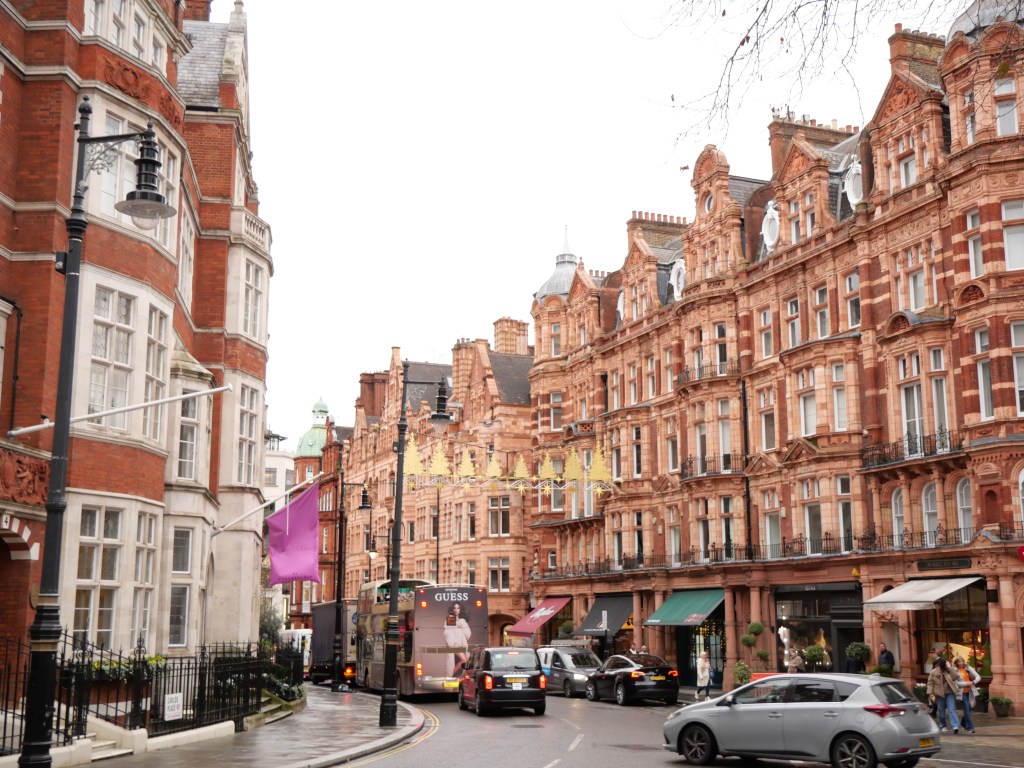
Mayfair from an urban perspective is a wonderful mixed-use district filled with lots of high end shopping districts, delicious regal architecture from the 18th and early 19th centuries, excellent subway access, and great parks with Hyde Park & James Park forming its western & eastern borders and historic squares which are actually open the public. But the district is still very exclusive and out of reach for most to reside here. Mayfair can also feel pretty tourist at points (i.e. Oxford & Regent St, and Picadilly Circle) and really lacks a dedicated bike lane and a strong tree canopy.
Click here to view my Mayfair Album on Flickr
URBAN STRENGTHS:
* Several major touristy streets including Oxford St, Regent St., and Picadilly
* Several wonderful historic squares (Grosvenor Sq, Berkely Sq, Mount St Gardens, & Hanover) and all are open to the public. Excellent access to green space as Hyde Park forms the district’s western border and Green Park/Buckingham Palace Garden its southern.
* Mount street is a lovely biz district with incredible historic buildings. New Bond and Dover are also really nice and Molton & Shepard’s Market are great pedestrian Streets.
* Spectacular regal British architecture from the 18th & 19th centuries.
* Excellent subway connection including 6 metro stations connected to 6 metro lines.
* Even with a low permanent population, Mayfair remains very vibrant with an influx of 85K residents during the day.
* Solid cultural amenities with a great array of restaurants, bars, cafes and a decent array of museums of live music venues. While there are limited theaters here, Mayfair has great access to nearby SoHo.
* Plenty of retail options as well especially department stores and arcades filled with smaller stores.
URBAN WEAKNESSES:
- Some tree canopy, certainly better than most of Central London but not great.
- Pretty poor system of dedicated bike lanes in Mayfair. Just a handful of small disconnected segments.
- Population density is pretty unimpressive for a central European neighborhood at just 11K residents per square mile.
- Very expensive place to live and at times very touristy.


