7th Street, of which the neighborhood is named after, follows a historic Native American and fur trader path along the river from downtown Saint Paul to Fort Snelling. The neighborhood first developed around Irvine Park in the mid 19th century after it was donated to the City. Wealthy citizens first built homes here and thankfully this subdistrict remains largely in-tact. The rest of the West 7th Street neighborhood was built out between the late 19th and early 20th centuries experiencing wave after wave of immigrants drawn by the breweries and factories along the Mississippi River. The first wave was mostly Germans in the 1860s, then Poles and Czechs in the 1870s. Large numbers Irish, German, Czech and Scandinavian immigrants moved to West 7th in the 1880s and by the turn of the century the neighborhood hand transitioned mostly to Italian immigrants. They settled mostly in the old Polish levee underneath the High Bridge (name called Smith Bridge). This subdistrict has mostly been abandoned due to constant flooding and the construction of Shepard Road. The most recent wave of immigrants welcomed into West 7th Street has been Mexicans although must of the neighborhood, especially close to Downtown is beginning to gentrify.
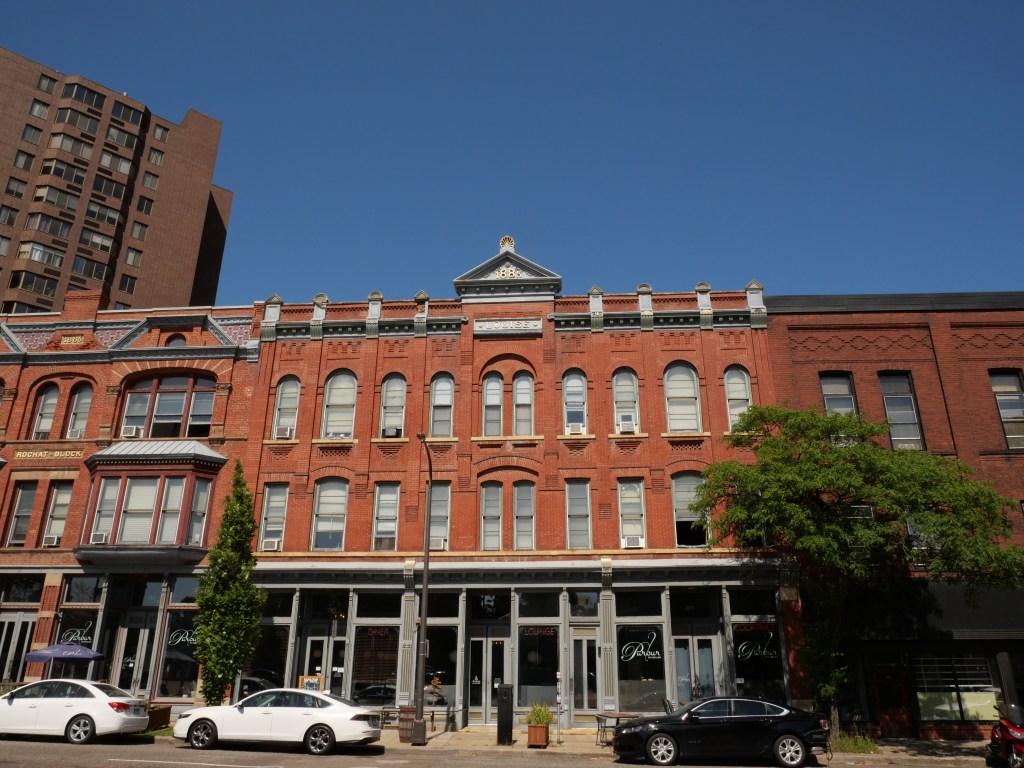
7th Street provides a solid urban commercial district running down the spine of the neighborhood providing plenty of walkable restaurants, bars, & cafes and some retail amenities as well. The street is a patch work of residential, retail, and old industrial uses. Many of the old breweries have been reopened as breweries, event spaces, lofts, and offices and many large industrial areas along the river have been redeveloped into new housing. Randolph is also a nice smaller business district with some amenities running along several blocks of the Western edge of the neighborhood. For Seven 7th Seventh Street to become a great urban district it needs to super charge development along 7th Street adding a much large population base, which will help grow the neighborhood’s retail and cultural amenities. There is also need for more schools, better tree canopy, and a refresh of the neighborhood’s tired looking streetscaping.
Click here to view my West 7th Street Album on Flickr
URBAN STRENGTHS:
- Urban form is a mixed-bag. Mixture of urban massing and auto-centric uses along Fort Road with better urban form closer to Dwtn. Plenty of redeveloped industrial sites which or more or less urban depending on when they were redeveloped.
- Consistent sidewalks but ADA curb cuts are mostly reserved for the main streets (i.e. Fort Rd & Randolph Ave).
- Some very attractive historic commercial along Fort Rd, especially closer to Dwtn.
- Good urban in-fill near Dwtn but plenty of autocentric uses along Fort Rd.
- West Seventh is generally pretty safe and still has some grit.
- Good public transit access throughout but certainly much better closer to Dwtn.
- Solid economic diversity with good representation among all economic classes.
- Two main bike lanes along the edges of West Seventh terminating Dwtn.
- Excellent access to Dwtn only 20 minutes by bus and bike.
- Pretty extensive park running along the Mississippi River that’s part of the Mississippi Recreational Area along with a recreational path running along the highway. Several smaller neighborhood parks spread throughout the neighborhood as well.
- Good # of rental options in the low 1Ks, 1-beds lease btwn $900- the mid 1Ks, not as many 2-beds. These lease generally in the mid 1Ks to the low 2Ks, and only a handful of 3-beds.
- Plenty of affordable for sale options. Good number of 1-bed for sale options (mostly SF homes), plenty of 2-bed inventory of small SF homes generally selling btwn 150K-350K, some high-end 2-bed town homes along the river selling btwn 500K-800K, 3 & 4 bed homes generally sell btwn 200K-500K. Only a handful of more expensive luxury townhomes.
- Great cultural amenities including tons of restaurants, bars & cafes, several breweries, a couple art galleries & historic homes, and a couple night clubs and music venues. Great access to the cultural amenities of Dwtn.
- Decent retail amenities including a Trader Joe’s, Co-op & Asian food store, a couple drug stores, several vintage stores, plenty of salons, several dessert joints, a local post office & public library, plenty of churches and United Hospital.
URBAN WEAKNESSES:
- Streetscaping could use a lift in most parts of the neighborhood.
- So so density for an urban district.
- Historic residential is generally more basic worker housing. Mixture of eras from the late 19th century to the 1940s.
- Poor tree canopy near dwtn and in industrial areas but pretty good on the western half of the neighborhood.
- Majority White neighborhood with some racial diversity. Decent age diversity but few family households.
- A handful of well-rated schools in the western half of the district, but plenty of smaller schools. Residents living near Dwtn don’t really have walkable school options.
- Has few local creative stores, limited gyms & clothing stores.”

 Evaluating our Urban Communities [with a focus on America]