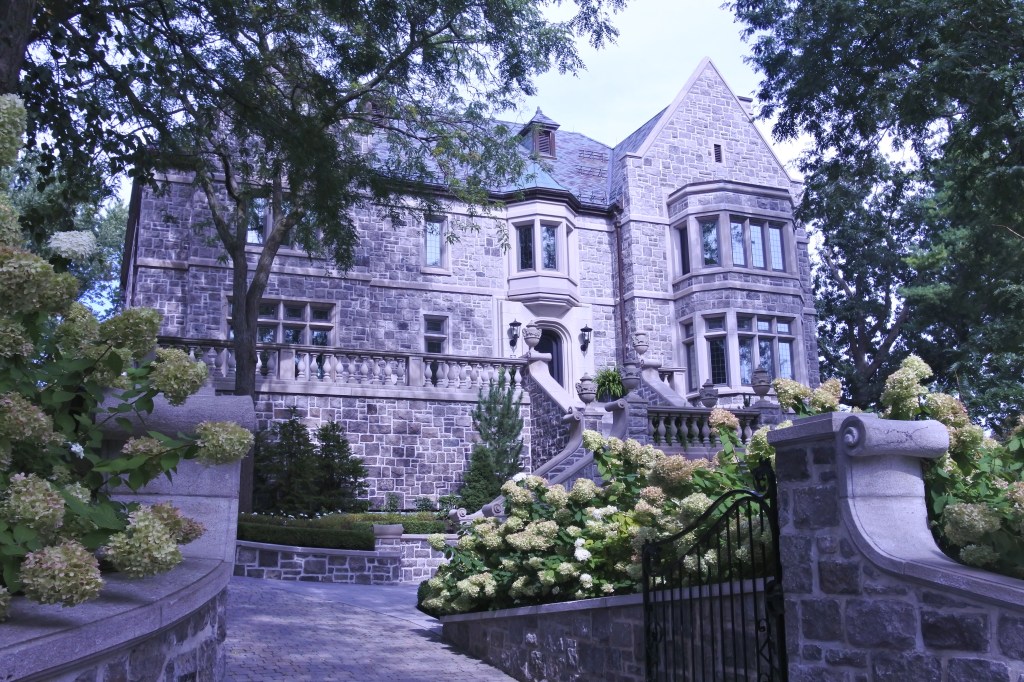
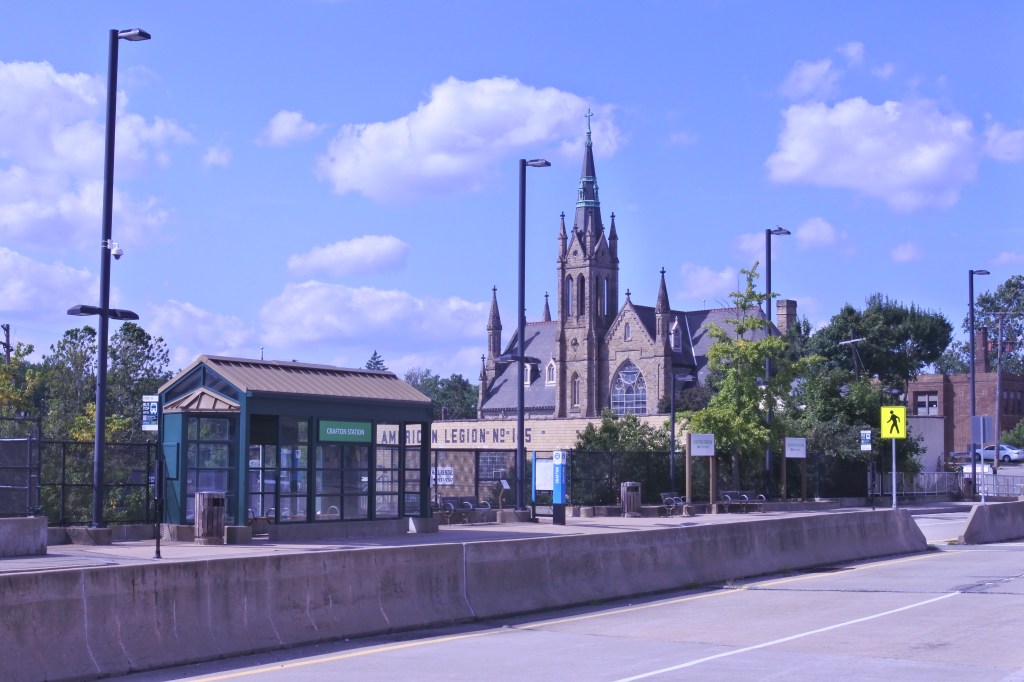
Crafton, PA- an Inner Ring Pittsburgh Suburb located along the West Busway

I included all of Crafton with the exception of a small part of the Idlewood neighborhood in the southwestern part of the Borough. Crafton is named after James  Craft, a frontier attorney who was granted land near the “forks of the Ohio” in present-day Oakland. His son divided up the track of land that became modern day Crafton and the town was incorporated as a Borough in 1892 and soon after linked to downtown Pittsburgh by trolley in 1896. Crafton had a population of 2K in 1900 and quickly grew in the early 20th century reaching 7K souls in 1940 and peaking at 8,400 in 1960. Population has shrunk modestly since then bottoming out at 6K in 2010 but the borough saw a small population gain between 2010-2020 and now sits at just above 6K people.

Crafton has managed to stay in-tact especially in its residential areas and has limited blight. Housing prices are pretty health with many homes selling in the 200ks & 300Ks. Crafton also has excellent access to Dwtn Pittsburgh with a 10-15 minute drive or trip on the bus way, which runs right through Dwtn. The Borough has also done an excellent job replacing curbs with modern ADA standards, has good park amenities and decent retail stores. What Crafton needs most to become a better urban area is the redevelopment and occupancy of its historic downtown area. There are many vacant retail spaces and surface parking lots that could easily be redeveloped with quality mixed-use infill given their close proximity to the West Busway. Crafton also needs better bike infrastructure, more 1-bed apartments, better racial diversity and more cultural amenities. Several new restaurants and breweries would go a long way towards sprucing up the Downtown area. New dwtn streetscaping would also greatly enliven dwtn. I would also love to see the Crafton Ingram Shopping Center, a strip mall equipped with a massive parking lot, redeveloped as a mixed-use urban shopping center. But I don’t see that happening any time soon!
Click here to view my Crafton, PA album on my Flickr page

URBAN STRENGTHS:

* Generally most intersections across the Borough have ADA compliant curb cuts. Some streets on the edges of the Borough don’t have sidewalks.
* Lots of attractive brick streets and a good mix of large and medium sized historic homes.
* Solid public transit thanks mostly to the busway stop.
 * Convenient access to Dwtn with only a 10-15 minute commute via public transit and driving. Driving to Oakland is about 20 mins but transit access is about 45 minutes.
* Excellent economic diversity with the medium household income tracking the state medium and good representation among all economic classes.
* Overall a safe community with limited blight.
* Tree canopy is generally good in the residential areas but sparse in the Dwtn area.
* Not many 1-beds but plenty of 2-beds that lease btwn 900-1.3K. Some 3-beds as well the lease in the mid-high 1ks.
* Very good for-sale housing diversity except for 1-bed condos. Good # of 2-beds that sell anywhere btwn 50K-300, 3 & 4 beds sell between 80K-350K.
* Good park amenities including the Crafton Creekside Trail running along Chartiers Creek and several medium sized parks, a couple of parkettes, along with an outdoor City pool.
* Decent retail amenities but much of them are located in the awful Crafton Ingram Shopping Center. Retail includes a supermarket, drug store, a busy beaver hardware store, a couple family dollars & drug stores, a handful of clothing and furniture stores, several salons & barber shops, a couple dessert spots and gyms, several banks, a local post office & public library, several churches, & a couple of medical offices.

URBAN WEAKNESSES:

* Only a handful of attractive historic commercial buildings.
* Connectivity is out but the grid is very irregular including the Dwtn area.
 * Bike infrastructure is pretty much non-existent.
*Almost 90% White and generational diversity is so so.
* In fill is limited to a massive strip mall on the northern edge of the City and a couple other auto centric uses. No quality urban in-fill.
* Density is so so for an urban area.
* Cultural are lacking for the most part other than some restaurants & bars, and an art school & gallery.
* Only one elementary school is located within the Crafton Borough. All other schools are well rated but a 5 min drive from the Borough.
* A couple decent main street blocks Dwtn but the street grid is very chaotic and plenty of surface parking lots and autocentric uses in the Dwtn. The many shopping area is the Crafton Ingram Shopping Center which hosts a strip mall center by an oversized parking lot.
* Streetscaping is outdated (except for ADA curbs) with pretty narrow sidewalks.

Verona, PA- a curiously named portmanteau along the Allegheny River only 20 minutes from Dwtn Pittsburgh

I included most of Verona in this evaluation except the northern and western edges of the Borough where there is a significant amount of underutilized industrial space. Verona was named by creating a portmanteau of the Verner and Iona railroad stops along the Allegheny Valley Railroad. Like many Pittsburgh river towns Verona was formed along a river with railroad access in the late 19th century. Population reached 2K in 1900 and peaked at 4.4K in 1940. Verona is healthier than many Pittsburgh river towns but has still nearly lost half of its population and currently sites at 2,500 with population appearing to stabilize between 2010 and 2020.

One can see the Borough’s population lost with the numerous vacant lots sprinkled around the residential areas and business districts (Allegheny River Blvd and Railroad Ave). But the Borough has managed to mitigate the damage and a downward blight cycle by maintaining its vacant lots, redeveloping some for parks, and retaining a relatively cohesive urban fabric and population density. Verona also has good retail and food & beverage occupancy in its dwtn, good schools, decent parks & tree canopy, and affordable housing. Hopefully with Verona’s population stabilizing since 2010 and its quality amenities and relatively low crime values will increase enough for new construction filing in its vacant lots and commercial spaces with new homes and mixed-use buildings. I’d also like to see at least one bike lane cut across down, more cultural amenities & nightlife, more ADA compliant curbs, and more housing diversity. 

Click here to view my Verona Album on Flickr

URBAN STRENGTHS:

* Good access to dwtn via driving (only 20 mins) but transit and biking is only so so.
* Pretty good income diversity but mostly working class households.
* Several average or good schools within Verona or in neighboring Oakmont.
* Rentals are pretty limited but affordable.
* Decent park amenities including two medium sized parks and a solid Dwtn park (Railroad Park).
* Solid tree canopy throughout.
* Decent but not great cultural amenities limited to a decent amount of food & beverage businesses.
* Pretty good retail stores including a supermarket, drug store, music store, a furniture store, a couple boutiques/clothing stores, a hardware store, several gyms & salons, a bike shop,  a couple banks, a dollar store, and several churches.
* A couple good urban blocks along Allegheny River Blvd and Railroad Ave but also plenty of surface parking lots and vacant lots. Streetscaping is pretty good though.

URBAN WEAKNESSES:

  • Decent amount of blight in Verona especially the small neighborhood along the river where many homes have actually been removed.
  • ADA compliant curbs are often missing. Missing sidewalks along the eastern edge of Verona and the streets along the river.
  • Pretty mediocre public transit access.
  • Bike Infrastructure is non-existent.
  • Not much for sale housing diversity but affordable. 2-beds sell btwn 50K-200K, 2 & 4 beds sell btwn 50K-250K. A handful of newer homes that sell in the mid-300Ks.
  • Not much modern in-fill and what does exist is either strip malls or industrial uses.”

Oakmont, PA- Pittsburgh Rivertown Suburb and Home to the World Famous Oakmont Country Club

I included most of Oakmont except the more suburban parts of the Borough east of 10th St and North of Hulton Rd (except the older streets between the river and 5th St).  Oakmont incorporated as a town in 1889. The settlement took its name from a landmark tree. Oakmont is most known for the Oakmont Country Club as the course hosted multiple US opens and has been consistently ranked in the top five courses of the world.

From an urbanist perspective Oakmont is a convenient historic rivertown suburb located only 20 minutes driving to Downtown Pittsburgh. The Borough hosts a decent main street along Allegheny River road, which has a railroad running through the center. The area between the river and Allegheny River Road was historically more industrial but this has changed with the ongoing  redevelopment of a major brownfield side into the new urbanist inspired River’s Edge project. East of the main street are the bulk of Oakmont’s housing stock with a mix of modest and larger historic homes from the first half other 20th century.

I consider Oakmont a viable urban place but there are several areas that need improvement including better ADA curbs, better public transit access, some assemblance of bike infrastructure, more 1-bed apartments, better parks, and redeveloping surface parking lots that remain along the main street.

Click here to view my Oakmont, PA album on Flickr

URBAN STRENGTHS:

* Edgewater is a well designed new urbanized community along the river. The residential community ties in nicely to the historic neighborhood north of here.
* Decent access to Dwtn via car but not great bus service.
* Good public schools in Oakmont and walkable too. Just 2 of them. Another is in Verona, which is part of the same school district. Also a Catholic Grad school here.
* Good range of prices. Some 1-bed condos that sell in the 100Ks & 200Ks, 2-beds sell anywhere from 150K-300K, 3 & 4 beds sell btwn 150K- ~ 800K, but newer 3 & 4 bed housing in Edgewater  after sell btwn 1-2M.
* Overall a very safe community to reside.
* Good cultural amenities including lots of restaurants & bars, a historic movie theater, a local museum, and a couple live music venues.
* Also good retail amenities including an organic food market, a couple drug stores, plenty of boutiques, gift stores, and unique locally owned businesses, a hardware store, several gyms, plenty of dessert joints including the famous Oakmont Bakery, a book store,  a dwtn public library and post office, a couple medical offices, and lots of churches.
* Solid tree canopy.
* Some excellent larger historic single family homes mixed-in with more modest ones. Biz district mostly historic but more modest styling.
* A handful of decent in-fill in the biz district. Also a new urbanist development along the Allegheny River that is of a high quality. 
* Generally good urban form on Allegheny River Blvd but plenty of surface parking gaps and a handful of autocentric uses. 

URBAN WEAKNESSES:

* Get pretty industrial and ugly along Plum St. Oakmont’s southern border.
* limited ADA curbs and sidewalks except in the new urbanist Edgewater development.
* Some transit access but not great.
* Bike infrastructure is almost non-existent other than a short trail along the railroad  for half a mile.
* Racial diversity is very limited as Oakmont is 93% White.
* Definitively an aging population but a decent number of households with kids.
* Only a decent number of 2-beds which lease btwn 1K-1.7. Limited 1 & 3 beds.
* Park amenities are decent but not great. Riverside park is the best amenity including a large playground and lots of ballfields. Also a couple f natural parks and smaller pocket parks.
* Some more industrial auto centric uses.

Vieux Quebec City

In this evaluation I consider Vieux Quebec to be the entire old town within the original walled City and Basse Ville, which includes the Old Port area the oldest part of the City. Upper Town is considered the majority of Vieux Quebec elevated from the port and developed a bit later. This holds the majority of sites and landmarks. Lower Town is the Basse Ville along the waterways. Major landmarks in Vieux Quebec include Place Royal (the original Quebec civic bldg constructed in 1608), La Citadelle de Quebec, Le Chateau Frontenac, Notre-Dame de Quebec Cathedral, Gare du Palais, Chapelle des Ursulines, Théâtre Capitole, and Édifice Price.

Vieux Quebec is Quebec’s most walkable and urban district filled with shops, restaurants & bars, and lots of cultural amenities and entertainment. It can also feel overrun by tourism, especially in the summer season, but seems increasingly to be adding year round housing especially in the lofts in the Vieux Port helping it to establish more neighborhood amenities. Other great amenities in Vieux Quebec include its extensive parks, plazas, promenades, well connected bike lanes in Lower Town and many pedestrian only or car light streets. My hope is that Vieux Quebec continues to add more neighborhood amenities and also keep more streets off limits to cars where they don’t really belong given the narrow streets and thick pedestrian activity.”

Click here to view my Vieux Quebec Album on Flickr

URBAN STRENGTHS:

* Gorgeous architecture spanning the 17th century to the early 20th century. This includes the original ramparts of Vieux Quebec that were preserved and restored in the late 19th century.
* Many wonderful landmarks.
* Tons of shops, boutiques and clothing stores, and gift stores. Also a couple drug stores
* Great array of restaurants, bars, and cafes. Also tons or art galleries especially in Basse Ville, a couple historic theaters, plenty of museums, lots of live music in bars & pubs, and plenty of night clubs.
 * Very pedestrian friendly, although I wish they would restrict cars more than they do. Several pedestrian streets including, Corridor du Littoral (waterfront promenade), Terrasse Dufferin (boardwalk over looking Lower Vieux Quebec) Rue du Petit Champlain/Rue Sous-le-Fort, and Rue Saint Jean is often a pedestrian street.
* Great parks and plazas including Place des Canotiers, Parc du Bastion-de-la-Reine, Parc des Gouverneur’s, Place d’Armes, Place D’Youville, Esplanade Park, Le parc du Vieux Port, Place Jean-Pelletier, Place de l’Hôtel de Ville, Moulin Cavalier Park, etc.
* Good amount of for sale housing but generally pretty expensive but some cheaper smaller condos.
* Excellent dedicated bike paths along the waterfronts.

URBAN WEAKNESSES:

  • No major supermarkets or department stores.
  • Very touristy. Not many locals who live here nor authenticity.
  • Some apartments in Vieux Quebec but generally very expensive.

Saint Roch- A great urban comeback story for Quebec City


Saint-Roch
was first settled in 1620 by the Recollects (a Franciscan order) who built a
small church dedicated to Saint Roch. The settlement remained mostly rural
until the first half of the 19th century when Saint-Roch became a major
shipbuilding site. From the mid-19th century to the 1960s, rue Saint-Joseph
was the main commercial street in Quebec City but during the second half of
the 20th century, the district fell into decline and was considered the  most impoverished district of the City.
Much of the neighborhood was also destroyed with the construction of highway
440 overpass helping open up the City to new suburban development.

Fortunately the fortunates of Saint-Roach have turned around since the late
90s with major investments on rue Saint-Joseph, the creation of Quebec City’s
2nd Dwtn concentrated along Boulevard Charest, and major investment in parks
along the river and Victoria Park. Rue Saint Joseph has regained its status
as one of Quebec’s best commercial districts and is now an in-demand urban
neighborhood of Quebec an the edge of Vieux Quebec City.

Click here to view my Saint Roch album on Flickr

URBAN STRENGTHS:

 * Lots of mid sized office buildings along Boulevard Charest E. This is probably Quebec City’s secondary Dwtn after the dwtn cluster along Boulevard Honoré-Mercier.
* Wonderful promenade blvd street inside of  Bd Langelier.
* Excellent neighborhood biz district along Rue Saint-Joseph
* For sale pricing is reasonable with a good # of 1-bed condos selling btwn 100K-300K, 2-beds 200K-500 and 3 & 4 beds btwn 300K-500 but not much product.
* Access  to parks thanks to the riverside parks, Victoria Park, and several smaller parks throughout the neighborhood.
* Great concentration of food and beverage bizs, a couple breweries. Decent cultural amenities including a couple performing arts theaters, several art galleries, and a couple night clubs and music venues. Very convenient access to all the cultural amenities in Vieux Quebec.
* Great retail amenities including lots of local and unique shops along Saint Joseph.

URBAN WEAKNESSES:

* Architecture is so . The modern office towners along Blvd Charest E. are pretty bland and most of the historic rowhouses are without much ornamentation. Some good historic commercial architecture along Boulevard Charest E.
* Tree canopy is so so.
* Modern ADA curb cuts are largely non-existent.
* Rentals are a bit pricy. 

Saint-Jean-Baptiste- Quebec City’s best Urban Neighborhood

When the old city wall existed,  Saint-Jean was located just west of the Port Saint Louis. Until the early 19th century Saint-Jean-Baptiste was sparsely populated in a semi-rural setting. The neighborhood was also caught up in the Second major Quebec Fire in 1845, which is why buildings before the mid 19th century are pretty limited.

This is arguable Quebec’s City best urban district outside of Vieux Quebec. There is an excellent urban business district that runs along several blocks of Rue Saint-Jean and the iconic restaurant district along Grande Allee with its gorgeous late 19th century rowhouses. Mixture of great 19th century architecture and some quality urban infill. Grande Allee is another great street with stunning rowhouses and Quebec’s iconic restaurant row. Boulevard Honoré-Mercier hosts most  Quebec City’s downtown buildings along Saint-Jean-Baptiste’s eastern edge. The neighborhood  also hosts great park amenities, a wonderful array of retail and cultural amenities, good amount of moderately priced housing options and sits on the western border of Vieux Quebec City. Some minor areas for improvements that would allow Saint-Jean-Baptiste to become a top notch urban district including more vibrancy along the wide and often cold Bd rene-Levesque, modern ADA curb cuts, and more bike lanes.


Click here to view my album on Flickr

URBAN STRENGTHS:

  • Grande Allee is another great street with stunning rowhouses and Quebec’s iconic restaurant row.
  • Excellent urban business district that runs along several blocks of Rue Saint-Jean. Mixture of great 19th century architecture and some quality urban infill.
  • Boulevard Honoré-Mercier hosts most of Quebec City’s downtown buildings.
  • Great array of historic architecture from all decades of the 19th century.
  • Decent tree canopy.
  • Good park access including lots of small and medium parks and the expansive Plains of Abraham.
  • For-sale housing is very reasonably priced with 1-bed selling btwn 100K-350K. 2-beds btwn 200K-750K. 3 & 4 beds 300K-900K.
  • Great array of restaurants, cafes, & bars. Other cultural amenities include a couple community theaters, the Grand Theatre de Quebe where the Symphony plays, and several night clubs & live music venues.
  • Great retail amenities too including several book stores, plenty of gift stores, boutiques/clothing stores, lots of grocerias, a couple drug stores, tons of banks and lots of other interest stores.

URBAN WEAKNESSES:

* Bd René-Lévesque is very wide although architecture while urban contains some uglier mid-century bldgs. Lots of gov’t buildings here with large grassy set backs that hurts vibrancy on the street.
* Curbs are generally not up to modern ADA standards.
* Rent is a  bit pricy.
* Only a handful of bike lanes.

Saint-Sauveur- Quebec City’s Historic Working Class District

Saint-Sauveur gets its namesake from Jean le Sueur who in 1653 was the first secular priest to come to New France. The neighborhood, while initially being considered for the founding of Quebec, remained rural and sparsely populated until the 1840s. The success of the shipyards, timber trade and port activity led to the rapid development of Saint-Sauveur in the mid 19th century. Since then the neighborhood become a hub for poor workers and sadly given the neighborhood’s location outside of Quebec City no building regulations were ever mandated and Saint-Sauveur experienced two devastating fires in 1866 and 1889. The neighborhood also didn’t have access to Quebec’s water distribution network. Thankfully in 1889 Saint-Sauveur was annexed into Quebec and the City authorities greatly improved the neighborhood  building sewers, pavements, lighting streets, and of course adding water service. While always being gritty Saint Sauveur never experienced wholesale disinvestment but has seen increased interest and investment in recent decades.

Saint Sauveur is a solid urban district, at least between Verdun and Bd Langelier. West of Verdun the neighborhood gets either industrial or more suburban in character. One can easily feel the working class roots of Saint-Sauveur as most of the housing are rowhouses and modest. But thankfully working class rowhouse fabric lends itself to a compact and walkable district with a solid commercial district running down Rue Saint-Vallier. Housing prices are also very reasonable for both rental and for sale. For Saint-Sauveur to become a top notch urban district it needs to tame a couple wide and autocentric roads (Rue Marie-dl’Incarnation & Bd Charest O). The tree canopy is also very limited , there are no up-to-date ADA curbs, and only a handful of dedicated bike lanes exist.

Click here to view my Saint-Sauveur Album on Flickr

URBAN STRENGTHS:

* Nice commercial district along  Rue Saint-Vallier especially along the eastern edge.
* Pretty good park amenities including the extensive Victoria Park and lots of small parkettes and plazas spread throughout.
* Good cultural amenities including a great array of restaurants, bars, & cafes, a couple art galleries, and several performing arts venues.
* Good retail amenities as well including several super markets, a couple pharmacies, lots of unique and locally owned stores but not high end and some other typically neighborhood stores.
* For sale housing is very reasonable for such a quality urban district close to the center of town. Top of the market is about 500K for a 3 & 4 bedroom.
* Rentals prices are also very reasonable. 

URBAN WEAKNESSES:

* Rue Marie-de-incarnation is a very wide road and the northern parts of it get pretty autocentric.  Bd Charest O gets very autocentric on its western half.
* West of Verdun St. the urban fabric generally breakdown and there is a lot of more suburban residential areas and industrials sections.
* Tree canopy is limited
* Dense urban architecture but architecture is very striped down working close rowhouses from the turn of the 20th century.
* Very few of the curb cuts are up to modern ADA standards.
* Several dedicated bike stations but only a handfull of bike lanes.

Montcalm, Quebec City- a solid urban district named after the much revered General Montcalm

The district is named after General Montcalm who led the French troops during the famous Battle of the Plains of Abraham (located on the southern edge of the neighborhood) in 1759 defending the French territory against the British army. While the French lost the battle and Montcalm also lost his life, he remains a much revered figure in French Quebec and has several statues of his likeness across the City. Montcalm is a pretty ideal neighborhood for me with its good mix of housing typologies, great commercial district along Cartier Avenue, and consistent medium density. Housing is also pretty affordable here especially for 1 & 2 bedrooms (both rental & for sale) and the district has great access to several great parks and is only a 10 minute bus ride to Vieux Quebec. The only area I see for improvement from an urban perspective would be more commercial and mixed-uses in the western half of the neighborhood which is almost exclusively residential.

Click here to view my Montcalm album on my Flickr page

URBAN STRENGTHS:

*  Av. Cartier is an excellent commercial district with gorgeous artistic street lights. The street is often a pedestrian zone in the summer. Also several mixed use blocks along Ch Ste-Foy, Rue Crémazie, Boulevard René-Lévesque
* Boulevard René-Lévesque is a grand boulevard with grand apartment buildings  and large trees lining the boulevard.
* Good mix of housing typologies including single family homes, duplexes/triplexes, rowhouses, and apartment buildings ranging from the mid-19th century to the early 20th century. Decent amount of infill esp. along the western edge.
* Great tree canopy throughout.
* Good array of cultural amenities concentrated mostly along Cartier Av (restaurants, bars, cafes, a boutique theater, and a some performing arts theater. The neighborhood also hosts a couple art galleries and the Musee National des beaux-arts du Quebec.
* Solid retails amenities including a couple supermarkets, several drug stores, tons of boutiques, gift shops, and clothing stores concentrated on Cartier, plenty of banks, and lots of bakeries, dessert shops, and several bookstores.
* 1 & 2 bedroom apartments are very reasonable here leasing in the low 1Ks. 3 & 4 get pretty pricey however.
* For sale prices are very reasonable lots of smaller condos. 1-beds sell btwn 100K-400K, 2-beds sell mostly btwn 200K-500K. 3 & 4 beds start to get expensive starting at 500K.
* Great park access including the expansive Plains of Abraham, Braves Park, and several parks along the ridge adjacent to Saint-Sauveur.

URBAN WEAKNESSES:

  • Not much commercial activity in the western half of the district.
  • No rail access in Quebec City but still decent bus service.
  • Lots of intersections don’t have modern ADA curbs.

Westmount Quebec- Montreal’s most Famous Anglophone Community

Traditionally, the community of Westmount has been a wealthy and predominantly anglophone enclave, having been at one point the richest community in Canada. It is now the most affluent neighborhood in Canada outside of Toronto and Vancouver. The Village of Côte St-Antoine was first incorporated in 1874, which was later renamed Westmount in 1895, reflecting its location on the southwest slope of Mount Royal and the presence of a large English-speaking population. In the twentieth century, Westmount was home to some of Montreal’s wealthiest families including the Bronfmans and the Molsons.  This made the City a target of the Front de libération du Québec terrorist bombings in the 1960s. Westmount was fully incorporated into the City of Montreal for a time in the mid-2000s but was able to regain most of its autonomy shortly after. Its strong anglophone roots exist to this day as English is spoken in about 70% of homes.

This urban inner ring suburb reminds me a lot of Brookline MA. Westmount contains a Downtown area between Dorchester and Sherbrooke and Ave Greene to the southern border of Montreal, which functions in many ways as an extension of Dwtn Montreal. The southern eastern edge of Westmount between Route 136 and Sherbrooke is very dense with a mix of apartments and rowhouse fabric and including the Dwtn area mentioned above, lots of mixed-use fabric along Saint-Catherine and a great neighborhood commercial district along several blocks of Sherbrook. Between Sherbrooke and The Boulevard is a quality medium density residential area mixing mostly rowhouse, single family bldgs, and a few apartment bldgs. Btwn the Boulevard and Mount Royal is almost all single family homes including many mansions built between the 1910s-1960s. Westmount’s biggest urban challenge is a lack of affordable for-sale housing. A good number of moderate rentals exist however exist here. Public transit access and bike infrastructure also not as good as most other central Montreal neighborhoods.

Click here to view my Westmount album on Flickr

URBAN STRENGTHS:

* Great tree canopy.
* Three excellent commercial districts (dwtn, and along Sherbrooke and Saint-Catherine.
* Lots of excellent historic architecture throughout Westmount.
* Rental housing is more reasonably priced than for-sale options.
* Good retail options including several supermarkets, great array of boutiques and clothing stores, lots of higher end and specialty stores, a decent shopping mall in Dwtn Westmount, plenty of banks, great array of restaurants and cafes.
* Decent cultural amenities (esp. Dwtn) including several art galleries, a cineplex, and a couple museums. The Westmount public library is gorgeous too and looks like a conservatory. 

URBAN WEAKNESSES:

* Good public transit service but not as good as most of central Montreal. One subway stop on the edge of Dwtn Westmont and several others on their southeastern edge. Public transit access not that great in the lower density northwestern edge.
* Some dedicated bike lanes but not ask good as the rest of central Montreal. Dedicated bike stations good Dwtn and decent in Westmount’s most dense areas but pretty limited elsewhere.
*  For sale housing is rather expensive. 1 & 2 bed condos start at 600K and 3 at 900K.
* Limited retail and mixed-use fabric outside of the 3 biz districts.

La Petite-Patrie- Hosts Montreal’s Largest Hispanic and Quality Working Cloass Urban District

“Until the late 19th century, La Petite-Patrie was mainly agricultural, with the exception of limestone quarries, now the location of Père Marquette Park. The construction of a tramway in 1892 linking the neighborhood to downtown led to the urbanization of the area, which continued until about the 1950s. La Petite-Patrie area includes several ethnic communities, including an Italian community, a Vietnamese community and more recently a large Latin American community.

La Petite-Patririe is a solid urban neighborhood with a thriving commercial district along Rue St-Hubert, plenty of mixed-use streets, excellent access to two subway lines and 5 subways stops, and great bike infrastructure. All around this is a very walkable and multi-model community. La Petite-Patrie manages to be a solid urban district even with a high poverty rate of just over 1/3 of its residents. Unfortunately the price of for sale homes, while more moderate than surrounding gentrifying districts, is way out of reach of most residents in the neighborhood. For La Petite-Patrie to became an even better urban district I’d also like to see improved urban form and quality infill along some if its auto centric edges (i.e. Av. Papineau and Bd Rosemont), more park amenities, and more affordable for-sale options.

Click here to view my Petite-Patrie Album on Flickr

URBAN STRENGTHS:

  • Also decent biz districts along Rue Bélanger, and Saint Denis and Christophe-Colombo are nice residential Blvd.
  • Excellent commercial district along Rue St-Hubert with comfortable new streetscaping, covering pathways and tons of stores.
  • Good tree canopy throughout most of the district.
  • Urban form is generally good with consistent rowhouse fabric ranging from 1900s-1960s architecture.
  • Pere-Marquette Park is a decent size and multi-faceted. Some other smaller parkettes and plazas spread throughout.
  • For sale housing has more moderately priced 1 & 2 bed options than neighboring Little Italy but still plenty of higher priced hsg. Similar trend with rentals.
  • Great local retail options especially along Rue St-Hubert. Lots of more affordable retail as well. Also several supermarkets and drug stores.
  • Good cultural amenities including plenty of restaurants & bars, several night clubs & local theaters.
  • Great subway access with 5 metro stops. Also wonderful bike infrastructure including several dedicated bike lanes and plenty of bike rental stations.

URBAN WEAKNESSES

  • While urban form is good the detailing of the architecture is pretty plain.
  • Rosemont is a mixed-use street but rather gritty and has a lot of autocentric uses, pretty uncharacteristic for this part of Montreal. Av. Papineau on the Northeastern edge of the neighborhood has these issues too but not as severe.
  • Very working class neighborhood with a high poverty rate (36%). But much more intact and thriving than the equivalent American urban neighborhood.”