Johnston Square- An East Baltimore Neighborhood on the Rise

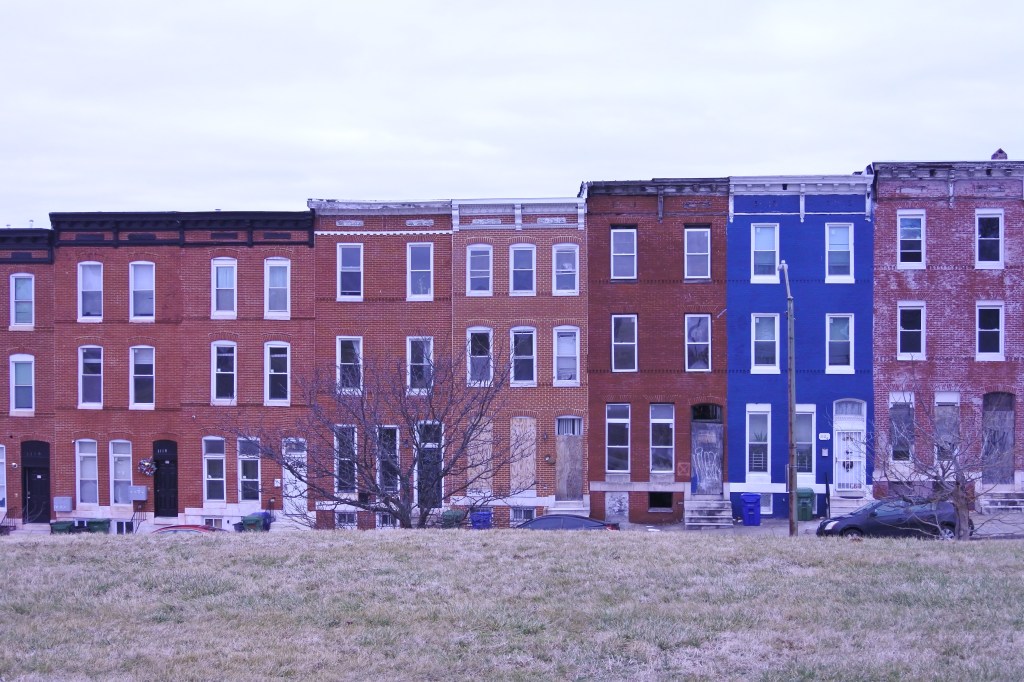
In the early 1800’s affluent city leaders located their country houses on the rising hills surrounding the port of Baltimore in currently day neighborhoods like Johnston Square.  Green Mount Cemetery (now located on Johnston Square’s northern border) was established in the 1830s as a rural oasis for the deceased and visiting. Mills and industries harnessed the power of the water along the Jones Falls Valley were developed in the early 1800s and followed by railroads, which transformed the valley into an industrial artery.  After the Civil War, the country estates were sold to developers  and modern day Johnston Square started to take shape. Like many Baltimore neighborhoods it was developed around a central elevated square (Johnston Square Park) with a larger 3-story townhouses lined the wider boulevards and smaller 2-story worked housing lining the alley ways and secondary streets. This created a very natural mixed-income community. The late 19 century also brought waves of immigrants settled to Johnston Square with the  Catholic Church playing a dominant role in supporting the community and its development

During the late 1940s rural African-Americans arrived in East Baltimore seeking work in the war-related industries and often replaced abandoned churches and homes by white families During the second half of the 20th Century like so many other urban African American neighborhoods, Johnston Square became a victim to discriminatory lending practices which resulted in disinvestment, concentrated poverty, population loss and abandonment. Fortunately momentum seems to be turning as the  neighborhood is embarking on an ambitious Johnston Square Vision Plan, supported by Rebuild Metro and the Baltimore Square Neighborhood Organization to rebuild the community as a Mixed-income and multi-racial neighborhood. Johnston Square is simply to well positioned between employment centers and major institutions and a high level of walkability and community character to remain disinvested. 
Click here to view my Johnston Square album on Flickr

URBAN STRENGTHS:

* Sidewalk infrastructure is pretty consistent although some are neglected here there is widespread abandonment. Modern ADA curbs existing in 50% of curb cuts.
* Excellent public transit access.
* Decent bike infrastructure access with a pair of west-east bike lanes and lots of rentable scooters. Far fewer rental dockless bikes here.
* Great access to employment centers being 2 miles from Dwtn and less than 1 mile from John Hopkins Hospital and University. Access across all modes.
* Good racial diversity with about 40% of the population being non Black.
* Several dedicated affordable rentals have been built recently.
* Three solid medium sized parks including playground, basketball court, and outdoor pool amenities.
* Mix of worker and more regal late 19th century rowhouses. The fixed up rowhouses are very attractive here.

URBAN WEAKNESSES:

* Decent Urban Density.
* 40% of residents are living in poverty but increasing wealth is entering the neighborhood.
* Only St. Francis High School is located in the neighborhood. Several mixed-rated schools located north in Greenmount West. Schools to the east of Johnston Square are rated rather poorly.
* Some rentals but mostly 2 & 3 beds leasing anywhere in the1Ks. Rentals seem in good condition.
* For sale housing market is still pretty depressed with 2-beds selling around 100K. 3 & 4 beds sell btwn 50K-225K with renovated product being on the higher end.
* Cultural amenities are limited to a handful of restaurants & bars, a cafe, a cider house. Just across the highway from good amenities in Mt. Vernon and some good amenities in Greenmount West to the north.
* Retail amenities are limited to a only drug store, several convenience stores, a couple salons, several churches, and community clinic. Good retail amenities adjacent Mt. Vernon.
* Johnston Square has a long history of crime and blight issues but there seems to be light at the end of the tunnel as the community embarks on an ambitious stabilization plan renovating nearly 1,000 units of housing.
* A couple recent residential in-fill projects that have been pretty well done. ^0s & 70s infill is a mixed bag. Some stuff is actually decent for the era.
* Not much urban form left on the historic biz district (Greenmount) and mix of cohesive, bombed out blocks, and urban renew residential blocks.

Greektown- Historic Center of Baltimore’s Greek Population

The history of Greeks in Baltimore dates back to the turn of the 20th century. Baltimore is in fact home to one of the largest Greek American communities in US.  By the 1920s, a small but vibrant Greek community had been firmly established centered around the St. Nicholas Greek Orthodox Church located in the Greektown neighborhood. The neighborhood officially became know as “Greektown” when in the 1980s residents petitioned the City to change the name from “the Hill”. By the 1980s Baltimore’s Greek community had 25,000 strong but the concentration of Greeks in Greektown and Highlandtown was starting to decline as they moved on to other neighborhoods. Latino populations are now increasing in both Highlandtown and Greektown.

From an urban perspective Greektown is isolated from the rest of East Baltimore by railroads and an industrial zone on its western border and  I-95 on its eastern border. This probably helped keep the Greek identity strong in the district and keep out crime and blight issues that afflicted many other East Baltimore neighborhoods. But this makes traveling to the rest of East Baltimore a bit challenging. The commercial district along Eastern Ave is generally still in tact and the housing market is quite strong, bolstered recently by the construction of hundreds of new townhouses.

For Greektown to be a great urban neighborhood it could use a full service supermarket, more 1-bed rentals, more walkable schools, and more park amenities. But overall a solid in tact urban district.

Click here to view my Greektown Album on Flickr

URBAN STRENGTHS:

* Decent density.
* Good proximity to Dwtn and solid public transit connections
* Lots of moderately priced homes for sale and plenty of new townhouses available. 2-beds sell anywhere from 175K-400K. 3 & 4 beds sell btwn 125K-425.
* Decent cultural amenities with several restaurants (many still Greek and now Hispanic) & bars, a Starbucks, and a couple night clubs. There is also a dinner mystery venue and a couple event venues.
* Overall a very safety community.
* Lots of infill urban townhouse. Design and form are so  but certainly could be a lot worse.
* Urban form along Easter Avenue is generally cohesive but certainly some surface parking and autocentric uses along it.
* Greektown seems to have a pretty high impression among Baltimoreans. Perhaps this is why so much new housing was built here.

URBAN WEAKNESSES:

* ADA and sidewalk infrastructure is generally good in Greektown but spots of Eastern have sidewalks on only one side and modern ADA curbs existing in about 1/2 of all intersections.
* Greektown is pretty isolated from the rest of East Baltimore. One needs to past through very industrial areas without good pedestrian or bike connections to get to Highlandtown.
* One smally dedicated bike lanes runs north to south through the district but not good connections to surrounding districts.
* Poor access to schools other than a couple schools in the adjacent Joseph Lee district. But not really walkable.
* Very few 1-beds for sale.
* Rentals are pretty limited especially 1-beds. Some 2-beds lease for around 2K. Plenty of 3-beds rentals leasing btwn the high 1Ks-3K.
* Parks are limited to a playground and community garden in Greektown. There is a large cemetery bordering Greektown but its seperated by a highway.
* Ok retail venues including several ethnic grocerias (esp. Hispanic), a drug store, a couple banks, a couple boutiques, several bakeries, a gym, and several churches. There’s also a Home Depot in the adjacent neighborhood that’s semi walkable from Greektown.
* Pedestrian activity is a bit limited.

Highlandtown- Baltimore’s Hispanic Heart

The area currently known as Highlandtown was established in 1866 and named because of the views it offered over the City. Highlandtown also historically hosted a large Polish, Czech, Italian, Irish, Greek, and Ukrainian populations as the neighborhood has a long history of being a very working class community. The community got the nickname of “Little Appalachia” around the World War II era as many Appalachian migrants settled in Baltimore. More recently Highlandtown has seen a large increase from the Latino community and has also become an increasingly popular neighborhood for young professional families. The Latino immigration in particular helped keep the neighborhood afloat after it suffered a period of decline during the 1970s when manufacturing declined and department stores  closed on Eastern Avenue. Now Eastern Avenue’s retail is largely Hispanic oriented.

Highlandtown is yet another solid Baltimore rowhouse neighborhood with good walkability, high density, and quality public transit access. For sale housing options are relatively affordable compared to neighboring areas like Canton and hosts solid retail and cultural amenities. For Highlandtown to become a great urban district it needs more retail and cultural amenities, much better tree canopy, infill in the abandonded industrial areas along its eastern edge, and more affordable rental options.

Click here to view my Highlandtown Album on Flickr

URBAN STRENGTHS:

* Solid urban density.
* Great access to Dwtn and highly connected streets.
* Highly racially diverse neighborhood with large white, Hispanic and Black populations.
* Solid economic diversity as well.
* For sale host more moderate options than rentals. A few 1-beds in the community selling in the low-mid 200Ks, 2-beds sell btwn 150K-400K, 3 & 4 beds sell btwn 175K-550K.
* Good park access with the expansive Highland Park on the Western border. Really no other parks here.
* Good cultural amenities including a decent # of restaurants, bars, & cafes, a couple night clubs, several art galleries, and a local arts center.
* Good retail amenities with a supermarket, several Hispanic grocerias, a couple drug stores, a couple banks, plenty of local boutiques, consignment, and gift stores, several jewelry stores, a book store, several dessert joints, a couple gyms, lots of salons and barber shops, several furniture stores, a local post office & public library, lots of churches, and a couple medical offices.
* Highlandtown overall is a pretty safe community. Some grittiness and vacancy remain but strong community.
* Good architecture. Rowhouses are more working hsg style but still nice. Better historic commercial along Eastern. Not much in-fill but what does exist is generally good except for a couple strip malls.

URBAN WEAKNESSES:

* Consistent sidewalks but modern ADA curb are generally only present on the Commercial districts.
* Ok bike infrastructure with a couple dedicated bike lanes and some dockless scooters. I don’t see many dockless bikes however.
* Several elementary schools but mixed ratings.
* Good # of rentals but most are on the expansive side and newer. 1-beds lease in the mid 1Ks, 2-beds has some moderately priced units starting in the mid 1Ks going to 3Ks, 3-beds lease btwn 2K-4K.
* Dedicated affordable hsg appears limited.
* Some dead industrial space along the eastern edge of Highlandtown.

Canton- a Rapidly Gentrified Neighborhood and one of Baltimore’s most Popular

Canton’s development goes back to the early 19th century as mostly Welsh immigrants, followed by the Irish in the 1840s began settling in Baltimore in large numbers. Subsequent groups of immigrants included Germans, Poles and Ukrainians. Most houses in Canton are turn-of-the-20th-century rowhouses bit many  homes closer to the waterfront date from before the Civil War. With the de-industrialization of the neighborhood in the 1990s the neighborhood’s waterfront was redeveloped into new housing and marinas and the revitalization process worked its way gradually northward. Some metrics hold that between 2000 and 2016 Canton was the 16th most gentrified American neighborhood and now is considered  one of Baltimore’s trendiest and vibrant neighborhoods.

Brewer’s Hill development came later. First with the development of breweries in the 1880s, the most famous being the National Bohemian brand, known affectionately by locals as Natty Bo with the massive Mr. Boh sign hanging high above the old brewery. Most of the district’s rowhouses were built in the 1910s. Brewer’s Hill  also has seen significant revitalization since 2000.

I like both Canton and Brewer’s Hill but the neighborhood seems a bit over hyped by the locals. Yes there is good walkability here with quality public transit & bike access, great parks, decent schools, lots of brand name retail options, and tons of food and beverage businesses, but the neighborhood has some major holes, which elevate other Baltimore districts to a higher urban status in my mind. Canton/Brewer’s Hill lack locally run boutiques and creative stores, is very white and high income, often lacks good tree canopy and modern ADA curbs and is missing some major cultural amenities (i.e. art galleries, museums, and theaters). With more of these missing amenities I would feel more comfortable listing Canton/Brewer’s Hill as one of Baltimore’s top urban districts.

Click here to view my Canton and Brewer’s Hill Neighborhood on my Flickr Page

URBAN STRENGTHS:

*Solid urban density.
* Great access to Dwtn via all modes of transit.
* Good bike infrastructure with a decent # of dockless scooters and bikes.
* Pretty good generational and age diversity with a fair number of families with kids.
* Decent schools here with a well rated elementary school, a couple Catholic grade schools and two Catholic high schools.
* For sale housing leans higher end but good variety of times and prices. 1-beds are a mix of condos and rowhouses and sell anywhere btwn 150K-325K, 2-beds sell btwn 175K-600K, 3 & 4 beds sell btwn 225K-850K but a handful of more expensive homes.
* Good # of apartments especially in the large MF bldgs of Brewers Hill. Def on the pricey side but some moderately priced. 1 beds lease anywhere in the 1Ks, 2-beds 1.5K- the high 2Ks, 3-beds btwn 2K and the high 3Ks.
* Solid parks with the expansive Patterson Park sitting on the north park, several good waterfront parks, and a couple parkette’s spread throughout Canton.
* Solid cultural amenities includes lots of food & beverages biz, plenty of live music venues, and a couple bars host live music,
* Solid retail amenities including several supermarkets & drug stores, a target, several brand named stores clothing stores @Shops at Canton Crossing, hardware store, plenty of banks,  a couple of florists, public library, a game store, several dessert stores & gyms, and many churches.
* Attractive Historic rowhouses throughout, a bit more ornate in Canton than Brewer’s Hill. Urban Infill projects a generally good but some auto centric strip malls like Shops at Canton Crossing and a couple others.
* Streetscape is good but not spectacular and the commercial districts haven’t been redone in awhile.
* Very popular neighborhood in Baltimore.

URBAN WEAKNESSES:

* Consistent sidewalks but modern ADA curb cuts only make apt 1/3 of intersections.
* This is a high income largely white neighborhood so diversity is not Canton’s strong suite.
* So so tree cover. Better in Canton than Brewer’s Hill.
* Really no art galleries, museums, or theaters in the neighborhood.
* Few locally owned boutiques or gift shops. Also no book stores and no post offices but there are a couple nearby.
* A couple strip mall developments break up the generally good urban massing in the neighborhood.

Charles Village- Baltimore’s Historic Bohemian College Neighborhood

I included John Hopkins University as well in this Charles Village evaluation as its so integrated into the neighborhood.

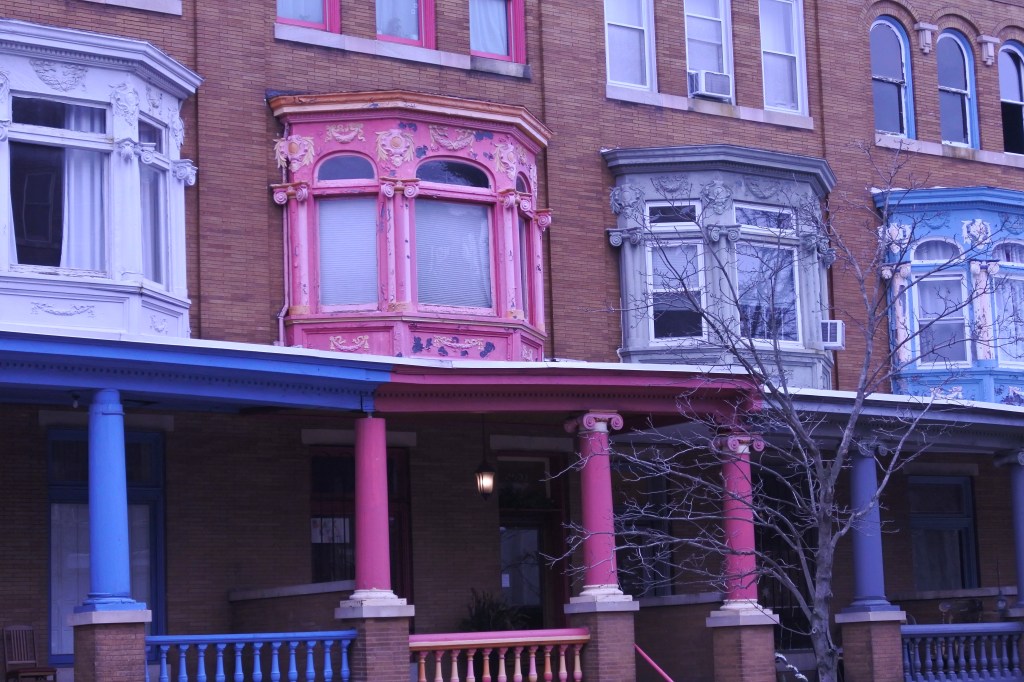
Charles Village is a diverse, eclectic, international, and largely middle-class area mixing a large student and homeownership population  The neighborhood traces its roots back to 1869 when 50 acres were purchased for the development as “Peabody Heights. The area was first developed as a streetcar suburb in the late 19th to early  20th century.  Most homes are exemplary Baltimore brick and stone row houses. Because of its proximity to the University, Charles Village has attracted a large population of artists and bohemians and is one of the most diverse neighborhoods in Baltimore. Charles Village largely escaped the disinvestment and blight of many surrounding neighborhoods and has seen a real estate prices boom since the 2000s. Fortunately there is still a lot of moderately priced housing in the neighborhood and a fair amount of dedicated affordable housing. Charles Village is also known for hosting the Baltimore Painted ladies when a residents were challenged to take up a paint brush and choose vividly uncommon colors for the facades and front porches of their Victorian rowhouses. Within five years, residents had enlivened more than 100 homes.

Charles has most of the urban components of a top notch urban neighborhood including great density, diversity, convenient access to jobs, great public transit and bike infrastructure, diversity of housing prices and types, solid park, cultural, and retail amenities, gorgeous historic architecture, and some modern infill with quality urban form. For Charles Village to be a truly top tier American urban district it needs to address some challenges around crime (or at least perceptions of crime) , bolster more households with kids, which is likely a directly result of sub par neighborhood schools, and attract important retail amenities like a post office and larger retailers. The 25th Commercial District could also use some urban infill in some dead spots and surface parking areas.

Click here to view my Charles Village Album on Flickr

URBAN STRENGTHS:

* Solid urban density at around 20K residents per square mile
* Convenient access to Dwtn across all modes being only 2 miles away but also lots of jobs in the Neighborhood with John Hopkins University.
* Great connectivity in the district.
* Great system of bike lanes with 3 dedicates north-south lanes and one of them is protected. Not dedicated bike stations in Baltimore but dockless bike and scooters operating pretty well here.
* Sidewalk infrastructure is great and modern ADA curb cuts is more hit or miss. About 60% of curb cuts are to modern standards.
* Lots of rentals available with rentals generally leasing a moderate priced.  1-bed renting btwn $900-1.5K, 2-beds mostly btwn 1K-2K but some product in the mid to high 2Ks. A handful of 3-beds as well. Decent amount of dedicated affordable units.
* Good for sale diversity with 1-bed condos sell anywhere btwn 100K-400K, 2-beds generally btwn 150K-350K but some higher end product selling in the 500Ks. 3 & 4 beds sell btwn 175K-600K.
* Good park amenities with the expansive Wyman Park and John Hopkins campus (with its numerous quads) sitting to the NW of the neighborhood. Within Charles Village only a couple small parkettes.
* Solid cultural amenities with a good number of food & beverage bizs (although a bit underwhelming for a college neighborhood), a couple live music venues & night clubs (Lots of these in the Goucher district to the south), a couple art galleries, several museums including the Balt. Art Museum and several others on John Hopkins Campus, and the performing arts at the University.
* Good retail amenities including a several supermarkets and drug stores, several boutiques/clothing stores, a couple book stores, a hardware store, bike shop, several banks, a couple home goods stores, a major hospital and lots of medical offices, and several churches.
* Gorgeous historic architecture throughout, especially the painted Baltimore Ladies and solid urban infill, albeit limited.

URBAN WEAKNESSES:

* Some generational diversity but very high numbers of students living here and limited households with children.
* Some crime issues in Charles Village but generally pretty safe also thanks to the local John Hopkins Police Force.
* Decent # of walkable schools but the public schools are generally not rated well. Some smaller better private schools in the area.
* Missing retail including a post office, more clothing stores, and this neighborhood could really use a target given the student population.
* Some surface parking lots on 25th street break up the urban fabric. Could be better streetscaping there too.
* Neighborhood Buzz could be better here. Still some concerns over safety in Charles Village.

Ravenna, OH- Historic Satellite Suburb of Akron, OH

This evaluation includes just the pre WWII urban fabric of Ravenna. That is more or less the entire with of the Town between the north and south railroad tracks.

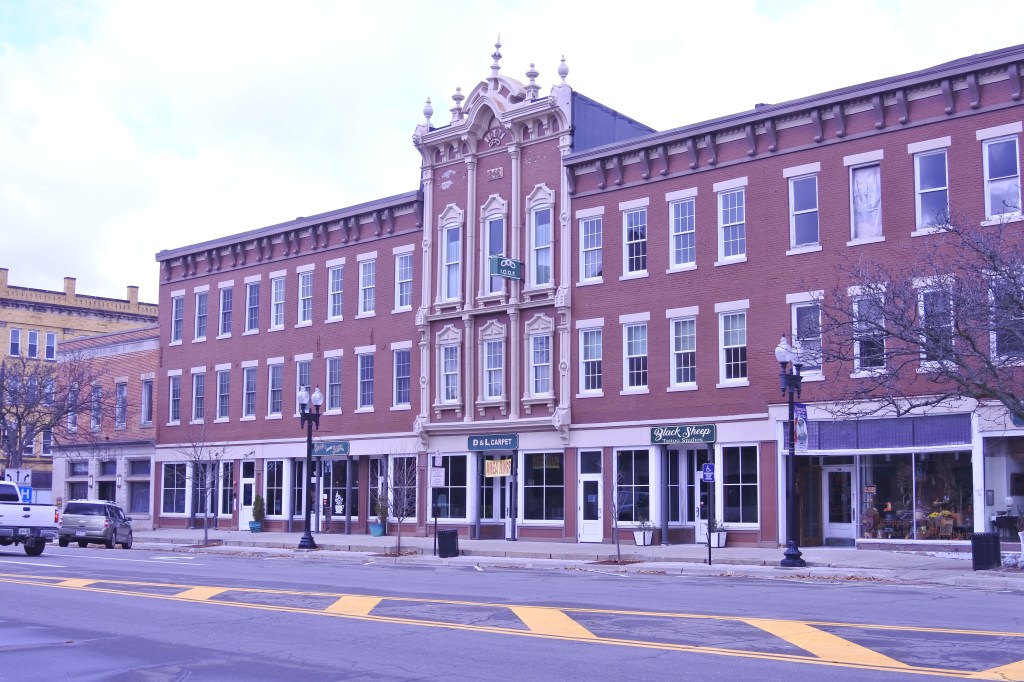
Ravenna was founded in 1799 and is named after Ravenna, Italy. Ravenna grew pretty quickly in the 1800s reaching almost 2K residents by the Civic War. Historically it was know for producing some of the highest quality hearses in the Country, hired to escort Presidents McKinley and Garfield to their final resting place. Rail service arrived in Ravena via the Cleveland and Pittsburgh Railroad in 1851. In 1877, the Quaker Oats Company was established in Ravenna with the familiar Quaker Oats logo patented in in the City. The City reached 4K residents in 1900. Thanks to this decent sized population in the 1800s Ravenna hosts an Italianate styled heavy Commercial District. The City’s population continued to modestly climb in the 1900s reaching 7K in 1920 and 8.5K in 1940. Population peaked at 12K in 1990 and has since slowly declined to 11,300 souls. Ravenna is also well know for its Balloon Festival that occurs around mid- September.

Ravenna is a mixed-bag when it comes to quality urbanism. There is a good compact Downtown core along Main St and a couple blocks off, but the quality of Main Street quickly becomes auto centric outside the Dwtn core. Quality historic residential is also pretty limited and population density is very low. Ravenna does have solid retail and cultural amenities and a decent # of good walkable schools. The City, however, lacks quality public transit, bike amenities, housing diversity (esp. rentals), and is a very homogenous White community. 

Click here to view my Ravenna Album on Flickr

URBAN STRENGTHS:

* Decent grided and connected streets. Better in the core of Dwtn.
* Great economic diversity and decent generational diversity.
* Good # of schools and generally pretty well rated. High Schools is located a bit outside of Town and really isn’t very walkable.
* Some dedicated affordable housing in Ravenna.
* Good tree canopy.
* Lovely historic commercial bldgs. Residential is a bit uninspiring.
* Good urban massing in the Dwtn core but falls a part outside of the core along OH-59.
* Good cultural amenities including solid # and variety of food & beverage bizs, a major cineplex, a local dance and music school, a small conference center, and a couple local museums.
* Solid retail amenities including several supermarkets & drug stores, a couple dollar stores, lots of banks, plenty of boutiques, lots of gift shops, a couple antique stores, a toy store, a local hardware store, plenty of dessert shops, a couple gyms, a local library & post office, several churches, and a local hospital and lots of doctor’s offices sits just north of the Dwtn area. 

URBAN WEAKNESSES:

* Very low density for an urban area.
* So so sidewalk and ADA curb cuts.
* Pretty poor public transit.
* Some bus service to dwtn Akron but pretty  limited. Only a 20 min drive.
* Some nice regional recreational bike paths on the edges of Dwtn but nothing penetrates its.
* Poor racial diversity as this is over 90% White.
* For sale housing is pretty limited to affordable and moderately priced hsg. 2-beds sell btwn 50K-200K, 3 & 4 Beds btwn 85K-300K.
* Rentals are pretty limited but affordable.
* Limited modern infill and what does exist is very auto centric.

Grove City, OH- A Booming Columbus Suburban with an Attractive Historic Dwtn Core

This evaluation only includes the more walkable/historic part of Grove City. My boundaries broadly included Haughlin Rd/Orchard Ln to the East, Ross Ave to the North, Curtis & the Railroad tracks to the west and Kingston/Woodlawn Ave to the south.

By 1853, the newly formed village of Grove City had only 50 residents. The town founders named the village for the remaining groves of trees left standing after their initial clearing.  The City remained small in the 1800s reaching only 650 residents by 1900 and slowly growing in the early 20th century and hitting 1,800 souls in 1940. Like other Columbus satellite suburbs, the town exploded in the post War Era. Grove City officially become a City in 1958 on its path to reaching 14K residents in 1970, 27K in 2000 and 41K in 2020.

Fortunately the historic core, as small as it is has been pretty well preserved with an attractive main street (Broad Ave) with lots of locally owned shops, retailers, and food & beverage businesses. Dwtn Grove City also excels at a high level of safety, quality schools, good for sale housing diversity, quality park amenities, and pretty good ADA and sidewalk infrastructure. For Dwtn Grove City to become a great urban area it needs a lot more population and in-fill development, much better public transit and bike infrastructure, more rental options, better economic and racial diversity, and crucial retail amenities like a full service walkable supermarket.

Click here to view my Grove City album on Flickr

URBAN STRENGTHS:

* Only 15-20 minute drive to Dwtn Columbus.
* Generally good sidewalk and ADA infrastructure but about 25 of roads are missing sidewalks. ADA modern curbs are pretty consistant when there are sidewalks.
* Lots of family households with children here.
* High levels of safety here in line with most exclusive suburbs.
* Several well rated walkable public elementary and middle schools. High school is more on the outskirts of Grove City.
* Pretty good for sale diversity with a handful of 1-beds available selling in the 100Ks and low 200Ks. Plenty of 2-beds that sell btwn 150K-the low 300Ks, 3 and 4  beds sell btwn 200K- 500K.
* Solid parks and recreational in Dwtn Grove City leading with the expansive Windsor Park with all its ball fields. A couple of small/medium sized parks.
* Solid tree canopy.
* Good cultural amenities with a good # of good & beverage biz, a brewery, a couple night clubs and live music venues, a local performing arts theater, and a couple local museums.
* Decent retail amenities including a drug store, lots of boutiques/gift stores,  several locally owned businesses, dwtn public library, a couple antiques and home good stores.
* Solid architecture with quality historic homes and commercial and a decent amount of good urban in-fill.
* Pretty good urban form and streetscaping along Broadway Ave (the main street).

URBAN WEAKNESSES:

* Very low density for an urban area.
* Bike transit is pretty poor, although decent direct connection to Dwtn.
* Dwtn connectivity is so so.
* Some bike lanes in Grove City and the Dwtn area but none go through the heart of Dwtn nor connect it to the rest of Grive City. No dedicated bike stations.
* Poor economic and racial diversity.
* Some rentals Dwtn but more 2-beds than 1 beds. Moderately priced.
* Missing retail amenities include churches, doctor’s offices, post office, a supermarket, a hardware store, and larger retails.

Newport, KY- Wonderful Historic Urban Suburban Across the Ohio River from Cincinnati

For this evaluation I included just the northern half of Newport north of the railroad. While much of the southern half was development before WW II its often blight, disconnected, and the Monmouth St (the commercial district) becomes very auto centric.

Newport was established as a town in the late 18th and incorporated as a City in 1834 with a population of only about 1,000. The first bridge spanning the Ohio River to Cincinnati opened here in the mid 19th century and the John A. Roebling Suspension Bridge (the precursor to the Brooklyn Bridge). By that time Newport’s population was exploding reaching 10K residential in 1860, 20K in 1880 and 28K in 1900. The late 19th century also brought a large influx of German immigration. Population growth significantly slowed by the early 20th century and Newport reached its peak of 31K residents in 1950. The 20th century also brought  waves of “vice” to the City with liquor smuggling in the 1920s, gambling and racketeering in the 30s-1950s and sex clubs in the 60s-80s. In response the City demolished a significant part of the Downtown/waterfront area to create Newport on the Levee, a family friendly new urbanist development with a cineplex and a mall. This opened in 1999 but has lost much of its luster going into the 2020s.

South of the Newport on the Levee is a the Dwtn area, anchored along 4th & 5th Streets that have been ravaged by urban renewal and autocentric development. Fortunately the perpendicular street running up from the south (Monmouth St) is a fairly intact historic biz district with a good array of retail and cultural amenities. The eastern half of Historic Newport is Mansion Hill, filled with tree lined mid-late 19th century residential streets and a mix of grand and more modest homes. The western half is very working class historic stock. Newport also has solid public transit, great housing diversity, decent levels of safety, and solid walkable schools. For Newport to be a great urban district it needs more urban infill Downtown, along York and Monmouth, and other dead spots. There is a funny juxtaposition of great historic urban form and awful senseless post WW II development.

Click here to view my Newport, KY album on Flickr

URBAN STRENGTHS:

* Decent urban density
* Good sidewalk infrastructure. Modern ADA curb cuts are hit or miss. Most curb cuts in the business districts have been updated but less than 50% of residential areas.
* Excellent historic architecture especially in Mansion Hill and the Monmouth Biz district. The western half is more working class.
* Modern in fill is mixed bag. Decent urban infill at Newport on the Levee and Dwtn but a good amount of auto centric crab as well.
* Solid public transit and great access to Dwtn Cincinnati being just across the river.
* Good connectivity.
* Good number of walkable schools but public schools were generally rated poor to fair. Several Catholic schools also mixed in.
* Good diversity of for-sale hsg options with 1-beds selling anywhere btwn 85K-400K, 2-beds btwn 100K-500K with some riverfront condos selling for more. 3 & 4 beds sell btwn 150K-800K with some newer product selling for more.
* Good amount of rentals available and nice mix of new and old. 1-beds lease btwn 800K-1.5K, 2-beds anywhere in the 1Ks, 3-beds 1.5K-2.5K. Good amount of afford. hsg here.
* Generally a safe place but good amount of grit, some vacancy, and medium levels of crime.
* Decent parks including the riverfront levee park, excel public plaza at Newport on the Levee, the expansive Ralph Mussman Recreational Complex, and a handful of smaller pocket parks.
* Excellent cultural amenities including many food & beverage bizs, a major cineplex,  a performing arts center, several live music venues, a couple art galleries, the Aquarium & a couple other local museums, and several historic sites.
* Good retail amenities including a couple grocerias, several drug stores, lots of boutiques, lots of antiques and gift stores, plenty of consignment/clothing stores, the Newport Levee shopping mall (no name brands clothing currently), a couple book stores, many banks, plenty of gyms & dessert stores, local post office & public library, lots of churches. Kroger’s and Target sit just outside urban Newport and other stores in the Newport Pavilion.

URBAN WEAKNESSES:

* Bike  infrastructure including a dedicated bike lane along the levee and a few bike rentals at Newport on the Levee. But much improvement needed.
* Decent economic and generational diversity. Racial diversity is pretty limited.
* Tree canopy was pretty sparse in parts, esp. the more working class western half and dwtn area. Mansion Hill has good tree canopy.
* Some bad urban massing along 4th and 5th Ave but otherwise pretty good.

Reading, OH- Historic Cincinnati Surbub rebranding its Downtown as “The Bridal District”

This evaluation only reviews the walkable pre WW II portion of Reading in the western half of the town.

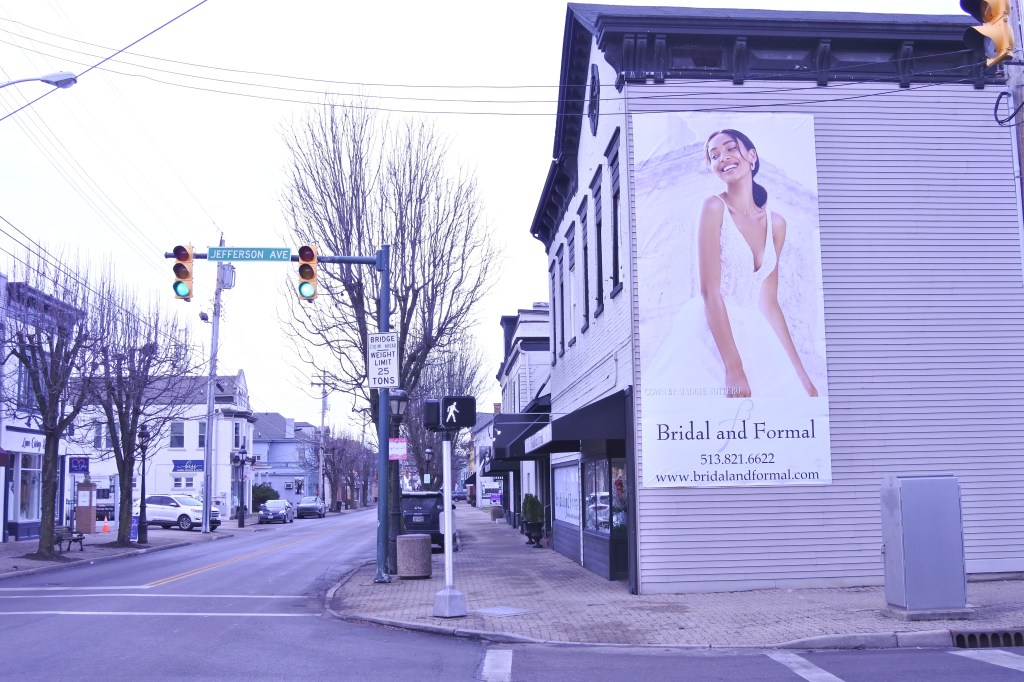
Between 1830 and 1880, Reading grew rapidly to become the largest village in Hamilton County. It was incorporated as a village in 1851 and reached 1K in 1860. The village’s major industry in the mid 19th century was clothing manufacturing. By the turn of the 20th century like other communities in the Mill Creek Valley, Reading’s economy centered around industry suppliers for nearby aerospace and automotive plants. Sadly Reading has some very ugly segregationist history as it was a sundown town, meaning that African Americans were prohibited from living within the city or remaining there after dark. The law led to few Blacks living in Reading until the 60s. On a more positive note, Reading has reinvested itself as The Bridal District along Benson Street bosting the claim of the highest concentration of wedding-related businesses in the United States.

Reading has fair pretty good for an older Cincinnati urban suburb losing only about 4K of its peak population of 14K and keeping much of its historic fabric and commercial district in tact. This is thanks to newer suburban growth in its easter half (not part of this evaluation), solid schools, decent parks, high level of safety, and reinvesting its Dwtn. For reading to become a solid urban district it needs more housing diversity, mixed-use development especially along the run down parts of Reading Rd., much better bike infrastructure, more trees, and some key missing retail amenities.

Click here to view my Reading, OH album on Flickr

URBAN STRENGTHS:

* Solid ADA infrastructure with consistent sidewalks and generally ADA curbs.
* Good economic and generational diversity and there are lots of families with children living here.
* Good ratings for the Reading schools. A elementary  &  middle school are located right in the Dwtn area. Catholic & public schools are in the more suburban eastern half of reading.
* Reading is overall a safe place.
* For sale housing is a mix of affordable and moderately priced housing with ok diversity. 1-bed homes available selling btwn 50K-100K, 2-beds sell btwn 85K-250K, 3 & 4 beds btwn 100K-300K.
* Decent park amenities with several ball fields, cemeteries and pocket parks.
* Good cultural amenities including lots of food & bev businesses, a couple art galleries and local museums, a couple night clubs and live music spots.
* Good retail amenities too including a drug store, a grocerias, a family dollar, an amazing concentration of bridal shops with supporting boutiques & salons, a couple banks & furniture/antique shops, several dessert joints, a couple doctor offices, a public library, and several churches.
* Attractive historic architecture esp. in the commercial district.
* Good urban massing along Benson Ave. Hit or miss along Reading and esp. auto centric south of Benson. Similar story with streetscaping.

URBAN WEAKNESSES:

* Pretty low density for an urban district.
* So so public transit access.
* Bike infrastructure is basically non-existent.
* Rental is pretty limited. Some 1-beds listed at moderate prices.
* Reading could use a full service supermarket, a hardware store, local post office, more creative (non wedding) stores, a book store, etc.
* Modern in-fill is non-existent except for some crummy auto centric bldgs.
* Tree canopy is so so.

Bellevue, PA- Pittsburgh Ohio River town with a Bright Future

The land on which the borough currently sits was once part of the Depreciation Lands reserved for Revolutionary War veterans. Bellevue was incorporated as a borough independent of Ross in 1867 after a dispute with the Township over developing along the Venango Rail line (now route 19). Development came slow at first to Bellevue with only 300 residents around the Civil War, but quickly accelerated in the late 19th century jumping to 3,500 in 1900, 8K in 1920 and peaking around 11,500 in 1950.  Bellevue’s population started to drop in the 1970s along with the rest of the Pittsburgh region and only recently has showed signs of bottoming out with only a small population drop between 2010 and 2020. The Borough now sits just above 8,000 residents, which for Pittsburgh standards is pretty good!

From an urban perspective Bellevue is a fairly compact inner ring suburb with good transit access, a pretty well maintained main street (Lincoln Ave) with a good number of retail still open, good housing diversity, and the typical suburban amenities of good schools and safety. For Bellevue to reached its urban potential it needs more population, a complete urban rehaul of I-65 (an auto centric disaster) better park & bike amenities, some improved sidewalk and ADA curb infrastructure, and key missing retail like gyms, clothing stores, and more higher end retail. But buzz is certainly building for Bellevue as trendy new businesses have recently opened up along Lincoln Avenue and homes starting to sell over 300K. Hopefully this positive trend can continue without significant displacement.

Click here to view my Bellevue Album on Flickr

URBAN STRENGTHS:

* Solid urban density.
* Convenient access to Dwtn. Only 10 min drive and 30 min bus ride. Not great bike connection.
* Solid diversity esp. generational and economic.
* Several walkable schools in Bellevue, generally rated well, and good mix of private and public.
* Good mix of affordable and moderately priced for-sale housing. Very limited 1-beds but lots of 2-beds ranging btwn 100K-300K, 3 & 4 beds sell btwn 85K-350K.
* Decent # of rentals and pretty affordable. 1-beds lease btwn $800-1K, 2-beds btwn 1K-1.5K, 3-beds in the 1Ks. Also a good amount of dedicated affordable housing.
* Thanks to generally leafy streets and lots of hillsides, Bellevue has a solid tree canopy.
* Good cultural amenities including lots of restaurants, bars, a brewery a couple cafes, an art gallery, a couple local theaters & live music venues, a couple historic sites.
* Solid retail amenities including a couple supermarkets & drug stores, a hardware store, a couple of consignment stores, several gift stores/creative shops including a Hallmark, a couple family dollars, lots of salons/barber shops, several dessert joints, a historic library, and several churches, a major hospital, and several doctor’s offices.
* Overall a safe community.
* Most of Lincoln has seen a streetscaping refresh and is good urban form.
* Solid historic architecture both residential and commercial. Some homes date to the early-mid 1800s.
* Buzz in Bellevue is certainly bldg although I won’t consider it trendy yet.

URBAN WEAKNESSES:

* Most streets have sidewalks but about 10% are missing them. Modern ADA curb cuts existing in about 65% of all intersections. Hills in spots make walking more challenging.
* Really no bike infrastructure here.
* Bayne Park is a nice centralized medium size park but only a handful of other smaller parks in the Borough limits. Several larger park sit outside of the Borough but not very walkable to most Bellevue residents.
* Missing retail amenities include a gym, clothing stores, post office, other high end retail.
* Very auto centric road along 65 but at least it has sidewalks in most spots.
* In-fill is limited to most auto centric crud on 65.