Downtown Ft. Lauderdale, FL

This is a very compact dwtn between S Federal Hwy and NW 2nd Ave, and NE 4th St and south to 6th Street below the New River.

Downtown Ft. Lauderdale is a thoroughly modern Downtown as almost all of its historic fabric has been wiped away. From the little I’ve read it appears Downtown was a rough place around WWII, which would explain why civic leaders were so aggressive in their urban renewal effects. In the post war era, Downtown was mainly a 9-5 office district. Safe but very sterile and dead in the evenings. With the renovation of Las Olas in the early 2000s restaurants and other entertainment venues started to pop up Downtown. The district also became a major residential area and current day Downtown Ft. Lauderdale hosts a sizable population.

Other than 2 supermarkets, Dwtn lacks most neighborhood retail amenities. Much of this fortunately exists to the east in the Beverley Heights neighborhood along Las Olas but this is a crucial urban need if Downtown Ft. Lauderdale is to become a quality urban district. Dwtn also needs better bike infrastructure, more walkable schools, a large student presence, more affordable rental options, better cultural amenities and the in-fill of many vacant lots and surface parking lots north of Broward Blvd and south of the New River.

Click here to view my Downtown Ft. Lauderdale album on Flickr

URBAN STRENGTHS:

* Pretty good density of a Dwtn.
* Connectivity is generally pretty good Dwtn. There are some wider streets but none are 1-ways.
* High quality tree canopy.
* Interesting mix of high incomes and those in poverty.
* Good racial diversity and a pretty high % of family households living Dwtn similar to Dwtn Miami.
* Other than a large homeless population, Dwtn is very safe.
* Dwtn has nice parks including riverfront trails on both sides of the river, Stranaham Land Park, and Huizanga Plaza, which also functions as Dwtn’s Civic Plaza although not a spectacular one.
* Cultural amenities Dwtn include plenty of restaurants, some bars & cafes, a couple life music venues, a couple local museums; and plenty of night clubs, a major performing arts complex, an Imax & Science Center but all  in the adjacent Sailboat Bend. Dwtn also hosts the convention Center.
* Buildings can be tacky but generally good urban form. The newer construction is better that stuff built to the 2000s.
* Urban form and streetscaping are good in the core of dwtn. Lots of parking lots and underinvested streetscaping btwn Broward and 4th and south of the river.

URBAN WEAKNESSES:


* Ok system of bike lanes in Ft. Lauderdale and to adjacent suburbs. A small bike sharing system exist in Ft. Lauderdale with only a couple of stations dwtn.
* Public transit is only good Dwtn and in a handful of districts surrounding it. The City as a whole has decent transit access as well as the surrounding suburbs.
* ADA and sidewalk infrastructure is generally good but a good amount of curb cuts don’t have modern ADA curbs and some missing sidewalks in the north and southern edges of Dwtn.
* Almost no remaining historic architecture.
* Walkable schools are limited to a couple quality elementary schools on the eastern border of Dwtn.
* Rental housing is expensive with studios leasing in the low 2Ks, 1-beds btwn mid 2Ks-low4Ks, 2-beds 3Ks-5Ks, and some 3-beds generally leasing in the 5Ks.
* For sale is a bit more reasonable as there are a fair amount of moderately priced 1-bed condos selling btwn 300K-600K, 2-beds btwn 500K-2 M, 3 & 4 beds 600K-3M.
* Only a handful of satellite colleges dwtn. No more than a couple thousands students Dwtn.
* Missing cultural amenities include art galleries and there are not sports arenas Dwtn.
* Difficult to determine but it appears about 30-40K employees work in Dwtn Fr. Lauderdale. I saw a report mentioned 60K but I believe that was the “greater dwtn area”. Office vacancy rate is at about 20%.
* Dwtn retail amenities are limited to 2 Publixs, a couple of drug stores, plenty of banks, a Dwtn Library, a couple gyms and churches. All the retail amenities are east along Las Olas (which is walkable fyi).
Downtown Miami, FL

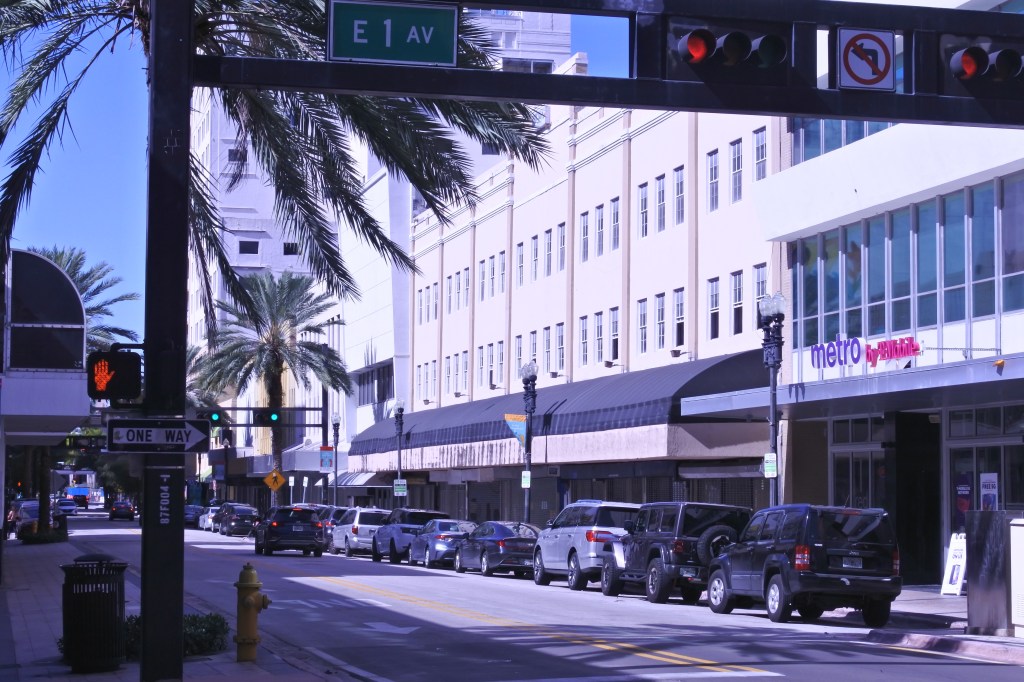
I included within my Downtown Miami evaluation anywhere between SE 15 and NE 15th Roads,1-95/NW 1st Ave to the west and the water to the east. This includes half of the Bricknell District.

Downtown Miami is the historic heart of Miami. Along with Coconut Grove, it is the oldest settled area of Miami, with early pioneer settlements dating to the early 19th century. But development really didn’t get started until the extension of the Flagler railroad in 1896.  Not surprisingly, there are only a handful of antique skyscrapers here and a small area remaining (btwn 1st SE and 2nd St NE) of concentrated historic structures. But Downtown Miami is in a boom cycle becoming the fast-growing area by population in the Miami area. This has particularly occurred in Bricknell, Miami’s densest and most complete urban district. Other housing concentrations are along the bay and in the Town Square sub district. Miami is one of the densest downtowns in America. Downtown also hosts a very high # of families for a Dwtn neighborhood certainly helped by having excellent schools and quality parks.

Downtown Miami is on the cusp of becoming an elite American Downtown. The area where it needs to improve the most is the filling in of vacant lots and surface parking lots north of the Miami River with in-fill. Miami could also improve pedestrian connections across the Miami River, clean up its sketchy spots, plant more trees, and provide more affordable rental housing. 

Click here to view my Downtown Miami Album on Flickr

URBAN STRENGTHS:

* Great downtown density with around 22K per sq mile living here.
* Miami has very good public transit within the City and that service is generally at least decent in the suburbs northwards to Pompano Beach. North of here and south of South Miami is when quality public transit starts to peter off.
Dwtn transit score of 9.7. Miami City score of 8.5. Good transit in most suburbs up to Pompano Beach. So  north of here and so  south of Miami.
* Ok bike lanes within the City of Miami. More dedicated lanes outside of the City. Pretty good dedicated bike station system covering Dwtn + Miami neighborhoods along the bay + Miami beach.
* Great economic diversity and generational diversity. About 25% of all downtown households are households w/ children (very high for dwtns). Good racial diversity too.
* Excellent array of quality schools dwtn and not just private and charter schools but several well rated public schools.
* For Sale are generally expensive but tons of moderately priced product. studios sell anywhere btwn 150K-450K, 1-beds are very diverse in price ranging from 175K-1M and some even more expensive; similar situation with 2-beds with prices ranging anywhere from 200K- 2M ; lots of 3-bed product. Prices generally range from 450K-3M. Even a good number of 4 beds available.
* Given that 1/4 of dwtn residents are in poverty it appears Dwtn has many affordable apts.
* Dwtn anchored by Bayfront, Maurice Ferre, & Margaret Pace Parks. Handful of smaller parks.
* Good cultural amenities including  diverse restaurants, bars, cafes, and art galleries. Plenty of theaters ranging from community to professional, boutique theaters & a cineplex, lots of museums.
* Regional amenities include a Convention Center and the Miami Heat arena are Dwtn.
* Several satellite campus’s dwtn  but not major university presence. Probably 5-6K students dwtn.
* Solid employment #s with 170-200K office jobs. Strong rent demand still and very expensive.
* Retail amenities include 2 supermarkets, drug stores, a Marshalls, the expansive  Brickell City Centre (includes a Sac 5th, lots of clothing stores), Bayside Market (good array of shops but smaller & cheaper), plenty of boutiques, home goods & desserts, many banks & gyms, and a Dwtn library. 

URBAN WEAKNESSES:

* Connectivity is generally good but certainly several wider 1-way streets and poor connections (esp. for non cars) across the Miami River.
* Lots of rentals available but very expensive. Studios lease btwn 2K-4K, 1-beds is the same range but more product leasing in the 3Ks, 3-beds are plentiful but generally lease btwn 4K-10K with plenty even more expensive.
* Only one major league team plays dwtn.
* Some sketchy areas dwtn around Flagler where there is a high homeless population. These areas are esp. dangerous at night. But Bricknell and north of Flagler Avenue are safe areas.
* No stately post office
* Miami’s districts often lack strong distinction thanks to all the modern bldgs.
* Historic architecture is pretty limited but what does remain is nice.
* Urban massing is good in Bricknell but hit or miss north of the Miami River. Lots of open lots and surface parking still. Often a lack of cohesion.
* Tree canopy is so .
* Bricknell has a great buzz but north of the Miami River is hit or miss. 

Downtown Sacramento, CA

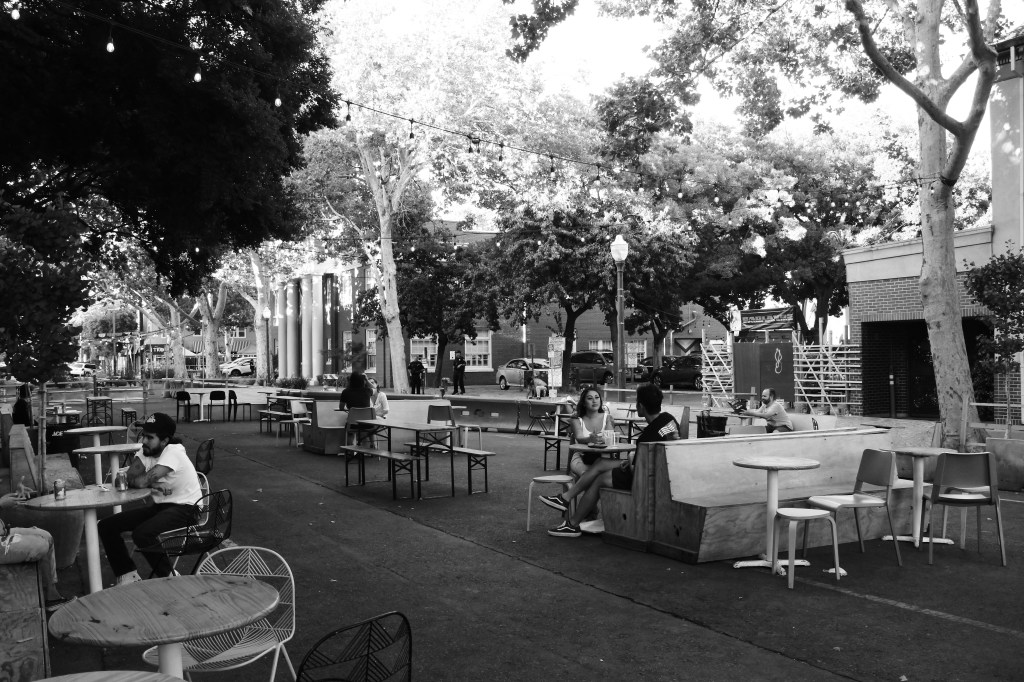
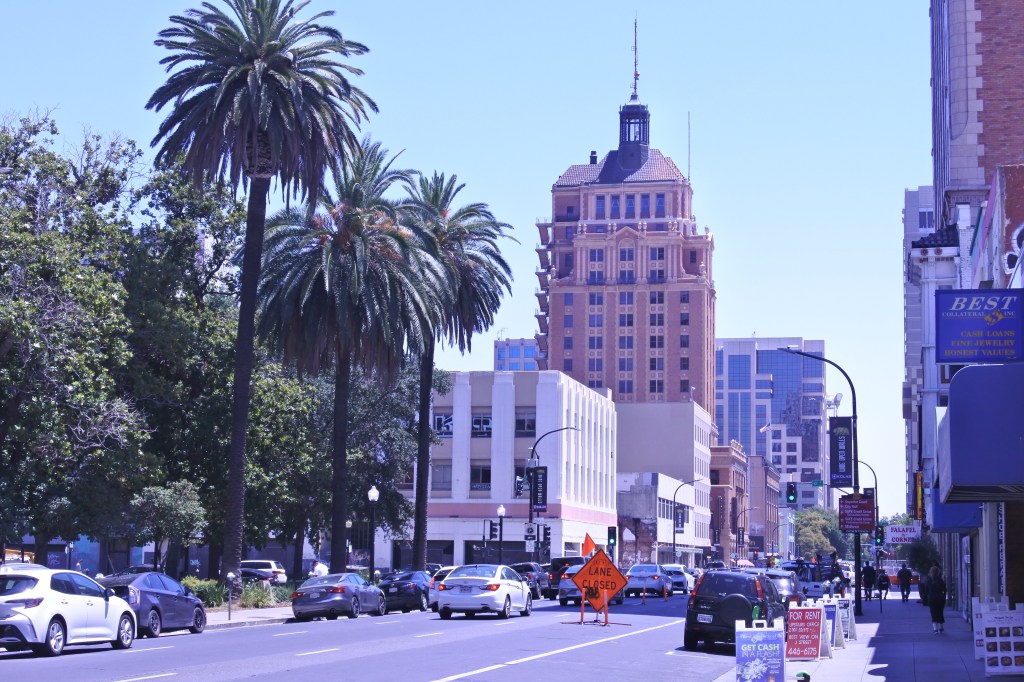
Downtown Sacramento is a pretty dynamic place thanks to a strong residential base, the local Civic Center, the California Capitol Park, a distinct historic district called “the Kay”, an entertainment district building around Golden 1 Arena, and the quaint and vibrant Old Sacramento along the Sacramento River. I also like how Downtown flows pretty seamlessly to surrounding urban districts located in Central Sacramento. Its nice that the inner belt wasn’t built too tight around Downtown.

The future is also bright for Downtown Sacramento as Civic leaders as moving to continue to built up its residential base, and bring more and more entertainment and retail amenities. I also like the fact that Downtown has few surface parking lots thanks to California’s strong real estate market. But there are several key urban elements Dwtn needs before it becomes a premiere US dwtn. This includes walkable K-12 schools, a university presence dwtn, more amenities for children, better affordable housing options, a stronger civic plaza marking the heart of Dwtn, a better skyline, and missing cultural and retail amenities including more theaters & art galleries, a dwtn post office, and a supermarket.

Click here to view my Downtown Sacramento album on Flickr

URBAN STRENGTHS:

* Very good density for a Dwtn district.
* Great ADA and sidewalk infrastructure.
* Pockets of attractive historic architecture (i.e. Old Sacramento and Cathedral Square).
* Decent public transit access within the City especially Central Sacramento. Hit or miss with the suburbs.
* Excellent system of dedicated bike lanes across the whole region. One of the best systems in the country. While there are no dedicated bike stations, Lime provides excellent bike and scooter options throughout most of the City of Sacramento. Not so much in the suburbs.
* Very connective dwtn. Some large 1-way streets but not terrible.
* Great racial and economic diversity residing Dwtn.
* A decent # of affordable hsg units Dwtn. This is certainly reflected by dwtn’s high poverty rate among residents.
* Good number of parks anchored by the State Capitol Park. Several small/medium sized parks spread throughout Dwtn and some nice plazas at Dwtn Commons.
* Solid Dwtn cultural amenities including plenty of restaurants, bars, and cafes, several live music venues, a cineplex, i-max, and historic movie house, a good array of museums, and couple historic homes.
* Regional amenities include a major convention center and an NBA arena and plenty of government office and courts thanks to being the state capitol.
* Dwtn has solid employment # hosting about 90K. Vacant rates also appear low, albeit these are pre-covid #s.
* Solid retail amenities as well including: a couple drug stores, a Macy’s; the DOCO Shopping Mall filled with tons of food & beverage stores, an urban outfitters, and several other retail outfits; tons of boutiques & gift shops in Old Sacramento; plenty of banks and dessert joins, a couple gyms & bookstores, a dwtn library, and several churches.
* Overall very good urban massing and good tree canopy for a dwtn.

URBAN WEAKNESSES:

* Not my family households living dwtn but a fair amount of museums and the NBA to draw them into Dwtn.
* Really no K-12 schools within dwtn although a handful exist on the edges of dwtn.
* Certainly an expensive place to purchase a house but a decent # of moderately priced 1-bed condos selling btwn 300K-600K. 2-beds sell anywhere btwn 400K-1M, and a decent # of 3-beds selling anywhere btwn 500K-800K.
* Rentals are a similar story… studios lease in the 1Ks-mid 2Ks, 1-beds in the 2Ks, 2-beds in the 2k and low 3Ks, and 3-bed rentals are pretty rare.
* Several plazas could function as Dwtn civic plaza, but not clear and well programed heart of Sacramento.
* Skyline has some tall buildings but they are pretty bland and the skyline overall lacks cohesion and interest.
* Largely missing from Dwtn’s cultural & entertainment scene include art galleries, only a couple of theaters,
* Missing retail amenities include a supermarket, major dwtn post office.
* Dwtn is generally safe but large homeless population.
* Only a handful of small satellite colleges dwtn. Any colleges of size are at least a couple miles away.
* In-fill is a mixed bag. High rises are generally pretty bland but pretty good medium sized infill.

Southside Park- the Most Diverse Central Sacramento District

Historically Southside Park was Central City’s natural low spot and was subject to seasonal flooding. As such, development in Sacramento was at first confined to areas north of the R Street levee. But this changed with the construction of the levee at Y Street (now Broadway) opening up development south of R street starting in the late 1800s. The neighborhood welcomed those working in  nearby railyards, canneries, and lumber yards and those whose race (i.e. Portuguese, Japanese, Italians, Slavs, Africans) was not welcomed in more gentile parts of the City until the late 1960s.

This lower income/racially diverse legacy certainly carries over to the present day for Southside Park and Richmond Grove, but now as a strength as surrounding Central City districts are much less diverse and expensive. But like Central City Southside Park & Richmond Grove are solid mixed-use and walkable districts. With a density of only 7K per square mile, Southside Park could certainly use more housing and people. This would help support more retail and cultural amenities and hopefully provide more affordable housing. I’d also like to see more dense mixed-use buildings along the 15th & 16th street corridors. 

Click to view my Southside Park and Richmond Grove Albums on Flickr

URBAN STRENGTHS:

* Overall very good sidewalk and curb cut infrastructure but lots of curb cuts not up to ADA standards.
* Quality historic architecture overall. In-fill is more of a mixed bag. Most of it is good urban form but plenty bland 60s & 70s design and some autocentric in-fill as well.
* Very convenient access to Dwtn, great public transit access, and a very comfortable neighborhood for all transportation moods.
* Excellent racial and economic diversity.
* Several walkable schools within the district are nearby.
* Great tree canopy.
* Southside park anchors the Southside neighborhood and is the largest park in the Central Sacramento. There are several smaller parks on the district’s northern edge.
* Quality cultural amenities including many restaurants & bars, several cafes & art galleries, a handful of live music venues, 1 community theater, a couple local museums and convenient access to Dwtn’s cultural amenities.
* Retail amenities include a Safeway, a pharmacy, several boutiques, a couple banks, several florist and dessert shops, a couple book stores, several gyms and churches and the eclectic Ice House mixed-use space.
* Good urban massing but some autocentric spots along 15th & 16th Streets.

URBAN WEAKNESSES:

* Density is pretty mediocre for an urban district.
* Very few households with kids but still some age diversity.
* Certainly an expensive place to purchase a house but a decent # of moderately priced 1-bed condos selling btwn 300K-600K. 2-beds sell anywhere btwn 400K-1M. 3 & 4 beds btwn 500K-1.1 M.
* Rentals are a similar story… studios lease in the 1Ks, 2-beds in the 1 & 2Ks, 2-beds in the 2 & 3Ks, and 3-beds anywhere from 3K-6K.
* Missing a public library and post office, and no department stores.
* Decent pedestrian activity but certainly less vibrant than other Central Sacramento districts.

Midtown- Sacramento’s Premiere Urban District

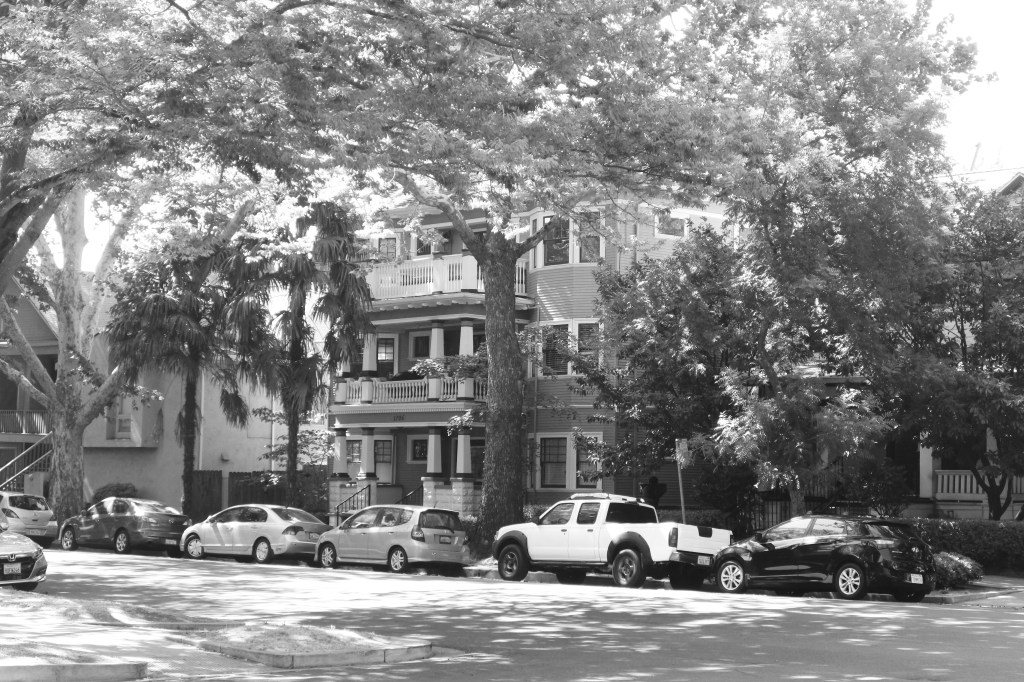
Midtown is another late 19th century central Sacramento neighborhood filled with lots of Victorian architecture. What elevates it above its neighbors is its strong mixed-use and destinational character. This is clearly Sacramento’s premiere urban district,  the center of Sacramento’s art, music, and cultural scene and home to many boutiques, bars, clubs, and dining options. Midtown also hosts the Lavender Heights subdistrict, Sacramento’s gay and lesbian district, located at K Street and 20th Street.

While Midtown is a solid urban neighborhood it still requires certain amenities to become a great urban district. That includes more walkable schools, more affordable housing options. greater density, and more retail amenities. Hopefully zoning restrictions can be relaxed somewhat to allow more housing to be built here. The demand to reside in Midtown is certainly present.

Click here to view my Midtown album on Flickr

URBAN STRENGTHS:

* Sacramento’s densest district with nearly 11K per square mile.
* Great ADA and sidewalks infrastructure.
* Great access to Dwtn and great connectivity.
* Very walkable community and convenient among all modes of transportation.
* Good racial diversity.
* Lots of subsidized units available in Midtown.
* Good vibrancy, prob the most vibrant neighborhood in Sacramento.
* Convenient access to several nice small-medium sized parks and the California State Capitol Park is only a couple blocks west of the district’s boundaries.
* Overall very good tree canopy here.
* Midtown has a very high buzz locally in Sacramento.
* Quality architecture both historic and in-fill.
* Great cultural amenities include many restaurants, bars, & cafes, several art galleries, several live music venues & night clubs, a couple local theaters & smaller museums.
* Great retail amenities as well including a Safeway and Target Grocery store, many smaller grocerias, several drug stores, many boutiques, clothing stores, and consignment shops, a couple book stores & home good stores, several gyms and dessert shops, a major hospital, and several churches.
* Good urban form throughout. Lots of mixed-use streets especially along the western half of the district.

URBAN WEAKNESSES:

* Ok economic diversity and poor generational diversity. Few family households here and mostly students and young professionals.
* Okay walkable access to schools. There is a catholic grad school in the neighborhood and decent access to a couple schools in adjacent districts.
* For sale hsg is expensive. Some moderately price 1 & 2 bed condos available for 400K-600K. Most 2 & 3 -bed condos and homes selling for anywhere btwn 700K-1.3M, 4-bed 800K-1.5 M.
* Rentals are more reasonable with studios leasing in the 1Ks, 1-beds leasing btwn the low 1Ks to high 2Ks, 2-beds in the 2K & 3Ks, and limited 3-bedroom product. Good rental availability overall.
* Missing retail include a public library, post office

Masion & Alkali Flats- One of Sacramento’s Oldest Districts

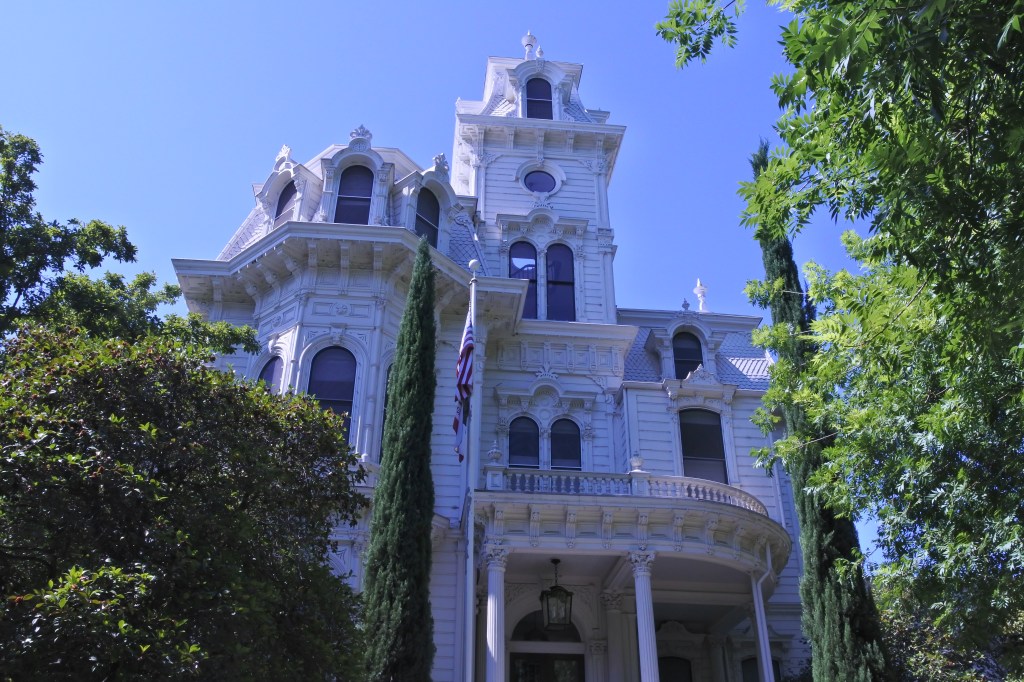
Alkali Flat is Sacramento’s oldest in-tact neighborhood (outside of Old Sacramento) with plenty of structures built between 1853 and 1869. At that time the most prominent of Sacramento’s elite lived here. By the 1920’s, the neighborhood was home to Irish immigrants and a growing number of Mexicans. The district was named after the white powdery substance that once coated the ground, a result of salt ocean tides that overflowed. Mansion Flats got its name from the Historic California Governors Mansion Located at 16th & H Streets.

By the 1950s both Mansion and Alkali Flats fell into disrepair. Alkali Flat and Mansion Flats was rezoned C-4 heavy commercial and many businesses moved in. The County of Sacramento also built many office buildings and  parking lots. Many Latinos moved here after being displaced by redevelopment efforts in the Capitol Corridor. Revitalization started in the 1970s with a strong concentration of historic preservation. Now the neighborhood is one of Sacramento’s best urban districts with good walkability, mixed-use streets along 12, 16th, and J Streets, convenient access to dwtn, great connectivity & public transit access, quality cultural amenities and retail amenities.

Like neighboring Boulevard Park, Mansion Flats needs more density and housing. Not only would this help meet some of the high demand for inner city housing, it could also be leveraged to create desperately needed affordable housing, and elevate the district’s urbanity. The neighborhood also needs more schools, bike lanes, family households and retail amenities. 

Click here to view my album on Flickr

URBAN STRENGTHS:

  • Great connectivity and access to public transit.
  • Great access to Dwtn.
  • Excellent racial and economic diversity.
  • Good access to several small and medium sized parks but not convenient access to any larger parks.
  • Overall a safe community.
  • Quality ADA infrastructure and sidewalks.
  • Good # of attractive structures esp. in the more residential portion of the district away from Dwtn.
  • Modern in-fill is generally good but lots of tacky mid-century styles.
  • Pretty good urban form along 16th St, J St., and 12 St.
  • Good cultural amenities including a decent # of restaurants, bars, & cafes, a handful of art galleries, a couple performing arts theaters, a historic movie house, a handful of live music venues & night clubs, a couple museums, and convenient access to all the cultural amenities dwtn.
  • Retail amenities are decent including a Target & Grocery Store, a handful of consignment stores, several banks, a couple dessert joints, a local post office and walkable access to Macy’s, the DOCO Shopping Mall, and lots of other Dwtn retail amenities.”

URBAN WEAKNESSES:

  • Poor generational diversity largely due to limited households with children.
  • Decent but not great bike lane infrastructure
  • Okay walkable access to schools. A public elementary schools within Mansions and some in adjacent districts.
  • For sale hsg is expensive. Only a handful of moderately priced 2 bed condos selling for around 500K. Limited 1-bed condos available. Most 2 & 3 -bed condos and homes selling for anywhere btwn 500K-1M, 4-bed 800K-1.2 M.
  • Rentals are more reasonable with 1-beds leasing in the 1Ks, 2-beds around 1.5K-2.5, and 3-beds anywhere from 2.5K-5Ks.
  • Density is so with about 8,500 people per sq mile.
  • Missing retail amenities include a drug store, few gyms, no walkable hospitals, “

Boulevard Park- Hosting Sacramento’s Best Historic District

In this evaluation I included everywhere north of J Street to B street and btwn 16th Street and Highway 80.

The neighborhood was born out of the subdivision of Boulevard Park in 1905. This district was originally located on the old state fairgrounds and its racetrack. Fortunately the development of the neighborhood was early enough to produce a quality walkable district and Sacramento’s largest historic district. Most of the modern in-fill of Boulevard Park is quality urban development and the district is blessed with an attractive business district along J St and to a lesser extent along 16th Street. For a better district I’d like to see more density and mixed-use development tactfully inserted into the urban fabric as there is much demand to live here. There are also a limited number of walkable schools resulting in few households with children.

Click here to view my Boulevard Park Album on Flickr

URBAN STRENGTHS:

* Excellent access to dwtn and great connectivity.
* Great array of dedicated bike lanes and there appears to be sharable scooters and bikes in the Dwtn area.
* Overall quality walkable environment.
* Decent racial diversity.
* Nice array of small/medium parks in the evaluation area. Decent access to the expansive Sutter’s Landing but its not terribly walkable from the neighborhoods.
* Very good tree canopy here.
* Some bland bldgs and autocentric infill along 16th St. but generally quality architecture with good urban form; both historic and modern in-fill.
* Overall a very safe community.
* Great ADA infrastructure and sidewalks overall.
* Good cultural amenities including several restaurants, bars, & cafes, several theater venues, several theaters, a good # of live music and night club options, and pretty good access to the museums and sport arenas in Dwtn Sacramento.
* Retail options are good as well including many boutiques, several consignment stores, a couple home good stores, a Target w/ a grocery store, several fancy grocerias, a couple drug stores, a public library, a handful of dessert shops and gyms. Macy’s and large shopping center are only 1.5 miles away.

URBAN WEAKNESSES:

“* Ok economic diversity and poor generational diversity. Few family households here and mostly students and young professionals.

  • Okay walkable access to schools. A couple of public elementary schools within Boulevard Park/New Park and some in adjacent districts.
  • For sale hsg is expensive. Only a handful of moderately priced 1 & 2 bed condos selling for around 500K. Limited 1-bed condos available. Most 2 & 3 -bed condos and homes selling for anywhere btwn 500K-1M, 4=bed 800K-1.5 M.
  • Rentals are more reasonable with 1-beds leasing in the 1Ks, 2-beds around 2K, and 3-beds in the 2Ks. Good abound of 1 & 2 bed product.
  • Only a handful of banks, no post office in the neighborhood”

Downtown South- A Decent Las Vegas District South and East of Downtown

For the Downtown South Boundaries I included everything between Maryland and Eastern Avenues and between Sahara and Charleston Blvd.

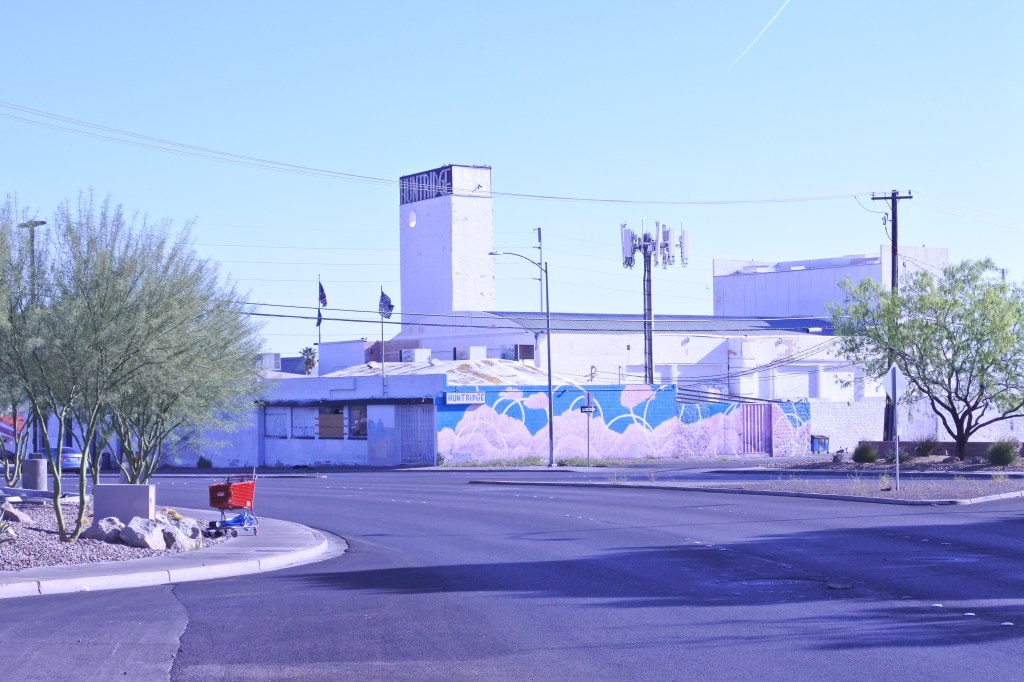
Huntridge makes up the better known mid -century district within Downtown South centered at Maryland Parkway and Charleston where the old vintage Huntridge theater was constructed around 1945. The surrounding residential streets were built up starting in the 1940s and filling in by the 1970s. Downtown South is the extension of that neighborhood eastern wards to Eastern Avenue,

After the Arts Districts and John S Park neighborhoods to the west, Downtown South is considered one of Las Vegas’ best urban neighborhoods. It has generally gridded streets, decent public transit and good access among all modes to Dwtn and the Strip District, decent walkable schools, safety, reasonably priced housing, okay density, and some walkable cultural and retail amenities. But due to its auto centric business districts, a lack of place, limited bike amenities, and tacky commercial in-fill, I don’t quite consider this a quality urban neighborhood. For that to happen Sahara and Charleston Avenues need some walkable cohesion or Maryland Parkway needs to truly become a mixed-use street and center of the neighborhood.

Click here to view my Downtown South Album on Flickr

URBAN STRENGTHS:

* Decent public transit and very good access to Dwtn and the Strip.
* Good diversity across all categories.
* A decent # of walkable schools with decent ratings.
* For sale options are pretty affordability priced. Really no studio or 1-bed options for sale. 2-beds sell anywhere btwn 200K-350K, 3 & 4 beds anywhere btwn 230K-700K.
* Overall a pretty safe community.
* Some interesting mid-century architecture but much of it is pretty bland.
* Decent retail amenities including a supermarket, a couple Mexican markets, several drug store, lots of dollar stores, plenty of banks, a bike store, plenty of thrift and consignment stores, lots of antique stores, several dessert joints, and a major hospital is less than 1 mile south of the neighborhood. These are mostly auto centric oriented.

URBAN WEAKNESSES:

* Decent ADA and sidewalk infrastructure. But plenty of residential streets with limited sidewalks and ADA curbs are often not up to date.
* One east to west bike lane running along St. Louis St. No other bike infrastructure in Downtown South.
* Rentals are very limited. 1-beds that do exist lease btwn 700K-1.5K. 2 & 3 beds lease for anywhere btwn 1.5K-2K.
* Park Amenities are pretty limited but there is Maryland Park in the middle of the Blvd and the larger and multi-faceted Jaycee Park.
* Modern in-fill is generally pretty awful autocentric buildings.
* No much redeeming about the urban form of the biz districts. Some ok mixed-use urban form along Maryland Pkwy.
* Cultural amenities are so . They include a decent # of ethnic restaurants, a handful of bars & cafes, a historic mid-century theater. Downtown cultural amenities are only 1 mile away.
* Limited sense of place as there is not walkable commercial district nor any heart to the community.

The Arts District- Las Vegas’ best urban neighborhood

I consider the Arts district to be between roughly Wyoming and Gass Street and the railroad tracks and Las Vegas Blvd.

This funky district has become a Vegas “counter cultural” enclave known for its distinct “non-Vegas” vibe striving to be an authentic arts and entertainment district where people have a heart, and locals striving for some semblance of authenticity flock. The Arts Districts has been in active development for several decades taking advantage of the decent urban form and walkability along Main St. To their credit the City has made a point of investing in the neighborhood’s public transit, and streetscaping, opened up zoning to allow for dense mixed-use apartments, and allowing murals and art installations to thrive. The district is also know for its watering holes, breweries, cafes, theaters, live music, and tons of antiques and vintage shops. But when compared to urban districts outside of Las Vegas, from an urban perspective, there are still many “urban needs”. That starts with a lack of density and population. There are also plenty of dead space and parking lots screaming for in-fill development, a lack of park amenities and trees, missing retail amenities (i.e. supermarket, post office, and churches). The Arts district could also use several walkable schools as well.

Click here to view my Arts District Album on Flickr

URBAN STRENGTHS:

* Great access to both Dwtn and the Strip and also high quality public transit.
* Good bike infrastructure with several dedicated bike lanes and bike stations.
* Great racial diversity and good economic diversity (although a high poverty rate remains.
* Pretty good array of rental options at moderate rents. 1-beds rent anywhere from 700K-2.5K, 2 & 3 beds options are pretty limited and generally lease for around 3K.
* Generally good sidewalks and ADA curbs.
* Great cultural amenities hear including lots of restaurants, bars, & cafes, lots of breweries, plenty of art galleries, lots of outdoor murals & sculptures, a couple museums, several local theaters, a boutique movie theater, a magic show venue, several night clubs & live music venues.
* Decent retail amenities including a drug store, plenty of boutiques, antiques & thrift stores, home goods & stores, several dessert stores, and a couple gyms.
* Generally a safe district but can get seedy at night and lots of deep spaces/underutilized spaces.
* Some nice branding around the Arts District and esp. a sense of place along Main St. But also plenty of dead and underutilized spaces. Lots of efforts have been made to improve the streetscape along Main St and other parts of the Arts District.
* Overall a very mixed-use district coming retail, warehouses, industrial, cultural amenities, art galleries, and some housing.

URBAN WEAKNESSES:

* Very low Density for am urban district
* Few families with children in the Arts District.
* No schools within the Arts District boundaries, but a couple good walkable options in adjacent districts.
* Limited for sale product. Some condos for sale with 1-beds selling anywhere btwn 250K-500K, 2-beds 350-600K, but really not 3-bed product.
* The only park within the Arts District is the small Healing Parkette. A couple other small parks within walking distance to the neighborhood,
* Tree canopy is pretty limited to the main roads.
* Missing some important retail amenities (i.e. supermarket, banks, a local post office, only a couple churches.
* Not much historic architecture here, although some interesting mid-century architecture.
* More and more quality urban in-fill is being built but still tons of auto centric uses and ugly 1-story warehouses.
* Pretty good urban form along Main Street. Ok orientation along Las Vegas Blvd, Casino Center Blvd & Charles Blvd. Plenty of dead spaces, surface parking lots, and industrial areas however.

Downtown Riverside, CA- the Cultural and Urban Hub of the Inland Emphire

I evaluated Downtown Riverside as a neighborhood because it’s really not a major job center with only about 10K jobs here. Dwtn Riverside is also a large area of about 2 square miles with about 65% of its use as traditional early 20th century residential streets.

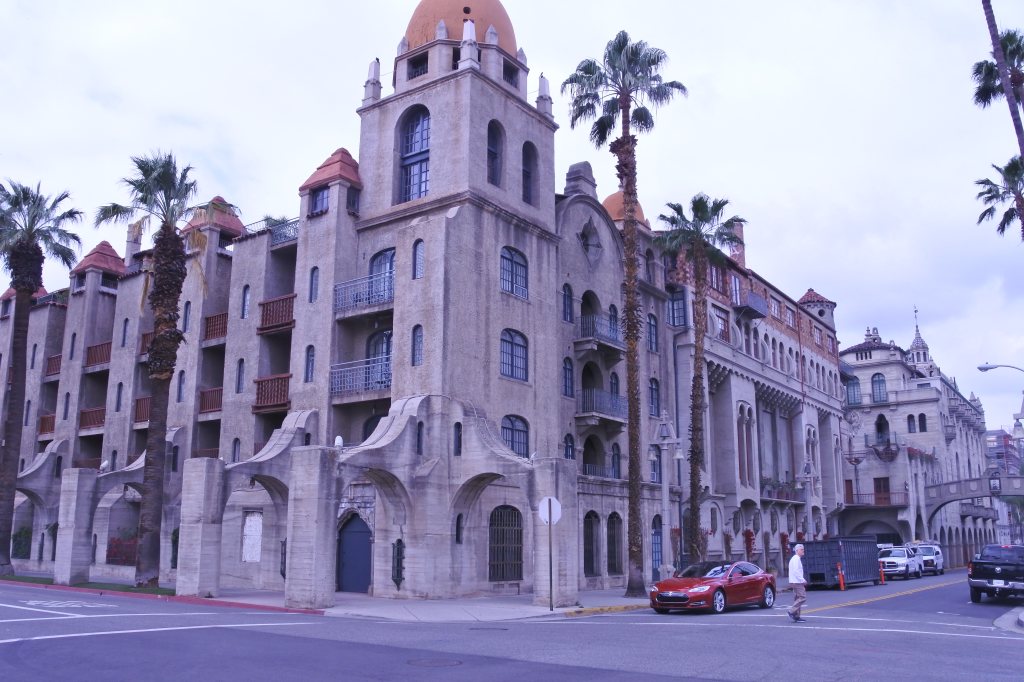
Riverside was founded in the early 1870s and a traditional street grid was quickly laid out setting the foundation for a well connected and walkable neighborhood. Downtown Riverside is also the birthplace of the California citrus industry and home of the Mission Inn, the largest Mission Revival Style building in the United States. It also fills the roll of cultural and urban hub of the Inland Empire; a title that San Bernardino unfortunately cannot claim given how disinvested its become.  Downtown Riverside hosts a great concentration of cultural amenities, decent retail amenities, an interesting pedestrian street along a couple blocks of Main St., good public transit, quality schools, great parks, and attractive historic architecture representing well the main historic styles common in California. What Downtown Riverside primarily needs to become a great urban district is more people. Its density is only 4,500 per square mile. I was shocked at how few apartment bldgs there are dwtn. Outside of the business core, the historic residential areas are primarily single family homes. Additional density would go a long way to attract additional retail amenities and expanding the mixed-use footprint of Downtown.

Click here to view my Downtown Riverside album on Flickr

URBAN STRENGTHS:

* Generally consistant sidewalks and curbs (except for western edge going up to the mountains) but curbs generally not ADA compliant.
* Great location for if you have a job in Dwtn Riverside, but only about 10K jobs there.
* Public transit is generally good Dwtn but some transit deserts in the western and northern sections.
* Several dedicated bike lanes Dwtn, including recreational trails along the river. No dedicated bike stations however.
* Great economic and racial diversity. Some households with children but nice mix of college students and young professionals.
* Several excellent parks Dwtn including the expansive Mt. Rubidoux Park and Fairmount Park on the western edge of the district, the gorgeous White Park located near the center and the pedestrian street/plaza covering several blocks of Main St.
* Decent # of schools dwtn and generally rated pretty well.
* Decent retail amenities including a couple medium sized Mexican grocery stores, several drug stores, a bookstore, plenty of quirky boutiques, antiques, home goods and gift shops, several banks, plenty of dessert stores, a dwtn post office & public library, plenty of churches, and large hospital on Dwtn’s southern border.
* Dwtn Riverside is generally considered safe but some areas are best to avoid at night.
* Overall quality historic architecture both in the Business districts (Esp. with all the Spanish based mission architecture) and in the residential neighborhoods.
* Pedestrian traffic good in the core of dwtn. Pretty sparse in the res. areas.
* Good culturally amenities Dwtn including a plethora of restaurants, bars, & cafes, lots of art galleries, several live music venues & night clubs, a convention center, a couple performing arts theaters, and several museums and historic sites.

URBAN WEAKNESSES:

* Density is rather low.
* Hsg is pretty expensive but similar to other stable inner city neighborhoods. Limited 1-bed product. Surprisingly there are few condos dwtn. What does exist sells around 400-500K, 2-beds sell btwn 300K-650K, 3 & 4 beds 400K-1 M.
* Rentals are surprisingly limited. What is available seems to lease in the 2-3Ks.
* Urban form is a mixed-bag in Dwtn Riverside. Mission  Inn Avenue has the best form, Market Street is a mixed bag, the smaller streets btwn 14th and 5th Streets are more “dwtn” in feel and a mix of surface parking lots, office towners, and areas of decent urban form. Main St in the northern half of dwtn is awful.