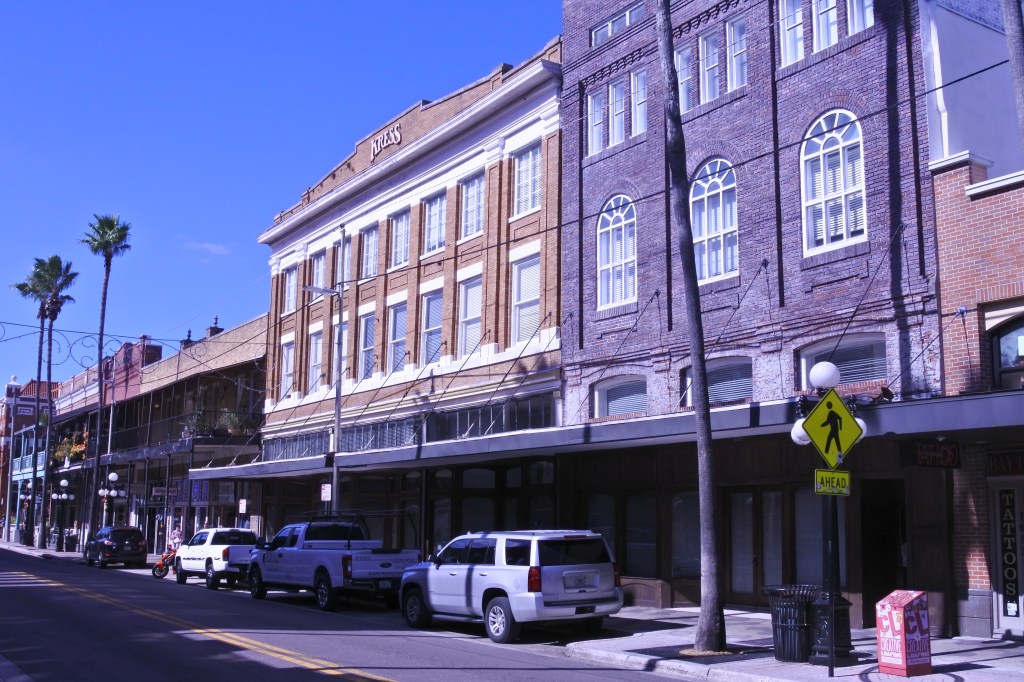
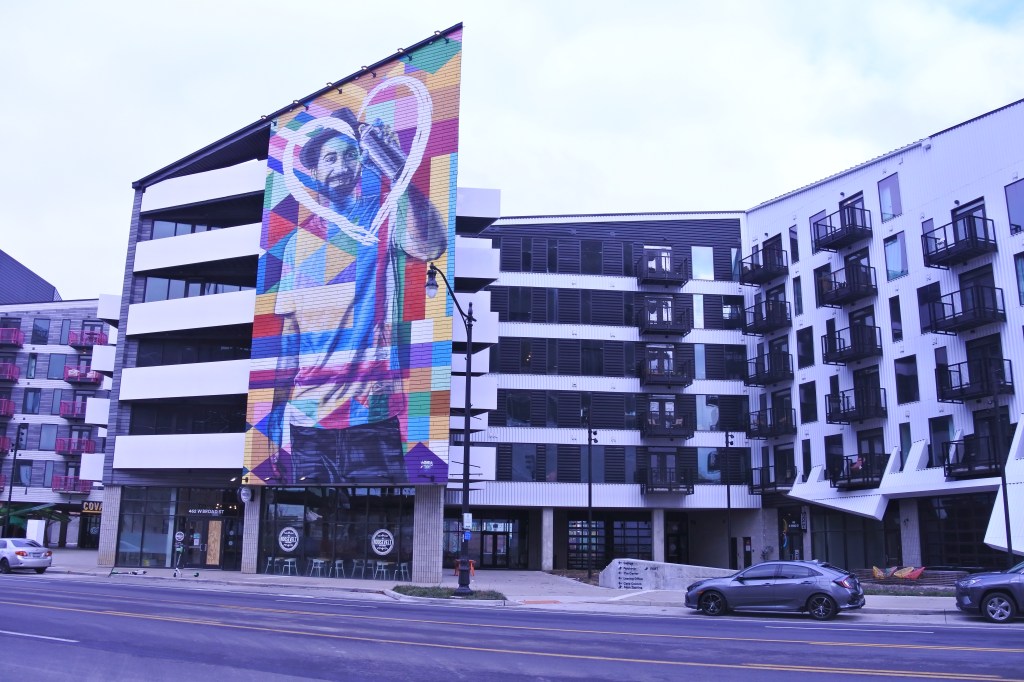
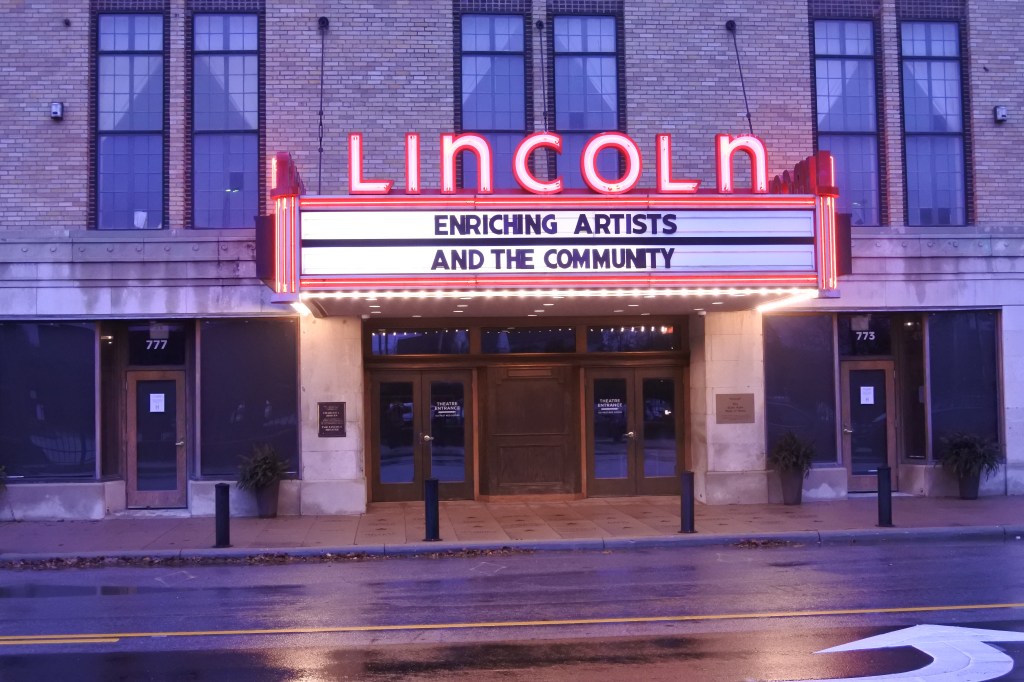
Downtown Saint Petersburg, FL

“Downtown was the first part of Saint Petersburg that began to develop starting in the early 20th century. Shippingopened up with the dragging of the channel nearby and development began to grow exponentially Downtown. As St. Petersburg began as a tourist destination even from its early days, office has never had a major foothold here. Currently there are only about 10-20K office jobs Dwtn. Fortunately Dwtn has grown up to be a center of arts & cultural, a quality food & beverage scene, has many great waterfront parks, plenty of retails, and a good concentration of housing making it an attractive urban neighborhood. City leaders also had the vision to preserve much the City’s historic architecture (unlike Dwtn Tampa Bay) maintaining a wonderful concentration of historic buildings around Central Avenue. The urban form of the infill buildings is also pretty good.

Unfortunately due to a lack of walkable districts in St. Petersburg overall, housing is very expensive here. Other areas for improvement dwtn include more walkable schools, lack of some major dwtn amenities (i.e. convention center & dwtn library), missing transit line to the airport, and a good # of surface parking lots remaining on the western and southern edges of Dwtn. But with an on-going construction boom I anticipate Downtown St. Pete will get better and better and hopefully more office jobs will move here too.”

Click here to view my Downtown St. Petersburg Album on Flickr

URBAN STRENGTHS:

“* Excellent ADA and sidewalk infrastructure.

  • Solid density Dwtn.
  • Public transit is so in the Dwtn and surrounding neighborhoods but decent across St. Peterburg city limits and even decent to the northern suburbs.
  • Great street grid, good connectivity, and not too many wide 1-way streets.
  • Great bike lane system in the region and several dedicated bike lanes with Dwtn. Only Dwtn and a handful of inner city neighborhoods have dedicated bike stations.
  • Safety is generally very safe but some dead spots.
  • Much of Dwtn’s historic fabric remains and looks great. This is concentrated along Central Ave.
  • Modern in-fill is generally pretty good besides some of the design tackiness and auto centric bldgs on the edges of Dwtn.
  • Great tree canopy for a Dwtn.
  • Solid Dwtn vibrancy thanks to Dwtn’s decent population base.
  • Decent # of college students attending school within or near dwtn. USF St. Petersburg is just south of dwtn and enrolls 3,500 students. There is also a Dwtn Campus for St. Petersburg College.
  • Some very nice park spaces, especially along the waterfront. The crown jewel being the 26 acre St. Petersburg Pier, filled with many different recreational amenities.
  • Good cultural amenities including many great restaurants, bars, cafes, several breweries, tons of art galleries, both an independent theater & cineplex, and a handful of theaters (performing arts and live music)
  • Culturally a decent # of museum options (i.e. Fine Arts, History, Dali Museum, Holocaust, Chihuly, and lots of other smaller museums). Other Dwtn attractions include a soccer Stadium and the Devil Rays Stadium is just outside of Dwtn, a historic post office, and a decent # of gov’t bldgs.
  • Good retail amenities with 2 publixs, a couple drug stores, lots of brand name clothing stores, good # of boutiques, plenty of banks, lots of gift shops, a nice bookstore, plenty of dessert shops and gyms, a couple home good stores, plenty of churches, and two major hospitals on the edges.

URBAN WEAKNESSES:

“* Lots of for-sale housing options but generally expensive. 1-bed condo sell anywhere btwn 100-1M, 2-beds mostly 500K-1.5M but some cheaper dated options selling btwn 200K-500K, older 3-beds sell btwn 550K-850K, newer 3 beds sell anywhere btwn 1-3M. Lots of 3 bed options esp. for a dwtn. Only a handful of 4 & 5 beds.

  • Decent # of rentals but also rather pricey. 1-beds lease in the 2Ks, 2-beds rent in the 2Ks & 3Ks, only a handful of 3-beds leasing for a bit more. A handful of affordable senior bldgs.
  • Only a handful of small schools Dwtn. A couple larger ones in surrounding neighborhoods.
  • Some nice skyline angles but generally Dwtn is filled bland residential medium sized towers and limited office towers. Taller bldgs are also spread apart.
  • Urban form generally good but a sizable # of surface parking lots remain in the southern and western edges of Dwtn.
  • Dwtn’s traditional civic plaza, Williams Park is disappointing. Pretty well designed but overrun by homeless and limited events. The St. Pete Pier is taking over as the Civic heart of Dwtn with lots of events and festivals but doesn’t have great central location.
  • No Convention Center Dwtn, no major dwtn library (although there is a local branch).
  • Dwtn is not a great employment hub. Prob the lowest amount of any major city. Total jobs dwtn is somewhere btwn 10-20K. Job are concentrated in more suburban areas like the Gateway St. Petersburg by the airport.”
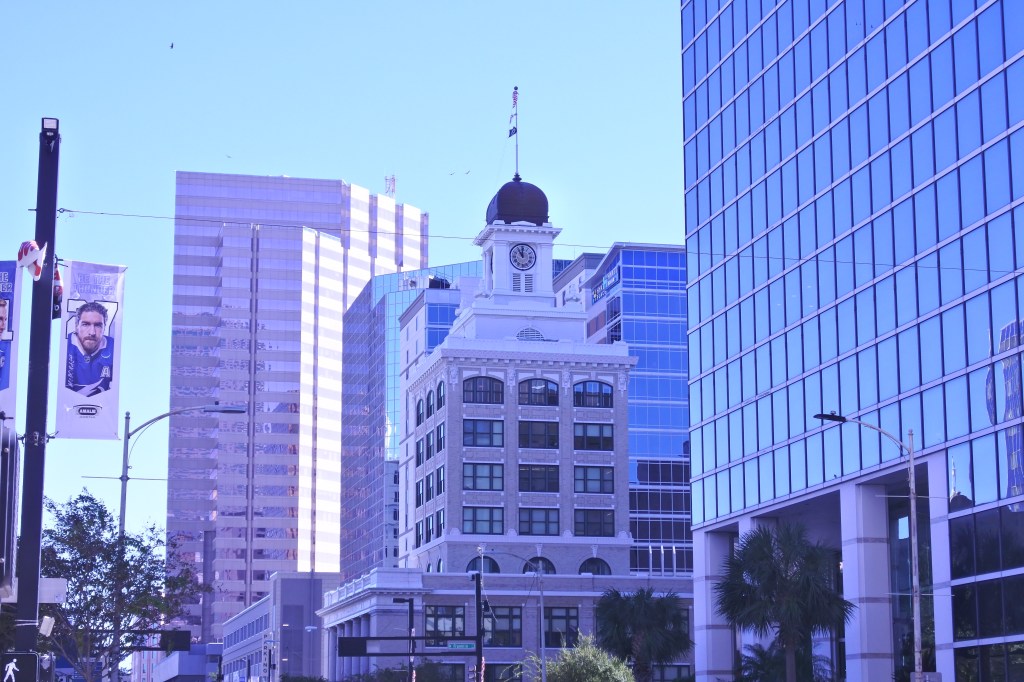
Downtown Tampa Bay

In this Downtown evaluation I included the traditional (Dwtn area north of I-618 ) and the sub districts Water Street and Channel Island between I-618 and the Ybor Chanel.

Given that Tampa Bay reached only 50K by 1920 and 100K by 1930 it’s not surprising that there are only a handful of historic mid-rise buildings. What is surprisingly is how little of Downtown’s pre-WII fabric remains. Post WWII Downtown Tampa Bay went all in with the Office Tower/Autocentric craze. Fortunately since the early 2000s civic leaders have focused on creating better quality park space and decent mixed-use housing and neighborhoods. This first began with a flurry of new construction in the Channel Island subdistrict and the Sparkman Wharf completed in 2018. More recently the Water Street district was revealed and is on course to finish the first phase by 2022. The new district is across 56 acres and includes 3,500 residential units, tons of office space and lots of new retail amenities. Revitalization efforts in the Downtown core have been slow and mainly one-off multi-family and mixed used developments. This has helped but the core of Dwtn still feels sleepy and bland. Lots of development activity occurring just north of Downtown in the South Nebraska neighborhood with the Encore! and GAs Worx Developments.

Once the above mentioned projects are completed, Dwtn Tampa will be a much more vibrant and 24 hour place filling in many of its dead spaces. But there is still much work to do in the core of Dwtn. Other areas of improvement needed for Dwtn include better retail amenities, more walkable schools, a more interesting skyline, direct transit connection to the airport, and need for more jobs. “

Click here to view my Downtown Tampa Album on Flickr. Click here for my Channel District Album. Here for Water Street.

URBAN STRENGTHS:

“* Overall very good ADA infrastructure especially in the traditional core of Dwtn.

  • Great bike lane system in the region and several dedicated bike lanes with Dwtn. Only Dwtn and a handful of inner city neighborhoods have dedicated bike stations.
  • Excellent economic diversity and solid racial diversity Dwtn.
  • Decent amount of affordable housing dwtn, especially along the north edge.
  • Excellent supply of for sale but on the expensive side. 1-bed condos sell between 250K- 550K, 2-beds 350-650K. Good amount of 3-bed supply but very expensive some sell around 600K but most around 1 M.
  • Good array of parks and recreational amenities including Lykes Gaslight Park, Courthouse Square, Fort Brook Park, Julian Riverfront Park, and Curtis Hixon Waterfront park- a solid and active civic plaza. Riverwalk trails outline most of Dwtn.
  • Dwtn has had a special improvement district in place since 94′
    *Much of the modern architecture from the 60s-90s is quite bland but the newer infill concentrated in the Channel Island and Water Street sub-district is pretty high quality.
  • Solid college enrollment Dwtn with just sky of 9K students at the University of Tampa (just across the River from Dwtn), 2K students at USF Health College, a couple other small satellite colleges, and several thousand students attending Hillsborough College & Brewster Technical College a couple miles from Dwtn.
  • Culturally a good # of restaurants, bars, and cafes, a decent # of theaters and a large historic movie house, lots of museums (i.e. Ship Museum, Aquarium, History Center, Art & Children’s Museum, and a couple local museums).
  • Dwtn also hosts a decent central library & post office, plenty of gov’t bldgs, a major convention center, but only the Hockey Area for Pro teams.
  • Retail amenities include 2 publics, several drug stores, tons of banks, some boutiques and creative stores, plenty of salons & barber shops, tons of dessert joints, some churches, and the Tampa General Hospital is nearby

URBAN WEAKNESSES:

“* Ok transit within Tampa Bay City limits. Very good dwtn and in a couple inner city district and fair transit connections throughout. Very limited transit options to surrounding suburbs and no transit access to the airport.

  • Only a handful of elementary schools located within dwtn but several quasi-walkable schools in adjacent districts.
  • Good supply but rental housing on the expensive side. Studios lease in the mid-high $1,000s, 1-beds ~ 2K, 2-beds in the 2 & 3Ks, and some 3-beds leasing btwn 3-5K.
  • Generally a safe dwtn but plenty of dead spots that make it feel unsafe.
  • The Skyline is pretty bland but a good concentration of verticality with 7 bldgs above 400 ft. Only a handful of mid-sized historic towers. The new high-rises in the Water Street sub-district is more interesting and will help with the skyline in the future.
  • Some nice historic arch dwtn but most of it has been torn down. Similar vibe to dwtn Houston here.
  • Vibrancy is not great, especially in the core of Dwtn but some pockets of vibrancy especially in Sparkman Wharf.
  • Culturally dwtn has a limited # of art galleries, live music venues, and some night clubs.
  • 70K jobs in dwtn Tampa (decent but not amazing for its metro’s size) Dwtn St. Pete prob reduces this jobs #. Office vacancy around 12%. Not bad.
  • No department stores.
  • Lots of dead spots and surface parking lots especially in the traditional core of Dwtn. With the massive Water Street development the urban fabric of the southern end of Dwtn will greatly improve. Even when there are bldgs with decent form, there is a lack of activity in many bldgs due to the office tower dominance. “

The Edge District- A great main street district just west of Downtown St. Petersburg

 I included everything west of MLK Blvd  and within the inner belt for this evaluation. The Edge district is concentrated around Central Avenue, Tampa Bay’s premiere main street that runs to Downtown and further west from the Edge District. The corridor has a great concentration of food & beverage businesses, boutiques and creative stores, murals, and a collection of mid-century modern furniture. The Edge district is also walkable to many parts of Dwtn and has quality bike and transit connections.

Central Avenue is a bit of an urban island however. Urban form in the rest of the neighborhood used in this evaluation are not great. South of Central is the MLB stadium where the Tampa Devil Rays play. The stadium is surrounding by a sea of parking. North of Central is a mix of historic residential and industrial blight. Some new apartment bldgs are starting to sprout up in the  neighborhood giving me hope that the areas north of Central Avenue will fill in and create a more seamless urban district.

Because of  a lack of housing in the district and quality urban neighborhoods in general in St. Petersburg, housing is quite expensive in the Edge District. Dedicated park space is also very limited, although residents have walkable access to several nice parks in adjacent neighborhoods. 

Click here to view my Edge District Album on Flickr

URBAN STRENGTHS:

* Great access to dwtn and decent transit access.
* Several bike lanes run thru the district along with good bike station coverage.
* Very diverse incomes but really just those who are professionals and those under the poverty line.
* Great racial diversity.
* Some affordable rentals in the Edge District Area
* Solid cultural amenities including many restaurants, bars, and cafes, a local magic theater, a couple live music venues, a MLB stadium, and good access to all the cultural amenities dwtn.
* Good retail amenities with a Public’s Supermarket, a drug store, lots of boutiques, home goods stores, several antique stores, lots of dessert shops, and a couple of gyms. 

URBAN WEAKNESSES:

* Density is pretty low.
* Good ADA infrastructure along Central Ave, 1st Ave, and Pinellas Trail but hit or miss outside of this.
* Poor generational diversity as few families live here.
* Really no schools within the Edge district but a couple okay schools located in adjacent districts.
* For sale hsg is generally pretty expensive but some affordable 1-bed condos selling btwn 150K-400K, 2-beds btwn 250K-550K, 3-beds btwn 300K-600K,
* Rentals are also pricy with studios leasing in the high 1Ks, 1-beds in the low-mid 2Ks, 2 beds in the high 2KS and 3Ks, and 3-beds are limited but expensive.
* Dedicated park spaces is very limited within the Edge District boundaries but still walkable access to walks in adjacent neighborhoods (Mirror Lake and Campbell Park
* General a safe neighborhood but lots of dead spaces and some blight.
* Great vibrancy along Central Avenue but pretty dead outside of here.
* No public library or post office, but located in nearby Dwtn. Also limited banks.
* Good urban form and Streetscaping along Central Ave and decent along 1st Ave and Pinellas Trail but pretty terrible outside of these streets. Lots of surface parking around Tropicana Stadium and lots of vacant lots and auto centric areas in the neighborhood.

Ybor City- the reason behind Tampa Bay’s historic Cigar City nickname

Ybor City was founded in the 1880s by Vicente Martinez-Ybor and other cigar manufacturers. They helped propel Tampa Bay from a struggling village to a bustling city in about 20 years and giving it the nickname “Cigar City”. Ybor City was populated by thousands of immigrant workers, mainly from Cuba, Spain, and Italy. For the next 50 years, workers in Ybor City’s cigar factories rolled hundreds of millions of cigars annually. Ybor City grew and flourished from the 1890s until the Great Depression, when a drop in demand and mechanization greatly reduced employment opportunities. This process accelerated after World War II, and a steady exodus of residents and businesses continued until large areas of this formerly vibrant neighborhood were virtually abandoned by the late 1970s.

Fortunately the neighborhood did not sit vacant too long as artist began moving into the old cigar factories in the 80s. By the 90s and early 2000s renovations efforts were well underway and Ybor City became a major cultural and late night destination for Tampa Bay. New offices and residences have also has been built in the last 15 years diversifying the neighborhood and starting to fill in the many holes left by its de-industrialization. At its Height, Ybor City reached at least 10K. It bottomed out with around 1,000 residents and now has just over 2,000.

There is certainly much room for in-fill and new residents and businesses as much of the neighborhood (outside the 7th and 8th Avenue) core is vacant or underutilized land.  Given that 1-bedroom rentals lease in the high $1,000s, there is certainly demand for more housing here. The neighborhood also needs better sidewalks and ADA infrastructure, more park and recreational space, better tree canopy, and better basic neighborhood retail amenities like a supermarket and drug store. In addition to a thriving cultural scene Ybor City excels at great access to dwtn, good public transit service, excellent racial and economic diversity, vibrancy, and gorgeous historic architecture. 

Click here to view my Ybor City album on Flickr

URBAN STRENGTHS:

* Great access to downtown and excellent public transit access.
* Good bike infrastructure access with a couple bike lanes and several dedicated bike share stations.
* Excellent racial and economic diversity.
* Decent for sale options. 1-bed condos sell 200ks & 300ks, 2-beds anywhere btwn 200Ks-500Ks, 3 & 4s beds are similar but some SF options selling in the 500KS & 600Ks.
* Excellent historic and modern architecture along the 7th & 8th Street core. Hit or miss outside the core.
* Great massing and streetscape along 7th & 8th but a mixed-bag outside this area. Some pretty autocentric and industrial areas on the edges.
* Good pedestrian activity especially in the touristy core of the district, pretty dead outside this area.
* Excellent cultural activities including many restaurants, bars and cafes, art galleries, lots of music venues, theaters, and night clubs, several breweries, a cineplex, and plenty of local museums.
* Good but not great retail amenities including : a Public Library and Post Office, lots of boutiques and vintage stores, cigars shops, some antique shops, several desserts spots, banks, and a couple of gyms. Also a good array of churches.

URBAN WEAKNESSES:

* Very poor Density.
* ADA compliant curbs are infrequent at intersection although curbs and sidewalks are certainly the norm.
* Poor generational diversity with only about 15%-20% family households.
* Several walkable grade schools but of mixed-ratings.
* Rental housing is rather expensive and limited. 1-beds lease in the mid-high $1,000s, 2 & 3 beds generally in the 2Ks. Not much dedicated affordable hsg here.
* Ybor City has a perceptions and history of crime but relatively safe in the present day. Some crime related to its night life activities and sketchy areas off the main 7th & 8th St. drags.
* Nice central park (Centennial Park) and Centro Ybor plaza but not much else with parks and recreational amenities.
* Tree canopy is pretty limited.
* Some missing retail amenities include no supermarket, drug store, 

Hyde Park- Tampa Bay’s best urban district

The Hyde Park neighborhood was established in the 1880s when railroad financier Henry B. Plant built the first bridge across the Hillsborough River at what is now Kennedy Boulevard. Growth occurred rapidly and a street car line was put in on Swann Ave and Rome Avenues.  The heart of the Hyde Park Neighborhood (aka Hyde Park Village) grew at the intersection of Swann and South Dakota Ave. Hyde Park Village is now a well defined  business node with many restaurants, bars, cafes and high-end boutiques. The rest of Hyde Park’s business districts are really a mix of urban and auto centric streets. Howard Ave has some decent urban stretches but Kennedy Blvd is overwhelmingly autocentric with the exception of the node adjacent to Tampa University.

The rest of Hyde Park is filled with attractive housing with a good mix of  historic homes from the 1910s-1940 and generally thoughtful infill residential. But housing is very expensive and there is not enough rental housing here. Other Hyde Park urban strengths include close proximity to dwtn, decent public transit, safety, quality schools, very good retail and cultural amenities, and a thick tree canopy. Hyde Park could be a great urban community if it filled it its autocentric blocks with dense mixed-use housing and added better park spaces and amenities.

Click here to view my Hyde Park Album on Flickr

URBAN STRENGTHS:

* Great access to Dwtn being literally on its western border. Decent public transit but a bit sub-par for an inner city neighborhood.
* Great bike infrastructure especially with the many dedicated bike paths.
* Solid racial diversity
* Not walkable high schools but very good array of well rated public and private elementary and middle schools.
* Very safe community.
* Great tree canopy.
* As one of the few quality urban districts in Tampa Bay, there is great buzz here.
* When the infill is not auto centric it is pretty high quality.
* Great array of historic homes from the 1910s-1940s.
* Culturally a great array of restaurants, bars, and cafes, several performing arts and community theaters, several art galleries, an upscale movie theater, and a couple museums in adjacent Tampa University and many cultural assets in nearby Dwtn.
* Good retail assets as well including 3 supermarkets, several drug stores, great concentration of boutiques & home good stores around Swann and Hyde Park Village, plenty of dessert stores and gyms, and Tampa General is just across the channel. Lots of retail stores are autocentric however.

URBAN WEAKNESSES:

* 50-50 with ADA Compliance curb cuts. Sidewalks are consistant however.
* So  economic and generational diversity.
*For Sale housing is pretty expensive but a good amount of condos selling btwn 200K-450K. 2-beds sell anywhere from 250K-1 M depending on size and conditions. 3-beds sell anywhere btwn 400K-1.5 M. 4 & 5 Beds sell btwn 700K and 3 M.
* Rentals are also expensive and a bit limited. Studios lease around 2K, 1 beds in the 2,000s, 2-beds 2-4K, 3 beds in the 4,000s.
* Does not appear to be much affordable rentals here.
* Parks a bit limited but include a nice bayfront trail, a small waterfront park, a small pocket park, and some ballfields.
* Real mixed back with urban biz districts. When the urban form is good the streetscaping is also very good.
* No post office or public library.

Avalon, PA- A quaint Pittsburgh inner-ring suburb along the Ohio River

Avalon was incorporated as a distinct municipality in 1875 starting out as a small community of a couple hundred families. The City  was named after the legendary island of Avalon (“land of apples”) on account of there being several orchards in the area. By 1900 the borough reached 2,000 people and with the help of a streetcar and train line it reached 6,000 by 1940. Population maxed out at 7,000 souls in 1970 and Avalon has been losing people ever since and is down to 4,500 currently. Yet Avalon still feels very in tact and has been a recent destination of single family home renovations and strengthening real estate market.

Avalon also has decent main street buildings that with more investment in the community could lead to many more locally owned businesses and vibrancy. Other urban assets include: a good mix of affordable and moderately price rentals and for sale options thanks to the community’s flexible zoning laws, good tree canopy, solid parks, safety, excellent economic diversity, and decent historic architecture.

Urban areas where Avalon could improve include much more bike infrastructure, more retail and especially cultural amenities, and better urban massing along the state route 65, a very autocentric boulevard.

Click here to view my Avalon, PA album on Flickr

URBAN STRENGTHS:

* Sidewalks are on 95% of the streets but ADA current ramps are more often absent.
* Overall a pretty safe community.
* Excellent economic diversity and very good generational diversity.
* Good access to downtown with both good driving and bus access.
* Decent rental options and affordable. 1-beds lease for $700-1K, 2-beds around $1,000s  and 3-beds in the low $1,000s.
* Good for sale diversity as well with a good # of 1 bed condos selling btwn 50K-125K, 2 beds btwn 75K and high 100Ks, 3-beds a bit more expensive extending into the low 200Ks, and 4 & 5 beds into the high 200Ks and low 300Ks.
* Great tree canopy especially in the hillside areas.
* Solid park amenities around Spruce Run.
* Pretty good historic architecture.

URBAN WEAKNESSES:

* No bike lanes infrastructure.
* Cultural amenities are pretty limited to several restaurants & bars, and some chain coffee stores, a small local theater.
* Retail amenities are a bit better including several clothing stores, a bank, a drug store, florist, a couple barbershops & salons,  several auto centric businesses on 65 and walkable access to a supermarket (and many other amenities) that’s located in adjacent Bellevue.
* Decent but not great schools access with one well rated elementary schools and the schools in Bellevue (some school district) are somewhat walkable.
* Some very crummy modern in-fill along 65 but some good modern apartments/condos.
* Urban massing is a mixed bag. Pretty awful along 65 as its a auto centric blvd but very good massing along Lincoln Ave.

Emsworth, PA- a sleepy Pittsburgh historic suburb along the Ohio River

This small borough along the Ohio River in Allegheny County  Population arose in the 1870s and grew to 1,000 residents by 1900 taking advantage of its proximity to factory jobs along the Ohio and convenient rail service to Dwtn Pittsburgh. Emsworth’s population peaked in 1970 with just over 3,000 residents but has shrunk by about 1,000 souls. 

Emsworth’s attraction lies in its convenience to Dwtn; only a 15 minute drive and around a 30 minute bus ride to during commuting hours. It also has a stable set of single family homes in a quite and safe neighborhood setting. This has led to rising homes prices and it is now difficult to purchase a nice home here for less than 200K. But from an urban perspective there are lots of deficiencies mainly due to the Borough’s lack of retail and cultural amenities. Density is also low and ADA and bike infrastructure are lacking. My hope is that Emsworth and its neighboring inner ring suburbs urbanize and densify around improved public transit connections. There are plans by the Port Authority to re-open dedicated rail to the north Ohio river suburbs.

Click here to view my Emsworth Album on Flickr

URBAN STRENGTHS:

* Density access is so  but only a 15 minute drive to Dwtn and 20 minutes if you time the bus right. Oakland about 40 minutes by bus.
* Solid economic and generational diversity.
* Some nice historic homes but nothing spectacular.
* Solid tree canopy.
* For sale homes are moderately priced but stable. Product sells anywhere btwn high 100Ks to the low 300Ks.
* Emsworth Community Park is a solid and expansive park really nothing else.

URBAN WEAKNESSES:

* Urban density is rather poor.
* No dedicated bike lanes.
* ADA infrastructure and sidewalks are pretty hit or miss. Generally sidewalks but more often than not ADA infrastructure is not up to date.
* Limited racial diversity.
* Limited modern in-fill and most of it is auto centric.
* Some mixed-use development on Centre, which has decent urban, massing but most of the commercial is along state route 65 which is auto centric. It has sidewalks but they are located right next to fast moving traffic.
* The only school in the City is a small but quality Catholic High School. At least its walkable.
* Rentals are also moderately priced but very limited.
* Cultural amenities limited to a handful of restaurants, bars, a brewery, and a art gallery.
* Retail amenities limited to a handful of salons, a barber shop, a chiropractor, several churches, and some auto centric retail uses.

East Franklinton- Columbus’s oldest Neighborhood and Now Home to a Burgeoning Art Scene and Major Redevelopment Efforts

Settled in 1797, Franklinton is the first American settlement in Franklin County, and was the county seat until 1824. As the city of Columbus grew to the east, Franklinton was annexed and incorporated by Columbus in 1859. Franklinton still hosts some of the City’s oldest surviving building, but unfortunately due to serious disinvestment, much of this has been lost. The eastern portion of Franklinton is sometimes referred to as “The Bottoms”  because much of the land flooded historically. But this threat has been eliminated thanks to the construction of a floodwall in 2004. Franklinton industrialized during the second half of the 19th century as four railroads were built here. This also led to a significant influx of families from SW Ohio and West Virginia   The fabric of the neighborhood was well maintained until the 1960s with the construction of the innerbelt. This resulted in significant lowering of property values and ultimately blight and disinvestment. Thanks to the construction of the damn and significant political will, there are major redevelopment plans in the works for East Franklinton. The neighborhood has already seen some renovations, large infill projects, new breweries & restaurants, and a bourgeoning arts scene. This will be well augmented by the Scioto Peninsula project projected to bring 1800 new residences, a couple hotels, 2M Sq. Ft. of office and 200K sq ft of new restaurant and retail space to the community. The Scioto Peninsula is the portion of the neighborhood sticking out into the Scioto River where Cosi and the Natural History Museum are currently located directly across from Dwtn.

East Franklinton also excels at hosting wondering recreational amenities, several museums, and some of the best examples of cutting edge in-fill architecture in Columbus. From an urban deficiency standpoint, East Franklinton has limited retail amenities, limited housing options, a lack of tree canopy, low density, and many dead spaces. These issues however will hopefully be resolved soon as the neighborhood continues to fill in. Many current residents and housing advocates are rightfully concerned with potential gentrification and displacement, which hopefully will motivate City leaders to aggressively develop new affordable housing.

Click here to view my East Franklinton Album on my Flickr Page.

URBAN STRENGTHS:

* Excellent access to Dwtn sitting literally across the Scioto River front it. Also solid public transit as well.
* Several dedicated bike lanes including the Scioto River trail that wraps around the district and a couple road based lanes. Also several bike rental stations in the neighborhood. Scotter rentals are also very plentiful in the neighborhood.
* More and more rentals coming to the neighborhood as it is under a construction boom. 1-bedrooms generally lease in the low-mid $1,000s. 2-beds in the mid $1,000s.
* Some very nice Park and Recreational amenities with the Dodge Park Community Center & Pool, the Lower Scioto Recreation Trail, wrapping around 2/3rds of the neighborhood, West Bank Park, and Genoa Park.
* Culturally the neighborhood excels at Breweries, bars, and art galleries. Also a good number of restaurants & cafes. Franklinton also hosts COSI, the Natural History Museum, and Veterans Memorial & Museum. The neighborhood also has good access to the cultural amenities Dwtn.
* Some really wonderful historic buildings but not much of it left in the neighborhood. Franklinton is becoming a skinning example of cutting edge in-fill architecture for the City.
* Lots of recent buzz about the district helping to counter act decades of negative perception.

URBAN WEAKNESSES:

* Sidewalks are generally in place but sometimes missing due to the blighted and industrial legacy of Franklinton. About 50% of intersections have current ADA ramps.
* Only a handful of schools within East Franklinton but of mixed ratings. Several in the wider Franklinton community also with mixing rating but covering K-12 well.
* For sale housing is pretty limited but generally moderately priced. Really not 1-bedroom product. 2-beds btwn mid 100Ks to 300K. New or renovated 3 & 4 beds seem to be selling in the 300Ks & 400Ks but not a lot of comps to go on.
* Retail amenities are still very limited. There are a couple boutiques, a florist, a salon, a couple churches, and convenient access to a major hospital.
* Safety in East Franklinton is more perceived than real. Most crime seems to occur west of I-315 but East Franklinton still hosts a lot of blight and vacancy.
* Lots of missing teeth leading to bad urban form. This will improve, however, as the neighborhood fills in. New develop has been quality urban form and good streetscaping.
* Tree canopy is so .
* Density is very low but this will improve quickly and tons of development is planned for East Franklinton.

King Lincoln- Columbus’s Historic African American Neighborhood

Originally known as Bronzeville by its residents, this neighborhood was rebranded as King-Lincoln during Mayor Michael B. Coleman’s administration to highlight its historical significant to the African-American community in Columbus.

The origins of King-Lincoln date back to the 19th century when freed and escaped slaves from across the Confederate South began to settle in Columbus. The neighborhood’s Black population especially grew during the Great Migration after WWI due to its existing Black population and convenient location near jobs. Restrictive housing covenants in other areas and White flight, solidified Bonneville’s claim as the most populated African American neighborhood in Columbus and by the 30s it was a vibrant self-sustaining Black community. It also became a hub of Black cultural hosting four theaters and multiple jazz clubs. The district would later be the  site for much of Columbus’ civil rights activism. Like most African American neighborhoods in America, Brownsville started to decline in the 60s thanks to the construction of I-71, and the migration of middle class Black families to the suburbs. This gutted King-Lincoln of most of its businesses and helped create a concentrated area of blight, crime and poverty.

Thankfully King-Lincoln is on the rise again thanks to the success of neighboring Olde Town East but also to the tireless promotion of its community groups and lots of gorgeous historic homes that are being renovated. While there is a significant amount of permanent rental housing, efforts should be made to ensure long time residents can move to homeownership and take advantage of the rise in housing prices and investment. There are also signs of Long Street being rebuilt with some new food & beverage businesses and some mixed-use infill. But much work is still needed as there remains lots of blight and vacancy in King Lincoln. The northern business district, Mt. Vernon has seen very little reinvestment.

Click here to view my King-Lincoln Album on my Flickr Page

URBAN STRENGTHS:

* Solid transit access and excellent convenience to Dwtn being literally on its eastern border.
* Good urban connectivity.
* Excellent economic diversity decent racial and generational diversity.
 * A good # of walkable schools within the neighborhood but most average or under performing.
* Good diversity in housing. 1-beds condos or rowhouses sell in the high 100Ks or low 200Ks, 2 beds btwn 100K-300K depending on size, condition, and stability of the block, 3-beds btwn mid 100Ks-400K, 4 & 5 beds are similar but with larger and newer homes selling btwn 400K-700K.
* Market rate rentals are a bit limited but moderately priced. 1-beds lease around 1,000, 2-beds in the 1,000s, and 3-beds in the mid $1,5000s to low 2Ks.
* Medium rent in King Lincoln is only $350 an indication that there remaining a lot of dedicated affordable rentals here.
* Some excellent residential architecture on the more stable streets. Also some good recent in-fill although plenty of crummy auto centric in-fill as well.
* Solid number of parks and recreational amenities within or near King Lincoln including Mayme Park, Beatty Park and recreation center. Franklin Park and Saunder Park/Swimming poll are in adjacent districts but still walkable. 

URBAN WEAKNESSES:

* Density isn’t great thanks to all the demolition and blight that have affected the neighborhood.
* Some bike infrastructure with a dedicated bike lane and a 2 dedicated bike stations.
* Decent ADA infrastructure but plenty of non compliance ADA curbs and some missing or broken sidewalks.
* While King Lincoln is prob much safer than it was still some pretty dodgy areas especially around Mt. Vernon and lots of blight remaining.
* As the density is still pretty low and there isn’t a cohesive biz district yet, pedestrian activity is pretty low.
* Cultural amenities are limited to the King Theater, the Kings Arts Complex, and a handful of restaurants and bars. Decent proximity to the cultural amenities in Olde Town East, Franklin Park, and Downtown.
* Retail amenities are also pretty limited but there is a local pharmacy, florist, library branch, a major hospital, post office branch and a handful of boutiques, barber shops, salons, and banks. Lots of churches however.

Historic Willoughby- an attractive historic suburb of Cleveland

Permanent White settlers first came to Willoughby in 1798, who operated a gristmill. In 1835, the village was permanently named “Willoughby” in honor of Dr. Westel Willoughby, Jr., a public health official and founder of a short-lived Medical College. Willoughby reached 1,000 residents in 1880s and slowly grew from there to just over 4,000 souls in 1940. The city’s population really boomed after WWII in areas not covered by this evaluation because they are very suburban.

From an urban perspective Willoughby excels at having an attractive and vibrant historic downtown. There are also several well rated walkable schools, good parks, moderately priced for sale housing, excellent tree canopy and a very high level of safety. But Dwtn Willoughby still has many suburban characteristics with many missing sidewalks, low density, no dedicated bike infrastructure, poor urban massing outside of the main street, and no walkable supermarkets and drug stores. While the chances of this occurring are slim, I’d love to see an effort to densify and urbanize this historic core of Willoughby. The infrastructure, sidewalks, and street grid are certainly there to do it.

Click here to view my Dwtn Willoughby Album on Flickr

URBAN STRENGTHS:

* This is a very safe community.
* The population skews old by around 50% of households are family ones. Decent economic diversity too.
* Walkable schools within or nearby Historic Willoughby include a public middle & high school and catholic grade school. All are rated well.
* For Sale housing is moderately priced with 2-beds selling in the 100Ks, 3 & 4 bedrooms anywhere between 100K-400K depending on size and condition. A handful of larger homes costs more.
* Good array of parks within Historic Willoughby.
* Cultural amenities include a nice array of restaurants, bars, cafes, breweries, and a couple art galleries.
* Retail wise an excellent array of boutiques, home good stores, dessert places, and creative shops. Downtown also hosts a historic public library and the post office.
* Very nice historic architecture in Dwtn. The historic homes are mostly mediocre 30s-40s housing but some gems.
* Excellent tree canopy.

URBAN WEAKNESSES:

* Poor density more on pare with a suburban community.
* Some public transit access but overall pretty limited.
* Driving to Dwtn takes about 30 mins via bus on the weekday 50 mins. Limited transit access during the weekend.
* ADA and sidewalk infrastructure is good along the historic main street but spotty in the residential areas. About 80% of the streets have sidewalks and less than half current ADA ramps.
* No dedicated bike lanes in historic Willoughby.
* Very low racial diversity as 98% of population is White.
* Rentals are very limited.
* Culturally no museums, or theaters.
* No supermarket nor drug store in Historic Willoughby.
* Not much modern in-fill and what does exist is mostly auto centric development.
* Massing and streetscaping is very good in Dwtn but quickly becomes auto centric in areas still within this evaluation.
* Pedestrian activity good Dwtn but limited in residential areas.