Haight-Ashbury- Home to San Fran’s Hippo Movement

The famed Haight-Ashbury was one of the few neighborhoods spared from the 1906  fires allowing its gorgeous Edwardian and Victorian houses to survive. But that doesn’t mean the neighborhood didn’t have its struggles. WWII brought about a sub diving of its large homes into apartments and the 50s a general decline from suburbanization. This left many buildings vacant or in decline and interestingly paved the way for the Beats allured by its cheap rent to move in during the 60s after being displaced from North Beach. This helped create a culture in Haight-Ashbury conducive to the 60s Hippie Movement and home of the Summer of Love in 1967. This alternative culture has remained in the neighborhood but most notably along Haight Avenue the business district. The late 70s and 80s brought revitalization and gentrification to the wider neighborhood and homes here are as expensive as anywhere else in San Francisco.

The smaller Cole Valley district to the SW is come to a smaller but attractive business district along Cole Street, newer architecture from the 1900s-1940s, and became a major destination for white collar dot-commers during the late 1990s. The area is also home to many  young University of California (San Francisco) students and staff.

Both Cole Valley and Haight-Ashbury are dense, highly walkable neighborhoods with close proximity to many parks (including Golden Gate) and cultural amenities. Compared to much of San Francisco, biking infrastructure and access to schools is a bit limited here. But similar to most of the City, housing is very expensive. At least 70% of all units are rent controlled. 

Click here to view my Haight-Ashbury Album on Flickr

URBAN STRENGTHS:

* Great public transit service and access to Downtown San Francisco.
* Good racial diversity.
* About 70% of units are rent controlled in the district.
* Great park access here between some of San Fran’s finest parks (i.e. Golden Gate, Buena Vista Park, Mt Sutro, Corona Heights Park, and the Panhandle). Also a handful of smaller parks.
* Excellent tree canopy.
* Some excellent historic architecture, especially the colorful Victorians in Haight Ashbury. Homes in Cole Valley are a bit newer and less ornate but still very attractive.
* Excellent urban form and streetscaping.
* Cultural amenities include a good array of restaurants, bars, and cafes, and several live music venues. Great access to several wonderful museums in Golden Gate Park (de Young Art Museum, Botanical Garden, Academy of Sciences, Conservatory of Flowers, & Japanese Tea Garden). Several “boutique museums” within the district.
* Neighborhood Amenities include a Whole Foods and many smaller local grocerias, several drug stores, a vast array of quirky boutiques, gift stores, unique stores, and fitness centers; there are also a couple book stores, several hardware stores, several churches library and post office, and two hospitals within a 1/2 mile of the district.

URBAN WEAKNESSES:

* ADA generally very good but a good amount of intersections in the hilly parts of Ashbury Heights don’t have modern curb cuts.
* Decent # of electric bikes and bike stations. Dedicated bike lanes are limited to only the Pan Handle Park.
* Economic and generational diversity is so .
* For sale housing is very expensive. 1-bedroom condos start around 700K and sell upwards of 1.3 M. 2-bedrooms start around 850K and sell upwards of 2 M. 3 bedrooms generally between 1-3M. Some larger homes selling btwn 3-5 M.
* Studios lease around 2K, 1-bedrooms mid2Ks-mid3Ks, 2 bedrooms 3 & 4Ks. 3-bedrooms 4K-5K.
* Modern architecture limited to some small scall residential in-fill built close to WWII.
* Only a handful of schools in the district but well rated & diverse.
* Only a handful of live music venues and banks.

The Mission District- San Fran’s original settlement and now thriving Hispanic District

outh America, the Middle East, Philippines and former Yugoslavia. The late 90s-2010s brought the gentrifiers and professionals into the district, especially in the western and northern sides of the neighborhood. The neighborhood’s Chicano/Latino residents, still reside on the eastern and southern sides.

With its highly diverse population and dense development, this is one of my favorite districts in the City. It also boasts great urban form with high quality transit, bike infrastructure , tons of cultural and retail amenities, and great walkable schools. There are several commercial districts (Mission, Valencia, 24th Street, 16th) and most of the neighborhood is highly mixed-use. With 65% of its units rent controlled, many can still live in relative affordably. For sale prices are certainly very high but a decent amount of condos selling between 400-750K, which by San Fran standards is “moderately priced housing”.  There are some minor areas to improve including the redevelopment of surface parking and industrial uses along the district’s northern edge, outdated streetscaping, and a somewhat lack of street trees throughout the district.

Click here to view my Mission District Album on Flickr

URBAN STRENGTHS:

* Excellent Density.
* Great public transit access. All around a very walkable district.
* Wonderful mixed-use development throughout the entire district.
* Excellent bike infrastructure, public transit access, and general walkability here.
* One of the most economically and racially diverse districts in the City.
* 65% of all units are rent controls helping to create a large amount of affordable/moderately priced units. Medium rent at $1,700 is lower than the City average.
* Good park amenities starting with expansive and well known Mission Dolares Park. Plenty of small-medium sized parks spread throughout the district. Most are in good shape and amenity rich. Largest skatepark in the City.
* Culturally the district offers a great array of restaurants (esp. ethnic ones),  plenty of bars & cafes, a good number of breweries, art galleries, clubs, and live music venues. There are also several performing arts centers, a pair of cinemas, the historic Doloares Mission Church, several smaller museums and historic sites.
* Neighborhood amenities include several full-size supermarkets (esp. along the northern edge), lots of small grocerias, a couple drug stores, a Best Buy and Office Max, plenty of banks, boutiques, florist’s, and antique/thrift stores, 2 post offices, a library, tons of bookstores/gift shops, dessert places and salons, a couple gyms, a major hospital (Zuckerberg General), and a decent # of churches.
* Walkable access to a wide arrange of schools for all ages. Public receive decent rankings.

URBAN WEAKNESSES:

* For sale prices are certainly expensive but this district actually has some condos 1 bedrooms selling between 350K-750K. Fair amount of modestly priced condos selling between 750K-1 M. SF homes sell anywhere from 1-3M depending on size and condition.
* Market rate rents are typically in the 2000s for 1 bedrooms, 3000s for 2 bedrooms, 3.5K-6K for 3 bedrooms. Some studios rent in the $1,000s.
* Overall a good tree canopy but below average for San Fran.
* The district is generally safe especially nowadays. Still some blight in along Mission and other commercial streets in the southern edge of the district, a vestige to its past.
* Northern edge of district has a good amount of surface parking and industrial uses.
* Streetscaping is solid but dated. No recent investments.
* The image of the Mission district has certainly improved in recent history (just look at the hsg prices), but still a prospection with some that it is a rough, unsafe place.

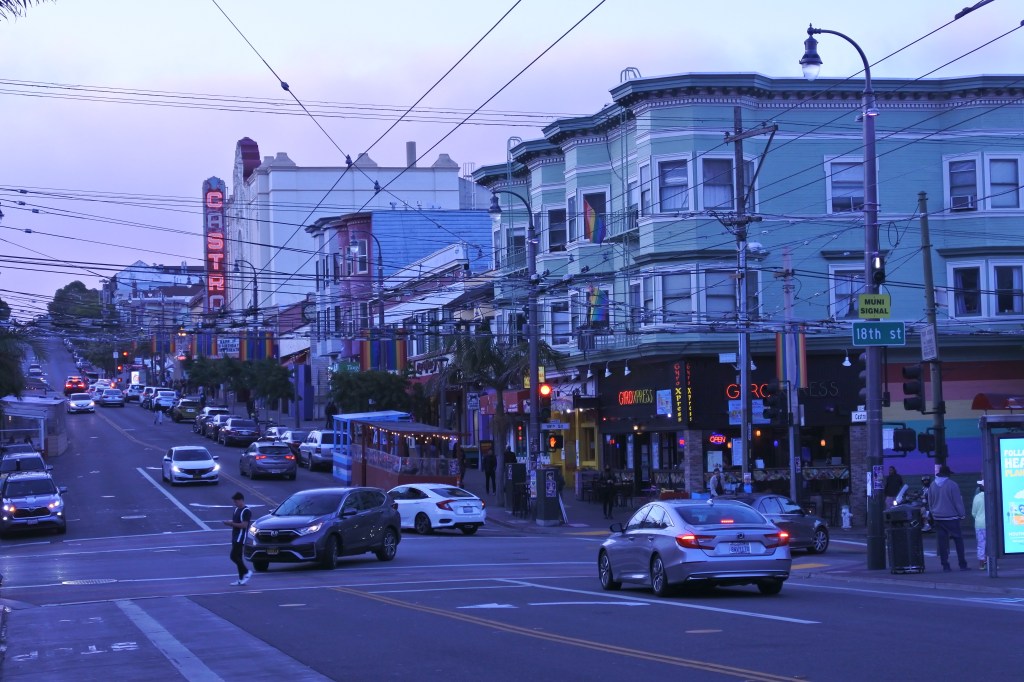
The Castro District- America’s first Gayburhood

Castro Street was named after José Castro (1808–1860), a Californian leader of Mexican opposition to U.S. rule in California in the 19th century,  From 1910 on, the Castro District and some of the surrounding areas were known as Little Scandinavia, because of its large Finnish, Danish, Norwegian and Swedish populations attracted to the City’s shipping industry. A large influx of  Irish and Italian immigrants arrived in the 1930s transitioning Castro into an ethnically mixed working-class neighborhood  up until the 60s when Castro underwent a major transformation. At that time the neighborhood became one of the first “Gayburhoods in the United States. The 1950s saw large numbers of families moving out of the Castro to the suburbs opening up large amounts of real estate for gay purchasers. Castro’s gay village is mostly concentrated in its business district along Castro Street from Market Street to 19th Street heavily demarked by flags and banners.

Regardless of Castro’s status on San Fran’s original “Gayburhood” Castro is a high quality urban district blessed with great walkability, urban amenities, attractive Victorian architecture (located mostly outside the 1906 burn zone), great urban form and business district, and vibrant area. Some areas for improvement includes a grave lack of affordable for-sale housing and limited economic diversity. Rental controlled units, however, still comprise about 60% of the district. Bike infrastructure could use several more dedicated lanes, and there is a limited amount of churches in the district. The western edge of Castro is rather hilly and not as conducive of an urban environment, although still well endowed with sidewalks and ADA ramps.

Click here to view the Castro album on my Flickr page

URBAN EVALUATIONS:

* Over ADA infrastructure and sidewalks are excellent with the some small exception of some missing modern ADA curbs on the hiller sections.
* Great architecture both historic and modern.
* Excellent Tree Canopy.
* Good amount of affordable housing here as 60% of all units are rent controlled. Also a handful of public housing developments here.
* Parkwise there are several great medium sized parks within Castro (Corona Heights, Kite Hill, and Rikki Streicher Field). Mission Dolores & Buena Vista Parks are wonderful larger parks just outside the neighborhood. Tons of smaller pocket/community parks spread throughout.
* Good array of walkable private and public schools. Private schools were generally rates well and public was a mixed bag.
* Great cultural in Castro including  a plethora of restaurants, bars, and cafes along with a ton  of clubs and live music venues. There is also a historic Movie theater, several smaller local museums + the Science Museum, and a good array of art galleries.
* Retail amenities are great as well. Several grocerias and health food stores. A Safeway and Wholefoods are located just outside the district. Other amenities include several drug stores, fitness centers, plenty of banks, good array of boutiques and unique stores, a couple home good/hardware stores, a book store, tons of barbershops & Salons, lots of dessert place, a public library & post office, and many eclectic and creative stores. Sutter Hospital only 1/2-1 mile away.

URBAN WEAKNESSES:

* Generally good street connectivity but some curvy streets in the hilly section of the district. Still good stair connections for pedestrians here.
* Bike infrastructure good but not great compared to other San Fran districts. Dedicated bike lanes run down Market and 17th street to the center of District but no coverage in western half of district. Bike share is similar in distribution.
* Medium rents at $2,100 are a bit higher than the average City wide . Market rents start in the 2Ks and 3K for studios and 1-bedrooms, and 4K & 5K for 2 & 3 bedrooms. Not a ton listed on the open market.
* For sale housing very expensive. 1-bedroom conds run for 700K-1M, 2-bedrooms 1M-1.5M, and 3 bedrooms 1.5M-3 M generally.
* Not many churches in the district but a good amount in neighboring Mission District.

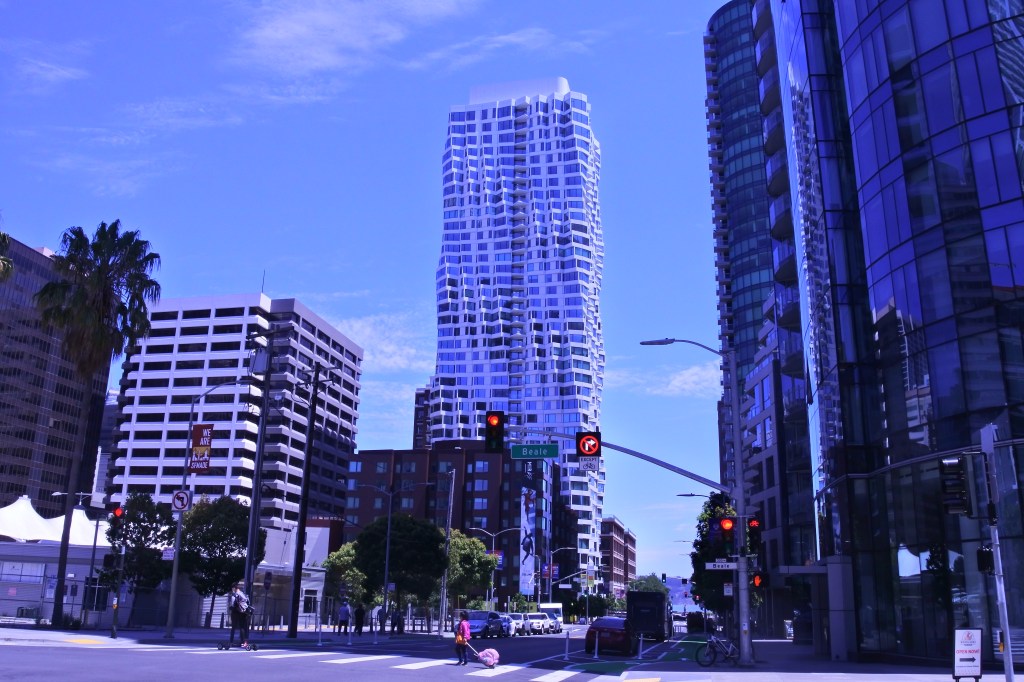
South Beach- San Fran’s new Downtown District

The district of South Beach was originally referred to as Rincon Hill. The South Beach name is more of a modern invention. The 1906 earthquake and fire destroyed the remaining Rincon Hill mansions, which were already on their way out. Post fire, Rincon Hill languished but eventually became an industrial/maritime district serving the Embarcadero wharfs. Things really started to go down hill in South Beach in the 50s with the construction of the Embarcadero Freeway (surrounding the neighborhood on three sides by freeway ramps) and the decline of the maritime industry.  From the 1960s to the mid-1980s, while the nearby Financial District was built up, Rincon Hill was largely ignored.

Fortunately things started to slowly improve for South Beach. The 1989 earthquake had the positive urban affect of its disassembly which helped removed a major physical and psychological barrier to the rest of Downtown. An upzoning in 1985 lead to some new housing and office (albeit with poor urban design) and a 2005 revision helped create a Vancouver esh mixed-use downtown district.  South Beach is now a highly attractive and walkable urban neighborhood sitting on the edge of the San Francisco Bay, Financial District, and South Market neighborhood.

There are still some areas of improvement for South Beach. The district has limited schooling options making it a bit hard to raise a family here. While they are a high level of affordable rental units, modestly priced for sale options is non-existence with 1 bedroom condos starting at 700K. 

Click here to view my East Cut album and here to view my South Beach Album on Flickr

URBAN STRENGTHS:

* Excellent ADA infrastructure overall.
* Great public transit and overall walkability. Great bike lane system and a plethora of dedicated bikes (both electric and non electric available).
* Great racial diversity with just as many Asians as Whites and a large Hispanic population.
* About a quarter of all rental units are rent controlled but overall about 60% of all units are affordable. This certainly shows in the data as the median rent is around $1,700 (lower than the median Citywide).
* No large parks in the district (or nearby ) but plenty of excellent medium parks (i.e. Salesforce, Yerba Buena Garden * Public Square, San Fran. Bay Trail and waterfront parks, Sue Bierman Park, and Maritime Park). Also plenty of Dwtn plazas and pocket parks throughout.
* Some Homeless issues in the district, but overall it is very safe and low crime neighborhood. In 2015 the district created an improvement district.
* Not a ton of historic architecture but a decent amount of attractive warehouses remain. Lots of dense urban infill with good urban form and pretty good aesthetics.
* Culturally great array of restaurants, bars, cafes, and breweries, some art galleries, and several great museums (i.e. Mexican Museum, SFMOA, CA Historic Society, Museum of African Diaspora, and the San Fran Railway Museum). Really no theaters within South Beach but plenty nearby in the Dwtn area.
* Retail amenities including: 3 full service supermarkets within or on the edge of the district, several drug stores, post office, Ferry Building (a market with plenty of shops and stores), lots of banks, several book stores. Plenty of  major shopping areas just outside of South Beach (Union Square, Embarcadero Center, Crocker Galleria, Metreon, Westfield Mall, and two targets.
* Generally excellent urban form with the exception of a couple surface lots and some cold modern bldgs on the streetscape. Even better urban streetscape as much of it is new.

URBAN WEAKNESSES:

* Decent generational and economic diversity. Certainly a high overall medium income but still a 10& poverty rate and many other modest income earners.
* For sale housing is very expensive. The cheapest are 1-bedroom condos selling for around 700K. 1-bedrooms typically sell btwn 1M and 1.5M, 2-bedrooms anywhere from 1.5M-2.5 M, and 3-bedrooms generally 2 & 3 Million.
* Market rents start around 3K for 1-bedrooms, $4,000s for 2-bedrooms, and 5K+ for 3 bedrooms.
* Only a handful of schools within South Beach. Some still walkable in adjacent districts but none are large schools.

San Francisco- Duboce Triangle and Lower Haight

I combined the two smaller neighborhoods of Lower Haight and Duboce Triangle and also the smaller area to the eastern slopes of Corona Heights Park.

The name “Lower Haight” derives from the significant elevation change as Haight Street climbs steeply from Scott Street to Buena Vista Park. The district is also referred to as “Pine Valley” in the 70s because of all the pine trees. The district was built up mostly in the late 19th century and fortunately was mostly outside of the 1906 Fire helping it retain much of its more ornate Victoria architecture. The main business district is along Haight St. but a couple good blocks along Divisadero and plenty of business mixed throughout the district.

Duboce Triangle – is south of Lower Haight between Market and Duboce Avenue. The area is sometimes known as Mint Hill as it hosts a US Mint Branch. Market Street is a major commercial corridor that the district is blessed to have providing many retail assets.  Market hosts the bulk of in-fill in both neighborhoods and most of it is of a very high quality. Some very attractive homes along both Corona Heights and Buena Vista Park.

Both Lower Haight and Duboce Triangle are urban neighborhoods of a very high quality and walkability. The biggest downside to these districts is that it is impossible for most to be able to purchase a home here. Fortunately many rent controlled units remain in the neighborhood. The district could also use more schools, and better economic and generational diversity. Other than that, not a whole lot to complain about. 

Here click to view my Lower Haight Album and here to view my Duboce Albums on Flickr

URBAN STRENGTHS:

* Like most of San Francisco great density.
* ADA infrastructure is great as sidewalks are generally comfortable everywhere. Here and there a couple intersections without modern ADA curbs and some hilly streets along the parks.
* Excellent public transit access and very convenient access to the Financial district across all modes. Also decent access to Dwtn Oakland via driving, public transit and even biking.
* Good amount of bike lanes but wonderful access to bike stations and dockless electric bikes throughout the district.
* Good racial diversity.
* Around 65-70% of units are rent controlled. In the neighborhood. Medium rents are around $2,100.
* Very good park amenities including convenient access to Buena Vista, Corona Heights Park, Almo Square, and the Panhandle. Plenty of smaller parklets as well.
* Good cultural amenities including  a great array of restaurants, bars & cafes,  breweries, plenty of art galleries, and a couple live music venues.
* Great neighborhood amenities including several full service supermarkets and lots of grocerias, several drug stores, hardware store, fitness centers, tons of boutiques &small retail, lots of banks, several antique and home good stores, a  major hospital, and 3-4 book stores, and a decent amount of churches.
* Great tree canopy.
* Gorgeous Historic Architecture (helps that it was locate outside of the 1906 fire). Not much modern in-fill but some great buildings along Market Street.
* Several schools within or near the district but not a ton. Very walkable of course.
* Great urban form and streetscaping throughout.

URBAN WEAKNESSES:

* High income district with low poverty rates. Some income diversity but not great. Also pretty low pct of family households.
* About 30% of rentals (non-rental controlled) are astronomically high. 1-bedrooms lease for around 3K-3.5K, 2-bedrooms 3K & 4Ks, and 3-bedrooms in the 4Ks-5Ks.
* For sale prices are astronomical.  Cheapest units are small 1-bedroom condos selling for 800-900K. The vast majority of for sale units are selling above 1 M and maxing out around 2.5 M.
* No theaters or cinemas, or museums within the district but several in surrounding areas.
* Some crime issues in the past but that was at least a decade ago. Feels now like a very safe place.

Downtown Wilmington, Delaware

Downtown is really an inverted L shape with Walnut clearly forming the eastern boundary. The western border is a bit fuzzier but from the south its Tatnal, West St., Jefferson, and the western down 11th street to  202. The northern border is the Brandywine Creek and the southern border Christina River with the inclusion of the Riverfront development down to New Sweden St. I like to subdivide Downtown into three districts: Midtown-Brandywine- centered along 11th & 12th streets up to Brandywine Creak; Historic Market Street- running north to South; Riverfront- newer development on the west bank of the Christina River.

Downtown Wilmington is dominated by corporations in many ways. The City has become a national financial center for the credit card industry, largely due to regulations enacted by former Governor Pierre S. du Pont, IV in 1981. Legislation eliminated the usury laws enacted by most states, thereby removing the cap on interest rates that banks may legally charge customers. Major credit card issuers such as Barclays Bank of Delaware, are headquartered in Wilmington.

Historic Market Street was the commercial center of the city between roughly 1870 and 1968 and is the most historically intact part of Dwtn with great architecture, the best being the Grand Opera House. Many restaurants, bars, and retail are here but the district seems to still struggle with vacancies. Surrounding Streets are often uninspiring modern offices with lots of surface parking . Brandywine-Midtown is a mix of early 20th century and modern office towners along 11th and 12th Streets. Between 12th and Brandywine is a lovely late 19th century historic rowhouse district. The Riverfront District was formerly a hub for manufacturing and the city’s shipbuilding industry. Rapid urban renewal efforts, driven by the state, changed the district in the late 1990s. A nice riverfront trail, many new office buildings and entertainment venues were born from these efforts. Unfortunately little attention was paid to urban design and the district feels rather dead and soulless with all its surface parking.

There are certainly good assets in Downtown Delaware and blocks of attractive historic buildings. What is needed is a focus on livability, walkability, and connectiveness to counteract decades of catering to suburban/autocentric corporate thinking. There are just too many surface parking lots, dead spaces, and large soulless modern corporate towers. My visit to Wilmington during the pandemic showed how dead Downtown Wilmington can feel when its not filled with office workers. Hopefully this leads City leaders to rethink their Downtown.

Click here to view my Flickr album for Downtown Wilmington, DE

URBAN STRENGTHS:

* Solid transit access throughout most of the City of Wilmington. Hit or miss in the suburbs depending on how old the suburb is and whether its connected to a rail line that flows through Wilmington and Philadelphia. Only 20 minutes from Dwtn Wilmington to Dwtn Philly on rail but over an hour to the Philly airport due to an indirect connection. Convenient access to Dwtn DE airport but not many flights out of there.
* Excellent economic and racial diversity among the population living Dwtn.
* Dwtn for sale housing is very reasonably priced. Nice pocket of rowhomes in the Mid-Town/Brandywine subdistrict selling between 200K-400K. Some even selling in the 100s just east of King Street. Newer/higher end townhomes and condos selling in the Waterfront district anywhere between 200K-450K.
* Dwtn hosts nice riverside parks and trails along especially along the Brandywine Creek but especially the Christina River.
* Cultural amenities include a decent array of restaurants, bars & cafes, several theaters (including the beautiful Grand Opera House), a indie theater and full cineplex, the Children’s Museum, the Delaware Sports Museum, & Contemporary Art Museum, several historic sites & buildings, the convention center, a minor league baseball park, and a decent array of art galleries. Dwtn also has an attractive historic library,
* Probably about 25K-30K jobs in Dwtn Wilmington, a good number considering the City has only 70K people. Very large corporate presence here.
* Large Biz Improvement District Dwtn helping with safety and cleanliness.
* Some good areas of historic architecture especially along Market but also 11th/12th Streets.
* Great concentration of schools Dwtn across all grade levels but many of them are ranked poorly. Still many perform highly making Dwtn an ideal place to walk to school.
* Good tree canopy for a Dwtn area.
* Streetscaping is overall of a good quality throughout Dwtn.

URBAN WEAKNESSES:

* Dedicated bike paths within dwtn and the City of Delaware and are pretty limited. A handful of nice paths along the Brandywine and Christina Rivers that feed into dwtn. Nice array of bike paths in the Wilmington Region however, but mostly disconnected with dwtn. No dedicated bike stations.
* Highly gridded and connected streets dwtn, but many wide one-lane roads exclusive to moving car traffic..
* Rentals are modestly priced. 1-bedrooms leasing in the low-mid $1,000s and 2-bedrooms in the $2,000s. Overall product is pretty limited and very few 3-bedrooms.
* Most plaza spaces dwtn are pretty unaspiring and small. But there are a couple decent ones…Tubman Garret River Park and Rodney Square. Both have decent programming and events Rodney Square is pretty centrally located and its Dwtn Civic plaza.
* Limited sporting venues and activities dwtn. No large Dwtn post office.
* Dwtn neighborhood services are kinda limited. No dedicated grocery. But Dwtn does have a couple of drug stores, plenty of banks. many discount clothing stores, a handful of boutiques, and tons of salons and barbershops. The Wilmington Hospital is also on the western edge of Dwtn.
* The skyline is rather short and state but well concentrated along Market and 11th/12th. Modern towers are very bland but some good historic ones.
* Some better newer infill in the waterfront but still pretty bland.
* Not great pedestrian activity, especially considering how dense the districts are around it. There just seems to be a lack of buzz Dwtn even though there are a decent amount of activities going on.
* Only a handful of satellite campuses dwtn amounting to now more than 2K students.
* Urban form is a mixed bag. Good along Market, decent in the Mid-Town-Brandywine district but pretty awesome at the River front where parking lots abound and along edges of Dwtn. Lots of dead space here due to corporate nature of Dwtn. 

Hilltop- Wilmington’s Little Italy

Hilltop contains several subdistricts including the more posh Cold Springs district with larger homes from the late 1800s,  West Hill centered around Titlton Park, a district of more modest and dense late 19th century rowhouse, and the Little Italy District anchored by the Lincoln Avenue commercial district and St. Anthony’s Church.

Hilltop’s urban strengths include its proximity to Downtown (only 1.5 mile away), attractive late 19th century architecture, dense form, economic and racial diversity, mix of housing types and prices, and convenience of many small/medium parks. It is a very comfortable but quiet district. The main areas for the district to improve upon is more retail and cultural amenities, urban business districts (Lincoln, 4th St, and Pennsylvania Ave) with better form and sense of place, and better bike infrastructure. The district should also consider building more dedicated affordable housing to prevent displacement should the district continue to revitalize.

Click here to see more Hilltop photos in my Flickr Album

URBAN STRENGTHS:

* Very convenient access to downtown with good public transit options. Street grid is highly connective and conducive to pedestrian activity.
* Mix of modest and larger more ornate rowhouses.
* Nice mix of housing prices. Larger/renovated homes generally sell between 300K-500K. Larger mansions around Cool Spring Park Sell for more. Modest but well kept homes sell in the 200Ks. Plenty of smaller not well kept rowhouses selling between 60K-150K especially near Lancaster road. Rentals are generally affordable but a pretty limited.1-bedrooms lease for around $1,000.
* Great racial and economic diversity. * Nice array of small and medium sized parks spread throughout the district with quality amenities. Other parks are walkable in adjacent districts including the extensive Brandywine Park.
* Mix of decent and high quality historic architecture. Best architecture is in the eastern half of the district.
* Tree cover best also in the eastern half of the district, which is generally the more wealthier half of the neighborhood.
* Cultural amenities include a very diverse array of restaurants, several cafes and bars, the Delaware Children’s Theatre, a Library, Post Office, and the Brandywine Zoo is located in an adjacent district.
* The Saint Francis Hospital is centrally located in Hilltop and a very good array of churches.
* Good number of Christine and Catholic schools in and around Hilltop K-12. Very limited public schools but there is a high performing Charter School to the SW of the district.

URBAN WEAKNESSES:

* One dedicated north-south bike lane. Not dedicated bike stations.
* Good but not great ADA infrastructure as intersections on residential streets are hit or miss with consistant curb cuts.
* Very low generational diversity as family households is around 20%..
* No museums, theaters, or art galleries in the district. Fortunately downtown is only a 1.5 away and offers many of these amenities.
* Retail amenities are a bit underwhelming. They include many Hispanic grocerias (Achme Supermarket located in adjacent 40 acres), several drug stores, a library and post office, handful of boutiques, gift stores, dollar stores, plenty of convenience stores, and a handful of banks.
* Buzz of the district depends on where you live in Hilltop. The eastern edge and Cold Spring portions of the neighborhood seem very in demand but other parts not so much.
* Not much modern architecture in the district and what does exist is more auto centric commercial uses.
* Urban massing along Union St is decent but uninspiring. 4th Street is more residential with some commercial and has acceptable urban massing. The western half Pennsylvania Street is most auto centric commercial uses.
* Even in the early 2010s the district had some pretty high crime. This seems to have drastically improved by 2020.

Queen Village- Philly’s first “Suburb”

Queens Village was Philadelphia’s first suburb and thus has a ton of history. Despite William Penn’s planned orderly east-to-west filling of the city, new inhabitants tended to stay close to the Delaware River, preferring to subdivide Penn’s original ample lots or move just south or north of the city rather than west beyond 4th Street. Thus Queen’s Village began to fill in during the late 1700s starting with  a large Swedish population. The district also attracted Philly’s first Free African American Community in the early 1800s. Queens Village was officially incorporated into the City of Philadelphia in the mid-1850s. By the 1890s, an Eastern European Jewish population settled along the South Street and 4th Street commercial corridors, the latter of which became Philadelphia’s Fabric Row. Steams of Polish then Italian immigrants came during the turn of the 20th century taking advantage of many waterfront jobs. This helped establish South Philly as the City’s main Italian hub. Between the major wars, Queens Village became over crowded with poor local housing conditions. This unfortunately led to some ill-conceived urban renewal efforts including the construction of 1-95 cutting the district from the waterfront and the Southwark projects built between Christian and Washington Streets.  These efforts, along with suburban sprawl lead to several decades of decline in Queen Village especially in the concentrated area of poverty at the Southwark projects.

Thanks to several conditions (a burgeoning historic preservation movement, commercial revitalization efforts along South Street, and a stabilizing effort by Italian and other immigrant families who refused to leave the neighborhood), revitalization came to Queens Village in the 70s and 80s. Now the district is one of Philly’s best urban centers but also very expensive. Other than the affordability issue, there is not a whole lot to improve to this dense, mixed-use neighborhood. But if I’m being nitty picky the district could use better tree canopy, ADA infrastructure, a public library, and better park amenities.

Click here to view my full Queen Village Album on Flickr

URBAN STRENGTHS:

* Great density. Nearly 40K per square mile.
* Great access to Center City Philly being just south of Society Hill.
* Convenient district for all modes of transportation via bike, walking, and public transit.
* Decent but not great diversity here.
* Good amount of project housing near Washington Ave.
* Access to a several smaller parks, playgrounds, and plazas well distributed throughout the district. Jefferson Square/Sacks Playground is the largest recreational space in the district.
* A very safe feeling district with very limited amounts of blight.
* Only a handful of solid schools within the district but several good ones in surrounding neighborhoods along with walkable access to several alternative high schools about 1 mile away.
* High level of cultural amenities here including a great diversity of restaurants, bars, and cafes, several live music venues along South Street, and many art galleries.. There are also several historic homes and museums just to the north and northeast in adjoining Society Hill and Navy Yards.
* Great Amenities are also great and include: several supermarkets just outside the neighborhood boundaries, many grocerias/small grocers, a couple drug stores, a great array of boutiques, antique stores, bookstores, and creative shops, plenty of banks, a local post office, hardware store, desert joints, and a decent mix of churches.
* Excellent historic architecture Georgian styling near front and Italianate further within the district. Lovely 2-story bays in the commer. buildings as well.
* Modern infill stylistically is hit or miss depending on what decade it is, but always very contextual (with the major exception with the affordable housing near Washington Street (bland 89s/90s structures with courtyard parking).
* Urban form is great throughout the district with the major exception of parts of Washington Street.
* Great mixed use development helped by several biz districts (South, 4th, & Bainbridge) and mixed use buildings throughout. 

URBAN WEAKNESSES:

* Decent ADA infrastructure. Good along Commercial streets but modern ADA curbs are spotting on residential streets.
* While this is a very expensive neighborhood still a good amount of smaller 2 & 3 bedroom rowhouses/condos selling in the high 200Ks/ and 300Ks. Modest sized but higher end product selling between 400K-600K. Larger higher end product selling between 600K and about 1 Million.
* Rentals are also pretty expensive but plentiful. Studios go for around 1K. 1-bedrooms in the mid to high 1,000s. 2-bedrooms the high 1Ks to the mid 2Ks,
* No library within the district.
* Tree cover is okay. Its certainly difficult to fit trees in with such limited side walk space.

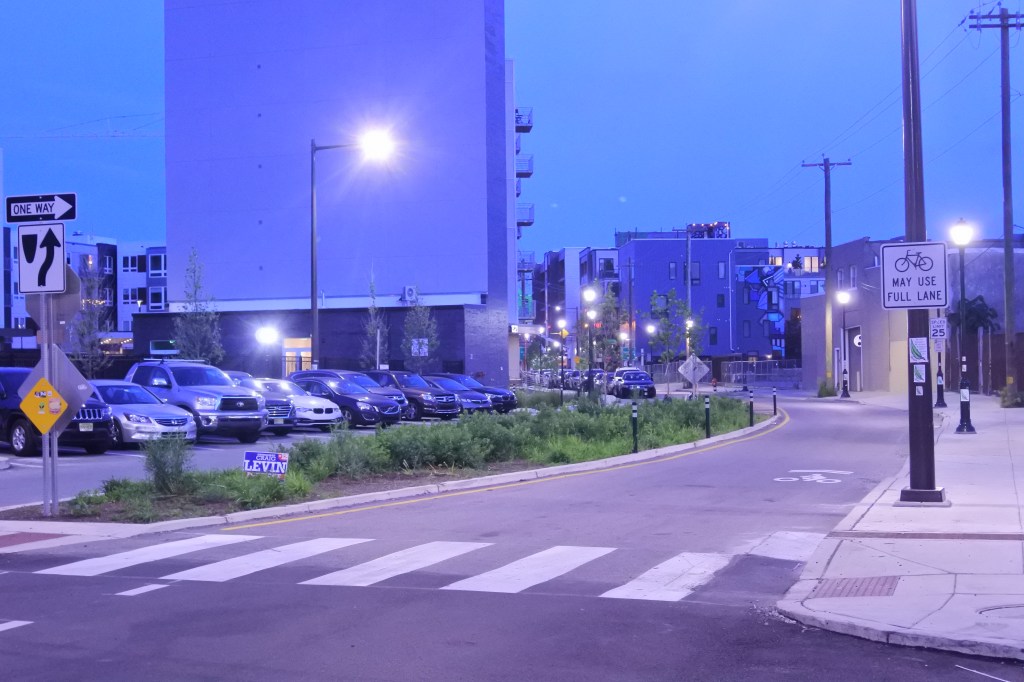
Olde Kensington- a renewed industrial hub on Philly’s Northside

Like most inner-city Philadelphia neighborhoods, Olde Kensington has roots in colonial Philadelphia. It was conceived in 1730 by  a wealthy provincial councilor named Anthony Palmer to become a mirror of upscale London, with regal sounding street names like Hanover, Prince (Girard) and Bishop (Berks). Gradually, however, it proximity to the waterfront and rail lines lent the neighborhood more to manufacturing and Olde Kensington ultimately became a quite the North Philly industrial hub centered along American St. One can still see vestiges of its regal ambitions with grand Italianate flats along 2nd Ave.

After World War II, the neighborhood began to decline due to deindustrialization and abandonment became commonplace in Olde Kensington, although not as widespread as other North Philly neighborhoods like Sharswood or Cecil B. Moore. Since the 2000s the gentrification of the surrounding districts of Northern Liberties and Fishtown spilled over into Olde Kensington drawn by its more affordable rents and loft spaces. Many industrial spaces have also been converted into artistic workspaces and interesting mixed-use buildings. The City recently made major infrastructure investments  along American St, giving it a road diet and adding dedicated bike lanes, and creating a boulevard. The neighborhood is now seeing significant renovation projects and in-fill leading to a rapid ride in housing costs.

The biggest missing piece in Olde Kensington from an urbanist perspective is more retail amenities. Girard is the closest thing the district has to a business district but its not very consistant. Park amenities and Bike infrastructure are also limited. I hope the district can produce more affordable housing to offset district’s rapid price increases. There are plenty of vacant lots remaining.


Click here to view my Olde Kensington Flick Album

URBAN STRENGTHS:

* ADA curbs are pretty consistant along the commercial streets but hit or miss on the residential streets. But better than most Philly neighborhoods.
* Great racial diversity. Also very good economic distribution but too high of a poverty rate (around 25%).
* Cultural amenities include a very diverse array of restaurants, several bars, distilleries, and breweries, a handful of art galleries, a couple local museums, and a local theater. Also convenient access to the plethora of cultural amenities in adjacent Northern Liberties and Fishtown.
* Neighborhood amenities include convenient access to Acheme Markets, many ethnic grocerias, several drug stores, several boutiques, convenient access to a couple post offices and a library, a couple bike stores. Several churches open across a decent diversity of denominations but not a ton. These are concentrated along Girard Street but decent mix of uses throughout. Also good access to amenities in surrounding districts like Fishtown and Northern Liberties.
* Only a handful of smaller schools within Olde Kensington but plenty in surrounding neighborhoods that are still very walkable.
* Generally very good architecture with the historic warehouses, a fair amount of more elaborate rowhouses mixed in and great urban in-fill.
* Urban massing is generally pretty good but some vacant lots and industrial uses still existing along American and Cecil B. Moore. Urban streetscaping is pretty tired and uninspiring with the major exception of American St. which is getting a complete make over and road diet. 

URBAN WEAKNESSES:

* Bike infrastructure a bit limited. Only dedicated lanes along American Street and a handful of dedicated bike stations.
* Generational diversity is deceit but not great.
* For sale prices are beginning to look like Northern Liberties in Olde Kensington, especially the eastern half and southern edge. Still some modest price homes selling in the high 200Ks and look 300Ks. There are mainly smaller condos/townhouses. The majority of homes selling anywhere between 400K-800K. These are either renovated or new product.
* Rentals are pretty expensive as well with 1-bedrooms leasing in the $1,000s, 2 bedrooms in the mid 1000s to low $2,000s. and 3-bedrooms in the 2Ks and low 3Ks. Some dedicated affordable apts are present here.
* Park amenities within and near Olde Kensington but there is the Hancock Playground  and Cruz playground/recreational center.
* No active hospitals within or adjacent to the neighborhood.
* Crime does not appear to be a major issue in Olde Kensington but still a decent amount of blight remains here.
* Tree canopy is wanting. 

Fishtown- One of my favorite Philly neighborhoods

Fishtown is a largely working class Irish Catholic neighborhood, but has recently seen a large influx of young urban professionals and gentrification. The name Fishtown derives from the major original occupation of its residents. Early settlers were fishermen and over time they controlled the fishing rights to both sides of the Delaware River from Cape May to the falls at Trenton, NJ. The neighborhood was originally built up by German immigrants in the early-mid 19th century followed by Polish and Irish Catholic immigrants in the late 19th century. Poverty grew in Fishtown in the 70s-80s after many good jobs left during the deindustrialization era, however many of Fishtown’s workers stayed keeping the neighborhood for slipping into widespread poverty like so many surrounding North Philly districts.

This neighborhood is one of my favorites in Philly. This may surprise some, but Fishtown’s recent revitalization builds upon an existing neighborhood with quality urban fabric. Fishtown is very similar to the better South Philly neighborhoods but it still retains good economic diversity and its improving its racial diversity. Housing is certainly increasing here but much lower the “hot” neighborhoods like Northern Liberties to the south. Plenty of 2 & 3 bedrooms selling for 200K/300K. Fishtown’s recent gentrification has certainly added to its retail and cultural amenities. My biggest concern for the future is that rising housing prices will spiral out of control as this is such an attractive urban area. City leaders would be wise to building a significant amount of affordable housing here immediately. Other urban metrics where the district could improve include better street trees and bike infrastructure, ADA curbs, and more generational diversity. 

Click here to view my Fishtown Album on Flickr

URBAN STRENGTHS:

* Excellent density at nearly 25K per square mile.
* Solid architecture both modern infill and historic buildings.
* Great access to Dwtn as its well connected to a heavy rail line, short drive, and very bikeable via Delaware Avenue.
* Bike infrastructure is good but not great. Delaware and York have dedicated lanes and a handful of dedicated bike stations.
* While housing is getting price here lots of for-sale variety and sales prices thanks to the diverse housing stock. Plenty of smaller 2 & 3 bedrooms (rowhouses & condos) selling in the 200Ks and low 300Ks in good condition. Medium sized renovations or new construction 3 & 4 bedrooms selling between 350-500K. Higher end and larger product selling between 500K-800K. This is mostly new construction.
* Nice array of well dispersed smaller/diverse parks. Decent riverfront park as well.
* Great cultural amenities including a plethora of restaurants, bars, breweries, and cafes. Also a good amount of art galleries, a couple local theaters and live music venues.  No museums though.
* Good retail amenities as well including several smaller grocerias, a food co-op, and two discount groceries. Also convenient access to Giant, which is just over the line in Northern Liberties. Other amenities include a couple drug stores, lots of banks, great array of unique and creative stores, boutiques, thrift stores, a post office, and public library.
* Lots of walkable elementary/middle schools in Fishtown w/ generally decent rankings. View high schools.
* Commercial districts generally have very good urban form but decent streetscaping.

URBAN WEAKNESSES:

* Good ADA infrastructure on commercial streets (Girard & Frankford) but hit or miss in the residential streets.
* Rentals are pretty plentiful but on the higher end. 1-bedrooms  lease in the low-mid $1,000s, 2-bedrooms generally in the high $1,000s and low $2,000s, and good amount of 3-bedrooms leasing anywhere between the high $1,000s and 3Ks.
* Some dedicated aff. housing but certainly less than ideal.
* Delaware Ave is pretty industrial and doesn’t have the best urban form or streetscaping.