Eastown- Popular Urban Community in Grand Rapid’s Eastside

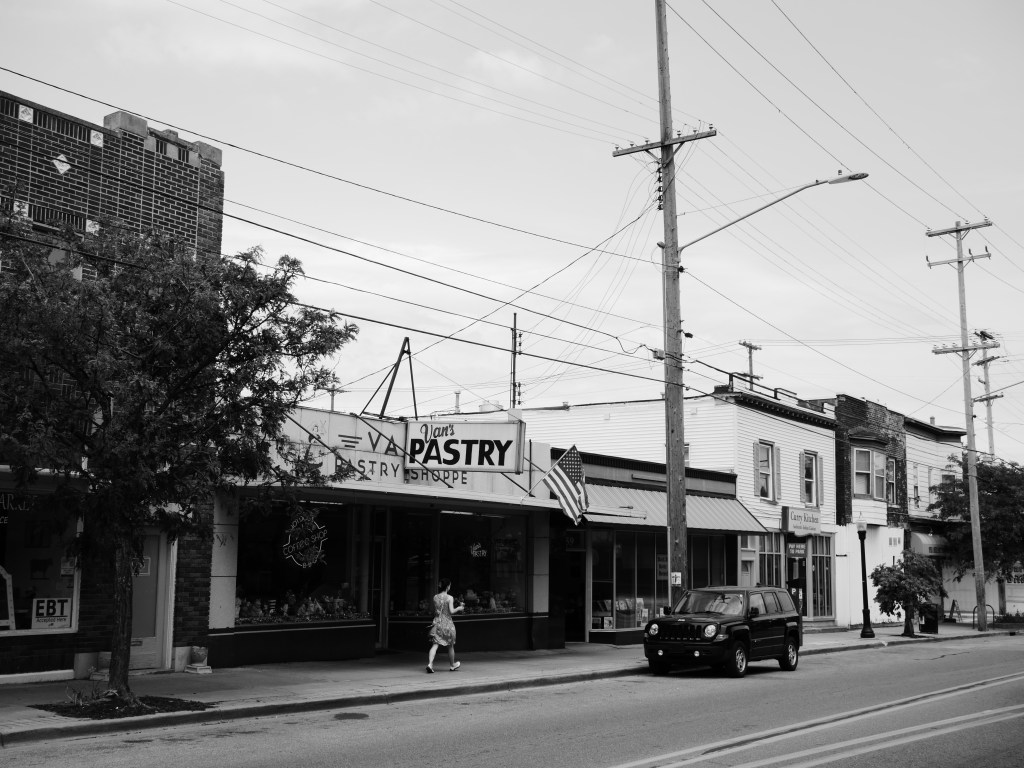
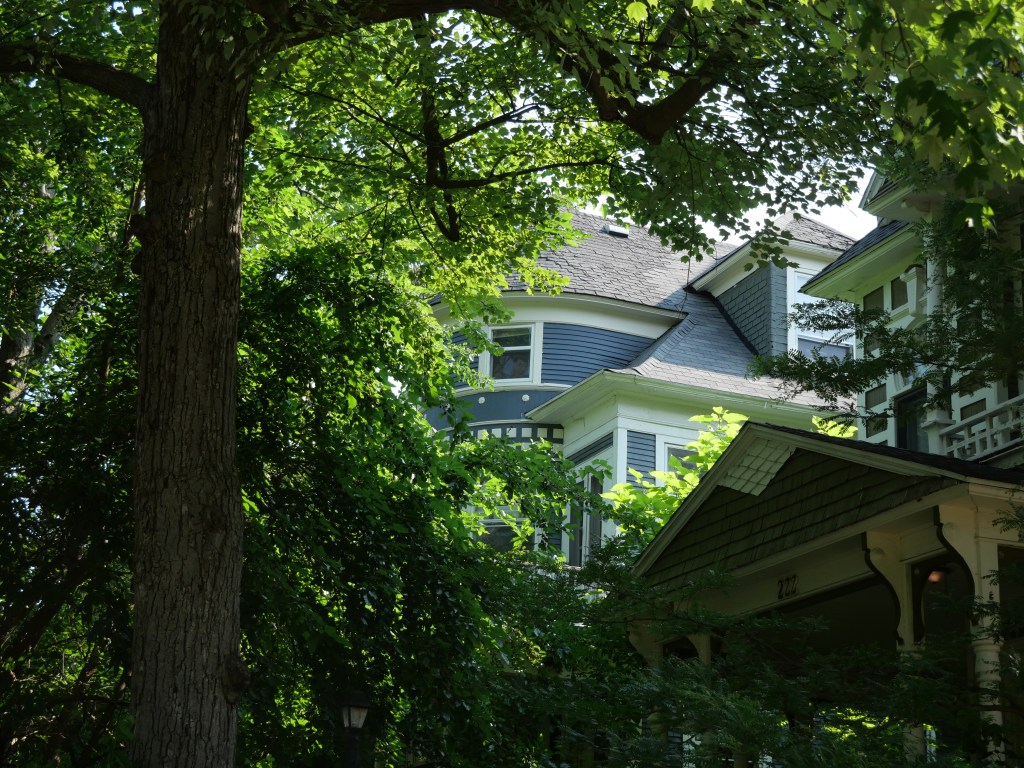
Eastown began as a streetcar commuter suburb in the early 20th century and was an important midway stop between downtown Grand Rapids and the resort area of Reeds Lake (now East Grand Rapids). The neighborhood filled in by the 1930s with a handsome array of larger single family homes catering to the professional middle class. However, the district was redlined in the mid-century and experienced several decades of disinvestment in the post war area. Fortunately the neighborhood began to attract creative and intellectual types in the 60s and 70s and was often referred to as the “Greenwich Village of Grand Rapids”. Eastown has fully stabilized and is one of the City’s most popular and  neighborhoods and arguably holds its best urbanism thanks to its solid commercial districts running down Lake and Wealthy Streets.

For Eastown to be a premiere urban district it simply needs a density level of at  least 15K to drive more retail and cultural amenities. This would require significant densification along its commercial corridors and relaxing its likely strict single family zoning laws. Eastown could also use better public transit access and more walkable schools.
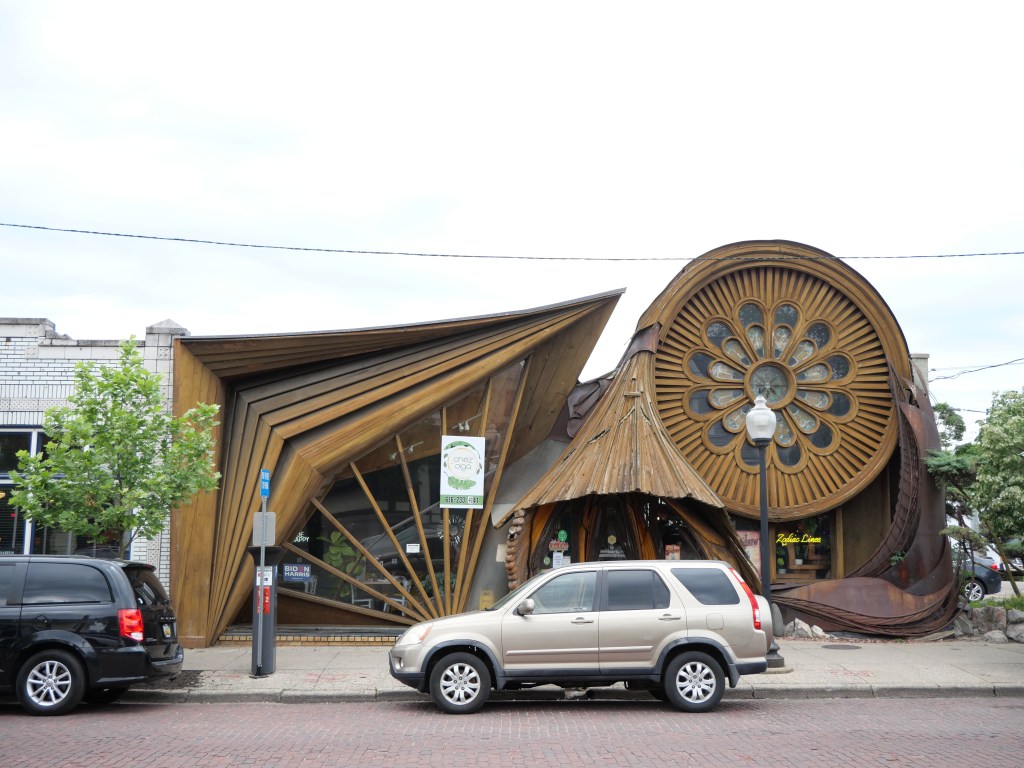
Click here to view my Eastown album on Flickr

URBAN STRENGTHS:

* Solid access to dwtn being only 2 miles away.
* Great sidewalk infrastructure and ADA curbs are up to date in most intersections.
* Very safe community with limited blight.
* Decent for sale diversity and price points but not 1-bed condos and only a handful of 2-beds that sell btwn 270K-340K. Plenty of 3 & 4 beds that sell anywhere btwn 200K-600K with a handful of mansions that sell for more.
* Decent inventory: 1-beds lease in the low-medium 1Ks but are pretty limited, more 2 & 3 beds that lease btwn 1.7-2.4Ks. Several 4 beds as well.
* Excellent tree canopy throughout.
*Overall a pretty safe community with limited blight
* Great array of larger historic homes from the 1890s-1930s. Some nice historic commercial but generally planer.
* Good park amenities starting with the multi-functional Wilcox Park and Acquinas College has gorgeous grounds & woods, sigsbee is also a nice park and MLK park has a pools and sits just south of Eastown.
* Only a handful of infill. Generally pretty good urban form.
* Solid cultural amenities especially restaurants, bars, cafes, a performing arts theater at Acquinas College, a couple live music venues, the Indie Wealthy Theater is only a block outside of Eastown, and lots of great cultural amenities in neighboring East Hills.
* Generally good urban form along the two major biz districts of Eastown (Lake & Wealthy) and the couple blocks along Robinson & Fulton. But a decent amount of small surface parking lots throughout.
* Good retail amenities including a drug store,  some  boutiques & clothing stores, a couple bookstores and home goods stores, several salons, a bike shop, several dessert joints, a couple of gyms, a local post office, several churches, and a major hospital just east of the neighborhood. Also walkable access to all the retail amenities in neighborhood East Hills.
* 3 dedicated bike lanes with decent connection to surrounding neighborhoods.

URBAN WEAKNESSES:

  • Schools are pretty limited to most private elementary schools. A public elementary school located within Eastown but not well rated.
  • Public transit is so so for an urban district.
  • Missing some key retail amenities including a neighborhood supermarket, public library, and local boutiques and gift shops are a bit limited.”

Madison Area/South Hills- Home to the Frank Lloyd Wright Meyer House and another Grand Rapid’s Neighborhood on the Rise

South Hill and Madison Area were shaped by several waves of immigration starting with the Dutch in the late 19th century, Italian immigrants in the early 20th century, and later the neighborhood transitioned into a majority African American. South Hills is a residential only subdistrict with large early 20th century homes that were originally filled with upper middle class families. The districts also hosts the Frank Lloyd Wright Meyer May house. The area declined in the 60s and 70s thanks to white flight and disinvestment. However, the neighborhood never fell into ruin thanks to the resilience of the residents and in time investment has returned to the neighborhood especially within the past decade. Wealthy Street in the northeast corner of Madison Area is a vibrant commercial node, most of the homes are occupied and especially in good condition in South Hills and the streets just south of Wealthy St.. The neighborhood also welcomed a new park in 2014, Pleasant Park from a former parking lot.

But for Madison Area to be on the same urban level as some of its adjacent communities like East Hills and Eastown, it needs more investment and people which will help foster more retail and cultural amenities especially along the underinvested biz districts of Madison and Eastern Avenues. It would be great to have more walkable amenities in the southern half of the district.

Click here to view my Madison Area Album and South Hills Albums on Flickr

URBAN STRENGTHS:

  • Good Sidewalk and ADA infrastructure. About 85% of curbs are up to date.
  • Solid public transit access
  • Decent Urban Density.
  • High poverty rates but still good income diversity.
  • About 40-50% Black population but overall great diversity.
  • Very convenient access to Dwtn being only 2 miles away. Also a short 20 min bus ride.
  • Gorgeous historic architecture along Wealthy, the northern edge of Madison Area and South Hills where the Frank Lloyd Wright house is located. Beyond these areas architecture is a mixture of modes test working class and middle class homes from the 1910s & 1920s.
  • Solid tree canopy except the southern edge of the district which is industrial.
  • Some good urban mixed-use infill bldgs along Wealthy. More and more along Eastern but plenty of autocentric in fill still along Eastern and parts of Madison.

URBAN WEAKNESSES:

  • Some blight pockets along the southern edge of Madison and crime appears higher than more gentrified neighborhoods to the north but the neighborhoods is much safer than it was a couple decades ago.
  • A handful of schools located within Madison area with mixed ratings
  • 1 bed rentals are limited but decent amount of 2 & 3 rentals. Prices are pretty modest.
  • For options are a bit limited. No 1-bed condos and sales prices are pretty modest. 2 beds sell btwn 150K-240K, 3 & 4 beds btwn 100K-325K.
  • Parks are limited to several cemeteries and a nice playground park.
  • Some food & beverage businesses located along Wealthy btwn Union and Eastern. Not much else in Madison area besides the Frank Lloyd Wright house, but the neighborhood is walkable on the northern half to cultural amenities in East Hills and Baxter.
  • Most of the retail amenities are concentrated along Wealthy St including several boutiques & clothing stores, a local bank, a couple home good stores, several salons, and a couple bakeries. Other retail amenities outside of Wealthy St are limited but include a supermarket, a public library, and a couple of churches.”

Baxter- A Historic African American Community in Grand Rapids Eastside on the Rise

The Baxter neighborhood was established in the late 1800s and named after Albert Baxter a notable historian and novelist from the late 19th century. The neighborhood was originally populated by Irish and German immigrants as Grand Rapids was rapidly expanding. By the 1960s Baxter had transitioned to a predominantly Black demographic and sadly faced redlining and segregation challenges, which accelerated disinvestment and blight in the neighborhood at a faster pace than its more white neighborhoods to the north (i.e. East Hills). The community responded with the creation of the Baxter Community Center in 1969 to address the neighborhood’s many social injustices and unmet needs. ​And by the 1980s the Baxter Neighborhood Association was established to help foster neighborhood improvements, local businesses, and community events like festivals and parties.  Thanks to these efforts and retaining ethnic diversity, the Baxter community’s residential inventory remains mostly intact and the Wealthy St business corridor is now flourishing with many restaurants, bars, local businesses, and a thriving local historic theater. Eastern Ave has been slower to rebound but is seeing a plethora of new apartment bldgs with good urban infill. MLK St, the southern border, is still pretty blighted and desolate.

For Baxter to be a top tier urban district it’s first order of business is the redevelopment and densification of the Eastern and MLK business corridors. These corridors have the majority of the neighborhood’s blight and autocentric development. I would also like to see more walkable schools, better bike amenities, more rental options, and improvement on crime.

Click here to view my Baxter album on Flickr

URBAN STRENGTHS:

  • Solid urban density.
  • Solid ADA curbs with about 80% of curb cuts. Good Sidewalks
  • Very convenient access to Dwtn being only 2 miles away. Also a short 18 min bus ride.
  • One of Grand Rapids most diverse neighborhoods with a large Black and Hispanic population alongside a 45% White population. Poverty is high here (around 25%) but lots of medium and upper middle class households.
  • Higher pct of family households here.
  • Decent for sale options and pretty affordable. 2-beds selling btwn 150K-250K, 3 & 4 beds btwn 150K-400K.
  • Solid tree canopy but not as good as more affluent neighborhoods to the north.
  • One park centrally located in Baxter and two on its edges. MLK park is a decent size and contains a public pool.
  • Attractive historic homes throughout most of Baxter. Decent historic commercial especially along Wealthy.
  • Modern in-fill is getting better and better with lots of quality urban infill along Wealthy and more and more multi-family buildings popping up along Eastern. Eastern and MLK however have a decent amount of unattractive autocentric infill.
  • Quality urban massing along Wealthy. Hit or miss along Eastern but getting better. MLK’s urban form is generally unattractive thanks to blight and autocentric uses.
  • Decent cultural amenities including several restaurants, bars, & cafes, a brewery, a historic indie movie theater, and walkable access to the many night life and restaurants in East Hills and East Town.
  • Retail amenities within Baxter are decent but mostly limited to Wealthy Street. They include a gourmet grocery store, a butcher, decent # of boutiques & clothing stores, a couple home good stores, several salons, a couple churches, a medical clinic, a couple dessert joints, and the Baxter Community Center, which hosts lots of community services. Plenty of walkable retail amenities in neighboring East Hills and East town only a 10 min walk.

URBAN WEAKNESSES:

  • Only one dedicated bike lane and unfortunately it doesn’t take you Dwtn. Not bike sharing stations.
  • Decent but not great public transit access.
  • Limited walkable school options. No schools located within the neighborhood but a handful in adjacent neighborhoods. However only one is a school of significant size.
  • Rental inventory is pretty limited. What does exist is of pretty modest price.
  • The neighborhood was rough not too long ago but it has come a long way and blight is pretty limited now and crime is lower than it was. Blight is concentrated along MLK the southern edge of Baxter.

East Hills- A Great Urban Revitalization Story only 2 miles east of Downtown Grand Rapids

The majority of the East Hills neighborhood was built in the late 19th Century, when the area was made up of orchards and farms. During the late 1800s grand Rapids experienced a major population boom thanks to the effects of the industrial revolution and massive European immigration. Thanks to its convenient accessibility to Dwtn via the streetcar many of Grand Rapid’s new immigrant residents settled here.  They helped build a thriving urban community with 4 business districts cutting through the East Hills community (Wealthy, Lake, Cherry, and Fulton). During the 1960’s East Hills lost its luster as many residents left for the suburbs and an increase in crime, blight and abandonment came to the area a common fate to so many American inner city neighborhoods in the Post War Era. Fortunately East Hills was able to retain most of its urban fabric thanks to the strong organization efforts of the East Hills Council Neighborhoods in the 80s & 90s. By the early 2000s the 4 business districts were welcoming a plethora of new shops , restaurants, bars, and coffee shops and the neighborhood has never looked back.

This is one of Grand Rapid’s best urban districts thanks to its 4 walkable business districts, good rental inventory, great tree canopy , comfortable sidewalks, and convenient access to dwtn being only 1.5 miles away. But for this to be a premier urban district on a national level it needs better bike access, better diversity, more walkable schools, and better park amenities.

Click here to view my East Hills Album on Flickr

URBAN STRENGTHS:

  • Excellent sidewalk infrastructure with most ADA curbs being up to date.
  • Solid urban density at just under 10K people per square mile.
  • Very convenient access to Dwtn being only 1.5 miles away and a 10-15 minute transit ride.
  • Limited blight here and a pretty safe community.
  • Excellent historic architecture esp. the turn of the century homes but also good historic commercial buildings too.
  • Strong sense of place with several urban biz districts and distinctive buildings.
  • Decent for sale diversity and price points but not 1-bed condos. 2-beds sell btwn 200K-425K. 3 & 4 beds btwn 200K-600K with a handful of mansions that sell for more.
  • Good rental inventory especially . 1-beds lease in the low-medium 1Ks, 2-beds in the 1Ks. 3-beds lease btwn 1.8K-2.3K. A handful of 4 beds as well.
  • Great tree canopy throughout the district.
  • Some modern in-fill bldgs but what does exist is pretty good urban quality.
  • A handful of surface parking lots on the 4 urban biz districts (wealthy, Cherry, Lake, and Fulton) but overall urban form is very good in East Hills.
  • Some small groceries but no supermarkets here. Plenty of boutiques & clothing stores, several home goods stores, ton of salons & barber shops, a couple book stores, a toy store, plenty of dessert joints, a couple of gyms & churches.
  • Great array of restaurants, bars, and cafes, a handful of art galleries & nightclubs, an indie movie theater, and a couple bars host live music.

URBAN WEAKNESSES:

  • Some economic diversity but racial and generational diversity are pretty limited.
  • So so bike access to a couple segments of dedicated bike lanes. No bike sharing stations.
  • Only one school located within East Hills. At least it is a well rated public schools. A handful of somewhat walkable schools in the adjacent areas that are generally rated pretty well.
  • Only a handful of parks within East Hills that are pretty small. A couple walkable parks in adjacent neighborhoods.
  • Missing some key retail amenities including a local post office, public library or hospitals and only a handful of doctor’s offices.”

Midtown- A Comfortable Streetcar Era Grand Rapids Neighborhood only 2 Miles east of Downtown

Until the early 20th century Midtown was known mostly for farming and the City’s  oldest Cemetery (Fulton Street). With the advent of the downtown trolley running through Midtown development picked up and the neighborhood is now filled with  1910s & 1920s bungalows and foursquares. Fulton still has a relatively intact streetcar business district but Michigan unfortunately became mostly autocentric. Midtown is overall a comfortable urban district with convenient access to Dwtn, decent retail and cultural amenities, affordable housing, thick  tree canopy, decent park amenities, and high levels of safety.

For Midtown to become a premiere urban district it needs more density and continued quality urban infill on Michigan Ave. This would help drive better retail and cultural amenities. Midtown also needs better bike and public transit infrastructure and more walkable schools.

Click here to view my Midtown album on Flickr

URBAN STRENGTHS:

  • Very convenient access to Dwtn being only a 20 minute bus ride and 10 min bike ride.
  • Excellent economic diversity and decent racial diversity.
  • Generally good sidewalk and ADA infrastructure. About 75% of all curb cuts are modern standard.
  • Overall a pretty safe community with limited blight.
  • Decent rental inventory especially 2&3-bed options. 1-bes lease in the low-medium 1Ks, 2-beds btwn 1.5K-2K. 3-beds lease btwn 1.8K-2.5K. A handful of 4 beds as well.
  • Few 1-bed options but good diversity of other for sale options and pretty affordable. 2-beds sell btwn 125K-350K. Pretty good variety for 3 & 4 bed homes selling anywhere between 175K-450K.
  • Decent park amenities including Midtown Green, a large cemetery, several ballfields and the extensive Hillcrest park on the eastern edge.
  • Excellent tree canopy.
  • Decent cultural amenities including several restaurants, bars & cafes, and a couple art galleries.
  • Pretty good urban massing along Fulton but Michigan is pretty autocentric. This is slowly getting better however.
  • Decent retail amenities include a supermarket, a couple smaller gourmet grocerias, a year round farmer’s market, a couple drug stores, several salons, a handful of clothing/gift stores, a couple book stores, a hardware store, a couple bakeries & gyms.

URBAN WEAKNESSES:

* Pretty mediocre transit service for an urban neighborhood.
* Bike infrastructure is limited to a couple block stretches of dedicated bike lanes. No bike sharing stations either.
* Not a ton of family households and a disproportional # of college students and young adults living here.
* No schools within Midtown but some good  walkable options on the edges of the neighborhood.
* Not much dedicated affordable housing in Midtown.
* A good amount of the urban infill is autocentric but more and more urban infill is coming especially to Michigan street as larger apartments.
* Missing some key retail amenities such as a post office, public library, and medical offices. Also few boutiques, churches, and banks.

Downtown Grand Rapids, MI

Downtown Grand Rapids is the original settlement for the City like most American cities and transitioned from a mostly manufacturing/warehouse area for the city’s flourishing furniture corporations in the mid-late 19th century to a more traditional American dwtn in the early 20th century. Dwtn doesn’t have well branded/defined districts but I would generally divide it into 4 quadrants: The SW quadrant is the Warehouse District with lots of loft conversions, unique stores & boutiques and some newer developments like Studio Park and Van Andel Arena. The SE Quadrant host the Trinity Health District with Dwtn’s worse urban form. There is the Historic Core centered btwn Fulton & Lyon and Division and the River contains a great collection of well maintained turn of the century historic commercial bldgs and Dwtn’s Civic Heart (Rosa Parks Circle).  North of here is the Medical Mile containing Corewell Hospital, many research facilities, and the City Civic Center.

Downtown Grand Rapids is a solid urban Downtown in the top tier of Dwtns in metro areas btwn 1M-1.5M. Dwtn excels at hosting a great collection of well maintained historic bldgs, comfortable sidewalks & streetscaping, good cultural and regional amenities, quality school & high levels of university students. Recent in-fill has generally been at a high urban quality and retail amenities are decent. For Dwtn Grand Rapids to become a top tier urban district it needs to continue attracting more residents, improve its bike infrastructure, create more and better park amenities, and fill in a decent # of surface parking lots especially during Trinity Health Hospital.

Click here to view my Downtown Grand Rapids Album on Flickr

URBAN STRENGTHS:

  • Solid grid and connectivity. Dwtn has several wide main streets common for Mid-western Dwtns but no wide 1-way pairs. Two highways cut through dwtn but not inner belt.
  • Solid public transit Dwtn and surrounding pre-1920s neighborhoods. Decent transit for neighborhoods developed before WWII. Hit or miss transit service for suburban areas, but most suburbs have some level of transit.
  • Decent number of activities for families dwtn with several family friendly museums and a sports arena mainly used for Hocky.
  • Solid K-12 schools with pretty well rated public schools and a good # of private/charter schools.
  • Better rental options with some studios leasing in the low 1Ks, more 1-beds that lease btwn 1-2K, wide variety of 2-beds that mostly range from 900K to 2.5K, but some that lease around 5K, but only a handful of 3 & 4 bed options.
  • Pretty good college present Dwtn with 12K students enrolled at Grand Rapids CC which has a large presence in the SE edge of Dwtn with multiple bldgs. There are a couple other smaller satellite campuses Dwtn including a pretty large one from Grand Valley State University.
  • Very solid stock of attractive historic architecture including a nice mix of late 19th century 4-6 story Italianates, several midsize antique towers, and lots of warehouse bldgs south of Fulton.
  • Plenty recent multi-family infill and several decent newer residential towers. Plenty of bland mid-century architecture too although the City Hall bldg is to some pretty interesting.
  • Decent retail amenities including a supermarket, a couple drug stores, a good amount of boutiques, consignment stores, and gift shops, a handful of antique stores & bookstores, plenty of banks, plenty of salons, some dessert joints, a couple of gyms, two major hospitals, and plenty of churches.
  • Solid cultural amenities including plenty of restaurants, bars, & cafes, several live music venues, a major theatre complex, several performing arts theaters (although mostly modern), plenty of art galleries, a decent # of museums (esp. if you include those across the river), and a couple historic sites. For regional amenities Dwtn hosts a large convention center and indoor arena.
  • Solid employment #s Dwtn (at least pre pandemic) of around 35-40K.

URBAN WEAKNESSES:

* Density is so so but certainly could be better for a stable dwtn like Grand Rapids.
* No direct transit line from the airport to Dwtn. Takes about 1 hr. using 2 bus lines.
* Bike infrastructure is pretty mediocre. Some bike lanes in and around dwtn and decent lanes across the City but not consistent connections across the City and into Dwtn. Some bike lanes in the suburbs but not good connections into the City. There is no dedicated bike share System in the City.
* Pretty good range in prices for for-sale options but a bit limited. Some 1-bed condos that sell anywhere btwn 200K-400K, more 2-bed condos ranging from 200K-800K,  Only a handful of 3 & 4 beds that are generally more expensive.
* Park and recreation space is pretty underwhelming for a Dwtn. There is a recreational trail along the east side the grand trail but it feels free urban. Several smaller plazas and parklets and 4 medium sized parks (Rosa Parks Circle, Calder Plaza, Veterans Memorial Park, and Hearthside Park). The Rosa Parks Circle was a good additional to dwtn and has provide a much needed Civic Heart with lots or programing (including an ice rink). Calder Plaza also has some events but not in the heart of Dwtn and is a pretty cold modernist plaza.
* Some more interesting medium sized high-rises along the river. But other the Grand Rapids skyline is pretty so so. Just not a critical mass of vertical buildings or other stand out landmarks.
* Good number of surface parking lots especially surrounding the two hospitals Dwtn. The number of  surface parking lots around Trinity Health Center is particularly atrocious in the SE corner of Dwtn. At least the Medical Mile area is seeking lots of new construction.

Heritage Hill- Arguably Michigan’s best Historic District

The Heritage Hill neighborhood is located just to the east of Downtown Grand Rapids and is the City’s oldest residential district. It also has Michigan largest concentration of nineteenth and early twentieth-century homes, with many of them as mansions for the City’s elites. However, this neighborhood was under threat from the recking ball as City officials threatened to demolish huge swaths of the neighborhood in the 1960s. Thankfully tactful community organizing resisted these efforts and one of the best Historic Distracts was created in Grand Rapids. Heritage Hills in the present day is one of the City’s more desirable communities, retaining its historic fabric, amplified by great access to Dwtn, good housing diversity, and decent schools and food & beverage businesses. But to become a top notch Midwestern neighborhood it needs more retail and walkable amenities. This can start with rebuilding Michigan Avenues as an urban mixed-uses corridor instead of autocentric business district, and allowing more mixed uses along Fulton, Cherry, and Wealthy Streets. 

Click here to view my Heritage Hills neighborhood on Flickr

URBAN STRENGTHS:

  • Almost all intersections have modern ADA curb cuts.
  • Respectable density at just under 10K per square mile.
  • Great historic homes.
  • Solid public transit access and great access to Dwtn being only 1 mile away.
  • Great Tree canopy.
  • Decent # restaurants, bars, and a couple cafes, a couple art galleries, a couple museums & historic houses and convenient access to all the cultural amenities dwtn.
  • Decent # of schools within the district and public schools have ok ratings
  • Overall pretty safe with limited blight.
  • Pretty good rental diversity and also affordable. 1-beds lease in the low 1Ks, 2-beds btwn 1.2K-2K, and only a handful of 3 & 4 bed rentals.
  • Decent # of 1-bed condos that sell anywhere from 150K-300K, decent # of 2-beds sell btwn 200K-500K including many units carved out of historic mansions. Pretty good variety for 3 & 4 bed homes selling anywhere between 250K-750K.

URBAN WEAKNESSES:

* One east to west dedicated bike lane and not dedicated bike stations here nor in Grand Rapids as a whole.
*  Some poor urban form along Michigan Ave with large surface parking lots but improving with better urban infill. Rest of the neighborhood is pretty good.
* Not great park space within the community. Only a couple of smaller parks but more parks surrounding it.
* Retail amenities are pretty limited but include a Dollar Store, a couple clothing stores, a couple dessert joints, a couple gyms, a couple churches and a major hospital.

University Heights- Home to Bronx Community College and the Aqueduct Walk

The neighborhood takes its name from the hill on which New York University’s Bronx campus was built in 1894. The neighborhood, however, didn’t really fill in until 1917 with the opening of the IRT Jerome Avenue elevated Line. This lead to a rapid transition from a one-time farm community that had become a place where wealthy people had their mansions and suburban villas, to an urban neighborhood built almost entirely of low-rise apartment buildings housing mostly middle classes families. Like most of the South Bronx the neighborhood  lost its middle class base in the 1970s with white flight and a rise in crime and arson but University Heights has stayed more intact than most South Bronx Communities and has decent income diversity.

In the present day University Heights is a stable working class/middle class neighborhood with limited blight and disinvestment. The neighborhood does not have the same level of shopping districts as other South Bronx community but does hosts several smaller urban business districts along Knightsbridge, Burnside, University Blvd and is located close to the western edge of the Fordham Center Shopping District. For University Heights to be a top tier urban community it needs more higher income households to foster more racial diversity and better cultural & retail amenities. The neighborhood also needs better bike infrastructure and could use to high quality urban in-fill in spots.

Click here to view my University Heights Album on Flickr

URBAN STRENGTHS:

* Solid urban density for NY at 65K people per square mile
* Solid sidewalks but ADA curb cuts exist on about 55% of all intersections.
* Excellent public transit access.
* Decent income diversity of South Bronx as poverty is 1/4 of the population and decent # of middle income households.
* Pretty good age diversity thanks to the student population.
* Good array of pretty well rated public walkable schools but no high schools in University Heights. A handful of Catholic and charter schools.
* One of the safest communities in South Bronx with limits blight as well.
* Historic architecture while not stunning is generally in tact.
* Solid tree canopy partially thanks to the hills.
* Solid park amenities but not as good as most South Bronx communities. Several good medium sized parks but University Heights is missing the plethora of smaller parks and playgrounds common in most South Bronx Communities.
 *  Several supermarkets &  drug stores, a couple hardware stores, walkable access to all shopping options in Fordham Center just to the east of the neighborhood including tons of clothing stores, a target, and several small department stores, and boutiques. Other retail amenities in University Heights neighborhood include plenty of salons & barber shops, tons of dessert & bakeries, a  public libraries, several churches, a VA hospitals and several medical centers and doctor’s offices.
* University Heights has a lot of rental inventory but most of it is not market rate (5:1 lease below 2K). It does have a decent amount of market rentals as well. Decent # of studios and 1-bed rentals leasing btwn 1.5K-2.5K. 2-beds lease btwn 2K-3K., a good # of 3-beds leasing btwn 2.8-3.8K.

URBAN WEAKNESSES:

* Decent bike infrastructure but less bike sharing stations and bike lanes than most South Bronx neighborhoods.
* Access to Dwtn is worse than most South Bronx neighborhoods in University Heights. 45 mins to Midtown but an hour to Lower Manhattan.
* This is probably one the least diverse neighborhoods in the South Bronx with 65% Hispanic population.
* In-fill is limited to a handful of 1960s&1970s towers near Knightsbridge and the VA Hospital & Bronx Community College.
+ Other than large surface parking lots located outside of the VA Hospital and the Bronx Community College urban form is pretty good.
* So so cultural amenities including plenty of restaurants but only a handful of bars and cafes, and a salsa club.
* Missing some key retail amenities including a local post office, gyms, bookstores, and limited boutiques and gift shops outside of Fordham Center.
* For sale options are pretty limited but pretty affordable. Some 1 bed condos that sell in the 100K and 2-bed condos that sell btwn 150K-275Ks. Better 3 & 4 beds options selling btwn 300K-700K. 

Fordham- A solid West Bronx Neighborhood home to the Fordham University and Fordham Center

There are also several subdistricts within this larger more commonly known Fordham neighborhood. Fordham Manor is the northern portion of this evaluation area cutting west all the way to the Harlem river. The area dates back to the mid 18th century when a large estate (Rose Hill) was constructed encompassing Fordham University. The most well known resident of the area was poet Edgar Allan Poe who spent his final years year. His cabin has been preserved with a nice park surrounding it. By the mid 19th century the estate was broken up and Fordham University emerged, starting as a seminary but eventually transforming into a Jesuit College. To the west of campus the Old Fordham Village slowly grew in the 19th century, accelerating its growth in the late 19th century as it was connected by rail into Manhattan. By 1900 the area was connected to the NYC subway system and thousands of 2nd & 3rd generation Irish and Jewish immigrants seeking to escape the slums of Lower Manhattan flooded in. The Old Fordham Village was transformed into a modern business district by the 1920s along the present day Fordham Rd, which remains a vibrant commercial district with many department and brand name clothing stores. By the 1970s the Irish and Jewish families left for the suburbs or the sunbelt and Black and Hispanic families replaced them. While the Fordham neighborhood was certainly negatively impacted by the fires and disinvestment of the South Bronx, it seemed to retain more of its historic fabric and eventually stabilized by the 1990s.The name Fordham Heights subdistrict is named after the more elevated terrain just south of Fordham Road. Further south along Burnside is the Mount Hope subdistrict named after the historic mansion.

From an urban perspective this is a very solid urban district with better amenities and lower crime than most South Bronx neighborhoods. There are many urban commercial districts in addition to Fordham Rd (i.e. 183th, Burnside, Grand Concourse, Jerome, Webster, Knightsbridge) helping to foster a highly walkable and mixed-used neighborhood. To become a top tier urban district Fordham needs more income diversity, which would foster better housing diversity, more retail and cultural amenities and hopefully fill in the many autocentric-industrial pockets with quality urban form.

Click here to view my Fordham Album on Flickr

URBAN STRENGTHS:

* One of the densest neighborhoods in the Bronx at 100K per square mile. This density is on the same level as the denser Manhattan neighborhoods.
* Excellent Transit Access and solid access to Manhattan as it’s a 40 min subway ride to Midtown and 50-55 to Lower Manhattan.
* Great bike infrastructure including dense bike rental coverage and several north-south dedicated bike lanes. East to west lanes are limited though.
* Lots of urban biz districts including 183th, Burnside, Jerome, Fordham, Webster, Knightsbridge, Grand Concourse and plenty of commercial on residential corners.
* Great sidewalks and ADA standard curbs on about 70% of intersections. Brand new streetscaping along Grand Concourse.
* Solid historic architecture as much of it remains in tact. Mostly planer apartment buildings however.
* A Good number of walkable schools. Public schools are mixed ratings. More private schools than most Bronx neighborhoods.
* Fordham has a ton of rental inventory but most of it is not market rate (7:1 lease below 2K). It does have a good amount of market rentals as well. Decent # of studios and 1-bed rentals leasing btwn 1.5K-2.5K. 2-beds lease btwn 2K-3.5K. Some 4 beds that lease btwn 3K-4K.
* Decent tree canopy for a South Bronx neighborhood.
* Excellent pedestrian activity especially in the commercial districts, foremost with Fordham.
* Decent parks in Fordham but below average for South Bronx.  A couple nice medium sized parks (i.e. St. James, Richman Park), a recreational center, the lengthy Aqueduct Park, and several smaller playgrounds and pocket parks.
 *  Plenty of supermarkets &  drug stores, great shopping options on Fordham Center including tons of clothing stores, a target, and several small department stores, and boutiques. Other retail amenities in the Fordham neighborhood include plenty of salons & barber shops, tons of dessert & bakeries, a couple gyms, a couple post offices and public libraries, several churches, and while no hospitals there are plenty of medical centers and doctor’s offices.

URBAN WEAKNESSES:

* Decent amount of autocentric/industrial uses along Webster and Jerome.
* Hispanic populations represent about 60% of Fordham. Also pretty high levels of poverty (~30%) but decent number of middle class households. Just limited higher income households.
* Certainly some crime in Fordham but pretty average for South Bronx.
* Really only a handful of urban infill buildings. A decent amount of autocentric infill bldgs along Webster and Jerome.
* Okay cultural amenities including a good array of restaurants & cafes, a handful of bars, a couple live music venues, convenient access to the performing arts center at Fordham University, a couple art galleries, the Edgar Allen Poe Cottage,
* For sale options are pretty limited. Some 1 bed condos that sell in the 100Ks & 200Ks. A handful of 2-bed condos that sell in the 400K & 500Ks. Better 3 & 4 beds options selling btwn 500K-800K. 

Belmont- Bronx’s Little Italy and Neighbor to Fordham University

Development came to Belmont when the old New York Lorillard family  moved to New Jersey in 1870. The City acquired the estate turning part of it into Bronx Park and the other part into the Belmont we know today. By the mid-1880s, a large number of Irish and German immigrants began moving into the neighborhood and Belmont’s population densified after the construction of the Third Avenue El by the late 19th century. A large wave of Italian immigrants moved into Belmont in the early 20th century and gradually helped created a concentrated Italian community.  Many consider Belmont the most authentic Little Italy in New York.

Belmont like many NYC neighborhoods experienced disinvested in the mid-20th accelerated by the dismantling of the Third Ave Elevated line in 1973 and the arson and blight that plagued the South Bronx. But thanks to the tight knit Italian community, which remained at 50% of the neighborhood’s population even until 2000, Belmont remained more stable than most South Bronx neighborhoods. By the mid-1990s the neighborhood was already experiencing a renaissance helping it to maintain its Italian community and shops. Since the 2000s the Italian population has diminished, replaced by Albanians, Puerto Ricans, and large numbers of Mexican immigrants. Belmont also hosts many Fordham students and has much better income diversity than most Bronx communities, while still retaining a majority working class community.

From an urban perspective Belmont is probably the best community in the South Bronx thanks to retaining its Historic character and Little Italy business community. Belmont has solid park access, good schools, excellent transit access, and better market rate rental options than most South Bronx districts. For Belmont to become a top tier NYC neighborhood it still needs more income diversity, which would help create more market rate for sale options, which are sorely lacking. I’d also like to see more urban infill in the several more autocentric/industrial pockets of the neighborhood.

Click here to view my Belmont Album on Flickr

URBAN STRENGTHS:

  • Great transit access and only a 30 min subway ride to Midtown and 45 minutes to Lower Manhattan.
  • One of Bronx densest communities at around 75K residents per square mile.
  • Good sidewalks and modern ADA curbs on about 65% of all intersections.
  • Solid connectivity including several diagonal street pretty unique for the Bronx.
  • Plenty of dedicated bike station and some dedicated bike lanes but less than most Bronx neighborhoods.
  • Good racial diversity thanks to decent White and Black populations and higher Asian representation than other South Bronx Neighborhoods.
  • Safer than most South Bronx neighborhoods and not too much grit.
  • Most of the Historic architecture remains in tact here with more ornamentation than most Bronx neighborhoods.
  • Belmont has a much better perception than most South Bronx neighborhoods largely due to its Little Italy neighborhood that attractive a lot of NY Metro visitors.
  • Good school options including plenty of public schools that are generally rated btwn 3-6 (out of ten) across all grades. Some charter and private school options.
  • Belmont has a ton of rental inventory but most of it is not market rate (7:1 lease below 2K). It does have a good amount of market rentals as well. Decent # of studios and 1-bed rentals leasing btwn 1.8K-3K. 2-beds lease btwn 2K-3.8K. Lots of # of 3 & 4 beds that lease btwn 3K-5K.
  • Excellent park amenities thanks to the Bronx zoo and park east and northeast of Belmont and many small and medium sized parks spread throughout Belmont.
  • Urban form is generally pretty solid except for a couple autocentric/industrial spots along 180th, 3rd Avenue, Park Aven and Fordham Ave. * * Pretty good streetscaping overall especially along Arthur Avenue, the heart of the Little Italy community in Belmont.
  • Great cultural amenities including tons of restaurants (esp. Mexican & Italian), plenty of bars & cafes, a couple beer halls, plenty of wine bars, cultural events at Fordham, the Pittsburgh Zoo.
  • Plenty of supermarkets & grocerias, the Arthur Avenue Retail Market, several drug stores, plenty of boutiques, clothing stores, & gift shops, a local hardware store, a TJ Maxx, plenty of salons & barber shops, tons of dessert & bakeries, a couple gyms, a couple post offices, a public library, a couple churches, and the large St. Barnabas hospital. The Fordham Center shopping district is along located just to the NW of Belmont, which has a plethora of clothing store options.

URBAN WEAKNESSES:

* High levels of poverty here around 35% but a decent number of median and higher incomes. The higher poverty rates could be due to the large college population living here thanks to Belmont’s proximity to Fordham University.
* For sale product is pretty limited especially 1 & 2 bed condos. Some  3 & 4 beds variety selling btwn 500K-800K.
* Not much modern infill. A couple decent mixed-use bldgs along 3rd Avenue but also some more autocentric bldgs spread throughout.