Park Slope- One of America’s Best Urban Communities Sitting on the edge of Olmsted’s Prospect Park

I used the expanded Google Map Boundaries for Park Slope. There is also a smaller South Slope District on the southern edge of Park Slope starting by most accounts at 15th Street and running south across the Prospect Expressway. This likely predated the highway. For simplicity sake I am breaking this up in my evaluations between Park Slope and Greenwood Heights. Sadly the highway has kinda obliterated this historic neighborhood running right through the middle of it.

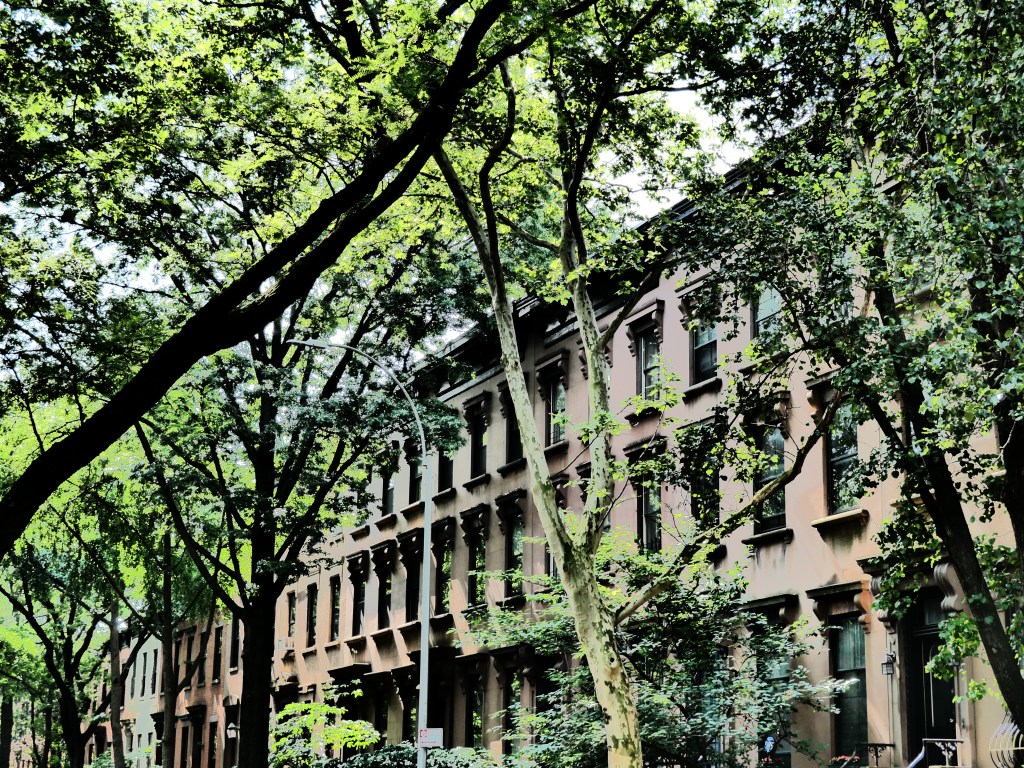
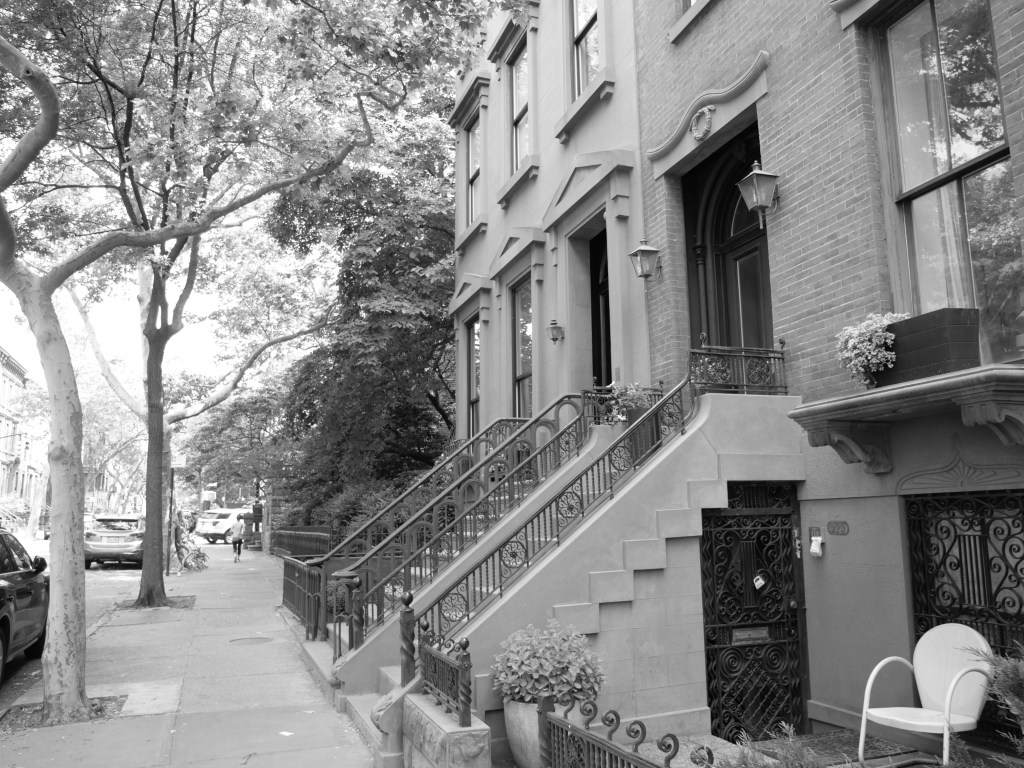
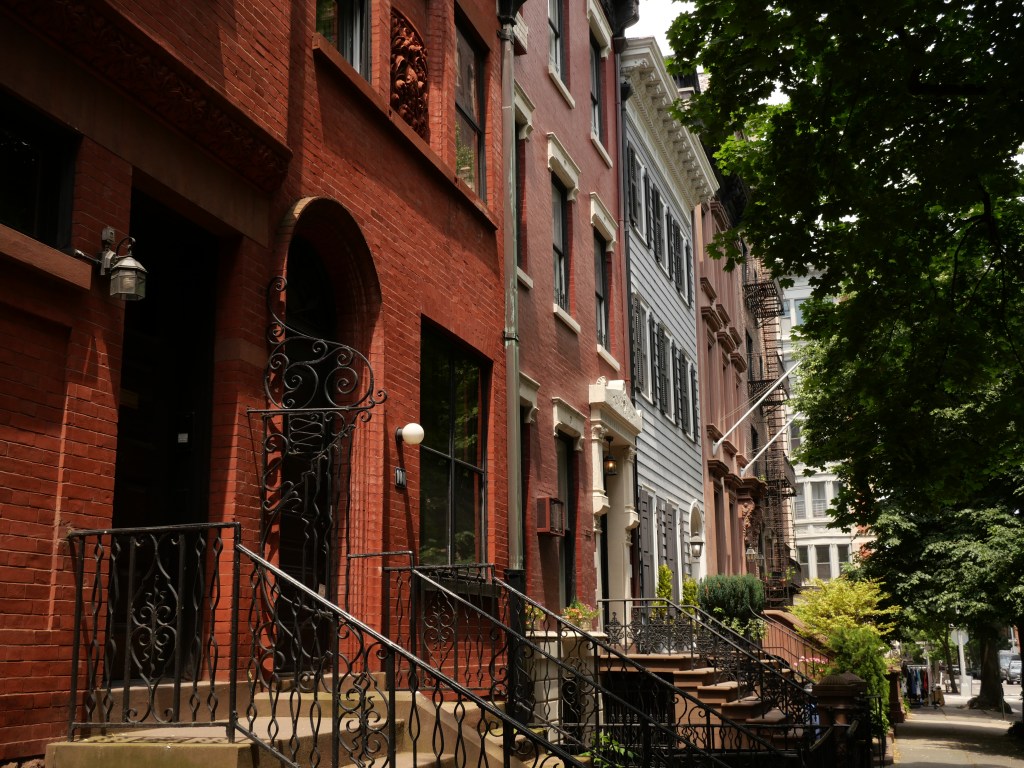
Generally, the neighborhood is divided into three sections from north to south: North Slope, Center Slope, and South Slope. The neighborhood takes its name from its location on the western slope of neighboring Prospect Park. The area was mostly farms and woods until the early 19th century, when the land was subdivided into rectangular parcels. The western section of Park Slope was occupied in the mid-19th century, being located near the industrial Gowanus Canal and ferries. After the completion of Prospect Park, numerous mansions and rowhouses were developed in Park Slope’s eastern section in the 1880s. By 1883, with the opening of the Brooklyn Bridge, Park Slope continued to boom and subsequent brick and brownstone structures pushed the neighborhood’s borders farther. The 1890 census showed Park Slope to be the richest community in the United States.  Park Slope gradually became a more working class neighborhood. Large and opulent brownstones were subdivided and large apartment buildings were constructed. Park Slope experienced decline for a couple decades after WWII but this was not to last as the an influx of young professionals recognized the value and beauty of its brownstones and rowhouses. In 1973  much of the neighborhood was included in the Park Slope Historic District. The neighborhood quickly popularized and once again the upper class of Manhattan began moving back into Park Slope. However this time Park Slope has a wider variety of housing types as many small apartments and condos still remain and many  units are stabilized rentals, allowing a good number of working and middle class residents to continue living here.
From an urban perspective this is likely one of American’s top 5 urban neighborhoods thanks to its proximity to the expansive Prospect Park, perfectly gridded streets, excellent subway and bike access & infrastructure, 30 min subway ride to Dwtn Brooklyn, Lower Manhanttan, and Midtown, great schools, top notch cultural & retail amenities, and several biz districts cutting thru the neighborhood (4th, 5th, & 7th Aves, 9th St, and Flatbush Ave).  The biggest area for improvement is more racial and economic diversity. This can mainly be achieved through providing more affordable housing. In order to achieve this, the Park Slope Historic District regulations need to be loosening a bit to allow new denser development.

Click here to view my Park Slope neighborhood on Flickr

URBAN STRENGTHS:

* Excellent residential density at just over 60K residents.
* Convenient access to 3 NYC CBDs. 30 mins subway to Dwtn Brooklyn and 40 mins to Midtown & Lower Manhattan.
* Nearby perfect street grid besides a couple blocks on the southern edge of the neighborhood.
* Great public transit access with several subway lines servicing the neighborhood. Also outstanding bike infrastructure include many dedicated bikes lanes and several of them are protected. Great access to bike share stations as well.
* Park Slope is one of the safest communities in Brooklyn with only a touch of blight along Flatbush and 4th Avenue.
* Good ADA and Sidewalk in structure but a good 35% have outdated curb cuts.
* Excellent historic architecture. Really only a handful of American neighborhoods are better.
* Some modern-infill (especially along 4th Ave). Generally of very high urban quality except for a couple of blocks along 4th Avenue that still have some autocentric/industrial uses where Park Slope borders Gowanus.
* Solid tree canopy especially as one moved further from Gowanus.
* Good # of young families living here and pretty good age diversity.
* Excellent array of walkable schools including a good mixed of private & public and generally highly rated public schools. Also a good mix of elementary, middle and high schools.
* The massive Prospect Park itself provides Park Slope excellent and varied park amenities including the Brooklyn Botanical Garden and Prospect Park Zoo to name a few. Also several small parks within the neighborhood a community pool and the expansive Greenwood Cemetery to the south.
* Great array of cultural amenities including tons of bars, restaurants & cafes. several art galleries, several live music venues, a couple performing arts theaters, an Indie Theater, and the Brooklyn Museum, Barclay Center, and Botanical Gardens are nearby.
* Excellent retail amenities including several supermarket, grocerias, and co-ops, several drug stores,  great # of boutiques/gift stores,/home good stores, several book stores and hardware stores, several gyms and tons of dessert joints, several bike shops and florists, tons of churches, 3 public libraries, a couple post offices, an ambulatory center is located within Cobble Hill and  a major hospital and many doctor’s offices nearby. On the northern edge there is a Target & Marshall’s, Best Buy, Burlington, and many other stores in the Atlantic Terminal Mall.
* Good amount of rental product as well but also very expensive. Studios 2.5K-3.5K, 1-beds btwn 2.5K-6K  2-beds btwn 6K-7.5K. Some 3-beds. ranging btwn 4K-9K. Good number of rental stabilized units however and the number of rentals below 2K exceeds the # above 2K. 

URBAN WEAKNESSES:

* Not great racial diversity and so so economic diversity but still a good # of rent stabilized units. Likely close to 50% of all units.
* A lot of for sale condo product but generally very expensive. A good number of studios selling anywhere btwn 250K-1M, an extraordinary number of  1-beds selling btwn 400K-3M. But most of these units sell btwn 400K-2M. 2-beds range btwn 650K-4M with most units selling btwn 850M–2.5M. Good # of 3-beds but very expensive ranging anywhere from 500K-5M with most product selling btwn 1.25M-3 M. A lot 4-bed product generally selling btwn 1M-7M. I saw some under market sales as well which makes me think there is likely a Community Land Trust operating in the Neighborhood on a small $ of units.
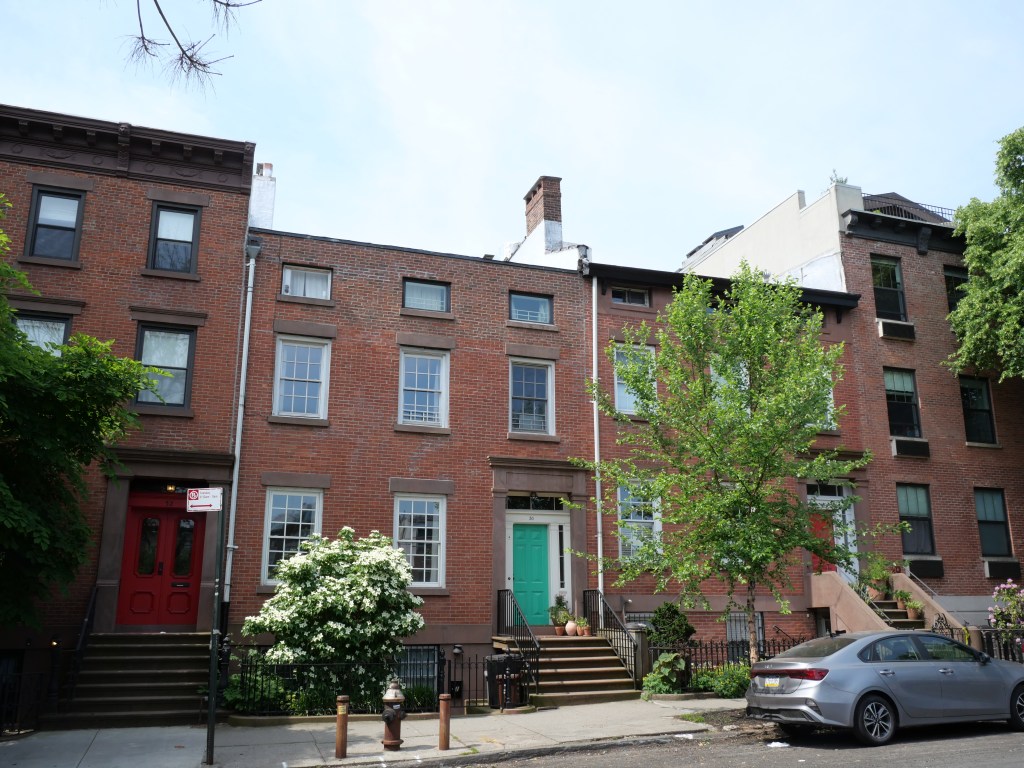
Carroll Gardens- Historic Home to Irish & Italian Immigrants and now a Gentrified Inner Brooklyn Neighborhood with Distintive Setback Brownstones

The Carroll Gardens  neighborhood was named after Charles Carroll, the only Roman Catholic signer of the who immigrated from Ireland. As the neighborhood witnessed a large influx of Irish Immigrants in the mid-19th century this was a good fit. Irish Immigrants were followed by Norwegian immigrants later in the 19th century. The development of South Brooklyn was spurred in the 1840s with the creation of the Green-wood Cemetery and the desire to connect the cemetery to Manhattan.. Ferry lines and streetcar lines were built to achieve such a connection and this began the neighborhood’s development centered around Carroll Park Brooklyn’s third-oldest park. At this time building codes required several streets south of Carroll Gardens to be set back further from the street than was common in Brooklyn. With the draining of the Gowanus Creek, surrounding swampland, and the creation of Gowanus Canal development boomed in the neighborhood as the Carroll Gardens Historic District was born with the large set backs. These set back brownstones were included in a Historic District in the early 1960s and is concentrated between 1st Place and 5th Place.  By the late 19th century Italian immigrants began migrating into the neighborhood drawn by jobs at the nearby Brooklyn Navy Yards. The Irish and Italian clans were often at odds but by the 1950s most of the Irish population left the neighborhood. The creation of the Brooklyn-Queens Expressway helped give Carroll Gardens a  separate character separating it distinctively from Red Hook, a deeply working class Italian neighborhood. By the 1960s young middle-class professionals began to move to Carroll Garden and this began the neighborhood’s gentrification process. The  Italian population remained strong through much of the 20th century but by 1980 it started to drop off decreasing to only 22 %  by 2012. More recently  French immigrants have moved into the neighborhood opening lots of French bakeries and restaurants.

This is a very solid neighborhood from an urban perspective with great retail and cultural amenities, great public transit and bike amenities, good schools, high level of safety and in general an ideal walkable neighborhood. Expensive housing, especially for-sale options, is the biggest challenge facing the neighborhood. I would like to see the north half of the neighborhood (outside of the Carroll Historic District) opened up for new development with large affordable requirements. There is very limited modern in-fill in the neighborhood. The neighborhood could also use some park amenities, an additional supermarket, and more name brand retail.


Click here to view by Carroll Gardens Album on my Flickr Page

URBAN STRENGTHS:

* Excellent density at 54k people per square mile.
* Great public transit access.
* Great ADA and sidewalk infrastructure. A handful of intersections are without updated ADA curb cuts.
* Good tree canopy but lessens on the eastern edge with Gowanus.
* Generally excellent urban form except along the eastern edge of the neighborhood along Smith St where some industrial uses remain. Solid urban streetscaping as well.
* Great access to CBD’s being a 10-15 minute train ride to Dwtn Brooklyn and 30 minute train ride to Lower Manhattan and Midtown. Also excellent bike infrastructure including several dedicated bike lanes and bike share stations.
* Very safe community.
* Decent number of families living here.
* Good walkable schools including several well rating public grade schools. Also plenty of decent sized private schools that are K-8. Several high schools as well but generally specialty ones.
* Good amount of rental product as well but also very expensive. Studios & 1-beds lease btwn n the 2.5K-4.5K, 2-beds btwn 3K-5.5K. Some 3-beds. ranging btwn 3K-6K. Good number of rental stabilized units however and the number of rentals below 2K exceeds the # above 2K.
* Tons of restaurants, bars, & cafes and a handful of breweries. Only a handful of non-food & beverage cultural amenities including some art galleries & night clubs, a performing arts theater and indie theater, a couple local museums.
* Excellent retail amenities including a supermarket & several groceries, a couple drug stores,  great # of boutiques/gift stores,/home good stores, a couple book stores, a  hardware stores, several gyms and tons of dessert joints, a couple bike shops, several florists, some churches a public library, an ambulatory center is located within Cobble Hill and  a major hospital & lots is only 10-15 min walk.

URBAN WEAKNESSES:

* Very limited urban in-fill but the very newer buildings that do exist are of sound urban design. This lack for in-fill is not really a detriment to the urbanity of Carroll Gardens.
* Not great racial diversity as over 70% of the residents are white but better economic diversity.
* A lot of for sale condo product but generally very expensive. Limited # of studios but plenty of 1-beds selling btwn 600K-3M. But most of these units sell btwn 750K-1.5M. 2-beds range btwn 850K-4M with most units selling btwn 1.2M–2.5M. Good # of 3-beds but very expensive ranging anywhere from 750K-4.5M with most product selling btwn 1.8M-3.5 M. A lot 4-bed product generally selling btwn 1.6M-4.8M.
* Decent park access including several small but efficient parks..
* Community post office is just south of the neighborhood. Also no walkable access to any Department stores, Home Depots or the big box chain stores. 

Gowanus- Historic Dumping Grounds of Brooklyn now being Cleaned up and becoming one of Brooklyn’s most Trendy Neighborhoods

The neighborhood is named after a local Native American and became the site of the first settlement by Dutch farmers. The ponds of Gowanus meadowlands served to drive early settlers’ tide-powered gristmills. In the 1860s, the Gowanus Creek was turned into the Gowanus Canal, and the area became a hub for manufacturing and shipping. However, intensive industrial development and  a combined sewer system dumped waste water directly into a designated outflow at the head of the canal. By the late 19th century the neighborhood quickly became one of the most polluted areas of New York. By the mid 20th century with the decline of shipping at the port of Red Hook and manufacturing around New York, Gowanus lost its industrial edge and fell into neglect and decline. In the late 1940s, the neighborhood also became the site of several NYCHA housing projects built to house returning WWII veterans.  These projects remain in the neighborhood’s northern edge.  In 2010, the EPA designated the Gowanus Canal as a Superfund site and allocated 1/2 Billion dollars to cleanup the decades of industrial pollution and sewage contamination. This lead to renewed interest to redevelopment the area, adjacent to the long gentrified inner Brooklyn neighborhoods. For years, new development was hindered by the industrial zoning and the problems of the sewage overflow through the canal water. The City Planning department has been working with local residents for years on a Gowanus Neighborhood Development Land Use Plan with the goal of thoughtfully adjusting local zoning to direct development in appropriate parts of the neighborhood while also building a significant amount of affordable units through inclusionary zoning laws and creating new park space along the Gowanus Canal. Already there are thousands of new apartments and condos in Gowanus along the eastern  and north edges of the neighborhoods. There will likely be an additional 10K units by 2035 with a significant # of them as permanent affordable housing.

The industrial uses of Gowanus, especially in the Southeastern edge of the district certainly reduce its urban viability but Gowanus still remains a pretty dense and very mixed use neighborhood with good public transit & bike infrastructure making it a very walkable neighborhood. Gowanus also has a excellent Cultural amenities as it is one of Brooklyn hippest places for night life and good retail amenities including several big box stores, a Whole Foods, and a good amount of local retail mostly concentrated along 3rd & 4th Avenues and Union Street. With the thoughtful Gowanus Neighborhood Development Land Use plan and EPA Superfund well underway I feel confident that Gowanus will continue to redevelop in a productive way adding a good of affordable units alongside market housing, creating more park spaces, and remediating industrial uses and waste sits. Gowanus has the potential to be an very interesting urban district.


Click here to view my Gowanus Album on Flickr

URBAN STRENGTHS

* Solid density at 24K residents per square mile but a bit low for Brooklyn.
* Great public transit access. Also solid bike infrastructure including several bike lanes and plenty of dedicated bike shares.
* Solid access to 3 NYC CBDs including a 30 minute subway ride to Dwtn Brooklyn, Lower Manhattan, and Midtown.
* Gowanus is overall a very safe community but has a lot of grit thanks to the past and present of Industry in the neighborhood.
* Modern in-fill from the past 15 years is some often urban in-fill. Decent amount of autocentric/industrial crap still around, especially in the southeastern quadrant of the neighborhood.
* Solid walkable school access within and nearby Gowanus. Thanks to Gowanus’ proximity to Carroll Gardens and Park Gardens it has convenient access to several well rated public elementary and middle schools Good # of private schools too. But walkable high school options are pretty limited.
* Good amount of rental product and the market rate units are certainly  very expensive. Because of all the new construction Gowanus has some higher price points than surrounding districts that have extensive historic districts. But Gowanus has a very high % of dedicated affordable and rent stabilized units. There are several large projects were constructed on the north edge of the neighborhood. The number of units below 2K is 4 times more than the number above 2K.  Studios lease in the 2Ks 1-beds btwn 2.5K-5.3K, 2-beds btwn 3K-7K. Some 3-beds. ranging btwn 4K-9K.
* While there are not large parks decent# of small and medium sized parks within or on the edge of Gowanus including a public pool and even some modest waterfront parks running along the Gowanus Canal.
* Good array of restaurants, bars, cafes, and breweries especially in the Northeast gentrified quadrant of Gowanus near Union Street. Also tons of art galleries taking advantage of all the industrial bldgs, a couple local museums, a couple live music venues and night clubs, and several local performing arts theaters.
* Good retail amenities including a Wholefoods, a couple of other supermarkets and small grocerias. Also a Home Depot & a Lowes along with several hardware stores, a Staples, a couple pharmacies, decent # of home goods/antiques/gift stores, handful of clothing/boutiques, a couple bookstores & bike shops, good # of bakeries & dessert joints, plenty of gyms, some churches, and a local post office.

URBAN WEAKNESSES:

* Overall sidewalk infrastructure is good but only about 50% of all intersections have proper ADA curb cuts and a fair amount of the sidewalks are weathered thanks to all the industrial issues present and historical.
* Good amount of surface parking lots and autocentric uses in the Southeastern quadrant of Gowanus that remains very industrial still.
* Not surprisingly tree canopy isn’t that great. Ok along the more residential streets however.
* Pretty consistent grid but connectivity gets disconnected out points due to the Gowanus Cannel and industrial uses.
* Pretty historically negative perception as the neighborhood was literally the sea spool of Brooklyn. But more and more people are finding this an attractive place to live as more and more factories close and the area cleans up.
* Historic rowhouses are generally very working class and therefore pretty plain and often gritty. Plenty of historic warehouses here too.
* Much less pedestrian activity than other surrounding Brooklyn neighborhoods but pretty good in spots (western edge and northern edges).
* A lot of for sale condo product but generally very expensive. Limited studios. Some 1-beds esp. along 4th Ave that sell btwn 650K-1.1M. 2-beds range btwn 850K-2.8M with most units selling btwn 950K-1.5M. Decent # of 3-bedselling btwn 1.3M-2.8M with most product selling btwn 1.8M-3 M. Even more 4-bed product selling anywhere from 1.3K-3.8K. Still a decent #  of “cheaper” rowhouses.
* Only a handful of medical offices, but a major hospital is only 1/2 east of Gowanus, no post office,  

Boerum Hill- Diverse but Gentrified Inner Broolyn Neighborhood and Historic Home of the NYC Mohawk Community

I followed the Google maps boundaries for the neighborhood using Smith St as the eastern boundary and DeGraw as the southern. Boerum Hill is named for the colonial farm of the Boerum family, which occupied most of the area during early Dutch settlement. Most of the housing in Boerum Hill consists of three-story row houses built between 1840 and 1870 and are more plain than the housing in Cobble Hill and Brooklyn Heights as the neighborhood historically hosted many working class families, especially iron workers in the late19th/early 20th century.  Boerum Hill was home to a significant Mohawk community who came to NYC to work on the cities booming skyscrapers.  From the early 1970s until about the early 2000s, Boerum Hill was populated mostly by working & middle-class African-American and Puerto Rican families. But by the late 1990s the neighborhood had largely gentrified and became one of the wealthiest neighborhoods outside of Manhattan. Thankfully this is still a minority majority neighborhood as many working class families were able to stay in the community thanks to the high number of stabilized rentals in the district.

Other than the high housing prices, Boerum Hill is a top notch urban district and arguable one of the best in America. It has excellent public transit access, located just south of Dwtn Brooklyn and an easy subway ride to Manhattan, has quality schools, great retail and cultural amenities all making it very walkable community. Other than the need to provide more affordable housing (especially ownership options) I would like to see are more park amenities and some more dessert joints and bakeries. 

Click here to view my Boerum Hill Neighborhood on Flickr

URBAN STRENGTHS:

* Excellent density at 58K residents per square mile. This is accompanied by excellent transit access to 8 subway lines. Also has excellent access to Dwtn Brooklyn located just north of the neighborhood and a train ride to Lower Manhattan and Midtown are 25 & 30 mins, respectively.
* Excellent bike infrastructure including several dedicated bike lanes and plenty of bike rentals.
* Generally excellent sidewalks and modern ADA curbs, but still several curb cuts that have not been updated. * Great connectivity with gridded, generally small blocks.
* Urban form is really solid with only a handful of surface parking lots and modern public housing bldgs set back from the street. Streetscaping is also solid but a bit outdated on the biz districts.
* Historic architecture is also generally very attractive but does includes some industrial warehouses abutting Gowanus and the brownstones are not as ornate as Brooklyn Heights. Modern infill generally has solid urban form.
* Good tree canopy but not as full as neighboring Cobble Hill or Brooklyn Heights.
* Very safe community with limited blight except some in the transition zone with Gowanus.
* Solid racial and economic diversity. Much better than surrounding Cobble Hill and Brooklyn Heights.
* While market rents are certainly very high, lots of Stabilized rentals in Boerum Hill helping it to remain a diverse neighborhood after it gentrified.
* Solid array of walkable schools including a nice mix of public and private. Public schools are generally rated well but a couple of poorly rated ones. The Brooklyn High Schools of the Arts is located in Boerum Hill and highly rated.
* Good amount of rental product as well but also very expensive. Studios lease in the 2Ks 1-beds btwn 3K-4K, 2-beds btwn 4K-7K. Only a handful of 3-beds. However, there are a fair amount of rent stabilized units as over half of all units rent below 2K.
* Decent park access including several small but efficient parks. Good access still the expansive park amenities running along the East River.
* Solid cultural amenities including plenty of restaurants, bars & cafes, a comedy club, several art galleries, a handful of live music venues & community theaters, a couple of local museums, and the several theaters that make up the Brooklyn Academy Music just  east of Boerum Hill and the Cobble Hill Cinema is nearby.
* Excellent retail amenities including several supermarket, a couple drug stores, several department stores including a target, two Marshalls, and much more sit just North of Boerum Hill. including many name brand clothing stores in Dwtn Brooklyn. Also a great # of boutiques/gift stores,/home good stores, a couple book stores, a couple hardware stores, several churches a public library & post office, several doctor’s offices are located within Boerum Hill and  a major hospital & lots is only 10-15 min walk.

URBAN WEAKNESSES:

  • Decent parks including several small but efficient urban parks. Only large park within 20 min park is Fort Greene Park.
  • A lot of for sale condo product but generally very expensive. Fair amount of studios and 1-beds selling btwn 330K-650K. But most of these units sell btwn 700K-1.5M. 2-beds range btwn 850K-3M with most units selling btwn 1M–2M. Good # of 3-beds but very expensive ranging anywhere from 1.8K-4M with most product selling btwn 1.8M-3 M. A lot 4-bed product generally selling btwn 2M-5M.
  • Only a handful of dessert stores & bakeries

Cobble Hill- One of Brooklyn’s first Neighborhoods to Gentrify and home to some of its best Historic Architecture

I followed the Google maps boundaries for the neighborhood using Smith St as the eastern boundary and DeGraw as the southern. The current name, a revival of a name which had died out by the 1880s, was adopted in 1959 when the neighborhood started to gentrify. Cobble Hill – which was named after the conical shaped hill called “Coleshill” was located where Atlantic Avenue, Pacific Street, and Court Streets intersect. Cobb Hill remained mostly rural until the establishment of the South Ferry in 1836. Development quickly came starting nearer to the waterfront and moving inward. By 1860 Cobble Hill was built out. Cobb Hill also incrementally became a destination for wealthier Manhattanites and matched the affluence of neighboring Brooklyn Heights by the 1870s. By the 20th century the neighborhood transitioned into more of middle class district after it absorbed an influx of immigrants from Ireland, Italy, and the Middle East. By the 1950, brownstones were being rejuvenated and the neighborhood began to experience a renaissance. By 1969  most of the neighborhood was contained within the Cobble Hill Historic District. Cobble Hill has two vibrant commercial districts (Court and Smith) that have a nice mix of generational stores and higher end trendy shops. Cobble Hill become very trendy in the early 2000s as many restaurants and popular bars opened. The neighborhood still retains much of these vibes but the trendiest Brooklyn neighborhoods have moved east.

Cobble Hill is much less racially and economic diverse than neighboring Boerum Hill even though they both have similar levels of affluent residents. Assuming this is largely due to less stabilized rentals being located here. I would like to see affordable condos be build in the neighborhood to help address its lack of diversity and inequities. But for this to occur the neighborhood’s expansive Historic District would be to be relaxed on contracted. But all in all Cobble Hill is another great New York Neighborhood where there is truly little reason to own a car.

Click here to view my Cobble Hill Album on Flickr

URBAN STRENGTHS:

* Excellent density at 55K residents per square mile. This is accompanied by excellent transit access to 5 subway lines. Also has excellent access to a CBD located just south of Dwtn Brooklyn of the neighborhood and a train ride to Lower Manhattan and Midtown are 25 & 35 mins, respectively.
* Great connectivity with gridded, generally small blocks.
* Very safe community with limited blight.
* Excellent bike infrastructure including several dedicated bike lanes and plenty of bike rentals.
* Solid sidewalk and ADA infrastructure with only a handful of outdate curb cuts.
* Get historic architecture mainly Italianate rowhouse/brownstones. Not much urban infill but everything that exists (mostly along Atlantic) is of high urban form and quality.
* Side streetscaping is a bit dated and warn but solid.
* Top Notch urban massing. Can’t find any surface parking lots in Cobble Hill.
* Solid array of walkable schools including a nice mix of public and private. Public schools are generally rated well but a couple of poorly rated ones.
* Good amount of rental product as well but also very expensive. Studios lease in the 2Ks 1-beds btwn 3K-4K, 2-beds btwn 4K-7K. Only a handful of 3-beds. However, there are a fair amount of rent stabilized units as over half of all units rent below 2K.
* Solid cultural amenities including plenty of restaurants, bars & cafes, several art galleries, a couple community theaters, a couple of local museums, the Cobble Hill Cinema and good access to the cultural amenities in Dwtn Brooklyn.
* Excellent retail amenities including several supermarkets & drug stores, a Marshall’s,  Mitchell’s, Five Below and easy access to all the Department and name brand clothing stores in Dwtn Brooklyn, great # of boutiques/gift stores,/home good stores, a couple book stores, a couple hardware stores, several gyms and dessert joints, plenty of churches a public library, an ambulatory center is located within Cobble Hill and  a major hospital & lots is only 10-15 min walk.

URBAN WEAKNESSES:

  • A lot of for sale condo product but generally very expensive. Fair amount of studios and 1-beds selling btwn 500K-800K. But most of these units sell btwn 800K-1.5M. 2-beds range btwn 600K-2M with most units selling btwn 900K-2M. Good # of 3-beds but very expensive ranging anywhere from 1.3K-4M with most product selling btwn 1.5M-3 M. A lot 4-bed product generally selling btwn 2.5M-5M.
  • Overall not great diversity as this is a majority white neighborhood. But a decent amount of lower-middle class households likely thanks to rent stabilization and a decent number of families with kids.
  • Moderate amount of rental product as well but also very expensive. 1-beds btwn 3K-4K, 2-beds btwn 3K-6K. Only a handful of 3-beds are pretty rare. Fortunately a decent amount of the rental product is stabilized.
  • No neighborhood post office”

Brooklyn Heights- New York’s First Commuter Suburb, First Historic Preservation District, and home to many of the City’s Leading Abolitionists

Originally referred to as Brooklyn Village, Brooklyn Heights has been a prominent area of Brooklyn since the early 19th century. It was the first part of Brooklyn to see major residential development and became New York’s First commuter suburb with the establishment of regular ferry service making it an easier commute to Lower Manhattan than from the Upper West and East sides. By the Civil War there were over six hundred brownstones built and by 1890 the neighborhood was completely built out. Brooklyn Heights contains the largest concentration of Anti-Bellum housing in New York with the majority of such structures concentrated in the northern edge. The neighborhood also became a hot spot of leading abolitionist leaders and major stop along the underground railroad.  By the early 20th century, Brooklyn Heights was well connected by subways going into Manhattan and the neighborhood lost its specialness, which lead it to transition from a more exclusive neighborhood to one welcoming more and more working and middle class families as most mansions were divided up into  apartments and boarding houses. Artists and writers began to move into the neighborhood and large hotels sprung up in the 1920s. During the 1940s and 1950s Robert Moses forced his Brooklyn-Queens Expressway along the western and northwestern edges of the neighborhood removing a significant chunk of Brooklyn Heights’ oldest Brownstones. The Cadman Plaza development along the eastern edge in 1960 displaced 1,200 residents but at least provided modest rental and co-op housing. Neighborhood opposition led the Brooklyn-Queens expressway to be routed from the heart of the neighborhood to the bluff and helped created the Brooklyn Heights Promenade. Brooklyn Heights also hosted the City’s first major preservation movement leading to the City’s first Historic District in 1965 protecting a large chunk of the neighborhood’s historic character. This helped lead to Brooklyn Heights being one the first Brooklyn neighborhoods to gentrify in the 1970s & 80s.  The 2010 brought the extensive Brooklyn Promenade and Pier parks giving the neighborhood excellent park amenities.

Brooklyn heights contains main business districts: Montague, Atlantic, and several blocks of Henry. The Eastern edge of the Brooklyn Heights is the Downtown transitional zone along Court Street and a block of Montague. From a urban perspective there area only a few areas of improvement I see. Brooklyn Heights needs a lot more affordable housing units, which can only be built if the historic preservation designation is relaxed. This would help add much needed economic and racial diversity. The district could also use a sprucing up of its streetscaping as well and more schools and larger affordable housing units to welcome more families.

Click here to view my Brooklyn Heights Album on Flickr

URBAN STRENGTHS:

* Great density at just over 70K per square mile.
* Top notch transit access and excellent access to Dwtn Brooklyn just to the east and only a 15-20 min train ride to Downtown Manhattan and Midtown.
* Connectivity is great except for the fact that I-278 cuts through the northern and western edge of the neighborhood.
* Excellent bike infrastructure including several dedicated bike lanes and good access to bike rentals.
* Overall a very safe community.
* Excellent historic architecture. A great mix of mid-late 19th century rowhouses & brownstones and early 20th century apartment bldgs.
* Great tree canopy especially considering how dense the neighborhood is. Feel more like a tree canopy in Paris.
* Good amount of rental product as well but also very expensive. Studios lease btwn 2.5K-4K, 1-beds btwn 3K-4.5K, 2-beds btwn 4K-8K. Only a handful of 3-beds. However, there are a fair amount of rent stabilized units as Medium rent is around 3K and half the units rent below 2K.
* Excellent park amenities thanks to the new and extensive Brooklyn Bridge and Pier parks developed along the East River between 2010-2021. The parks include roller rinks, pickle ball courts, recreational trails, large lawns with great views of Lower Manhattan, playgrounds, dog parks, beaches, basketball courts, soccer fields, marinas & more. Up the hill is the Brooklyn Heights Promenade was created in the 1950s above the Robert Moses designed Brooklyn-Queens Expressway. The Cadman & Columbus Plazas also sit on the neighborhood’s eastern edge.
* Pretty good school access including a well rated public and private grad school, a couple specialty public high schools and several other well rated private or specialty public schools in surrounding districts.
* Very vibrant foot traffic but not overwhelming like in Midtown.
* Excellent retail amenities including several supermarkets & drug stores, a Marshall’s Mitchell’s, Five Below and easy access to all the Department and name brand clothing stores in Dwtn Brooklyn, good # of boutiques/gift stores,/home good stores, a couple book stores, a couple hardware stores, several gyms and dessert joints, plenty of churches, a major hospital & lots of doctor offices, plenty of salons, and  Dwtn library & post office.
* Good cultural amenities including plenty of restaurants, bars & cafes, a couple live music venues & night clubs, a couple museums on the edge of Dwtn Brooklyn, a couple performing arts theaters, and convenient access to the indie theater in Dwtn and its cultural amenities.

URBAN WEAKNESSES:

  • Not much modern in-fill other than a handful of buildings along the neighborhood’s eastern edge with Dwtn but this doesn’t negatively impact much the urban quality of the neighborhood.
  • Overall not great diversity as this is a majority white neighborhood. But a decent amount of lower-middle class households likely thanks to rent stabilization.
  • A lot of for sale condo product but generally pretty expensive. Fair amount of studios and 1-beds selling btwn 300K-500K. But most of these units sell btwn 500K-1M. 2-beds range btwn 600K-2M with most units selling btwn 900K-1.3M. Good # of 3-beds but very expensive ranging anywhere from 850K-4.3M with most product selling btwn 1.5M-3.5M. Some 4-bed product generally selling for a couple Million more.
  • Some of the streetscaping looks a bit tired and some intersections have outdated ADA curb cuts.”

Downtown Brooklyn, NY

Historically, Downtown Brooklyn was built just up the hill from where present day Dumbo and Vinegar Hill stand in the middle 19th century as growth from the Port of New York on Manhattan caused shipping to spill over into Brooklyn. As Brooklyn came into its own in the late 19th century , Downtown Brooklyn became  primarily a commercial and civic center hosting the Brooklyn City Hall and Courthouse with relatively little residential development and only a handful of antique skyscrapers for office uses. The 1950s brought several generally harmful urban renewal projects to Dwtn including the redevelopment of several blocks project housing, street widening (i.e. Boerum Place) which leads to a widened approach to the Brooklyn Bridge, and the construction of I-278. My sense is that not  much changed in Dwtn Brooklyn between the 1960s and 2000s. But by 2000 after an important report by the  Regional Plan Association, Downtown Brooklyn pivoted to spur new growth by encouraging both new commercial and residential high-rises and realizing the report’s findings that it could become the City’s third-largest business district thanks to its proximity to Lower Manhattan. The major catalytic event was the rezoning of Downtown  in 2004, By 2015 Dwtn Brooklyn was also becoming a growing hub for education and by my estimates hosts at least 30K college students.

Thanks to its residential density, excellent transit & bike infrastructure, great retail amenities & vibrant pedestrian activity, solid park amenities, and proximity to Manhattan, this compact CBD is one of America’s best urban Downtowns even if it is overshadowed by Midtown and the Financial District. The biggest challenge facing Downtown Brooklyn is staggering high housing costs, although at least half of the rental product is rent stabilized. I would also like to see more cultural amenities in Dwtn (i.e. more restaurants, bars, theaters, and live music venues). While Dwtn has a great array of Department stores and name brand clothing stores concentrated along Fulton Street, it lacks locally owned boutiques and creative retail stores.

Click here to view my Downtown Brooklyn Album on Flickr

URBAN STRENGTHS:

  • Solid architecture all around both historic and post WWII. Buildings generally have very good urban form.
  • Top notch density for a Dwtn area at 50K per square mile. Only Midtown and Dwtn NYC are denser.
  • Very limited surface parking and autocentric uses in Dwtn Brooklyn. The worst urban form are the two mid-century public housing projects (Concord Village & University Towers) which have surface prkg btwn the buildings. If these aren’t that egregious.
  • Excellent ADA & sidewalk infrastructure throughout.
  • The Skyline is not quite as nice as Downtown NYC, Midtown and Chicago but still pretty top-notch for American skylines.
  • Great pedestrian activity.
  • Excellent public transit hub providing a central point to the entire Borough of Brooklyn and out to Long Island.
  • Excellent bike infrastructure within Dwtn Brooklyn with plenty of dedicated bike lanes. The Bike share system and comprehensive bike lanes however really only extends out to about 1/2 of Brooklyn and loses steam in southern and southeastern Brooklyn.
  • Good number of schools in Dwtn Brooklyn with generally good ratings. Lots of specialty High Schools (both private and public). Some really good public schools in adjacent Brooklyn Heights.
  • Great number of apartments in Dwtn Brooklyn but the market rate units are very expensive. Fortunately about half of the units are either rent stabilized or permanent affordable units under 2K. Market studios lease btwn 3K-5K, 1-beds 3K-6K, 2-beds 4K-8K. And some 3-beds units that are even more expensive.
  • Solid park amenities including the large Cadman Plaza Park. Commodore Berry Park w/ a public pool, several smaller parks, and the large Fort Green Park just east of Dwtn.
  • Columbus Park/Korean War Memorial/Cadman Plaza Park are really one unified plaza space with Columbus Park sitting just outside of Brooklyn City Hall. This is the civic heart of Dwtn and seems to get a good amount of events and active use.
  • Good cultural & regional amenities in Dwtn but a bit underwhelming for NYC. In addition to plenty of food & beverage amenities there are a handful of art galleries, a couple museums, the Dekalb Market Hall, a indie movie theater, a couple theaters and night clubs, and the Barclay arena is just south of the neighborhood. Great surrounding cultural amenities in the adjacent neighborhoods and only a 20 min subway ride to Manhattan.
  • 3rd largest employment hub in NY with btwn 50K-85K depending on how you measure Dwtn. Job # are on the increase.
  • Great retail amenities including several supermarkets, a dwtn target, a Macy’s, Burlington, and several other big retailer names concentrated along Fulton St, a couple of pharmacies, a couple bookstores, several furniture stores, a hardware store, lots of jewelry stores, plenty of bakeries & gyms, a dwtn post office & library, a Brooklyn Hospital is just east if Dwtn. Not a ton of boutiques and local gift stores here however.
  • Several large enrollment universities in and near Dwtn Brooklyn. About 30K students.

URBAN WEAKNESSES:

  • Decent age diversity and % of families with Children for a dwtn area but very limited kid friendly activities dwtn.
  • Generally good connectivity and many shorter blocks but a good amount of highways and boulevards break out the street grid.
  • Good amount of for sale condos but also very expensive. Studios and 1-beds sell btwn 300K-1M, 2- beds btwn 650K-1.5K Decent amount of 3-beds but very expensive. Selling generally btwn 1-3M.
  • Decent number of restaurants & bars in Dwtn Brooklyn but kinda underwhelming for New York. Only a handful of breweries. Also not major conversion center here. .”

Stillwater, MN- One of Minnesota’s First Settlements and Major Tourist Destination for Twin City Residents

The name derives from the St. Croix River’s calmness near the town center. Stillwater was one of the first settlements in Minnesota witnessing newcomers in the 1830s. And its official founding was in 1843. Stillwater was also the site for the selection of the State Capital and the University of Minnesota.  Stillwater’s initial population boom was due to its strategic location to significant forest to the north along the St. Croix River.  The settlement grew to 4K in 1870, 12K in 1900, but then began a rare population decline in the early 20th century, likely due to the collapse of the lumber industry in Minnesota. By 1940 Stillwater had contracted to just 7K residents. This, however, was not to last as Stillwater became an attract suburb in the Post War area. After significant suburb growth & annexation, along with becoming a popular tourist destination, Stillwater now has a population of nearly 20K whose daytime population swells in the height of the tourism season.

From an urbanist perspective Stillwater has a very intact Dwtn core, mainly focused on the St. Croix Scenic Byway. Several nearby blocks also have attractive historic commercial buildings as well. The surrounding residential streets are generally attractive late 19th and early 20th century single family housing and more and more denser apartments and luxury condos and townhomes are being built on the edge of Dwtn. Stillwater has a great array of local retail and boutiques and also contains many restaurants, bars and cafes. Stillwater has become a pretty exclusive place if one wishes to live here. Rentals are limited, for sale housing is pretty expensive and the bulk of the population is higher earning White families. Given its low density, I would like to see a lot more dense housing built, especially rentals available to working people. Schools are also generally located outside of the City core, and transit service is very limited.

Click here to view my Stillwater album on Flickr

URBAN STRENGTHS:

* Overall very good sidewalk and ADA infrastructure. Just a handful of streets on the edge of this evaluation area lack sidewalks.
* Excellent tree canopy.
* Decent for sale options with a handful of 1-bed homes that sell in the 200KS & 300Ks, 2-beds sell btwn 200K-800K with higher end product concentrated in newer townhomes in Dwtn Stillwater. 3 & 4 beds sell btwn 300K-1M.
* Excellent waterfront trail and park space. Other than this are a couple of smaller parklettes, several ballparks, a public golf course, and cemetery.
* Great cultural amenities including tons of restaurants, bars & cafes. Also a handful of art galleries, a couple museums & live music venues, and several historic sites.
* Good retail amenities including a Co-op, a great array of locally owned boutiques, antiques, &  gift shops, a couple bookstores. a local florists, plenty of dessert joints & bakeries, a couple gyms, a public library, several churches, and a local hospital.
* Overall Stillwater is a very a safe community.
* Good historic architecture, especially the commercial buildings along St. Croix Trail. Modern-infill is limited but some pretty urban apartments and townhomes in the Dwtn area.
* Great pedestrian activity in Dwtn Stillwater. Much quieter in the residential areas.

URBAN WEAKNESSES:

  • Some buses travel to Dwtn St. Paul and Minneapolis (40 mins and 60 mins) but other than that public transit is limited. One can still drive to Dwtn St Paul in 25 mins and 35 mins to Dwtn Minneapolis.
  • Very low density for an urban district but this is still a town seperated from the Twin Cities.
  • A couple scenic bike trails crossing St. Croix river or running alongside it but not terribly practical.
  • Not great diversity indicators.
  • Only a couple small schools within the walkable part of Stillwater but both a large public elementary and middle school sit just west of the Stillwater core.
  • Rentals are pretty limited in Stillwater.”

Downtown Minneapolis

It is a bit difficult to untangle Dwtn Minneapolis from its surrounding inner city districts. My approach was to include the core of Dwtn and the parts of the surrounding inner city district that feel Dwtn in fabric. I used 3rd avenue/I-394  as the northern border including a couple blocks of the Warehouse District, the eastern edge of Loring Parks as the Western border, Grant St and I-94 as the southern, Fifth Avenue as the SE border as Elliot Park was not included in this evaluation, and the Mississippi River as the Eastern border including both the Gateway and Dwtn East neighborhoods within the Dwtn evaluation area.

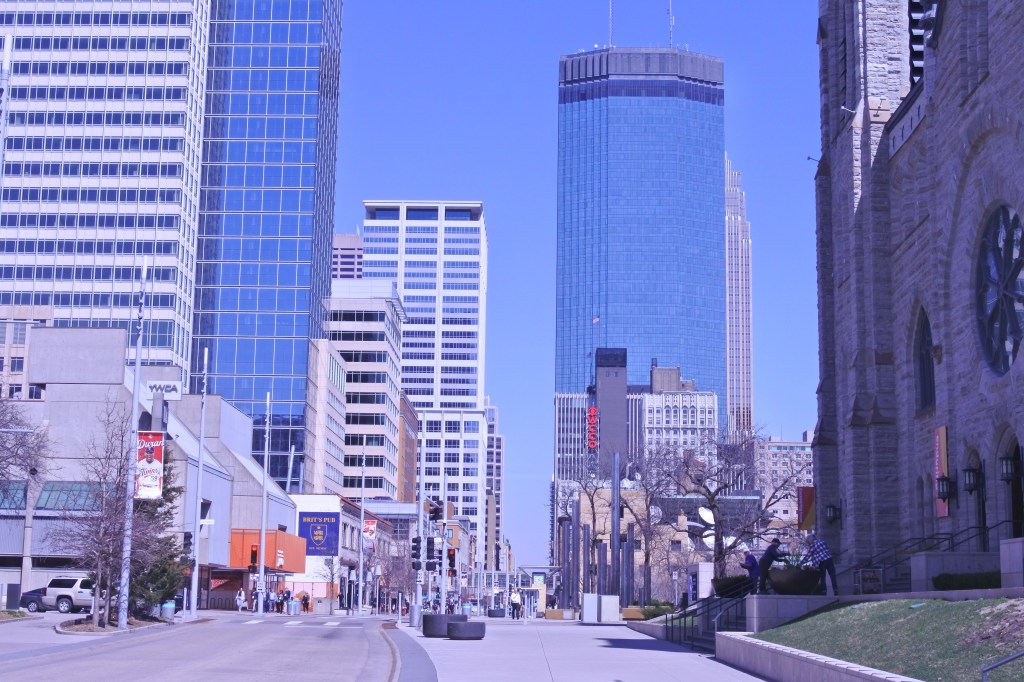
Downtown Minneapolis is very much a Midwestern Downtown with its large surface area, vertical modern high-rises accompanied by large plazas and extensive nearby parking garages & lots, wide streets, an extensive highway network inclosing it, and overall a grand and regal feel to it. And outside of Chicago, Dwtn Minneapolis has a strong argument for being the best Dwtn in the Midwest thanks to its large Dwtn population accompanied by big city amenities (supermarkets, a target, several malls,  and extensive theaters and live music venues). Dwtn also excels with great sidewalk and ADA infrastructure, an excellent bike and transit network that extends across the entire City of Minneapolis and beyond, great concentration of 3 professional sports venues a top notch convention center, and over 100K employees working here (at least pre-pandemic).

But there are several aspects of Dwtn Minneapolis that are not top-notch that leave the door open for Midwestern cities like Cleveland, Cincinnati, Detroit, Indianapolis, and Milwaukee to claim Midwestern’s second best dwtn title. Dwtn Minneapolis has good but not great park amenities. The Commons is not a strong Civic Heart and outside of the Riverfront and Loring Park, park spaces are limited. Street vibrancy is not what it should be for a Dwtn hosting 20K people. This is largely due to a lack of street boutique retail as retail is concentrated in indoor malls and the City’s extensive skyway system. But it is also due to Dwtn’s wide streets and remaining surface parking lots and extensive parking garage network. Dwtn could also use more K-12 schools making it more walkable to families and should try to increase the number of students Dwtn to add to street vibrancy. Other than post-pandemic retail and office struggles, the trajectory is good for Central Minneapolis. I foresee its population continuing to grow, new mixed-use infill claiming more and more surface parking lots, better car free modes of transportation. But the open question is whether Central Minneapolis will become a great Dwtn more similar to Chicago? Will it perhaps close down the inner belt that separates it from many great inner city neighborhoods? We shall see.

Click here to view my Downtown Minneapolis album on Flickr

URBAN STRENGTHS:

* Great density for an Dwtn district and pre=pandemic had over 100K working dwtn.
* Excellent sidewalk and ADA curb cut infrastructure. Only about 10% of intersections are without upgrade ADA curb cuts.
* Almost all of Minneapolis proper has solid public transit access. The City has also recently built 3 light rail lines and many Bus Rapid Transit routes. Public transit service however out to the suburbs is generally only good for 2-4 miles.
* Minneapolis has an extensive bike lane system serving well every neighborhood within the City and including tons of bike lanes even dwtn. The bike share system, while dockless, forces uses to park bikes on City bike racks. Decent bike connections to the suburbs but they are often fragmented esp. to the north and west of the City where there are more lakes.
* Excellent Dwtn Grid. Easy to navigate.
* Good amount of for-sale product with 1-bed condos selling btwn 150K-600K (some luxury product selling for 2 M), plenty of 2-bed condos selling btwn 200K-800K, and a good amount of 3-bed product generally starting in price at 450K but some cheaper product selling around 200K.
* Tons of rental product with plenty of studios leasing btwn $750K-2K, 1-beds btwn $950-2.5K, 2-beds ranging anywhere from 1.3K-4K. Decent # of 3-beds but generally pretty expensive.
* Very attractive skyline with many vertical towers well concentrated in the core of Dwtn.
* Good but not world-class parks in Dwtn Minneapolis. The highlight is certainly the extensive riverfront parks along the Mississippi River which includes the raised Gold Metal Park, Mill Ruins, and the extensive recreation trail. Loring Park on the western edge of Dwtn is also a highlight including the Loring Greenway that cuts into Dwtn. The Commons Park functions as “Civic Heart” of Dwtn. While it has planned activities is pretty bland and not well trafficked. A couple other smaller plazas spread through Dwtn.
* Solid cultural amenities including plenty of restaurants, bars, & cafes, a handful of art galleries & breweries, plenty of theaters & music venues especially concentrated along Hennepin Ave, tons of night clubs, and a couple of museums. Regional amenities include a large convention center, professional baseball, basketball, & football arena.
* Decent college enrollment of about 7K between Minneapolis College, Minneapolis Community & Technical College, Dwtn St. Thomas University, and North Central University but a bit underwhelming for a City of Minneapolis’ size.
* Solid architecture with a good amount of quality historic buildings, attractive midcentury high-rises, and solid modern apartment bldgs.
* Good retail amenities including 4 major grocery stores, a Target, several drug stores, several indoor malls & all the shopping inside the skybridge system, the Dayton Project Dept Store, plenty of salons, a couple bookstores, several dessert joints & gyms, plenty of churches, a major hospital, a Dwtn post office & public market.

URBAN WEAKNESSES:

  • Diversity indicators Dwtn are so so.
  • Too many wide streets including 3-4 lane one way pairs. Too easy to drive into Dwtn.
  • Schools dwtn are generally small or not rated highly. Best school is the FAIR Senior High.
  • Certainly some dead spots dwtn but several pretty active areas (i.e. Nicolette Mall, Downtown East, Convention Center)
  • Vibrancy is ok and could be so much better if it wasn’t for Downtown’s extensive skybridge system, many autocentric uses, parking garages, and parking lots.
  • Much of the retail is concentrated in the many Dwtn malls and skyway system. Limited amount of street retail that lends itself well to more local boutiques. The pandemic has also not been kind to Dwtn’s retail activity. Some of these smaller shops are located in the Warehouse District which sits on the north edge of Dwtn. “

Downtown Saint Paul, MN

1841, Father Lucien Galtier established a Catholic chapel (near present-day Second Street and Cedar Street), on the bluffs above the Lower landing naming it in honor of his favorite saint. This is essentially where Saint Paul’s development first began although the Upper Landing Development near modern day Irvine Park was established soon over. Downtown Saint Paul naturally grew out of the Lower Landing site evaluating into the Lowertown District as shipping and commerce grew thanks to this being the first port of access to the Twin Cities. By the 1870s Lower landing grew into a major shipping and rail yard with more and more warehouses. Eventually by the late 19th century commercial buildings incrementally filled in the rest of current day Dwtn St. Paul. The next major development in Downtown was the creation of the Minnesota State House which was completed in 1905. The early 1950s saw the creation of the expansive State  mall that currently surrounds the Capitol. This was in reality a major urban renewal project that razing several blocks of a deemed undesirable neighborhood north of Dwtn. This coupled with extensive highway and innerbelt construction left Downtown St. Paul with a significant amount of dead and underutilized spaces. Like Downtown Minneapolis, Downtown Saint Paul adopted an extensive skyway system consisting of 40 bridges and experienced a skyscraper-building boom beginning in the 1970s.  Interestingly, because the  City Center is directly beneath the flight path into the airport across the river there is a height restriction for all construction.

The scares of Saint Paul’s extensive highway and urban renewal projects are still very visible today and have left Dwtn with a low level of vibrancy on its streets. Nevertheless Downtown has seen a resurgence of Dwtn living and has grown from 5K to 10K between 2010 and 2020. Like most American dwtn’s Saint Paul also has a solid concentration of theaters and cultural/regional amenities, decent park spaces, plenty of Museums, a supermarket, and decent retail amenities. Dwtn hosts around 60K office workers (pre-pandemic), is a solid hub for transit and biking access across the City. But for this to be a great Dwtn, it needs not only more population but an improved urban realm erasing many of the mid-century development mistakes. Significant attention should be made to redeveloping dead spaces surrounding the Capitol Complex, adding more retail amenities, and creating a better sense of place Dwtn. Given St. Paul’s relatively modest size, I think this is a very doable proposition. 

Click here to view my Dwtn St. Paul album on Flickr

URBAN STRENGTHS:

  • Excellent ADA infrastructure. Good wide sidewalks and nearly every Dwtn intersection has modern ADA curbs.
  • “* Good density for a Dwtn area.
  • Solid public transit access throughout most of Saint Paul and especially good Dwtn and the surrounding neighborhoods. Decent transit service only extends a couple miles out to the suburbs north and south of the City.
  • Good amount of attractive historic architecture but less than most mid-western cities.
  • While Saint Paul only has a dockless bike share system Citywide it has a good array of bike lane connections including a couple lane seperated options within Dwtn, good connections to city neighborhood (especially to the west and north), and decent bike connections to the suburbs, especially to the south. Suburban connections are pretty fractured north and east of the City thanks to all the Minnesota lakes.
  • Cultural amenities include a good number of museums including family friend options like the Children’s Museum & Science Center.
  • Good diversity indicators among residents living dwtn and pretty friendly place for families to visit.
  • Decent skyline thanks to a good cluster of medium sized skyscrapers. Not many distinctive skyscrapers however.
  • Solid park amenities including Rice Park & Mears Park, which serve as Dwtn’s Civic Plazas, some decent riverfront parks along the water and up on the bluff, a couple small plazas, the extensive but dead mall space Infront of the Capitol Bldg, and Bruce Vento Nature Sanctuary, an extensive reclaimed industrial sight now run by NPS.
  • Excellent dwtn mark that is open on the weekends. This has been part of St Paul’s history for 165 years.
  • Solid # of rental options including plenty of studios leasing generally in low 1KS, 1-beds lease in the 1Ks, 2-beds btwn 1.5Ks-2.5Ks. Decent amount of dedicated affordable rentals as well dwtn.
  • Pretty good number of for-sale options that are generally moderately priced. 1-bed condos sell btwn 100K-350K, good diversity with 2-bed condos selling btwn 150K-600K, and some 3-bed condos selling btwn 330K-700K.
  • Solid cultural/regional amenities including a decent # of restaurants & bars, plenty of cafes, good array of Dwtn museums and a couple art galleries, a minor league sports arena/convention center & ballpark, a couple night clubs & live music venues, and several theaters mostly located near each other. Good concentration of governmental buildings Dwtn augment by all the state offices surrounding the Capitol Building.
  • Pre-pandemic Dwtn hosted around 60K, a respectable # considering Minneapolis hosted over 100K in a metro of 3.7 M
  • Decent retail amenities include a supermarket, a couple drug stores, some boutiques & gift shops, a couple book stores, a major Dwtn public library & historic post office, plenty of banks, several dessert joints & a couple gyms, a major hospital & several doctor’s offices.

URBAN WEAKNESSES:

  • Not a fan of much of Dwtn St. Paul’s modern in-fill. There is limited mixed-use residential and plenty of bland office towers and auto centric uses.
  • While there is a decent dwtn population, Dwtn Saint Paul feels pretty dead. This is likely due to a lower amount of cultural & retail dwtn amenities as most American Dwtn, lots of bland office towers, parking lots, and more autocentric urban renewal uses, and a local a strong civic center to Dwtn.
  • Dwtn grid is fine but too many boulevards and large 1-way streets. Its way too easy to drive to Downtown St. Paul.
  • Neither Mears Park or Rice Park are strong Civic Spaces. While they do a fair amount of programming they generally feel pretty dead and the design is nothing special.
  • Excellent Performing Arts High School Dwtn. But not much else schoolwide other than a couple small charter school and underperforming public middle school.
  • Two community colleges on the edges of Dwtn (St. Paul College and Metropolitan State) with a combined enrollment of about 7K. Given these are commuter colleges and not well connected to Dwtn, not sure if they add much vibrancy to Dwtn.
  • 3-bed rentals are very limited.