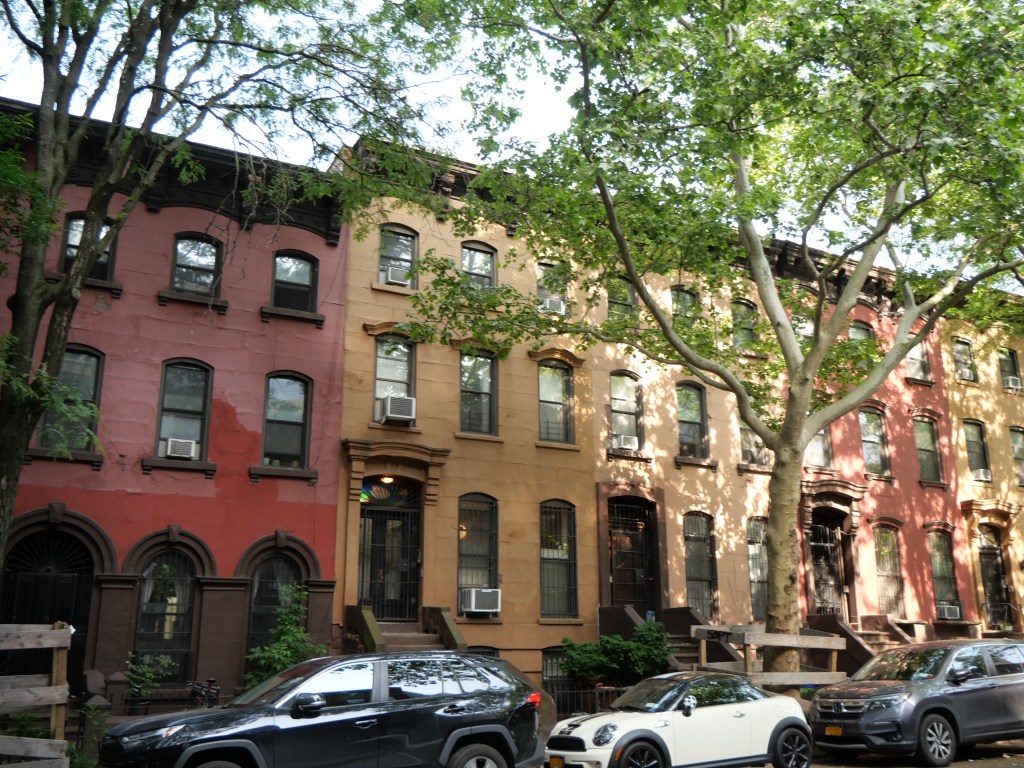
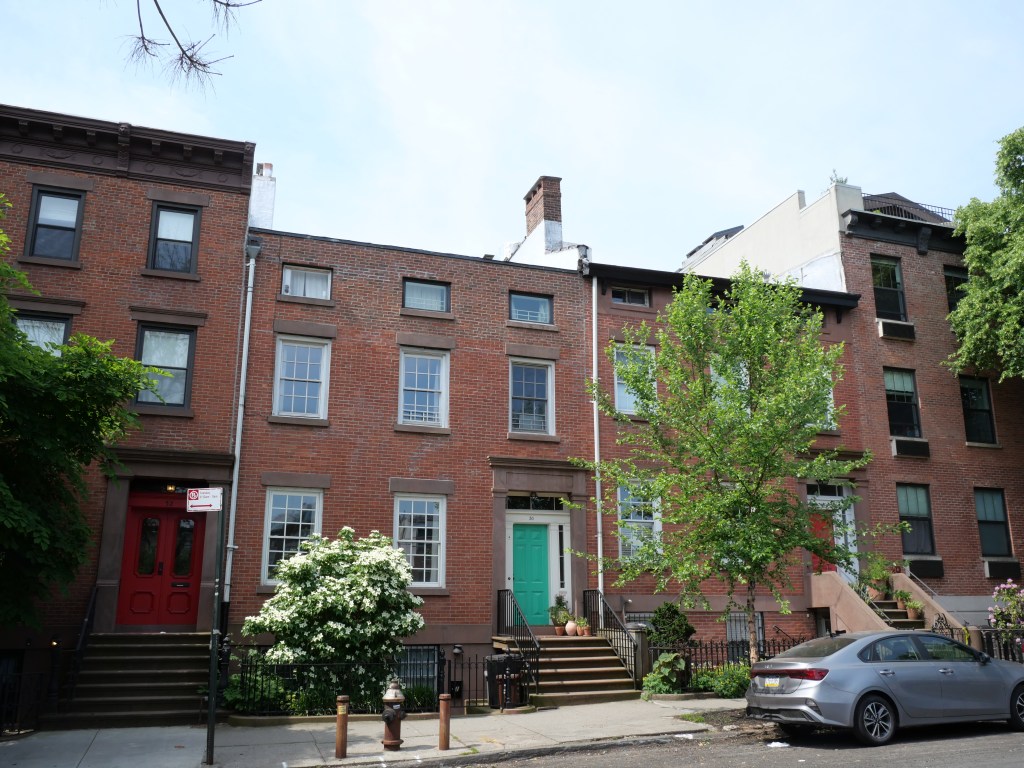
Clinton Hill received its name in honor of New York Governor DeWitt Clinton and due to its slight elevation above the surrounding area. Clinton Hill’s European roots began with the Dutch who cultivated tobacco plantations in the 1640s The area remained largely rural until the 1830s when the tree-lined Clinton Avenue was laid out as a boulevard along the crest of the hill in 1832. By the 1840s, Clinton Hill and neighboring Fort Greene had become fashionable neighborhoods for those who could commute to Manhattan by way of a stage coach to the Fulton Ferry. By the 1880s Clinton Hill was largely built out with mostly rowhouses attracting middle class professionals and more and more working class families. Oil executive Charles Pratt founded the Pratt Institute in 1887 as a private college which remains to this day. By 1920 several apartment buildings were built on Clinton Avenue and Washington Avenues. The1940s-1950 brought the construction of several affordable high rises raising the blocks surrounding the Platt Institute. Fortunately Clinton Hill retained its urban cohesion and most of its browntowns and rowhouses in time for the 1970s preservation movement, which lead to the restoration of many of these gems. In 1985 a significant portion of the neighborhood was included in the Clinton Hill Historic District.
From an urban perspective this is a top tier urban district with excellent walkability thanks to the neighborhood’s robust public transit and bike infrastructure, retail and cultural amenities running along Fulton, Myrtle, and Atlantic. Clinton Hill also has convenient access to 3 major Dwtns in New York, great schools, dense tree canopy, and a high level of safety. While the neighborhood has certainly gentrified in the last several decades, it has managed to hold on to much of its economic and racial diversity thanks to a sizable number of affordable housing and rental units. But as always there are still small ways the neighborhood could improve. More infill and road dieting is needed to tame the autocentric thoroughfares of Atlantic and Flushing Avenues. Significant effort should also good towards maintaining affordable rentals and creating new affordable condos likely through a Community Land Trust structure.
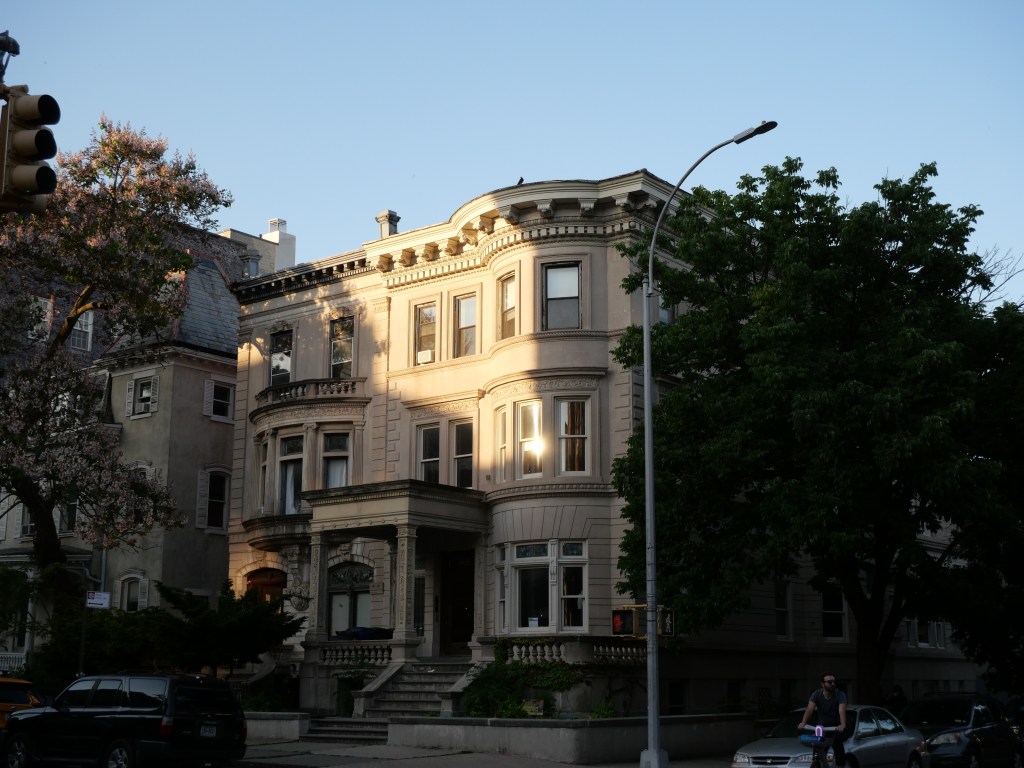
Click here to view my Clinton Hill album on Flickr
URBAN STRENGTHS:
* Solid urban density at around 53K per square mile.
* Great access to 3 top CBDs including a 15 min subway ride to Dwtn Brooklyn and 30 mins to both Lower Manhattan & Midtown. Quicker to bike to Dwtn Brooklyn and Lower Manhattan in most cases.
* Other than the Brooklyn-Queens Expressway running along the north edge of the neighborhood, connectivity is nearly perfect.
* Solid ADA Curb and sidewalk infrastructure throughout but about 40% of intersections have outdated ADA curbs.
* Excellent bike infrastructure including several dedicated bike lanes and a good number of share stations, although not as many as most Inner Brooklyn neighborhoods.
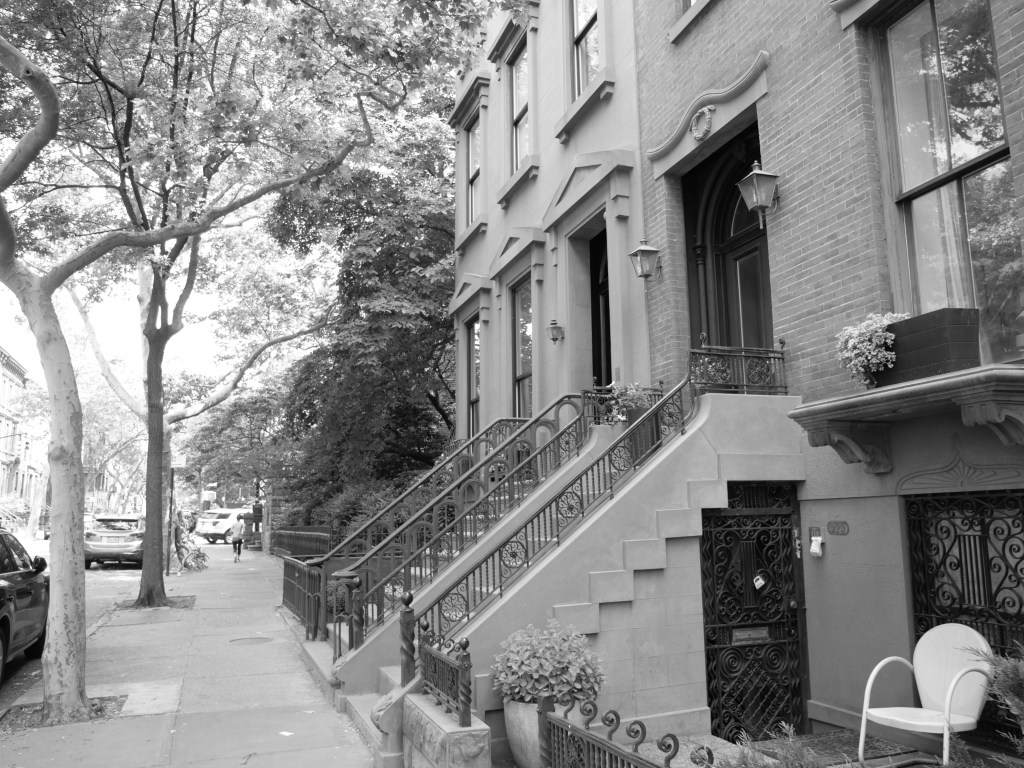
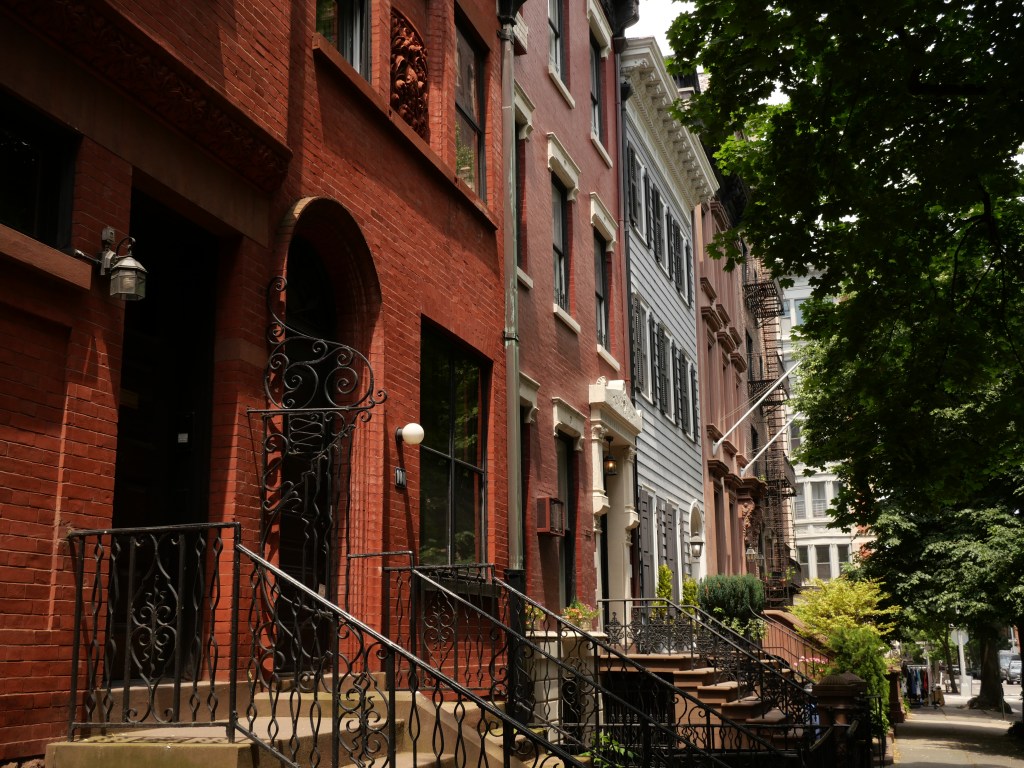
* Solid urban architecture with a nice variety of styles ranging from mid-late century rowhouses & brownstones, SF mansions, 1920s brick apartment buildings and modern in-fill. Other than the crummy autocentric/industrial uses along Flushing and Atlantic urban-infill is pretty good.
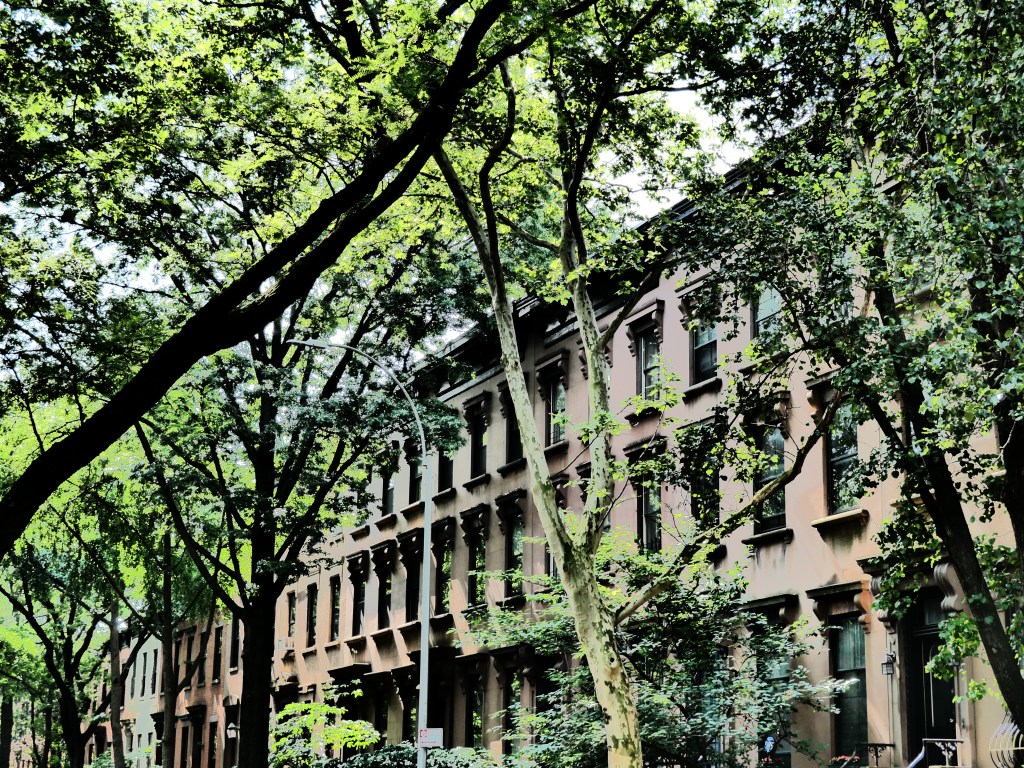
* Pretty excellent tree canopy for an urban neighborhood.
* Generally a very safe community.
* Great economic diversity and racial diversity. Also solid age diversity and lots of families here.
* Great walkable schools really across all categories but a mix of ratings for the public schools are well rated. Just north of Clinton Hill are tons of private Jewish Schools.
* Excellent retail amenities including a supermarket & several groceries, a couple drug stores, several boutiques/gift stores,/furniture stores, a couple a hardware stores, several gyms and a couple of dessert joints, a bike shops, a couple florists, several churches a public library, a couple post offices, plenty of doctor’s offices and a couple hospitals in nearby Clinton Hill and Bedford Styuy.
* Solid cultural amenities including plenty of restaurants, bars & cafes, a couple breweries, tons of art galleries, a performing arts theaters, a couple live music venues, and a couple local museums.
* Good amount of rental product especially along the western boarder with Dwtn Brooklyn. But market rentals are very expensive. Studios lease btwn n the 2.5K-3.5K,1-beds btwn 3.5K-4.5K, 2-beds btwn 3K-6K. Not a ton of 3-bed product. Good number of rental stabilized units however and the number of rentals below 2K exceeds far exceeds the # above 2K.
URBAN WEAKNESSES:
* Missing any bookstores or big box stores.
* Good array of several small playgrounds and ball fields but not major parks or public pools.
* Flushing’s and Atlantic are both wide boulevards with a fair amount of unattractive and autocentric uses along them. Also a good amount of industrial uses along the Brooklyn-Queens Highway along the north edge of the neighborhood.
* A lot of for sale condo product and while expensive more moderately priced condo options that other Inner Brooklyn neighborhoods. Decent # of studios that sale btwn 400K-800K, tons of 1-beds with great range of prices btwn but plenty of 1-beds selling btwn 350K-1.5M. Most 2-beds product sells btwn 500K-2.5M. Good # of 3-beds with most product selling btwn 600K-3M. Some 4-bed product too but selling in the same price range.




 Evaluating our Urban Communities [with a focus on America]