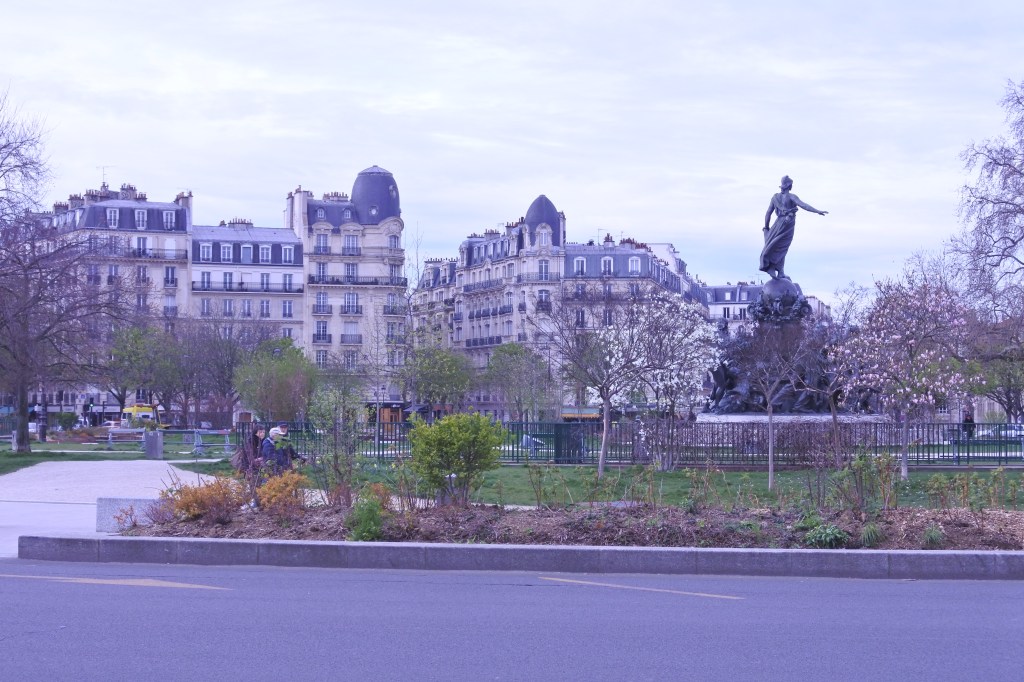
The 20th Arrondissement: Home to Paris’s most Historically Radical Neighborhood (Belleville)

The 20th Arrondissement is generally conceived as Paris’ most radical and working class arrondissement. In many ways this is true but the 20th Arrondissement is much more than that as it also hosts many middle class districts. Les Amandiers/Menilmontant and Belleville are the stereotypical working class and historically radical neighborhoods within the 20th Arrondissement.  By the 1830s Menilmontant and Belleville were already urbanized, heavily working-class, and socialist. The districts played a major role in the Paris Commune of 1871 and was the most difficult area for the Versailles Army to reconquer Paris in May of 1871. By the 1950s/1960s  many artists, musicians, students, and hippies moved into the area, giving it a distinctively bohemian, left-wing and counterculture identity. But by this time much of the neighborhood was in disrepair and the City targeted the area for urban renewal. Fortunately Paris’ version of urban renewal was much more targeted and sensible than its counterpart in American. Hillsides were converted to parks and buildings surgically replaced with modernist buildings that still retained a decent urban design. Current day Belleville remains somewhat gritty but is witnessing a significant amount of revitalization. Belleville also hosts Parc de Belleville where one is given some of the best great views of the City. The remaining parts of the 20th Arronissement, which comprise the majority of the district, are middle class areas hosting an eclectic mix of historic and modern architecture with generally quality urbanity.

The 20th Arrondissement hosts several great commercial districts but has limited consistant mixed-use areas as is the case closer to the center of Paris. Major commercial districts in the arrondissement include:  Rue d’Avron,  Rue Saint-Blaise (intimate cobble stone street), Rue de Bagnolet, Av. Gambetta/Rue Belgrand, Rue des Pyrénées, Rue de Belleville, Rue de Ménilmontant, Bd de Belleville.
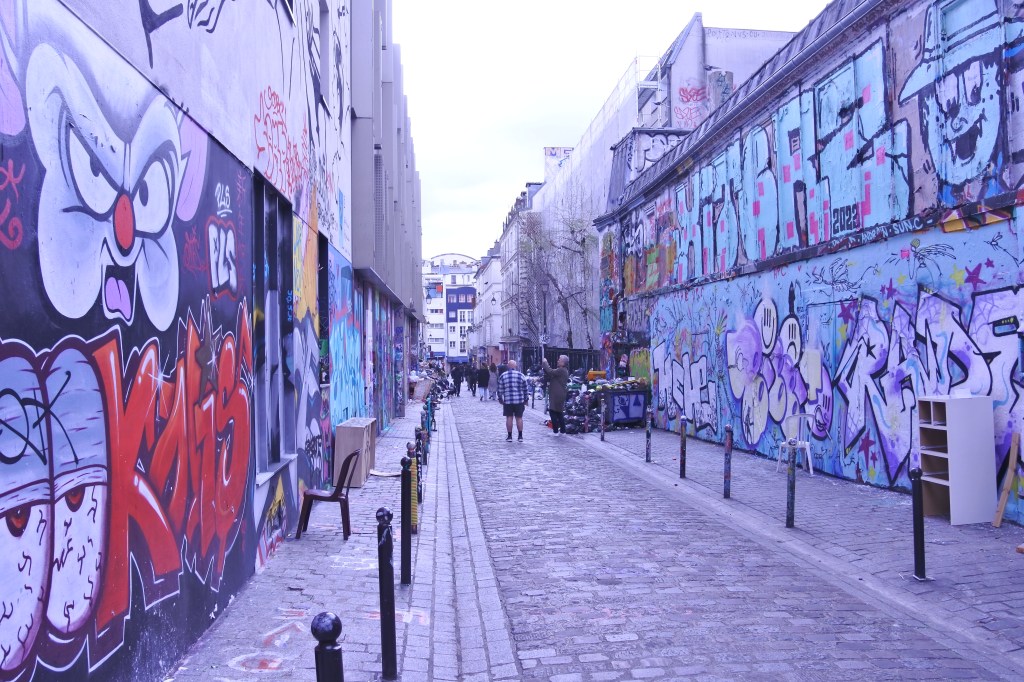
Click here to view my 20th Arrondissement Album on Flickr

URBAN STRENGTHS:

* Solid density at around 83K per square mile.
* Hosts the infamous Père Lachaise Cemetery where many famous people are buried (i.e. Edith Piaf, Jim Morrison, Chopin, Oscar Wild) and countless Parisian families.
* Largest immigrant populations here.
* Limited amount of tourism.
* Hosts Parc de Belleville a wonderful hilltop park with great views of the City. Decent # of other small to medium sized parks but less green spaces than most parts of Paris.
* Nice Promenade in the middle of Bd Belleville.
* Quality modern in fill in the eastern and southern parts of the arrondissement.
* Interesting maze of stairways and roadways in the hillier parts of the district.
* Good subway access throughout the district. 

URBAN WEAKNESSES:

* Still lots of grit and some crime in the Menilmontant and Belleville areas but this is changing as the districts are gentrying.
* Tree canopy is lacking in the more historically working class areas.
* The Menilmontant and Belleville areas hosts a large concentration of unattractive mid century buildings. Still better urban form than their counterpart in American but often ugly buildings.

Paris’ 19th Arrondissement- An Authentic Parisian District Mixing Classic Bohemism with New Diverse France

The 19th arrondissement is a great mix of architecture styles and walks of life mixing Old French bohemianism and the new highly diverse Parisian cosmopolitanism. This sector is home to many immigrants especially from North and Sub-Sahara Africa. Generally the south western edge of the district is the oldest populated with a mix of Haussmannian architecture along the Boulevards but also plenty of more plain historic styles common to its neighbor Belleville to the south. As one moves to the north and east thru the neighborhood architecture becomes more and more modern but plenty overall the district is very eclectic architecturally.

Quartier de la Mouzaïa in the eastern central portion of the district is the most affluent and attractive neighborhood of the 19th Arrondissement hosting many semi-private and village esh streets. The Quartier is surrounded by two excellent hilltop parks (i.e. Parc des Buttes-Chaumont and Parc de la Buttee-du-Chapeau-Rouge), which take advantage of the 19th’s hilly terrain. Just north of here is the LaVilette, Paris’ largest cultural park, a treasurer for Parisian families where one can enjoy a host of museums and performing arts venues or simply take a stroll thru the well designed plazas and canal side promenades along the Canal Saint-Denis and Cala de l’Ourcq. Much of the 19th Arrondissement has a strong immigrant/working class presence but it is most pronounced  in the Northwestern sector outlined by the two aforementioned canals. This subdistrict is mostly post WWII construction yet still maintains a high level of urbanity.

The 19th’s main commercial districts include  Av. Jean Jaurès,  Rue de Belleville, Simon Bolivar, Rue Eugène Jumin (a block long pedestrian st surrounded by gorgeous 1910s flats), Av. de Flandre (Pedestrian Promenade in the middle), and Rue de Crimée.

Click here to view my 19th Arrondissement Album on my Flickr Page

URBAN STRENGTHS:

* The 19th Arrondissement is marked by some of Paris’ greatest parks and ones that are off the beaten track of most tourist (i.e. the hilltop parks of Parc des Buttes-Chaumont (designed by Baron Haussmann for the World’s Exposition in the 1860s) and Parc de la Butte-du-Chapeau-Rouge, Le Bassin de la Villette and surrounding canal promenades, and the expansive La Villete filled with numerous museums and arts and cultural amenities, it is Paris’s largest cultural park), and Jardins d’Eole. Plenty of others smaller plazas and parkettes and the lengthy where Canal Saint-Denis and the Canal de l’Ourcq meet creating some wonderful waterfront trails.
* Great diversity here with more middle and upper middle class districts in the southern and eastern quadrants and more immigrant work class areas in the western and northern sectors.
* Solid public transit access.
* Only of Paris’ most hilly districts.
* Nice mix of architecture covering anywhere between the mid 1800s to the present age. Older parts of the district are in the Southwestern portions of the neighborhood.
* Solid urban density at 68K per sq mile pretty average for Paris. Neighborhood is actually at its peak population.
* Low amounts of Tourism here give one a very authentic Parisian experience.

URBAN WEAKNESSES:

* Some churches but much less than other Parisian districts.
* Decent amount of grid in the more working class areas.
* Decent number unattractive modern buildings with not the best urban form.

Paris’ 17th Arrondissement- A Wonderfully Tourist Free District just beyond the Arc de Triompe

The 17th Arrondissement is divided into four administrative districts: Ternes and Monceau in the southwestern part (two upper-class districts which are more Haussmannian in style); in the middle is the tightly packed Batignolles district, a hip area experiencing significant gentrification; and in the northeastern part, the Épinettes district a former industrial district redeveloped residential with a mixture of middle class and working class immigrant families.

Other than the small area around the Arc de Triomphe, the 17th Arrondissement is largely a tourist free area as it lacks major destinations. This gives it a very authentic Parisian vibe where one can enjoy the district for  an excellent representative slice of Parisian life. The Parc Clichy-Batignolles/Martin Luther King Park is a wonderful redevelopment sight with an expansive and well designed modern park with excellent edgy modern apartment buildings rising around it similar to New York’s Highline. Yet the area is very much off the tourist path. Other highlights include the excellent Boulevard des Batignolles pedestrian promenade, the highly urban and mixed-use area between Ave de la Grande Armee and Rue de Courcelles, and the stunning Haussmannian architecture on the western half of the district and surrounding the excellent Parc Monceau.

The more working class eastern third of the 17th Arrondissement also hosts some wonderful urbanity mixing late 19th century architecture with modern mid century buildings. My only real critique of the neighborhood is that some of the mid-century neighborhoods are a bit gritty with uninspiring buildings and the Bd Peripherique (a highway) runs along the outer edge of the neighborhood. One hopes that the gentrification process never becomes total and complete in the eastern half of the district.

Click here to view my 17th Arrondissement on my Flickr Page

URBAN STRENGTHS:

* Boulevard Pereire is a really nice park/promenade boulevard with fancy Parisian housing surrounding it.
* Several excellent business districts including: Ave des Ternes- Very high end street and fashionable commercial street; Rue de Courcelles- Incredible ornate and consistent beau arts architecture; Rue des Dames- alleyway biz district
* Parc Clichy-Batignolles/ Martin Luther-King: Very modern park but super interesting with very innovative park design and modern buildings surrounding it.
* Excellent mixed use area between Ave de la Grande Armee and Rue de Courcelles. High level of urbanity here with incredible Haussman architecture.
Batignolles-  subdistrict that surrounds both sides of the railroad tracks is home to narrow streets packed with shops, wine bars and eateries.
* Excellent pedestrian prominent within Boulevard des Batignolles. Greater node where it hits Place De Clichy.
* Ave de Clichy Av. de Saint-Ouen are solid biz districts along the Eastern edge of the district.
* Solid population density with 76K per square mile.
* Parc Monceau is on the southern border an excellent medium sized park. Some incredible architecture around the park.
* Good mix of high end neighborhoods on the western half and middle class/working class districts in the eastern half of the district.
* Several nice small-medium sized parks in the eastern half (i.e. Square des Batignolles, Square Ernest-Gouin, Square Jean Leclaire, & Square des Epinettes.
* Other than the immediate area surrounding the Arc de Triomphe, tourism is low.

URBAN WEAKNESSES:

* Northeast sections of the district (i.e. Porte de Clichy, Porte de Saint-Ouen, and Epinettes) is pretty gritty with lots of uglier mid century buildings.
*  Highway runs along the outer edge of the neighborhood.

Paris’ 11th Arrondissement- Great Density and home to the Place de la Bastille and Place de la Nation

The 11th Arrondissement is one of Paris’ most dense neighborhoods siting at just over 100K per square mile with a total population of 150K. The neighborhood actually peaked in 1911 with a total population of 250K! The 11th Arrondissement is less known to tourist than other more centrally located portions of Paris but has some well known landmarks such as the Place de la Bastille, Opera Bastille, Place de la Republic, and the popular Oberkampf district where the 2015 terrorist attacks occurred. Generally the western half of the 11th Arrondissement is more mixed-use with great cultural assets, cool arcades and passageways, and gorgeous Haussmannian architecture largely hosting single adults. The eastern half is more laid back and more family-oriented. The area hosts less ornate and more modern architecture but still  boast high quality urbanism.

Other areas to highlight in the 11th Arrondissement are the Rue du Faubourg Saint-Antoine, an active commercial district  full of fashionable cafés, restaurants, and nightlife, running along the district’s southern border; Rue de Charonne, a less known but quality business district that cuts through the middle of the neighborhood west to east; and the impressive Place de la Nation holding down the southeastern corner of the neighborhood .

Click here to view my 11th Arrondissement album on Flickr

URBAN STRENGTHS:

* Great subway coverage here.
* One of Paris’ most dense districts at over 100K per square mile.
* Great concentration of arcades and small passage ways off the main street line with small shops. Much less touristy than passages of the 2nd and 9th Arrondissements. These are closed to Place de la Bastille.
* Largest open air market (Marche Bastille) set up along  Richard-Lenoir. Richard-Lenoirs becomes a great blvd park further north, the filled in remains of the old Canal Saint-Martin.
* Both famous plazas (Place de la Republique and Place de la Bastille) are in the 11th Arrondissement along the Western Edge. A lesser know but still great square (Place de la Nation) is along the Eastern Edge.
* Several nice gardens and parkettes (jardin Émile-Gallé, Jardin Damia, Square des Jardiniers, Square Maurice Gardette.
* Sizable middle class  family areas esp. in the eastern half away from the trendy parts of the district.

URBAN WEAKNESSES:

* Architectural style is less spectacular as the buildings move to the mid century in the eastern half of the neighborhood but still very urban and decent styling.
* Some of the more mid-century buildings are tired and without green adornment and street trees.
* Less cultural opportunity in the southeastern portion of the neighborhood.

Paris’ 3rd Arrondissement- Known for its hôtels particuliers, gardens, elegance, and historic diverse communities

Development began in the 3rd Arrondissement in the 14th century when King Charles V drained the marshlands  “the Marsais”  included this area inside the new walls that protected the city. Charles V  also relocated the Royal Court to Hôtel Saint Paul in Le Marais (4th Arrondissement). This relocation prompted many important and wealthy people wishing to be near the King to built beautiful private mansions (hôtels particuliers) nearby, which explains the plethora of hotels particulars in Marsais. Several centuries later, the third arrondissement became home to 3 ethnic communities: Auvergne (from the French region of Auvergne), Jewish and Wenzhou Chinese community, the first Chinese community to arrive in Paris

The 3rd Arrondissement of Paris is divided into 4 neighborhoods: Quartier des Arts-et-Métiers, Quartier des Enfants Rouges, Quartier des Archives and Quartier Sainte-Avoye. the Temple Quarter.
– The name “Temple” comes from the Knights of Templar, the religious and military order who by the 14th century owned this area.
– Arts et Métiers Museum stands as a silent witness of this arts & crafts past in medieval times.
– Quartier des Enfants Rouge:  This district takes its name from the Hospice des Enfants-Rouges founded in 1536. In memory of this hospital-orphanage, the neighboring market of the Marais du Temple became the Marché des Enfants-Rouges.

Evidence of the historic Jewish quartier are still present in the 3rd Arrondissement by landmarks such as the Musée d’Art et d’Histoire du Judaïsme and Jardin Anne-Frank. But the heart of the quarter is just to the south along the Rue de Rosiers in the 4th Arrondissement. 

Click here to view my Album on Flickr

URBAN STRENGTHS:

* Lovely array of 17th hotels [mansions:  hôtels de Soubise, Hotel Sale, Musée Cognac-Jay, Musée Carnavalet, Hôtel de Saint-Aignan] often turned into boutique museums and small and mediums plazas [Les jardins des Archives nationales, Parc de l’Hôtel Salé, Square du Temple, Square Émile-Chautemps, Square du General Morin, Square Georges-Cain, Square Léopold-Achille, Jardin Arnaud Beltrame typically the remanence of walled hotel yards.
* Wonderful architecture through the district mixing architecture from the 16th-19th centuries. Oldest than most Parisian districts.
* District contains half of the famous Plaza de la Republique.
* Much of “Le Marsais” district is contained in the 3rd one of Paris’ most elegant and preserved districts.
* Contains the city’s oldest market “Marché couvert des Enfants Rouges:
* One of Paris’ most dense districts with 75K per square mile.
* More unique district in Paris as its missing the large Haussmannian boulevards.
* Great night life amenities as well. Most of the district is mix use providing residents excellent access to retail amenities

URBAN WEAKESSES:

* Because of the historic marsh located in the district, subway stations are concentrated along the edges of the district and subway access is less dense than most parts of Paris.
* Decent amount of tourism but better than other tourist districts in Paris as the neighborhood has a large and dedicated population.