Brentwood- A Pleasant Pittsburgh Suburb close to Downtown

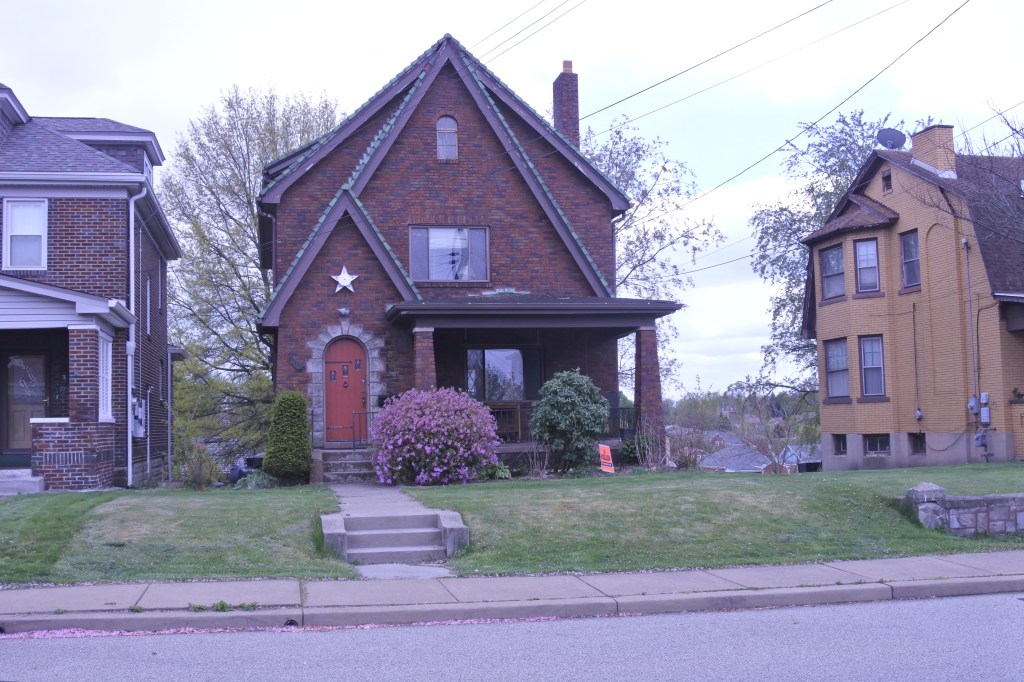
Brentwood is an inner ring suburb located on the southern border of Pittsburgh. Development began around 1910 and the Borough grew to about 8,000 residents by WWII. The Borough continued to grow after the war reaching a peak of 14,000 in 1970. Since then Brentwood has lost about a quarter of its peak population and now sits just above 9,000 souls. Even so, this is a relatively health community for Pittsburgh standards with limited blight and vacancy.

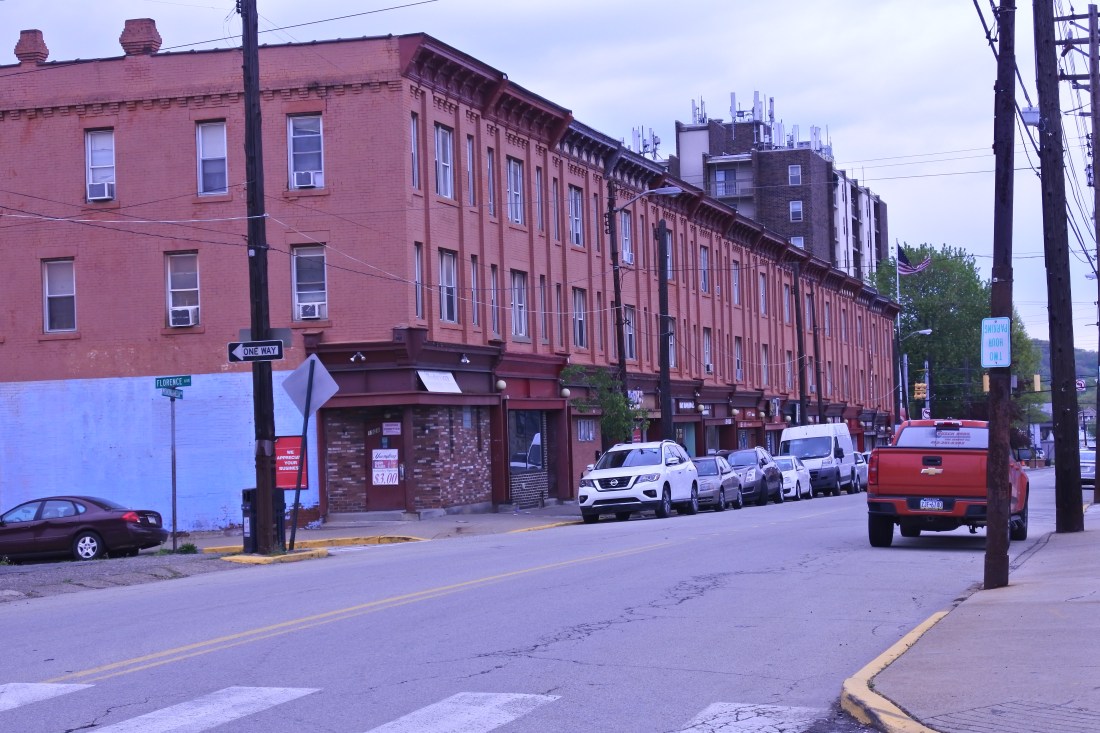
Brentwood’s moderate density, transit connectivity, and urban main street along Brownsville road have created a fairly desirable urban community for individuals desiring some walkability, convenient access to downtown, while still retaining a good sized yard. Other positives are its solid schools and low crime rates. For Pittsburgh standards, Brentwood is also seeing a growing Nepalese population evident by several Nepalese run restaurants emerging along Saw Mill Road.

The largest areas to improve the urbanity of Brentwood includes new mixed-use infill along Brownsville Road, additional recreational amenities, and dedicated bike lanes running along Brownsville Road. Not much else that can be done given the borough’s hilly terrain and auto centric commercial thoroughfare running along Saw Mill Road. 
Click here to view all Brentwood photos on my Flicker page

URBAN STRENGTHS

* Very safe community.
* Decent public transit access, and good access to downtown.
* For sale housing is pretty affordable but decent price and size variety. Most product sells in the $100Ks but a fair amount below 100K and in the 200Ks.
* Pretty good neighborhood amenities (although most of located on Saw Mill or in the Brentwood Towne Square shopping center). Brentwood hosts a supermarket, several banks, several pharmacies, plenty of salons, cafes, and a good amount of boutiques

URBAN WEAKNESSES

* Because of the very hilly terrain, about 1/3 of residential streets don’t have sidewalks. ADA compliant curbs are reserved for Brownsville (the main traditional business district).
* Saw Mill Run is completely auto centric and hosts many of Brentwood’s businesses.
* Not a ton of rental product, but generally in the lower moderate range. The limited 1-bedroom product rents between $500-$750. 2-bedrooms for $800-$1,000. And whole houses generally in the low to mid $1,000s.
* Only one park in the Brentwood (Brentwood) park. It is a large park with lots of amenities (including a rec center) and fortunately is pretty centrally located in the borough.
* Cultural amenities limited to restaurants and bars. Some diversity added with several Nepalese restaurants.
* Solid school options for K-12 and generally walkable. 

Swissvale, Pennsylvania- part of the Pittsburgh Region

Swissvale is named after the Swisshelm family, who owned a farm where the town is located. Jane Swisshelm became a noted abolitionist and political activist. The family settled here in the late 1700s. Widespread development did not come to Swissvale until the early 1900s with the industrialization of the Borough. The Population peaked at 16,500 in 1950 and rapidly declined. There are now approximately 8,500 residents here, but signs are positive that the population is stabilizing.

Swissvale has a lot of good things going for it from an urban perspective. It’s located at the end of the Pittsburgh East Busway, providing convenient access to downtown. Regent Square and Frick Park are nearby as well. Swissvale still retains much of its housing stock and traditional main street, which is centered around a Bus Rapid Transit (BRT) stop.

There are signs that investment is picking up in Swissvalle, especially in the western and more stabilized western half of the borough. Increased targeted investment in the urban commercial district would go a long way towards making this a quality urban district.

Click here to view my Swisshelm Flickr Album
URBAN STRENGTHS

* Solid public transit access throughout most of Swissvale. And good access to Downtown Pittsburgh and Oakland.
* Excellent economic and generational diversity and decent racial and diversity.
* Great range of for sale housing starting at around 40K for the rougher product to 300K for the best housing in the most stable streets. Rentals are on the cheap side with 1-bedrooms ranging from $500-$800 and 2-bedrooms anywhere from $800-$1,300. Lots of rental product.
* While set in a strip mark, the Edgewood Shopping Center provides residents lots of important neighborhood amenities (i.e. Liquor store, Supermarket, clothing stores, banks, etc.). In the traditional main streets along  Monongahela and Noble St there are some neighborhood shops, cafes, restaurants, some boutiques, churches, and the public library.  

URBAN WEAKNESSES

* Recreational amenities can be limited depending on where you live. Residents in Swisshelm and the western edge of Swissvale have great access to 9 mile run and Frick Park but only 3 other small parks throughout.
* Cultural amenities pretty limited. There are some restaurants, bars, and cafes but not theaters or museums. One is about a mile though from Regent Square, which hosts many restaurants, bars, and cafes.
* A fair amount of blight and vacancy still exists throughout.
* Several walkable schools within Swisshelm but generally poor ratings.
* ADA infrastructure is a mixed bag. Generally there are curb cuts, but often not ADA compliant infrastructure.
* Not much modern architecture, and what does exist is pretty suburban.

Pittsburgh’s Bloomfield-Friendship Neighborhood

Bloomfield is referred by many locals as Pittsburgh’s Little Italy as it was settled by Italians from the Abruzzi region of Italy and has been a center of Italian-American population for many decades. Friendship is small adjacent district of large Victorian houses in the East End.

In 1868 Bloomfield and Friendship were annexed by the City of Pittsburgh. Development started more or less from west to east with narrow lot row-houses between the 1870s and 1890s. By the 1890s, the trolley extended to Friendship via Baum Boulevard and large square homes designed for professional-class families were constructed in Edwardian and Victorian styles. 

By the 1960s, many prominent families in Friendship moved to the suburbs repulsed by the construction of massive housing projects in nearby Garfield and misguided urban renewal in East Liberty. Zoning changes in the 1950s allowed landlords to subdivide these massive Victorian houses beauties into multi-unit apartments, and by the 1980s, over 70% of the housing stock were rentals. Bloomfield remained a solid working class neighborhood holding on to its Italian heritage.

Recently, the neighborhood has become an attractive place to buy or rent bolstered by the general gentrification of the East End and housing prices continue to steadily climb with more diverse residents. With great access to downtown, public transportation, neighborhood amenities, restaurants/bars, attractive historic homes, and proximity to other great East End neighborhoods like Oakland, East Liberty, Lawrenceville, and Shadyside; its no wonder that Bloomfield-Friendship has become such an in-demand location.

The Bloomfield-Friendship neighborhood is bordered by Penn Avenue to the north, Negley to the east, Baum to the south, and the Bloomfield Bridge/40th Street to the West. Friendship is a smaller sub-neighborhood that became an official City designated neighborhood in recent history. This is the area between Aiken-Negley and Penn-Liberty-Baum. 

Click here to view my Bloomfield photo album & here for my Friendship Albums on Flicker
URBAN STRENGHTHS

* Very good bike infrastructure, public
 transportation, and access to Pittsburgh’s 2 largest employment centers: Downtown and Oakland.
* For sale prices heating up in neighborhood but still plentiful housing options available for 200-350K and still slightly below national median levels. 350K-500K large homes available in Friendship. Rental prices also very reasonable. 1-bedrooms can be found for 600-1,300. 2-bedrooms in the 1,000s.
* Great access to many smaller parks, playgrounds, City pool, and Historic Allegheny Cemetery.
* Culturally, good access to diverse restaurants, bars, many art galleries along Penn Avenue. Also within walking distance to several other solid commercial districts… East Liberty and Ellsworth, Highland, and Walnut in Shadyside.
* Very good access to retail, restaurants/bars, grocery stores, etc. at 3 businesses districts (Liberty, Penn, and Baum/Center). 

URBAN WEAKNESSES

* Tree cover great between Gross and Negley, but pretty sparse west of
Gross St.
* Some sections of Liberty and Baum are pretty auto centric. Sections of Penn Avenue and Liberty can feel pretty dead at night. 
* Racial diversity is ok but over 65% of residents are white. Also percentage of family households are much lower than the average in Pittsburgh.