Olneyville- Home of Historic Olneyville Square and once a Hub for Blue Collar Jobs in Providence

Settlement in Olneyville began at Olneyville Square in the early 18th century as a center of trade with a nearby Narragansett village. The settlement grew significantly around 1785, after Christopher Olney, an American Revolutionary War General, founded a grist mill and a paper mill. By the mid-19th century, Olneyville developed as a railroad junction and a mill district, and became a major employment hub in Providence attracting many immigrants. This all came to an end in the post War era as the mill industries decline and the construction of highways 6 & 10  separating Olneyville from other neighborhoods. This led to decades of decline for Olneyville and a substantial drop in its population. Yet Olneyville is mostly preserved and has become a major hub for 1st & 2nd generation Hispanic immigrants. Former warehouses and mill buildings have seen new life as artist collectives and loft spaces since the 1990s and trendy new businesses and some new construction apartments are trickling in. But I would not say that Olneyville is gentrifying yet as the neighborhood is very affordable comparted to neighboring as with a top for sale price at around 450K.

From an urban perspective Olneyville has a lot of good walkable attributes. Its dense, has solid public transit and bike access, has a nice neighborhood hub where Broadway, Manton, & Westminster St meet (historic Olneyville Square), convenient access to Dwtn, a good array of cultural and retail amenities and lots of mixed-use areas thanks to it historic industrial legacy. Olneyville also has decent parks thanks to the recreational trail and riverside parks along the Woonasquatucket River and decent walkable school options. But Olneyville still has a lot of blight and grit and plenty of strip malls & autocentric uses ( especially concentrated along Manton Avenue) limited tree canopy, and not enough housing options. But given its good urban bones, I think Olneyville will continue to get better and better and has one of Providence’s best potentials as an up and coming urban district.
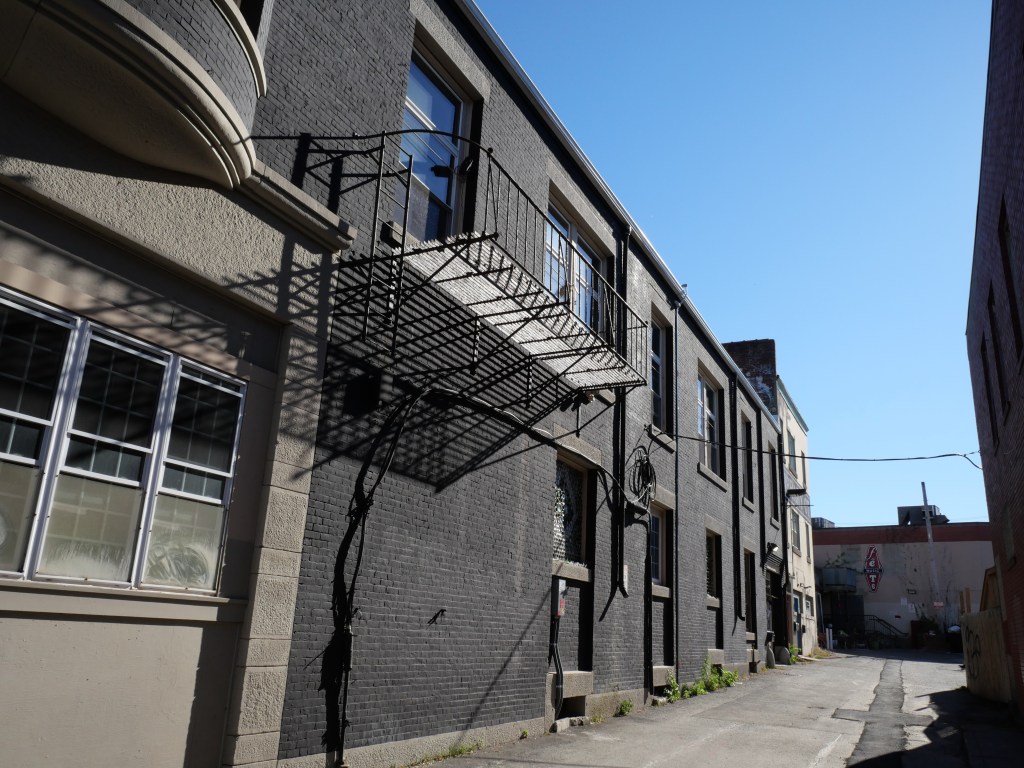
Click here to view my Olneyville album on Flickr

URBAN STRENGTHS:

* Solid density at nearly 15K per sq mile.
* Good sidewalk infrastructure but only about half of all intersections have ADA curb cuts with much better coverage along the biz districts than residential streets.
* Some attractive 19th century landmark bldgs and old warehouses but the residential arch is generally very working class and gritty.
* Decent public transit access and very convenient access to Dwtn being only a 10 min drive and 20 min bus ride. Also a good # of dedicated bike lanes running along the streams & rivers and providing good access to Dwtn through Federal Hill.
* Likely hosts the largest concentration of Hispanics in Providence at nearly 60%. Also sizable White & Black populations. A largely working class population with some income diversity.
* Many larger families here with children.
* Some bad stretches of strip malls along Manton Ave but generally urban form is pretty solid along Broadway and decent along Valley & Atwells.
* Pretty good cultural amenities including tons of restaurants, a couple of bars & cafes, a couple art galleries, a small technology museum, several live music venues, a local performing arts theater.
* Extensive riverside park including a rec trail in Olneyville running along Woonasquatucket River. Also convenient access to the large Merino Park just across the river, Donigian Park, and the Button Hole golf course.
* Only one schools within Olneyville but several solid schools just across the river in Federal Hill.
*  Decent # of rental options including some 1-beds options that lease btwn 1.4K-2.5Kand some of 2 beds btwn 1.5K to 2.5K. Good amount of dedicated affordable housing.
* Really solid retail in Olneyville which  include several grocerias, a supermarket just on the edge of the neighborhood, a flee market, several clothing/boutique stores, a family dollar, a couple gift shops, several furniture stores, a hardware store, tons of salons, a couple banks, a couple book stores & bike shops, several bakeries, a local library and post office, several churches, and a couple of medical centers.
* Thanks to the historic industrial district located on the southern edge of Olneyville and 4 biz districts, this is a very mixed-use area.

URBAN WEAKNESSES:

* Mix of autocentric strip malls and some quality urban infill.
* Lots of grid due to the industrial and immigrant legacy of the neighborhood. Some crime and gang issues but not terrible.
* Tree canopy is so so due to the large amounts of industry remaining in Olneyville.
* For sale options are a bit limited. Really no 1-beds but for sale housing is pretty reasonable compared to more gentrified areas. 2-bed sell in the 200Ks, and some more 3 & 4 beds which sell  btwn 175K-475K.
* Some recent interest in the neighborhood judging by some recent loft conversions on creative stores locating in the old warehouses but judging by the relatively cheap housing prices, Olneyville is still not a cool and “in demand” area.

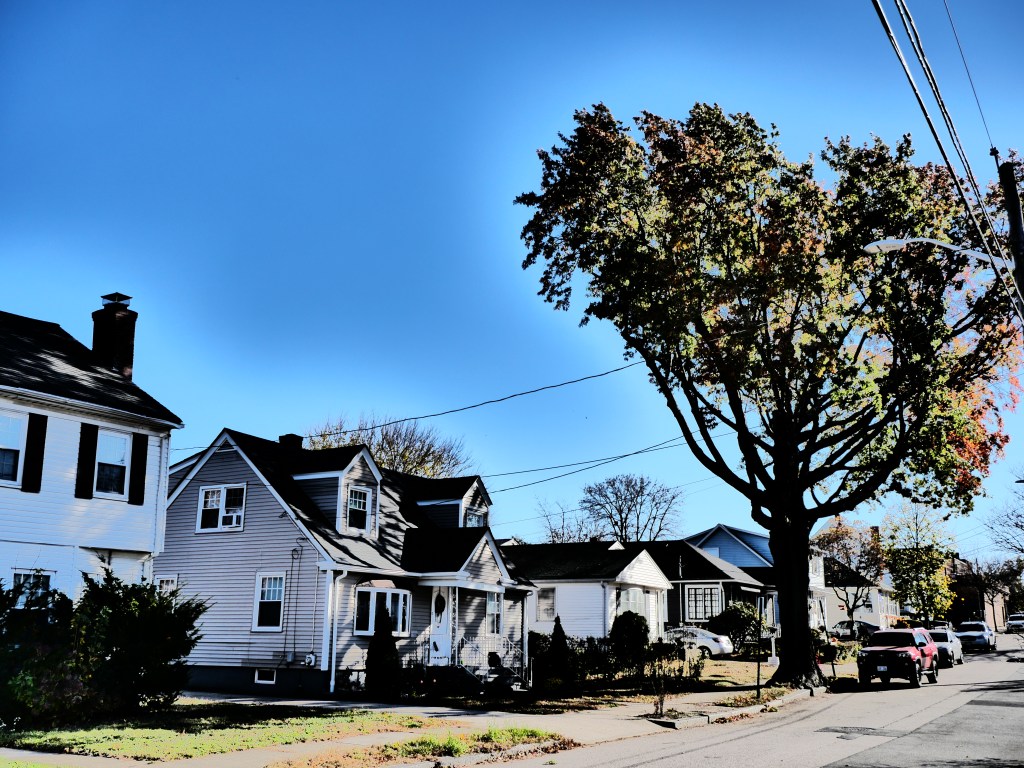
Mt Pleasant- A stable Providence Westside Neighborhood that has always welcome 2nd & 3rd Generation Middle Class Immigrants

Mount Pleasant was one of the last sections of the City to be developed, and as a result, the houses have decent side yards and front lawns. Although some houses were constructed in the late 19th century thanks to the construction of the streetcar down Chalkstone, most homes were built in the early to mid 20th century. There are sections of Mt. Pleasant (esp. on the western edge and northeast corner) that weren’t built up until the 50s and are often missing sidewalks. Very similar to neighboring Elmhurst, the neighborhood saw an influx of 2nd & 3rd generation Irish and Italian immigrants into Mt. Pleasant in the first half of the 20th century with the Irish leaving behind Smith Hill and the Italians leaving Federal Hill.  In the post War era, Mount Pleasant was one of Providence’s most stable neighborhoods with few homes being listed for sale. By the 2000s the demographics shifted to include large numbers of  Hispanic and African American families. Mt. Pleasant, by all accounts, has made this transition graciously, and is still a very stable part of Providence.

From an urban perspective Mt. Pleasant contains many suburban amenities with enough urban amenities to be a solid urban district. It has good schools and high levels of safety but also high density levels, decent retail amenities, convenient access to Dwtn pretty good transit access and some  2 & 3 bedroom rentals. For Mt. Pleasant to become a top tier urban district it needs more accessible parks. Most parks space is dedicated to sport complexes attached to schools, the Triggs Memorial Golf Course, and Rhode Island College. The neighborhood could use better public transit and bike infrastructure and major mixed-use development built up along the business districts running along Chalkstone, Smith, and Atwells, which would foster more retail and cultural amenities in the community.

Click here to view my Mt. Pleasant Album on Flickr

URBAN STRENGTHS:

* Really good density esp. for this era of housing btwn WWI and WWII.
* Decent public transit access and very convenient access to Dwtn being only a 13 min drive and 20 min bus ride.
* About 60% of all curb cuts are up to ADA standards. Generally good sidewalk infrastructure but some sections with limited sidewalks especially in sections of the neighborhood with a lot of Post WWII housing (western edge and  northeastern sections).
* Solid tree canopy throughout.
* Large Hispanic population here (about 50%). Also large White and Black populations as well. Also good economic diversity and a large number of college students and families here.
* Overall a pretty safe community.
* Good array of pretty well rated public grade schools in Mt. Pleasant. There are a couple private schools and a large public HS but poorly rated.
* Really no 1-beds but for sale housing is pretty reasonable compared to more gentrified areas. 2-bed sell btwn 200K-500K, and 3 & 4 beds sell btwn 200K-700K.

URBAN WEAKNESSES:

  • Modern in-fill is limited but much of what does exist is auto centric junk.
  • Historic residential is generally pretty plain with a mix of working class duplex/triplexes and single family homes. Some nice homes mixed in throughout the neighborhood.
  • Urban form is mixed along the commercial corridors (Chalkstone, Academy, Smith, and Atwells) . Nothing special about the streetscaping.
  • Outside of the Triggs Memorial Golf Course, the Rec center at Rhode Island College, school sports fields, only a handful of parks within Mt. Pleasant.
  • Okay cultural amenities including plenty of Hispanic restaurants, a handful of bars & cafes, an art museum and performing arts theater at Providence College.
  • So so retail amenities including several smaller grocerias, a couple drug stores, a hardware store, a couple banks, tons of salons & barber shops, several bakeries, a couple churches, and a public library.
  • Limited 1-beds and some of 2 & 3 beds the lease btwn 1.8K-2.5K.”

Elmhurst- a solid Middle Class Neighborhood on Providence’s Westside mixing suburban & urban amenities

The neighborhood remained sparsely settled for most of the nineteenth century. This began to change when a streetcar opened in 1882 connecting Elmhurst to Downtown. In 1909, the City acquired a piece of land on either side of a stream flowing parallel to Chalkstone, and created Pleasant Valley Parkway, a landscaped boulevard. The design was similar  to Blackstone Boulevard over in East Providence but it never quiet attracted the more desirable upper middle class residents as in Blackstone Blvd. Regardless, the Parkway is still a major neighborhood amenity with attractive homes from the 1920s-1940s. In the early 1900s, Irish and Italian immigrants made their way out to Elmhurst leaving behind the more crowded inner City Providence neighborhoods. This really solidified Elmhurst as a solid middle and working class neighborhood. Elmhurst was also one of the few Providence neighborhoods with room to grow in the post War years concentrated in the  northwestern part of the neighborhood.

From an urban perspective Elmhurst contains most suburban amenities with enough urban amenities to be a solid urban district. It has good parks, schools and high levels of safety but also high density levels, decent retail amenities, convenient access to Dwtn and lots of 2 & 3 bedroom rentals. For Elmhurst to become a top tier urban district it needs better public transit and bike infrastructure and major mixed-use development building up the business districts running along Chalkstone, Smith, and Admiral which would foster more retail and cultural amenities in the community.

Click here to view my Elmhurst album on Flickr

URBAN STRENGTHS:

  • Overall good sidewalk infrastructure. Most commercial intersections have modern curb cuts. Less than 50% of residential intersections have them.
  • Convenient access to Dwtn only 2-3 miles away. 10 min drive and 20 min transit or bike trip.
  • Nice array of home styles from the 1910s-1940s including a variety of single family styles with many duplexes and triplexes mixed-in.
  • Good diversity indicators especially economic. Slight majority white neighborhood with a large Hispanic population and decent Black and Asian #s.
  • Decent pretty well rated public schools but not a ton. Decent # of public & private schools in nearby Mt. Pleasant.
  • Overall a safe community with limited amounts of blight.
  • Limited 1-beds but plenty of 2 & 3 beds the lease btwn 2K-3K.
  • Really no 1-beds but for sale housing is pretty reasonable compared to more gentrified areas. 2-bed sell btwn 200K-450K, and 3 & 4 beds sell btwn 250K-650K.
  • Pretty good tree canopy.
  • Decent parks especially plentiful sport fields. Also a splash pad and the Providence College green space.
  • Solid density.
  • Decent retail amenities including an Aldi’s a couple Hispanic groceries, a drug store, a couple clothing/boutique stores, a florist, a couple banks, a hardware store, plenty of salons & barber shops, several bakeries & dessert joints, a university book store, several churches, two major hospitals with plenty of accompanying doctor’s offices, and a local public library.

URBAN WEAKNESSES:

* So so public transit access.
* Bike infrastructure is limited.
* Modern in-fill is limited but much of what does exist is auto centric junk.
* Urban form is mixed along the commercial corridors. Nothing special about the streetscaping.
* So so cultural amenities including some restaurants, a couple bars & cafes, a dinner theater and local art museum  and Performing arts at Providence College.
* Missing major brand name supermarkets, a local post office, and limited locally owned boutiques and creative stores. 

Fox Point- Historic Working Class Neighborhood located at Providence’s First Port (India Point)

Fox Point retains much of its historical character, with housing stock dating from the late 18th and 19th centuries. This includes vernacular of the Federal, Greek revival, and Italianate styles generally well represented West of Governor Street. East of Governor St the architecture is more working class from the late 19th century. Fox Point’s economy quickly became focused on the docks and trade with the creation of Providence’s first port at India Point in 1680, which sadly became major trading point in the Atlantic Triangle Slave Trade. By the mid 1800s Fox Point transitioned to move heavy industry with the completion of the Boston and Providence Rail Roads and regular steamship connections to ports along the East Coast. This attracted many immigrants starting with the Irish and then families from Portuguese and Cape Verdeans in the second half of the 19th century. Fox Point retained its working class ethnic vibe well into the 20th century but by the 1980s due to its proximity to Brown University working class families were replaced by students and upper middle class professionals looking for convenient access to College Hill in a walkable community.

Fox Point is a solid urban district with great access to both Dwtn and College Hill, decent public transit & bike connections, solid park amenities, and good retail amenities thanks to Wickenden & Ives Commercial Streets. It also is a great destination for night life, particularly bars & restaurants, and  has a strong cafe cultural and college vibe. While housing types are diverse and rentals plentiful, its a pretty expensive neighborhood and lacks good neighborhood schools and families. Hopefully Fox Point can do a better job attracting families and empty nesters. I also would like to see continued dense urban infill along Main & Benefit Street near Providence River. My dream project would be the removal of I-195 which would eliminate the barrier to India Point Park and heal this incision through the neighborhood.

Click here to view my Fox Point Neighborhood on Flickr

URBAN STRENGTHS:

  • Good sidewalk infrastructure but ADA curb cuts are less than 1/2 of all intersections.
  • Good urban density.
  • Very convenient access to Dwtn being only 1.5 Miles from Dwtn across all modes of transport. Nice bike lanes along the river connecting to Dwtn.
  • Good street grid but 195 really separates the southern edge of the district from the waterfront.
  • Excellent economic diversity. Good racial but not as good as College Hill.
  • Good array of for-sale options but pretty expensive. Thankfully do to the diversity of housing options there are moderately price condos often in multi-family historic mansions. This includes plenty of 1-bed condos that sell btwn 200K-750K, 2-bed btwn 300K-850K, and 3 & 4 beds btwn 400K-1.5 M.
  • Lots of rental options with studios and 1-beds leasing btwn 1K-3K, tons of 2-beds which lease btwn 1.8K-3.3K, and plenty of 3 & 4 beds leasing btwn 2K-4K.
  • Solid tree canopy.
  • Overall a very safe community. Can be a bit noisy near the bars.
  • Nice array of small parks spread throughout Fox Points, the larger India Point Park and a Guys & Girls Club with an indoor pool.
  • Attractive historic 19th century architecture but not as consistent or old as Federal Hill. A lot more plainer working class homes mixed in, esp. the eastern half of Fox Point.
  • Good urban form throughout most of Fox Point. A couple spots with surface prkg near 195 but these areas seem to be redeveloping.
  • Good cultural amenities including many diverse restaurants, tons of bars & cafes, a couple art galleries, a brewery, a performing arts theater, and convenient access to all the cultural amenities of College Hill & Dwtn.
  • Good retail amenities a Trader Joes, a couple gourmet grocerias, a couple florist, good amount of boutiques & gift stores, several antiques & home good stores, a hardware store, a couple bike stores, a local public library, several dessert joint & bakeries, a couple gyms, and several of churches.
  • Very mixed use district with two main biz districts along Wickenden & Ives but also a local of commercial activity along Brook & Hope.

URBAN WEAKNESSES:

  • A handful of good schools in Fox Point but they are small. Several quality schools in neighboring College Hill and Wayland.
  • Streetscaping along Wickenden & Ives is pretty dated and narrow but better streetscaping along Main St.
  • Not much urban infill but more and more along or near Main St with pretty solid urban form.
  • Missing a post office, doctor’s office, pharmacy, etc.
  • Limited generational diversity as the district is largely college students and young professionals.

College Hill- Providence’s Colonial Urban Gem located just east of Downtown & Home to Brown University

College Hill is the most affluent neighborhood in Providence, with a median family income of nearly three times that of the whole city. Next to Dwtn it is Providence’s oldest neighborhood and home to the City’s colonial core.  By 1644, settlement had taken root in College Hill around a natural spring at the base of the neighborhood near the Providence River. College Hill has some of the City’s oldest and more prominent buildings (e.g. Old State House, Providence Atheneaeum, John Brown House, Providence County Courthouse, Providence County Courthouse, and many iconic bldgs at Brown University). It is also known for its gorgeous 18th and 19th century mansions. Prior to Brown University’s 1770 relocation to Providence, the area was known as Prospect Hill. By the time of the American Revolution, the foot of the College Hill was densely populated with wharves, warehouses, shops, public buildings, and residential houses.

By the 1900s the portion of College Hill near Providence River became working class leading to many subdivided larger homes. It appears the rest of College Hill remained middle-upper middle class. By the mid century there were several urban renewal efforts to clean up this perceived slums of Providence and to expand and modernize Brown University. Soon after a major preservation report was published in 1959  recommending the restoration of North Benefit and conversion to residential uses. While this was a major victory for historic preservation, it helped gentrify the area displacing the neighborhood’s working class African-American and Cape Verdean communities. Regardless,  College Hill was destined to gentrify eventually given its proximity to Dwtn, Brown University, and incredible historic and architectural gems.

Not much to complain about with College Hill from an urban perspective but for it to become a top tier American urban district in line with the best neighborhoods of NYC, Boston, San Fran, DC, and Philly it needs more density, which would help drive more retail amenities like a neighborhood grocery store or urban target. College Hill also needs more affordable housing and better bike infrastructure.

Click here to view my College Hill Album on Flickr

URBAN STRENGTHS:

* Solid density but lower than I was expecting for Providence’s top tier urban district and home of Brown University.
* Solid sidewalks and ADA Curb cuts that are up to standard in most intersections.
* Good public transit access, especially the western half of the neighborhood. Very convenient access to Dwtn where residents living near the Providence River have a 5-10 walk to dwtn.
* Excellent economic diversity and solid racial diversity.
* A couple large and excellent private schools ranging from K-12 that are likely very expensive. A good public elementary schools but the public HS isn’t well rated.
* Overall a very safe community with limited blight. Some theft but that’s pretty typical for a college campus.
* Lots of for-sale options but pretty expensive. Thankfully do to the diversity of housing options there are moderately price condos often in multi-family historic mansions. This includes plenty of 1-bed condos that sell btwn 200K-600K, 2-bed btwn 200K-1M, and 3 & 4 beds btwn 400K-2 M. Some multi-million $ options for larger mansions.
* Good parks but many of them are quads or sport complexes for Brown University. Other park amenities include the Providence River Greenway, the historic Memorial Park, Prospect Terrace w/ excellent views of Dwtn, all the parks space and ballfields around Hope HS, and a major pool and rec center at Brown University.
* Great tree canopy throughout.
* Very attractive Historic Architecture spanning the late 17th to early 20th century. Amazing historic mansions, ornate commercial bldgs, and excellent historic collegiate architecture at Brown University.
* Numerous cultural amenities including a great diversity of ethnic restaurants, plenty of bars & cafes, several art galleries, a plentitude of historic sites, College and City Museums, several concert halls within Brown or nearby, several theaters at Brown, a couple local theaters, and an Indie Movie Theater. Also very convenient access to the Cultural Amenities Dwtn.
* Solid urban form with few parking lots or strip malls. Urban in-fill while not ubiquitous is generally of good quality.
* Good retail amenities but a bit underwhelming for a top tier urban college. Urban amenities include a Whole Food located just north of the district, a drug store,  good amount of boutiques & gift stores, a university book store, a couple art supply stores, a hardware store, a couple antique/furniture stores, several banks, a local post office, several dessert joints, a couple gyms, and plenty of churches.

URBAN WEAKNESSES:

  • Not a ton of age diversity as many living here are of college age.
  • A nice north to south seperated bike lane running along the river, but not much else.
  • Good # of rentals but less than I would expect for a College District. Rentals are expensive for Providence. Some studios lease btwn 1K-1.5K, more 1-beds that rent btwn 1.8K-3K-, 2-beds 2K-4K, 3 & 4 beds btwn 2K-4.5K.
  • No public library nor a department store like Target but these things can be found Dwtn and Providence Place Mall.”

Smith Hill- Solid Inner City Providence Neighborhood just NW of the Capitol Bldg with so much potential

Prior to the mid-1800s, the area was considered rural escape from downtown, with few homes. However, in the late 1800s and early 1900s industrialization attracted immigrants from Ireland, Eastern Europe and the Balkans to work in nearby mills and in particular the Watershed Foundry Area along the Woonasquatucket River. I sense that Smith Hill never experienced widespread disinvestment and blight but it also is not one of Providence’s trendy gentrified neighborhoods. Stark income divisions exist on either side of the Smith Ave with many upper middle class families south of Smith and much more working class families north of it. This tracks with the location of the Smith Hill Historic District, which runs along the highway near dwtn, hosting some of the neighborhood’s best homes from the late 19th century. Smith Hill also hosts a unique historic district the “”Oakland Historic District”” preserving a very intact row of triple decker houses from the turn of the centry. The Watershed Foundry Area was redeveloped in the early 2000s with the closure of the Brown and Shape Manufacturing Company. At its peak the plant employed around 12K in WWII. This redevelopment has also lead to the cleaning up of the Woonasquatucket River and the Providence Place Mall opened in 1999 just across the highway.

From an urban perspective Smith Hill is a solid urban district with good bones. It has good public transit, excellent access to Dwtn, relatively affordable housing (compared to more gentrified Providence neighborhoods), good parks, a decent array of food & beverage businesses, and is a pretty safe area to live. But it really lacks retail amenities forcing residents to drive to surrounding neighborhoods or go to Providence Mall for all their shopping needs. Bike infrastructure is almost non-existent here and the schools leave much to be desired. My sense is that development and reinvestment will eventually home to Smith Hill. Hopefully this helps densify the neighborhood and attract better retail amenities along Smith and Douglas Avenues.

Click here to view my Flickr Album

URBAN STRENGTHS:

* Solid density number.
* Sidewalk infrastructure is good but ADA standard curbs are located on about half of all curb cuts.
* Very convenient access to Dwtn being only 1-1.5 miles away but even closer if you are trying to get to the State House or Providence Place Mall. Transit takes about 10 mins and a 5 min drive.
* Excellent racial diversity with 1/3 of the population being Hispanic and White. Large number of Black and Asian households as well. While about 1/4 of the population is in poverty still a strong middle class represented here.
* Average urban form along the two main commercial arteries (Smith and Douglas). Some good and in-tact stretches and some bad autocentric ones. While there has been some good reuse projects of the Foundry complex,  a large # of surface parking lots surround it. This is located along Promenade St.
* Mix of attractive and more gritty historic residential throughout most of Smith Hill. Some great homes  mid-late 19th century historic homes just south of Smith Street and near the Statehouse.
* Some low level crime but overall Smith Hill is pretty safe. While there is some grit and abandonded vacant lot, limited vacant structures.
* Nice array of small and medium sized parks spread throughout Smith Hill. Also a community rec center and outdoor pool.
* Decent cultural amenities including a diverse array of ethnic restaurants, several cafes & bars, a couple restaurants that do live music, performing arts at nearby Providence College, and convenient access to the cineplex in Providence Place Mall and pretty easy access to the cultural amenities dwtn.
* Fair # of rentals and pretty moderately priced compared to surrounding neighborhoods. Studios & 1 beds rent btwn 1.5K-2.5K, More 2-beds btwn 1.3K-3K  depending on age, and some 3 & 4 beds that rent btwn 1.8K-3K. Decent # of affordable rentals however.
* Ok or-sale options including some 1-bed condos that sell btwn 170K-350K, fewer 2-beds that sell in the 300Ks & 400Ks,  and 3 & 4 beds btwn 250K-600K.

URBAN WEAKNESSES:

* Limited bike lanes infrastructure in Smith Hill and no direct connection to Dwtn. So so coverage by the dockless bike system here.
* Not the best connectivity and grid for an urban district thanks to the highways, industrial areas and many dead end streets.
* So so tree canopy.
* The streetscaping is serviceable but tired and has not received any investment for awhile.
* Modern infill is limited to most autocentric crude. The market isn’t strong enough in Smith Hill for attractive urban infill.
* Some schools here is mixed ratings but poorer array of walkable schools than most Providence neighborhoods.
* Retail amenities for small locally owned businesses and boutiques are pretty limited.  But Smith Hill does have  an Aldi’s, a couple ethnic grocerias, an antique store, a local public library & post office, a bakery and ice cream store, several salons & barber shops, several churches and a good # of doctor’s offices and two major hospitals just west of the neighborhood. Smith Hill residents also have a convenient walk to Providence Mall which includes several brand name clothing stores, and dept stores.

Providence’s West End- A Historically Struggling Inner City Neighborhood Showing Signs of Life & Reinvestment

In the 19th century, the West End Area developed industrially and residentially with several factories built near the now-filled Long Pond. Development began to fill in in earnest in the Mid-19th century. The neighborhood was historically broken up by the section  Northland South of Cranston Street. North of Cranston Street became a white middle-class subdistrict of the neighborhood characterized by one and two family houses, while south of Cranson became double and triple decker houses built to accommodate increasing numbers of working class  Irish, French Canadians, and African-Americans families. This division in the neighborhood still holds today and the sub-section of the West End north of Cranston is significantly more affluent with more attractive and well maintained homes.  Following the urban decline of the 1930s, the West End ended a slow decaying period where more and for middle class residents replaced by larger numbers of working class families, especially Hispanic and African American. In past decade however, the West End has begun to revitalize as increasing numbers of affluent households (generally White) have invested in homes bringing new life to the attractive historic houses north of Cranston  but also converting many older houses into affordable rentals. While the revitalization are most evident north of Cranston, it has begun to spill out into other areas of the neighborhood. There is even new urban infill along Westminster (the north border of the district).

From an urban perspective West End has solid urban bones with a good walkable grid, solid public transit, excellent access to Dwtn, decent park & recreation amenities, and lots of solid walkable school options. There are lots of diverse housing options with prices cheaper than Federal Hill to the north. But the neighborhood still lacks the retail and cultural amenities of Federal Hill, a sign of the long rebuilding effort need to erase its many decades of decline. I hope that the West End can find a way to rebuilt without significant displacement of its many working class households. Given the neighborhood’s many vacant lots and underutilized space I’m hopeful it can find a way to do this, but attention will need to be paid to intentionally create affordable housing as reinvestment comes.

Click here to view my West End Album on Flickr

URBAN STRENGTHS:

* Solid density even with a decent amount of vacant lots.
* Pretty good ADA and sidewalks infrastructure but ADA standard curb cuts are in place on about 2/3s of all curbs.
* Convenient access to Dwtn only 1.5-2 Miles away 8 mins by car, 12 mins by bus, and 15 by bike.
* This is a major Hispanic neighborhood but still good diversity with large White, Black, and modest Asian population. A Quarter of the population is in poverty but still good income diversity.
* Many family households likely  due to the large Hispanic population.
* Not a ton of private schools but plenty of public ones and generally high ratings.
* Good # of rentals and more reasonably priced than neighboring Federal Hill. 1-beds lease btwn 1.3K-2.3K, 2-beds btwn 1.3K-3K, and a decent # of 3 & 4 beds btwn 2K-4K. A large # of affordable housing rentals here.
* Good # for-sale options including and cheaper than Federal Hill but still a pretty strong market. Some 1-bed condos that sell btwn 150K-300K, 2-bed btwn 150K-500K, and 3 & 4 beds btwn 250K-700K with a handful of more expensive options.
* Pretty good # of small and medium sized parks well distributed throughout. Also the West End Recreation center.
* Mix of attractive late 19th century wood frame homes of various styles concentrated around Dexter Field but most of the other houses and more working class structures.
* Decent cultural amenities including some restaurants, a couple live music venues and salsa clubs, a couple breweries, and the impressive Cranston Steel Armory. Good access to the cultural amenities in nearby Broadway at Federal Hill.

URBAN WEAKNESSES:

  • Decent # of vacant lots throughout the district although few vacant bldgs.
  • Okay amenities include a Co-op, plenty of ethnic grocerias and butchers, a drug store, a family dollar, plenty of salons & barber shops, several bakeries, a public library, plenty of churches, and a couple doctor’s office and decent access to the Rhode Island Hospital.
  • Really a lack of bike infrastructure other than some dockless bikes.
  • Tree canopy is so so. Generally better in the wealthier sections along the northern edge of the West End.
  • Historically West End was a pretty rough neighborhood but it has come a long way since the early 2000s with reinvestment and much less violent crimes. While vacant bldgs are limited, there are plenty of vacant lot and underutilized autocentric uses, a legacy of the neighborhood’s disinvestment.
  • Not much modern in-fill but some decent projects along Westminster. A good amount of autocentric junk on the Cranston and Elmwood Biz districts.
  • Urban massing is really hit or miss along Cranston, Elmwood, and Westminster. Getting better along Westminster thanks to recent in-fill projects. Some residential in-fill near the stronger parks of the district around Dexter Field.

Federal Hill- Home to Providence’s Little Italy Community and many great mid-late 19th Century Historic Mansions

Federal Hill received its name after a 1788 Fourth of July ox roast celebration on the plain adjacent to the hill. Federal Hill’s Atwells Avenue is named for Amos Maine Atwell, who led a syndicate of businessmen developing the western areas of the city in 1788. The area developed into a working class district during the early 19th century . In 1840, only the lower streets of the hill were occupied mostly by Irish immigrants who worked in the nearby textile shops and foundries. By the early 1850s, part of Atwells Avenue was clustered with two- and three-story tenements that housed the large influx Irish Immigrants fleeing the famine of 1845 to 1851. But by late 19th century, Federal Hill was increasingly Providence’s Italian enclave.  By 1900, the Hill was divided almost evenly between the Irish and the Italians. The Little Italy District is marked in the present day by The La Pigna (or The Pine Cone) sculpture hanging from its center – a traditional Italian symbol of welcome, abundance, and quality – over Atwells Avenue. 

While Federal Hill still hosts a strong Italian presence along Atwell Street it is much more than that. 20 % and 10% of the neighborhood is filled with Hispanic and Black families respectively making this a very racial and economically diverse community. The blocks surrounding Broadway host some incredible mid-late 19th century mansions of the Federal, Italianate, Second Empire, and Victorian styles. Broadway is also a solid commercial district on its own right. Westminster, the southern border of the district, is an up and coming area emerging from decades of disinvestment and contains the bulk of the neighborhood’s modern infill projects. The eastern edge of the neighborhood hosts the best mixed-use district in Federal Hill as it historically was a small manufacturing area. Overall Federal Hill is a very walkable neighborhood thanks to solid cultural & retail amenities, good public transit and bike access and convenient access to Dwtn (only 1-1.5 miles away). The neighborhood also hosts lots of rentals options (while running a bit expensive) and lots of different for sale options from 1-bed condos in divided up historic mansions to million dollar historic homes.

This is one of Providence’s best urban district but to become a top tier American  neighborhood Federal Hill could use some more density, urban in-fill development or remaining surface parking lots, esp., along Westminster, better tree canopy and some key retail amenities such as a supermarket and a local library and post office.

Click here to view my Federal Hill Album on Flickr

URBAN STRENGTHS:

* Solid urban density
* Excellent mid-late 19th century Federal, Italianate, and Victorian architecture concentrated in the blocks surrounding Broadway. Outside of this hub the historic architecture is much more modest and working class.
* Most intersections have ADA curb cuts but more so along the  major biz districts (Broadway, Westminster, and Atwells).
* Very convenient access to Dwtn only about 1 mile from Dwtn.
* A nice pair of dedicated bike lanes including a north to south route through the neighborhood and a good route to Dwtn. Decent # of dockless bikes here too.
* Good racial and excellent economic diversity with a large Hispanic population and most Asian and Black. While there is a 1/4 poverty rate in the neighborhood there is still a high medium income here and good diversity of household incomes.
* Overall this is a very safe neighborhood with some lower level crimes and gritty apartment buildings especially north of Broadway.
* Some mixed-use in-fill throughout Federal Hill but especially along Westminster and the eastern edge of the district. But also some auto centric in-fill too esp. along Westminster.
* Good number of schools here with a mix of private, public, and charters across all ages. Generally good ratings except the public HS.
* Lots of rentals but pretty expensive. Studios & 1 beds rent btwn 1.5K-2.2K, 2-beds btwn 1.8K-3K and plenty of 3 & 4 beds that rent btwn 1.8K-4K. Decent # of affordable rentals however.
* Lots of for-sale options including plenty of 1-bed condos that sell btwn 150K-400K, 2-bed btwn 200K-650K, and 3 & 4 beds btwn 250K-1 M
* Decent parks including several small-medium parks within Federal Hill or nearby. Also a quality recreation center w/ an outdoor pool.
* Solid cultural amenities including plenty of restaurants, bars, & cafes including a concentration of Italian businesses along Atwell St (Providence’s Little Italy District), a couple art galleries & breweries, a couple live music venues including one in the historic Uptown Theater, also a couple night clubs as well.
* No supermarkets but this neighborhood is old school with a strong Italian vibe that remains leading to plenty of Italian grocerias & bakeries, and a couple butchers. Othe retail amenities include a drug store, several boutiques & clothing stores, plenty of gift stores, a bookstore, several dessert joints & bakeries, a couple gyms, a bike shop, a couple antique stores, several doctor’s office while no local hospital, several churches, and plenty of butches and salons.
* Good amount of retail even on primarily residential streets.

URBAN WEAKNESSES:

  • Generally good urban form but some pretty extensive parking lots along Westminster and in the southeastern edge of the district.
  • Tree canopy is so so and lacking in the more working class typology streets.
  • No supermarket nor local post office or public library but these do at least exist dwtn only a mile away.”

Downtown Providence, RI

Current day Dwtn Providence was originally  known as “Weybosset Neck” or “Weybosset Side”. It was first settled by religious dissidents from the First Congregational Society in 1746. Their settlement was located near present-day Westminster Street. Downtown did not witness substantial development until the early 19th century, when Providence began to compete with Newport RI thanks to the British destruction of much of Newport. From there on Dwtn Providence developed like typical American dwtns first becoming a warehousing, storage, and general goods district, then hosting a concentration of Department stores, offices, and theaters in the early 20th century.

But like most American Dwtn’s, Providence was scared and isolated by significant highway development receiving an innerbelt looping around 2/3s of the downtown area and isolating it from South Providence, West End, Federal Hill, and the Smith Hill neighborhoods. By the 1970s downtown was widely seen as a dangerous place to be after dark and witnessed significant disinvestment and abandonment. Johnson and Wales University used this opportunity to purchase many of the vacant properties for cheap and significantly expanded its main Dwtn campus and in the process helped stabilize Dwtn. The 1980s and 1990s kicked off major reinvestment projects in Dwtn including reopening access to the city’s natural rivers, Water place Park new development around the Capitol, and the opening of Providence Place, an extensive mall with several department stores and Cineplex.  Significant investments were also made to bolster the arts lead by the Providence Performing Arts Center and Trinity Repertory Company.

From an urban perspective Downtown providence punches above its weigh class for a metro at just over 1.5 M. It has a compact historic core which is generally in tact with a great array of historic bldgs, solid dwtn population, good retail amenities (thanks to the Providence Place Mall), good cultural amenities, compact feel and good walkability including the ability to walk to Brown in 10-15 minutes, large college presence, and well connected by bike and transit modes. But for this to become a top tier American Dwtn it needs to reinvent itself in the wake of the Covid-19 shuffle. Recent news articles point to a Dwtn which is struggling to maintain its vitality with the decrease in dwtn workers. Downtown Providence needs to build on its quality built environment and compactness and truly become the 5 minute neighborhood it was meant to be. There are many surface parking lots, especially on the southern edge of Dwtn and in the Jeweler Subdistrict screaming for new density and housing.

Click here to view my Downtown Providence Album on Flickr

URBAN STRENGTHS:

* Solid population for a  dwtn.
* Great public transit within Providence with 7.5 rating. Public transit to the suburbs is a mixed-use bag with better transit in the older suburbs than the newer ones.
* Decent dedicated bike lanes within Providence and Dwtn but not as fully as one would like. Some good lengthy bike lanes out to the suburbs but not plentiful. Providence has dockless system across the City but not as good as dedicated bike sharing stations.
* Excellent Historic architecture, mostly late 19th century 4-6 story bldgs but also some boutique skyscrapers too.*
* Most intersections have ADA curb cuts and good sidewalks.
* Not the most gridded Dwtn but lots of short blocks.
* Excellent racial and economic diversity metrics Dwtn.
* Some amenities dwtn for kids including the History & Children’s museum, Hockey Team, and winter ice rink.
* Generally a very safe dwtn with low levels of crime and limited blight.
* Very nice cluster of private, public, and arts schools in the heart of Dwtn with mixed ratings. Several quality schools on the western edge of Dwtn including the highly rated Classical High School with 1,000 students.
* Also good college presence dwtn with several satellite campus dwtn, the heart of Brown University is only a 15 min walk with several colleges located closer, and Liston Community college is located just south of Dwtn.
* Decent # of rentals but market rate is generally expensive. 1-beds lease btwn 1.8K-the low 3Ks, some 2-beds in the 2Ks & 3Ks, and some 3-bed product. Plenty of permanent affordable rentals however.
* Solid parks in Dwtn including a recreational trail running along Providence River, the new 195 District Park & Station & Waterfront Park, the Civic hubs of Burnside & Biltmore Parks, and several smaller plazas.
* Compared to most dwtn’s surface parking lots aren’t terrible. Only a handful in the core of Dwtn but they become and more and more pervasive as one heads to the southern end of Dwtn (the Jewelry District).
* Solid cultural & regional amenities including plenty of food & beverage bizs, plenty of art galleries, plenty of nightclubs & a handful of live music venues, lots of performing arts venues, (both old & modern), a cineplex, several museums & historic sites (esp. when you count statehouse and those across the river), a convention center. Excellent concentration of gov’t offices  across local and state.
* Solid retail amenities including a couple drug stores, the Providence Place Mall (which is pretty healthy with lots of clothing stores, food options, retail stores and several; dept stores) several boutiques, gift stores, book stores and churches in the Historic dwtn. Also a handful of dessert joins, gyms, home good stores but less than most dwtns. A major hospital is just south of dwtn.

URBAN WEAKNESSES:

  • Dwtn population is largely students and young adults.
  • No supermarkets dwtn but there is a Trader Joe’s just across the river.”
  • Dwtn providence is not the most vertical dwtn or extensive but a nice cluster of bldgs btwn 300-430 feet topped out by the antique Industrial Nat Bank Bldg. The modern skyscrapers that surround it a decent.
  • Okay for sale product too with 1-bed condos selling btwn 250K-500, some 2-beds btwn 500k-750K, but limited 3-beds.
  • Dwtn employment in Dwtn Providence isn’t great. Probably somewhere btwn 20K-30K.
  • Decent but not top notch urban infill. Lots of quality urban infill for 1990s/early 2000 standards but the design is pretty bland yet with decent urban form. The modern office towers are decent but not distinctive, also some unattractive 1960s-1970s apartment bldgs surrounding the Cathedral.
  • Streetscape is fine but generally pretty dated and often narrow.
  • Sports amenities are limited to the Bruins hockey arena, a minor league team. # of restaurants is a bit limited for a dwtn area.