The East Side Historic District- Elgin’s, IL Oldest Neighborhood

For the Elgin East Side Historic District I used Geneva as the western border, Park as the northern border, Liberty as the eastern and Villa St as the southern.

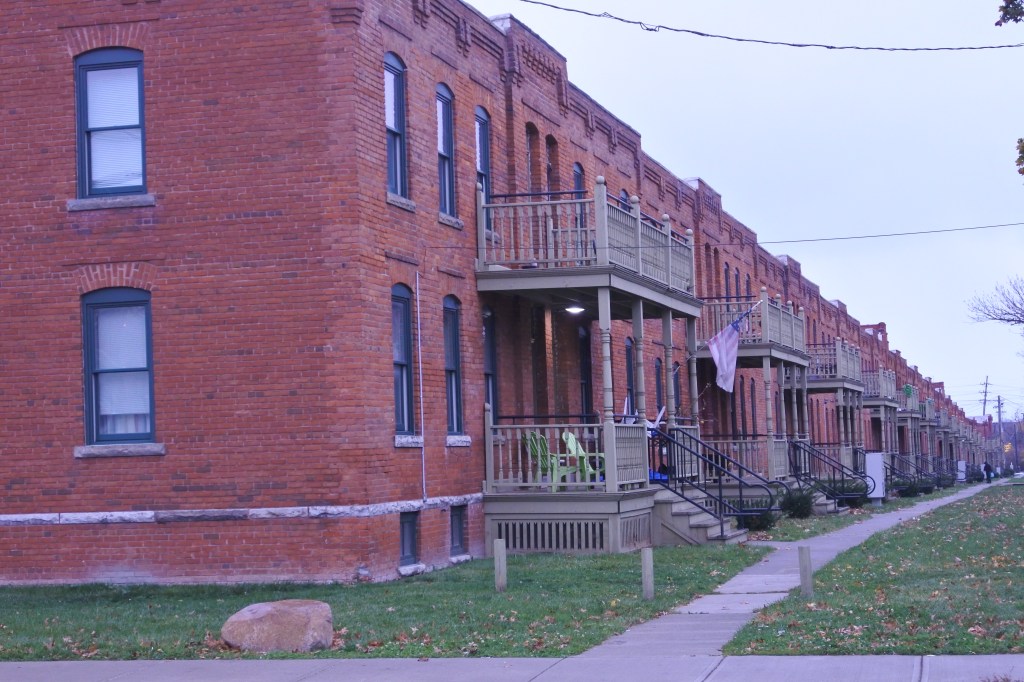
The East Side Historic District is the oldest portion of the city, and contains mostly residences and churches. The historic district was created in 1983 and includes a set of 697 buildings, of which, 429 contribute to the district’s historical integrity. The East Side Historic District is for the most part a stable residential, walkable neighborhood. Few retail amenities exist within the district, but most residents are able to walk to Dwtn in 10-15 minutes, which has a good concentration of retail and cultural amenities. The district is generally safe with good walkable school options, plenty of parks, and comfortable tree lined streets. In order for the East Side Historic District to become a great urban district it needs better public transit and bike access, more retail and cultural amenities mixed in, more density and rental options. One sensible way to urbanize the neighborhood is use the western edge with Downtown to prioritize mixed-use dense in-fill. This area also has the least number of historically significant structures alleviating concerns of widespread demolition as the district densifies.

Click here to view my East Side Historic District album on Flickr

URBAN STRENGTHS:

* Good ADA curbs and sidewalk infrastructure.
* Good density.
* Good diversity indicators especially economic. Racial make up is about 70% Hispanic.
* Good number of schools in and around Downtown with a nice mix of grades and private versus public school options.
* The East Side Historic District is overall pretty safe.
* Several nice small and medium sized parks.
* Solid tree canopy.
* Really nice historic homes from the turn of the 20th century.
* Urban massing is generally good with few parking lots and auto centric uses. But not much retail amenities here.

URBAN WEAKNESSES:

* So so public transit
* Bike infrastructure is very limited.
* Rentals options are pretty limited but generally moderately priced.
* Not too much for sale housing diversity but housing is generally affordable. 2-beds sell btwn 100K-215K, 3 & 4 beds sell btwn 100K-400K. A handful of condos options as well.
* Modern in-fill is really non-existent.
* Pedestrian traffic is pretty limited.
* Cultural amenities within the East Side Historic District are limited to the Elgin Historic Museum, some historic homes and a couple bars. But most of the neighborhood has walkable access to all the cultural and retail amenities of Dwtn.
* Retail amenities within the East Side Historic District are limited to a drug store, a couple boutiques, a couple gyms, and a couple of salons.

Downtown Elgin, IL- A Large Historic Chicagoland Suburb

Downtown Elgin is a pretty compact area. I generally followed the boundaries set by google using Geneva/Welling as the eastern boundary, Lake as the southern, and Kimball St. as the norther.

While development in Downtown Elgin began in the 1830s, the oldest standing buildings in the district were built in the 1870s. Most of the district’s buildings were built in the late 19th and early 20th centuries. Early Elgin achieved fame for the butter and dairy goods it sold to the city of Chicago. The dairy industry became less important with the arrival of the Elgin Watch Company famous for producing some of America’s finest watches and survived well into the mid-20th century. Like most midsized American cities Elgin lost most of its landmark business by the 1980s. Fortunately the Downtown area quickly experienced a renaissance in the 1990s converting many historic buildings into lofts, opening many new food and beverage bizs and local businesses, and fostering its arts community. 

The City of Elgin as a whole is the seventh-largest city in Illinois sitting at 115K residents and has experienced consistant growth throughout its history. It hosted almost 3K residents in 1860 and steadily grew from there reaching 22K residents in 1900, 38K in 1940, 55K in 1970 and more than doubled since then, an indication that Elgin has annexed much of the surrounding suburban growth around it. For Downtown Elgin to truly become an premiere urban district it needs more population, which can help attractive important retail services like a full service grocery store, drug store and perhaps some larger clothing stores. There are plenty of underutilized parking lots and auto centric buildings that could be replaced with compact mixed-use buildings.

Click here to view my downtown Elgin Album on Flickr

URBAN STRENGTHS:

* Good ADA curbs and sidewalk infrastructure.
* Very nice dedicated bike lane along the Fox River. Really no dedicated bike stations.
* Great diversity indicators all around.
* Good number of schools in and around Downtown but generally smaller private schools.
* Good park amenities including a bike trail along the fox river, a couple nice river front parks, and many small parkettes and plazas.
* Some issues with the homeless population but  Dwtn Elgin is overall pretty safe.
* A good amount of the Dwtn Elgin historic fabric remains and some more recent attractive urban in-fill including a large townhouse community.
* Decent tree canopy.
* Solid cultural amenities Dwtn including plenty of food & bev bizs, several art galleries and night clubs, a couple local theaters and local museums.
* Good retail amenities include a couple smaller grocerias, a hardware store, lots of boutiques & gift shops, a couple bookstores, several antiques & banks, plenty of gyms and dessert joints, a dwtn public library and post office, several churches

URBAN WEAKNESSES:

* So so density.
* 50 min drive and 1.5+ bus/train ride from Elgin to Dwtn Chicago. But dwtn Elgin has some jobs itself.
* For sale product is a bit limited but lots of for sale product in the townhouse development btwn Prairie and Lake Ave. few 1-bed condos but plenty of 2-bed townhomes selling btwn 200K-350K, 3 & 4 beds sell btwn 200K-350K but limited product.
* Rentals are also pretty limited. 1-beds lease in the high 1Ks and 2-beds around 2K, and 3-beds lease for around 3K.
* Some crummy autocentric development and surface parking lots along the edges of Downtown.
* Dwtn Elgin’s image was not the best in the 80s and 90s but has steadily been improving since the 2000s.
* Dwtn could really use a full service grocery store and drug store.

Chicago’s Pullman Neigborhood- Home to the George Pullman’s Company Town designated a National Monunent in 2015


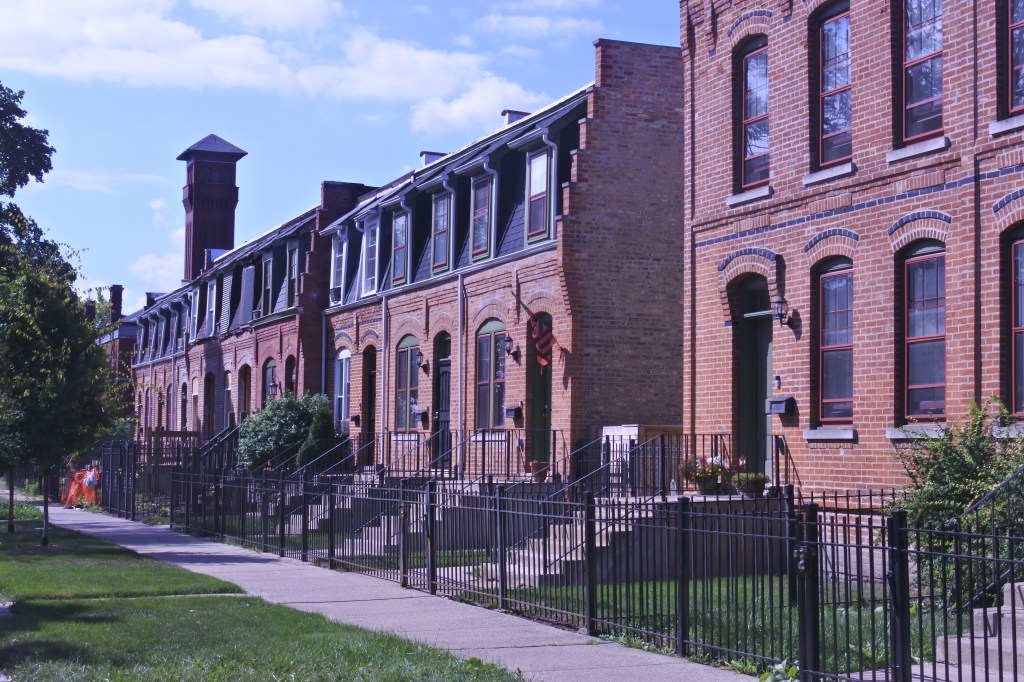
Chicago’s Pullman neighborhood encompasses a much wider area than its two historic areas stretching between W 115th St to 95th St and including the Cottage Grove Heights subdistrict built up in the 1920s-1940s. Historic Pullman was built in the 1880s by George Pullman as a full company town for his workers. The distinctive Victorian rowhouses were comfortable by the time’s standards containing such amenities as indoor plumbing, gas, and sewers. However, this Utopian vision for a company town quickly fell apart during the Panic of 1893. Demand for Pullman cars slackened and the Pullman company responded by laying off hundreds of workers and raising rents and provisions sold at the company town while keeping wages the same. This quickly led to the Pullman Strike in 1894 that lasted 2 months and only ended with the intervention by the US government and military. A couple years later the Illinois Supreme Court required the company to sell off the town as it was beyond the company’s charter. By 1899, the town and other major portions of the South Side were annexed by the city of Chicago and Pullman homes were sold to their occupants. The fortunes of the neighborhood would continue to rise and fall with the Pullman Company for many ensuing decades. The Post War era was not kinda to the Pullman neighborhood as many jobs were lost to deindustrialization and railroad restructuring along with many residents packing up for the suburbs. By the 60s, the original Pullman Town between 103rd and 115th Streets was threatened by demolition for an industrial park. Thankfully local residents formed the Pullman Civic Organization, and the community was preserved as a National Historic Landmark District in 1969. President Obama elevated its designation as National Monument in 2015.

Revitalization of the Pullman rowhouses has gained steam the last 10 years and now many of the rowhomes are selling in the 200Ks. Big box stores and distribution warehouses have moved into the area providing economic opportunity, albeit with  poor urban form. This has also helped reduced crime in the area and Pullman’s population decline appears to be slowing. But much remains to transition Pullman back into a quality urban neighborhood as industrialization and railroad lines have left it deeply scarred and disconnected, much vacant brownfield lands remain, and the community lacks any cohesive urban biz district.

Click here to view my Pullman Album on Flickr

URBAN STRENGTHS:

* Solid public transit access, which allows residents to get dwtn in a 30 min train ride. Travel by car can be 20-25 mins without heavy traffic.
* Decent bike coverage with a couple north-side bike lanes and several rentable bikes available in the neighborhood.
* Good diversity indicators especially economic and generational.
* Crime has definitively improved here the best decade thanks to many new jobs in the area and higher incomes. Still some crime issues and areas of blight throughout.
* Good # of walkable schools but mixed ratings.
* Lots of parks space in and around the Historic Pullman neighborhood. Also the expansive Palmer Park just to the west in Roseland complete with a pool.
* Some very attractive working rowhouses in Historic Pullman, cute bungalows in the Cottage Grove Heights, and decent early 20th rowhouses in between.

URBAN WEAKNESSES:

* Very poor urban density thanks to the district industrial legacy and significant neighborhood disinvestment and blight.
* Good street grid where residential areas are located but poor neighborhood level connectivity thanks to the highways and rail lines that disconnect the community.
* Great ADA and sidewalk infrastructure in the residential portions of Pullman, pretty poor in the more industrial/big box parts of the neighborhood.
* Ok number of rentals (at least not many listed on Zillow). 1-beds generally lease around 1k, 2-beds anywhere in the 1Ks, Not many 3-beds available.
* For sale is pretty affordable but not much diversity. Few 1-beds available. 2-beds sell btwn 100K-225; 3 & 4 beds sell btwn 85K-300K.
* Limited park space outside of Historic Pullman District.
* Ok cultural amenities with the Historic Pullman District Site being the most important. Only a handful of restaurants & bars, and a couple art galleries.
* Retail amenities are pretty limited and generally autocentric still some good amenities including: a Walmart (complete with a grocery store as well), a Jewel-Osco, a couple clothing stores, a couple banks, a couple salons/barber shops, a couple dessert joints, a planet fitness, and a handful of churches and doctor offices.
* Not a ton of modern in-fill and what does exist is big boxes or auto centric development.
* Poor urban massing

Riverside, IL- A Fredrick Olmested Designed Community and Arguabily America’s 1st Planned Community

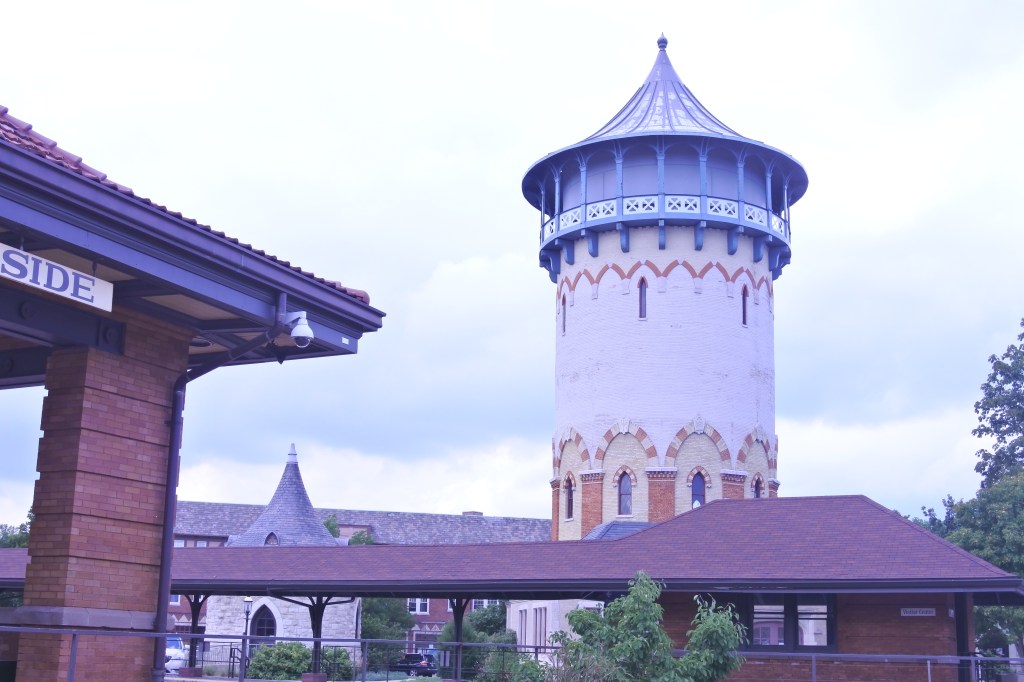
Riverside is arguably the first planned community in the United States, designed in 1869 by Calvert Vaux and Frederick Law Olmsted. The village was incorporated in 1875. The Riverside Landscape Architecture District, covering most of the Village area, was designated a National Historic Landmark in 1970. Riverside’s location was sought out thanks to its highly desirable location next to the Fox River, a  Natural Oak forest, and convenient access to Chicago via a railroad line. Frederick Law Olmsted and his partner  Calvert Vaux had a hand in almost all aspects of the community’s design following the land’s contours and the winding Des Plaines River. The Village also has many stunning turn of the century homes designed by top architects such as Frank Lloyd Wright, Daniel Burnham, Louis Sullivan and many others. The second period of Riverside’s development came in the 1920s and late 1930s, when many more modest houses were constructed on smaller parcels. The remaining plots were developed during the post–World War II boom, and by 1960 the village was almost entirely developed. The population peaked at 10,357 in 1970 and dropped below 8,500 by the mid-1990s. Riverside’s population also increased by 5% between 2010 and 2020 thanks to some in-fill construction and now sits at just over 9,000 residents.

From an urban perspective Riverside is a mixed bag. The naturalist curvilinear streets provide excellent aesthetic value but create difficulties for wayfinding and imageability. The low density development limits walkability and more urban mixed-use fabric. Riverside also has very limited bike infrastructure, a handful of apartment buildings, often missing curb cuts, and more auto centric designed commercial corridors along its borders (Harlem and 26th Streets). The historic core of Riverside, however, is charming with some stunning late 19th century architecture (the Riverside tower, trains station, and several mixed-use buildings). Riverside also has decent retail and cultural amenities, great schools, decent diversity of for-sale housing options, and excellent tree canopy. With its recent rise in population Riverside appears to be allowing more mixed-use in fill in a sign that its allowing itself to densify. I hope this trend continues especially in the historic core and along its edge commercial districts of 26th and Harlem ave.

Click here to view my Riverside Album on Flickr

URBAN STRENGTHS:

* Good generational diversity and there are many families w/ kids and young professionals here.
* Extremely safe community.
* Good number of walkable schools and all rated well.
* For sale options are generally on the expensive side but some moderately priced smaller sized homes. A handful of condos are available with 1 beds selling in the low 100Ks, more 2-bed condos that sell btwn 125K-300K, 2-beds SF homes sell btwn 275-500, 3 & 4 beds range btwn 250K- 900K. Some larger mansions selling the low millions.
* Decent cultural amenities including a good # food & beverage bizs, a glass studio, a local Arts Center, a local historic museum, a couple Frank Lloyd Wright homes, and a major cineplex located just north of Riverside.
* The bulk of Riverside’s retail amenities are located just north of Riverside at North Riverside Park Mall, which is a very auto centric development. The mall includes several department stores, a Best Buy, Cosco, and lots of name brand clothing stores. Retail amenities within Riverside proper are a bit limited and include a supermarket, a couple pharmacies, a couple banks, a couple gift shops, several dessert joins, a couple gyms, several churches, a couple doctor’s offices, and a public library and post office.
* Good set of parks with lots of small and medium sizes parks thanks to all the leftover triangle wedges leftover from the curvilinear roads. Sizable wood along the Fox River as well.
* Some absolutely stunning turn of the century mixed-use commercial buildings in the town center and gorgeous early 20th century mansions. But also more plain residential homes from the 1940s & 1950s mixed in.
* Good urban massing and streetscaping in the historic core of Riverside along Burlington/Forest Ave and Riverside St.
* Tree canopy is about as good as it can get for an urban area.

URBAN WEAKNESSES:

* Pretty low dense for an older suburb.
* Ok public transit and decent access to Dwtn.
* Roads were intentionally design to be confusing. Designed by Fredrick Olmsted to be sinuous and highlight nature but not to move people efficiently through the village. At least it has decent connectivity.
* Very limited bike infrastructure.
* Limited economic diversity as this is a very wealthy village. Some racial diversity.
* Sidewalks are pretty consistent in Riverside but some newer areas without them. Most curb cuts do not have property ADA curb cuts but pretty consistent in the biz districts.
* Apartments are pretty limited with 1-bed leasing around 1K, 2-beds in the mid 1Ks-2K, and 3-beds around 2K.* Imageability is a mixed-bag as the heart of Riverside has a very unique and defined historic center but very challenging residential streets to navigate.
* Not much urban infill. Some 1950s homes, mid-century apartment bldgs along Harlem and 26th street along with auto centric crap.
* Pretty limited pedestrian activity.

Elmwood Park, IL- Dense mid-century Chicago Inner Ring Suburb

Elmwood Park was incorporated as a village in 1914 in order to prevent annexation by the greater city of Chicago. By this time the village only had a population of around 1K. This quickly changed as Elmwood saw the bulk of its development between 1910-1950 rising to 18K residents. and maxing out at 26K in 1970. The City has more or less maintained its population since then.

Elmwood City is a rare case of an rather dense and urban mid-century community. Development in most American cities between 1930-1960 would result in a much more suburban and auto centric form. The only cities that seem to run counter to this are Chicago and New York, which is much more akin to the type of mid-century urban development in Canadian cities.

That doesn’t mean Elmwood City is perfect however. Its commercial districts still have significant auto centric stretches, bike infrastructure is basically non-existent, the tree canopy is a bit wanting, and there aren’t enough rental options. But Elmwood City with its gridded streets, quality public transit, lots of smaller condo options, good retail amenities and a density of 14K residents per square mile (more dense than the City of Chicago) has great potential to become a great urban community. With significant in-fill development along its commercial corridors I can easily imagine its density increasing to 20K+ residents per square mile with a much more urban and walkable environment.

Click here to view my Elmwood Park Album on Flickr

URBAN STRENGTHS:

* Solid density
* Excellent Sidewalk and ADA infrastructure although some areas that are pretty autocentric areas.
* Great connectivity in the street grid.
* Highly diverse demographic especially economic diversity.
* Decent # of walkable schools and well rated. Public High Schools is just across the border in River Grove.
* Good for sale housing options generally moderately priced. Lots of  mid-century condos  available. 1-bed condos sell btwn 90K-150, 2-beds 100K-400K, 3 & 4 beds btwn 200K-750K.
* Lots of small and medium sized parks well dispersed throughout Elmwood with quality amenities (Ballcourts, playgrounds, skatepark, and swimming pool).
* Overall a very safe community.
* Good retail including several supermarkets & drug stores, a hardware store, plenty of banks, a couple boutiques, several floral and gift shops, several bakeries and ice cream shops, plenty of gyms, a local post office and public library, plenty of churches, lots of doctor offices and the Gottliebl Memorial Hospital is in nearby Melrose Park.
* Some very cute 1920s/1930 bungalows in spots but also some more plain 1940s apartment bldgs.

URBAN WEAKNESSES:

* Limited bike infrastructure throughout.
* Some rentals moderately priced. 1-beds lease in the low 1Ks and 2-beds lease from the mid 1Ks to mid 2Ks. 3-beds Few 3-bed generally leasing in the 2Ks. A handful of dedicated affordable housing buildings.
* Ok cultural amenities including many food & bev. businesses, a couple live music venues but not much else.
* Urban form is a mixed bag. Lots of auto centric stretches along Grand.
* Some good urban infill along Conti Pkwy but most of the post WWII development is autocentric.
* So so tree canopy.

River Forest, IL

River Forest is closely tied to the larger neighboring community of Oak Park but developed a couple decades later. River Forest shares the same High School with Oak Park, is located just a couple blocks west of Dwtn Oak Park and also contains many great early 20th century buildings including a couple designed by Frank Lloyd Wright and others following the Prairie School design ethic. Development did not come to River Forest with any significance until the 20th century. By 1910 the Village had 2.5K,  4K by 1920, nearly 10K in 1940 and the Village’s population maxed out at 13K in 1970s. Population declined slowing in the ensuing decades thanks to smaller household sizes but recently reversed in the last decade. River Forest now has nearly 12K residents.

River Forest excels with the typical staple suburban amenities of great parks and schools, a very low rate of crime, lots of households with kids and solid retail and cultural amenities. But because of its strong suburban tendencies some of its urban qualities are compromised including a low density, limited pedestrian activity, really no bike infrastructure, limited racial and economic diversity, limited rental options and business districts with lots of auto centric stretches. The last decade’s population increase is likely the result of additional mixed-income developments along River Forest business districts (Lake, Harlem, and North) I hope this trend continues and this early 20th century suburban can continue to urbanize.

Click here to view my River Forest album on Flickr

URBAN STRENGTHS:

* Solid public transit access and pretty convenient location to Dwtn.
* Solid connectivity as well. Pretty good for a suburb with most if its population growth after 1920.
* Lots of family households here.
* Lots of walkable schools and all are well rated. Good mixed of public and private.
* Extremely safe community.
* Wide range of for sale options thanks to the large number of condos in River Forest. Single family homes start out at around 500K. 1-bed condos sell btwn 75K-200K, 2-beds condos btwn 175K-600K, 2-bed homes sell btwn 425K-700K, 3 & 4 beds sell btwn 230k- the mid 1 Ms. Plenty of 3-be condos available selling around 300K.
* Excellent tree canopy.
* Great park amenities with several large wooded parks, and many small-medium sized parks with good amenities spread throughout River Forest.
* Very attractive historic homes.
* Even with larger auto centric strengths in River Forest, the streetscape design is of a high quality.
* Decent cultural amenities with good food & beverage options, a couple Frank Lloyd Wright homes, Art Museum at Concordia University, performing art amenities at both Concordia and Dominican Universities, and convenient access to the Lake Ave biz district in Oak Park which includes many cultural amenities.
* Decent retail amenities including 3 supermarkets, a target, several drug stores, a couple boutiques and clothing stores, several banks, several gift shop, a couple book stores, a hardware store, several dessert joints and gyms, public library & post office, lots of churches and plenty of medical offices. Good access to biz district in Oak Park too.

URBAN WEAKNESSES:

* Sub par urban density even compared to inner ring suburbs in Chicago.
* Bike infrastructure is very limited.
* Poor racial and especially economic diversity as this is a very wealthy community.
* Rentals are pretty limited here. 1-beds lease in the low 1Ks, 2-beds in the mid 1Ks, and some 3-beds that are more expensive.
* A couple decent biz districts but pedestrian activity is pretty limited.
* Modern in-fill is a mixed bag. Plenty of auto centric bldgs along North, Lake, and Harlem but some good more recent mixed-use infill.

Forest Park, IL Chicago’s Village of Cemeteries

Forest Park was officially incorporated in 1907 when the community hosted around 6K residents. The bulk of Forest Park’s development occurred btwn 1910 and 1930 as it grew from 6.5K-14.5K souls. Forest Park topped out at 15K residents in 1970s and has more or less remained at that level in the ensuing decades. For much of its history, Forest Park was known as a “Village of cemeteries”, with more dead “residents” than living ones; some figures estimate the ratio at 30:1, dead to alive. Forest Park also hosted the Forest Park Amusement Park, a small but popular amusement park located just north of Waldheim Cemetery where the current Forest Park T station now resides.

In general more affluent and more urban development are located north of I-290 containing Forest Park’s best urban business district along Madison. This area also contains much better streetscaping and urban form than south of 1-290. Forest park also excels with great diversity across all metrics, lots of diverse housing options, good cultural and retail amenities, excellent access to public transit, and high levels of safety. For Forest Park to have a similar level of urbanity as its Oak Park neighborhood it needs more density, especially along the rather auto centric corridors of Roosevelt and Harlem, much better bike infrastructure, and more walkable school options.

Click here to view my Forest Park, IL Album on Flickr

URBAN STRENGTHS:

* Excellent public transit access.
* Great diversity indicators, especially racial and economic.
* Great variety of for sale options! Lots of-bed condos selling btwn 65K-250K, Lots of 2-bed condos selling btwn 115K-350K, 2-bed SF homes sell btwn 240K-400K, 3 & 4 beds sell btwn 175K-750K with condos being on the cheap end.
* Decent # of rentals. 1-beds lease btwn 1K-2.5K, 2-beds lease btwn 1.5K-2K, 3 beds in the high 1Ks or 2Ks.
* Decent Park space including the expansive Historic Forest Homes Cemetery and the multi-faceted City Forest Park with a swimming pool & aquatic Center and Recreation Center.
* Good cultural amenities including lots of food & bev bizs along Madison Ave. a public local museums and easy access to Dwtn Oak Park just a couple blocks east of Forest Park.
* Overall a very safe community.
* Good retail amenities including several supermarket & drugstores, a Walmart and the Forest Park Plaza, a Bed Bath & Beyond, a Hardware store, several brand name clothing stores, lots of boutiques and unique stores along Madison, a couple bookstores, several dessert joints & gyms, a couple post offices, a public library, plenty of medical offices, and several churches.
* Good streetscaping along all the Commercial districts.

URBAN WEAKNESSES:

* ADA curb cuts are actually less common south of I-290 but quite good north of I-290.
* A couple decently rated elementary and middle schools but the High school is pretty far away and not walkable.
* Much of the commercial amenities are auto oriented.
* Good urban massing along Madison but poor along Roosevelt and Harlem.
* So  density, somewhere between a City and a typical Suburb.
* Bike infrastructure is very limited.

Oak Park, IL- A Wonderful Urban Suburb in Chicagoland and Home to the Highest Concentration of Frank Lloyd Wright Buildings

Oak Park was first settled in 1835 but took much later to incorporate (1902). It wasn’t until the 1870s with the construction of  its own railroad depot that Oak Park started to grow ballooning from 500 residents in 1870 to nearly 2,000 in 1890. The late 19th saw the construction of streetcar lines and Oak Park’s population really started to expand. This was also at the same time that Frank Lloyd Wright settled in the area and became his first laboratory for cutting edge architecture design and now holds the best concentration of his designs in the world. By 1910 the population exploded to 20K and by 1930 it nearly hit its peak at 60K tripling in 3 decades. In a progressive move Oak Park, passed the Open Housing Ordinance in 1968, which helped devise strategies to integrate the village rather than resegregate. The City currently boasts nearly a 20% African American population and only 60% are White. Oak Park maintained relative stability in the Post WWII years only shedding about 15K of its peak population.

 That last decade have actually seen a population reversal with 3,000 new residents as the City made efforts to densify its downtown area centered on Lake and Marion. Other quality urban business districts exist along Oak Park, Harrison, and Chicago Ave. The other biz districts (Harlem, Roosevelt, Madison & North Ave) still struggle from auto centric buildings and orientation. They certainly have the potential to become thriving mixed-use district with the right investment and infill development. Oak Park could also benefit from a dedicated bike station system and better economic diversity but overall this is a great urban area and one of Chicago’s best urban suburbs.

Click here to view my Oak Park, IL album on Flickr

URBAN STRENGTHS:

* High connected street grid (with the exception of some defensible streets).
* Solid public transit and pretty convenient access to Dwtn.
* Solid ADA infrastructure but plenty of spots without modern ADA curb cuts.
* Excellent array of walkable schools that are well rated. All public schools however.
* Lots of apts available and good variety. Studios lease btwn $800-2K , 1-beds anywhere in the 1Ks, 2-beds the low 1Ks-3K, and 3-beds btwn 2K-4K.
* Great for-sale diversity as well. Lots of condos with 1-beds selling btwn 85K-250K, 2-beds sell btwn 115K-450K with lots of afford condos, 3 & 4 beds sell btwn 180K- low 1Ms. Good number of 3-bed condos too. Some more expensive mansions as well.
* Good number of dedicated affordable housing in Oak Park.
* No huge parks but lots of small-medium sized parks well distributed throughout Oak Park. Also a major ice skating center and outdoor pool.
* Excellent tree canopy.
* Lots of families with kids live here but also a fair amount of young professionals.
* Solid cultural amenities including plenty of food & bev businesses, lots of art galleries, a historic theater, several local performing arts centers, lots of historic sites and local museums and a plethora of Frank Lloyd Wright homes as this was a long time home for him.
* Great retail options including several full service supermarket, a couple gourmet options as well, a plethora of drug stores, an urban target, a 10 thousand villages, tons of boutiques, gift shops, home goods, and clothing stores, lots of banks, several book stores, lots of dessert joints & gifts, several churches, a major hospital and two large medical centers, and a local post office and public library.
* Generally a very safe place to reside.
* Some stunning historic architecture thanks to all the late 19th century mansions including many Frank Lloyd Wright homes, but also plenty of more normal architecture.
* The best urban biz districts are along Oak Park, Lake Aven/Marion (Dwtn), Harrison, and Chicago Ave is generally pretty good.

URBAN WEAKNESSES:

* A couple dedicated bike lanes but no apparent bike sharing system in Oak Park.
* Not great economic diversity.
* Some autocentric stretches along Harlem, Roosevelt, Madison, and North Avenue.
* Northern third of Oak Park is newer large lot singly family homes with lower density and less walkable access to retail and cultural amenities.

Berwyn, IL- A quality Chicago urban inner-ring suburb and Illinois’ most dense municipality

Berwyn has it roots in the mid 1800s starting with Plank road cutting across it linking up Chicago-Ottawa IL. For several decades it remained mostly undeveloped until the late 1800s. In 1908 it was chartered as a municipality  and quickly became one of Chicago’s fast growing suburbs. The bulk of Berwyn’s growth came in the 1920s as the middle portion of the suburb was filled in. This explains why there are so many cute bungalow brick homes here. By 1930 Berwyn had 47K and it maxed out in 1960 at 54K souls. Population slowly receded in the remaining decades of the 20th century only to quickly rebound in the 90s likely with a large influx of Hispanic Immigrants. Berwyn is back to full strength and now has 57K residents.

Berwyn also has the highest population density of any municipality in Illinois sitting at 14,500 residents per square mile. While Berwyn is known as the “City of Homes,” it also contains four primary business corridors: Ogden Ave, the Depot District, Cermak Road, and Roosevelt Road. Ogden Ave, a segment of historic Route 66. These business districts are lengthy and were originally streetcar lines. They is a mix of quality urban stretches and auto centric areas, the worst being Ogden and Harlem Avenues. The Depot District, centered on Berwyn’s regional train station, contains the best urban form and has seen some good mixed-use infill.

Berwyn also excels at quality walkable schools, solid public transit access, good park amenities, attractive 1920 Bungalows, good retail & cultural amenities, relatively affordable for-sale options and many rental options, and a high level of safety. There are however no dedicated bike lanes nor bike sharing stations, often outdated ADA curbs, and poor urban massing in spots. Berwyn simply needs more quality urban in-fill to become a great urban districts. It certainly has great urban bones and already good walkability.

Click here to view my Berwyn, IL Album on Flickr

URBAN STRENGTHS:

 * Solid density and good public transit access.
* Excellent connectivity and grid system.
* Great diversity all around, especially economic.
* Lots of walkable public schools here rated well except the public High School.
* No major parks but lots of small-medium sized park well distributed throughout Berwyn.
* Decent architecture with a mix of quality urban infill near the train stations but some crummy auto centric infill along some of the commercial corridors. Lots of cute brick bungalows throughout and some good historic commercial.
* Good cultural amenities including lots of food & beverage bizs, many breweries & night clubs, several live music venues, a couple local theaters, and a cineplex just across the border in North Riverside.
* Good retail amenities as well including several off-brand supermarkets and smaller groceries, several pharmacies, the North Riverside Mall sits on the western edge and contains main amenities (Dept stores, Best Buy, Office Depot, Aldi’s Ross’ etc.), several hardware stores, many boutiques/thrift stores & gift shops, some antiques, many banks, a couple book & toy stores, plenty of dessert joints, bakeries, & gyms, local post office & library, many churches, and a major hospital.
* Overall a very safe community.
* Good variety of for-sale small to medium sized options generationally moderately priced. Decent # of 1 & 2 bed condos sell btwn 80K-200K; tons of 3 & 4 beds that sell btwn 200K-600K
* Good # of rentals. 1-beds lease in the low-mid 1Ks, 2-beds in the 1Ks, and 3-beds btwn the high 1Ks to mid 2Ks.

URBAN WEAKNESSES:

* Bike Infrastructure is non-existent in Berwyn.
* Generally good ADA and sidewalk infrastructure, but modern ADA curbs are hit or miss on residential streets.
* Decent but not great tree canopy throughout.
* Urban massing is a mixed bag. Many commercial districts with long stretches many auto centric development inevitable in spots. Best urban massing is the commercial district near the commuter line.

Armour Square- Stable Multi-Cultural District south of Chinatown and north of the White Sox Stadium

Armour Square is a very funky narrow rectangle of left over space btwn the Dan Ryan Freeway to the east, railroads to the western, W33rd and the Chicago White Sox Stadium to the south and I-55 to the north. Historically Armour Square included Chinatown and the White Sox Stadium, but I see no reason to include them in this evaluation.

This area was first settled during the Civil War years thanks to the opening of the Union Stock Yards in 1865. The first immigrants to the neighborhood included German and Irish immigrants. By the 1870s many Swedish immigrants arrived and by the late 19th century many Italians and Croatians settled in the central part of the district. By the early 20th century Asians arrived in numbers especially in the northern end of Armour Square. African Americans also migrated to the area around the same time esp. the southern end. These immigrant trends lead to the creation of the Chinatown subdistrict north of 55 and the Wentworth Garden projects in the 1940s. The Dan Ryan expressway in the 50s lead to the destruction of must Black homes in the neighborhood and drastically reduced their population in Armour Square.

The construction of the highways in many ways stabilized Armour Square as it isolated the neighborhood for the blight of Bronzeville to the East. Armour Square also saw its crime decrease after the highways and continued in a more or less stable fashion becoming increasingly Asian as Italians and Croatians moved out of the neighborhood. Some signs of revitalization activity along 31st street with several newer restaurants, but all in all Armour Square doesn’t appear to be changing much. More commercial amenities and in-fill construction would certainly be a major plus towards adding more vibrancy to the neighborhood.

Click here to view my Armour Square album on Flickr

URBAN STRENGTHS:

* Excellent urban density.
* Very good ADA and sidewalks infrastructure overall but about 20% of intersections without modern ADA curb cuts.
* Great access to dwtn with the Red line sitting just to the east of Armour Square and solid bike infrastructure.
* Good gridded and connected streets within the neighborhood.
* Historically an Italian District, Armour square is becoming a majority Asian, esp. north of 31st Street.
* Solid economic diversity and excellent generational diversity.
* Some walkable schools within and near Armour Square. Several well rated public elementary schools. A couple well rated middle & high schools not to far away.
* Overall a pretty safe area.
* Good mix of moderately and higher end for sale product. Limited 1-bed condos. Selling around 200K. Decent # of 2-bed condos. Sell btwn 200K-400K. 3 & 4 beds sell btwn 200K-700K.
* A couple subsidized apt bldgs available.
* Only hosts one park (Armour Square Park) but has a diversity of amenities (ballcourts, outdoor pool, playground, and fitness center.
* Decent historic and modern infill. Interesting mix of residential infill from the post WWII era to present.

URBAN WEAKNESSES:

*Connectivity to adjacent districts is obviously a bit stunted as Armour Square is surrounded by barriers.
* Rentals are pretty limited here but very reasonably priced.
* Okay Tree canopy.
* Decent cultural amenities including several restaurants & bars and the Chicago White Sox’s stadium. Easy access to Chinatown and better amenities in Bridgeport
* Limited retail amenities including a couple Asian grocerias, a couple boutiques, a couple salons, and some odds and ends Asian Stores, a couple churches.
* Mixed urban massing along 25th and 31st Street. Some auto centric spots in the district.