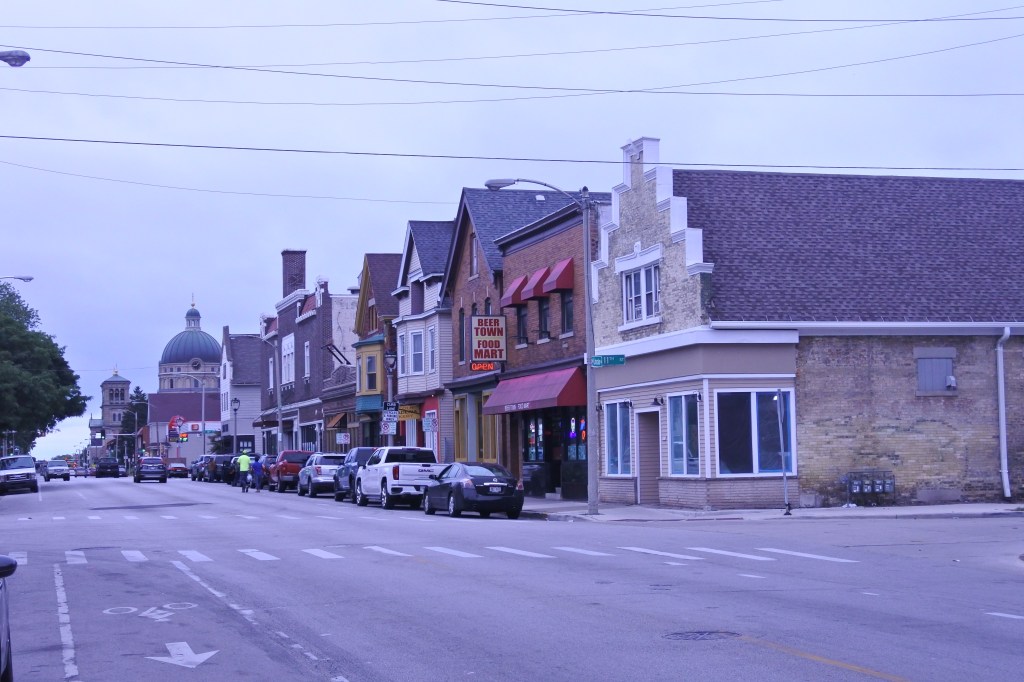
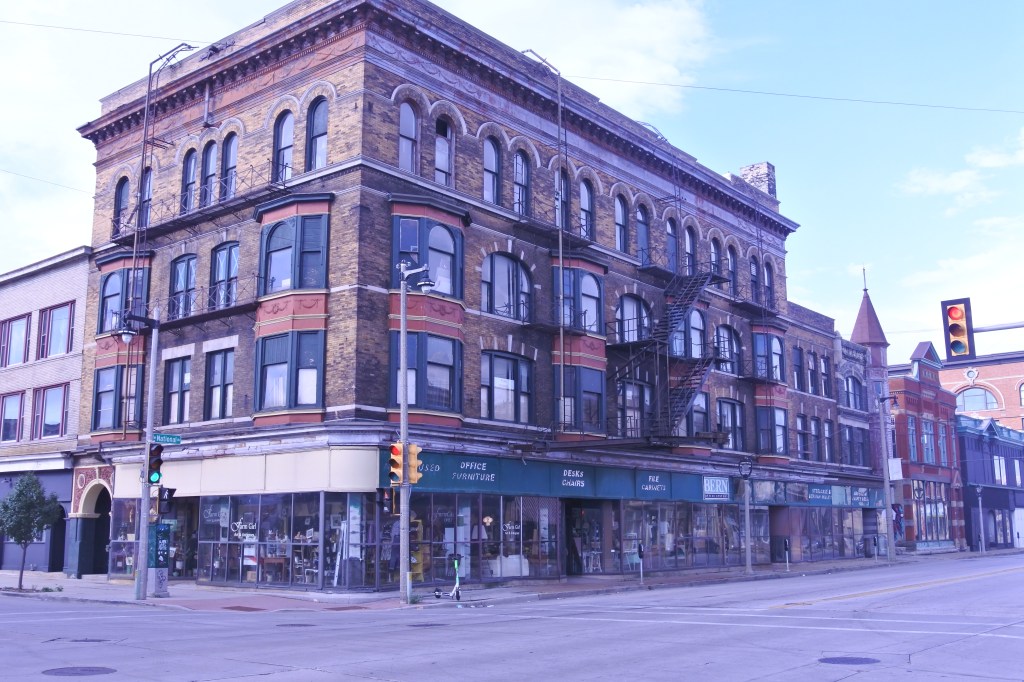
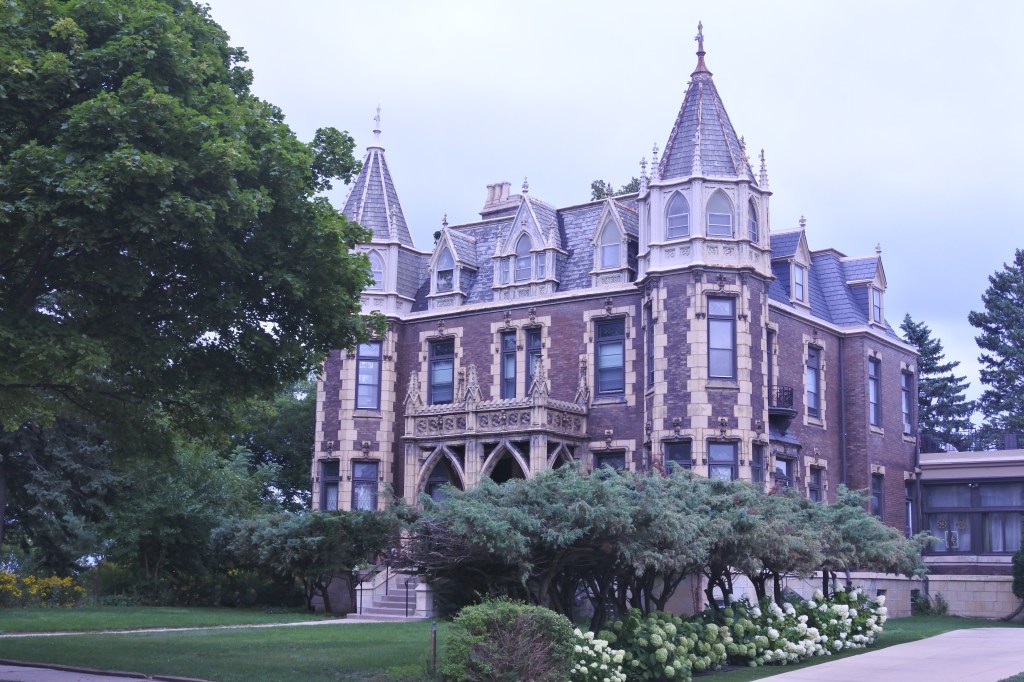
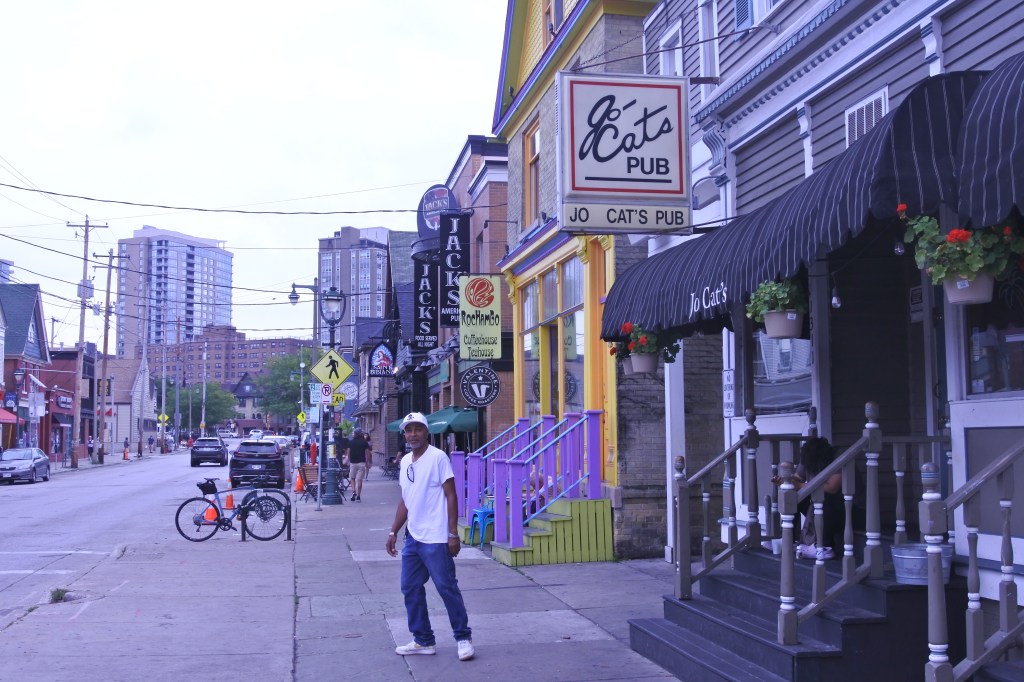
Riverside Park & Murray Hill- Two excellent urban districts in Milwaukee’s East Side

Murray Hill was built primarily in the early  20th century, primarily bungalows, two-family duplexes, and larger apartment buildings. The area quickly became home to many Italian Immigrants and there is still some evidence of this influence.

Riverside is noted for its racial and ethnic diversity, including large numbers of African-Americans and Caucasians, as well as growing Iranian, Russian, Asian, and Hispanic populations. With the neighborhood’s proximity to the University of Wisconsin–Milwaukee, a sizable college student population also resides there. Both Murray Hill and Riverside Park have seen rises in housing value thanks to their solid walkable amenities, and access to Dwtn and UMW.

Both neighborhoods also excel at great access to park, retail, and cultural amenities, great public transit and bike access, great housing diversity including lots of moderately priced housing, good tree canopy, and solid architecture. There are several commercial nodes in the neighborhood including North Avenue, a couple blocks of Murray Avenue & Farwell Ave, and Downer Avenue. The biz districts of the Lower East Side around North Avenue and Oakland Ave in the Upper East Side are nearby as well.

Areas for improvement from an urban perspective include better ADA curb cuts, better schools and more families, and urban infill in the auto centric pockets of the neighborhood along parts of North Avenue and Farwell Avenue.

Click here for my Murray Hill Album and click here for my Riverside Park Album on Flickr

URBAN STRENGTHS:

* Great public transit and bike access.
* Very convenient access to Dwtn.
* Great economic diversity and solid racial diversity.
* Good # of apartments and generally moderately priced. 1-beds lease btwn 800K- 1.5K, 2-beds mostly line the low 1Ks but some luxury product leasing in the 2Ks, and lots of 3-beds available leasing btwn 1K to the mid 2Ks. Even an handful of 4 beds available. Vast majority of rentals are in Murray Hill.
* Great mix of for sale options. Decent # of 1-bed condos selling in the 100Ks and low 200Ks, -beds. Tons of 2-beds selling btwn 150K-450K. 3 & 4 beds selling btwn 250K- 550K
* Great access to parks and recreation here. The expansive Riverside park sides on the western edge of the Riverside neighborhood and Garden Park is just across the Milwaukee River. The expansive Lake park is just several blocks east of Murray Hill. Limited amount of parks in Murray Hill itself.
* Solid tree canopy here.
*Good cultural amenities including a decent # of restaurants, bars & cafes, a couple art galleries, several live music venues, a couple indie movie theaters, a bowling alley, and convenient access to all the cultural amenities of the Lower East Side near North Ave.
* Good retail amenities as well including 2 supermarkets, a couple drug stores,  a hardware store, several creative/unique stores, clothing stores mostly in nearby Lower East Side, a couple banks, several book stores, a bakery, a couple gyms, several dessert joints, a post office, several churches, and convenient access to Ascension Hospital.
* Overall these are very safe communities.
* Solid historic architecture especially in Murray Hill. Generally good modern in-fill but some auto centric stuff mixed in.
* Overall pretty good urban in-fill in the biz districts but some auto centric stretches.

URBAN WEAKNESSES:

* Decent sidewalk and ADA infrastructure but more than 1/2 of the curb cuts are not up to modern standards and some don’t have curb cuts at all.
* Thanks to the large college population, generational diversity is pretty limited. But some families here.
* Only a handful of schools in the area and ratings are mixed.

The Historic Water Tower Neighborhood- Home to many Gorgeous Mansions and the Gothic WaterTower

The Historic Water Tower is naturally named after its namesake, The North Point Water Tower, built in 1873. This was part of Milwaukee’s first public waterworks, with attractive Victorian Gothic. The neighborhood slowly was built after the completion of the water tower moving from south to north. At that time the area was just considered part of the East Side neighborhood and not as a separate district. I suspect the Historic Water Tower neighborhood name didn’t come into fashion until the preservation of movement of the 1970s. Five separate historic districts were created here with many notable historic buildings being added to the registry.

The norther half of the district was built around the N Downer Ave. commercial node and  has a very early 20th century street car character. The homes tend to get more spacious and SF detached the further north you go. From an urban perspective the Historic Water Tower district also excels at quality retail and cultural amenities in a walkable setting, has a good array of for sale housing, excellent park amenities, and great tree canopy. The neighborhood’s biggest failings is a lack of racial and economic diversity. It also lacks quality schools, has limited rentals, and no local post office. I hope the Downer and North Avenue nodes continue to densify with quality urban infill as well.

Click here to view my Historic Water Tower Album on Flickr

URBAN STRENGTHS:

* Solid urban density.
* Good ADA and sidewalks infrastructure. Some older ADA curb cuts.
* Solid # of dedicated bike lanes and some bike rental stations.
* Very safe community overall.
* Good mix of moderately priced and expensive homes. Handful of condos for sale in the 200Ks & 300Ks, 2-beds range anywhere btwn 175K-650K with a lot of moderately priced condo options. 3 & 4 beds range btwn 250K- 1 M with some larger mansions selling for even more. Again a good # of moderately priced condos/townhomes selling in the 300Ks.
* Excellent access to parks including the expansive and multi-faceted Lake Park and excellent Back Bay/McKinley Park, lakefront access and several beaches. Also convenient access to the quad space at University of Wisconsin Milwaukee.
* Good cultural amenities, especially when you include the North Avenue commercial node located a couple blocks west. Also solid cultural amenities along Downer Ave. Good # of food & beverage biz, a couple breweries,  a pair of historic indie theaters, a couple live music venues, and several historic homes and museums, esp. when you include the cultural amenities at UWM.
* Good retail amenities including a hardware store, a bakeries, a Wholefoods & local grocery store, a drug store, good # of boutiques/clothing stores, a book store, several banks, some gyms & dessert joints, a public library, and major hospital.
* Excellent historic architecture, especially the larger homes near the lake.
* Very full tree canopy.

URBAN WEAKNESSES:

* Not great racial nor economic diversity. Decent generational diversity here.
* Only a handful of schools in the area and ratings are mixed.
* Rentals are pretty limited especially 1-bed.s Some 2 & 3 beds leasing btwn 1K-2.5K.
* No local post office.
* Not a ton of modern in-fill but some good modern mixed-use in-fil along Prospect.

The Lower East Side- Milwaukee’s Best Urban District

The lower East Side’s development really got going after the Civil War. By the early 1870s East Brady Street began to emerge as a center of Polish commerce with a concentration of working class Polish immigrants living in the surrounding neighborhood. Homes closer to the lake were occupied by the City’s elite and wealthy. In the 1920s the ethnic focus of the neighborhood began to shift to Italian, reaching its peak in the 1950s. By the 1960s immigrant families began to Americanize and move out to the suburbs.  Brady Street then  became the focus of Milwaukee’s counter-culture movement. More recently due to its prime location near Downtown and between the Lake and Milwaukee River, the Lower East Side has seen major rises in value and significant development interest.

Interestingly this recent period of investment following a strong counter-cultural movement has left the Lower East Side as Milwaukee’s premiere melting pot, with a mix of hipsters, hippies, college students and young professionals. The district has several commercial areas including Brady St., North Avenue, Prospect/Farwell Avenues, and Water St. This all culminates in a very diverse and walkable neighborhood, one of Milwaukee’s best urban neighborhoods. The Lower East Side also hosts great parks spaces including two designed by Frederick Law Olmsted. Even with its rise in value, the Lower East Side still hosts a lot of affordable/moderately priced housing.

For this to be a premiere district it needs urban in-fill in a couple dead spots, better walkable schools and generational diversity, and a fuller tree canopy.

Click here to view my album on Flickr

URBAN STRENGTHS:

* Solid urban density
* Solid sidewalk infrastructure but lots many curbs cuts were not up to modern standards, esp. on residential streets.
* Excellent access to Dwtn amongst all modes of transportation.
* A bit of a confusion street grid but still solid connectivity.
* Great bike infrastructure with several dedicated lanes and many bike stations.
* Wonderful economic diversity.
* Lots of Apts and good mix of moderately and luxury priced ones. Studios lease btwn $600- low 1Ks, 1-beds btwn $880- 2K-, 2-beds btwn $950- 2.5K, 3-beds btwn 1.2K-3K. Decent # of 3-beds.
* Similar diversity with for sale product. Good # of 1-bed condos selling btwn $130K-350K, 2-beds btwn 200K-600K, and 3 & 4 beds btwn 250K- 700K.
* Great park access including two large waterfront parks (Caser’s Park & Veteran’s Park) and several small/medium parks spread throughout.
* Cultural amenities are great including a wonderful array of food & Beverage Bizs, several art galleries, a couple night clubs a several museums & historic homes, several live music venues, an indie theater, and convenient access to all the Dwtn amenities.
* Great retail amenities too including  two supermarkets, several grocerias and drug stores, lots of boutiques/clothing stores, several home good stores, lots of creative stores, tons of dessert joints, several gyms, several churches a public library & post office, and a major hospital nearby.
* Very safe neighborhood overall.
* Great urban form through with only a couple of vacant or underutilized spaces.
* Solid pedestrian traffic.
* Excellent modern in-fill throughout.

URBAN WEAKNESSES:

* So so racial diversity and poor generational diversity.
* Decent # of walkable schools in and around the Lower East Side but pretty mixed ratings.
* Good but not great tree canopy. Better along residential streets.

Washington Park West- A Comfortable early 20th Century Denver Neighborhood and Home to Washington Park

The Washington Park West neighborhood was unsurprisingly developed to the west of Washington Park. The Park itself was designed by Architect Reinhard Schuetz in 1899.  The neighborhood was part of the larger South Denver suburb created in 1886, which was quickly annexed by the City of Denver thanks to the silver bust of the 1890s. The creation of Washington Park hastened development in the Washington Park West neighborhood and the area filled in between 1900 and 1940 with some late nineteenth century brick houses in the northwest corner of the neighborhood. Washington Park West was officially seperated from the Washington Park neighborhood in 1972. The district never experienced any significant decline but experienced a renaissance in the late 90s thanks to its central location, proximity to the park, and access to several commercial business enclaves.

Washington Park West also does well from an urban perspective with its great public transit and solid bike access, consistent ADA/sidewalk infrastructure, good public elementary schools, good retail options, safety, and attractive offering of 1910-1930 historic bungalow and craftsman homes. I would not include it in Denver’s elite urban districts due to a medium level of density, limited racial/economic diversity, limited housing options, ok cultural amenities, and uncompelling business districts along Broadway and Almeda. There are still many urban in-fill opportunities along these corridors.

Click here to view my Washington Park West photos on Flickr

URBAN STRENGTHS:

* Great public transit access and solid bike access.
* Solid access to Dwtn as well.
* Excellent connectivity here.
* Very good ADA and sidewalk infrastructure.
* Decent amount of generational diversity.
* Okay # of walkable schools with 3 well rated elementary schools being the highlight.
* Great tree canopy.
* The district is located just west of Washington Park, which is a great multi-amenity park. No other parks in the district.
* Good retail amenities including 5 major supermarkets, an Office Depot, a couple drug stores, a couple boutiques/clothing stores, several home goods/furniture stores, a bookstore, a post office, plenty of churches and gyms.
* Overall a very safe neighborhood.
* Attractive historic bungalows and some Denver rowhouses mixed in mostly from the 1910s-1930s.

URBAN WEAKNESSES:

* So so density.
* Poor racial and esp. economic diversity.
* Decent # of apts but less than other inner city Denver districts. 1-beds lease anywhere in the 1Ks, 2-beds 2K-mid 3ks, and 3 beds in the 3 & 4 ks.
* Some  moderately priced housing but most for sale product is very expensive here. 1-beds that sell btwn 275K and 650K, 2-beds sell btwn 350K-950K, 3 & 4 beds btwn 550K-2M.
* Ok cultural amenities including a decent # of food & beverage bizs concentrated along Alameda, some art galleries, and a live music venue.
* Generally autocentric infill. Some nice MF infill in the SW corner of the neighborhood.
* Urban massing is a mixed bag along Almeda but pretty autocentric along Broadway. Good streetscaping however along Broadway.

Denver’s University Neighborhood- Home to Denver University and the Original Chipotle’s

The University neighborhood grew up alongside Denver University but is also know as  “DU” or the University neighborhood. The district was incorporated in 1886 as the town of South Denver as a way to restrict the creation of more saloons and roadhouses but was quickly annexed into the City of Denver in 1894. The campus is an interesting mix of modern and old architecture, with University Hall constructed in the 1890s. After World War II, enrollment spiked at DU thanks to the GI Bill.  A decent amount of the neighborhood was built in the 1920s & 1930s, especially the northern half. Most of the southern half was filled out by the 1960s thanks to the spike in the campus population and general Denver growth trajectory.  University’s other claim to fame is hosting the original Chipotle Mexican Grill.

From an urban perspective this is a comfortable semi-walkable district. The North half is the most walkable with its pre-WWII fabric and decent biz districts along University Blvd and Evans Ave. The southern half is newer and is often missing sidewalks. Thanks to the University there are a good # of apartments here including several large MF buildings along University Blvd. The DU also has solid public transit access, good cultural & retail amenities, a good tree canopy, and is a very safe area. For this to be a great neighborhood it needs more density and urban infill. I’d also like to see better bike infrastructure and retail amenities (esp. a public library and post office.)

Click here to view my album on Flickr

URBAN STRENGTHS:

* Solid connectivity and good public transit access.
* While a bit far, University still boasts of good access to dwtn by driving or public transit. Still doable by bike.
* Solid economic and generational diversity.
* Ok number of walkable schools but all rated well.
* Very safe area.
* Decent # of apartments generally leasing in the low-mid 1Ks, 2-beds btwn the mid 1Ks and mid 2Ks, 3-beds mid 2Ks to 3K. This is pretty moderately priced for Denver.
* Good # of moderately condos and wide range of prices. 1-bed selling btwn 250K-600K with condos being cheaper. 2-beds btwn 300K-800K, 3 & 4 beds btwn 450K- the mid-1Ms.
* Great tree canopy.
* Solid cultural amenities including a good array of Food  & Beverage businesses, an Art Gallery & Anthropology Museum, a live music venue, and the Performing Arts offered by University of Denver.
* Good retail amenities as well including a supermarket, drug store, several banks, a couple clothing/boutique stores, several dessert joints, many churches and a major hospital.

URBAN WEAKNESSES:

* Ok density.
* So  bike infrastructure.
* Racial diversity is pretty lacking but still some thanks to the University.
* So so sidewalk and ADA infrastructure. Its good until the southern 1/3 of the neighborhood were sidewalks are either missing are narrow right along the street.
* Decent pedestrian activity in and around the university but limited outside of it.
* So so park access including DeBoer Park, a recreation trail, and the quad space in University of Denver. The expansive Harvard Gulch Park is located in nearby Rosedale neighborhood.
* Historic architecture is so so.
* Modern in-fill is a mixed bag. Some good MF apartment buildings along University Blvd and good SF in-fill but also lots of suburban style ranches and auto centric commercial.
* No public library of post office in University.
* Urban form is hit or miss along University Blvd & Evans Ave.

Whittier- Denver’s First Racially Integrated Neighborhood

Whittier is named after the poet John Greenleaf Whittier, an abolitionist and founding member of the American Republican political party. Thanks to its abolitionist roots, Whittier was a rather integrated neighborhood from its beginning. This still remains to a large extent.

While the neighborhood was founded in the late 19th century development, it didn’t really start to development until the 1920s. The neighborhood was actually not fully built out until the 1970s, which is why there are many modern ranch homes here.

Whittier never experienced a significant amount of disinvestment, but it remained a bit under the radar as other adjacent inner-city districts revitalized. That dynamic has changed since the mid 2010s and now Whittier commands housing prices close to its neighbors. Whitter boast of quality park amenities great bike and public transit access, safety, quality tree canopy, and good overall urban massing. The biggest urban amenities missing are quality retail and cultural amenities, pedestrian activity, and a business district. I’d also like the urban density here double given the crazy demand for housing in Denver.

Click here to view my Whittier album on Flickr

URBAN STRENGTHS:

* Good sidewalk infrastructure. About 65% of the curb cuts are ADA compliant.
* Great public transit and solid bike infrastructure access.
* Very convenient access to Dwtn as well.
* Great racial diversity and decent economic and generational diversity.
* Overall a pretty safe community.
* Nice array of small and medium sized parks where distributed throughout Whittier. City Park is also along its Southeastern border.
* Solid Tree Canopy.
* Solid urban massing and streetscaping throughout. Nothing spectacular as there isn’t a cohesive biz district here.
* Generally a good image and buzz as a solid place to live.

URBAN WEAKNESSES:

* Decent # of walkable schools but mixed ratings
* Rentals are pretty moderately priced for Denver standards but rather limited. 1-beds lease anywhere in the 1Ks but are very limited, 2-beds in the 2ks.. A good # of 3-bed for rent that lease btwn 2K- the mid 3Ks.
* For sale options are pretty typical for inner city Denver standards. Good # of 1-beds selling anywhere btwn 370K-525K, 2-beds 425K-1M, 3 & 4 beds btwn 550K- the mid 1Ms.
* Decent historic architecture but mainly 1910s-1930s. Some older stuff further west and east. Also a lot of bland ranch homes mixed in.
* Cultural amenities are a bit limited. There are a decent amount of food & beverage businesses. Convenient access to the cultural amenities of City Park.
* Retail amenities are rather limited. No supermarket or drugstores here but they are nearby. Really only a garden center, several churches, a couple salons, decent proximity to a hospital and decent proximity to other retail amenities in close neighborhoods.
* Modern in fill is very limited.
* Pedestrian activity is a bit sleepy.

Cole- Historic Hispanic Neighborhood on Denver’s Northside

Cole was first settled in the 1870s but developed rapidly in the turn of the century due to the expansion of the surrounding industry in the Platte River Valley. Development generally moved from southwest to northeast. By 1900 half of the residential blocks had been built and by 1930 the neighborhood was filled in. The majority of the early settlers were Western European immigrants generally working at the nearby rail yards, smelters, stock yards, and warehouses. After WWII, Cole become predominantly Hispanic.

Cole never experienced widespread blight and disinvestment but it experienced some rough decades likely between the 1970s-2000s. The neighborhood certainly appears to have stabilized as evidenced in its housing prices and a lack of vacancy but Cole still has lingering crime issues and limited retail amenities.

Yet Cole is a solid urban district that does a lot of urban things pretty well. Its best assets are its great public transit and bike access, great connectivity, walkable schools, park amenities, and good access to Dwtn. To become a great urban area Cole needs better density/vibrancy, more rental options, and better retail and cultural amenities.

Click here to view my Cole album Flickr

URBAN STRENGTHS:

* Solid public transit and bike access. This helps create great access to Dwtn.
* Excellent connectivity.
* Great diversity overall esp. economic and racial diversity. Good # of families living here too.
* Solid walkable school assess with decent ratings and good grade diversity.
* For sale options are pretty moderately priced for Denver standards. Good # of 1-beds selling anywhere btwn 325K-500K, 2-beds 350K-750, 3 & 4 beds btwn 500K- the low 1Ms.
* Good recreational amenities including a rec center, Russel Square Park, the lengthy George Morrison Park, and the impressive 39th Aven Greenway spanning several blocks along all industrial space.
* Lots of cute historic bungalows here.
* Decent urban massing in the areas with commercial. Some autocentric spots

URBAN WEAKNESSES:

* Decent density.
* Good sidewalk infrastructure but only half of the curb cuts are ADA compliant.
* Rentals are pretty moderately priced for Denver standards but rather limited. 1-beds lease anywhere in the 1Ks, 2-beds btwn the mid 1Ks to 3K. A good # of 3-bed for rent that lease btwn 2K- the mid 3Ks.
* Still some crime issues but Cole is in a better place than it was a decade ago. Still some blight and grit remain too.
* So so cultural amenities including some food & beverage businesses, a handful of art galleries, and a couple of night clubs. Good access to the plentiful cultural amenities in Curtis Park & RiNo.
* Pretty underserved from a retail perspective. No supermarket or drug store. Cole does have a family dollar, several clothing/thrift stores, a couple salons/barbershops and many churches.
* Very limited modern in-fill. Some auto centric stuff but a some quality urban infill along Downing Street.
* Not great pedestrian activity.
* The neighborhood still suffers from a bit of an image issue.

River Arts North [aka the RiNo District]- Denver’s premier arts revitalization story

My evaluation uses the small geography for River North (aka RiNo) from the Platte River to Larimer St but all the way down to 20th St and up to 38th st and thus includes much of the Ballpark District.

RiNo is a newer neighborhood name that grew out of the arts revitalization of a previously industrial area. But RiNo is actually a combination of parts of several neighborhoods including the Ballpark District, 5 Points, and  Globeville. The revitalization of RiNo started in the 1990s as artists were inspired by the frayed industrial environment and converted many old industrial spaces and garages into workspaces. It was a gritty and interesting place with the South Platte River running through it, full of vacant lots and vast swaths of junkyard . Now RiNo has, like many American arts revitalization efforts, become popular and its Denver’s fasting growing neighborhood with new apartment buildings sprouting up everyone.

As an urbanist I generally feel this is the natural and positive movement that reclaims underperforming and desolate industrial space back into the wholesome urban fabric of a City. But many lament that it creates gentrification and a loss of authenticity.  Regardless, the scale of new bldgs and housing in RiNo is staggering and something to learn from. I particular like the mixed-use character of RiNo-‘s revitalization efforts and seamless connection to Dwtn/Union Station. RiNo also has excellent public and bike infrastructure and wonderful cultural amenities thanks to the still thriving arts scene. Amazingly there is still more room for urban infill here and urban connectivity could be improved. Schools are also utterly lacking thanks to a few children living here & tree canopy is thin thanks to the industrial legacy.

Click here to view my RiNo album on Flickr

URBAN STRENGTHS:

* Great ADA infrastructure except for some industrial areas where the sidewalk got torn up.
* Very convenience access to Dwtn. Some parts of RiNo and within 1 mile of the CBD/Union Station,
* Great public transit and bike infrastructure.
* Pretty good racial diversity here.
* Generally a very safe district. Still some gritty and desolate spots.
* Lots of apartments available and generally on the expensive. Fair amount of “Moderately priced” studios and 1-beds but they sell anywhere from 1.3K-3K. 2-beds lease btwn 1.3K- mid 3Ks. 3-beds are limited and lease in the 3 & 4 Ks.
* Great cultural amenities here including a wide range of Ford & Beverage stores, the ballpark, tons of art galleries, a handful of museums, lots of live music venues & night clubs and a couple theaters. All great access to all the Dwtn Cultural amenities.
* Good park amenities including the Platte Recreational Trail, the large Cuernavaca Park,  the new Arts Park, and the Globeville Landing Park
* Great retail amenities including lots of boutique & clothing’s stores (Some brand name), a couple major supermarkets and a Co-Op, several drug stores, several home goods and gift shops, plenty of banks, a public library, a couple book stores, tons of salons, gyms, and dessert stores, and some churches. Great access to all the Dwtn retail amenities as well.
* Great urban infill throughout.

URBAN WEAKNESSES:

* So  density thanks to all the industrial land and railways still remaining in the RiNo district.
* Connectivity is a mix bag. Its good near the stadium and the eastern half of the district but becomes rather poor closes to the river in the previously industrial areas.
*So so economic diversity and horrible generational diversity as this is a very heavy young professional district.
* No walkable schools within the RiNo district. A handful of options in the adjacent Curtis Park neighborhood.
* For sale options are expensive but good amount of 1-bed condos available. Those sell btwn 400K-850K, 2-beds btwn 500K & low 1Ms, 3 & 4 beds btwn 600K and 1.5 M.
* With its industrial legacy tree canopy isn’t great right now but will get better as there are 100s of new trees being planted with the new developments.
* Limited historic infill.

Curtis Park- Denver’s Historic African American Community

I expanded the traditional boundaries of Curtis Park to touch North Capital Hill to the south at 20th Ave and Park Ave.

Curtis Park is one of Denver’s oldest district and developed mostly in the late 19th century. The district was first developed by the rich but this did not last long as waves of immigrants settled in the neighborhood by the late 19th century leading to row housing nestling next to mansions ad the wealthy moved on to Capitol and other areas. One of Curtis Park’s first immigration waves was by Jewish immigrants in the turn of the 20th century. By the 20th century Curtis Park became know as the “Harlem of the West” due to a major influx of African Americans. From the 1920s to the 1950s the community thrived anchored along the Welton Corridor. Yet, like with most 20th century African American neighborhoods, Curtis Park fell into decline starting around 1960 with White flight. Things started to turn around in the 1990s and now Curtis Park is booming.  This of course has lead to a rapid rise in housing prices and made homeownership out of reach for many of its legacy residents yet the district retains a very health economic and racial diversity.

From an urban perspective Curtis Park also excels as a highly walkable neighborhood thanks to great public transit/bike access and convenient local biz districts and Dwtn. The district also has great cultural and retail amenities, wonderful historic and modern urban architecture, and a decent # of walkable schools. While this is already a top Denver neighborhood, for it to became a premiere urban district Curtis Park needs better tree canopy, more parks and schools, better generational diversity, and improved safety. 

Click here to view my Curtis Park on Flickr

URBAN STRENGTHS:

* Excellent public transit and bike infrastructure
* Great and convenient access to Dwtn among all modes of transport. Only a mile away from most parts of the district.
* Excellent racial and economic diversity.
* Quality sidewalk infrastructure and about 70% of all curb cuts are up to modern standards.
* Solid access to walkable schools which generally have good ratings.
* Hsg on the pricey but a ton of moderately price condos. 1 beds sell anywhere btwn 350K-600K, 2-beds 400K-low 1Ms, 3 & 4 beds btwn 600-1.5M with condos being on the cheaper end.
* Lots of rentals priced in line with other inner City Denver districts.. Studios 1-beds lease anywhere from 1K-the low 2Ks, 2-beds 2K to 4K, 3-beds range anywhere from 2K-5K. Decent about of affordable hsg here as well.
* Decent but not great park amenities with 3 small-medium sized parks well distributed in Curtis Park.
* Solid Tree canopy.
* Great cultural amenities including plenty of food & beverages businesses, several art galleries, many live music venues & night clubs, a couple theaters and local museums. Also great access to all the cultural amenities of Dwtn and the RINO District.
* Solid retail amenities as well including a supermarket, a couple drug stores, lots of boutiques and creative stores, several home goods stores & banks, plenty of dessert shops & gyms, a local public library, tons of churches, and St. Joseph Hospital.
* Overall great urban architecture both historic and new.

URBAN WEAKNESSES:

* Limited children living here but still pretty good age diversity.
* Lack of tree canopy near Dwtn.
* Generally good urban form with the exceptions of the parking lot rich areas next to Dwtn and some autocentric development along Downing and N. Broad.
* Some safety issues but not bad.

Lincoln Park- Denver’s Historic Hispanic Heart

Lincoln Park is one of Denver’s oldest neighborhoods located just south of Denver’s founding. Most of the homes were constructed in a modest working class brick style in the late 1880s.  Many houses date from about 1900. The neighborhood is also referred to ass “La Alma/Lincoln Park “or the West Side.

Ethnically this was a very eastern European neighborhood until the district’s large influx of Hispanic immigrants in the mid-century. By the 60s & 70s the neighborhood became the heart of Denver’s Chicano Movement and continues to be a major Hispanic hub to this day. Lincoln Park is also home to El Museo de las Americas on Santa Fe Drive, the region’s first museum dedicated to the art and culture of Latinos.

This is a solid neighborhood from a urban perspective with good density, a great walkable biz district (Santa Fe), great public transit/bike infrastructure, excellent cultural and solid retail amenities, and racial and economic diversity. There are still some auto centric dead spaces that could use better urban in-fill, lingering crime issues, and limited tree canopy.

Click here to view my Lincoln Park Album on Flickr

URBAN STRENGTHS:

* Solid urban density with 12K people per sq mile.
* Highly convenient access to Dwtn given its proximity.
* Great public transit access and a very multiple modal neighborhood thanks to a great bike infrastructure and good access to retail amenities.
* Wonderful economic and racial diversity.
* High # of walkable schools across a diverse age range here but mixed ratings.
* Fair amount of affordable housing located in the neighborhood. This is certainly reflected by the fact that 1/4 of the population is living in poverty.
* Good but not great park amenities with La Alma Park and Sunken Gardens Park.
* Great cultural amenities including a good array of restaurants, bars, cafes & a couple breweries. Many art galleries, several community theaters, and a couple museums as well. Great access to all the museums in neighboring Triangle Square.
* Solid retail amenities including a supermarket, a couple grocerias, a drug store, good # of boutiques/consignments stores and creative stores, a couple antique stores & gyms, a public library and a couple churches.
* Lots of cute historic bungalows and generally good urban in-fill.
* Overall great urban massing along Santa Fe. Autocentric areas creep in along 6th Ave, and western/industrial edge and the northern edge.
* Great streetscaping along Santa Fe.

URBAN WEAKNESSES:

*  Generally good sidewalk infrastructure but ADA curb cuts are often generally dated, especially on residential streets.
* Good amount of auto centric crud in spots.
* Limited generational diversity. Lots of single young adults living here.
* Good # of rentals but on the pricy side. Studios & 1-beds lease btwn the mid 1Ks to 2K, 2-beds mid 1Ks -mid3K. Some 3-beds available generally leasing in the 3Ks.
* For sale properties are also expensive but decent variety and a good # of 1-beds and 2 beds in the district. 1-bed condos/homes selling in the 300KS-600Ks. 2-beds range from 450-800K,  3 & 4 beds homes sell btwn 475K-1 M.
* So  tree canopy.
* Some crime and safety issues in Lincoln Park but overall the neighborhood feels safe.