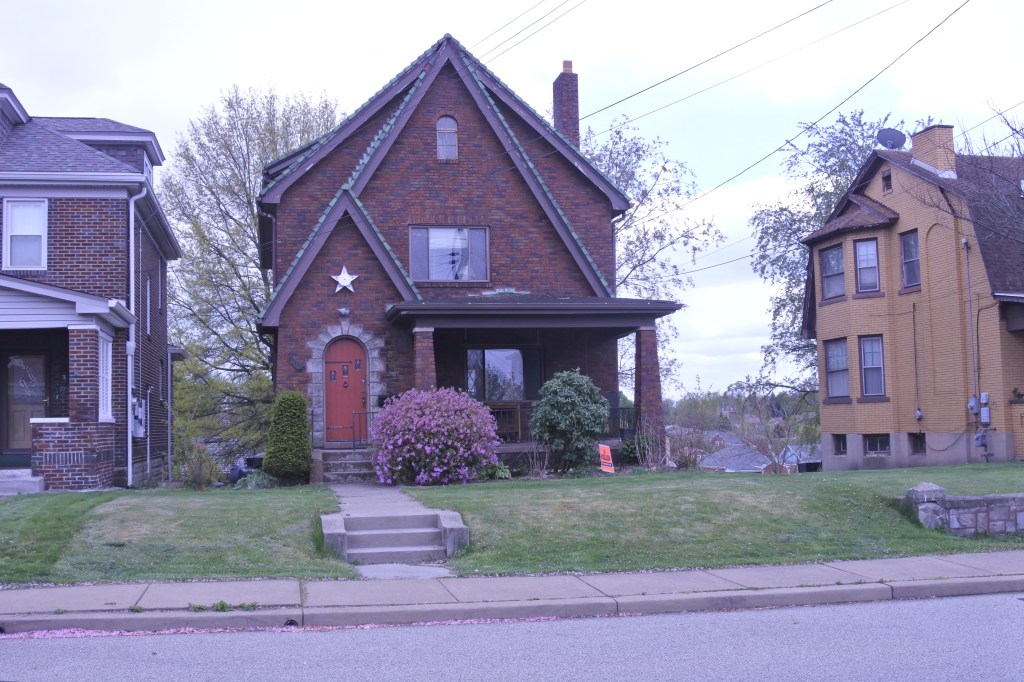
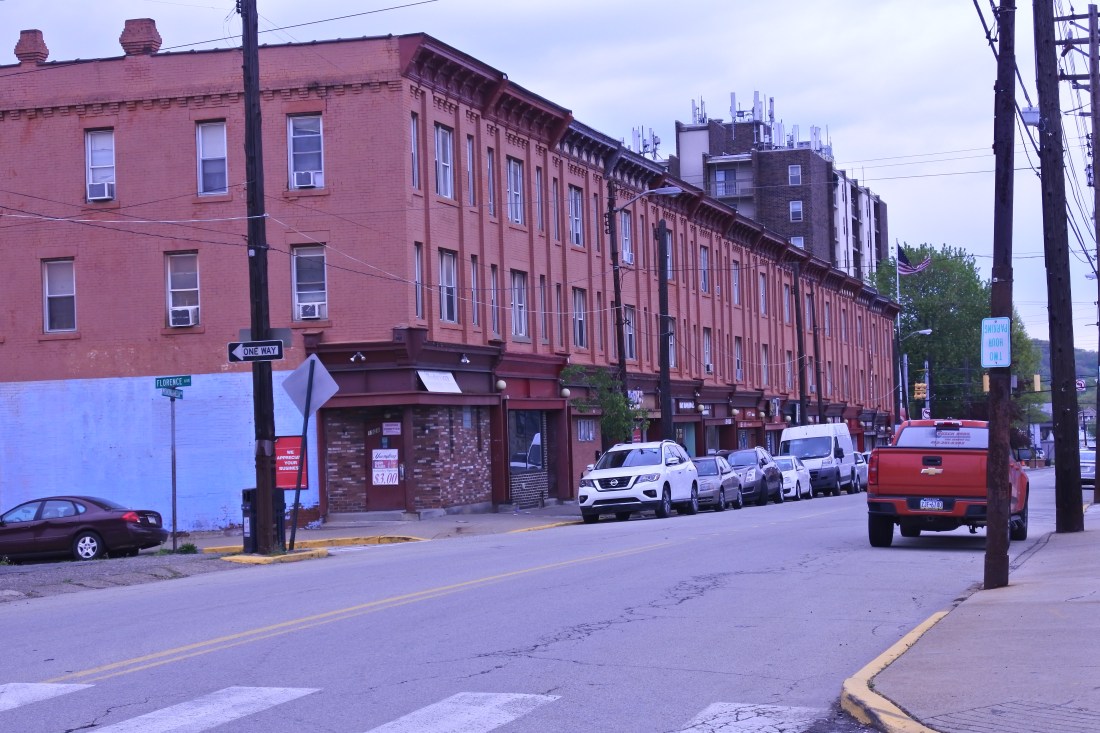
Braddock, PA- Pittsburgh’s Rustbelt Poster Child

Braddock is named after General Edward Braddock who led am Expedition in Western PA at this place. The area surrounding Braddock’s Field was originally inhabited by the Lenape, ruled by Queen Aliquippa (a  friend of George Washington). Nearby in Turtle Creek, the first permanent English settlement was established west of the Allegheny Mountains In 1742.  Braddock’s first industrial facility, a barrel plant, opened in 1850 and the borough incorporated in 1867. The town’s industrial economy began in 1873, when Andrew Carnegie built the Edgar Thomson Steel Works on the historic site of Braddock’s Field. Braddock is also the location of Carnegie’s first public library. Braddock lost its importance with the collapse of the steel industry in the United States in the 1970s and 1980s and was brought to its knees by the crack cocaine epidemic of the early 1980s.

Braddock is the most extreme case of industrial decline in Pittsburgh, which is probably why it’s the poster child for the rust-belt in Pittsburgh. The town reached a population high of 21,000 in 1920s and  now hosts  just over 2,000 souls. Population decline significantly picked up after WWII. Yet Braddock still has good bones with a comfortable street grid, high quality public transit, and good access to downtown. The recent Braddock “resurgence” shepherded by former mayor John Fetterman and restaurateur Kevin Sousa have returned Braddock to the spotlight and helped spur a mini resurgence with new restaurants, bars, cafes, vintage shops and interest for local non-profits. But Braddock really needs people to return, and in the thousands, for this to once again be a viable urban district.
Click here to view my Braddock album on Flickr

URBAN STRENGTHS

* Great generational diversity.
* Solid public transit access and very connected street grid. Braddock has the bones of a highly walk-able community.
* Braddock’s resurgence is being led by several new restaurants, bars, cafes, and breweries. Braddock has gained regional attention by several well know restaurateurs, local foundations, and community groups. But still a very long way to go. This resurgence is also attracting hip clothing, and vintage antique and restoration stores augmenting the remaining wholesaling stores, dollar store, beautiful Carnegie library, and post office.
* Good amount of tree canopy.

URBAN WEAKNESSES

* Very high poverty (30%) and some racial diversity.
* Very depressed for-sale market. Very little sells above 50K. Not a ton of rental product but very affordable. 2-bedrooms generally go for between $700-$800.
* Very limited parks space with Braddock, the only “official park” is the Verona Street Park.
* No supermarket or drug stores. The nearest hospital is a 10 min drive in McKeesport.
* Only two schools within Braddock and poorly rated.
* Sidewalks and curb cuts are common but in rough shape. Very few ADA compliant curbs. 

Munhall, PA a Middle-Class Haven with Convenient Access to Downtown Pittsburgh

A large portion of the Homestead Works existed in Munhall. The borough was in 1901, out of a part of Mifflin Township. Its most noted landmark is the  Homestead Library  donated by Andrew Carnegie in 1896. Development picked up in Munhall in the late 1800s to early 1900s with the building of the northern half of Munhall closest to the Monongahela River and Homestead. The southern half of Munhall was developed between 1910s to the 1950s. Munhall’s population peaked at around 17,000 in 1960 and has slowly declined to its current population of 11,000 souls.

Munhall is an inner ring suburb attractive to middle income families desiring to purchase an affordable house with some walkability, convenient “driving” access to the expansive Waterfront Lifestyle shopping center and close proximity to Downtown Pittsburgh. Main Street is the north to south spine that runs along the Ridge and provides a moderate level of neighborhood retail and amenities. Not much in the way of cultural amenities within Munhall, but easy access to adjacent Homestead where recent reinvestment to its historic Downtown along 8th Street is bringing many new restaurants bars, art galleries, and nightlife options.

Additional medium density mixed-use  in-fill along Main Street would go a long way to increasing vibrancy in Munhall and helping to stabilize its population. Not much else can be done to increase urbanity here unless the borough completely rewrites its zoning codes and the Port Authority brought better transit service to the community.

Click here to view my full Munhall album on Flickr.

URBAN STRENGTHS

* Good access to downtown via driving and even decent commute biking (using the Allegheny Passage Trail).
* Very low crime rate.
* Recreation in Munhall consists of several sport field clusters around Munhall schools and several more traditional parks near the Homestead Carnegie Library.
* Great Tree Cover.
* Munhall hosts some “light” retail along its traditional Main Street (drug store, banks, restaurants, bars, liquor store, flower shop, barbershops, nail salons, and a post office). The bulk of its retail are located in the brownfield redevelopment, the Waterfront straddling the border of Munhall and Homestead. While a very auto oriented shopping center it includes several supermarkets, Target, Lowes, Dicks, and many retail chain stores.
* Several medium to well rated schools within Munhall that are pretty walkable. 

URBAN WEAKNESSES

* Sub par public transit for an inner ring suburb, although the north half of Munhall is served well.
* Because of the very hilly terrain, about 1/4 of residential streets don’t have sidewalks. Even the traditional business district running along Main St. generally doesn’t have ADA compliant ramps.
* Bike infrastructure limited to the Allegheny Passage Trail running along the Mon River.
* Not a ton of rental product, but generally in the lower moderate range. The limited 1-bedroom product rents between $500-$800. 2-bedrooms around $850. And whole houses anywhere from $1,000 to $1,600. Higher prices in south Munhall.
* For sale prices are very moderate ranging anywhere from 50K to 200K.
* Cultural amenities consist of only a handful of American restaurants and bars. But Munhall has convenient access to Homestead which hosts more diverse cultural amenities including a cineplex.

Brentwood- A Pleasant Pittsburgh Suburb close to Downtown

Brentwood is an inner ring suburb located on the southern border of Pittsburgh. Development began around 1910 and the Borough grew to about 8,000 residents by WWII. The Borough continued to grow after the war reaching a peak of 14,000 in 1970. Since then Brentwood has lost about a quarter of its peak population and now sits just above 9,000 souls. Even so, this is a relatively health community for Pittsburgh standards with limited blight and vacancy.

Brentwood’s moderate density, transit connectivity, and urban main street along Brownsville road have created a fairly desirable urban community for individuals desiring some walkability, convenient access to downtown, while still retaining a good sized yard. Other positives are its solid schools and low crime rates. For Pittsburgh standards, Brentwood is also seeing a growing Nepalese population evident by several Nepalese run restaurants emerging along Saw Mill Road.

The largest areas to improve the urbanity of Brentwood includes new mixed-use infill along Brownsville Road, additional recreational amenities, and dedicated bike lanes running along Brownsville Road. Not much else that can be done given the borough’s hilly terrain and auto centric commercial thoroughfare running along Saw Mill Road. 
Click here to view all Brentwood photos on my Flicker page

URBAN STRENGTHS

* Very safe community.
* Decent public transit access, and good access to downtown.
* For sale housing is pretty affordable but decent price and size variety. Most product sells in the $100Ks but a fair amount below 100K and in the 200Ks.
* Pretty good neighborhood amenities (although most of located on Saw Mill or in the Brentwood Towne Square shopping center). Brentwood hosts a supermarket, several banks, several pharmacies, plenty of salons, cafes, and a good amount of boutiques

URBAN WEAKNESSES

* Because of the very hilly terrain, about 1/3 of residential streets don’t have sidewalks. ADA compliant curbs are reserved for Brownsville (the main traditional business district).
* Saw Mill Run is completely auto centric and hosts many of Brentwood’s businesses.
* Not a ton of rental product, but generally in the lower moderate range. The limited 1-bedroom product rents between $500-$750. 2-bedrooms for $800-$1,000. And whole houses generally in the low to mid $1,000s.
* Only one park in the Brentwood (Brentwood) park. It is a large park with lots of amenities (including a rec center) and fortunately is pretty centrally located in the borough.
* Cultural amenities limited to restaurants and bars. Some diversity added with several Nepalese restaurants.
* Solid school options for K-12 and generally walkable. 

Swissvale, Pennsylvania- part of the Pittsburgh Region

Swissvale is named after the Swisshelm family, who owned a farm where the town is located. Jane Swisshelm became a noted abolitionist and political activist. The family settled here in the late 1700s. Widespread development did not come to Swissvale until the early 1900s with the industrialization of the Borough. The Population peaked at 16,500 in 1950 and rapidly declined. There are now approximately 8,500 residents here, but signs are positive that the population is stabilizing.

Swissvale has a lot of good things going for it from an urban perspective. It’s located at the end of the Pittsburgh East Busway, providing convenient access to downtown. Regent Square and Frick Park are nearby as well. Swissvale still retains much of its housing stock and traditional main street, which is centered around a Bus Rapid Transit (BRT) stop.

There are signs that investment is picking up in Swissvalle, especially in the western and more stabilized western half of the borough. Increased targeted investment in the urban commercial district would go a long way towards making this a quality urban district.

Click here to view my Swisshelm Flickr Album
URBAN STRENGTHS

* Solid public transit access throughout most of Swissvale. And good access to Downtown Pittsburgh and Oakland.
* Excellent economic and generational diversity and decent racial and diversity.
* Great range of for sale housing starting at around 40K for the rougher product to 300K for the best housing in the most stable streets. Rentals are on the cheap side with 1-bedrooms ranging from $500-$800 and 2-bedrooms anywhere from $800-$1,300. Lots of rental product.
* While set in a strip mark, the Edgewood Shopping Center provides residents lots of important neighborhood amenities (i.e. Liquor store, Supermarket, clothing stores, banks, etc.). In the traditional main streets along  Monongahela and Noble St there are some neighborhood shops, cafes, restaurants, some boutiques, churches, and the public library.  

URBAN WEAKNESSES

* Recreational amenities can be limited depending on where you live. Residents in Swisshelm and the western edge of Swissvale have great access to 9 mile run and Frick Park but only 3 other small parks throughout.
* Cultural amenities pretty limited. There are some restaurants, bars, and cafes but not theaters or museums. One is about a mile though from Regent Square, which hosts many restaurants, bars, and cafes.
* A fair amount of blight and vacancy still exists throughout.
* Several walkable schools within Swisshelm but generally poor ratings.
* ADA infrastructure is a mixed bag. Generally there are curb cuts, but often not ADA compliant infrastructure.
* Not much modern architecture, and what does exist is pretty suburban.

Pittsburgh’s Bloomfield-Friendship Neighborhood

Bloomfield is referred by many locals as Pittsburgh’s Little Italy as it was settled by Italians from the Abruzzi region of Italy and has been a center of Italian-American population for many decades. Friendship is small adjacent district of large Victorian houses in the East End.

In 1868 Bloomfield and Friendship were annexed by the City of Pittsburgh. Development started more or less from west to east with narrow lot row-houses between the 1870s and 1890s. By the 1890s, the trolley extended to Friendship via Baum Boulevard and large square homes designed for professional-class families were constructed in Edwardian and Victorian styles. 

By the 1960s, many prominent families in Friendship moved to the suburbs repulsed by the construction of massive housing projects in nearby Garfield and misguided urban renewal in East Liberty. Zoning changes in the 1950s allowed landlords to subdivide these massive Victorian houses beauties into multi-unit apartments, and by the 1980s, over 70% of the housing stock were rentals. Bloomfield remained a solid working class neighborhood holding on to its Italian heritage.

Recently, the neighborhood has become an attractive place to buy or rent bolstered by the general gentrification of the East End and housing prices continue to steadily climb with more diverse residents. With great access to downtown, public transportation, neighborhood amenities, restaurants/bars, attractive historic homes, and proximity to other great East End neighborhoods like Oakland, East Liberty, Lawrenceville, and Shadyside; its no wonder that Bloomfield-Friendship has become such an in-demand location.

The Bloomfield-Friendship neighborhood is bordered by Penn Avenue to the north, Negley to the east, Baum to the south, and the Bloomfield Bridge/40th Street to the West. Friendship is a smaller sub-neighborhood that became an official City designated neighborhood in recent history. This is the area between Aiken-Negley and Penn-Liberty-Baum. 

Click here to view my Bloomfield photo album & here for my Friendship Albums on Flicker
URBAN STRENGHTHS

* Very good bike infrastructure, public
 transportation, and access to Pittsburgh’s 2 largest employment centers: Downtown and Oakland.
* For sale prices heating up in neighborhood but still plentiful housing options available for 200-350K and still slightly below national median levels. 350K-500K large homes available in Friendship. Rental prices also very reasonable. 1-bedrooms can be found for 600-1,300. 2-bedrooms in the 1,000s.
* Great access to many smaller parks, playgrounds, City pool, and Historic Allegheny Cemetery.
* Culturally, good access to diverse restaurants, bars, many art galleries along Penn Avenue. Also within walking distance to several other solid commercial districts… East Liberty and Ellsworth, Highland, and Walnut in Shadyside.
* Very good access to retail, restaurants/bars, grocery stores, etc. at 3 businesses districts (Liberty, Penn, and Baum/Center). 

URBAN WEAKNESSES

* Tree cover great between Gross and Negley, but pretty sparse west of
Gross St.
* Some sections of Liberty and Baum are pretty auto centric. Sections of Penn Avenue and Liberty can feel pretty dead at night. 
* Racial diversity is ok but over 65% of residents are white. Also percentage of family households are much lower than the average in Pittsburgh.