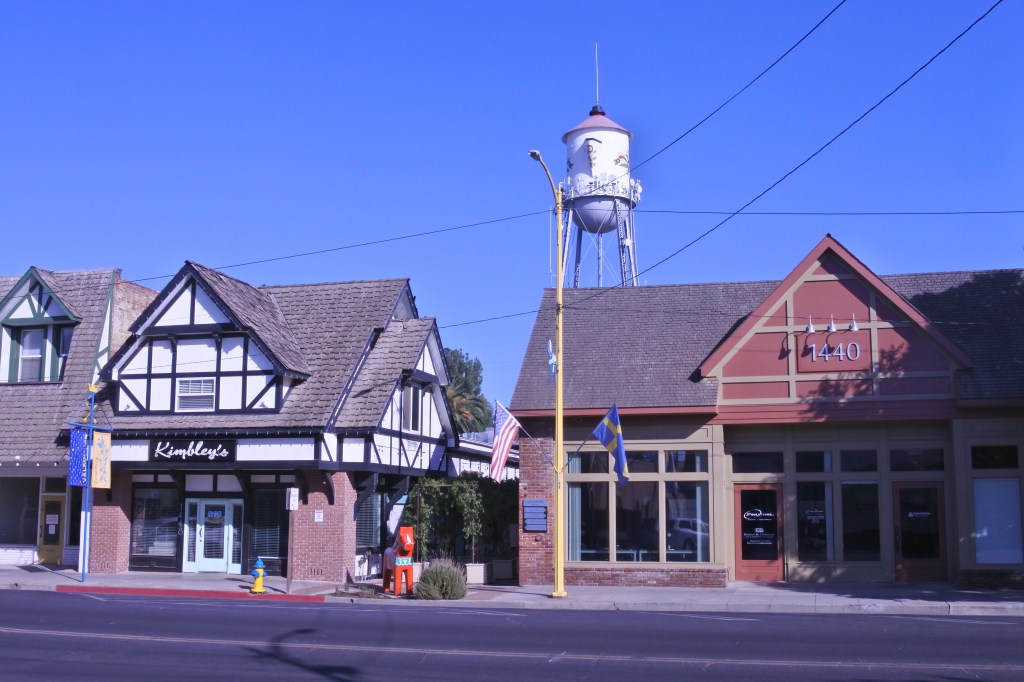
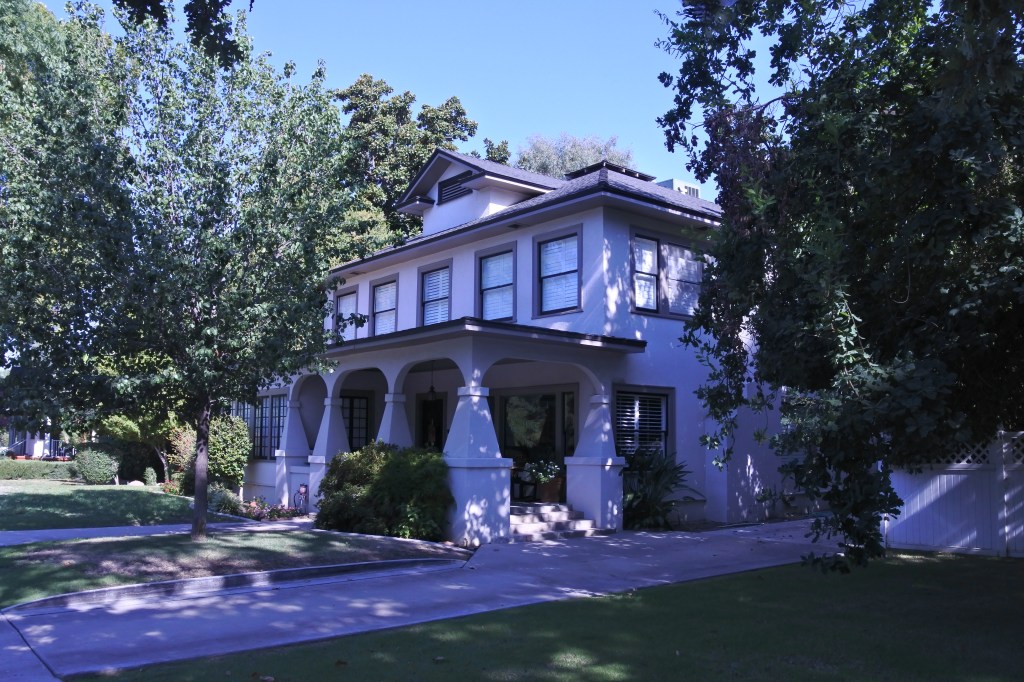
Downtown Visalia, CA

The Heart of Dwtn lies between West and Bridge Street. From north to south Dwtn is located roughly between I-198 and Oak Ave, which also has a railroad located on it. Between Main St and I-198 are larger regional attractions including a hospital, convention center and hotel. Downtown Visalia benefits from being the county seat of Tulare and this has brought a good number of government jobs and regional amenities (aka convention center, major hospital and a large Dwtn hotel). Main St is the west-to-east heart of Dwtn containing several well preserved historic blocks filled with many food and beverage business and local shops. This is where the majority of Dwtn’s historic buildings have been preserved. Court St is the 2nd best urban street dwtn running north to south. The edges of Dwtn Visalia become rather auto centric filled with numerous surface lots and car friendly buildings. What Dwtn Visalia needs most to become a solid urban neighborhood is simply more people. Apartments and condos are rare here and Dwtn feels very much just a place to work and hang out. 

Click here to view my Downtown Visalia album on Flickr

URBAN STRENGTHS:

* Good sidewalk infrastructure and decent ADA curb cuts.
* In tact commercial district along Main Street stretching for several blocks with mostly 1-2 story buildings. Church and Court (running north to south)also have good urban fabric too.
* Decent concentration of historic stock along Main St. Historic stock becomes very scattered outside of Main Street.
* Several dedicated bike lanes running through Dwtn connecting to a good sized bike system across Visalia.
* Solid food and beverage bizs but also several night clubs, a couple art galleries and local museums, and a historic and new movie theater.
* Great local shopping options including tons of boutiques & clothing stores, plenty of banks, plenty of dessert shops, and other amenities. Also a major hospital, convention center, city hall, and other government bldgs are located dwtn.
* Solid public transit access.

URBAN WEAKNESSES:

* Outside of Main St especially on Dwtn’s western, eastern, and northern edges the fabric loosens and many surface parking lots and autocentric uses spring up.
* Lots of bland modern infill from the 1960s-1990s. But of it at least has good urban massing albeit not always good urban form.
* Missing important neighborhood amenities such as a supermarket, hardware store,
* Limited population.

Downtown Ventura, CA- An attractie seaside California Community with a very walkable Historic Downtown Core

My evaluation area includes the heart of Dwtn Ventura and some surrounded streets that have a pretty high level of urbanism and connect well to Downtown. My western boundary is Ventura Ave., Chrisman/Sanjon is my eastern boundary, Poli St to the north and Ventura Freeway/the railroad tracks to the south. The area East of Dwtn Ventura also hosts pretty good urbanism with mostly pre-WWII housing and semi-urban commercial districts. This however felt like a distinct neighborhood from Dwtn.

With the arrival of Spanish missionaries in 1782, Mission San Buenaventura was established by Junípero Serra, giving the city its name. Following the Mexican secularization of the Californian missions a small community arose. Following the American Conquest of California, San Buenaventura eventually incorporated as a city in 1866. The 1920s brought a major oil boom, which along with the post–World War II economic expansion, significantly developed and expanded Ventura. Population steadily grew in the turn of the 20th century reaching 1,300 in 1880, 2,500 in 1900, and 4K in 1920. Population exploded after 1920 reaching 13K in 1940, 30K in 1960, 73K in 1980 and now sits at 110K.

Thanks to Ventura’s decent pre WWII population it hosts an excellent historic core with great urbanism along several blocks of Main Street between Juniper St and Fir St. East of here Main st continues as more of a mixed-use area with lots of residential development. Some decent urban form along Santa Clara and less so along E. Thomas Blvd, which doubles as a state highway 101. Unfortunately a highway separates Dwtn from its waterfront making the connectivity less than ideal. East of Fir St is a solid mixed-use turn of the century walkable residential area with attractive California historic housing. Some nice mixed-use development along Front St, which doubles as a historic wharf district. For Dwtn Ventura to become a top urban district is needs to fill in its remaining surface parking lots and underutilized auto centric spots. It also needs better urban density and a lot more affordable housing. 

Click here to view my Flickr Album

URBAN STRENGTHS:

* Solid public transit access.
* Consistent sidewalks access. ADA curbs cuts are great in the heart of Dwtn and along Main St but get less consistent on the surrounding residential streets.
* Excellent urban form and streetscaping along the core of Dwtn Ventura along several blocks of Main St. Lots of mix use fabric beyond this but a decent amount of auto centric form mixed in.
* While there are no dedicated bike stations here, a great system of dedicated bike lanes dwtn connecting to the rest of the City.
* Solid racial and economic diversity but not a ton of families with children and median age skews high.
* Excellent historic architecture here.
* High level of pedestrian activity Dwtn especially along Main St.
* One of the safest communities in California apparently. Blight is almost non existent.
* Excellent cultural amenities including a plethora of food & beverage bizs, plenty of art galleries and night clubs, a historic cinema, a live music venue, a performing arts theater, a couple local museums and lots of historic sites including the Mission Basilica San Buenaventura.
* Good park amenities including convenient access to the Beach, the Ventura Botanical Gardens, the excellent plaza park, several attractive plaza spaces, and good access to the Seaside Wilderness Park located just southwest of Dwtn.
* Great retail amenities too including a supermarket and lots of smaller grocerias and gourmet grocery stores, a couple drug stores, tons of local boutiques, gift shops & clothing’s stores, a hardware store, lots of antique and thrift shops, several bank branches, tons of dessert joints & gyms, plenty of salons, a couple book stores and florists, a dwtn post office/public library, several medical offices, & plenty of churches.
* Public Elementary, middle and high school all located in the Dwtn area with pretty good ratings.

URBAN WEAKNESSES:

* Urban density is pretty mediocre.
* Ventura is very far removed from any major Dwtn area in the LA Metro. The closest probably being Santa Monica about 75 minutes away. But Ventura is at least the County seat of which brings a decent amount of Dwtn amenities.
* Good amount of rental product, just very expensive. 1 beds lease anywhere between -3K, 2-beds lease between 2.5K-4K. Limited 3 & 4 bed product and what does exist is very expensive single family homes.
* For sale housing is pretty diverse but even more expensive than rentals. 1-bed condos sell btwn 600k-800K, 2-beds btwn 650K-1 M, 3 & 4 beds range between 800K-2 M.
* So so  tree canopy.

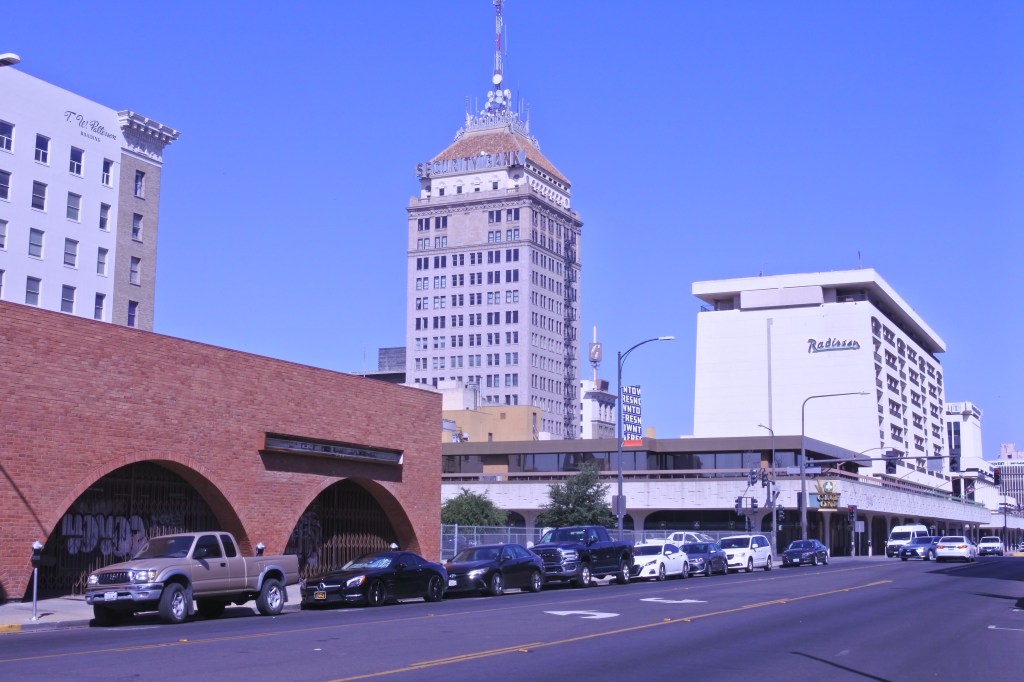
Downtown Fresno, CA

Downtown Fresno is historically quite large and well built in places. Between the 1880s and World War II, Downtown flourished, filled with extensive streetcar lines, several lavish buildings and a vibrant main street along Fulton Street. But Downtown Freson was hit hard with the twin enemies of suburban flight and urban renewal. A cool modernist Downtown complex was created in the 1960s but this was only after serious destruction of the Dwtn fabric, which exceeded well beyond the current footprint. The Fulton Mall was created in 1964 closing traffic as a way to compete with new suburban shopping malls. Sadly like most such attempts in American it failed and by the 1980s, most storefronts on the mall were empty. Cars were not reintroduced on Fulton until 2017  Interesting the public art and fountains built on the mall were kept and relocated to the sidewalks.

The area between Tuolumne Street and Divisadero St has been rebranded as the Mural District and is now the best residential area of Dwtn with significant infill development mostly concentrated on Broadway and Fulton.  The Arts side of the district is still very nascent. There is the Arte Americas and several murals but not much else. The Brewery District, which surrounds the Ballpark is an up and coming food & beverage district with most of the activities businesses lining Fulton. Some nice historic residential blocks near the modern City Hall Bldg and the Fresno Catholic Cathedral. Chinatown is technically part of Dwtn but I excluded it from this evaluation as its on the other side of the railroad tracks and largely abandonded. The rest of Downtown is mostly underutilized or dead space with parking lots, warehouse buildings, or government office buildings. Dwtn is starting to see some buzz and redevelopment interest. Thankfully it has some strong assets like Fulton St and many historic buildings to build momentum. The sky is the limit it seems for Downtown as there are so many surface parking lots, underutilized warehouses, and vacant historic buildings to revitalize.

Click here to view my Downtown Fresno Album on Flickr

URBAN STRENGTHS:

* Solid density for an urban area.
* Generally good sidewalks and ADA curbs but some ADA curb dead spots.
* Decent public transit in Fresno especially Dwtn and neighborhoods north of Dwtn and to a lesser extent east of it. Public transit access drops off quickly once you reach the suburbs.
* Generally a well connected grid dwtn but plenty of wide streets and serious inner-belt highways.
* No dedicated bike stations but a solid bike lane system Dwtn and especially across the City of Fresno.
* Good racial diversity living Dwtn.
* Good cultural & regional amenities including several museums, a minor league ballpark, a hockey arena and event center. Also a great concentration of governmental offices and a major dwtn public library.
* Decent but not great array of food & beverage amenities, several art galleries, live music venues, and night clubs, a couple gorgeous historic theaters and a modern performing arts theater.
* Good number of elementary and middle schools in the Dwtn and surrounding areas, mixed ratings however.
* So nice historic architecture especially concentrated along Fulton Street, the historic main street of Dwtn. Van Ness also hosts a good amount of historic fabric. This comes with the caveat that much of this fabric is pretty blighted and underinvested. Some historic residential area surrounding St. John’s Cathedral.
* Thanks to the City Government Complexes, decent pedestrian activity on Fulton and Civic heart of Dwtn.
* No data on # of workers in Dwtn Fresno, but it appears to be decent with all the governmental jobs.
* Decent retail Dwtn with a supermarket, a CVS, several banks, decent # of boutiques & clothing stores, the Mammoth Mall (collection of antique & resale shops), and unique stores mostly concentrated along Fulton. Also plenty of salons & barber shops, several dessert joints, a major hospital & lots of surrounding medical offices, and plenty of churches.

URBAN WEAKNESSES:

* 1/3 of the residents living Dwtn are in poverty. Some higher incomes but not enough to create meaningful economic diversity.
* I don’t consider Dwtn Fresno dangerous but I wouldn’t consider it safe either with its high vacancy rate, large dead spaces, and medium sized homeless population.
* Not the most vertical or concentrated skyline but some unique antique towers that make the skyline somewhat interesting.
* Pretty limited rental inventory and very cheap for a Dwtn. 1-beds lease for generally in the low 1Ks, 2-beds in the mid 1Ks, a handful of 3-beds leasing around 2K.
* For sale product is also rather limited and affordable. Most for sale housing is located in Villa Borgata Condos. Some 1 bed condos that sell in the 100Ks, 2-bed inventory sells in the 200Ks, limited 3 & 4 bed inventory sell in the 200Ks & 300Ks.
* College presence is very limited in Dwtn Fresno to maybe a couple hundred students. Closest college is Fresno City College located 2 miles north of Dwtn with an enrollment of 15K.
* Modern in-fill is a mixed bag. Some really interesting and relatively urban 60s infill in the City-Government complex and surrounding blocks but also plenty of unattractive rather autocentric infill. Some decent infill in the Mural District.
* Good urban form along Fulton and parts of Van Ness but lots of dead and semi-dead spaces and surface parking lots throughout Dwtn.
* Courthouse Park is an impressive Civic Heart and Government mall but not much else Parkwise in Dwtn Fresno.

Clovis, CA- Exploding Fresno Suburb with a well Invested and Urban Downtown

I drew the Urban Area of Clovis pretty tight to its Dwtn core as suburban development begins pretty quickly. I used Sierra Ave. as the northern border, Clovis Ave as the eastern, 8th St. as the southern, and Minnewanna Ave as the western.

Clovis was established in 1890 as a freight stop for the San Joaquin Valley Railroad by a group of Fresno businessmen. Clovis was officially incorporated as a city in 1912. The City’s population hit just over 1,000 residents in 1920 and was pretty stagnant through the early 20th century, only reaching 2,750 residents by 1950. In the Post War period, Clovis exploded into Fresno’s largest suburb as it now has a population of 120K. Clovis is one of Metro Fresno’s most in demand suburbs apparent with its quality schools, stable housing stock, and explosive growth. Thanks to its wealth, the City has been able to invest significantly into its downtown area creating an walkable main street but almost entirely with modern infill. Generally I believe the City has succeeded in this endeavor as the architecture and urban form of its in-fill is to a pretty high urban standard. Dwtn Clovis, however, still needs a lot more mixed-use bldgs and density. Other areas for improvement include better public transit access, development of its surface parking lots, more park amenities, more rentals, and some key retail amenities (i.e. a dwtn supermarket, drug store, and medical offices). 

Click here to view my Clovis Album on Flickr

URBAN STRENGTHS:

* Several quality urban commercial streets including several blocks of 5th St., Clovis Ave., and Polansky Ave. These blocks also have excellent streetscaping.
* Sidewalks and ADA curbs are generally good but several streets are missing sidewalks and ADA curbs in this evaluation area.
* Excellent dedicated bike/recreational path passing through the center of Dwtn. Also a good bike lanes on Sierra St as well and good connected system across all of Clovis.
* Good diversity indicators especially racial.
* Overall a very safe community.
* Most of the dwtn architecture is actually in-fill and quality urban in-fill.
* Some good historic architecture in the residential areas but nothing too exciting.
* Decent pedestrian activity especially in the core of Dwtn.
* Clovis seems to have a pretty good buzz across the region.
* Excellent schools in Clovis but only a handful are walkable and in the Dwtn core including 2 elementary schools and a middle school.
* Pretty good for sale diversity with 2-beds selling btwn 200K-400K, 3 & 4 beds sell btwn 300K-700K albeit with limited 4-bed product in the dwtn area.
* Good cultural amenities including plenty of food & beverage businesses, several local history museum, several night clubs, a performing arts theater, and some live music venues.
* Good retail amenities including several banks, lots of boutiques and clothing stores, lots of gift shops & antique stores, a few floral shops, toy stores & book stores, several dessert stores & gyms, a local post office & public library, and several churches.

URBAN WEAKNESSES:
* Density is pretty low for an urban area.
* Public transit access is very limited in Clovis.
* Transit to Dwtn is pretty terrible taking about 1 hour only on peak times. But a driving commute is only 15-20 mins.
* Decent amount of surface parking but generally behind building that are front the street. The surface parking in the center of the main square is the most unfortunate.
* Northern couple blocks of Clovis Ave are pretty auto centric.
* Some rentals available usually moderately priced.
* Missing amenities dwtn include a supermarket, drug store, no hardware stores, and few medical offices.
* Parks are limited a quality plaza, medium sized parks, and a recreational bike trail.

Reedley, CA- Self Proclaimed “World’s Fruit Basket” and a Fresno Exurb

I included only the original square laid out probably at the town’s beginnings. Dwtn Reedley is bound by North Ave, East Ave, Dinuba, and Reed Ave. This area was developed before WWII and contains the best urban form in Reedley. There are a couple of pre-WWII streets outside of the square but development quickly becomes car centric albeit with decent density and generally decent sidewalks (thank you California Growth Boundaries).Reedley’s chief economic source is fruit production leading to the self proclamation as the “The World’s Fruit Basket.” Reedley was settled shortly after the American Civil War Union with the town quickly becoming the center of the San Joaquin Valley’s booming wheat industry.  Since the 1940s, Reedley has seen a large increase in its Hispanic and Latino immigrant population .Population wise was pretty small during the 19th century and reached 2,500 residents in 1920 and grew to 4K by 1950. The City has continued to grow thanks to suburban sprawl and know sits at 25K.

Lots to like about Reedley with an intact historic main street, lots of shops, quality schools, affordable housing, and a high level of safety. But like other small towns in the Central Valley its density is quite level, its public transit access is poor, and rentals are very limited.

Click here to view my Reedley, CA Album on Flickr

URBAN STRENGTHS:

* Good sidewalks and consistent ADA curbs throughout Reedley including the residential streets.
* Nice historic architecture in the residential areas and dwtn but nothing spectacular.
* Good dedicated bike lane running through the center of Reedley.
* Good income diversity and generational diversity with a large number of families with children.
* Overall a very safe community.
* Good array of well rated walkable schools.
* G Street is a lengthy main street with pretty good urban form and streetscaping. 11th has a couple blocks of urban commercial fabric but becomes semi-autocentric a couple blocks from G Street.
* For sale housing is generally affordable with 2-beds that sell btwn 175K & 335K, and 3 & 4 beds selling btwn 200K-400K. Not too much variety however.
* Good parks spaces in dwtn Reedley including a recreation trail running down its center, a couple small parks and the multi-faceted Muller Park which includes a skate park, community center and much else.
* Solid cultural amenities including plenty of food & beverage businesses, a local history museum, and a local performing arts theater.
* Good retail amenities as well including a couple supermarkets & grocerias, a dollar store, a drug store, several boutiques & gift stores, lots of antiques & furniture stores, plenty of banks, a book store, a hardware store, lots of salons & barber shops, several gyms & dessert stops, a local post office & public library,  tons of churches, and a couple medical centers.

URBAN WEAKNESSES:

* Below average density for an urban area.
* Public transit access to rather poor. Takes 1.5 hours to take the bus to Dwtn. One can still drive to Dwtn in 35 minutes.
* Limited racial diversity as Reedley is about 80% Hispanic.
* Modern in fill is limited but what does exist is pretty auto centric.
* Rentals are very limited.

Kingsburg, CA- A Fresno exurb known for its Sweedish History and former headquarters of Sun Maid Growers

Kingsburg was established as a railroad town just after the Civil war as a stop on the Central Pacific Railroad. Soon after Swedish natives settled in the railroad town called at time “Kings River Switch”. By 1921, ninety-four percent of the population within a three-mile radius of Kingsburg was Swedish-American,  easily giving the community the nickname of “Little Sweden”. The town has built on this legacy as many of the town’s  retail businesses are designed in Swedish architecture along with main street’s streetscaping and the water tower designed as an antique Swedish coffee pot. Kingsburg not surprisingly also hosts one of the largest Swedish Festivals in the Country. Grape and raison productions is equally a part of the town’s history as most of the fields around Kingsburg are grape vineyards. Kingsburg was the headquarters of Sun-Maid Growers of California for a long time before it moved to Fresno.

The town took awhile to grow as it remained very small throughout the 19th century. By 1900 it reached 500 souls, by 1920 1,300 and 2,300 in 1950. Kingsburg is still growing thanks to mostly suburban expansion and now sits at 12K residents. But Kingsburg thanks to its strong identity has invested heavily in its Downtown and boasts many health shops and restaurants with quality urban form and streetscaping. The town also has good suburban amenities (i.e. quality schools, safety, and good parks) and thanks too its Central Californian locations homes are moderately priced. For this to be a great urban suburb Kingsburg needs a lot more density and vibrancy. Rentals are very sparse. There is also horrible public transit and limited bike infrastructure. I’d also like to see some more cultural amenities like a theater or art gallery.

Click here to view my Kingsburg, CA album on Flickr

URBAN STRENGTHS:

* Good sidewalk infrastructure except the northern and eastern edges of the neighborhood.
* ADA infrastructure good in the commercial district but spotty in residential streets.
* Wonderfully maintained historic district in the commercial area. Surrounding pre WW II homes are nice but nothing spectacular.
* Solid street connectivity.
* Good array of public schools and most of them are walkable.
* For sale housing is very moderately priced for CA standards. 2-beds sell btwn 200K-400K, and 3 & 4 beds sell btwn 300K & 600K.
* Good tree canopy.
* A couple very attractive medium sized parks located in the core of Kingsburg.
*This is a very safe community with really no blight.
* Very strong sense of place with a well defined main street and very cohesive Swedish theme. In some ways the Dwtn feels like a Swedish theme-park! The landmark water tower certainly also helps create a sense of place here.
* Good massing in Dwtn especially along Draper. Some vacant lots/parking lots on the side street and Sierra St is rather auto centric. Excellent streetscaping Dwtn.
* Good cultural amenities including many restaurants, several bars, a brewery, a couple cafes, and a train depot museum.
* Good retail amenities as well including 2 supermarkets, a family dollar, a couple banks & drug stores, several gifts stores & boutiques, a couple antiques, a record store, hardware store, lots of dessert joints and a couple gyms. Dwtn also has a Post Office & public library, tons of churches and several medical offices and centers.

URBAN WEAKNESSES:

* Density is very suburban
* Public transit is very limited running 3 times a day. It does provide a connection to Downtown and couple other exurb Fresno suburbs.
* Connection to Dwtn is ok via driving (30 mins).
* Bike infrastructure is almost non-existent in the Kingsburg.
* Rentals are basically non-existent.
* Modern in-fill is limited with a couple good in-fill bldgs dwtn but mostly auto centric strip along Sierra St.
* Missing several important amenities including art galleries, theaters & cinemas, any live music venues, 

The Tower District, Fresno’s best urban neighborhood

 The Tower District emerged in the early 1900’s as a streetcar suburb of the rapidly growing Fresno two miles north of the City. The neighborhood became a nice mix of middle class and working class residents centered on the Olive Ave Commercial District. The neighborhood’s namesake, Tower Theatre was designed in the Streamline Moderne style in the late 1930s.

While the neighborhood struggled at times during the post World War II years, it never declined into complete abandonment and disrepair.  In the late 80s the Tower District showed signs of new life, which helped galvanize residents to create a  Tower District Specific Plan which was adopted by city ordinance in 1991. This helped spawn new investment in the neighborhood’s resident stock and zero in on revitalizing the neighborhood’s well built Olive Street, which eventually became the City’s leading nightlife destination. The Tower District also contains attractive commercial clusters on the mixed-use Van Ness Ave. Yet its secondary commercial street, Belmont, is rather auto centric and uninspiring.

I already consider the Tower District to be a quality urban district but for it to be great it needs a couple crucial pieces (i.e. a supermarket, better walkable schools, and  more park space). More density and mixed use development along Olive, Van Ness, and especially Belmont would also go a long way to urbanizing the district. A quality mixed-use district along Belmont would create an important walkable hub in the district southern edge and help create a walkable node between Dwtn and Olive Street.

Click here to view my Tower District Album on Flickr

URBAN STRENGTHS:

* Sidewalks are consistently good. ADA curbs are pretty consistent along Olive St but spotty on other streets.
* Solid public transit and convenient access to Dwtn only 2 miles away across all modes.
* Several bike lanes run thru the district.
* Great connectivity with small blocks and gridded street network.
* Solid diversity indicators.
* Excellent historic housing stock. Nice mix of duplexes, larger SF homes, smaller bungalows, and larger apartment bldgs.
* High level of safety in Tower District.
* Solid tree canopy.
* Good urban form and streetscaping along Olive Street throughout most of the district. Not great along Belmont.
* One of Fresno’s most popular urban districts.
* Great cultural amenities here including an excellent array of food & beverage bizs. Also plenty of art galleries, two local performing arts theaters (one of them in the historic Tower Theatre), several night clubs, & live music venues, and quality cultural amenities at neighboring Fresno City College.
* Good retail amenities including a health food store, several drug stores, a dollar store, several boutiques/clothing stores, a couple gift stores, a couple bookstores & record shops, plenty of furniture/ antique stores, tons of dessert stores, several gyms, a local post office, several churches, a couple medical offices, and a hardware store near by. 

URBAN WEAKNESSES:

* Decent density but not great for an urban district.
* Mixed school ratings. Fresno HS is rated poorly while the smaller Design Science HS is rated very highly. A couple elementary schools in the district but generally rated poorly.
* Parks within Tower District are limited to the Ted Willis Community but Fresno’s best urban park and Zoo is located just a couple blocks west of the neighborhood.
* Tower District is missing a supermarket, banks, a public library, department stores, and a major hospital

Lowell and Jefferson, Inner City Fresno Neighborhoods Poised to Revitalize

This evaluation includes all of the Lowell and Jefferson districts, which are north of Divisadero St to the highway. Some consider this part of Dwtn but given its strong residential character I consider it a separate neighborhood.

Lowell-Jefferson began developing in the 1880s when Fresno experienced rapid growth. The neighborhood still hosts a great array of turn of the 20th century American residential architecture, especially in the more poach western sections of Lowell. Historically the neighborhood experienced great socioeconomic diversity with working class homes often mixed in on the same blocks with upper middle class residences. By the mid-century with the rise of autocentric suburbs the neighborhood declined. This neighborhood decline was deepened with the drawn out demolition and construction of the east-west portion of the loop (Highway 180), which took several decades to materialize not opening until 1995. Crime and poverty depended in the 90s and 2000s and many of the single family homes were cut up into apartments. By the 2010s, however, the neighborhood began to rebound with an uptick in renovations and homeownership. Yet there is still much revitalization to do especially along the unattractive commercial corridors of Fresno, Belmont, and Blackstone. Given the neighborhood’s close proximity to Downtown and the City’s relative Californian affordability,  it feels only a matter of time before it revitalizes.

Click here to view my Lowell and Jefferson albums on Flickr

Urban Strengths:

* Generally good sidewalks throughout but ADA standard curb cuts are more the minority than the norm.
* Decent urban density.
* Excellent access to Dwtn Fresno being only 0.5-1 for these neighborhoods.
* A handful of dedicated bike lanes on the edge of the district. Unclear if there are any bike share stations hear.
* Solid street connectivity.
* Good age diversity and lots of families with children living here.
* Some very nice historic housing remains primarily in Lowell where lots of upper middle class SF homes were built. Jefferson has much more working class housing.
* Good number of public highs schools in the neighborhood or nearby with mixed ratings.
* Pretty good housing diversity and affordability with 2-beds selling btwn 100K-300K, 3 & 4 beds sell btwn 150K-500K.
* Same with rentals… 1-beds lease btwn $850 & $1300, 2-beds btwn $900 & $1,500. Some 3 & 4bed product as well. Good # of dedicated affordable rentals as well.
* Culturally the neighborhood has a large # of restaurants (esp. Mexican) and a handful of cafes & bars. There are also a couple live music venues and great access to the Dwtn cultural amenities.

Urban Weaknesses:

* The commercial streets Fresno, Belmont, and Blackstone are all pretty shabby and uninvesting. But they still have some stretches with decent urban form. 
* Very Hispanic neighborhood (73%)
* Very high poverty levels (around 40%).
* Both neighborhoods experienced high levels of crime in the 1990s-2000s which also led to a lot of disinvestment. Things appear to have stabilized in the neighborhoods and organic investment of the existing housing stocks appears to be underway.
* Some decent in-fill along the Dwtn edge but lots of unattractive auto centric commercial.
* A handful of small & medium sized parks.
* Tree canopy isn’t great but gets better in the wealthier western edge of Lowell.
* Okay retail amenities including several Hispanic grocerias, a pharmacy, a couple boutiques, a gyms & bakery, many churches, and a major hospital and connected doctor’s offices. Tons unattractive auto related stores but good access to quality retail amenities Dwtn.

Downtown Bakersfield, CA

My evaluation for Dwtn is smaller than Google Maps and other measures. I include only the areas btwn F St to the west, the river to the east, and Truxtun Ave and 24th st to the south and north, respectively. Blocks outside of this more constrained area lacked a cohesive Dwtn fabric in my estimation. 18th, 19th, Chester Ave contained the best urban form and best vibrancy Downtown. These are in the heart of Dwtn. Edge arterials such as F St, Truxtun, and the wide one way 23rd and 24th pairs are rather auto centric in character and move large amounts of traffic. As a way of trying to drum up interest in Downtown the City has created a couple of subdistricts that are somewhat based on reality. The Arts District  contains Dwtn’s concentrations of theaters and cultural amenities and is roughly bordered by 21st Street, Chester Avenue, 17th Street, and G Street. Civic Center  is the center of government for both the City of Bakersfield and the County of Kern. Mill Creek is along the eastern edge of Dwtn and is centered around  attractive green space lining Mill Creek, the famous Mexicali restaurant, and a handful of new mixed-use apartment buildings. Downtown has decent vibrancy, cultural amenities, and historic stock mostly concentrated in its core with rather autocentric and dead spaces on the edges of Dwtn. Dwtn also excels with quality local shopping and boutique options, decent streetscaping, and some regional amenities. Downtown Bakersfield simply needs more residents and mixed-use development. Other important areas of improvement include more parks, better cultural and regional amenities, larger college presence, and slower more pedestrian friendly streets.

Click here to view my Downtown Bakersfield Album on Flickr

URBAN STRENGTHS:

* Solid bike network throughout most of the Bakersfield City limits, even out to more suburban areas. A dockless bike program also exists serving mostly just the dwtn area.
* Strong street grid that is easy to navigate but roads are overbuilt and wide.
* Some nice pockets of historic architecture, which generally correspond with better urban streets.
* Generally a pretty safe Dwtn. Pretty low homeless for a CA downtown.
* Dwtn streetscaping is pretty decent, esp. the core of Dwtn.
* Bakersfield’s regional amenities include a decent sized convention center and arena, a dwtn post office & library, some museums, plenty of bars & restaurants, a couple live music venues, a couple local theaters, the gorgeous Fox Theater (now a local cinema).
* Some retail amenities including plenty of boutiques, clothing stores, gift shops, and antiques/furniture stores. Also several banks, a toy store, a couple book stores, a couple gyms & dessert stores, several churches and a major hospital is nearby.

URBAN WEAKNESSES:

* Pretty low population density for a dwtn.
* Not much income diversity of the population living Dwtn, but plenty of people of means who work and visit Dwtn.
* Some kid friendly activities Dwtn (Arena complex, Natural Historic Museum but really not a whole lot.
* Well rated Dwtn public elementary school but schools surrounding Dwtn are poorly rated.
* Not a ton of for sale options Dwtn but what does exist is pretty affordable. 1-beds & 2-beds sell for around 200K,  and 3 & 4 beds sell btwn 200K-300K.
* Rentals are also limited but a bit more plentiful. 1 beds lease in the 1Ks, 2-beds lease btwn 1.5K-2K. Larger rentals are largely absent.
* Decent # of nice mid-century buildings but also plenty of unattractive modern building without great urban form.
* Very autocentric and unattractive urban form along the edges of Dwtn.
* Tree canopy is pretty thin larger the result of the climate.
* Park space is limited to Mill creek park on the eastern edge of Dwtn and a couple unimpressive plazas.
* Central Park is the only plaza space with some semblance of a Civic Heart of Dwtn with some events.
* Other than a couple md-sized bldgs. not much of a skyline.
* Sidewalks are consistent but ADA curb cuts are spotty.
* Kern College Community Center is Dwtn but not much else.
* Missing several key amenities including hotels, court houses stadiums, art galleries, and major theaters.
* # of jobs Dwtn is pretty low. Likely btwn 5K-10K

Riviera-Weschester- Bakersfield’s best Urban District

Riviera-Westchester has been Bakersfield’s premiere urban district since the 1920s. The southern 2/3s of the neighborhood were developed before WWII and the 1/3 north of 24th Street was developed in the 40s-60s. The district has held its value ever since and commands the highest prices for Bakersfield neighborhood with decent urbanity.

The district has more typical suburban amenities with low density, good tree canopy, lots of well maintained single family homes, a couple of good schools, great parks, and low crime. It also hosts some decent mixed-use blocks on 19th Street on the edge of Dwtn and while F street is a pretty auto centric commercial district it still has some good urban stretches.

Riviera/Westchester has great access to Dwtn and residents on its eastern edge can walk to Dwtn and enjoy the many cultural and retail amenities it holds. For the neighborhood to be a great urban district it needs much more housing and density, which will help spur more walkability and amenities. Riviera/Westchester also needs more consistent sidewalks and ADA curbs and mixed-use infill along 19th St and F Avenue.

Click here to view my Riviera-Westcheser album on Flickr

URBAN STRENGTHS:

* Decent public transit access and very convenient access to Dwtn across all modes of transit.
*Solid racial diversity and pretty good income diversity. Good generational diversity.
* Very safe district and limited blight.
* Good amount of rentals and moderately priced. 1-beds lease between 1K and the high 1Ks, some 2 & 3 beds that are lease in the 1Ks.
* Pretty good for sale range with the exception of much condo product. 2-beds range anywhere btwn 175K-450. 2 & 4 beds btwn 250K-750K. Some 5 beds sell for around 1M.
* High quality park amenities with 3 lovely parks, the Bakersfield racket club, a recreational trail along the river and a couple small parks. Along the massive Bakersfield ballpark complex is nearby.
* Solid Tree canopy.
* Decent cultural amenities including several restaurants & bars, a couple cafes. But mostly great access to all the cultural amenities Dwtn.
* Ok neighborhood amenities including a, a couple drug stores, tons of salons, a couple boutiques, a couple dessert spots & gyms,  and the dwtn post office and a major hospital are nearby. But lots of retail amenities nearby in Dwtn.
* Lots of attractive historic homes esp. south of 24th St.
* Well regarded neighborhood in Bakersfield.

URBAN WEAKNESSES:

* Very poor density, similar and sometimes even worse than a suburb.
* ADA curb cuts are pretty spotty and concentrated in the more commercial areas.
* About 60% of the district has consistant sidewalks. The SW section is largely missing them and the north 1/3 of the district.
* A very good public elementary school and below average high school are located in the district. Also a good elementary school nearby in Dwtn.
* Modern infill is generally auto centric junk but some good stuff.
* Not great pedestrian traffic.