Downtown Canton, OH

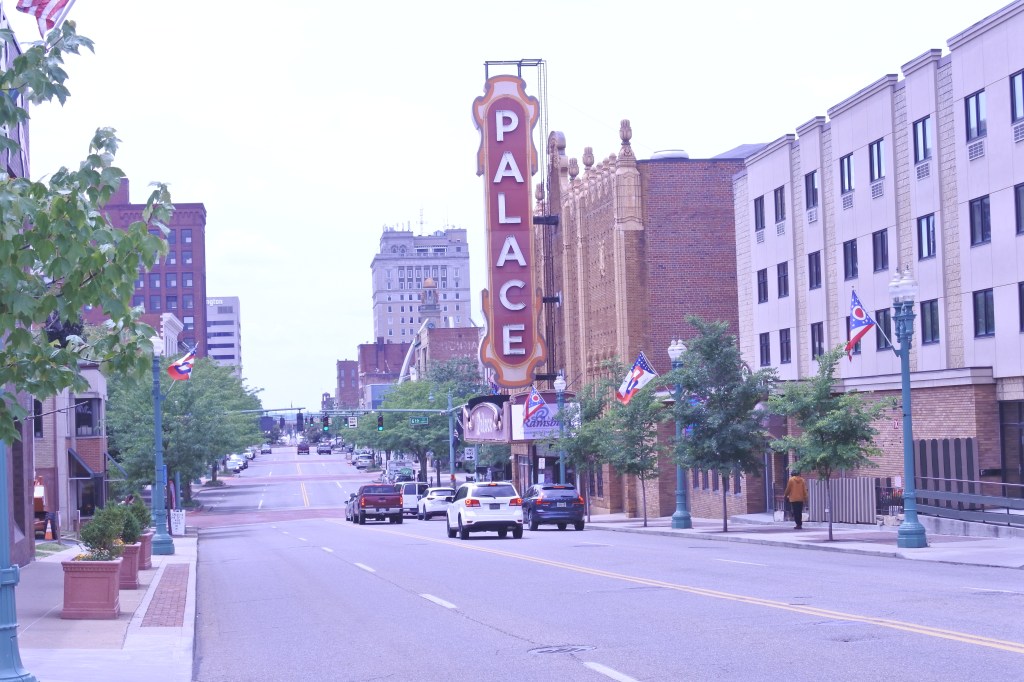
I loosely define Downtown Canton to be between McKinley to the west, Cherry to east and between north and south 6th Streets. One could argue that the North Market district running from North 6th to 12th street is also part of Downtown as it includes the main library and Canton’s Art Center.

Downtown Canton’s also contains a couple notable subdistricts: 1) The Canton Arts District/Music block centered in the core of Dwtn along Cleveland Street where many 2-4 story historic mixed-use buildings still remain and are filled with retail and food & beverage/theater uses. This is where Canton’s historic building concentration is strongest. 2) The Warehouse District which runs between Market and Cherry Avenues where a scattering of historic warehouse remain standing yet most are underutilized. 3) Saxton Quarter is located south of Tuscarawas St. This is named after the Saxton McKinley House and feels like a marketing attempt to uplift a largely dead part of Downtown. Market Street is the main spine through Dwtn and contains its best architecture and the well designed and active Centennial Plaza. Tuscarawas  is the second main street Dwtn and runs east to west.

All in all for a midsized Midwestern Dwtn, Canton does pretty good thanks to the targeted investment in its core along Cleveland and Market Avenues north of Tuscarawas. Dwtn includes a decent # of local retail, solid cultural amenities, a well designed central plaza and even a semi-pedestrian street along the Court Street alleyway. To move to the next urban level, Canton needs a lot of Dwtn apartments and condos and new development south of Tuscarawas and on its edges to liven these dead areas. Targeted redevelopment of the warehouse district is probably the best place to start.
Click here to view my Dwtn Canton Album on Flickr

URBAN STRENGTHS:

* Good efforts have been made to stabilize dwtn with the focus on the arts, revitalization efforts along Cleveland and Market Avenues, an extensive semi-pedestrian alley along Court Street line with many businesses, and the well designed Centennial Plaza.
* Also decent mixed-use activity along N 6th Street and some along N. 2, 3, 4, and 5th Streets.
* Good cultural offerings including plenty of bars, restaurants, and cafes, a historic theater, several live music venues, many museums and historic sites, and a major cultural arts center.
* Generally good sidewalk and ADA curbs especially in the more invested parts of Dwtn.
* Good historic architecture and much of it is still preserved.
* Decent number of street trees.
* Decent retail amenities but no supermarket.

URBAN WEAKNESSES:

* Lots of dead spaces outside of the core of Dwtn especially the southern half south of Market.
* Tinken Steel’s career Campus on the western edge of Dwtn feels like a suburban community college artificially placed Dwtn.
* Only a handful of rentals and condos Dwtn.
* Only a couple of schools located dwtn and a small Stark County Community College presence.
* So so modern infill

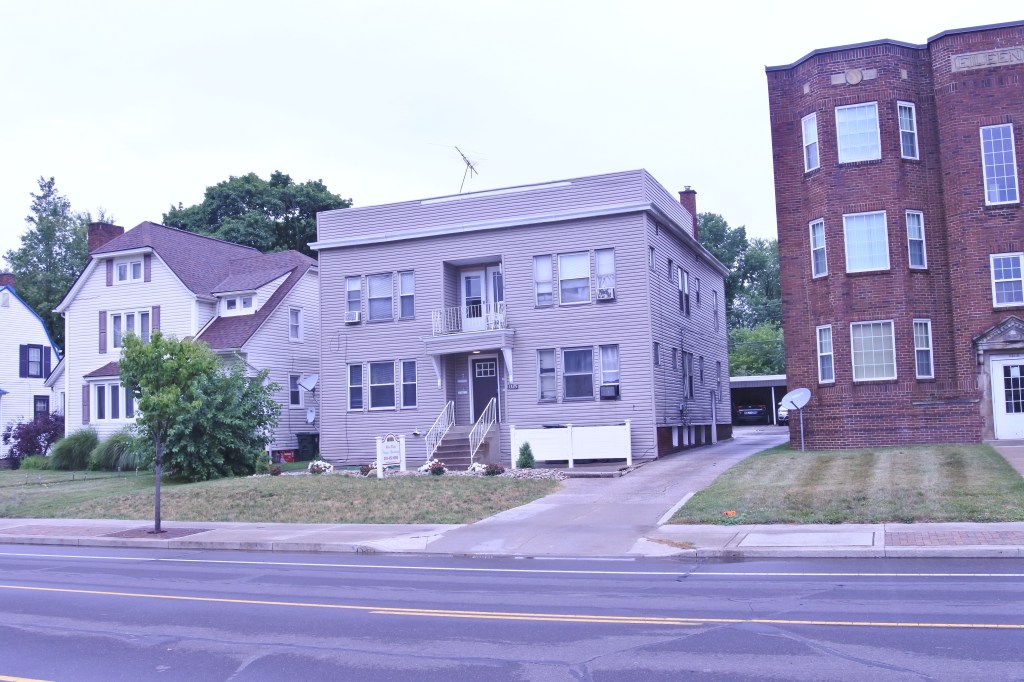
Vassar Park- A Stable Pre-War II Neighborhood on Canton’s Northside

Vassar Park is one of Canton’s more stable and attractive districts with generally stable housing developed between the 1920s-1940s. Some post WWII housing mixed-in making this a newer district than neighboring West Park. Vassar Park also has some retail amenities mixed-in, very affordable housing, a decent amount of rentals, solid racial and economic diversity, and very convenient access to Dwtn.

What Vassar Park needs to be a quality urban district is more parks and retail amenities, improved public transit access, and better ADA infrastructure.

Click here to view my Vassar Park Album on Flickr

URBAN STRENGTHS:

* Housing stock in generally in stock with a mix of modest and larger homes.
* Solid tree cover.
* For sale housing is very affordable ranging from 35K-250K.
* Decent # of rentals and very affordable.
* Solid racial and economic diversity.
* Generally a very family oriented neighborhood.
* Very convenient access to Dwtn Canton, only 1.5 miles away.

URBAN WEAKNESSES:

* ADA curb cuts are limited. Generally good sidewalks.
* Some retail but not supermarket.
* So so public transit access.
* Access to a dedicated bike lane on the southeastern edge but that’s it.
* A handful of schools in Vassar Park and nearby.
* Not much diversity in price point for housing.
* Only a handful of parks although Vassar Park is a very nice centrally located community park.

Canton’s West Park Neighborhood- a relatively intact early 20th century urban district along McKinley Memorial Park

West Park is located between 12th and 30th Street and between Cleveland and McKinley Memorial Park. The district was developed mostly in the early 20th century with a mixture of grand Victorian and Turn-of-the Century houses and elegant apartment buildings along with smaller houses middle class homes. The neighborhood was pretty stable until the 1980s and 1990s when blight and vacancy crept into the district thanks to low real estate prices. Some effort has been made to stabilize the neighborhood and this has prevented widespread abandonment and a mixture of stable and less stable streets. West Park does have some commercial amenities that are pretty walkable along Fulton and Cleveland Avenue but many retail amenities like a supermarket are missing.

To advance West Park to what I would consider a quality urban district it needs more commercial amenities along Fulton & Cleveland, more higher end residential diversity, more stability, and better public transit access. Thankfully since the neighborhood is mostly intact this seems doable. 

Click here to view my West Park Album on Flickr

URBAN STRENGTHS:

* Generally a stable early 20th century middle class district but decent amount of blight mixed in. Very street by street.
* Decent amount of rentals mixed in.
* Generally good tree canopy, but depending on the socioeconomics of your particular street.
* Good sidewalk infrastructure. ADA curbs are good along the main streets but hit or miss on the residential streets.
* Several schools in the neighborhood but mixed ratings.
* For sale housing is very affordable ranging from 50K-250.
* Decent number of rentals and generally very affordable.
* Good racial diversity.
* Excellent access to Dwtn only 1 mile away.
* Decent access to two dedicated bike lanes.
* Great park access with McKinley Memorial park running down its western border and lots of neighborhood parks.

URBAN WEAKNESSES:

* Some retail along Fulton and more so Cleveland but missing a lot of important neighborhood services starting with a supermarket.
* Cleveland Ave is generally ugly and rather autocentric.
* About 1/3 of the West Park neighborhood lives in poverty and medium of income at 30K.
* Public transit access is so . 

The Ridgewood Historic District- Canton, Ohio’s Premiere Residential Neighborhood

Ridgewood  consists of well preserved American Revival Mansions built mostly from the 1920s -1940s. Its homes are architect-designed for the most part and demonstrate the enormous variations of shape, skin, and sensibility that characterize the European Revival styles favored in this period.  The district also boasts of a highly aestetically pleasing envrionment with large shade trees, original brick streets, and locally produced street lighting standards. Due to its historic architectural significance, the Ridgewood was added to the U.S. National Register of Historic Places in 1982 and has remained one of Canton’s most stable communities.

From an urbanist standpoint Ridgewood is really a suburban-urban hybrid. Yes it has consistent sidewalks, mature trees, and some public transit access. But most trips needs to be made by car as the nearest commercial district is rather amenity poor and not a plesant walk. Bike infrastructure is non-existant and rental housing options are limited.

Click here to view my Ridgewood Album on Flickr

URBAN STRENGTHS:

* Canton’s premiere pre WWII mansion district.
* Excellent tree canopy and brick streets. Beautif aesthetic.
* Good sidewalk infrasturcture.
* These mansions are a great value with most costs between 250K-400K. These homes would costs close a 1 M in the equivalent Cleveland neighborhood.
* Very convenient access to Dwtn Canton only 2 miles away. A 7 minute drive and 15 minute bus ride. 

URBAN WEAKNESSES:

* Curbcuts exist but ADA ramp are not up to modern standards.
* Very little mixed use in the district. The nearest commercial district is 0.7 miles away on Cleveland Ave, a pretty sad semi-autocentric commercial district.
* Transit access is pretty limited.
* No dedicated bike infrastructure.
* Rentals are limited but some product availabe on the edges of the district.
* Few walkable schools in the area.

Canton- a Rapidly Gentrified Neighborhood and one of Baltimore’s most Popular

Canton’s development goes back to the early 19th century as mostly Welsh immigrants, followed by the Irish in the 1840s began settling in Baltimore in large numbers. Subsequent groups of immigrants included Germans, Poles and Ukrainians. Most houses in Canton are turn-of-the-20th-century rowhouses bit many  homes closer to the waterfront date from before the Civil War. With the de-industrialization of the neighborhood in the 1990s the neighborhood’s waterfront was redeveloped into new housing and marinas and the revitalization process worked its way gradually northward. Some metrics hold that between 2000 and 2016 Canton was the 16th most gentrified American neighborhood and now is considered  one of Baltimore’s trendiest and vibrant neighborhoods.

Brewer’s Hill development came later. First with the development of breweries in the 1880s, the most famous being the National Bohemian brand, known affectionately by locals as Natty Bo with the massive Mr. Boh sign hanging high above the old brewery. Most of the district’s rowhouses were built in the 1910s. Brewer’s Hill  also has seen significant revitalization since 2000.

I like both Canton and Brewer’s Hill but the neighborhood seems a bit over hyped by the locals. Yes there is good walkability here with quality public transit & bike access, great parks, decent schools, lots of brand name retail options, and tons of food and beverage businesses, but the neighborhood has some major holes, which elevate other Baltimore districts to a higher urban status in my mind. Canton/Brewer’s Hill lack locally run boutiques and creative stores, is very white and high income, often lacks good tree canopy and modern ADA curbs and is missing some major cultural amenities (i.e. art galleries, museums, and theaters). With more of these missing amenities I would feel more comfortable listing Canton/Brewer’s Hill as one of Baltimore’s top urban districts.

Click here to view my Canton and Brewer’s Hill Neighborhood on my Flickr Page

URBAN STRENGTHS:

*Solid urban density.
* Great access to Dwtn via all modes of transit.
* Good bike infrastructure with a decent # of dockless scooters and bikes.
* Pretty good generational and age diversity with a fair number of families with kids.
* Decent schools here with a well rated elementary school, a couple Catholic grade schools and two Catholic high schools.
* For sale housing leans higher end but good variety of times and prices. 1-beds are a mix of condos and rowhouses and sell anywhere btwn 150K-325K, 2-beds sell btwn 175K-600K, 3 & 4 beds sell btwn 225K-850K but a handful of more expensive homes.
* Good # of apartments especially in the large MF bldgs of Brewers Hill. Def on the pricey side but some moderately priced. 1 beds lease anywhere in the 1Ks, 2-beds 1.5K- the high 2Ks, 3-beds btwn 2K and the high 3Ks.
* Solid parks with the expansive Patterson Park sitting on the north park, several good waterfront parks, and a couple parkette’s spread throughout Canton.
* Solid cultural amenities includes lots of food & beverages biz, plenty of live music venues, and a couple bars host live music,
* Solid retail amenities including several supermarkets & drug stores, a target, several brand named stores clothing stores @Shops at Canton Crossing, hardware store, plenty of banks,  a couple of florists, public library, a game store, several dessert stores & gyms, and many churches.
* Attractive Historic rowhouses throughout, a bit more ornate in Canton than Brewer’s Hill. Urban Infill projects a generally good but some auto centric strip malls like Shops at Canton Crossing and a couple others.
* Streetscape is good but not spectacular and the commercial districts haven’t been redone in awhile.
* Very popular neighborhood in Baltimore.

URBAN WEAKNESSES:

* Consistent sidewalks but modern ADA curb cuts only make apt 1/3 of intersections.
* This is a high income largely white neighborhood so diversity is not Canton’s strong suite.
* So so tree cover. Better in Canton than Brewer’s Hill.
* Really no art galleries, museums, or theaters in the neighborhood.
* Few locally owned boutiques or gift shops. Also no book stores and no post offices but there are a couple nearby.
* A couple strip mall developments break up the generally good urban massing in the neighborhood.