Dahlman is the neighborhood just south of Dwtn and includes the Little Italy neighborhood which generally is located between 5th and 10th street just south of the historic Union Station. I expanded the traditional Dahlman boundaries to include 16th to the west and Martha St to the south.
Dahlman is one of the oldest neighborhoods in the City. It was originally platted in 1856. Dahlan’s growth was spurred mostly from the Union Pacific railroad located just south of Dwtn and attracted Omaha’s largest early concentrated of immigrant enclaves including large Bohemian, German, Irish and finally Italian populations all building their own Ethnic Catholic Church. Sicilian immigrants began arriving in mass in the early 20th century concentrated along South 6th Street and South 10th Street and is an neighborhood officially recognized on Google maps.
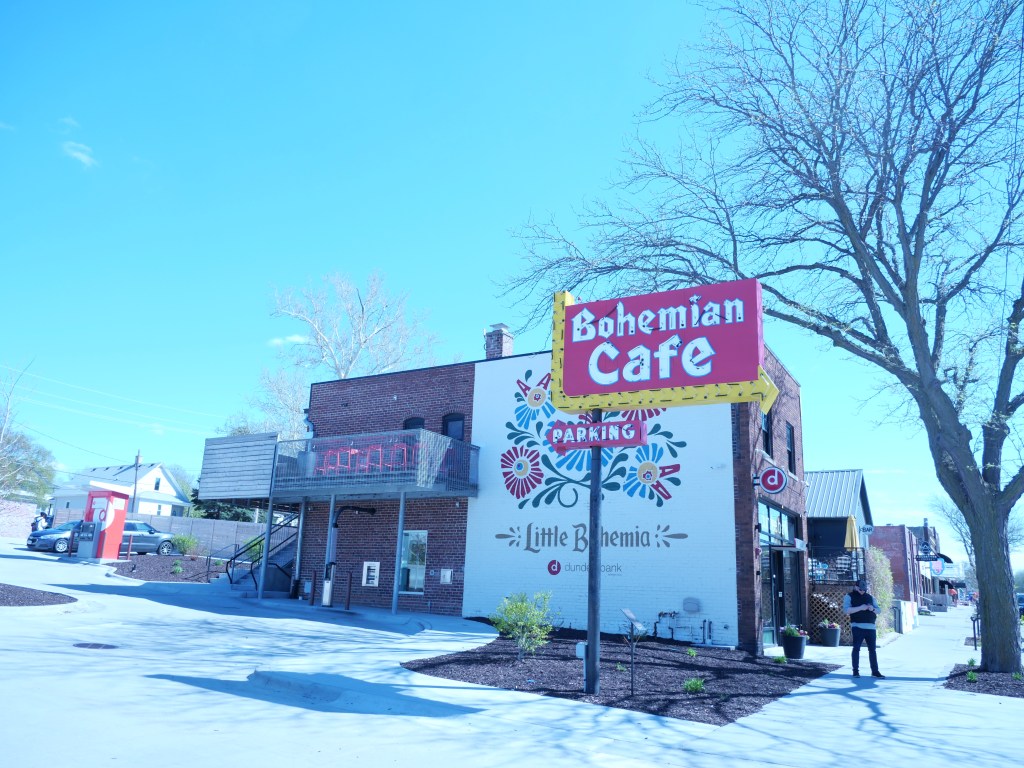
From an urban perspective Dahlman has good mixed-use nodes at 13th & Hickory St and 10th St near the Historic Omaha Train station. Because of it mostly late 19th century development, many areas of Dahlman are mixed-use. It also has solid public transit and great access to Dwtn being only 1.5-2 miles away along with a great array of for-sale options. Dahlman does pretty well with cultural amenities, hosting many restaurants, bars & cafes but lacks important retail amenities (i.e. supermarket, pharmacy, public library, and other general retail amenities). For Dahlman to be a top notch urban district it needs a lot more density and infill development especially to fill in its dead spaces along the neighborhood’s 3 arterial roads (16th, 13th, and 10th). Urban planners should also work hard to incentivize development around the Union Station as this is a natural extension of the Old Market District to the North. I’d also like to see a lot more rental options here and more park amenities.
Click here to view my Dahlman album on Flickr
URBAN STRENGTHS:
- Good public transit on the western half of Dahlman but quite mediocre in the eastern half.
- Decent bike infrastructure including a lengthy dedicated north-south bike lane and a couple of bike share stations.
- Good but not great ADA and sidewalk infrastructure. ADA curb cuts are present on 70% of all intersections and sidewalks are consistent except on the eastern edge of the neighborhood which honestly feels quasi-rural.
- Very convenient access to Dwtn being 1-2 miles away. Only a 5 min drive, 14 min bike ride and 20 min bus ride.
- Good diversity metrics especially economic and generational diversity.
- Pretty good for sale diversity including a some 1-beds and condos selling anywhere from 100K-500, 2-beds for 75K-500K, 3 & 4 beds btwn 100K-500K. A couple 1 M townhouses.
- Overall a pretty safe community but some blight in spots, especially the eastern half of the neighborhood.
- Some good historic commercial architecture, especially on 16th. Dahlman also hosts the Art Deco Train Station and a couple other impressive warehouse buildings nearby.
- Decent amount of urban in-fill (mostly townhouse but also some larger mixed-use buildings.
- Pretty good food & beverage amenities. Other cultural amenities are limited to a modern performing arts theater, and a couple live music venues.
- Good tree canopy throughout most of the district.
- Thanks to the pre-zoning industrial legacy of the neighborhood it is quite mixed-use even with retail amenities being pretty limited.
URBAN WEAKNESSES:
- Connectivity is hit or miss depending on whether there are railroads are old industrial areas in between. Also a lot of long blocks.
- So so density.
- Only one small Catholic Elementary school in the neighborhood.
- A mix of rental price points but not a ton of product listed. A couple dedicated affordable apts.
- Historic residential architecture is generally unatornedworker housing but some more impressive larger homes on the northern edge especially on or near 10th.
- Parks are limited to the medium sized Dahlman parks and the Lauritzen Botantic Gardens, while expansive is ticketed.
- Fair number of amenities including a hardware store, a couple banks, several boutiques and gift stores concentrated on a couple blocks of 13th St. There is also a couple furniture stores, several bakeries, a coulpe gyms, the main post office on the northern edge of the district, several churches.
- A couple good urban blocks along 13th between William & Hickory, at 10th at the Historic Train station and a couple blocks south but lots of surface parking ,auto centric uses, and underutilized buildings along the main streets of 16th, 13th, and 10th Streets.
- Infrastructure is generally pretty dated and worn out along the main streets.”
 Evaluating our Urban Communities [with a focus on America]