Downtown Ft. Lauderdale, FL

This is a very compact dwtn between S Federal Hwy and NW 2nd Ave, and NE 4th St and south to 6th Street below the New River.

Downtown Ft. Lauderdale is a thoroughly modern Downtown as almost all of its historic fabric has been wiped away. From the little I’ve read it appears Downtown was a rough place around WWII, which would explain why civic leaders were so aggressive in their urban renewal effects. In the post war era, Downtown was mainly a 9-5 office district. Safe but very sterile and dead in the evenings. With the renovation of Las Olas in the early 2000s restaurants and other entertainment venues started to pop up Downtown. The district also became a major residential area and current day Downtown Ft. Lauderdale hosts a sizable population.

Other than 2 supermarkets, Dwtn lacks most neighborhood retail amenities. Much of this fortunately exists to the east in the Beverley Heights neighborhood along Las Olas but this is a crucial urban need if Downtown Ft. Lauderdale is to become a quality urban district. Dwtn also needs better bike infrastructure, more walkable schools, a large student presence, more affordable rental options, better cultural amenities and the in-fill of many vacant lots and surface parking lots north of Broward Blvd and south of the New River.

Click here to view my Downtown Ft. Lauderdale album on Flickr

URBAN STRENGTHS:

* Pretty good density of a Dwtn.
* Connectivity is generally pretty good Dwtn. There are some wider streets but none are 1-ways.
* High quality tree canopy.
* Interesting mix of high incomes and those in poverty.
* Good racial diversity and a pretty high % of family households living Dwtn similar to Dwtn Miami.
* Other than a large homeless population, Dwtn is very safe.
* Dwtn has nice parks including riverfront trails on both sides of the river, Stranaham Land Park, and Huizanga Plaza, which also functions as Dwtn’s Civic Plaza although not a spectacular one.
* Cultural amenities Dwtn include plenty of restaurants, some bars & cafes, a couple life music venues, a couple local museums; and plenty of night clubs, a major performing arts complex, an Imax & Science Center but all  in the adjacent Sailboat Bend. Dwtn also hosts the convention Center.
* Buildings can be tacky but generally good urban form. The newer construction is better that stuff built to the 2000s.
* Urban form and streetscaping are good in the core of dwtn. Lots of parking lots and underinvested streetscaping btwn Broward and 4th and south of the river.

URBAN WEAKNESSES:


* Ok system of bike lanes in Ft. Lauderdale and to adjacent suburbs. A small bike sharing system exist in Ft. Lauderdale with only a couple of stations dwtn.
* Public transit is only good Dwtn and in a handful of districts surrounding it. The City as a whole has decent transit access as well as the surrounding suburbs.
* ADA and sidewalk infrastructure is generally good but a good amount of curb cuts don’t have modern ADA curbs and some missing sidewalks in the north and southern edges of Dwtn.
* Almost no remaining historic architecture.
* Walkable schools are limited to a couple quality elementary schools on the eastern border of Dwtn.
* Rental housing is expensive with studios leasing in the low 2Ks, 1-beds btwn mid 2Ks-low4Ks, 2-beds 3Ks-5Ks, and some 3-beds generally leasing in the 5Ks.
* For sale is a bit more reasonable as there are a fair amount of moderately priced 1-bed condos selling btwn 300K-600K, 2-beds btwn 500K-2 M, 3 & 4 beds 600K-3M.
* Only a handful of satellite colleges dwtn. No more than a couple thousands students Dwtn.
* Missing cultural amenities include art galleries and there are not sports arenas Dwtn.
* Difficult to determine but it appears about 30-40K employees work in Dwtn Fr. Lauderdale. I saw a report mentioned 60K but I believe that was the “greater dwtn area”. Office vacancy rate is at about 20%.
* Dwtn retail amenities are limited to 2 Publixs, a couple of drug stores, plenty of banks, a Dwtn Library, a couple gyms and churches. All the retail amenities are east along Las Olas (which is walkable fyi).
Downtown Miami, FL

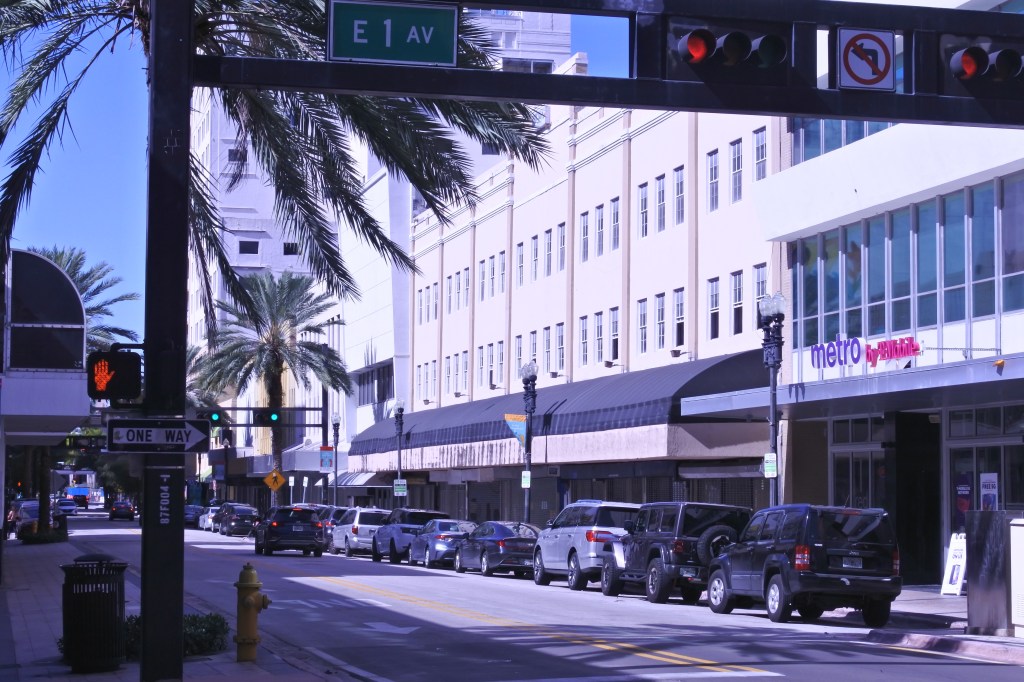
I included within my Downtown Miami evaluation anywhere between SE 15 and NE 15th Roads,1-95/NW 1st Ave to the west and the water to the east. This includes half of the Bricknell District.

Downtown Miami is the historic heart of Miami. Along with Coconut Grove, it is the oldest settled area of Miami, with early pioneer settlements dating to the early 19th century. But development really didn’t get started until the extension of the Flagler railroad in 1896.  Not surprisingly, there are only a handful of antique skyscrapers here and a small area remaining (btwn 1st SE and 2nd St NE) of concentrated historic structures. But Downtown Miami is in a boom cycle becoming the fast-growing area by population in the Miami area. This has particularly occurred in Bricknell, Miami’s densest and most complete urban district. Other housing concentrations are along the bay and in the Town Square sub district. Miami is one of the densest downtowns in America. Downtown also hosts a very high # of families for a Dwtn neighborhood certainly helped by having excellent schools and quality parks.

Downtown Miami is on the cusp of becoming an elite American Downtown. The area where it needs to improve the most is the filling in of vacant lots and surface parking lots north of the Miami River with in-fill. Miami could also improve pedestrian connections across the Miami River, clean up its sketchy spots, plant more trees, and provide more affordable rental housing. 

Click here to view my Downtown Miami Album on Flickr

URBAN STRENGTHS:

* Great downtown density with around 22K per sq mile living here.
* Miami has very good public transit within the City and that service is generally at least decent in the suburbs northwards to Pompano Beach. North of here and south of South Miami is when quality public transit starts to peter off.
Dwtn transit score of 9.7. Miami City score of 8.5. Good transit in most suburbs up to Pompano Beach. So  north of here and so  south of Miami.
* Ok bike lanes within the City of Miami. More dedicated lanes outside of the City. Pretty good dedicated bike station system covering Dwtn + Miami neighborhoods along the bay + Miami beach.
* Great economic diversity and generational diversity. About 25% of all downtown households are households w/ children (very high for dwtns). Good racial diversity too.
* Excellent array of quality schools dwtn and not just private and charter schools but several well rated public schools.
* For Sale are generally expensive but tons of moderately priced product. studios sell anywhere btwn 150K-450K, 1-beds are very diverse in price ranging from 175K-1M and some even more expensive; similar situation with 2-beds with prices ranging anywhere from 200K- 2M ; lots of 3-bed product. Prices generally range from 450K-3M. Even a good number of 4 beds available.
* Given that 1/4 of dwtn residents are in poverty it appears Dwtn has many affordable apts.
* Dwtn anchored by Bayfront, Maurice Ferre, & Margaret Pace Parks. Handful of smaller parks.
* Good cultural amenities including  diverse restaurants, bars, cafes, and art galleries. Plenty of theaters ranging from community to professional, boutique theaters & a cineplex, lots of museums.
* Regional amenities include a Convention Center and the Miami Heat arena are Dwtn.
* Several satellite campus’s dwtn  but not major university presence. Probably 5-6K students dwtn.
* Solid employment #s with 170-200K office jobs. Strong rent demand still and very expensive.
* Retail amenities include 2 supermarkets, drug stores, a Marshalls, the expansive  Brickell City Centre (includes a Sac 5th, lots of clothing stores), Bayside Market (good array of shops but smaller & cheaper), plenty of boutiques, home goods & desserts, many banks & gyms, and a Dwtn library. 

URBAN WEAKNESSES:

* Connectivity is generally good but certainly several wider 1-way streets and poor connections (esp. for non cars) across the Miami River.
* Lots of rentals available but very expensive. Studios lease btwn 2K-4K, 1-beds is the same range but more product leasing in the 3Ks, 3-beds are plentiful but generally lease btwn 4K-10K with plenty even more expensive.
* Only one major league team plays dwtn.
* Some sketchy areas dwtn around Flagler where there is a high homeless population. These areas are esp. dangerous at night. But Bricknell and north of Flagler Avenue are safe areas.
* No stately post office
* Miami’s districts often lack strong distinction thanks to all the modern bldgs.
* Historic architecture is pretty limited but what does remain is nice.
* Urban massing is good in Bricknell but hit or miss north of the Miami River. Lots of open lots and surface parking still. Often a lack of cohesion.
* Tree canopy is so .
* Bricknell has a great buzz but north of the Miami River is hit or miss. 

Downtown Sacramento, CA

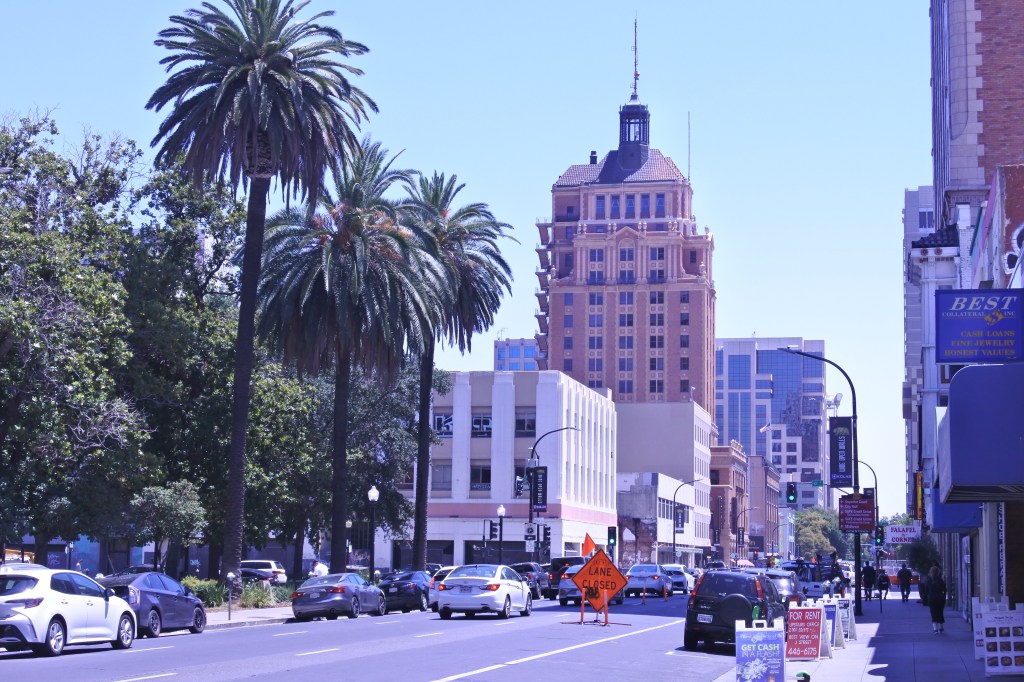
Downtown Sacramento is a pretty dynamic place thanks to a strong residential base, the local Civic Center, the California Capitol Park, a distinct historic district called “the Kay”, an entertainment district building around Golden 1 Arena, and the quaint and vibrant Old Sacramento along the Sacramento River. I also like how Downtown flows pretty seamlessly to surrounding urban districts located in Central Sacramento. Its nice that the inner belt wasn’t built too tight around Downtown.

The future is also bright for Downtown Sacramento as Civic leaders as moving to continue to built up its residential base, and bring more and more entertainment and retail amenities. I also like the fact that Downtown has few surface parking lots thanks to California’s strong real estate market. But there are several key urban elements Dwtn needs before it becomes a premiere US dwtn. This includes walkable K-12 schools, a university presence dwtn, more amenities for children, better affordable housing options, a stronger civic plaza marking the heart of Dwtn, a better skyline, and missing cultural and retail amenities including more theaters & art galleries, a dwtn post office, and a supermarket.

Click here to view my Downtown Sacramento album on Flickr

URBAN STRENGTHS:

* Very good density for a Dwtn district.
* Great ADA and sidewalk infrastructure.
* Pockets of attractive historic architecture (i.e. Old Sacramento and Cathedral Square).
* Decent public transit access within the City especially Central Sacramento. Hit or miss with the suburbs.
* Excellent system of dedicated bike lanes across the whole region. One of the best systems in the country. While there are no dedicated bike stations, Lime provides excellent bike and scooter options throughout most of the City of Sacramento. Not so much in the suburbs.
* Very connective dwtn. Some large 1-way streets but not terrible.
* Great racial and economic diversity residing Dwtn.
* A decent # of affordable hsg units Dwtn. This is certainly reflected by dwtn’s high poverty rate among residents.
* Good number of parks anchored by the State Capitol Park. Several small/medium sized parks spread throughout Dwtn and some nice plazas at Dwtn Commons.
* Solid Dwtn cultural amenities including plenty of restaurants, bars, and cafes, several live music venues, a cineplex, i-max, and historic movie house, a good array of museums, and couple historic homes.
* Regional amenities include a major convention center and an NBA arena and plenty of government office and courts thanks to being the state capitol.
* Dwtn has solid employment # hosting about 90K. Vacant rates also appear low, albeit these are pre-covid #s.
* Solid retail amenities as well including: a couple drug stores, a Macy’s; the DOCO Shopping Mall filled with tons of food & beverage stores, an urban outfitters, and several other retail outfits; tons of boutiques & gift shops in Old Sacramento; plenty of banks and dessert joins, a couple gyms & bookstores, a dwtn library, and several churches.
* Overall very good urban massing and good tree canopy for a dwtn.

URBAN WEAKNESSES:

* Not my family households living dwtn but a fair amount of museums and the NBA to draw them into Dwtn.
* Really no K-12 schools within dwtn although a handful exist on the edges of dwtn.
* Certainly an expensive place to purchase a house but a decent # of moderately priced 1-bed condos selling btwn 300K-600K. 2-beds sell anywhere btwn 400K-1M, and a decent # of 3-beds selling anywhere btwn 500K-800K.
* Rentals are a similar story… studios lease in the 1Ks-mid 2Ks, 1-beds in the 2Ks, 2-beds in the 2k and low 3Ks, and 3-bed rentals are pretty rare.
* Several plazas could function as Dwtn civic plaza, but not clear and well programed heart of Sacramento.
* Skyline has some tall buildings but they are pretty bland and the skyline overall lacks cohesion and interest.
* Largely missing from Dwtn’s cultural & entertainment scene include art galleries, only a couple of theaters,
* Missing retail amenities include a supermarket, major dwtn post office.
* Dwtn is generally safe but large homeless population.
* Only a handful of small satellite colleges dwtn. Any colleges of size are at least a couple miles away.
* In-fill is a mixed bag. High rises are generally pretty bland but pretty good medium sized infill.

Downtown Riverside, CA- the Cultural and Urban Hub of the Inland Emphire

I evaluated Downtown Riverside as a neighborhood because it’s really not a major job center with only about 10K jobs here. Dwtn Riverside is also a large area of about 2 square miles with about 65% of its use as traditional early 20th century residential streets.

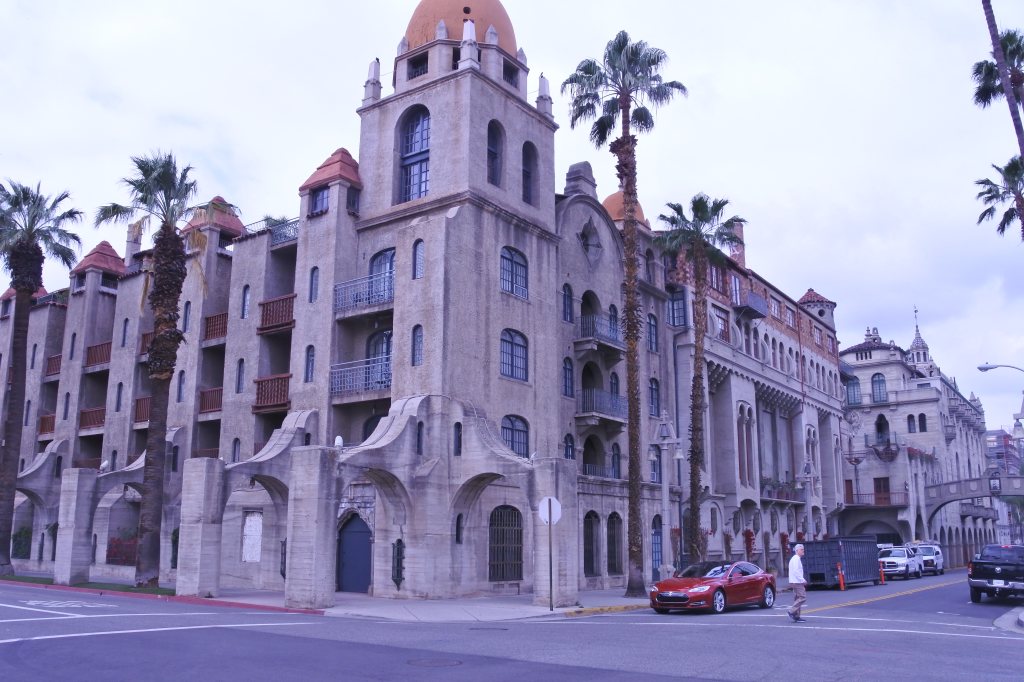
Riverside was founded in the early 1870s and a traditional street grid was quickly laid out setting the foundation for a well connected and walkable neighborhood. Downtown Riverside is also the birthplace of the California citrus industry and home of the Mission Inn, the largest Mission Revival Style building in the United States. It also fills the roll of cultural and urban hub of the Inland Empire; a title that San Bernardino unfortunately cannot claim given how disinvested its become.  Downtown Riverside hosts a great concentration of cultural amenities, decent retail amenities, an interesting pedestrian street along a couple blocks of Main St., good public transit, quality schools, great parks, and attractive historic architecture representing well the main historic styles common in California. What Downtown Riverside primarily needs to become a great urban district is more people. Its density is only 4,500 per square mile. I was shocked at how few apartment bldgs there are dwtn. Outside of the business core, the historic residential areas are primarily single family homes. Additional density would go a long way to attract additional retail amenities and expanding the mixed-use footprint of Downtown.

Click here to view my Downtown Riverside album on Flickr

URBAN STRENGTHS:

* Generally consistant sidewalks and curbs (except for western edge going up to the mountains) but curbs generally not ADA compliant.
* Great location for if you have a job in Dwtn Riverside, but only about 10K jobs there.
* Public transit is generally good Dwtn but some transit deserts in the western and northern sections.
* Several dedicated bike lanes Dwtn, including recreational trails along the river. No dedicated bike stations however.
* Great economic and racial diversity. Some households with children but nice mix of college students and young professionals.
* Several excellent parks Dwtn including the expansive Mt. Rubidoux Park and Fairmount Park on the western edge of the district, the gorgeous White Park located near the center and the pedestrian street/plaza covering several blocks of Main St.
* Decent # of schools dwtn and generally rated pretty well.
* Decent retail amenities including a couple medium sized Mexican grocery stores, several drug stores, a bookstore, plenty of quirky boutiques, antiques, home goods and gift shops, several banks, plenty of dessert stores, a dwtn post office & public library, plenty of churches, and large hospital on Dwtn’s southern border.
* Dwtn Riverside is generally considered safe but some areas are best to avoid at night.
* Overall quality historic architecture both in the Business districts (Esp. with all the Spanish based mission architecture) and in the residential neighborhoods.
* Pedestrian traffic good in the core of dwtn. Pretty sparse in the res. areas.
* Good culturally amenities Dwtn including a plethora of restaurants, bars, & cafes, lots of art galleries, several live music venues & night clubs, a convention center, a couple performing arts theaters, and several museums and historic sites.

URBAN WEAKNESSES:

* Density is rather low.
* Hsg is pretty expensive but similar to other stable inner city neighborhoods. Limited 1-bed product. Surprisingly there are few condos dwtn. What does exist sells around 400-500K, 2-beds sell btwn 300K-650K, 3 & 4 beds 400K-1 M.
* Rentals are surprisingly limited. What is available seems to lease in the 2-3Ks.
* Urban form is a mixed-bag in Dwtn Riverside. Mission  Inn Avenue has the best form, Market Street is a mixed bag, the smaller streets btwn 14th and 5th Streets are more “dwtn” in feel and a mix of surface parking lots, office towners, and areas of decent urban form. Main St in the northern half of dwtn is awful. 

Downtown San Bernardino- A struggling Downtown in the heart of the Inland Empire

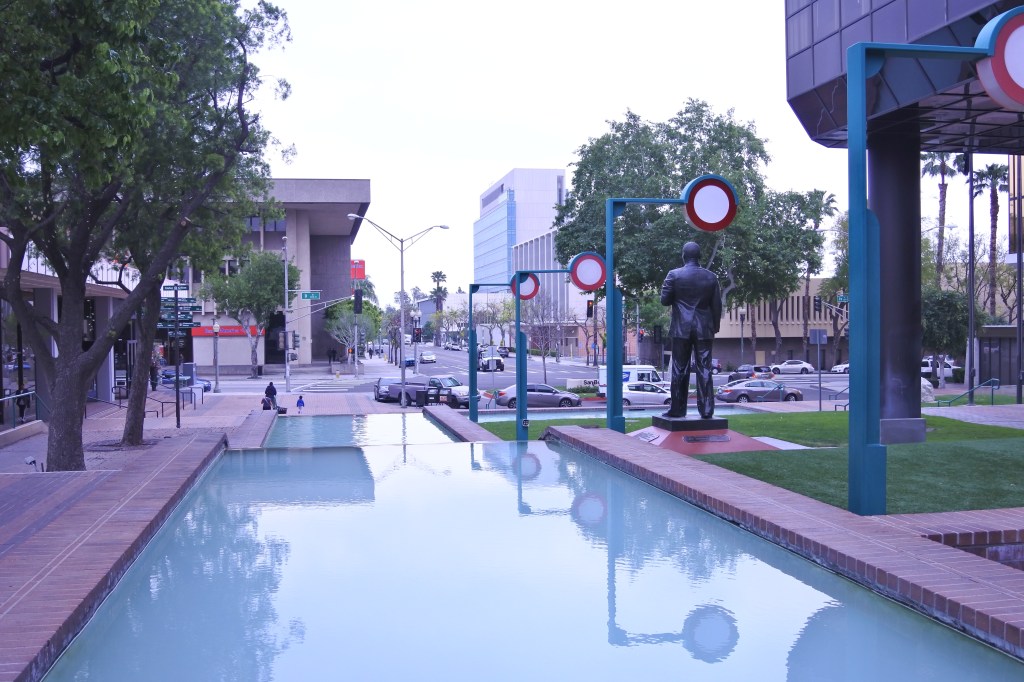
I used smaller boundaries than what is typically considered Dwtn Bernardino. I feel this better captures what should be considered a “downtown”. I decided to evaluate this as a neighborhood as Dwtn Bernardino is not a major job center and lacks many of the qualifications of a typical major city Dwtn. The boundaries I used include I-215, Sierra Way, 5th St., and Rialto Ave.

San Bernardino really came to form starting in the late 19th century as the City proved to be an important  commercial hub at the crossroads between Southern California and the American Southwest. This helps explain why San Bernardino has such a large historic railroad station. The City reached 13K residents in 1910 and 43K by 40K. Since then San Bernardino has continued to sprawl and now hosts around 220K residents. Sadly, the City, especially the urban core has fallen on hard times. The City filed for Chapter 9 bankruptcy in 2012 after having more than 1 Billion in debt.  Even through these challenges San Bernardino remains an important regional hub for the Inland Empire and hosts multiple consulates for Hispanic countries, due it is large Latino immigrant population.

While once a thriving and well built urban environment, Dwtn San Bernardino is a former shadow of itself. Only chunks of the original historic fabric remain. Most of historic San Bernardino was removed for parking, government office towers, or the failed Carousel Mall. Dwtn currently feels like a drivable Dwtn that permits pedestrians to exist if they choose. But there are still some positives not to overlook. Downtown has good ADA infrastructure, excellent public transit access, several walkable schools, decent cultural and retail amenities, and good parks. There are major plans underway to redevelop the former Carousel mall into a lively mixed-use hub. Hopefully this can succeed and pave the wave to an attractive Downtown San Bernardino again. There is just too much development pressure in Southern California for this dwtn to languish.

Click here to view my Dwtn San Bernardino album on Flickr

URBAN STRENGHTHS:

* Pretty good ADA infrastructure.
* Excellent public transit access.
* Walkable access to some jobs in Dwtn San Bernardino. Convenient 15 mins drive to Riverside and 45 bus ride.
* Very Hispanic population but good racial diversity overall. Also a surprisingly high number of households with Children Dwtn.
* Several walkable schools in the Dwtn area with decent ratings.
* Several Housing Authority Sites in the Dwtn area.
* Ok Cultural amenities. Only a handful of restaurants & bars, a couple cafes a cineplex, historic performing arts theater, a couple art galleries, and a couple night clubs/live music venues.
* Decent Retail Amenities as well including a budget supermarket, a drug store, a suburban power center on the southern edge of dwtn includes many retail stores, handful of boutiques & consignment stores, lots of gov’t offices and court houses, several banks, dwtn post office & public library.
* Not much hsg dwtn but a decent mix of retail, governmental bldgs, and entertainment venues.
* Several good park amenities most notably the large Seccome Lake Recreation Area. Meadowbrook Park is another decent sized park and there are several plaza spaces spread throughout dwtn.

URBAN WEAKNESSES:

* Very low density. This is partially attributable to this being rather Dwtn in character with limited residential bldgs.
* Poor bike infrastructure Dwtn with few dedicated bike lanes and not bike stations.
* While there is good public transit dwtn I can’t say this is a very walkable neighborhood given how auto oriented it is with half the land dedicated to parking lots.
* Very impoverished area with 35% living below the poverty line.
* Rental housing is fairly inexpensive for CA standards but very little of it Dwtn.
* Some for sale product in the Dwtn area. 1-bed condos sell btwn 60K-200K, 2-beds sell btwn 100K-400K, 3 & 4 beds btwn 300K-500K.
* San Bernardino is pretty notorious for high crime rate. This certainly pours into dwtn, but a bit more activity here so doesn’t feel terribly unsafe.
* Some blocks of historic fabric but much of dwtn is surface parking and lots of auto centric fabric.
 * Lots of auto centric crap but some interesting 70s & 80s in fill.
* What remains of Dwtn’s historic architecture is decent, but so much has been demolished.
* No real heart to Dwtn Bernardino. Imageability is pretty poor.
* Not great vibrancy dwtn as most people drive
* Tree canopy is so 

Downtown Saint Petersburg, FL

“Downtown was the first part of Saint Petersburg that began to develop starting in the early 20th century. Shippingopened up with the dragging of the channel nearby and development began to grow exponentially Downtown. As St. Petersburg began as a tourist destination even from its early days, office has never had a major foothold here. Currently there are only about 10-20K office jobs Dwtn. Fortunately Dwtn has grown up to be a center of arts & cultural, a quality food & beverage scene, has many great waterfront parks, plenty of retails, and a good concentration of housing making it an attractive urban neighborhood. City leaders also had the vision to preserve much the City’s historic architecture (unlike Dwtn Tampa Bay) maintaining a wonderful concentration of historic buildings around Central Avenue. The urban form of the infill buildings is also pretty good.

Unfortunately due to a lack of walkable districts in St. Petersburg overall, housing is very expensive here. Other areas for improvement dwtn include more walkable schools, lack of some major dwtn amenities (i.e. convention center & dwtn library), missing transit line to the airport, and a good # of surface parking lots remaining on the western and southern edges of Dwtn. But with an on-going construction boom I anticipate Downtown St. Pete will get better and better and hopefully more office jobs will move here too.”

Click here to view my Downtown St. Petersburg Album on Flickr

URBAN STRENGTHS:

“* Excellent ADA and sidewalk infrastructure.

  • Solid density Dwtn.
  • Public transit is so in the Dwtn and surrounding neighborhoods but decent across St. Peterburg city limits and even decent to the northern suburbs.
  • Great street grid, good connectivity, and not too many wide 1-way streets.
  • Great bike lane system in the region and several dedicated bike lanes with Dwtn. Only Dwtn and a handful of inner city neighborhoods have dedicated bike stations.
  • Safety is generally very safe but some dead spots.
  • Much of Dwtn’s historic fabric remains and looks great. This is concentrated along Central Ave.
  • Modern in-fill is generally pretty good besides some of the design tackiness and auto centric bldgs on the edges of Dwtn.
  • Great tree canopy for a Dwtn.
  • Solid Dwtn vibrancy thanks to Dwtn’s decent population base.
  • Decent # of college students attending school within or near dwtn. USF St. Petersburg is just south of dwtn and enrolls 3,500 students. There is also a Dwtn Campus for St. Petersburg College.
  • Some very nice park spaces, especially along the waterfront. The crown jewel being the 26 acre St. Petersburg Pier, filled with many different recreational amenities.
  • Good cultural amenities including many great restaurants, bars, cafes, several breweries, tons of art galleries, both an independent theater & cineplex, and a handful of theaters (performing arts and live music)
  • Culturally a decent # of museum options (i.e. Fine Arts, History, Dali Museum, Holocaust, Chihuly, and lots of other smaller museums). Other Dwtn attractions include a soccer Stadium and the Devil Rays Stadium is just outside of Dwtn, a historic post office, and a decent # of gov’t bldgs.
  • Good retail amenities with 2 publixs, a couple drug stores, lots of brand name clothing stores, good # of boutiques, plenty of banks, lots of gift shops, a nice bookstore, plenty of dessert shops and gyms, a couple home good stores, plenty of churches, and two major hospitals on the edges.

URBAN WEAKNESSES:

“* Lots of for-sale housing options but generally expensive. 1-bed condo sell anywhere btwn 100-1M, 2-beds mostly 500K-1.5M but some cheaper dated options selling btwn 200K-500K, older 3-beds sell btwn 550K-850K, newer 3 beds sell anywhere btwn 1-3M. Lots of 3 bed options esp. for a dwtn. Only a handful of 4 & 5 beds.

  • Decent # of rentals but also rather pricey. 1-beds lease in the 2Ks, 2-beds rent in the 2Ks & 3Ks, only a handful of 3-beds leasing for a bit more. A handful of affordable senior bldgs.
  • Only a handful of small schools Dwtn. A couple larger ones in surrounding neighborhoods.
  • Some nice skyline angles but generally Dwtn is filled bland residential medium sized towers and limited office towers. Taller bldgs are also spread apart.
  • Urban form generally good but a sizable # of surface parking lots remain in the southern and western edges of Dwtn.
  • Dwtn’s traditional civic plaza, Williams Park is disappointing. Pretty well designed but overrun by homeless and limited events. The St. Pete Pier is taking over as the Civic heart of Dwtn with lots of events and festivals but doesn’t have great central location.
  • No Convention Center Dwtn, no major dwtn library (although there is a local branch).
  • Dwtn is not a great employment hub. Prob the lowest amount of any major city. Total jobs dwtn is somewhere btwn 10-20K. Job are concentrated in more suburban areas like the Gateway St. Petersburg by the airport.”

Downtown Tampa Bay

In this Downtown evaluation I included the traditional (Dwtn area north of I-618 ) and the sub districts Water Street and Channel Island between I-618 and the Ybor Chanel.

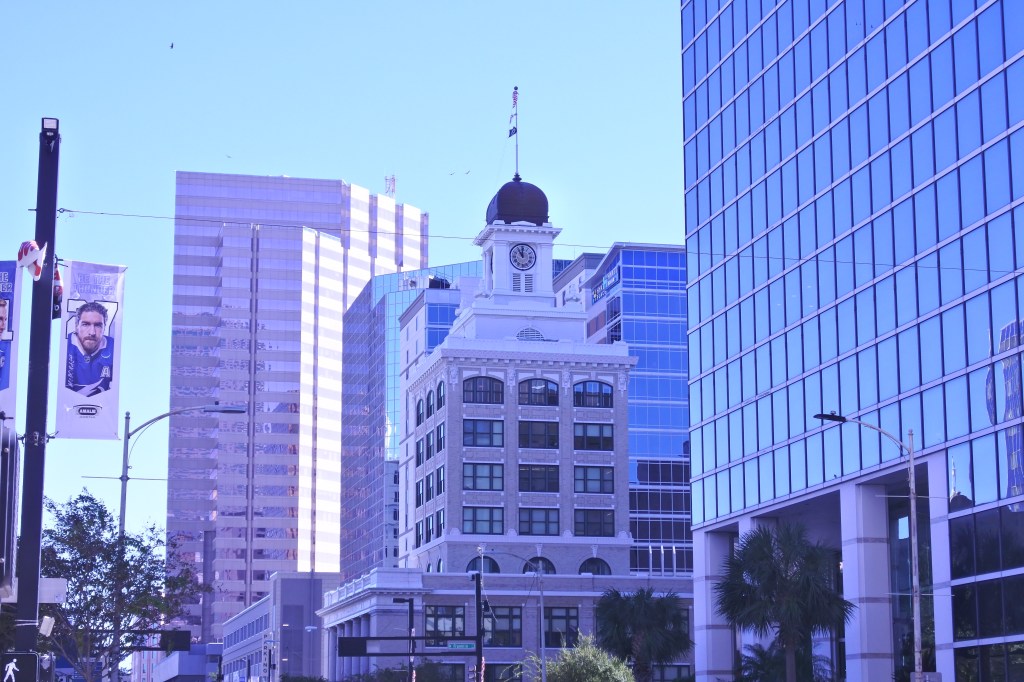
Given that Tampa Bay reached only 50K by 1920 and 100K by 1930 it’s not surprising that there are only a handful of historic mid-rise buildings. What is surprisingly is how little of Downtown’s pre-WII fabric remains. Post WWII Downtown Tampa Bay went all in with the Office Tower/Autocentric craze. Fortunately since the early 2000s civic leaders have focused on creating better quality park space and decent mixed-use housing and neighborhoods. This first began with a flurry of new construction in the Channel Island subdistrict and the Sparkman Wharf completed in 2018. More recently the Water Street district was revealed and is on course to finish the first phase by 2022. The new district is across 56 acres and includes 3,500 residential units, tons of office space and lots of new retail amenities. Revitalization efforts in the Downtown core have been slow and mainly one-off multi-family and mixed used developments. This has helped but the core of Dwtn still feels sleepy and bland. Lots of development activity occurring just north of Downtown in the South Nebraska neighborhood with the Encore! and GAs Worx Developments.

Once the above mentioned projects are completed, Dwtn Tampa will be a much more vibrant and 24 hour place filling in many of its dead spaces. But there is still much work to do in the core of Dwtn. Other areas of improvement needed for Dwtn include better retail amenities, more walkable schools, a more interesting skyline, direct transit connection to the airport, and need for more jobs. “

Click here to view my Downtown Tampa Album on Flickr. Click here for my Channel District Album. Here for Water Street.

URBAN STRENGTHS:

“* Overall very good ADA infrastructure especially in the traditional core of Dwtn.

  • Great bike lane system in the region and several dedicated bike lanes with Dwtn. Only Dwtn and a handful of inner city neighborhoods have dedicated bike stations.
  • Excellent economic diversity and solid racial diversity Dwtn.
  • Decent amount of affordable housing dwtn, especially along the north edge.
  • Excellent supply of for sale but on the expensive side. 1-bed condos sell between 250K- 550K, 2-beds 350-650K. Good amount of 3-bed supply but very expensive some sell around 600K but most around 1 M.
  • Good array of parks and recreational amenities including Lykes Gaslight Park, Courthouse Square, Fort Brook Park, Julian Riverfront Park, and Curtis Hixon Waterfront park- a solid and active civic plaza. Riverwalk trails outline most of Dwtn.
  • Dwtn has had a special improvement district in place since 94′
    *Much of the modern architecture from the 60s-90s is quite bland but the newer infill concentrated in the Channel Island and Water Street sub-district is pretty high quality.
  • Solid college enrollment Dwtn with just sky of 9K students at the University of Tampa (just across the River from Dwtn), 2K students at USF Health College, a couple other small satellite colleges, and several thousand students attending Hillsborough College & Brewster Technical College a couple miles from Dwtn.
  • Culturally a good # of restaurants, bars, and cafes, a decent # of theaters and a large historic movie house, lots of museums (i.e. Ship Museum, Aquarium, History Center, Art & Children’s Museum, and a couple local museums).
  • Dwtn also hosts a decent central library & post office, plenty of gov’t bldgs, a major convention center, but only the Hockey Area for Pro teams.
  • Retail amenities include 2 publics, several drug stores, tons of banks, some boutiques and creative stores, plenty of salons & barber shops, tons of dessert joints, some churches, and the Tampa General Hospital is nearby

URBAN WEAKNESSES:

“* Ok transit within Tampa Bay City limits. Very good dwtn and in a couple inner city district and fair transit connections throughout. Very limited transit options to surrounding suburbs and no transit access to the airport.

  • Only a handful of elementary schools located within dwtn but several quasi-walkable schools in adjacent districts.
  • Good supply but rental housing on the expensive side. Studios lease in the mid-high $1,000s, 1-beds ~ 2K, 2-beds in the 2 & 3Ks, and some 3-beds leasing btwn 3-5K.
  • Generally a safe dwtn but plenty of dead spots that make it feel unsafe.
  • The Skyline is pretty bland but a good concentration of verticality with 7 bldgs above 400 ft. Only a handful of mid-sized historic towers. The new high-rises in the Water Street sub-district is more interesting and will help with the skyline in the future.
  • Some nice historic arch dwtn but most of it has been torn down. Similar vibe to dwtn Houston here.
  • Vibrancy is not great, especially in the core of Dwtn but some pockets of vibrancy especially in Sparkman Wharf.
  • Culturally dwtn has a limited # of art galleries, live music venues, and some night clubs.
  • 70K jobs in dwtn Tampa (decent but not amazing for its metro’s size) Dwtn St. Pete prob reduces this jobs #. Office vacancy around 12%. Not bad.
  • No department stores.
  • Lots of dead spots and surface parking lots especially in the traditional core of Dwtn. With the massive Water Street development the urban fabric of the southern end of Dwtn will greatly improve. Even when there are bldgs with decent form, there is a lack of activity in many bldgs due to the office tower dominance. “

Downtown Rochester, NY

After the opening of the Erie Canal in the early 1820s, Dwtn Rochester boomed. By 1834, some 20 flour mills were producing 500,000 barrels annually, and the City’s population reached 13,500. Following the Civil War, many post-war industrial companies were founded including the likes of Kodak, Bausch & Lomb, Western Union, and Gleason Works. This led to the construction of many mid-sized skyscrapers in the late 19th century. Many of these buildings are still preserved along West Main Street in what is now called the Four Corners neighborhood. A subway was opened in 1927 on the old Erie Canal bed that ran through downtown but this was closed in the 1950s as public transit systems were replaced with cars and buses.

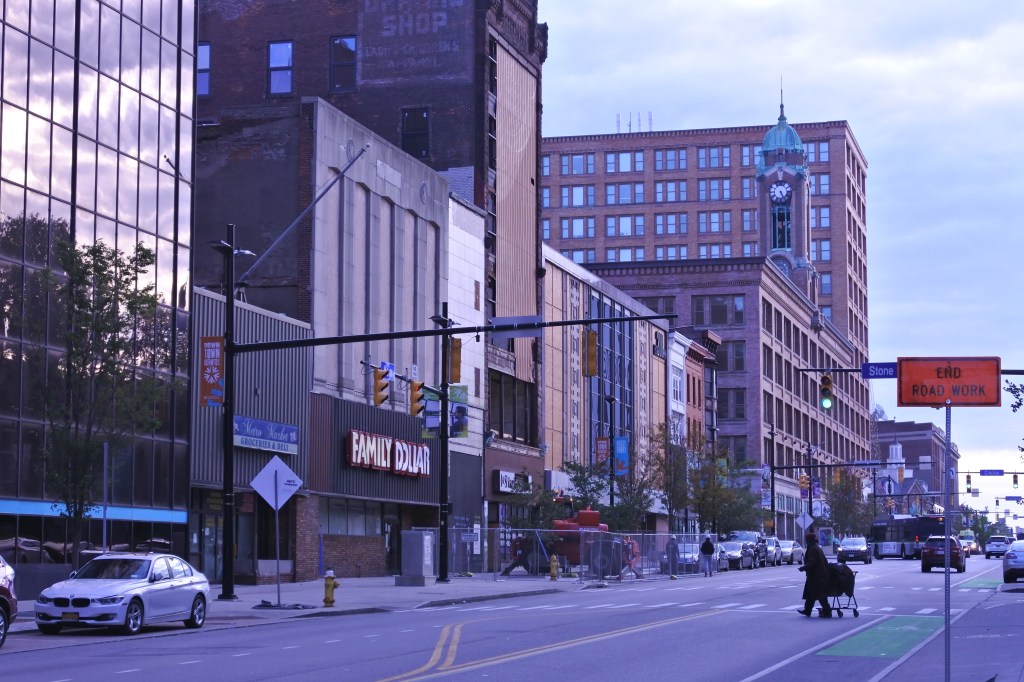
In the 60s Rochester, still a very corporate town, witnessed several ambitious urban renewals projects. This resulted in the Midtown Plaza mall, one of the first shinning new urban malls trying to compete with suburban malls. And new modern towners for Xerox, Bausch & Lomb, and several banks. Kodak actually built their major high rise and complex in 1915 just outside of Dwtn in the Brown Square district. Sadly these ambitious urban renewal projects sucked the vibrancy and energy out of Dwtn creating several nodes of activity (West Main Steet, the Saint Paul Quarter [a warehouse district], East End [where Eastman School of Music is located], Grove Place [an attractive residential area], and East Main Street) that are quite disconnected from each other.  After many years of stagnation, Midtown Plaza mall closed in the 2007. The tower still remains and is now a mixed used bldg, and the mall was converted to a pretty attractive park. The 2010s have been a good decade for Dwtn Rochester as businesses, people, and entertainment are starting to return to downtown. The East Inner belt was converted to a street in 2018 resulting in many new apartments and townhomes and the restoration of a seamless connection to the attractive East Rochester neighborhoods.

But there is still much work to do as many parts of Downtown Rochester remain either dead or blighted. The best untapped potential for Dwtn lies in the Four Corners district where an amazing concentration of gorgeous unspoiled late 1800s buildings lie waiting to be renovated. North of East Main street around the St. Paul Quarter district is a sea of parking lots and underutilized buildings. South of Broad street has almost all been cleared by urban renewal and is generally pretty dead. Plenty of East Main St. bldgs that could be repurposed as well.

Click here to view my Downtown Rochester album on Flickr

URBAN STRENGTHS:

* Good dwtn population here.
* Good number of dedicated bike lanes within Dwtn. Ok access to Rochester neighborhoods and suburbs. No dedicated bike stations yet in Rochester.
* Residential population is one of the most diverse in Rochester. Good economic diversity esp. when you consider the incomes that work Dwtn. About 25% of those living Dwtn are below the poverty line.
* Within Dwtn a large okay rate high school. Several pretty well rated schools located with 1 mile of Dwtn.
* An okay number of rentals dwtn and a mix of affordable and moderately priced ones. Studios around 750K, 1-beds lease btwn 900K and $1,600. and 2-beds in the $1,000s. Really no 3-bedrooms.
* Some for sale units Dwtn but very few 1-bedrooms. 1 bed condos sell in the 200Ks & 300Ks. 2-bedrooms anywhere in between 200Ks-500Ks depending on size  and condition. 3 & 4 beds selling for anywhere btwn 300K-700K. These are mostly town homes.
* A fair # affordable rents Dwtn. Medium rent is only $868.
* A good number of small and medium sized plazas and parks but no great stand out parks. MLK Plaza and now Midtown Commons are the best recreational spaces with some programming.
* Several nice smaller colleges dwtn including the Eastman School of Music, Monroe Community College, and Brockport Dwtn amount to about 3K students.
* An overall solid skyline due to Dwtn Rochester’s spreadout modern high rises.
* Great historic architecture Dwtn. Some much potential for wonderful bldg conversions.
* Culturally Dwtn has a decent # of restaurants, bars, cafes, and a few breweries, several art galleries, many performing arts, music, and cabaret theaters (both historic & modern), an indie cinema, several museums (auto, children’s, Modern. Art, etc.). Dwtn also host the convention center, a hockey/basketball arena and minor league ballpark, and a good # of gov’t bldgs on the west side.
* Almost 50K employees work Dwtn. Pretty good for a metro its size. Office vacancy is around 8%.

URBAN WEAKNESSES:

* Public transit is only so  within the City. Even poorer transit outside the City limits. Only Brighton has decent public transit as a suburb.
* Dwtn has a lot of wide Blvds but also plenty of intimate narrow streets.
* Only 10% of households are families. This is low even for Dwtn standards. Some adult diversity with Dwtn host a lot of young professionals and empty nesters.
* Safety is generally ok but certainly some very dead spots in Dwtn Rochester and plenty of vacant buildings.
* Modern in-fill is a tough one evaluate in Dwtn. Lots of corporate modern high, which to some are quite interest, but too many very ugly. Some more recent modern in-fill especially along Union Ave where the inner belt once stood.
* Some good blocks of urban form but plenty of surface parking lots and poor urban form due largely to the expensive urban renewal efforts Dwtn.
* Overall vibrancy is great but good with some spots Dwtn.
* Parts of the Eastern half of Dwtn are gaining positive momentum and buzz but the western half is very dead.
* Retail amenities are not great. No dwtn supermarket nor pharmacy. Shopping limited to a handful of boutiques, plenty of banks, a bookstore, some salons a family dollar, and the main public library and post office.

Downtown San Jose

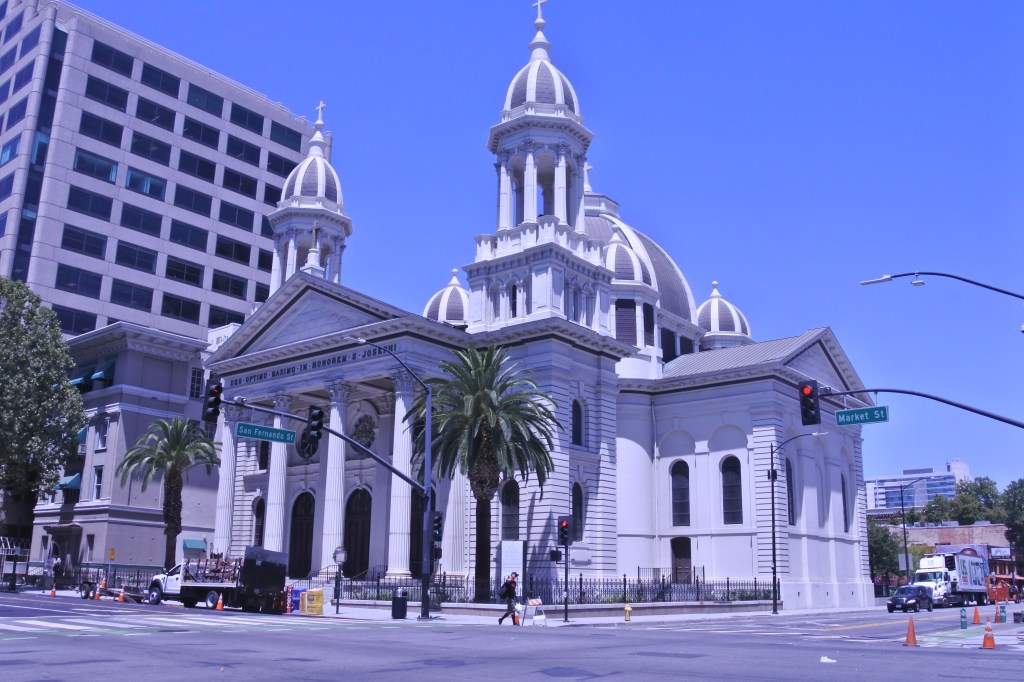
San Jose was settled originally by the Spanish as a mission town in 1777 called  Pueblo de San José de Guadalupe. The area that now makes up downtown was settled twenty years later, when Pueblo de San Jose de Guadalupe was moved somewhat inland from its original location on the banks of the Guadalupe River. In 1850, San Jose incorporated to become California’s first city and the location of the state capitol (this lasted only a couple years). Before WWII the downtown area was typical of a small, agriculture-based city of under 100,000 residents until city manager A. P. Hamann organized aggressive expansion during the 1950s and ’60s. As the city rapidly expanded into outlying areas, the downtown area unfortunately entered a period of decline.

But this did not last long as Downtown San Jose is the cultural and political center of one of the largest tech clusters in world, Silicon Valley. By the 1980s investment poured back into Downtown with the construction of many office tours, new residential housing, a renewed focus on the arts, and the construction of the San Jose State Event Center. Downtown is now home to Adobe’s World Headquarters, BEA Systems HQ, and numerous facilities and offices of major tech companies, including Amazon Lab126 and Google. Google is planning a 67 Million expansion and develop and will break ground in 2022.

At first glance Downtown San Jose can feel rather sterile and cold. But when one dives into it deeper one discovers that it upholds urban design principles quite well. Downtown has a solid population with just over 12K per square mile, effective public transit and  excellent bike lane system that expends out to most of the City, comfortable street scape, generally good urban design with few surface parking lots, quality parks, and excellent cultural amenities. There are certainly areas for improvement including the need for much better neighborhood retail amenities, more bike rental stations, more interesting high rise buildings, and a larger concentration of the region’s share of jobs. While dedicated affordable housing is highly concentrated dwtn, market prices are very expensive, similar to prices in San Franciso. Fortunately there are many development plans in the works, including the 67 M Google development, which will bring many more residents and jobs to Downtown. I believe this will help tremendously in creating a more bustling and interesting Downtown San Jose.

Click here to view my Downtown San Jose album on Flickr

URBAN STRENGTHS:

* High quality ADA infrastructure in Dwtn San Jose.
* Good density level for a Dwtn at around 12K per square mile.
* Solid public transit within the City of San Jose and good connections to its suburbs. So  public transit connection to the San Jose Airport.
* Likely one of the best dedicated bike lane coverages in the Country is here in San Jose Better than Oakland and San Fran. Network is well connected to surrounding suburbs too.
* Highly level of grid network and streets are generally not too wide and lanes are carved away for dedicated bike lanes. Sometimes feels a bit too easy to drive.
* Very good racial and economic diversity downtown. About 25% of residents are below the poverty line but the medium income is around 75K. Surprisingly around 35% of dwtn households are family ones. Also a Children’s Museum Dwtn.
* Medium rent is around $1,500 helped by the fake that Signiant portion of San Jose’s Total Affordable Housing is Dwtn.
* A decent # of grade schools (both public & private) dwtn and a large Catholic High School.
* Generally a safe dwtn helped with having a BID. Still a fair amount of homeless and panhandling, esp. on the north end of Downtown around St. James Park.
* The office towers are pretty bland but some decent residential in-fill with good urban form.
* Some very nice park spaces especially along the Guadalupe River. Pretty good civic plaza at Caesar Chavez Park
* Culturally Downtown has a great array of theaters, performing arts centers and cineplexes. The symphony, opera, & ballet are all here. Solid array of restaurants, bars, & cafes, live music venues, and clubs. Dwtn also hosts a large Convention Center, and Sharks arena, a good array of museums & art galleries, a major dwtn post office & library, and a great government complex.
* Retail amenities include a bargain supermarket, some nice local stores & boutiques (esp. along San Pedro), plenty of banks & dessert joins, a couple gyms & book stores, and plenty of churches.
* Great college presence with over 30K students attending San Jose State.
* While a bit sterile, Dwtn has a very good streetscape.

URBAN WEAKNESSES:

* Dedicated bike coverage is a bit limited only covering Dwtn and some inner city neighborhoods to the north and west.
* Not many elderly residents residing Dwtn. Its mostly students, young professional, and middle aged adults.
* Market rate housing is very expensive overall. Studios start at 2K, 1-bedrooms, 1-bedrooms in the 2Ks, 2-bedrooms in the 2ks & 3Ks, and few 3 bedrooms but those run in the 3K & 4Ks.
* Some studios listed around 500K. 1-bed condos sell btwn 600K-900K. A lot more 2-bedroom condos and townhomes selling btwn 700K and the low Millions. Some 3-beds townhomes and SF homes selling btwn 1M-1.5M
* Other than a 15 story historic tower the skyline is mostly bland, boxing mid rises.
* Only about 45K jobs currently in Dwtn. This is even less than San Jose, but several office towers are afoot to bring many more jobs in.
* Retail amenities are a bit lacking. No full service grocery store, nor drug store, and not a ton of local retail.
* Some surface parking remain but not too bad. Generally quality urban form Dwtn.
* Vibrancy is kinda lacking.

Downtown San Francisco- One of America’s Best Downtowns

Under Spanish and Mexican rule, what is now the Financial District and Yerba Buena Gardens, was the site of a harbor named Yerba Buena Cove with a small civilian outpost to support the military population of the Presidio and the Mission Dolores. Due to its sandy and marshy soil  the Spanish/Mexican government decided to focus their pueblo settlement at San José and the current Mission District in San Francisco. It was not until 1835 that the first settlers established themselves at Yerba Buena Cove. The Cove’s potential as a seaport made it the eventual center for European and American settlement which really accelerated after the California Gold Rush. The Downtown district became the financial capital of the west coast and only location of West Coast Skyscrapers along Market Street. After the great fire of 1906 Downtown was largely rebuilt with low-rise, masonry-clad buildings ranging from six to twelve stories. During the late 1920s, several Neo-Gothic high rises, were constructed. The Financial district then boomed with many Highrise towers in the 60s-80s. Yet many in San Fran saw this as a threat to the character of San Francisco descripting it as the Manhattanization of the City. This caused widespread opposition citywide and height restrictions were placed on new high-rise construction leading downtown to shift more to neighborhoods South of Market where high rise construction was still allowed. While I lament the anti-density sentiment this “skyscraper revolt” lead too, I’m happy that it led to an expansion of the City’s high-rise districts, creating a more dynamic and interesting skyline in San Fran.

Somewhat of a surprise to me, Downtown San Fran is my highest scoring Downtown district, beating out the likes of Midtown, Lower Manhattan, Chicago’s Loop District, Center City Philly, and Dwtn Boston. I attribute this mainly to Dwtn San Fran density (around 25K per square mile), which fosters great neighborhood amenities, high affordability levels (with 65% of all units as dedicated affordable housing), great cultural and park amenities, and an excellent bike and transit system connecting well to its neighborhoods and the entire Bay Area. Even so there are certainly aspects to improve. #1 on my list is improving the homeless situation. This causes some legitimate safety concerns but it is why many are distasteful of Dwtn. There are also very few universities Dwtn and schools could be improved. I also think Dwtn should be allowed to densify more. This could easily be a Dwtn with over 75K per square mile, something that makes a lot of sense with decreased office demand.


Click here to view my San Francisco Downtown Album on Flickr

URBAN STREGNTHS:

* Great downtown density at around 25K per square mile.
* Public transit is excellent within the City and good in the overall region. Because development is hemmed in by the mountains and at least a medium density, most suburbs even have decent transit access. But the BART seems is very expensive to travel across the region and timely. To travel from Dwtn San Fran to Dwtn San Jose takes almost 2 hrs. Good connections to San Fran Airport and Dwtn Oakland.
* Excellent dedicated bike system across the Bay Area feeding in well to Dwtn San Fran. Probably the best system of any US region.
* Street Connectivity is generally at a high level in San Fran due to the grid network, good dedicated bike lane system, and lots of narrow cut through streets. Some wider one way streets but not too bad.
* Excellent bike infrastructure with a very high concentration of rentable pedal & electric bikes Dwtn. Great dedicated lane coverage connecting well with most San Fran neighborhoods. Some of the hilly districts don’t have a ton of bike lanes.
* High levels of racial and economic diversity residing in the Dwtn area.
* Around 28% of households are family households, quite high for an American Dwtn. Good age distribution as well with a large number of elderly living in the Financial district and more young and middle aged people residing in other districts. Some Children friendly activities Dwtn like the Children Activity Center and Yerba Buena Gardens.
* 60-65% of all housing units are permanent afford housing units. This probably cuts the number of rental control units down (only around 33%). Median rent is ~$1,300, quite low for San Fran.
* The elevated Sales Force Park is a high quality park space. The rest are community sized small & medium parks spread throughout. Also good water front parks too. Dwtn hosts FOUR active civic centers (Civic Plaza, Yerba, Union & Sales) each acting as civic centers for their section of Dwtn.
* Def a top-tier American Dwtn with retail and cultural amenities. A very livable Dwtn.
* Great ADA infrastructure overall.
* One of the most iconic skylines in America.

URBAN WEAKNESSES:

* Only about 35% of all units downtown are rental controlled.
* Plenty of schools dwtn but many of them are smaller private schools. Good # of public grade schools.
* Market rents are pricey but lots of options. Some efficiency units rent in the $1,000s but most studios & 1 beds lease in the 2Ks and low 3Ks. Some 2-beds lease in the 2Ks but most go for 3K-5K. Lot a ton of 3-bed product. This can range anywhere from 3K-8K.
* For sale is also very expensive. But some moderately priced housing with studios selling for anywhere btwn 300K-800K. Plenty of 1-bedrooms in this range too but many of them all sell around 1 M. A handful of “moderately priced” 2-bedrooms but most sell btwn 1-2M. Plenty of 3-bedroom product but only a handful of it sells around 1 M. Most is 2M+
* Dwtn only hosts one major sports arena. Also no major dwtn post office remains.
* Dwtn San Francisco was certainly a strong job center pre-pandemic with around 300K employees. But even before the pandemic there were signs of changes with increasing vacancies and rents sky high. Given its great neighborhood amenities, Dwtn San Fran should emerge as an even better mixed-use district, even if office wanes.
* Safety is a mixed bag in Downtown. The Financial District and South Beach are safety by most measures. SoMa and areas around Union Square & Civic Square can be a bit rough. Lots of homeless in these pockets.
* Only several small satellite colleges in Dwtn. Nearest large university is 3.5 miles away.
* Some image problems dwtn with its large homeless presence.