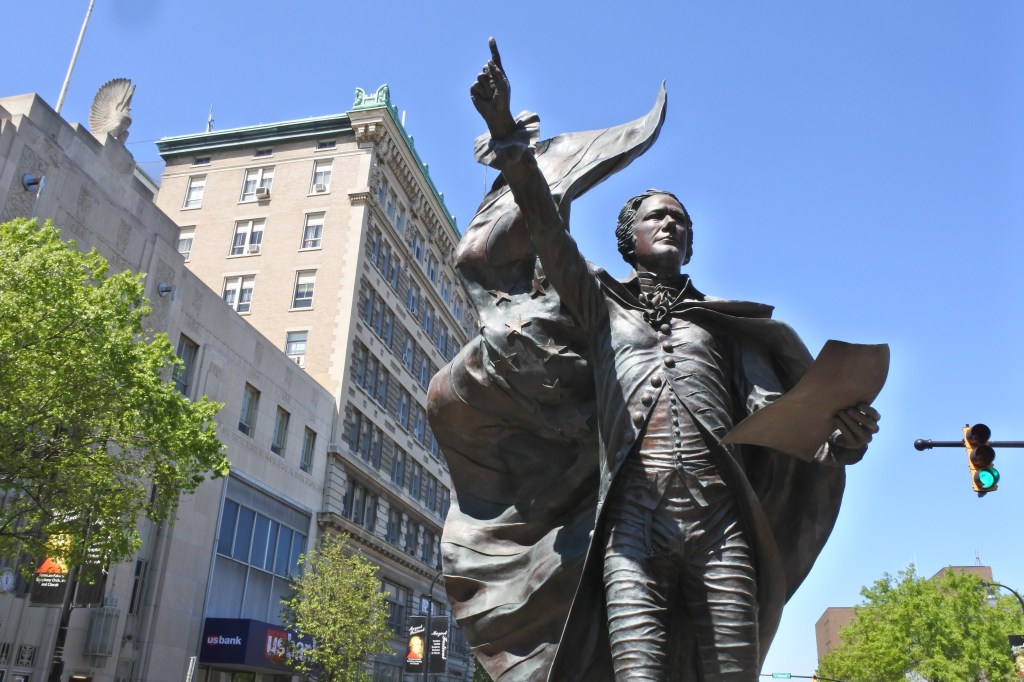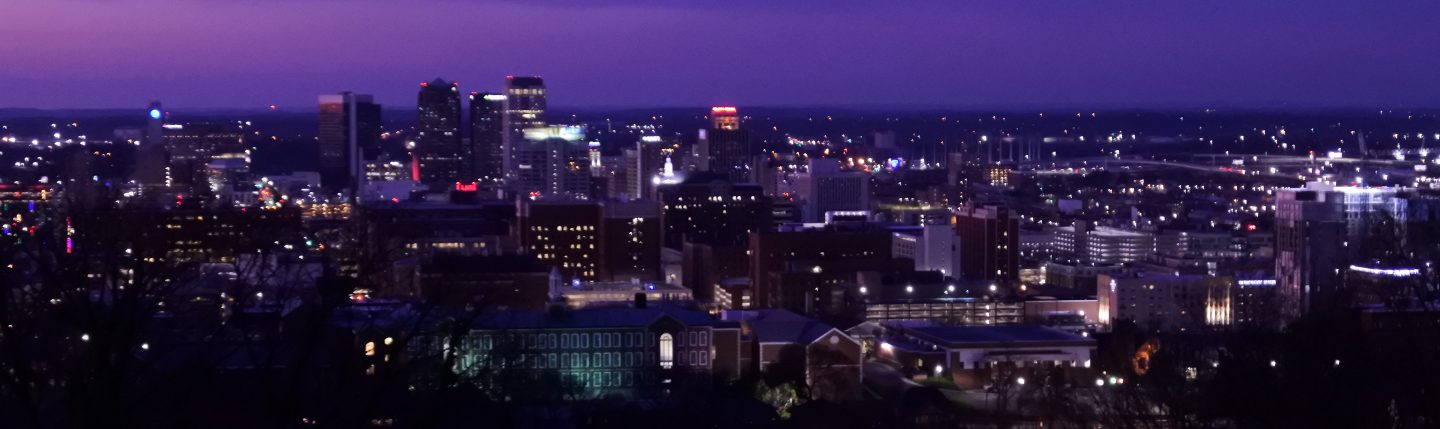
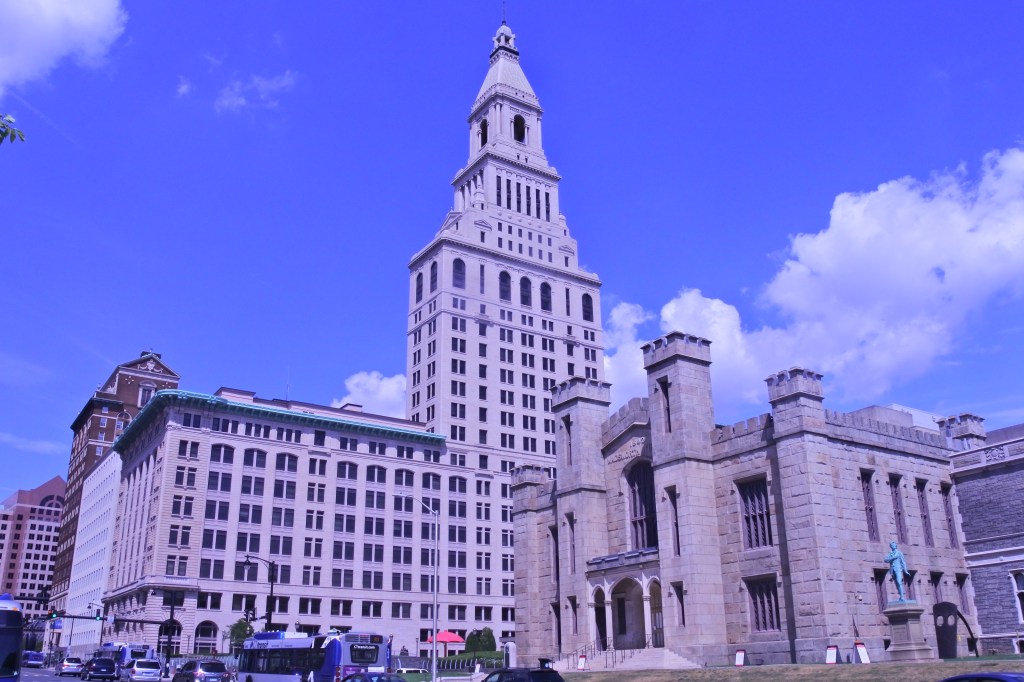
| I used pretty standard boundaries to measure Downtown Hartford, but excluded Downtown North of it is a mostly vacated district. Downtown Hartford is similar to other east coast midsized cities like Syracuse, Albany, Scranton, Allenton… compact with great historic architecture, but still struggling to rebound from disinvestment. Yet Hartford still excels as a major employment hub hosting over 80K jobs bolstered by being the state capital and hosting many corporate headquarters. Insurance is one of Hartford’s strengths earning it the nickname the “Insurance Capital of the World”. Dwtn Hartford also contains many great cultural amenities including a gorgeous statehouse, Fredric Olmsted designed park located right in its heart, a gorgeous historic train station and many museums including the Wadsworth Atheneum, the oldest public art museum in the US. Some live, work, play momentum has come within the last decade adding more vibrancy and night life. But dwtn Hartford still has a ways to go before being a truly mixed-use center. Plenty of parking lots in the NW section of Dwtn to in-fill with dense apartment buildings to help make this happen. Other urban attributes Dwtn Hartford could improve upon include better bike infrastructure, more economic & racial diversity among its residents, a real civic gathering space, and more neighborhood amenities like a supermarket and larger format retail. |
URBAN STRENGTHS:
| * Excellent public transit within Dwtn, Hartford City Limits, and well out the Hartford Metro area. Decent access btwn dwtn and the airport via an express bus line. * For sale condos and flats are a bit limited but good diversity in price. 1-bedrooms sell in the 100Ks & low 200Ks. 2-bedrooms go for anywhere btwn 150K-400ks. 3-bedrooms are limited and diverse in price. * Rentals are more plentiful generally pretty reasonable in price, esp. for an east cost town. Studios start around a $1,000, 1-bedrooms in the $1,000s, 2-bedrooms in the high $1,000s. 3-bedrooms are very limited. * Dwtn Hartford have their very owned Olmsted designed park (Bushnell Park) which in the middle of Downtown, This transitions into the statehouse grounds. Several other plazas in dwtn but most of them or pretty dead or bland modern plazas. None of these are viable civic plazas. Bushnell Park fulfills this role. * Culturally a nice array of historic and boutique theaters, plenty of music venues, and a small theater. Also plenty of restaurants & bars, lots of museums, and some art galleries. * Most dwtn amenities are here including the main post office & library, convention center, and many governmental offices esp. as this is dwtn. * Dwtn is very high for the size of the metro at 80K and it is the largest employment center in CT. * Office vacancy rates are high though hovering around 18%. * Pretty good retail amenities with boutiques and neighborhood amenities. * Great historic architecture and one of my favorite statehouses. * Curb cuts fill every intersection but a mix of current and date ADA infrastructure. * Great good urban streetscape but dependent on whether the street has seen major investment. * While not terribly vertical, this is a nice compact skyline. |
URBAN WEAKNESSES:
| * Hartford’s bike share system is generally disjointed and in small bits and pieces. Yes there are several large regional bike paths that pass through the Metro, but they aren’t built for commuters. A bike Share system appears to be in the works as of 2020. * Downtown residential population definitively skews white and young professional. * Sport venues are limited to a minor league baseball stadium. * No department stores or supermarkets. * Dwtn feels sketch in parts but generally pretty safe. * Plenty of schools kind of within walking district west and south of dwtn but generally not well rated. * Decent college enrollment dwtn with about 4,000 students at the community college and a dwtn branch of UConn. * Modern architecture not bad but generally modern office bldgs with so urban form. * Tree canopy is so but great coverage in Bushnell Park. * Fair amount of surface parking lots in the NW section of Dwtn but good urban form in the rest of dwtn. * Dwtn Hartford still has an image problem but this seems to be getting better. |