Wynwood- Miami’s Ultimate Art District

Wynwood historically was known as Little San Juan or El Barrio, because of its historically large Puerto Rican population. Wynwood has recently come into the national consciousness due to the spectacular amount of mural and graffiti art located between Miami and 5th Avenue and 21st & 29th streets. This has only been a “thing” since 2009 when a local developer used art murals as a way to help revitalize the neighborhood. Apparently the murals are mostly replaced after only a couple years of standing. Wynwood walls (now an outdoor art gallery) was where this also started). Taking advantage of this buzz there is now a plethora of food & beverage options, nightlife, museums, and new development rising up in Wynwood. Along the district’s northern edge is the extensive lifestyle center of Shops at Midtown Mall. There is also the Wynwood Technology District, home to various technology based companies and the co-working space, LAB Miami.

Wynwood has certainly improved from an urban standpoint since 2010. But there is still room for much improvement as many vacant and underutilized land remains, lack of bike lane infrastructure, limited park amenities, and generally expensive housing. Wynwood also lacks a real center, something that could be rectified with a new centrally located urban plaza.

Click here to view my Wynwood Album on Flickr

URBAN STRENGTHS:

  • Overall ADA infrastructure is quite good in Wynwood.
  • Very good access to dwtn via all modes of transit.
  • Decent diversity esp. family diversity.
  • Culturally a wonderful array of art galleries, restaurants, bars, cafes, lots of interesting modern and pop art museums, plenty of night clubs, a couple of community theaters, and a wonderful array of art murals on countless buildings in the neighborhood.
  • Very good retail amenities too including two full sized supermarkets, many small grocerias, a couple drug stores, a target, a Marshall’s, a Nordstrom Rack, a Dick’s and several other brand name retailers at the Shops at Midtown Mall. There are also lots of boutiques, creative stores, lots of salons, tons of desserts shops & gyms, and a local post office.
  • Good array of walkable schools but some public options are rated poorly.
  • Lots of hype and buzz in Wynwood now on a national level.
  • Great urban in-fill with good form and often mixed-use.
  • Very good mix of uses throughout the district.

URBAN WEAKNESSES:

* Limited bike lanes throughout but good array of dedicated bike stations.
* A decent amount of rental product but expensive. Studios lease in the mid to high 2Ks, 1 beds rent btwn 2K-3Ks. 2-bed product leases btwn 2-4K. 3-beds 4-6K. Some affordable hsg in Wynwood but not a ton.
* For sale options tend expensive but not too bad. Studios and 1-beds condos sell btwn 250K-500K, 2-beds generally sell btwn 350K-800K, 3 & 4 beds are generally SF homes selling btwn 350K-650K.
* Park amenities are limited to a handful of medium sized parks.
* Still some dodgy areas but Wynwood is generally pretty safe.
* Some decent but plain mid-century architecture with the basic commer. bldgs and historic homes in the NW section of the district. But much of the historic fabric has been wiped away..
* No real center in Wynwood. There are two development clusters: Midtown Mall Mixed-use Lifestyle node and the mural art and retail node in the center of the district.
* Urban form is generally good where bldgs stand (esp. the newer infill) but plenty of surface parking and vacant lots that disrupt the urban continuity of the neighborhood. This fortunately will get better as things fill in.

Edgewater- A rapidly urbanizing district just north of Downtown Miami

While Edgewater filled in between the 1920s-1950, the district has experienced rapid urbanization over the past decades. This has lead to the replacement of much of the historic fabric with new high-rise residential towers, mixed-use construction, and new retail. To put this in perspective the neighborhood had 15K residents in 2000 and now is approaching 25K.

Some may lament the loss of the neighborhood’s historic fabric but I generally feel it was an urban improvement. The historic homes weren’t terrible architecturally significant and the neighborhood lacked good density and had rather auto centric business districts. What we are seeking with the transformation and densification of Edgewater is more vibrancy & walkability, better urban form, and more and more cultural and retail amenities. Even with these positive urban changes there are still may vacant lots and auto centric buildings to fill in. Edgewater also lacks bike lane infrastructure, and more affordable housing options. There really needs to be a push to construct more affordable housing here, but unfortunately I don’t see any signs of it.

Click here to view my Edgewater Album on Flickr

URBAN STRENGTHS:

  • Great density.
  • Being just north of Dwtn, very convenient access. Public transit options are also of a high quality and plenty of dedicated bike stations.
  • Overall very good racial and economic diversity.
  • A good # of walkable schools generally with solid ratings.
  • generally a safe district.
  • Margaret Pace Park is an excellent one at Edgewater’s southern edge. A couple other decent parks around here but not much else further north.
  • While there is certainly a fair amount of bland auto centric arch. (esp. along 2nd Ave) urban in-fill is generally pretty solid.
  • Culturally Edgewater has a diverse array of restaurants & bars, plenty of cafes, several art galleries, several local museums, a drive in movie theater, and the expansive Arsht Performing Arts Center & Carnival Studio Theater and Perez Art Museum are just south of the neighborhoods boundaries. Many Dwtn and Wynwood cultural amenities are also nearby.
  • Retail amenities include several Supermarkets & drug stores, a good # of boutiques and creative stores, plenty of gyms, banks and dessert shops, several churches, an Ace Hardware, and Target is walkable to many residents just over the neighborhood line in Wynwood.”

URBAN WEAKNESSES:

  • No really bike lanes.
  • For sale also ends to be expensive but decent moderate options oo. Many Studio & 1 bed condos selling btwn 100K-400Ks. Luxury 1-beds sell for more. Significant diversity w/ 2 beds selling anywhere btwn 200Ks-1M depending on condition and size of condo. Similar situation with 3-beds with price point ranging from 450K- mid 1 Ms. 4 & 5 beds are more expensive with many homes selling in the Millions.
  • Lots of rental product but very expensive. Studios lease in the low to mid 2Ks, 1 & beds rent btwn 2K-3Ks. 2-bed product leases btwn 3-5K. 3-beds 4-6K but some apts are even pricier.
  • Historic architecture limited to a sprinkling of remaining homes and small apts. Nothing spectacular and no historic district here.
  • Better urban massing than the Upper East Side but certainly plenty of Vacant Lots and autocentric areas along 2nd Ave and Biscayne Blvd.
  • No walkable post office or library in the neighborhood.”

Upper East Side- Home to Miami MiMo Architecture and a Solid Urban District

The Upper East Side is primarily a residential neighborhood of single family homes from the 1920s-1960s and many high rise residential towers clustered along the bay with Biscayne Boulevard running along the center of the neighborhood. There are two unique historic styles here: Miami Modern (MiMo) architecture along Biscayne Boulevard (mid-century hotels and condos), and the 1920s-1940s Mediterranean and Art Deco styles found in the Morningside Historic District.

Like much of urban Miami, the Upper East side fell on hard times during the 60s & 70s but had a major resurgence in the 90s and 2000s starting with the Morningside subdistrict. The area is now home to a wide variety of price points and housing styles. Upper Eastside also has solid park amenities, diverse ethnic restaurants and interesting cafes, stylish boutiques and some creative stores, lots of art galleries, and great racial and economic diversity.

Very an urban perspective quality urban form and streetscaping is spotty along the main commercial thorofare of Biscayne Blvd with lots of autocentric stretches, ADA infrastructure is hit or miss, density is pretty low leading to limited pedestrian activity, bike lanes are missing, and about 1/3 of the district is within a gated community. Fortunately these are all areas that can be fixed and I anticipate will improve as the neighborhood densifies and fills in.

Click here to view my Upper East Side Album on Flickr

URBAN STRENGTHS:

  • Incredible racial diversity. It doesn’t get much better than this in America.
  • Economic diversity is also near the ideal.
  • Decent family and age diversity.
  • Thee appears to be a decent amount of dedicated affordable units here. Medium rent is $1,200.
  • Several decent walkable schools within or on the western border of the Upper East Side.
  • Solid Park amenities with Morningside Park topping the list.
  • Excellent Tree Cover especially in the Morningside subdistrict.
  • Some really cool Mid-Century Hotels still line Biscayne Blvd and the gated community of Morningside has some wonderful 1920s-1930s homes but much of the neighborhood was blander 1930s-1950 architecture.
  • In-fill architecture is a mix of auto centric and pretty decent urban Apartments and Mix-use bldgs. Lots of high rise towers as well.
  • Culturally a good array of very diverse restaurants, lots of cafes and dessert spots, a couple community theaters, plenty of art galleries, a couple of local museums.
  • Generally pretty safe district with some sketchy pockets.

URBAN WEAKNESSES:

  • Roads are generally gridded and connected but 1/3 of all residential areas are within gated communities, providing only limited access to the public.
  • Decent dedicated bike coverage but very limited bike lane coverage.
  • Rentals are generally pretty expensive but some modest apts still available with some studios leasing around 1K. 1 & beds rent btwn 1.5K-3K. 3-bed product is pretty limited and expensive leasing anywhere btwn 3K-6K. Rentals are generally prohibited im the gated communities.
  • For sale also ends to be expensive but decent moderate options oo. Many Studio & 1 bed condos selling btwn 100K-300Ks. Luxury 1-beds sell for more. Significant diversity w/ 2 beds selling anywhere btwn 200Ks-800Ks depending if condo or SF home. Similar situation with 3-beds with price point ranging from 300K- low 1 Ms.4 & 5 beds are more expensive with many homes selling in the Millions.
  • Hit or miss with ADA current ramps but most areas have at least decent sidewalks.
  • Urban form is so . Biscayne is very much a mixed bag with clumps of decent biz clusters connected by autocentric stretches.
  • Okay retail amenities including a supermarket, a couple drug stores, a couple banks, a good # of boutiques & home good stores, . There is also a local library branch and the really cool Ironside complex but no post office.
  • Not great pedestrian activity.

Downtown Saint Petersburg, FL

“Downtown was the first part of Saint Petersburg that began to develop starting in the early 20th century. Shippingopened up with the dragging of the channel nearby and development began to grow exponentially Downtown. As St. Petersburg began as a tourist destination even from its early days, office has never had a major foothold here. Currently there are only about 10-20K office jobs Dwtn. Fortunately Dwtn has grown up to be a center of arts & cultural, a quality food & beverage scene, has many great waterfront parks, plenty of retails, and a good concentration of housing making it an attractive urban neighborhood. City leaders also had the vision to preserve much the City’s historic architecture (unlike Dwtn Tampa Bay) maintaining a wonderful concentration of historic buildings around Central Avenue. The urban form of the infill buildings is also pretty good.

Unfortunately due to a lack of walkable districts in St. Petersburg overall, housing is very expensive here. Other areas for improvement dwtn include more walkable schools, lack of some major dwtn amenities (i.e. convention center & dwtn library), missing transit line to the airport, and a good # of surface parking lots remaining on the western and southern edges of Dwtn. But with an on-going construction boom I anticipate Downtown St. Pete will get better and better and hopefully more office jobs will move here too.”

Click here to view my Downtown St. Petersburg Album on Flickr

URBAN STRENGTHS:

“* Excellent ADA and sidewalk infrastructure.

  • Solid density Dwtn.
  • Public transit is so in the Dwtn and surrounding neighborhoods but decent across St. Peterburg city limits and even decent to the northern suburbs.
  • Great street grid, good connectivity, and not too many wide 1-way streets.
  • Great bike lane system in the region and several dedicated bike lanes with Dwtn. Only Dwtn and a handful of inner city neighborhoods have dedicated bike stations.
  • Safety is generally very safe but some dead spots.
  • Much of Dwtn’s historic fabric remains and looks great. This is concentrated along Central Ave.
  • Modern in-fill is generally pretty good besides some of the design tackiness and auto centric bldgs on the edges of Dwtn.
  • Great tree canopy for a Dwtn.
  • Solid Dwtn vibrancy thanks to Dwtn’s decent population base.
  • Decent # of college students attending school within or near dwtn. USF St. Petersburg is just south of dwtn and enrolls 3,500 students. There is also a Dwtn Campus for St. Petersburg College.
  • Some very nice park spaces, especially along the waterfront. The crown jewel being the 26 acre St. Petersburg Pier, filled with many different recreational amenities.
  • Good cultural amenities including many great restaurants, bars, cafes, several breweries, tons of art galleries, both an independent theater & cineplex, and a handful of theaters (performing arts and live music)
  • Culturally a decent # of museum options (i.e. Fine Arts, History, Dali Museum, Holocaust, Chihuly, and lots of other smaller museums). Other Dwtn attractions include a soccer Stadium and the Devil Rays Stadium is just outside of Dwtn, a historic post office, and a decent # of gov’t bldgs.
  • Good retail amenities with 2 publixs, a couple drug stores, lots of brand name clothing stores, good # of boutiques, plenty of banks, lots of gift shops, a nice bookstore, plenty of dessert shops and gyms, a couple home good stores, plenty of churches, and two major hospitals on the edges.

URBAN WEAKNESSES:

“* Lots of for-sale housing options but generally expensive. 1-bed condo sell anywhere btwn 100-1M, 2-beds mostly 500K-1.5M but some cheaper dated options selling btwn 200K-500K, older 3-beds sell btwn 550K-850K, newer 3 beds sell anywhere btwn 1-3M. Lots of 3 bed options esp. for a dwtn. Only a handful of 4 & 5 beds.

  • Decent # of rentals but also rather pricey. 1-beds lease in the 2Ks, 2-beds rent in the 2Ks & 3Ks, only a handful of 3-beds leasing for a bit more. A handful of affordable senior bldgs.
  • Only a handful of small schools Dwtn. A couple larger ones in surrounding neighborhoods.
  • Some nice skyline angles but generally Dwtn is filled bland residential medium sized towers and limited office towers. Taller bldgs are also spread apart.
  • Urban form generally good but a sizable # of surface parking lots remain in the southern and western edges of Dwtn.
  • Dwtn’s traditional civic plaza, Williams Park is disappointing. Pretty well designed but overrun by homeless and limited events. The St. Pete Pier is taking over as the Civic heart of Dwtn with lots of events and festivals but doesn’t have great central location.
  • No Convention Center Dwtn, no major dwtn library (although there is a local branch).
  • Dwtn is not a great employment hub. Prob the lowest amount of any major city. Total jobs dwtn is somewhere btwn 10-20K. Job are concentrated in more suburban areas like the Gateway St. Petersburg by the airport.”

Downtown Tampa Bay

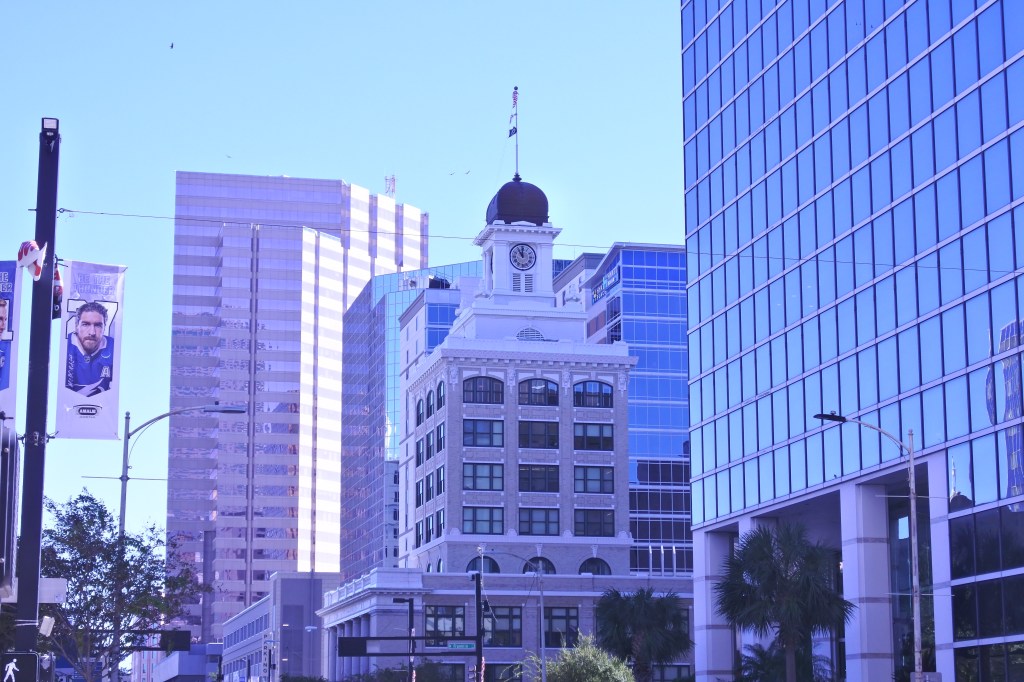
In this Downtown evaluation I included the traditional (Dwtn area north of I-618 ) and the sub districts Water Street and Channel Island between I-618 and the Ybor Chanel.

Given that Tampa Bay reached only 50K by 1920 and 100K by 1930 it’s not surprising that there are only a handful of historic mid-rise buildings. What is surprisingly is how little of Downtown’s pre-WII fabric remains. Post WWII Downtown Tampa Bay went all in with the Office Tower/Autocentric craze. Fortunately since the early 2000s civic leaders have focused on creating better quality park space and decent mixed-use housing and neighborhoods. This first began with a flurry of new construction in the Channel Island subdistrict and the Sparkman Wharf completed in 2018. More recently the Water Street district was revealed and is on course to finish the first phase by 2022. The new district is across 56 acres and includes 3,500 residential units, tons of office space and lots of new retail amenities. Revitalization efforts in the Downtown core have been slow and mainly one-off multi-family and mixed used developments. This has helped but the core of Dwtn still feels sleepy and bland. Lots of development activity occurring just north of Downtown in the South Nebraska neighborhood with the Encore! and GAs Worx Developments.

Once the above mentioned projects are completed, Dwtn Tampa will be a much more vibrant and 24 hour place filling in many of its dead spaces. But there is still much work to do in the core of Dwtn. Other areas of improvement needed for Dwtn include better retail amenities, more walkable schools, a more interesting skyline, direct transit connection to the airport, and need for more jobs. “

Click here to view my Downtown Tampa Album on Flickr. Click here for my Channel District Album. Here for Water Street.

URBAN STRENGTHS:

“* Overall very good ADA infrastructure especially in the traditional core of Dwtn.

  • Great bike lane system in the region and several dedicated bike lanes with Dwtn. Only Dwtn and a handful of inner city neighborhoods have dedicated bike stations.
  • Excellent economic diversity and solid racial diversity Dwtn.
  • Decent amount of affordable housing dwtn, especially along the north edge.
  • Excellent supply of for sale but on the expensive side. 1-bed condos sell between 250K- 550K, 2-beds 350-650K. Good amount of 3-bed supply but very expensive some sell around 600K but most around 1 M.
  • Good array of parks and recreational amenities including Lykes Gaslight Park, Courthouse Square, Fort Brook Park, Julian Riverfront Park, and Curtis Hixon Waterfront park- a solid and active civic plaza. Riverwalk trails outline most of Dwtn.
  • Dwtn has had a special improvement district in place since 94′
    *Much of the modern architecture from the 60s-90s is quite bland but the newer infill concentrated in the Channel Island and Water Street sub-district is pretty high quality.
  • Solid college enrollment Dwtn with just sky of 9K students at the University of Tampa (just across the River from Dwtn), 2K students at USF Health College, a couple other small satellite colleges, and several thousand students attending Hillsborough College & Brewster Technical College a couple miles from Dwtn.
  • Culturally a good # of restaurants, bars, and cafes, a decent # of theaters and a large historic movie house, lots of museums (i.e. Ship Museum, Aquarium, History Center, Art & Children’s Museum, and a couple local museums).
  • Dwtn also hosts a decent central library & post office, plenty of gov’t bldgs, a major convention center, but only the Hockey Area for Pro teams.
  • Retail amenities include 2 publics, several drug stores, tons of banks, some boutiques and creative stores, plenty of salons & barber shops, tons of dessert joints, some churches, and the Tampa General Hospital is nearby

URBAN WEAKNESSES:

“* Ok transit within Tampa Bay City limits. Very good dwtn and in a couple inner city district and fair transit connections throughout. Very limited transit options to surrounding suburbs and no transit access to the airport.

  • Only a handful of elementary schools located within dwtn but several quasi-walkable schools in adjacent districts.
  • Good supply but rental housing on the expensive side. Studios lease in the mid-high $1,000s, 1-beds ~ 2K, 2-beds in the 2 & 3Ks, and some 3-beds leasing btwn 3-5K.
  • Generally a safe dwtn but plenty of dead spots that make it feel unsafe.
  • The Skyline is pretty bland but a good concentration of verticality with 7 bldgs above 400 ft. Only a handful of mid-sized historic towers. The new high-rises in the Water Street sub-district is more interesting and will help with the skyline in the future.
  • Some nice historic arch dwtn but most of it has been torn down. Similar vibe to dwtn Houston here.
  • Vibrancy is not great, especially in the core of Dwtn but some pockets of vibrancy especially in Sparkman Wharf.
  • Culturally dwtn has a limited # of art galleries, live music venues, and some night clubs.
  • 70K jobs in dwtn Tampa (decent but not amazing for its metro’s size) Dwtn St. Pete prob reduces this jobs #. Office vacancy around 12%. Not bad.
  • No department stores.
  • Lots of dead spots and surface parking lots especially in the traditional core of Dwtn. With the massive Water Street development the urban fabric of the southern end of Dwtn will greatly improve. Even when there are bldgs with decent form, there is a lack of activity in many bldgs due to the office tower dominance. “

The Edge District- A great main street district just west of Downtown St. Petersburg

 I included everything west of MLK Blvd  and within the inner belt for this evaluation. The Edge district is concentrated around Central Avenue, Tampa Bay’s premiere main street that runs to Downtown and further west from the Edge District. The corridor has a great concentration of food & beverage businesses, boutiques and creative stores, murals, and a collection of mid-century modern furniture. The Edge district is also walkable to many parts of Dwtn and has quality bike and transit connections.

Central Avenue is a bit of an urban island however. Urban form in the rest of the neighborhood used in this evaluation are not great. South of Central is the MLB stadium where the Tampa Devil Rays play. The stadium is surrounding by a sea of parking. North of Central is a mix of historic residential and industrial blight. Some new apartment bldgs are starting to sprout up in the  neighborhood giving me hope that the areas north of Central Avenue will fill in and create a more seamless urban district.

Because of  a lack of housing in the district and quality urban neighborhoods in general in St. Petersburg, housing is quite expensive in the Edge District. Dedicated park space is also very limited, although residents have walkable access to several nice parks in adjacent neighborhoods. 

Click here to view my Edge District Album on Flickr

URBAN STRENGTHS:

* Great access to dwtn and decent transit access.
* Several bike lanes run thru the district along with good bike station coverage.
* Very diverse incomes but really just those who are professionals and those under the poverty line.
* Great racial diversity.
* Some affordable rentals in the Edge District Area
* Solid cultural amenities including many restaurants, bars, and cafes, a local magic theater, a couple live music venues, a MLB stadium, and good access to all the cultural amenities dwtn.
* Good retail amenities with a Public’s Supermarket, a drug store, lots of boutiques, home goods stores, several antique stores, lots of dessert shops, and a couple of gyms. 

URBAN WEAKNESSES:

* Density is pretty low.
* Good ADA infrastructure along Central Ave, 1st Ave, and Pinellas Trail but hit or miss outside of this.
* Poor generational diversity as few families live here.
* Really no schools within the Edge district but a couple okay schools located in adjacent districts.
* For sale hsg is generally pretty expensive but some affordable 1-bed condos selling btwn 150K-400K, 2-beds btwn 250K-550K, 3-beds btwn 300K-600K,
* Rentals are also pricy with studios leasing in the high 1Ks, 1-beds in the low-mid 2Ks, 2 beds in the high 2KS and 3Ks, and 3-beds are limited but expensive.
* Dedicated park spaces is very limited within the Edge District boundaries but still walkable access to walks in adjacent neighborhoods (Mirror Lake and Campbell Park
* General a safe neighborhood but lots of dead spaces and some blight.
* Great vibrancy along Central Avenue but pretty dead outside of here.
* No public library or post office, but located in nearby Dwtn. Also limited banks.
* Good urban form and Streetscaping along Central Ave and decent along 1st Ave and Pinellas Trail but pretty terrible outside of these streets. Lots of surface parking around Tropicana Stadium and lots of vacant lots and auto centric areas in the neighborhood.

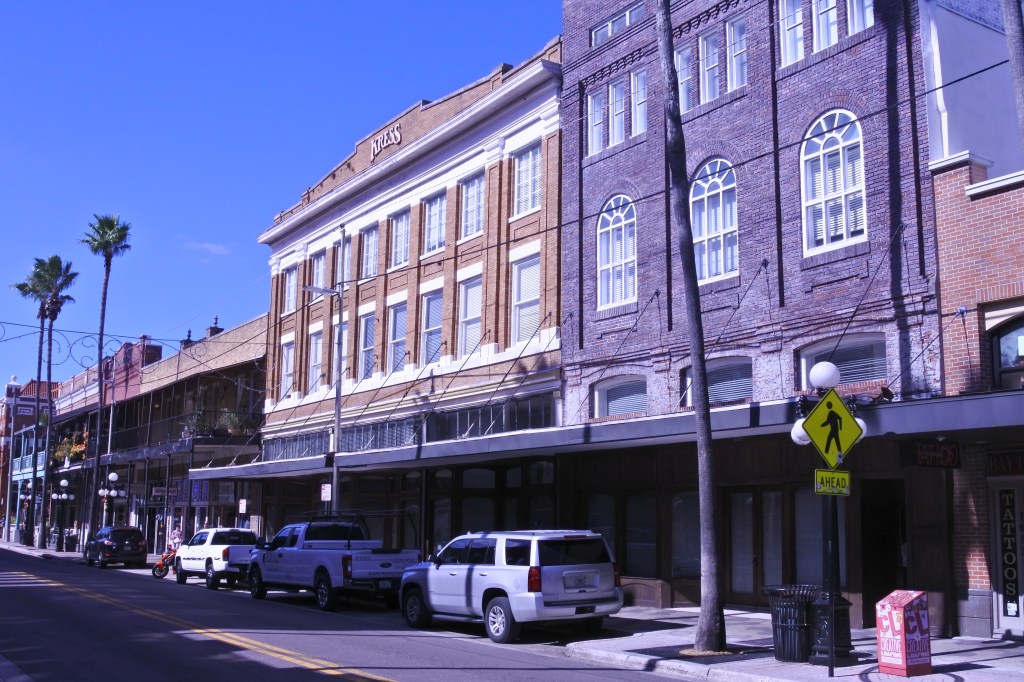
Ybor City- the reason behind Tampa Bay’s historic Cigar City nickname

Ybor City was founded in the 1880s by Vicente Martinez-Ybor and other cigar manufacturers. They helped propel Tampa Bay from a struggling village to a bustling city in about 20 years and giving it the nickname “Cigar City”. Ybor City was populated by thousands of immigrant workers, mainly from Cuba, Spain, and Italy. For the next 50 years, workers in Ybor City’s cigar factories rolled hundreds of millions of cigars annually. Ybor City grew and flourished from the 1890s until the Great Depression, when a drop in demand and mechanization greatly reduced employment opportunities. This process accelerated after World War II, and a steady exodus of residents and businesses continued until large areas of this formerly vibrant neighborhood were virtually abandoned by the late 1970s.

Fortunately the neighborhood did not sit vacant too long as artist began moving into the old cigar factories in the 80s. By the 90s and early 2000s renovations efforts were well underway and Ybor City became a major cultural and late night destination for Tampa Bay. New offices and residences have also has been built in the last 15 years diversifying the neighborhood and starting to fill in the many holes left by its de-industrialization. At its Height, Ybor City reached at least 10K. It bottomed out with around 1,000 residents and now has just over 2,000.

There is certainly much room for in-fill and new residents and businesses as much of the neighborhood (outside the 7th and 8th Avenue) core is vacant or underutilized land.  Given that 1-bedroom rentals lease in the high $1,000s, there is certainly demand for more housing here. The neighborhood also needs better sidewalks and ADA infrastructure, more park and recreational space, better tree canopy, and better basic neighborhood retail amenities like a supermarket and drug store. In addition to a thriving cultural scene Ybor City excels at great access to dwtn, good public transit service, excellent racial and economic diversity, vibrancy, and gorgeous historic architecture. 

Click here to view my Ybor City album on Flickr

URBAN STRENGTHS:

* Great access to downtown and excellent public transit access.
* Good bike infrastructure access with a couple bike lanes and several dedicated bike share stations.
* Excellent racial and economic diversity.
* Decent for sale options. 1-bed condos sell 200ks & 300ks, 2-beds anywhere btwn 200Ks-500Ks, 3 & 4s beds are similar but some SF options selling in the 500KS & 600Ks.
* Excellent historic and modern architecture along the 7th & 8th Street core. Hit or miss outside the core.
* Great massing and streetscape along 7th & 8th but a mixed-bag outside this area. Some pretty autocentric and industrial areas on the edges.
* Good pedestrian activity especially in the touristy core of the district, pretty dead outside this area.
* Excellent cultural activities including many restaurants, bars and cafes, art galleries, lots of music venues, theaters, and night clubs, several breweries, a cineplex, and plenty of local museums.
* Good but not great retail amenities including : a Public Library and Post Office, lots of boutiques and vintage stores, cigars shops, some antique shops, several desserts spots, banks, and a couple of gyms. Also a good array of churches.

URBAN WEAKNESSES:

* Very poor Density.
* ADA compliant curbs are infrequent at intersection although curbs and sidewalks are certainly the norm.
* Poor generational diversity with only about 15%-20% family households.
* Several walkable grade schools but of mixed-ratings.
* Rental housing is rather expensive and limited. 1-beds lease in the mid-high $1,000s, 2 & 3 beds generally in the 2Ks. Not much dedicated affordable hsg here.
* Ybor City has a perceptions and history of crime but relatively safe in the present day. Some crime related to its night life activities and sketchy areas off the main 7th & 8th St. drags.
* Nice central park (Centennial Park) and Centro Ybor plaza but not much else with parks and recreational amenities.
* Tree canopy is pretty limited.
* Some missing retail amenities include no supermarket, drug store, 

Hyde Park- Tampa Bay’s best urban district

The Hyde Park neighborhood was established in the 1880s when railroad financier Henry B. Plant built the first bridge across the Hillsborough River at what is now Kennedy Boulevard. Growth occurred rapidly and a street car line was put in on Swann Ave and Rome Avenues.  The heart of the Hyde Park Neighborhood (aka Hyde Park Village) grew at the intersection of Swann and South Dakota Ave. Hyde Park Village is now a well defined  business node with many restaurants, bars, cafes and high-end boutiques. The rest of Hyde Park’s business districts are really a mix of urban and auto centric streets. Howard Ave has some decent urban stretches but Kennedy Blvd is overwhelmingly autocentric with the exception of the node adjacent to Tampa University.

The rest of Hyde Park is filled with attractive housing with a good mix of  historic homes from the 1910s-1940 and generally thoughtful infill residential. But housing is very expensive and there is not enough rental housing here. Other Hyde Park urban strengths include close proximity to dwtn, decent public transit, safety, quality schools, very good retail and cultural amenities, and a thick tree canopy. Hyde Park could be a great urban community if it filled it its autocentric blocks with dense mixed-use housing and added better park spaces and amenities.

Click here to view my Hyde Park Album on Flickr

URBAN STRENGTHS:

* Great access to Dwtn being literally on its western border. Decent public transit but a bit sub-par for an inner city neighborhood.
* Great bike infrastructure especially with the many dedicated bike paths.
* Solid racial diversity
* Not walkable high schools but very good array of well rated public and private elementary and middle schools.
* Very safe community.
* Great tree canopy.
* As one of the few quality urban districts in Tampa Bay, there is great buzz here.
* When the infill is not auto centric it is pretty high quality.
* Great array of historic homes from the 1910s-1940s.
* Culturally a great array of restaurants, bars, and cafes, several performing arts and community theaters, several art galleries, an upscale movie theater, and a couple museums in adjacent Tampa University and many cultural assets in nearby Dwtn.
* Good retail assets as well including 3 supermarkets, several drug stores, great concentration of boutiques & home good stores around Swann and Hyde Park Village, plenty of dessert stores and gyms, and Tampa General is just across the channel. Lots of retail stores are autocentric however.

URBAN WEAKNESSES:

* 50-50 with ADA Compliance curb cuts. Sidewalks are consistant however.
* So  economic and generational diversity.
*For Sale housing is pretty expensive but a good amount of condos selling btwn 200K-450K. 2-beds sell anywhere from 250K-1 M depending on size and conditions. 3-beds sell anywhere btwn 400K-1.5 M. 4 & 5 Beds sell btwn 700K and 3 M.
* Rentals are also expensive and a bit limited. Studios lease around 2K, 1 beds in the 2,000s, 2-beds 2-4K, 3 beds in the 4,000s.
* Does not appear to be much affordable rentals here.
* Parks a bit limited but include a nice bayfront trail, a small waterfront park, a small pocket park, and some ballfields.
* Real mixed back with urban biz districts. When the urban form is good the streetscaping is also very good.
* No post office or public library.

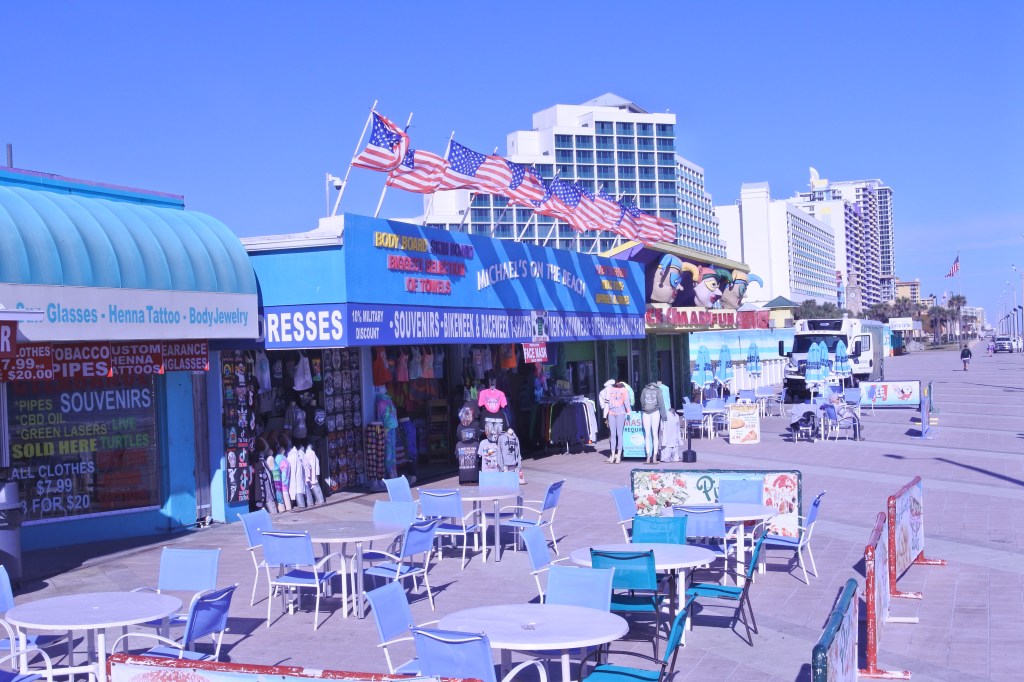
Daytona Beach FL, supposed home to the World’s “Most Famous” Beach

East Daytona is the historic beach portion of the City along the barrier island. This and Downtown Dayton, which runs along Beach Ave on the west side of the Halifax River, are probably the oldest parts of the City developed mainly in the early 20th century. I view the core of Historic East Daytona lying in between University Blvd to the north and the E International Speedway to the South.

The City was named in honor of  Mathias Day Jr. of Mansfield, Ohio, who purchased the former Orange Grove Plantation in 1871 on the westside of the Halifax River. He built a hotel spurring the creation of the town. By 1886 the St. Johns & Halifax River Railway arrived in Daytona but it wasn’t until the 1920s that development took off. By 1930s Daytona Beach had a population of 16K.  Daytona’s wide beachs of smooth, compacted sand attracted automobile and motorcycle races in the early 20th century. This led to many land record attempts and the first stock car races in 1936.  In 1958, William France Sr. and NASCAR created the Daytona International Speedway to replace the beach course and the rest is history! Population steadily continued to grow in Daytona Beach. The City reached 30K residents in 1950 and 64 K in 2000. Population dipped a bit in the 2000s but they seem to have rebounded.

East Daytona’s grid and general walkability make it by far the best urban area in Daytona Beach. But there are many areas for improvement including better neighborhood amenities, quality urban in-fill to replace auto centric strips and surface parking lots, and much more density. 
Click here to view my Daytona Beach album on Flickr

URBAN STRENGTHS:

* Quality transit service. Probably some of the best in the Daytona Beach region.
* Convenient access to many tourist jobs at Daytona Beach and only 2 miles to Dwtn Daytona. Convenient bike and bus access to Dwtn.
* Great economic diversity here.
* Decent array of rental product at moderate prices. 1-bedrooms rent in the low $1,000s. 2-bedrooms in the low to mid $1,000s.
* Nice variety of for sale options including 1-2 bedrooms condos selling around 100K, modest SF homes selling in the $100Ks, and larger homes selling in the 200Ks & 300ks.
* Park and recreational spaces are concentrated along the shoreline. This includes the beach, pier, Breakers, Ocean Park, and the amphitheater plaza. Really no parks within the neighborhood of East Daytona.
* Plenty of attractive early 20th century Florida homes. Much of commercial district is modern.
* Nice array of schools in East Ormond Beach.
* Pretty good urban form along Seabreeze Blvd and Main Street but pretty autocentric along Atlantic Ave. Unfortunately there are many surface parking lots west of Atlantic Ave.
* Culturally a good array of restaurants, bars, & cafes,  lots of live music venues, a cineplex. and a handful of historic museums. The cultural amenities of Dwtn Daytona are also only 2 miles away.

URBAN WEAKNESSES:

* Limited racial and especially generational diversity due to East Daytona’s concentration of retirees. Very few families living here.
* ADA and sidewalk infrastructure is a mixed bag. Generally consistent sidewalks throughout but update to date ADA curbs are 50-50.
* East Daytona generally feels pretty safe but still some abandonded lots and gritty areas. Much of the touristy waterfront has seen better days and needs some reinvestment.
* Modern infill in Daytona is hit or miss.
* Pretty low density in East Daytona.
* Good vibrancy on the beach and in the commercial districts but pretty dead in the rest of East Daytona.
* Much of East Daytona’s Beach’ infill has decent urban form, but the architecture styles can be very tacky.
* Its generally pretty safe in East Daytona but there are quite a few vacant lots and some vacant bldgs.
* East Daytona’ night life can be a liability sometimes with all the rowdy tourists that roll into town.
* Some neighborhood services amenities including a post office, a drug store, tons of touristy gift shops, a handful of boutiques, and the Ocean  Walks Shoppes (mostly just restaurants and gift shops).
* No walkable supermarket or library, 

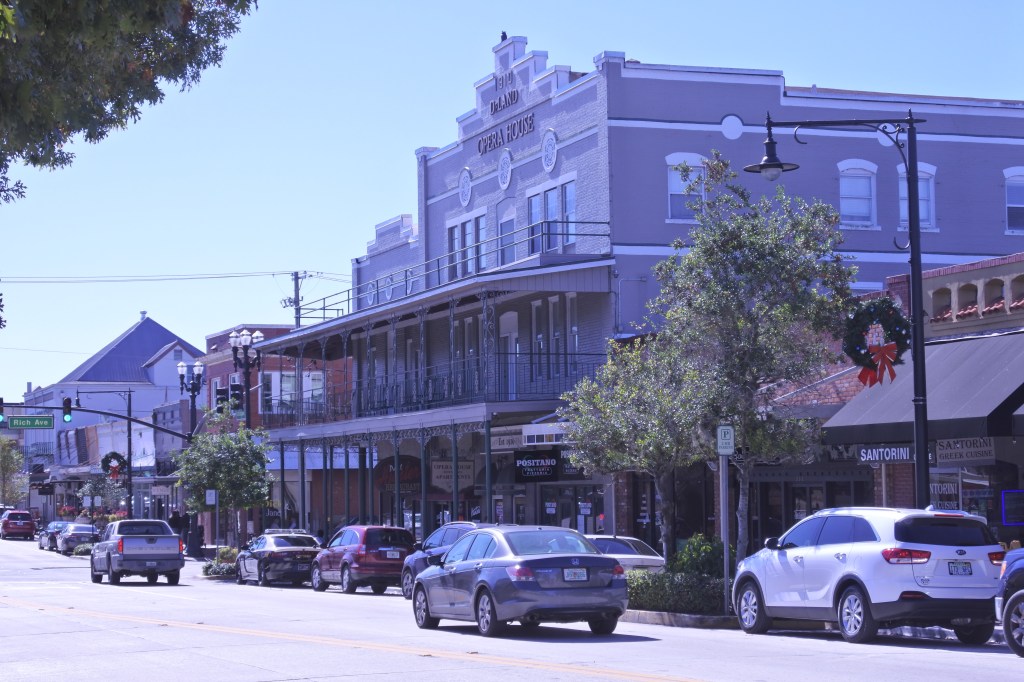
Deland, FL- Home to Florida’s oldest private college Stetson University

Deland was founded in 1876, and was named for its founder, Henry DeLand who also founded Stetson University, Florida’s oldest private college. After a killing freeze destroyed the central Florida’s orange crop, DeLand entrusted the academy to his friend John B. Stetson, a wealthy hat manufacturer from Philadelphia. The Town steadily grew and reached 7,000 residents by 1940. Deland hosts some great historic architecture, especially stucco Mediterranean Revival architecture often designed by native architect Medwin Peek.

Historic Deland has held up well even with rapid suburban growth on its fringes. The city now has over 30,000 souls. Much investment has gone into main street and downtown helping to create an attractive and vibrant core. Major areas for Deland to improve from an urban perspective include better density, public transit access, and converting transitioning its more auto centric commercial districts to be pedestrian friendly. 
Click here to view my Deland album on Flickr

URBAN STRENGTHS:

* Well invested Dwtn area complete with filled storefronts and great streetscaping.
* Great historic architecture especially Dwtn.
* Sidewalks and ADA Infrastructure is great  in Dwtn and Stetson University. Hit or miss in the historic residential streets where sidewalks are often missing and curb ramps are not up to ADA standards.
* Excellent street connectivity.
* Nice dedicated bike lane running the lengths of Historic Deland. No bike sharing system.
* Great generational diversity with around 60% family households. Excellent racial and economic diversity as well.
* Good supply of rentals with one-bedrooms leasing btwn $800-$1,000, 2-bedrooms in the low $1,000s, and 3-bedrooms in the high $1,000s.
* Great diversity of for-sale prices points starting around 50K all the way to 500K.
* Good mix of parks and amenities including several nice Downtown plazas, a major sports complex, Christholm Center, Painter Bond, the Bill Deggors Museum Complex, and the greenspaces of Stetson University.
* Culturally a great array of restaurants, cafes, and bars Dwtn, art galleries, the Athens historic theater and good array of local museums including Deland House Museum, Gillespie Science Museum, Museum of Art-Deland, African American Arts Museum, and the Bill” Dreggors Historic Site.
* Good array of neighborhood retails esp. Dwtn including a hardware store, several grocery stores and smaller ethnic grocers, public library, banks, a couple bookstores, and lots of boutiques and specialty stores.
* Mix of quality private and public schools within the historic core.
* Great tree canopy throughout Deland. 

URBAN WEAKNESSES:

* Pretty low density for an urban area, but this is pretty typical for the south.
* Outside of Downtown the commercial corridors are semi-auto centric. Amelia Street is primarily auto centric.
* Dwtn is vibrant but the rest of Deland is pretty quiet due to its low density
* Poor public transit.
* Decent amount of jobs in Deland as it is a county seat and hosts Stetson University. 30 minute drive (50 min bus ride) to Dayton Beach and 45 drive to Orland.
* Crime a bit above the National average and still plenty of blight throughout.