Downtown Jackson, MS

There are no hard boundaries for Dwtn but my sense is that its western border is the railroad to the west, Court St to the south, Jefferson St to the east, and High/Monument St to the North with a couple additional blocks north of the Statehouse.

Capitol Street is by far Dwtn Jackson’s best street with decent urban form as a lot of historic buildings remains, great streetscaping and even some business, hotels, and office bldgs. Decent cohesion and sense of place surround State Capitol Building, Smith Park,  and the governor’s Mansion. The block west of here to Lamar street holds a decent array of modern and historic bldgs but not great urban form. Some efforts have been made to revitalize the historic African American Business District (Farish St) evidenced by several blocks of new streetscaping and a handful of renovated businesses. A nice block on State St also sits across from the old Capitol Building.

But outside of these aforementioned nodes Downtown Jackson is a mixture of sterile and dead office blocks, parking lots, and blight and vacancy lacking a sense of place and urban cohesion. One particularly poor urban design decision was made at the intersection of Amite and Farish Street where a large mid century parking garage literally dumps two massive car ramps onto where sidewalks should be. Jackson is sadly the worse major American City Downtown I have evaluated to date from an urban perspective. But there is even still hope here. Downtown can continue to invest and urbanize the nodes I mentioned before, especially Capitol Street, where revitalization could spill northward towards the Capitol Building and State Street and eventually westward to Farish Street. There could conceivably be a quality tight Downtown core framed by State, Capitol, Farish and High Streets. But this would require significant amount of political will, intentionality, and investment.

Click here to view my Dwtn Jackson Album on Flickr

URBAN STRENGTHS:

* Dwtn’s Street Connectivity is pretty decent with a good grid and few very wide 1-way streets. The Innerbelt is set pretty far to the east and south of Dwtn and didn’t result in major Dwtn urban renewal. The wide Court St blvd on Dwtn’s southern edge is pretty bad.
* Jackson was blessed with some quality historic architecture and it was quite extensive. While much of it has been demolished much remains especially along Capitol St and many Capitol bldgs.
* Good racial diversity Dwtn.
* ADA and sidewalk infrastructure is a really mixed bag in Dwtn Jackson. Some great streetscaping along Capitol St, parts of Farish, and the core of Dwtn but the more distressed areas of Dwtn have terrible ADA/sidewalk infrastructure.
* Decent cultural amenities including some restaurants & bars, several night clubs and live music options, a couple art galleries, a good collections of museums, and plenty of historic sites. Regional amenities include two  convention centers and the Jackson Volcano site that includes the State fair grounds and an arena.
* Dwtn hosts a lot of government offices and courthouses along with the main public library.
* Dwtn Jackson has a safety ambassador’s program.
* Solid # of employees in Dwtn at 22K. This is decent given Jackson’s metro size just shy of 600K.
* Some good City Beautiful planning with both statehouses terminating at the end of Congress and Capitol  Streets but much of Dwtn’s originally cohesion has been lost.

URBAN WEAKNESSES:

* Low density even for a Dwtn area.
* Public transit access is quite bad throughout Jackson and mediocre at best in its pre-war II area. Dwtn has better public transit than other neighborhoods just about the worst Dwtn public transit access of any major US City.
* Modern in-fill is generally not very exciting. Either bland mid century towers with poor urban form or auto centric low rise buildings.
* Bike infrastructure doesn’t existing in Dwtn Jackson and practically doesn’t exist in the entire Jackson metro with the one exception of the Natchez Trace Pkwy rec trail running a couple miles north of the city.
* Overall Dwtn’s population is pretty poor but some economic diversity.
* Mostly a younger population Dwtn and few activities for kids.
* Dwtn Jackson isn’t particularly dangerous its just dead and often blighted in places.
* No schools within Dwtn Jackson but some well rated elementary schools in adjacent neighborhoods.
* Hsg is limited dwtn but affordable. 1-bed apts lease for 800K- the low 1Ks. and 2-beds in the 1Ks.
* For sale hsg is practically non-existent Dwtn.
* About 500 students attend college in Dwtn Jackson but Jackson State (10K enrollment) is 1 mile SW of Dwtn.
* Not a ton of verticality nor cohesion to the Jackson skyline but some attractive boutique skyscrapers augmented by the two capitol buildings.
* Very limited pedestrian activity dwtn.
* Only two sizable parks Dwtn: the Statehouse lawn and Smith Park, Jackson’s best Civic plazas. A handful of other plazas dwtn but not much.
* Retail is limited to a couple boutiques & banks, a florist, a couple gift shops & music/book store, a bakery, a gym, a small post office and several churches.
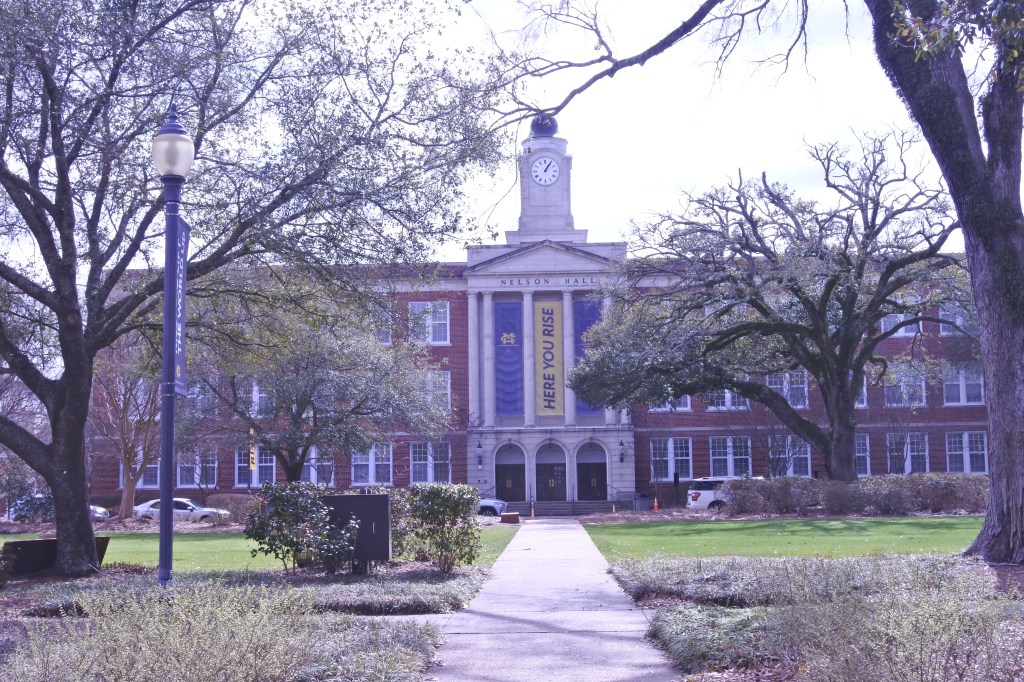
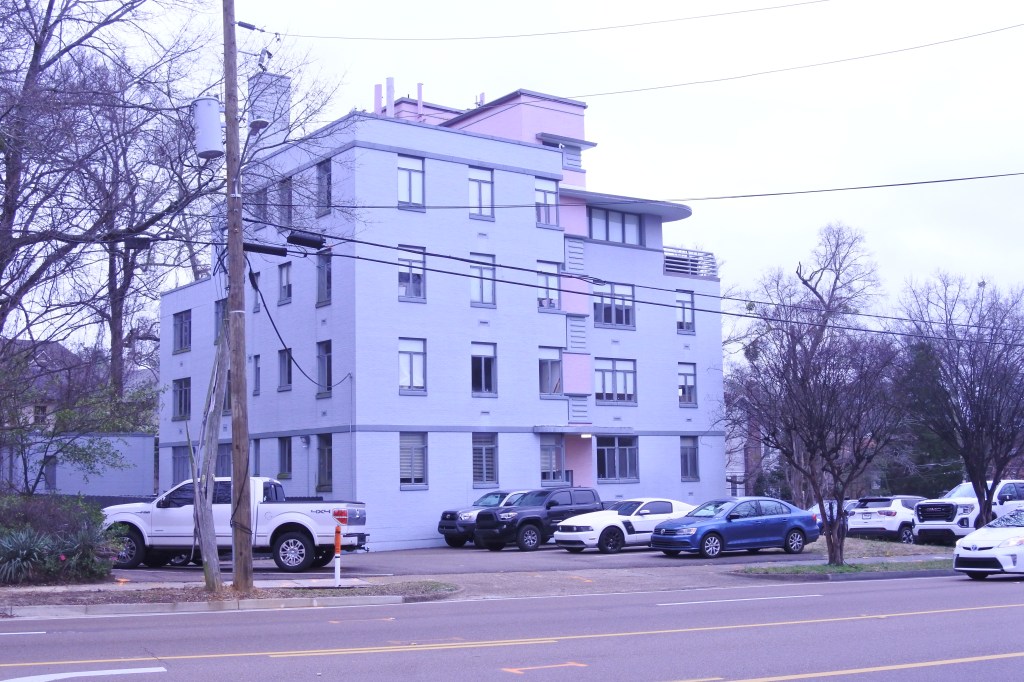
Clinton, MS- hosts Mississippi oldest College and now a Suburb of Jackson

The urban core of Clinton is very small (only .12 square miles) formed by College St. to the South, Clinton Pkwy to the East, West St. to the west and the rail road to the north.

In 1828, the city changed its name to Clinton in honor of DeWitt Clinton, the former governor of New York who led the completion of the Erie Canal. The first road through Clinton was the Natchez Trace. Clinton has the distinction of hosting’s the state’s oldest college, Mississippi College founded in 1826. Like many towns in the South, Clinton remained small before WWII fluctuating between 350-900 residents between 1880-1940. Clinton’s post war population boomed as it became a rapidly growing suburb in metro Jackson.

While Jackson is a pleasant and stable college town within a 15 minute drive of Dwtn Jackson it has a chilling racist past. In the 1870s during the reconstructionist era White insurgents disrupted a voting rally, attacking blacks in what was called the “Clinton Riot.” It resulted in the deaths of several white men and an estimated 50 blacks and was part of the movement in the south to reverse voting rights and the elections of African Americans.

The small historic core of Clinton is pleasant and generally walkable with several food & beverage businesses, some retail, attractive historic homes and commercial, nice tree lined streets, and convenient access to Mississippi College. It would be nice to see more density in the historic core with the additional of a couple mixed-use buildings catering to college students along with more walkable schools in the historic core. Really no public transit to speak of in Clinton and limited (if any) bus options to Dwtn Jackson.

Click here to view my Clinton, MS album on Flickr

URBAN STRENGTHS:

* Great access to Mississippi College, which employees about 1,000 people.
* Good connectivity.
* Great diversity, especially racial and economic.
* Attractive historic residential and commercial architecture. Attractive collegiate architecture as well.
* Excellent Tree canopy.
* Decent park including several sports fields, a pocket park and all the green space in the college quads.
* Culturally a good # of food & beverage bizs, a couple art galleries, a historic museum, a historic home and the performing arts coming from the college.
* Supermarket & Drug store just outside the Clinton Historic Core. Within the Historic Core there are a several boutiques & gift stores, a college bookstore, a bank, several salons, a post office, a couple medical offices, and several churches. Plenty of other retail amenities in Clinton but in the outskirts and not walkable to the core.
* Clinton is one of the most safe communities in MS.
* Nice block and 1/2 commercial node at Jefferson and Main. Good streetscaping and urban form here too.
* Decent pedestrian activity.

URBAN WEAKESSES:

* Low Density for an urban neighborhood.
* Decent sidewalk infrastructure but about 1/3 of all streets are without sidewalks and very few proper ADA curb cuts.
* Really not public transit to speak of here. Not even sure if there is a connection to Dwtn Jackson.
 * Dwtn Jackson is only a 20 drive to Clinton but all other modes of transit are very limited.
* No bike infrastructure to speak of here.
* Modern infill is very limited.
* A couple Christian schools within and around the Historic Core. Good public schools in Clinton but all in the outskirts and not walkable.

Belhaven- Jackson’s best Urban District

I included most of the traditional areas of Belhaven but excluded the area west of West St. as this is a rather blighted part of the neighborhood and the sliver between the railroad and highway to the east as this is an industrial area.

Belhaven is named after Confederate veteran Jones S. Hamilton’s house, which became the namesake of Belhaven University. Fortification Street, which runs East and West through Belhaven paved over what was once one of the last Confederate battle lines during the Siege of Jackson. Belhaven Heights is the neighborhood’s wealthiest enclave and noticeably more hilly than the rest of the district. Because it hosts several universities and hospitals many of Belhaven’s residents are either faculty or staff working at these institutions. The neighborhood is one of Jackson’s wealthiest communities.

Urban form is not great in Belhaven and the neighborhood lacks a convincing urban business node as found in Fondren. The most promising area for urbanity is the mixed-use node at Jefferson and Manship and the hospital district to the west. State Ave is very mixed-use but the urban form is uninspiring and autocentric. Most residential areas lack sidewalks but connectivity is still decent. For Belhaven to become an quality urban district it needs to densify and create more mixed-use urban infill along State Ave and around the Jefferson and Manship node.

Click here to view my Belhaven album on Flickr

URBAN STRENGTHS:

* Great access to Dwtn being just north of it.
* Decent connectivity.
* Excellent racial and economic diversity. Decent generational diversity.
* Belhaven is generally a safe area but the western edge is a bit rough.
* Several excellent schools along the northern border of Belhaven. A couple other schools throughout the neighborhood.
* No 1-bed homes but decent diversity elsewhere. 2-beds sell btwn 75K-300K, 3 & 4 beds sell btwn 130K-350K.
* Decent park amenities including a playground, recreational trail, a couple medium sized parks, decent quad open space in the two universities, and the expansive LeFleur’s State Park is on its Northeastern border.
* Good cultural amenities including a good # of food & bev businesses, a community theater, cultural amenities from the two universities, a couple live music venues, a College Art Museum, and several historic homes.
* Okay retail amenities too including a supermarket, a couple drug stores & banks, an interesting general store, a couple gift shops, a couple dessert joints & gyms, and convenient access to 3 hospitals and medical offices.
* Attractive first half of the 20th century architecture with some nice historic university buildings as well.
* Good tree canopy, especially north of Fortification.

URBAN WEAKNESSES:

* Low density for an urban neighborhood.
* Nice recreational path along the eastern boundary of Belhaven but not really no other bike infrastructure here.
* Other than the colleges, pedestrian activity is limited here.
* Rentals are pretty limited. Few 1-beds. 2-beds lease in the low-mid 1Ks. 3-beds lease btwn the mid 1Ks to 2K.
* Missing a local library & post office, few churches, and no department or big box stores.
* Most of modern in-fill is pretty ugly and auto centric but some decent urban infill around the Baptist Hospital.
* Urban form and streetscaping are generally sub par. Some hope at Jefferson and Manship with some mixed-use business opening and close proximity to the Baptist Hospital.
* Other than State Ave and Fortification, and a couple other spots, sidewalks are largely absent from the neighborhood.