Midtown- A Comfortable Streetcar Era Grand Rapids Neighborhood only 2 Miles east of Downtown

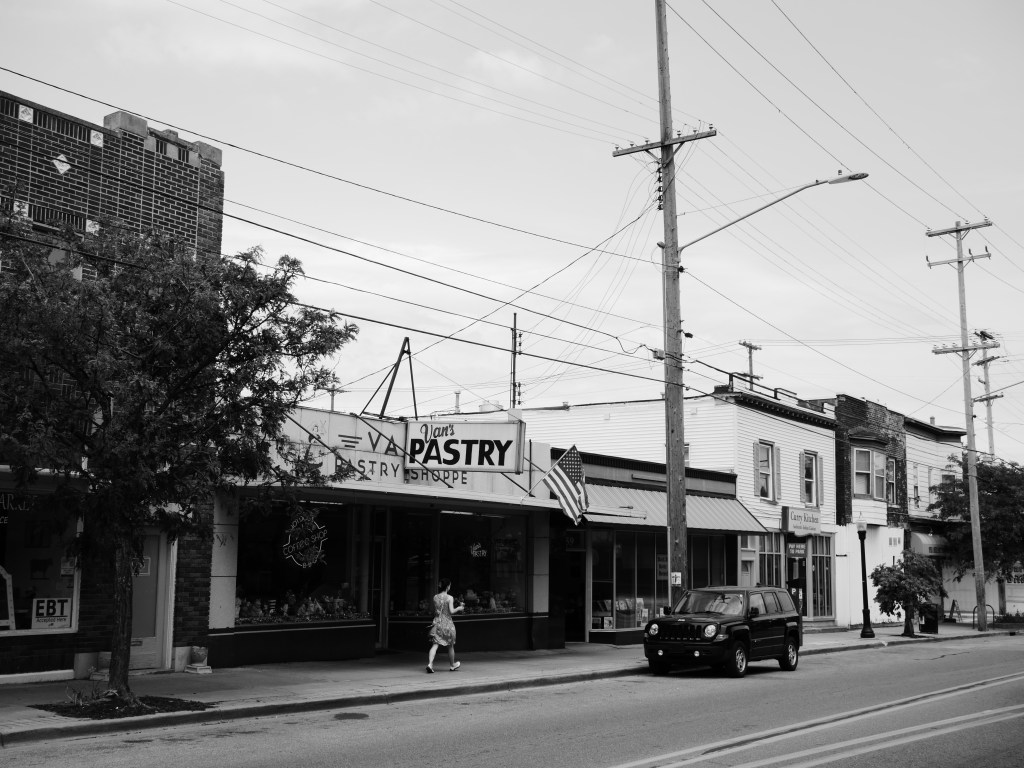
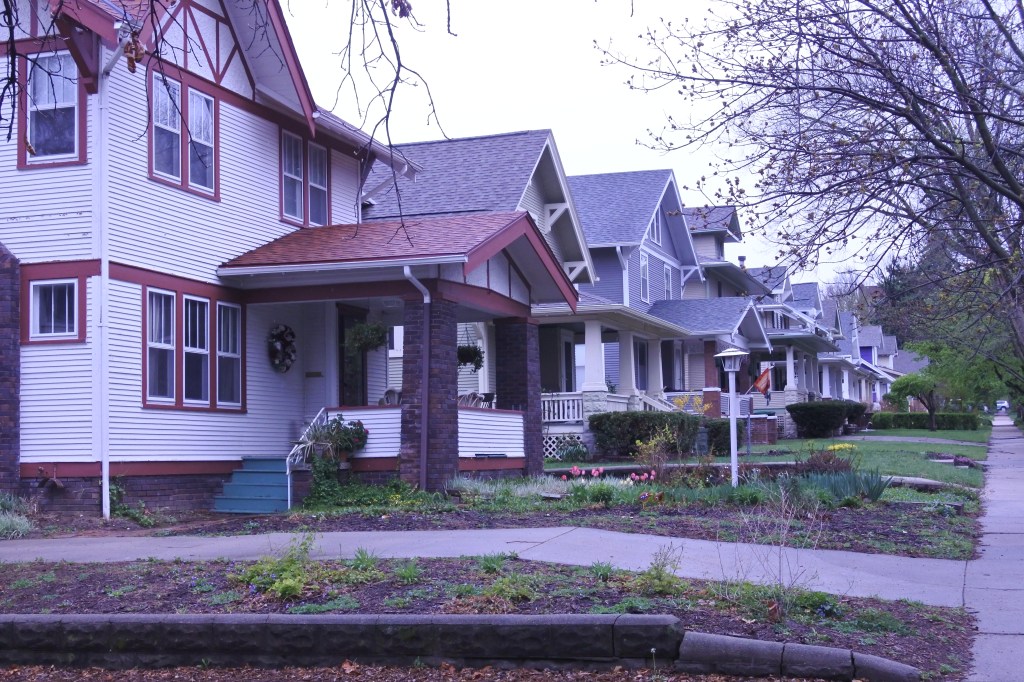
Until the early 20th century Midtown was known mostly for farming and the City’s  oldest Cemetery (Fulton Street). With the advent of the downtown trolley running through Midtown development picked up and the neighborhood is now filled with  1910s & 1920s bungalows and foursquares. Fulton still has a relatively intact streetcar business district but Michigan unfortunately became mostly autocentric. Midtown is overall a comfortable urban district with convenient access to Dwtn, decent retail and cultural amenities, affordable housing, thick  tree canopy, decent park amenities, and high levels of safety.

For Midtown to become a premiere urban district it needs more density and continued quality urban infill on Michigan Ave. This would help drive better retail and cultural amenities. Midtown also needs better bike and public transit infrastructure and more walkable schools.
Click here to view my Midtown album on Flickr

URBAN STRENGTHS:

  • Very convenient access to Dwtn being only a 20 minute bus ride and 10 min bike ride.
  • Excellent economic diversity and decent racial diversity.
  • Generally good sidewalk and ADA infrastructure. About 75% of all curb cuts are modern standard.
  • Overall a pretty safe community with limited blight.
  • Decent rental inventory especially 2&3-bed options. 1-bes lease in the low-medium 1Ks, 2-beds btwn 1.5K-2K. 3-beds lease btwn 1.8K-2.5K. A handful of 4 beds as well.
  • Few 1-bed options but good diversity of other for sale options and pretty affordable. 2-beds sell btwn 125K-350K. Pretty good variety for 3 & 4 bed homes selling anywhere between 175K-450K.
  • Decent park amenities including Midtown Green, a large cemetery, several ballfields and the extensive Hillcrest park on the eastern edge.
  • Excellent tree canopy.
  • Decent cultural amenities including several restaurants, bars & cafes, and a couple art galleries.
  • Pretty good urban massing along Fulton but Michigan is pretty autocentric. This is slowly getting better however.
  • Decent retail amenities include a supermarket, a couple smaller gourmet grocerias, a year round farmer’s market, a couple drug stores, several salons, a handful of clothing/gift stores, a couple book stores, a hardware store, a couple bakeries & gyms.

URBAN WEAKNESSES:

* Pretty mediocre transit service for an urban neighborhood.
* Bike infrastructure is limited to a couple block stretches of dedicated bike lanes. No bike sharing stations either.
* Not a ton of family households and a disproportional # of college students and young adults living here.
* No schools within Midtown but some good  walkable options on the edges of the neighborhood.
* Not much dedicated affordable housing in Midtown.
* A good amount of the urban infill is autocentric but more and more urban infill is coming especially to Michigan street as larger apartments.
* Missing some key retail amenities such as a post office, public library, and medical offices. Also few boutiques, churches, and banks.

Midtown Crossing/Blackstone- Some of Omaha’s Most Dynamic Urban Districts

This Midtown + neighborhood was developed during the turn of the 20th century and includes some of Omaha’s best urbanity. Farnam district is arguably Omaha’s best urban biz district and includes the modern Midtown Crossing’s district (Omaha’s New Urbanist town center), plenty of great urban in-fill, and the historic Blackstone biz district hosts some of Omaha’s best nightlife. Blackstone also host some great turn of the century mansions and there are several other decent mixed-use districts along Leavenworth and Grand Avenue. Medical Center anchors the western edge of the neighborhood and integrates pretty well into the rest of the district.

While this is a top Omaha urban district there is still plenty of room for improvement. Grand and Leavenworth host plenty of semi-autocentric stretches that need renewal and densification. There is also a lack of locally owned boutique businesses and a walkable post office or public library.

Click the links to view my Blackstone, Midtown Crossings, and Leavenworth Albums on Flickr

URBAN STREGNTHS:

* Decent urban density
* Solid ADA and sidewalk infrastructure.
* Excellent public transit access and good access to Dwtn across all modes. Decent bike infrastructure including many dedicated bike stations and a couple bike lanes with one that connected to Dwtn from the eastern edge of the neighborhood.
* Excellent diversity metrics.
* Good for sale diversity but overall product is a bit limited especially housing selling for 300K-500K.  Plenty of 1-bed condos selling anywhere btwn 100K-400K. 2-beds sell btwn range from 150K-500K depending on size and age. 3 & 4 beds sell btwn 150K-900K. Lots of larger condos and townhouses.
* Excellent array of rental product ranging anywhere from $700- the high 1Ks. 2-beds from $900-1.8K. 3-beds  anywhere in the 1Ks.
* Midtown is overall a pretty safe area with limited amounts of blight.
* Decent pedestrian activity. Better than most Omaha neighborhoods.
* Several decent medium sized parks with good amenities including Dewey Park, Turner Park, Leavenworth Park, and UNMC plaza space which includes an ice rink in the winter.
* Excellent food & beverage amenities in Midtown. Other cultural amenities include several art galleries & lots of night clubs, and a comedy club. Night life is concentrated on Farnam in Blackstone.
* Great array of housing styles from historic apartment buildings to modern infill along Farnam to smaller single family homes to large mansions.
* Excellent urban infill and urban form at Mid-town crossing and along Farnam in Blackstone.
* Good retail amenities including a couple supermarkets & grocerias, several drug stores, several banks, a couple dessert joints, a handful of clothing & boutiques., plenty of gyms, several salons, great access to University of Nebraska Hospital and plenty of doctor’s offices, and several churches.

URBAN WEAKNESSES:

  • Tree canopy is good in residential areas but limited in more commercial and hospital districts.
  • Only one poorly rated public school located within the neighborhood’s geography. Any other school is located at least a 1/2 from the neighborhood’s boundaries.
  • Urban form is hit or miss along Leavenworth and Dodge St.
  • Missing some key retail amenities including a post office, public library and much less boutiques and independent shops that one would expect for such a dynamic urban district.”

Gifford Park- Solid Omaha Urban District located on the Edge of Creighton University

“I expanded the boundaries of Gifford Park western ward to Saddle Creek to capture a small sub neighborhood of Midtown that is not well defined as a neighborhood.

The neighborhood is named after Gifford Park, which was a green space donated by Harold Gifford, who gave his property to the City in 1912. The park to this day is the heart of the community offering various recreational facilities, including tennis courts, a playground, and community gardens. The neighborhood was developed in the late 19th and early 20th century as Omaha expanded further and further out of Dwtn thanks to the streetcars. Gifford Park boast a nice array of architectural styles with larger and grander homes the further west you go. The intersection of 33rd and California was historically a busy commercial center. While nothing like it was in the past, this is a decent mixed-use commercial node in the present day and the best urban business district in Gifford Park. The other commercial districts (Cumming Street, Grand and Saddle Park) are much more autocentric. Gifford Park’s proximity to Creighton University and downtown Omaha makes it a desirable location for students.

Gifford Park also excels with quality public transit, excellent proximity to dwtn, great housing diversity with lots of affordable options, solid park amenities and decent retail and cultural amenities, albeit generally not located in a quality urban business district. For Gifford Park to become a great urban neighborhood it needs to densify and urbanize its stroads, create a legitimate bike network, and create more walkable school options.

Click here to view my Gifford Park Album on Flickr

URBAN STRENGTHS:

* Good urban density.
* Good ADA and sidewalk instructed throughout the district.
* Solid public transit access.
* Very convenient access to Dwtn being only about 2 mile away. One can even walk to Dwtn in 40 minutes.
* Overall good connectivity including plenty of short blocks, alleyways and even some pedestrian paths.
* Great economic and decent racial diversity. Lots of students and young adults live here so not a ton of generational diversity or that many family households.
* Nice for sale diversity. Decent number of 1-bed condos selling in the 100Ks, 2-beds for 100K-300K with nice diversity of housing types. 3 & 4 beds sell btwn 125K-500K.
* Lots of rentals as well leasing anywhere from $700 to the low 1Ks. 2-beds lease in the low-mid 1Ks, and plenty of 3-beds leasing anywhere from 1.5K-3K.
* Decent # of small-medium sized parks including Turner Park, Gifford Park, Bemis Park, and Clarkson Park.
* Overall a safe community with some grit along the eastern edge of the district.
* Decent but not great cultural amenities including a handful of restaurants, bars, & cafes, and a brewery. Lots of restaurants & bars a couple blocks south of Gifford Park in Midtown Crossing. Also a couple art galleries, a couple small neighborhood performing arts centers, and the Josyln Castle Historic home.
* Decent retail amenities but much of it is autocentric shopping malls and power centers along the western border of Saddle Creek Rd. This includes a Walmart, Ace Hardware store, a couple supermarkets, and a drug store.  Lots of retail in Midtown Crossing just south of Gifford. Within Gifford Park some retail along 33rd is a bike store, Mexican grocerias, and laundry mate. Other amenities include a bakery, a couple churches, several medical offices, a post office and a major hospital.
* More modest hoes on the eastern half. Grander historic homes on the western half.
* A couple decent blocks of mixed-use urban for centered on California and 33rd St.
* Good tree canopy throughout most of the neighborhood.

URBAN WEAKNESSES:

  • A couple good Catholic schools in Gifford Park but public schools are located on the edges of the neighborhood and generally not well rated.
  • Limited bike lanes and the segments that do existing on disconnected and not helpful towards building a larger bike network. A couple dedicated bike stations however.
  • Grand street is the largest commercial district in Gifford Park but is a pretty autocentric 5 lane street. Lots of in-fill here, a mix of quality urban infill and autocentric infill. Cumming Street on the northern is very much a 6 lane stroad with mostly residential but some commercial, which is mostly autocentric. The western edge of Gifford Park Saddle Park is the worse stroad in the neighborhood.”

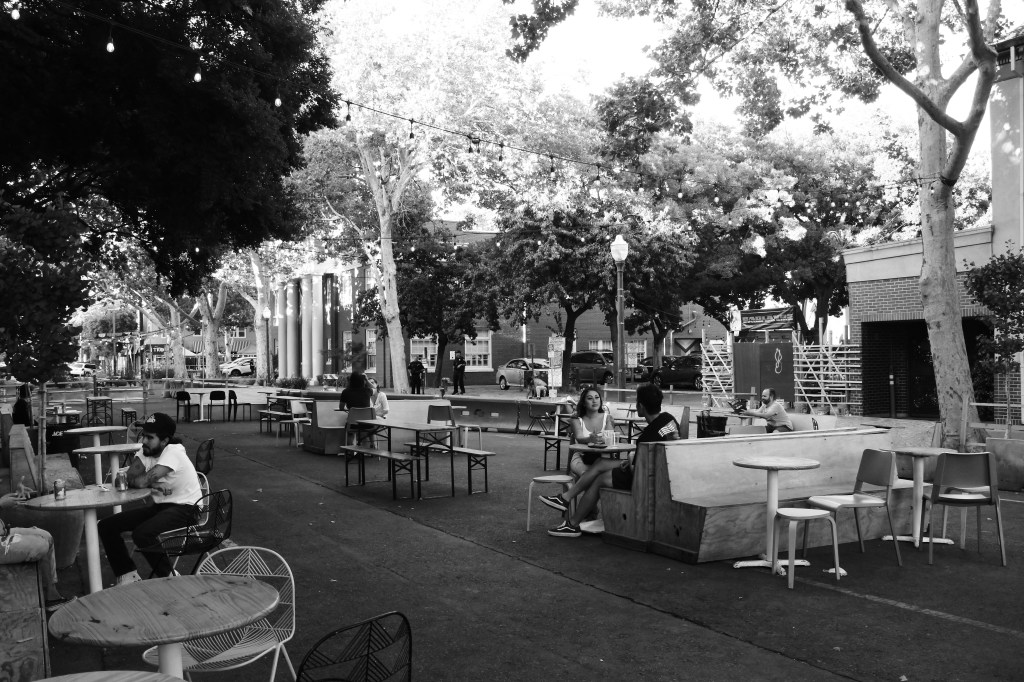
Midtown- Sacramento’s Premiere Urban District

Midtown is another late 19th century central Sacramento neighborhood filled with lots of Victorian architecture. What elevates it above its neighbors is its strong mixed-use and destinational character. This is clearly Sacramento’s premiere urban district,  the center of Sacramento’s art, music, and cultural scene and home to many boutiques, bars, clubs, and dining options. Midtown also hosts the Lavender Heights subdistrict, Sacramento’s gay and lesbian district, located at K Street and 20th Street.

While Midtown is a solid urban neighborhood it still requires certain amenities to become a great urban district. That includes more walkable schools, more affordable housing options. greater density, and more retail amenities. Hopefully zoning restrictions can be relaxed somewhat to allow more housing to be built here. The demand to reside in Midtown is certainly present.

Click here to view my Midtown album on Flickr

URBAN STRENGTHS:

* Sacramento’s densest district with nearly 11K per square mile.
* Great ADA and sidewalks infrastructure.
* Great access to Dwtn and great connectivity.
* Very walkable community and convenient among all modes of transportation.
* Good racial diversity.
* Lots of subsidized units available in Midtown.
* Good vibrancy, prob the most vibrant neighborhood in Sacramento.
* Convenient access to several nice small-medium sized parks and the California State Capitol Park is only a couple blocks west of the district’s boundaries.
* Overall very good tree canopy here.
* Midtown has a very high buzz locally in Sacramento.
* Quality architecture both historic and in-fill.
* Great cultural amenities include many restaurants, bars, & cafes, several art galleries, several live music venues & night clubs, a couple local theaters & smaller museums.
* Great retail amenities as well including a Safeway and Target Grocery store, many smaller grocerias, several drug stores, many boutiques, clothing stores, and consignment shops, a couple book stores & home good stores, several gyms and dessert shops, a major hospital, and several churches.
* Good urban form throughout. Lots of mixed-use streets especially along the western half of the district.

URBAN WEAKNESSES:

* Ok economic diversity and poor generational diversity. Few family households here and mostly students and young professionals.
* Okay walkable access to schools. There is a catholic grad school in the neighborhood and decent access to a couple schools in adjacent districts.
* For sale hsg is expensive. Some moderately price 1 & 2 bed condos available for 400K-600K. Most 2 & 3 -bed condos and homes selling for anywhere btwn 700K-1.3M, 4-bed 800K-1.5 M.
* Rentals are more reasonable with studios leasing in the 1Ks, 1-beds leasing btwn the low 1Ks to high 2Ks, 2-beds in the 2K & 3Ks, and limited 3-bedroom product. Good rental availability overall.
* Missing retail include a public library, post office