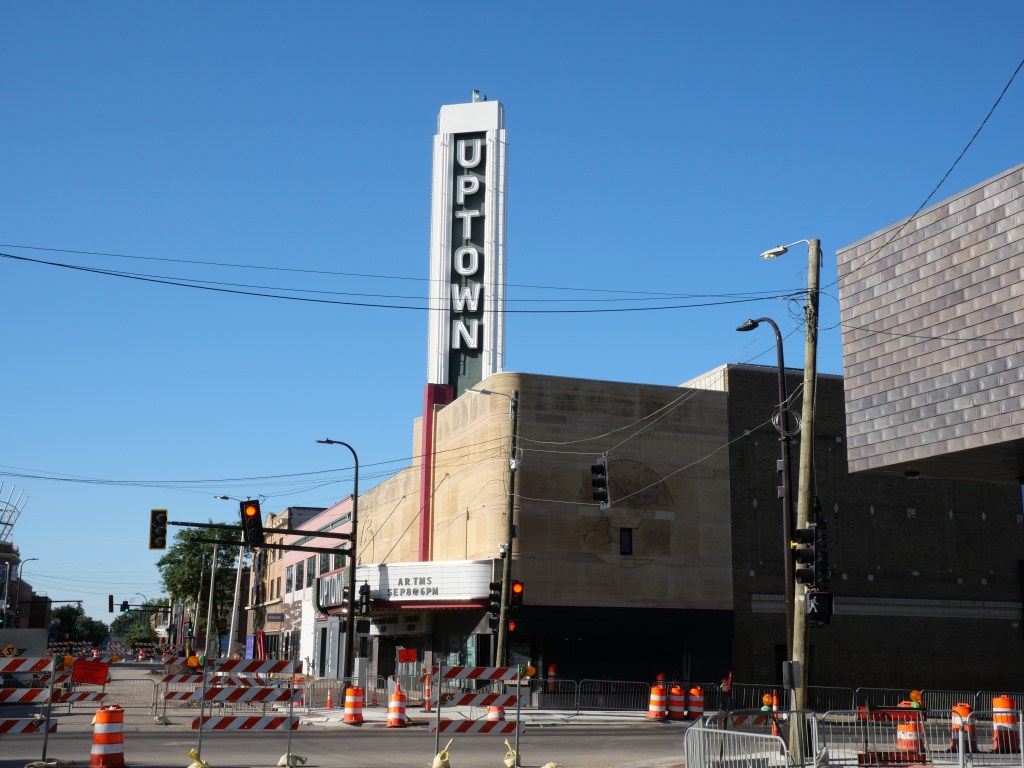
Similar to Uptown, the Whittier neighborhood mostly developed in the late 1800s and early 1900s and maintained a dense population and high rental occupancy into WWII. Whittier is a classic case of missing middle housing where any residential block can see medium density apartment buildings sitting next to single family homes. But like most inner-city Minneapolis neighborhood’s the post War era was not kind to Whittier as middle class white families moved out and left behind struggling business districts and disinvested residential properties. Fortunately the residents of Whittier organized in the late 70s creating several Community Development Corporations to combat the neighborhood’s decline. By the 1980s Whittier became home to many in the counter cultural Bohemian movement and large Chinese and Vietnamese communities moved into the neighborhood opening many food based businesses along Nicollet. Thanks to their investments to the biz district, neighborhood leaders rebranded Nicollet Street as “Eat Street”. Mexican businesses too opened but later in the 1980s and 1990s further diversifying the community. By the 2000s major private housing investments began with three major condominium projects along Nicollet Avenue. Whittier’s housing and business district market have continued to stabilize and many would say that the neighborhood is on a gentrification trajectory.
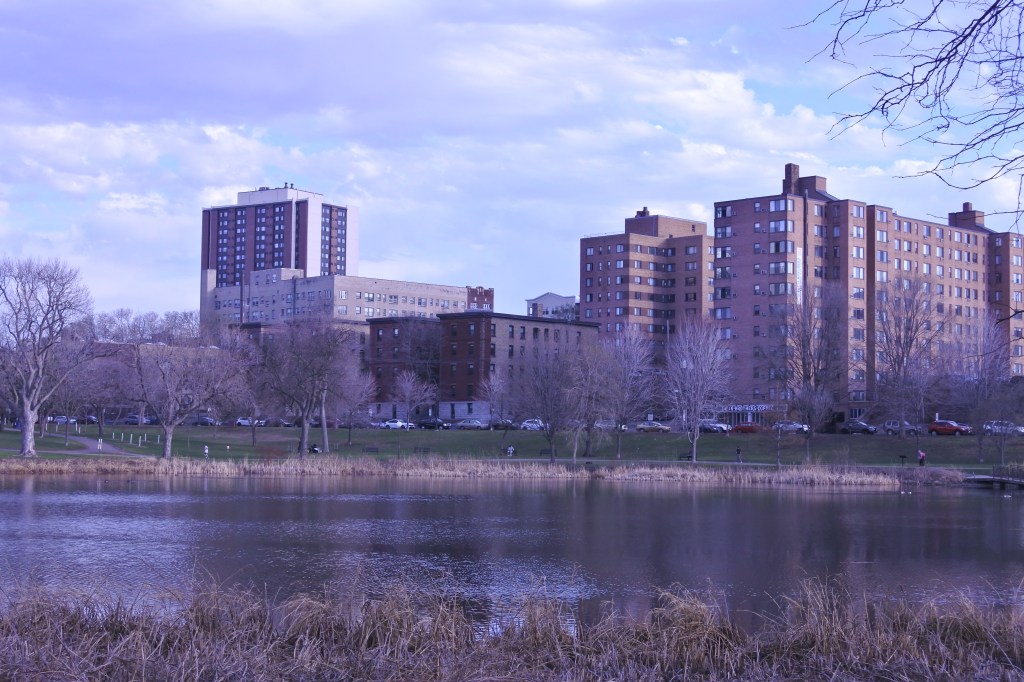
Fortunately, there remains a significant of affordable rental and condo supply for middle income families. Whittier is also one of Minneapolis’ more walkable neighborhoods thanks to three business districts (Nicollet, Lyndale, and Lake), hosts three museums including the Minneapolis Institute of Art, has great transit and bike infrastructure, and a surprisingly full tree canopy. For Whittier to be a premiere urban district it needs to continue promoting dense in-fill development along its commercial corridors as they still host a fair amount of autocentric development, improve its ADA infrastructure, and build more park and school amenities.

Click here to view my Whittier album on Flickr
URBAN STRENGTHS:
* Solid urban density. Nice mixture of SF and middle apartments buildings on residential streets. Lots of Missing Middle housing here.
* Very convenient access to Dwtn. Only 10 minutes by bike, 5 by car, and 20 by bus.
* Good sidewalk infrastructure but modern ADA curb cuts only fill about 40% of all intersections.
* Generally good urban form along the biz districts (Lake, Lyndale, & Nicollet) but sizable autocentric stretches especially along Lyndale & Lake.
* Solid historic and in-fill architecture but generally not spectacular.
* Solid tree canopy.
* Generally a safe community with a couple pockets of sketchy areas.
* Excellent bike infrastructure including several separate lanes, the Midtown Greenway running along an old railroad ROW, and plenty of dedicated bike stations.
* Great economic and racially diversity. Also pretty good generational diversity.
* Great rental diversity w/ tons of studios leasing btwn 750K-1.3K, 1-beds btwn $850-1.5K, 2-beds lease btwn 1K-2.5K, and good # of 3-beds leasing btwn 1.5K-2.5K.
* Great sidewalks amenities but modern ADA curb cuts cover maybe 60% of all intersections.
* Good diversity of 1-bed condo selling anywhere btwn 75K-320K, great diverse 2-bed options ranging for dated condos to modern condos, townhomes, and SF home selling btwn 150K-500K. Good diversity for 3 & 4 beds selling between 200K-900K .
* Good cultural amenities including plenty of restaurants, bars & cafes, the Minneapolis Institute of Art & Hennepin History Museum, Children’s Theater company, several Asian Markets along Hennepin, a couple live music venues & a performing arts & Improve theater.
* Solid retail amenities as well including 4 supermarkets & 3 drug stores, decent # of boutiques/clothing stores, a bookstore, several salons, several dessert shops & gyms, a couple floral shops, several record stores, a post office, a medium sized hospital & plenty of medical offices.
URBAN WEAKNESSES:
- Some missing /limited retail amenities including public library, churches, hardware store, and larger department stores.
- Really on two parks in Whittier: Washburn Fair Oaks & Whittier Park which also has a recreation center. At these they are decent sized parks with good amenities.
- Some walkable schools and but well rated.
- Several autocentric spots along Lyndale and Lake Avenue.


 Evaluating our Urban Communities [with a focus on America]