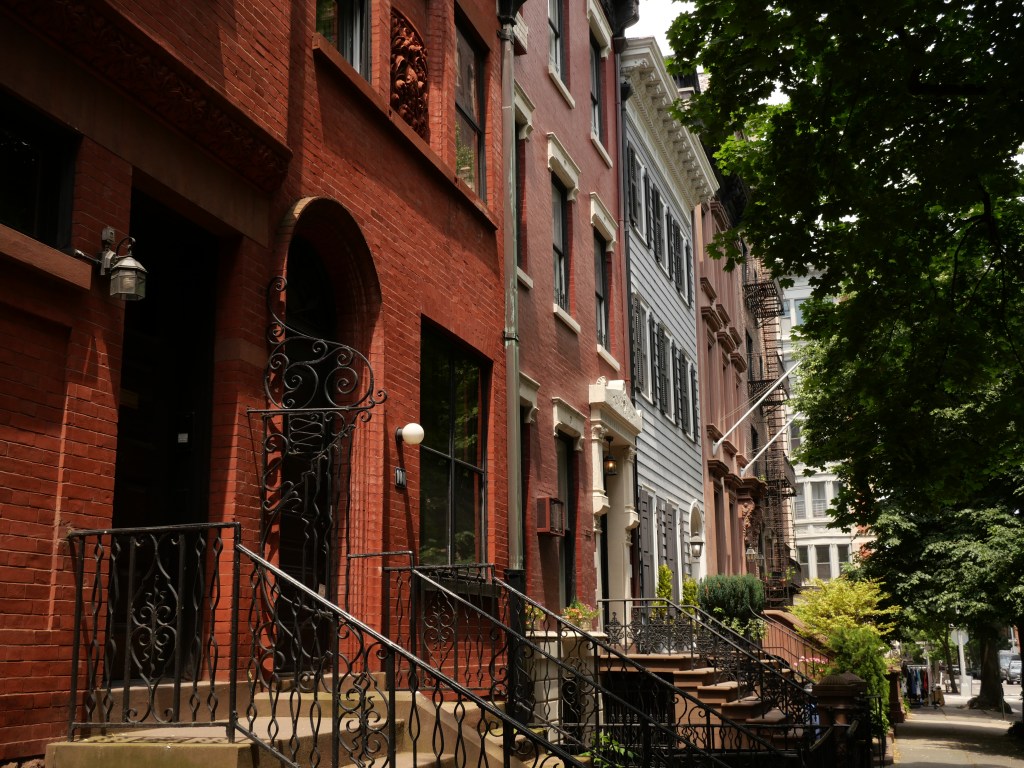
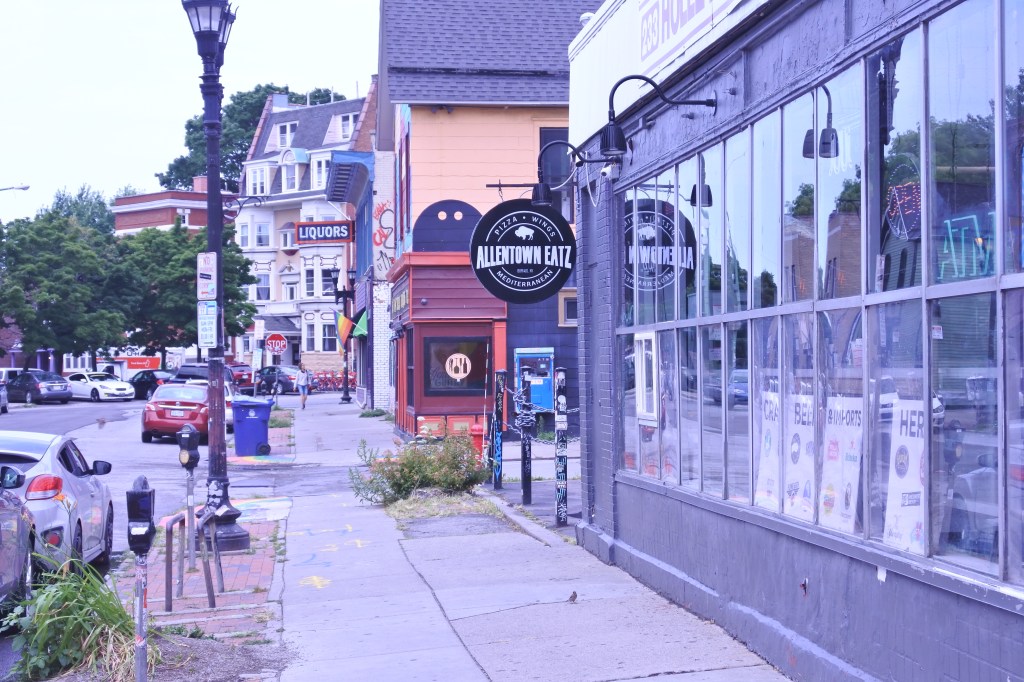
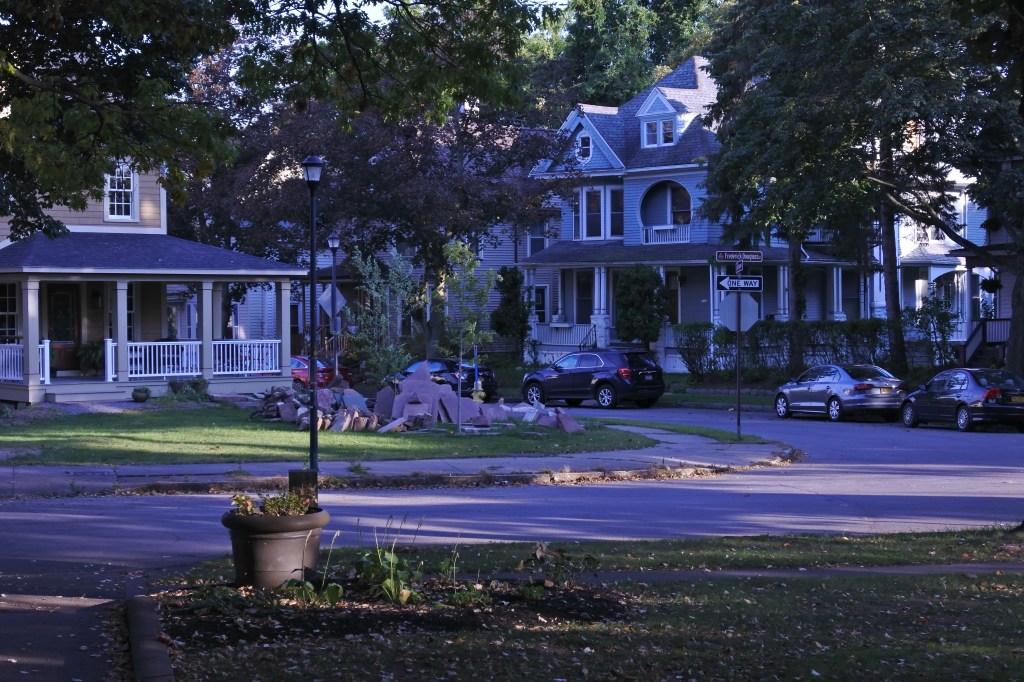
Gowanus- Historic Dumping Grounds of Brooklyn now being Cleaned up and becoming one of Brooklyn’s most Trendy Neighborhoods

The neighborhood is named after a local Native American and became the site of the first settlement by Dutch farmers. The ponds of Gowanus meadowlands served to drive early settlers’ tide-powered gristmills. In the 1860s, the Gowanus Creek was turned into the Gowanus Canal, and the area became a hub for manufacturing and shipping. However, intensive industrial development and  a combined sewer system dumped waste water directly into a designated outflow at the head of the canal. By the late 19th century the neighborhood quickly became one of the most polluted areas of New York. By the mid 20th century with the decline of shipping at the port of Red Hook and manufacturing around New York, Gowanus lost its industrial edge and fell into neglect and decline. In the late 1940s, the neighborhood also became the site of several NYCHA housing projects built to house returning WWII veterans.  These projects remain in the neighborhood’s northern edge.  In 2010, the EPA designated the Gowanus Canal as a Superfund site and allocated 1/2 Billion dollars to cleanup the decades of industrial pollution and sewage contamination. This lead to renewed interest to redevelopment the area, adjacent to the long gentrified inner Brooklyn neighborhoods. For years, new development was hindered by the industrial zoning and the problems of the sewage overflow through the canal water. The City Planning department has been working with local residents for years on a Gowanus Neighborhood Development Land Use Plan with the goal of thoughtfully adjusting local zoning to direct development in appropriate parts of the neighborhood while also building a significant amount of affordable units through inclusionary zoning laws and creating new park space along the Gowanus Canal. Already there are thousands of new apartments and condos in Gowanus along the eastern  and north edges of the neighborhoods. There will likely be an additional 10K units by 2035 with a significant # of them as permanent affordable housing.

The industrial uses of Gowanus, especially in the Southeastern edge of the district certainly reduce its urban viability but Gowanus still remains a pretty dense and very mixed use neighborhood with good public transit & bike infrastructure making it a very walkable neighborhood. Gowanus also has a excellent Cultural amenities as it is one of Brooklyn hippest places for night life and good retail amenities including several big box stores, a Whole Foods, and a good amount of local retail mostly concentrated along 3rd & 4th Avenues and Union Street. With the thoughtful Gowanus Neighborhood Development Land Use plan and EPA Superfund well underway I feel confident that Gowanus will continue to redevelop in a productive way adding a good of affordable units alongside market housing, creating more park spaces, and remediating industrial uses and waste sits. Gowanus has the potential to be an very interesting urban district.


Click here to view my Gowanus Album on Flickr

URBAN STRENGTHS

* Solid density at 24K residents per square mile but a bit low for Brooklyn.
* Great public transit access. Also solid bike infrastructure including several bike lanes and plenty of dedicated bike shares.
* Solid access to 3 NYC CBDs including a 30 minute subway ride to Dwtn Brooklyn, Lower Manhattan, and Midtown.
* Gowanus is overall a very safe community but has a lot of grit thanks to the past and present of Industry in the neighborhood.
* Modern in-fill from the past 15 years is some often urban in-fill. Decent amount of autocentric/industrial crap still around, especially in the southeastern quadrant of the neighborhood.
* Solid walkable school access within and nearby Gowanus. Thanks to Gowanus’ proximity to Carroll Gardens and Park Gardens it has convenient access to several well rated public elementary and middle schools Good # of private schools too. But walkable high school options are pretty limited.
* Good amount of rental product and the market rate units are certainly  very expensive. Because of all the new construction Gowanus has some higher price points than surrounding districts that have extensive historic districts. But Gowanus has a very high % of dedicated affordable and rent stabilized units. There are several large projects were constructed on the north edge of the neighborhood. The number of units below 2K is 4 times more than the number above 2K.  Studios lease in the 2Ks 1-beds btwn 2.5K-5.3K, 2-beds btwn 3K-7K. Some 3-beds. ranging btwn 4K-9K.
* While there are not large parks decent# of small and medium sized parks within or on the edge of Gowanus including a public pool and even some modest waterfront parks running along the Gowanus Canal.
* Good array of restaurants, bars, cafes, and breweries especially in the Northeast gentrified quadrant of Gowanus near Union Street. Also tons of art galleries taking advantage of all the industrial bldgs, a couple local museums, a couple live music venues and night clubs, and several local performing arts theaters.
* Good retail amenities including a Wholefoods, a couple of other supermarkets and small grocerias. Also a Home Depot & a Lowes along with several hardware stores, a Staples, a couple pharmacies, decent # of home goods/antiques/gift stores, handful of clothing/boutiques, a couple bookstores & bike shops, good # of bakeries & dessert joints, plenty of gyms, some churches, and a local post office.

URBAN WEAKNESSES:

* Overall sidewalk infrastructure is good but only about 50% of all intersections have proper ADA curb cuts and a fair amount of the sidewalks are weathered thanks to all the industrial issues present and historical.
* Good amount of surface parking lots and autocentric uses in the Southeastern quadrant of Gowanus that remains very industrial still.
* Not surprisingly tree canopy isn’t that great. Ok along the more residential streets however.
* Pretty consistent grid but connectivity gets disconnected out points due to the Gowanus Cannel and industrial uses.
* Pretty historically negative perception as the neighborhood was literally the sea spool of Brooklyn. But more and more people are finding this an attractive place to live as more and more factories close and the area cleans up.
* Historic rowhouses are generally very working class and therefore pretty plain and often gritty. Plenty of historic warehouses here too.
* Much less pedestrian activity than other surrounding Brooklyn neighborhoods but pretty good in spots (western edge and northern edges).
* A lot of for sale condo product but generally very expensive. Limited studios. Some 1-beds esp. along 4th Ave that sell btwn 650K-1.1M. 2-beds range btwn 850K-2.8M with most units selling btwn 950K-1.5M. Decent # of 3-bedselling btwn 1.3M-2.8M with most product selling btwn 1.8M-3 M. Even more 4-bed product selling anywhere from 1.3K-3.8K. Still a decent #  of “cheaper” rowhouses.
* Only a handful of medical offices, but a major hospital is only 1/2 east of Gowanus, no post office,  
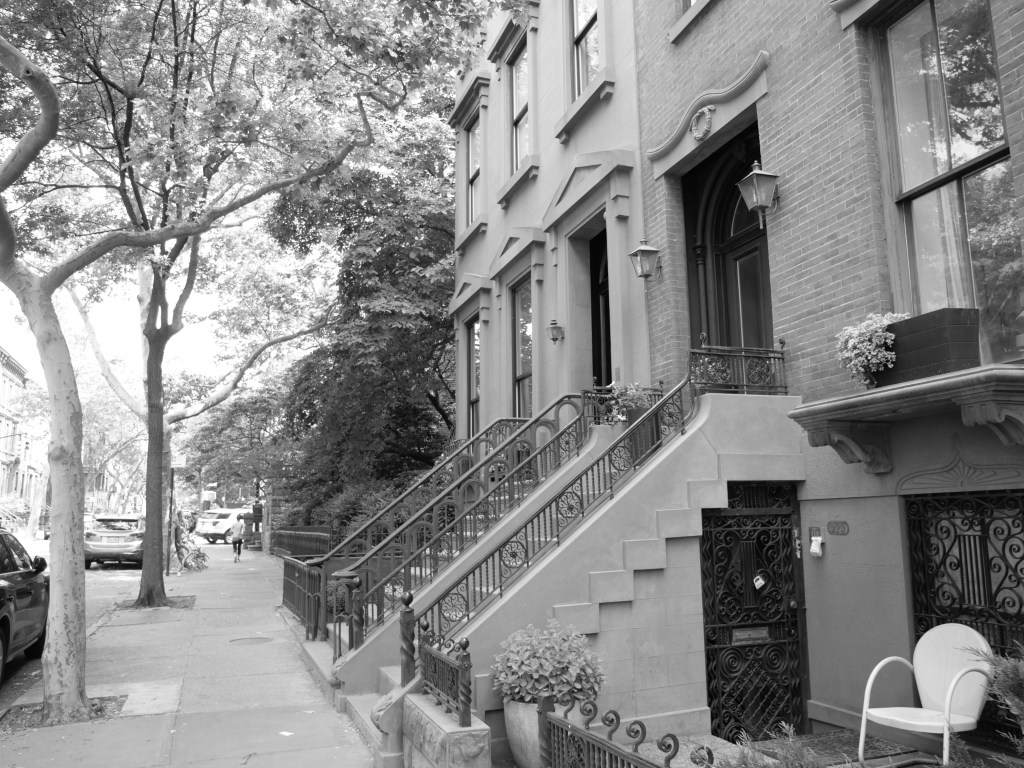
Cobble Hill- One of Brooklyn’s first Neighborhoods to Gentrify and home to some of its best Historic Architecture

I followed the Google maps boundaries for the neighborhood using Smith St as the eastern boundary and DeGraw as the southern. The current name, a revival of a name which had died out by the 1880s, was adopted in 1959 when the neighborhood started to gentrify. Cobble Hill – which was named after the conical shaped hill called “Coleshill” was located where Atlantic Avenue, Pacific Street, and Court Streets intersect. Cobb Hill remained mostly rural until the establishment of the South Ferry in 1836. Development quickly came starting nearer to the waterfront and moving inward. By 1860 Cobble Hill was built out. Cobb Hill also incrementally became a destination for wealthier Manhattanites and matched the affluence of neighboring Brooklyn Heights by the 1870s. By the 20th century the neighborhood transitioned into more of middle class district after it absorbed an influx of immigrants from Ireland, Italy, and the Middle East. By the 1950, brownstones were being rejuvenated and the neighborhood began to experience a renaissance. By 1969  most of the neighborhood was contained within the Cobble Hill Historic District. Cobble Hill has two vibrant commercial districts (Court and Smith) that have a nice mix of generational stores and higher end trendy shops. Cobble Hill become very trendy in the early 2000s as many restaurants and popular bars opened. The neighborhood still retains much of these vibes but the trendiest Brooklyn neighborhoods have moved east.

Cobble Hill is much less racially and economic diverse than neighboring Boerum Hill even though they both have similar levels of affluent residents. Assuming this is largely due to less stabilized rentals being located here. I would like to see affordable condos be build in the neighborhood to help address its lack of diversity and inequities. But for this to occur the neighborhood’s expansive Historic District would be to be relaxed on contracted. But all in all Cobble Hill is another great New York Neighborhood where there is truly little reason to own a car.

Click here to view my Cobble Hill Album on Flickr

URBAN STRENGTHS:

* Excellent density at 55K residents per square mile. This is accompanied by excellent transit access to 5 subway lines. Also has excellent access to a CBD located just south of Dwtn Brooklyn of the neighborhood and a train ride to Lower Manhattan and Midtown are 25 & 35 mins, respectively.
* Great connectivity with gridded, generally small blocks.
* Very safe community with limited blight.
* Excellent bike infrastructure including several dedicated bike lanes and plenty of bike rentals.
* Solid sidewalk and ADA infrastructure with only a handful of outdate curb cuts.
* Get historic architecture mainly Italianate rowhouse/brownstones. Not much urban infill but everything that exists (mostly along Atlantic) is of high urban form and quality.
* Side streetscaping is a bit dated and warn but solid.
* Top Notch urban massing. Can’t find any surface parking lots in Cobble Hill.
* Solid array of walkable schools including a nice mix of public and private. Public schools are generally rated well but a couple of poorly rated ones.
* Good amount of rental product as well but also very expensive. Studios lease in the 2Ks 1-beds btwn 3K-4K, 2-beds btwn 4K-7K. Only a handful of 3-beds. However, there are a fair amount of rent stabilized units as over half of all units rent below 2K.
* Solid cultural amenities including plenty of restaurants, bars & cafes, several art galleries, a couple community theaters, a couple of local museums, the Cobble Hill Cinema and good access to the cultural amenities in Dwtn Brooklyn.
* Excellent retail amenities including several supermarkets & drug stores, a Marshall’s,  Mitchell’s, Five Below and easy access to all the Department and name brand clothing stores in Dwtn Brooklyn, great # of boutiques/gift stores,/home good stores, a couple book stores, a couple hardware stores, several gyms and dessert joints, plenty of churches a public library, an ambulatory center is located within Cobble Hill and  a major hospital & lots is only 10-15 min walk.

URBAN WEAKNESSES:

  • A lot of for sale condo product but generally very expensive. Fair amount of studios and 1-beds selling btwn 500K-800K. But most of these units sell btwn 800K-1.5M. 2-beds range btwn 600K-2M with most units selling btwn 900K-2M. Good # of 3-beds but very expensive ranging anywhere from 1.3K-4M with most product selling btwn 1.5M-3 M. A lot 4-bed product generally selling btwn 2.5M-5M.
  • Overall not great diversity as this is a majority white neighborhood. But a decent amount of lower-middle class households likely thanks to rent stabilization and a decent number of families with kids.
  • Moderate amount of rental product as well but also very expensive. 1-beds btwn 3K-4K, 2-beds btwn 3K-6K. Only a handful of 3-beds are pretty rare. Fortunately a decent amount of the rental product is stabilized.
  • No neighborhood post office”

Brooklyn Heights- New York’s First Commuter Suburb, First Historic Preservation District, and home to many of the City’s Leading Abolitionists

Originally referred to as Brooklyn Village, Brooklyn Heights has been a prominent area of Brooklyn since the early 19th century. It was the first part of Brooklyn to see major residential development and became New York’s First commuter suburb with the establishment of regular ferry service making it an easier commute to Lower Manhattan than from the Upper West and East sides. By the Civil War there were over six hundred brownstones built and by 1890 the neighborhood was completely built out. Brooklyn Heights contains the largest concentration of Anti-Bellum housing in New York with the majority of such structures concentrated in the northern edge. The neighborhood also became a hot spot of leading abolitionist leaders and major stop along the underground railroad.  By the early 20th century, Brooklyn Heights was well connected by subways going into Manhattan and the neighborhood lost its specialness, which lead it to transition from a more exclusive neighborhood to one welcoming more and more working and middle class families as most mansions were divided up into  apartments and boarding houses. Artists and writers began to move into the neighborhood and large hotels sprung up in the 1920s. During the 1940s and 1950s Robert Moses forced his Brooklyn-Queens Expressway along the western and northwestern edges of the neighborhood removing a significant chunk of Brooklyn Heights’ oldest Brownstones. The Cadman Plaza development along the eastern edge in 1960 displaced 1,200 residents but at least provided modest rental and co-op housing. Neighborhood opposition led the Brooklyn-Queens expressway to be routed from the heart of the neighborhood to the bluff and helped created the Brooklyn Heights Promenade. Brooklyn Heights also hosted the City’s first major preservation movement leading to the City’s first Historic District in 1965 protecting a large chunk of the neighborhood’s historic character. This helped lead to Brooklyn Heights being one the first Brooklyn neighborhoods to gentrify in the 1970s & 80s.  The 2010 brought the extensive Brooklyn Promenade and Pier parks giving the neighborhood excellent park amenities.

Brooklyn heights contains main business districts: Montague, Atlantic, and several blocks of Henry. The Eastern edge of the Brooklyn Heights is the Downtown transitional zone along Court Street and a block of Montague. From a urban perspective there area only a few areas of improvement I see. Brooklyn Heights needs a lot more affordable housing units, which can only be built if the historic preservation designation is relaxed. This would help add much needed economic and racial diversity. The district could also use a sprucing up of its streetscaping as well and more schools and larger affordable housing units to welcome more families.

Click here to view my Brooklyn Heights Album on Flickr

URBAN STRENGTHS:

* Great density at just over 70K per square mile.
* Top notch transit access and excellent access to Dwtn Brooklyn just to the east and only a 15-20 min train ride to Downtown Manhattan and Midtown.
* Connectivity is great except for the fact that I-278 cuts through the northern and western edge of the neighborhood.
* Excellent bike infrastructure including several dedicated bike lanes and good access to bike rentals.
* Overall a very safe community.
* Excellent historic architecture. A great mix of mid-late 19th century rowhouses & brownstones and early 20th century apartment bldgs.
* Great tree canopy especially considering how dense the neighborhood is. Feel more like a tree canopy in Paris.
* Good amount of rental product as well but also very expensive. Studios lease btwn 2.5K-4K, 1-beds btwn 3K-4.5K, 2-beds btwn 4K-8K. Only a handful of 3-beds. However, there are a fair amount of rent stabilized units as Medium rent is around 3K and half the units rent below 2K.
* Excellent park amenities thanks to the new and extensive Brooklyn Bridge and Pier parks developed along the East River between 2010-2021. The parks include roller rinks, pickle ball courts, recreational trails, large lawns with great views of Lower Manhattan, playgrounds, dog parks, beaches, basketball courts, soccer fields, marinas & more. Up the hill is the Brooklyn Heights Promenade was created in the 1950s above the Robert Moses designed Brooklyn-Queens Expressway. The Cadman & Columbus Plazas also sit on the neighborhood’s eastern edge.
* Pretty good school access including a well rated public and private grad school, a couple specialty public high schools and several other well rated private or specialty public schools in surrounding districts.
* Very vibrant foot traffic but not overwhelming like in Midtown.
* Excellent retail amenities including several supermarkets & drug stores, a Marshall’s Mitchell’s, Five Below and easy access to all the Department and name brand clothing stores in Dwtn Brooklyn, good # of boutiques/gift stores,/home good stores, a couple book stores, a couple hardware stores, several gyms and dessert joints, plenty of churches, a major hospital & lots of doctor offices, plenty of salons, and  Dwtn library & post office.
* Good cultural amenities including plenty of restaurants, bars & cafes, a couple live music venues & night clubs, a couple museums on the edge of Dwtn Brooklyn, a couple performing arts theaters, and convenient access to the indie theater in Dwtn and its cultural amenities.

URBAN WEAKNESSES:

  • Not much modern in-fill other than a handful of buildings along the neighborhood’s eastern edge with Dwtn but this doesn’t negatively impact much the urban quality of the neighborhood.
  • Overall not great diversity as this is a majority white neighborhood. But a decent amount of lower-middle class households likely thanks to rent stabilization.
  • A lot of for sale condo product but generally pretty expensive. Fair amount of studios and 1-beds selling btwn 300K-500K. But most of these units sell btwn 500K-1M. 2-beds range btwn 600K-2M with most units selling btwn 900K-1.3M. Good # of 3-beds but very expensive ranging anywhere from 850K-4.3M with most product selling btwn 1.5M-3.5M. Some 4-bed product generally selling for a couple Million more.
  • Some of the streetscaping looks a bit tired and some intersections have outdated ADA curb cuts.”

Downtown Brooklyn, NY

Historically, Downtown Brooklyn was built just up the hill from where present day Dumbo and Vinegar Hill stand in the middle 19th century as growth from the Port of New York on Manhattan caused shipping to spill over into Brooklyn. As Brooklyn came into its own in the late 19th century , Downtown Brooklyn became  primarily a commercial and civic center hosting the Brooklyn City Hall and Courthouse with relatively little residential development and only a handful of antique skyscrapers for office uses. The 1950s brought several generally harmful urban renewal projects to Dwtn including the redevelopment of several blocks project housing, street widening (i.e. Boerum Place) which leads to a widened approach to the Brooklyn Bridge, and the construction of I-278. My sense is that not  much changed in Dwtn Brooklyn between the 1960s and 2000s. But by 2000 after an important report by the  Regional Plan Association, Downtown Brooklyn pivoted to spur new growth by encouraging both new commercial and residential high-rises and realizing the report’s findings that it could become the City’s third-largest business district thanks to its proximity to Lower Manhattan. The major catalytic event was the rezoning of Downtown  in 2004, By 2015 Dwtn Brooklyn was also becoming a growing hub for education and by my estimates hosts at least 30K college students.

Thanks to its residential density, excellent transit & bike infrastructure, great retail amenities & vibrant pedestrian activity, solid park amenities, and proximity to Manhattan, this compact CBD is one of America’s best urban Downtowns even if it is overshadowed by Midtown and the Financial District. The biggest challenge facing Downtown Brooklyn is staggering high housing costs, although at least half of the rental product is rent stabilized. I would also like to see more cultural amenities in Dwtn (i.e. more restaurants, bars, theaters, and live music venues). While Dwtn has a great array of Department stores and name brand clothing stores concentrated along Fulton Street, it lacks locally owned boutiques and creative retail stores.

Click here to view my Downtown Brooklyn Album on Flickr

URBAN STRENGTHS:

  • Solid architecture all around both historic and post WWII. Buildings generally have very good urban form.
  • Top notch density for a Dwtn area at 50K per square mile. Only Midtown and Dwtn NYC are denser.
  • Very limited surface parking and autocentric uses in Dwtn Brooklyn. The worst urban form are the two mid-century public housing projects (Concord Village & University Towers) which have surface prkg btwn the buildings. If these aren’t that egregious.
  • Excellent ADA & sidewalk infrastructure throughout.
  • The Skyline is not quite as nice as Downtown NYC, Midtown and Chicago but still pretty top-notch for American skylines.
  • Great pedestrian activity.
  • Excellent public transit hub providing a central point to the entire Borough of Brooklyn and out to Long Island.
  • Excellent bike infrastructure within Dwtn Brooklyn with plenty of dedicated bike lanes. The Bike share system and comprehensive bike lanes however really only extends out to about 1/2 of Brooklyn and loses steam in southern and southeastern Brooklyn.
  • Good number of schools in Dwtn Brooklyn with generally good ratings. Lots of specialty High Schools (both private and public). Some really good public schools in adjacent Brooklyn Heights.
  • Great number of apartments in Dwtn Brooklyn but the market rate units are very expensive. Fortunately about half of the units are either rent stabilized or permanent affordable units under 2K. Market studios lease btwn 3K-5K, 1-beds 3K-6K, 2-beds 4K-8K. And some 3-beds units that are even more expensive.
  • Solid park amenities including the large Cadman Plaza Park. Commodore Berry Park w/ a public pool, several smaller parks, and the large Fort Green Park just east of Dwtn.
  • Columbus Park/Korean War Memorial/Cadman Plaza Park are really one unified plaza space with Columbus Park sitting just outside of Brooklyn City Hall. This is the civic heart of Dwtn and seems to get a good amount of events and active use.
  • Good cultural & regional amenities in Dwtn but a bit underwhelming for NYC. In addition to plenty of food & beverage amenities there are a handful of art galleries, a couple museums, the Dekalb Market Hall, a indie movie theater, a couple theaters and night clubs, and the Barclay arena is just south of the neighborhood. Great surrounding cultural amenities in the adjacent neighborhoods and only a 20 min subway ride to Manhattan.
  • 3rd largest employment hub in NY with btwn 50K-85K depending on how you measure Dwtn. Job # are on the increase.
  • Great retail amenities including several supermarkets, a dwtn target, a Macy’s, Burlington, and several other big retailer names concentrated along Fulton St, a couple of pharmacies, a couple bookstores, several furniture stores, a hardware store, lots of jewelry stores, plenty of bakeries & gyms, a dwtn post office & library, a Brooklyn Hospital is just east if Dwtn. Not a ton of boutiques and local gift stores here however.
  • Several large enrollment universities in and near Dwtn Brooklyn. About 30K students.

URBAN WEAKNESSES:

  • Decent age diversity and % of families with Children for a dwtn area but very limited kid friendly activities dwtn.
  • Generally good connectivity and many shorter blocks but a good amount of highways and boulevards break out the street grid.
  • Good amount of for sale condos but also very expensive. Studios and 1-beds sell btwn 300K-1M, 2- beds btwn 650K-1.5K Decent amount of 3-beds but very expensive. Selling generally btwn 1-3M.
  • Decent number of restaurants & bars in Dwtn Brooklyn but kinda underwhelming for New York. Only a handful of breweries. Also not major conversion center here. .”

Downtown Buffalo, NY

My evaluation of Downtown Buffalo includes the entire area between Elmwood and Michigan from west to east and Tupper St to the north south to the Buffalo River. In the Southwest corner of Dwtn where Elmwood Ave turns to the Buffalo Skyway as it doglegs right, I draw an imaginary straight line south to Erie St and thus catch more of the waterfront in this evaluation.

One can tell that Downtown Buffalo was once a grand City by the Historic Architecture still largely in tact. Downtown has a wonderful array of antique skyscrapers (i.e. City Hall, the Electric Tower, Guaranty Bldg, Rand Bldg, Liberty Bldg, etc.). Buffalo’s Art Deco City Hall is one of my favorite City Halls in America. But Downtown Buffalo has struggled to built momentum even since the return to the City movement of the 1990s. Apartment bldg conversions have been limited, the Main Street pedestrian mall conversion of the 70s and construction of Main Place Mall largely failed, and much of Dwtn has languished and feels pretty dead after 9-5 work hours.

Things started to improve for Downtown Buffalo since 2014 with the Canalside development opened new apartment bldgs, office space, and the a new hocky area. This is south of what I consider the core of Dwtn Buffalo. More recently, a plethora of residential conversion and new projects have been announced for the core of Downtown. Main street is being converted back to car traffic (fortunately with major streetscaping and renovation dollars fixing its mostly in-tact but often vacant building stock). Downtown Buffalo still has a long way to go to catch up to the likes of Dwtn Cleveland, Buffalo, Cincy, and Pittsburgh but it seems poised to make significant progress in the 2020s.  

Click here to view my Downtown Buffalo Album on Flickr

URBAN STRENGTHS:

* ADA infrastructure is generally good but some under invested intersections at the edges of Dwtn with proper curb cuts.
* Downtown Buffalo serves as a solid huge for public transit in the region. At least good public transit through the entire City of Buffalo. This extends a bit to the inner ring suburbs but quickly drops off.
* Good connectively in Dwtn and a nice set of diagonal streets similar to Detroit (but not as good). Lots of wide street s though. Fortunately most of them are 2-ways many have bike lanes on them.
* Dwtn has a nice array of bike lanes. Within the City there is great bike lane coverage along the lake, which extends well north of the City. An ok # of bike lanes in the City. Not great coverage in the suburbs. Great bike share system covering about 60% of the City and extending to some of the northern suburbs.
* Generally good diversity dwtn reflected in its residential demographics and activities. Plenty to do for kids with the AAA ballpark, children’s museum, ships, and other museums.
* Nice concentrations of schools across all grades. Mix bag with ratings.
* Decent college presence dwtn with several smaller colleges adding up to an enrollment of about 5K.
* Pre-pandemic Buffalo had about 50K jobs, a high number for its metro size. Total office space was pretty flat pre-pandemic and vacancy pretty height at ~25%.
* Dwtn is a major gov’t jobs center helped with its large Art Deco City bldg and several court houses. It also hosts a convention center, ballpark & NHL hockey arena & a smaller hocky arena next door. Historic post office is no longer a post office. Large modern library.
* Culturally many theaters (many historic), a cineplex, lots of live music venues & night clubs, plenty of restaurants, bars & cafes, several art galleries, and many museums.
* Great historic architecture. One of the best for its size.
* Buffalo generally holds its urban form together. Only a few streets like Main street are mostly in-tact but most areas of dwtn have over 60% of bldgs remaining. The eastern and southern edges host the most surface parking and low intensity bldgs.

URBAN WEAKNEESES:

* Density is pretty low here. Not a ton of hsg in Dwtn Buffalo.
* For sale housing is pretty limited in Dwtn. Not even any studio options. Some 1-beds (esp. near the waterfront), these sell btwn 200K-350; 2-beds sell btwn 300K-800K, 3-beds are concentrated along the waterfront and sell btwn 500K-1.2M.
* Rentals are very limited for a dwtn area but at least are moderately priced. 1-beds lease  in the low 1Ks, 2&3 beds 1.5K-3K.
* Parks are pretty underwhelming Dwtn. There are a handful of nice smaller parks (i.e. Lafayette, Fireman’s, Niagara Sq, Fountain Plaza & Roosevelt) but nothing is outstanding. Decent park at Canalside a waterfront trail for about 1/4 of a mile.
* Fountain Plaza is Buffalo Civic heart but is pretty mediocre in my opinion. The fountain takes up more than half of the space. Some seating and another fountain.
* Pedestrian activity dwtn is so .
* Buzz is slowing growing for Dwtn Buffalo but its coming from a pretty low point. Locals have loathed their Dwtn for a long time.
* Retail amenities are a bit limited dwtn. The best amenity is a local supermarket. Dwtn has a drug store, a handful of boutiques & clothing stores, several banks & dessert joints, plenty of gyms & churches, and decent access to Buffalo General a mile away. Retail amenities dwtn went downhill when the Main Place Mall closed.
* Modern in-fill Dwtn is so . Handful of mid century towers, a couple 80s/90 office bldgs, and some better modern in-fill at Canalside. The Convention Center and the Main Place Mall are examples of unattractive 1960s-1970s in fill.

Allentown- Buffalo’s hippest spot and most walkable neighborhood

Allentown is named after Lewis F. Allen who came to Buffalo in April 1827 to serve as Corporate Secretary and financial manager of an insurance company. Allentown is the first neighborhood north of the Downtown Buffalo core. Its also the first Buffalo neighborhood to experience major revitalization and is known for its community of artists, bohemian and hipster culture, and for a strong commitment to preserving its historic building stock. Allentown is also Buffalo’s premier area for nightlife, music, dining, and antique shopping.

Not surprisingly this is also one of Buffalo best urban districts. As one of the few Buffalo neighborhoods from the 1860s-1900s that is still in tact, Allentown has a great mixed-use and compact feel. As it is only about a mile from Dwtn, I consider this Buffalo’s most walkable neighborhood. All things considered Allentown is pretty moderately priced considering these amenities.

To truly become a great neighborhood Allentown needs more in-fill housing to increase its density (currently sitting at just short of 9K residents per sq mile), redevelop the parking lots sitting at its border with Downtown, add more parking amenities, improve its ADA curbs at about 25% of its intersections, and be a more conducive district to families.

Click here to view my Allentown album on Flickr

URBAN STRENGTHS:

* Allentown is located just north of Dwtn. The median distance is about 1 mile allowing one to walk there. Also very convenient transit and bike access. Decent public transit access to the University of Buffalo.
* Great public transit access.
* Solid bike infrastructure including a couple north-south bike lanes and good bike share coverage.
* Great racial diversity and solid economic.
* Generally a good array of walkable schools within or near Allentown with pretty good ratings.
* Good array of rental options generally at moderate prices. studios & 1-beds lease btwn 900-1.6K, 2&3-beds 1.2K-2.5K. Good amount of affordable housing here as well.
* Nice mix of for-sale housing options.  1-bed condos that sell around 200K, 2-beds range anywhere btwn 200K-500K, 3 & 4 beds btwn 300K-800K.
* Great array of historic architecture ranging from the Post Bellum period to the early 20th century.
* Wonderful cultural amenities including many restaurants, bars, cafes, a couple breweries, many live music venues & night clubs, great access to Dwtn’s theater district located a block away, several historic sites, and several art galleries.
* Good retail amenities as well including a supermarket, a couple drug stores, several boutiques & consignment stores, banks, plenty of unique stores & antique shops, a hardware store, good array of gyms & dessert shops, a local post office, several churches and Buffalo General Hospital. This is certainly Buffalo’s most mixed use neighborhood.
* Overall very good urban massing and streetscaping. Southern edge, however, has a lot of parking lots and underutilized spaces next to Dwtn. 

URBAN WEAKNESSES:

* So  density. Less than other North and West Buffalo neighborhoods.
* Generational diversity is pretty limited. Pretty few households with Children here. Most residents are young adults.
* Tree canopy is good but not as good as other North Buffalo neighborhoods.
* A couple nice smaller parks but no larger parks here.
* Generally good ADA infrastructure but about 1/4 of all intersections are missing ADA curbs.

Elmwood Village- Buffalo’s Premiere Urban Distrct and Home to the Olmsted Boulevards

For this evaluation I consider Elmwood Village to be between Elmwood Ave to the West and Main St to east. From North to South the district is between Delaware Park and Utica St.

Elmwood has become one of the premiere urban districts in Buffalo. It features over 300 small local shops, coffeehouses, restaurants, bars, and art galleries. In 2007, Elmwood Village was named one of the ‘Top 10 Great Places in America’ by the American Planning Association. It also contains the best preserved segment of Frederick Olmstead and Calvert Vaux’s original parkway system.  Historically, an address along the boulevard was home to some of Buffalo’s most prestigious residents. Delaware Avenue is Buffalo’s most regal corridor hosting many historic luxury apartments mansions and other major institutions.

Sadly the neighborhood’s eastern border along Main Street has fallen into disrepair and underinvestment. Main street forms an almost impervious border between North Buffalo’s well maintained districts and the very poor African American neighborhoods of East Buffalo. One can tell that Main street used to be a wonderful urban business district with the buildings that remain. Its also where Buffalo’s solo subway line runs connecting Downtown to the University of Buffalo in Amherst to the northeast. Revitalizing the Main street corridor is the missing piece needed to make the Elmwood Village a truly great urban district. It would also have the benefit and bringing back a thriving commercial district to the disinvested neighborhoods of Cold Spring and Masten Park that border Elmwood Village to the east.


Click here to view my album on Flickr

URBAN STRENGTHS:

* Overall great ADA and sidewalk infrastructure throughout. Only a handful of intersection without proper ADA curb cuts.
* Great public transit access bolstered by the Main St Subway line. Because of this Elmwood Village is very convenient to Dwtn and has decent transit access to the UB.
* Great coverage in Elmwood Village by the Buffalo bike share. Decent dedicated bike lane coverage.
* Great economic and decent racial diversity.
* Decent # of walkable schools. The private schools are rated well and the public are rated poorly.
* Crime is pretty low here. Blight and crime pick up near Main Street, the district’s east border.
* Great tree canopy.
* Great access to parks in the northern half of the neighborhood (Delaware Park, Lincoln & Chapin Pkwy), but pretty limited in the southern half.
* Excellent historic architecture.
* Good # of rentals at moderate and higher end prices. 1-beds lease btwn 1K-1.8K, 2 & 3 beds 1.5K-2.8K.
* Good number of quality modern apartments mixed throughout Elmwood Village.
* Vibrant commercial nodes, pedestrians a bit sparse on residential streets.
* Great local buzz here.
* Great cultural amenities including many restaurants, bars & cafes, several art galleries, museums, and live music venues.
* Great retail amenities as well with a co-op store, a Topps, a couple drug stores, tons of boutiques & gift stores, a couple bookstores, several dessert joints & gyms, tons of churches.
* Good urban form and streetscaping along Elmwood. Main street is pretty rough.

URBAN WEAKNESSES:

* Generational diversity isn’t great as households with kids is limited and most of the population are young adults.
* For sale housing are def more on the high side but decent # of more affordable condos. 1-bed condos sell btwn  100Ks-400K, 2-beds anywhere btwn the low 200Ks and 500K. 3 & 4 beds homes sell anywhere btwn 250K-800K. Larger are selling in the low Millions.
* The district’s eastern edge along Main street is severly underinvested.

Forest- Another West Buffalo Neighborhood surrounding Buffalo Psychiatric

Forest is neighborhood  is the northern segment of the larger Upper West District, which also includes the Grant Ferry neighborhood to the South. Forest was developed around the turn of the 19th century and was known as a traditional landing zoning for immigrants thanks to its convenient location near the Lake and many jobs. Grant Ferry initially welcomed many Sicilian immigrants. In the 50s-70s it became home to many Puerto Rican and SE Asian enclaves. Most recently large Somali, Bhutanese, Sudanese, Middle Eastern, Eastern European, and Hispanic immigrants.

Like many American neighborhoods disinvestment came to the Forest neighborhood in the 70s. Historically Grant Street was the blight line dividing more blight and “immigrant” areas to the west and more stable and “White” areas to the east. This is not as hard and fast of a line as it is for the Grant Ferry neighborhood to the south. But unlike East Buffalo, Forest was mostly left standing thanks to a large influx of immigrants.

Gentrification is making the traditional Grant St blight line more and more fuzzy as North Buffalo’s revitalization pushes westward. More and more homes around and west of Grant St are being fully renovated and selling in the 200Ks and low 300Ks. The revitalization of Grant St  is also coming along. Niagara St along the lake recently received a streetscaping overhaul, although still has many missing teeth. Overall Grant Ferry has great public transit, bike infrastructure, diverse housing, great racial & economic diversity, solid cultural & retail amenities, and generally good urban form. Main areas for improvement include: revitalization of Grant Street, need for more parks, better schools, and more diverse for-sale options and more apartments.

Click here to view my album on Flickr

URBAN STRENGTHS:

* Quality public transit access.
* Only 3 miles from Dwtn. Only a 15 minute drive and 28 min bus ride. University of Buffalo is pretty easy to drive to, but challenging transit trip.
* Good bike infrastructure with plenty a nice north-south bike lane on Niagara and diagonal one on Bidwell Parkway.
* Good diverse across all categories.
* Decent amount of rental housing that’s pretty affordable. 1-beds range btwn $850-1.4K,  & 3 beds generally btwn 1K-2k.
* Good mix of affordable, moderately priced, and high end housing. 2-beds sell btwn low 125K to low 200ks, 3 & 4 beds sell btwn the low 100Ks-700K. 
* Great historic architecture in both residential and commercial areas.
* Very good sidewalk infrastructure and generally consistant ADA curbs but sometimes its missing.
* Good cultural amenities including many restaurants, bars, cafes, several art galleries, a couple live music venues, and several museums either within or near the Forest neighborhood.
* Good retail amenities as well including a Co-op grocery store, a farmer’s market store front, a couple grocerias, a couple boutiques & consignment stores, several book stores, a post office, only a couple churches, and great access to the psychiatric hospital.
* Not a ton of modern in-fill but some good mixed use and commercial bldgs along Grant and Elmwood St.
* Urban massing and streetscape are great along Elmwood. Massing is decent along Grant. Niagara is a mixed bag. Lots of warehouses and autocentric industrial businesses mixed together but new streetscaping here.

URBAN WEAKNESSES:

* Several schools on the edges of the neighborhood but not the heart of it. Mixed ratings.
* Crime issues are certainly getting better but plenty of blight and crime issues still west of Ferry Street.
* Decent Park space access but certainly better than neighboring Grant Ferry. There is a nice splash pad park, Bidwell Parky, access to the green space of the State Hospital, and decent access to Delaware Park (.5-1 mile from the neighborhood).
* Condo for sale options are largely missing from the Grant Ferry housing market. There also are few larger apartment buildings. This would go a long way towards adding density to the district.

Grant Ferry- A West Buffalo Neighborhood on the Rise

The Grant Ferry is neighborhood  is a segment of the larger Upper West District, which also includes the Forest neighborhood to the north. Grant Ferry was developed around the turn of the 19th century and was known as a traditional landing zoning for immigrants thanks to its convenient location near the Lake and many jobs. Grant Ferry initially welcomed many Sicilian immigrants. In the 50s-70s it became home to many Puerto Rican and SE Asian enclaves. Most recently large Somali, Bhutanese, Sudanese, Middle Eastern, Eastern European, and Hispanic immigrants.

Like many American neighborhoods disinvestment came to the Grant Ferry neighborhood in the 70s. Historically Grant Street was the blight line dividing more blight and “immigrant” areas to the west and more stable and “White” areas to the east. Streets west of here get progressively worse and streets east of here get progressively more stable as one moves to Elmwood Avenue. But unlike East Buffalo, Grant Ferry was mostly left standing thanks to a large influx of immigrants.

Gentrification is making the traditional Grant St blight line more and more fuzzy as North Buffalo’s revitalization pushes westward. More and more homes around and west of Grant St are being fully renovated and selling in the 200Ks and low 300Ks. The revitalization of Grant St seems to be lagging behind but hopefully will pick up pace. Niagara St along the lake recently received a streetscaping overhaul, although still has many missing teeth. Overall Grant Ferry has great public transit, bike infrastructure, diverse housing, great racial & economic diversity, solid cultural & retail amenities, and generally good urban form. Main areas for improvement include: revitalization of Grant Street, need for more parks, better schools, and more diverse for-sale options and more apartments.

Click here to view my album on Flickr

URBAN STRENGTHS:

* Solid Density
* Quality public transit access.
* Only 2-3 miles from Dwtn. Only a 10 minute drive and 20 min bus ride. University of Buffalo is pretty easy to drive to, but challenging transit trip.
* Great bike infrastructure with plenty of bike shares and a pair of convenient north-south dedicated bike lanes.
* Excellent diversity, especially racial.
* Good # of walkable schools in the neighborhood but mixed ratings.
* Decent amount of rental housing that’s pretty affordable. 1-beds range btwn $800-1.2K, 2-beds generally in the mid 1ks, 3-beds lease btwn the low 1Ks and mid 2ks.
* Good mix of affordable, moderately priced, and high end housing. 2-beds sell btwn low 100Ks to mid 200Ks, 3 & 4 beds sell btwn the low 100Ks-500K. 
* Very good sidewalk infrastructure and generally consistant ADA curbs but sometimes its missing.
* Good cultural amenities including many restaurants, bars & cafes, a couple art galleries & breweries and a couple community theaters.
* Good retail amenities as well including a Save a Lot,  A Co-op, plenty of ethnic grocerias, a hardware store, a couple home goods stores, salons & barbershops, a drug store, several banks, a good number boutiques, gift shops, & consignment stores, a couple dessert joints, and several churches.
* Urban massing and streetscape are great along Elmwood. Massing is decent along Grant but its very warn down by blight. Niagara is a mixed bag. Lots of warehouses and autocentric industrial businesses mixed together but new streetscaping here.

URBAN WEAKNESSES:

* Condo for sale options are largely missing from the Grant Ferry housing market. There also are few larger apartment buildings. This would go a long way towards adding density to the district.
* Crime issues are certainly getting better but plenty of blight and crime issues still west of Ferry Street.
* Parks are pretty limited. The only parks in Grant Ferry include Colonial Circle, Broderick Park (a small part of Unity Island) and a playground.
* Some good modern in-fill along Elmwood but generally pretty limited west of here. What does exist is often crummy autocentric uses.

Corn Hill- Rochester’s oldest neighborhood

Corn Hill is the oldest residential neighborhood in Rochester built just southwest of Downtown and still has homes standing from the 1830s and 1840s. Fortunately much of the neighborhood’s historic residential architecture has been preserved. Its unclear if Corn Hill ever had a vibrant business district. The Southeast quadrant of the neighborhood was redeveloped in the early 2000s with generally historic looking and contextual development. A decent but auto centric mixed-use shopping plaza and apartment development was built in 2008 called Corn Hill Landing. At least this development brought much needed retail to the community.

Additional population and commercial amenities is the biggest need for Corn Hill. Other areas in which it could improve include more walkable schools, better cultural amenities, and better ADA infrastructure. 

Click here to view my Corn Hill album on Flickr

URBAN STRENGTHS:

* Good public transit access and very convenient to Dwtn Rochester.
* Nice dedicated bike lane along the River front.
* Excellent racial and economic diversity. Average family diversity with about 31% of households as families.
* For sales homes are generally pretty affordable. Because of the newer townhouse development there are is a good # of 1-bedrooms selling in the 100Ks. 2-beds sell in the 100Ks and 200Ks 3-beds sell btwn 150K-300K and 4-beds with the same + some larger homes selling in the 300Ks.
* Significant % of the new housing was preserved for affordability.
* Park amenities are pretty good including a couple playfields, basketball courts, playgrounds, a rec center, waterfront trail, and the historic Lunsford Circle Park.
* Solid tree canopy.
*Good number of churches and a local public library branch.
* Generally a safe district but still some rough/dead spots.
* Excellent set of historic homes. The urban form of the in-fill housing is pretty good but architecture a bit tacky. The shopping center is very tacky and rather auto centric.

URBAN WEAKNESSES:

*An ok grade school is located in the neighborhood. Several other schools in surrounding neighborhoods but not really walkable.
* Rentals are limited. What is listed is generally moderately priced.
* A handful of restaurants, bars, and shops thanks to the Corn Hill Landing shopping center. Major retail amenities missing include a supermarket, pharmacy, banks, and post office.
* Other than several restaurants & bars a couple art galleries limited cultural options. At least you are a 5 minute car ride to Dwtn though.
* Sidewalks are generally in tact but current ADA curbs hit or miss.
* Really no biz districts to speak of. The main arteries Ford St. and Exchange Blvd. function more like Blvds in the suburbs.
* Very quite neighborhood. Not a lot of vibrancy.