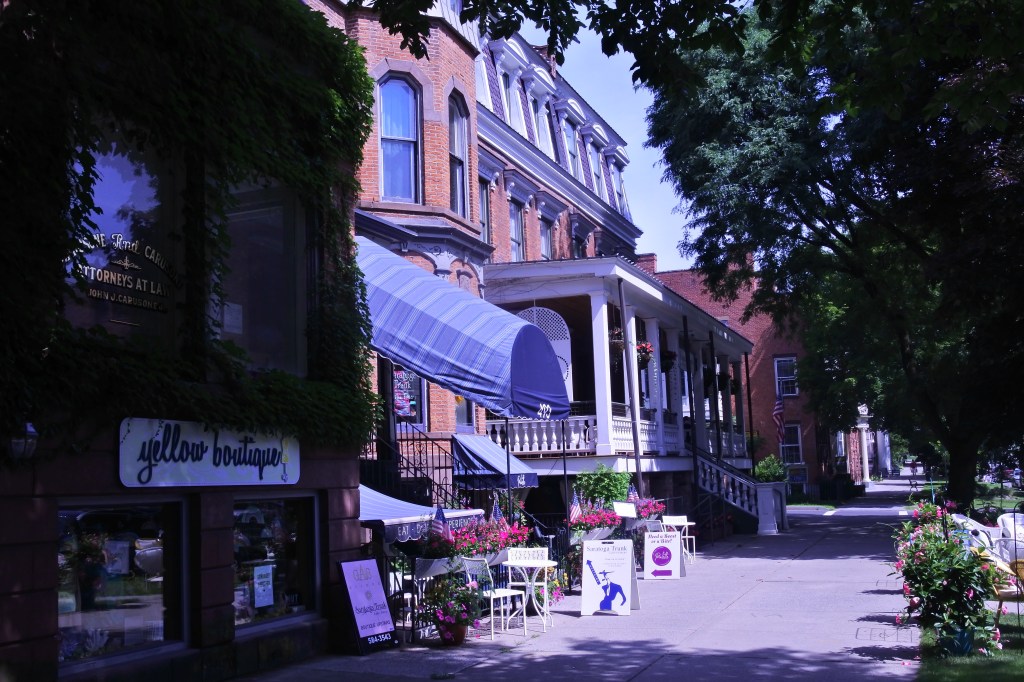
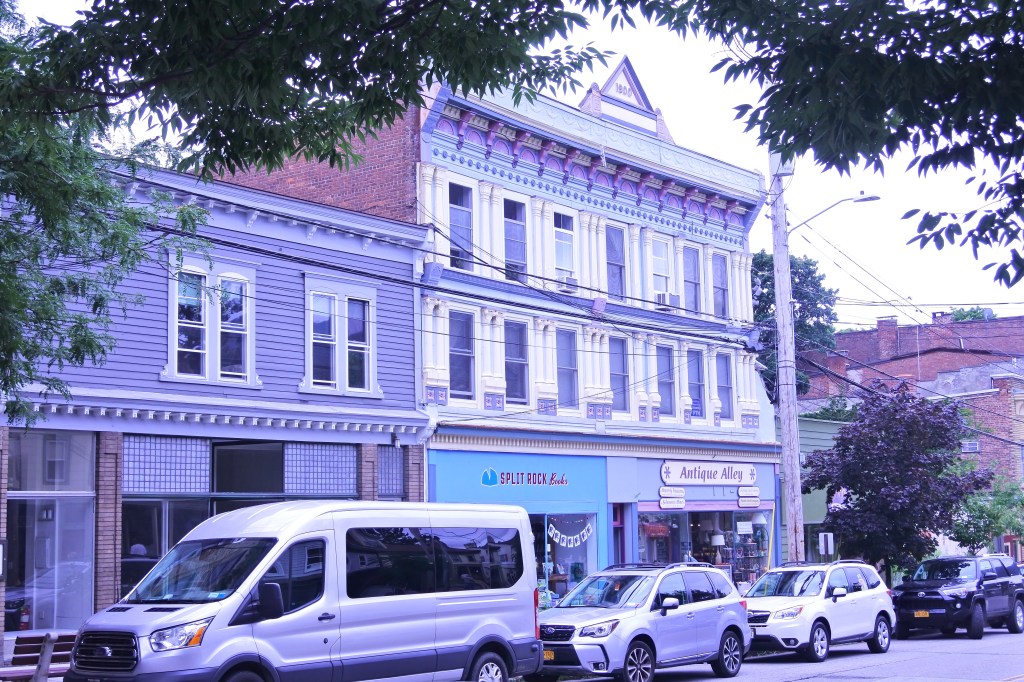
East Avenue- Home to the George Eastman Estate and Many of Rochester’s Cultural Treasures

East Avenue is home to the City’s best collection of large 19th and early 20th century homes,  historic churches, and museums. This is the neighborhood where George Eastman constructed his mansion and estate in the early 1900s. It also is located just east of Downtown and has several nice urban biz districts (i.e. Park Avenue, East Avenue & Union, and University & Atlantic Ave.). The district also hosts a vibrant food and beverage scene, quality retail amenities, and a diverse array of often moderately priced housing options.

But there are also several areas that the East Avenue neighborhood does not excel at from an urban perspective. Its urban density of around 8,000 people per square mile creating many dead spots, its public transit service is wanting, there are several very autocentric stretches along University Avenue, and it has a very low percentage of family households. An ambitious densification plan and urban form overlay along University Avenue could go a long way towards improving the urbanity of this neighborhood.

Click here to view my East Avenue album on Flick

URBAN STREGNTHS:

* Quality sidewalk infrastructure, but plenty of intersections without ADA compliant ramps.
* Excellent access to dwtn.
* Excellent economic diversity.
* Even for a higher end district medium rent is quite affordable hovering around $1,000. A moderate amount of dedicated afford. units here.
* Very diverse array of for sale price points. Several condo buildings selling 1 bedroom units in the 100Ks. 2-beds sell for anywhere btwn 150K-400K depending on size and condition. 3& 4-beds 200K-500K. The large historic mansions sell btwn 500K-800K.
* Rentals are a bit limited but moderately priced. 1-beds lease around 1K, 2-beds in the low-mid $1,000s, 3 beds in the 2Ks.
* Decent # of schools ranked moderately well. Several large specialty high schools here.
* Excellent Tree canopy.
* Very good cultural amenities in East Ave including many restaurants, bars, & cafes. Also several theaters & live music venues, a handful of art galleries, and a concentration of the best museums in Rochester.
* Retail amenities include 2 supermarkets, a couple drug stores, a mix of chain and local retail. Chain retail is mostly along auto centric biz district and local retail in more urban biz districts. There are also several gyms, a rock claiming wall, and home good stores.
* Very safe district.
* Gorgeous historic architecture.

URBAN WEAKNESSES:

* Transit is only so . Rather disappointing for a neighborhood adjacent to Dwtn.
* A couple north-south dedicated bike lanes but not bike share yet. Apparently this will come soon.
* This is a very young and childless district. Very few families reside here. Racial diversity isn’t’ much better as around 80-85% of all households are white.
* The expansive Cobb’s Hill sits on the SE border of district. This an excellent park with lots of amenities but virtually no other parks exist within East Avenue. For most residents this isn’t walkable.
* Mix of quality urban form and auto centric form in the biz districts.
* Most in fill is auto centric buildings. But new MF apartments replacing the inner belt along Union (district’s western edge), and these are of some urban quality.
* Vibrancy along Park Avenue and East & Union but rest of neighborhood is pretty dead.

Beacon, NY- Hudson Valley’s best Success Story

I only included the pre WW-II portion of Beacon in this evaluation.

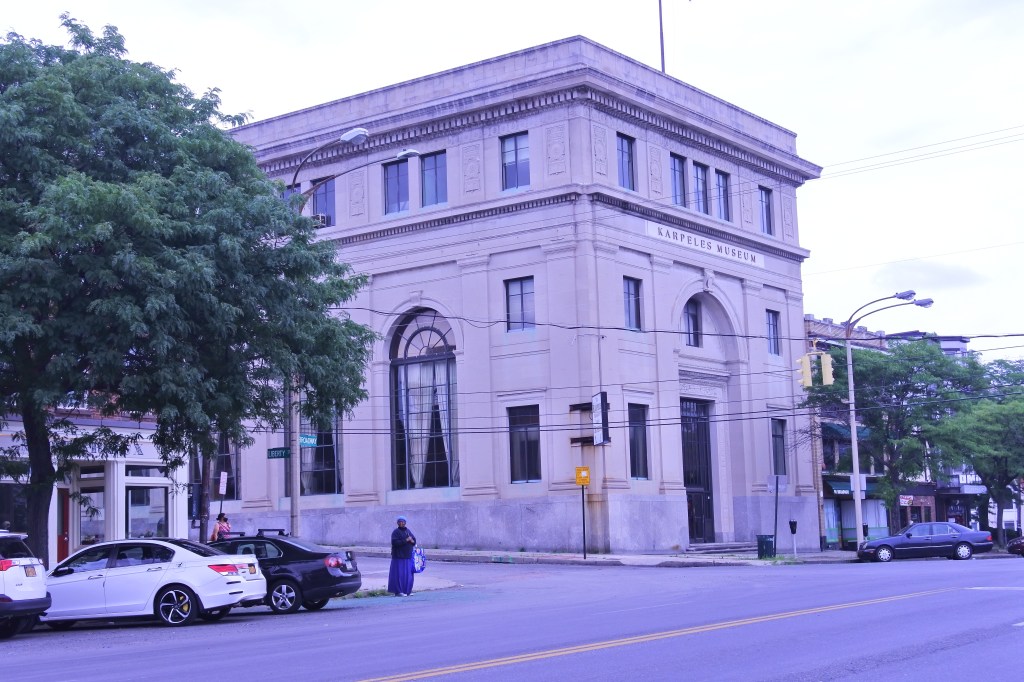
Beacon was named to commemorate the historic beacon fires that blazed forth from the summit of the Fishkill Mountains to alert the Continental Army of British troop movements. During the 1800s, the city  became a big manufacturing town and was known as “The Hat Making Capital of the US. Its important to note that Danbury, CT makes this claim as well!

But like most Hudson River Valley cities, Beacon experienced economic decline especially by the 60s.and 70s. By 1990 almost 80 percent of the city’s commercial business spaces and factories were vacant. Starting in the late 1990s, Beacon really focused on an art’s based revitalization strategy beginning with the opening of  Dia Beacon, one of the world’s largest contemporary art museums Dia. This spilled over into the Main Street and other historic warehouse buildings.

Main Street has become so successful that quality urban in-fill is starting to fill the gaps. Beacon’s revitalization success has also spilled over into a high standard of living for its residents, quality schools, good parks spaces, and a great array of cultural and walkable retail amenities focused on Main Street. To help make Beacon a great urban environment, I’d like to see better bike and ADA infrastructure along with a strong emphasis on providing affordable housing as this is a pretty high cost place to live. 
Click here to view my Beacon, NY album on Flickr

URBAN STRENGTHS:

* Wonderful historic architecture along the main St. Nothing spectacular
 in the residential areas.
* Dwtn Beacon is becoming such a strong market that there is not quality urban in fill being constructed.
* Good public transit in dwtn Beacon, but it drops off in the neighborhoods esp. east of Fishkill Creek. Beacon is connected to the Hudson line providing convenient access to Poughkeepsie. One can even get to Manhattan in 2 hours.
* Over 60% of households are family households.
* Strong middle class community but still with good economic diversity. Great racial diversity as well.
* Excellent main street overall with great vibrancy, streetscaping, and lots of diverse retail and stores.
* Solid park amenities including a great waterfront park, extensive sport fields at Memorial Park, the South Ave Park, and several other smaller community parks. 
* Crime is low here and blight is limited.
* Very nice array of public, private, and parochial elementary schools within the City core. Middle and high schools are to the north more on the outskirts of town.
* Good cultural amenities including a great array of restaurants, bars, and cafes, several nice live music spots, a performing arts center, movie theater, and one of the world’s largest art museums. Also a good array of art galleries and a couple local museums.
* Not surprisingly lots of boutiques, local creative retailers, a small nature grocery store and a full service grocery store, a drug store, a couple bookstores, several bakeries, a cheese shop, and many antique stores. There is also a dwtn library and post office.

URBAN WEAKNESSES:

* Good sidewalk infrastructure but up-to-date ADA curb cuts are rare.
* A short bike lane along the Hudson is the only one in town.
* For sale housing skews expensive but still a good diversity of product. Start homes run in the 200K, 300Ks, medium sized in the 400-500Ks. Top of the market is 600Ks-700Ks.
* Rental housing is also pretty expensive but good amount of product. 1-bedrooms lease in the $1,000s,  2 & 3 bedrooms anywhere from the high $1,000s to $3,000.

Newburgh, NY- Historic headquarters of the Continental Army

Downtown is generally bound by Washington to the south, 1st to the north, Robinson to the west, and the Hudson River to the east.

Newburgh area was first settled in the early 18th century. During the American Revolution, Newburgh served as the headquarters of the Continental Army. Newburgh became quite prosperous during the Gilded Age helped by its situation on the Hudson River midway between New York City and Albany.

Things started to unravel in Newburgh starting in the early 20th century with mills and industry shutting down. By the late 1960s the city was in full economic decline and used urban renewal plan to demolish the historic waterfront area. Newburgh has struggled for several decades even as Beacon across the river has stabilized and prospered. Much of this has to due with a lack of civic vision and political continuity. Fortunately things have begun to improve in Newburgh. More and more residential properties are being renovated with many homes selling in the 200K and 300Ks. The smaller Liberty Street biz district has seen many new businesses. Broadway Ave is still pretty rough but have businesses and most of its historic urban form. 
Click here to view my Newburgh, NY album on Flickr

URBAN STRENGTHS:

* Excellent connectivity Dwtn.
* Hispanic majority population but still good diversity.
* High percentage of family households.
* Good for sale diversity ranging from around 75K-350K depending on size and condition.
* Rentals are a bit more expensive but good amount of product. 1-bedrooms rent in the low $1,000s and 2-bedrooms in the mid $1,000s. This high end price range is pretty surprising given the blight of the neighborhood, but it is New York.
* Good park amenities with Washington Head Quarter’s historic site, a waterfront park, safe harbor’s green (a good civic space), and the expansive Delano-Hitch Park to the west of Dwtn with a swimming pool and many sport facilities.
* Decent cultural amenities including a handful ethnic restaurants, several cafes, and a good number of bars on Liberty, the Ritz Theater, a couple of art galleries.
* While rough the main street urban form is very much in tact. Streetscape still pretty rough. Liberty Ave has the most investment, Broadway has a ways to go still.
* Great density here. 

URBAN WEAKNESSES:

* Consistent sidewalks but lots of crumbling infrastructure and ADA
 curb cuts are rare.
* Not many jobs Dwtn but Beacon is only a 15 minute drive. Poughkeepsie is 35 minutes away.
* Public transit is very limited.
* No bike infrastructure really in Newburgh.
* Pretty high poverty Dwtn but some income diversity.
* Really no modern in-fill.
* Lots of blight remain in downtown Newburg. Crime is high but getting better.
* Retail amenities are more limited but include several nice boutiques and local stores on Liberty Ave, lots of small ethnic grocery stores, a florist, a bakery, a hardware store, and some other local retail. 
* The post office and library are located north of Dwtn. No banks dwtn, nor a pharmacy or full service supermarket.
* Only the Catholic grade school is located within New borough. A couple good school options north of Dwtn.
* Even with recent investment in dwtn Newburgh it still has a pretty bad reputation.

Downtown Troy, NY- one of American’s most beautiful Downtowns

Troy has a long history going back to the late 18th century when it was formally incorporated. Due to its access to the Erie Canal it quickly became a prosperous city. In 1824 the nation’s oldest private engineering institute opened here, the Renesselaer Polytechnic Institute. The industrial revolution continued to spur industrial and economic growth to the City helping Troy become the fourth wealthiest city in America around the turn of the 20th century. This wealth translated into amazing architecture, especially in Downtown  including many elaborate Victorian and Italianate rowhouses and brownstones along with several great churches containing Tiffany stained glass windows, Troy Music Hall,  Troy Public Library, and much more.

Like most industrial cities, Troy witnessed significant blight and disinvestment. Yet, unlike Albany, most of its historic building stock remains in tact. With new interest and reinvestment this become a great asset for Troy creating one of the most beautiful American Downtowns with great urban form and a truly live/work district. Many restaurants, bars, locally owned retail have opened the past couple decades. While not a major employment hub, Dwtn troy excels as a business incubator as it can provide cheap spaces in an attractive urban districts.

Areas that Dwtn can improve include removal of remaining blighted areas, new condos (for-sale housing is only rowhouses), walkable downtown schools, more bike lanes within the Downtown District, and a full service grocery store. 
Click here to view my Downtown Troy album on Flickr

URBAN STRENGTHS:

*Great density for a Dwtn especially a mid-sized city. Much larger residential population in Dwtn Troy than Dwtn Albany.
* Wonderful historic architecture. Arguably the best preserved historic downtown in the United States.
* Good street tree coverage especially for a Downtown area.
* Overall a very comfortable pedestrian environment where most curb cuts have up to date ADA infrastructure.
* High quality transit service Dwtn and extending to all of Troy and connecting to Albany. In fact the entire Capitol Region transit system is quite good.
* The bike share system in place in Albany, Troy, Schenectady provides great coverage to all these cities. Several regional bike trails come close but don’t quite connect with Dwtn. Still easy to bike the last 1/2-1 mile without a fully dedicated bike lane.
* Wonderful street grid and connectivity. * Good racial diversity.
* Most for-sale housing options are larger rowhomes. One can purchase a 2-4 bedroom in the 100Ks & 200Ks. Plenty of options in the 300Ks-600Ks depending on size and value. This is great if you want to live Dwtn with a family. Condos are certainly a missing market here.
* Decent array of rental options too. Pretty in-expensive for a dwtn. 1-bedrooms lease btwn $800-$1,400, 2-bedrooms in the $1,000s and low 2Ks, 3-bedrooms in the $2,000s.
* Parks spaces consist of Chamberlin Waterfront Park, sage park, and Monument Square- the modest civic heart of Dwtn in the middle of an ambitious re-design. The extensive Prospect Park is located just SE of Dwtn.
* Good college population within or near Dwtn with Sage College and Renesselaer  Polytechnic Institute (8,500 students).
* Excellent urban form and massing. Surface parking lots are pretty limited in Dwtn Troy.
* Dwtn has an active BID charged with clean up, beautification, and special events.
* Culturally dwtn excells at in the food & beverage industry, several art galleries, several historic theaters, and great cultural amenities from its colleges.
* Retail amenities include a wonderful array of local, creative stores, bookstores,  boutiques, a hardware store, drug store, dwtn post office & library, a small organic grocer, and nearby hospital.

URBAN WEAKNESSES:


* No convention center or sport facilities downtown
* IF you include the universities total employment dwtn is only about 10K. But there are positives in the office market. Troy has lots of small start up companies and trend is very positive. They are attracted by Downtown’s cheap rents (around $12-$15 a square foot). There is also limited vacancy too.
* Portion of Dowtn north of Federal Street and east of 5th Ave is still pretty blighted. But reinvestment seems to be arriving quickly.
* Limited post WW II in-fill but some nice medium sized mixed-income buildings starting to pop up, a sign of Dwtn’s success. Bland mid century infill located north of Federal St. due to some haphazard urban renewal efforts. Lucky this was limited.
* No direct public transit connection between Dwtn and the airport. One needs to pass transfer at Dwtn Albany.
* Incomes generally pretty low in dwtn Troy (30% poverty rate) but this seems to be improving as more young professionals move here. 
* Family households account for 30% of the pop, while this is low note bad for a dwtn area. Also plenty of 3 bedroom + options with all of Dwtn’s rowhouses.
* Crime rate in Troy overall is pretty high. But dwtn generally feels safer other than a few sketchy and blighted spots.
* Without any modern skyscrapers, no traditional American skyline here. Kind of nice though as the historic bldgs and churches still form the skyline.
* No schools located within Dwtn but a couple good options a mile away.
* Given its historic blight and safety concerns, Dwtn Troy still struggles with aa unjustified negative perception.
* Streetscape is generally attractive but uneven in terms of investment.
* No full-service supermarket and large retailer dwtn. 

Saratoga Springs, NY- Historic Vacation Grounds for New Yorkers

Lots of great history at Saratoga Springs. The community was  incorporated as a village in 1826 and quickly became a tourism destination after the arrival of the Saratoga Schenectady Railroad. Its mineral springs and eventually horse racing & gambling led to an explosion of large hotels. By 1900 the town had a fulltime population of 12,000, which grew to 15,000 by 1950. Following WWII, Saratoga had a couple decades of decline but quickly rebounded in the 1970s as a major destination but also attracted lots new housing and quality mixed-use infill.

Saratoga Springs has some major of urban weaknesses that prevent it from being a great urban area… expensive housing, lack of residential density, limited bike infrastructure, limited public transit access. 
Click here to view my Saratoga Springs album on Flickr

URBAN STRENGTHS:

* Good generational diversity and half of all households are family ones.
* Congress Park is a wonderful recreational amenity near Downtown. Several other nice park & recreational spaces in Saratoga Springs. Really wonderful in-fill development as well. Not just in Downtown but also in the residential streets.
* Vibrant downtown packed with great shopping and cultural amenities.
* Generally quality sidewalks and ADA curb cuts but lots out of date curb cuts.
* Low crime rate and limited blight through Saratoga Springs.
* Great urban form and streetscaping along Broadway.
* Schools are highly rated and most are located within the historic core.
* Great cultural amenities including ton of restaurants, bars, and cafes, several live music venues, Skidmore College theater, a cineplex, a good array of art galleries, museums and historic sites. 
* Retail amenities include a dwtn supermarket, lots of smaller specialty grocers, great array of boutiques & independent stores, some brand name retail, a couple drug stores, bookstores, public library, post office, Saratoga Hospital. Only retail amenities missing is a target and department stores.

URBAN WEAKNESSES:

* Density not great.
* Decent local public transit but limited access to downtown Albany or Dwtn Troy. There are a fair amount of jobs in Saratoga Springs with it local tourism, the arts and Skidmore College
* 40-45 minute drive to either downtown.
* Bike infrastructure limited inside historic Saratoga Springs.
* Generational high incomes here but some economic diversity. Racial diversity on the other hand is very limited.
* For sale housing is runs expensive but decent diversity in price and type (mix of townhouses, condos, and SF). Starter homes run in the 200Ks. Better 3-bedrooms generally 300-400K. Nice 3 & 4 bedrooms between 400K-700K. Large homes and luxury product generally selling between 700K and 1 M.
* Lots of rental product but pretty expensive. 1-bedrooms leasing in the $1,000s and low $2,000s, 2-bedrooms in the mid $1,000s and $2,00s

Cold Spring NY, a quaint Hudson Valley Town

Cold Spring is one of many attractive historic towns running along the Hudson frequented by many vacationing New Yorkers. The central area of the village is on the National Register of Historic Places due to its many well-preserved 19th-century buildings. The town grew around the West Point Foundry  in 1818.

Cold Springs has gracefully transitioned from a minor industrial hub into an attractive historic town that is well preserved and hosts a vibrant main street full of unique privately owned shops and plenty of bars and restaurants to serve tourists, especially in the summer. The City also takes advantage of its gorgeous views down the Hudson with an excellent waterfront park. For the year round resident, schools are good and most things you need are within walking distance. Highland State Park, one of New York’s best, is literally a mile away.

I’m not sure I’d want to see this town overdeveloped, but it would be nice to have some more quality urban in-fill outside of main street along with bike infrastructure. Cold Springs also lacks racial and economic diversity. 
Click here to view my Cold Spring album on Flickr

URBAN STRENGTHS:

* Lovely, well maintained historic main street.
* Along the Hudson Commuter Line which provides convenient access to towns up and down the eastern side of the Hudson and eventually NYC.
* Gorgeous riverside park with amazing views of the Hudson and Catskills Mountains. Parks within the City are pretty limited but Hudson Highland State Park and the Constitution Marsh Audubon Center are less than a mile away.
* Culturally there are many restaurants & bars, several community theaters and art galleries. Several nice historic sites as well.
* Many wonderful boutiques and locally owned shops as one might expect for a tourist town. But also important neighborhood assets including a drug store, supermarket, public library, post office, and medical center.
* Very safe town.
* Nice array of decent-good schools all within walking distance.
* Great sidewalks and ADA infrastructure along the Main Street and core, but walkability drops off a bit in surrounding streets.

URBAN WEAKNESSES:

* Not very dense. Much of the local businesses are supported by tourists. But it gives the locals a level of amenities they could never have without tourist.
* Lack of density is also not as much of a factor since everything is still very close in such a small town.
* Removed from major employment centers including over 1 hour by driving and 2 hours via transit to NYC. Although West Point is only a 1/2 drive.
* No biking Infrastructure here.
* Poor economic and racial diversity. Generally a pretty affluent White community.
* Generally pretty expensive housing. Limited smaller for sale product in the 200Ks & 300Ks. Most housing selling btwn 400K-600K.
* Rentals pretty limited. 1-bedrooms go for around 2K and 2-bedrooms around 3K.
* Modern in-fill is very limited and what does exist is generally more auto centric.