Graview Heights & Marble Cliff, OH- Desirable Streetcar Suburbs located just Northwest of Downtown Columbus

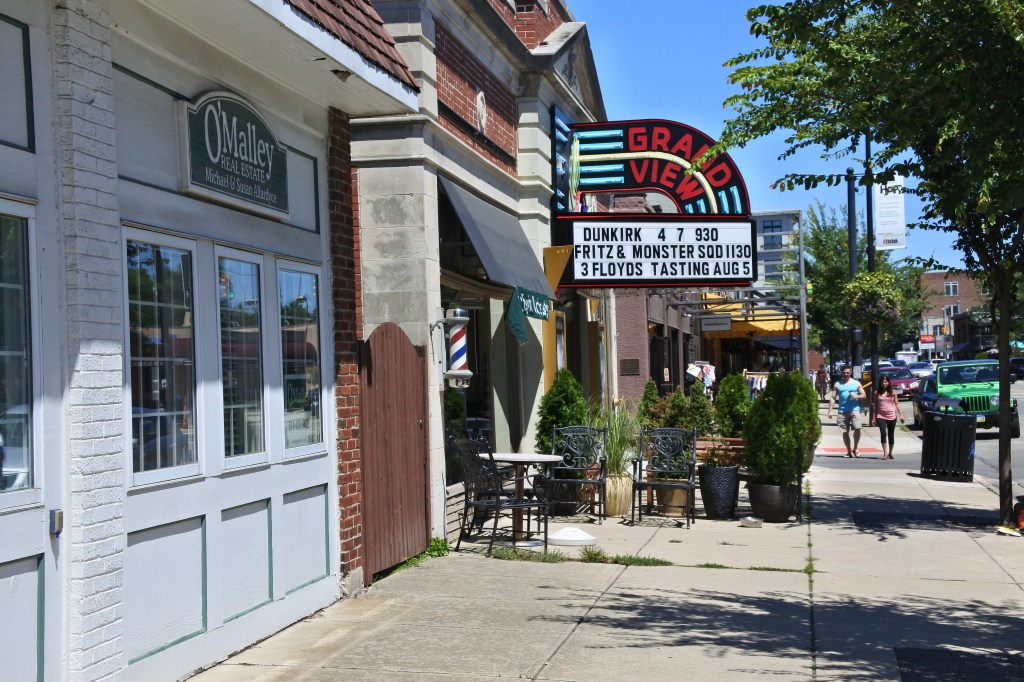
Grandview is one of Columbus’ more attractive inner ring suburbs located just 2-3 to the northwest of downtown. I include all of Grandview in this evaluation except the random block between Star and Farview Avenue between 3rd and 5th Ave. This a simply included with in my evaluation of the Columbus neighborhood of Fifth by Northwest. Marble Cliff is also included in this evaluation as it is a very small independent community that acts as an appendage to Grandview.

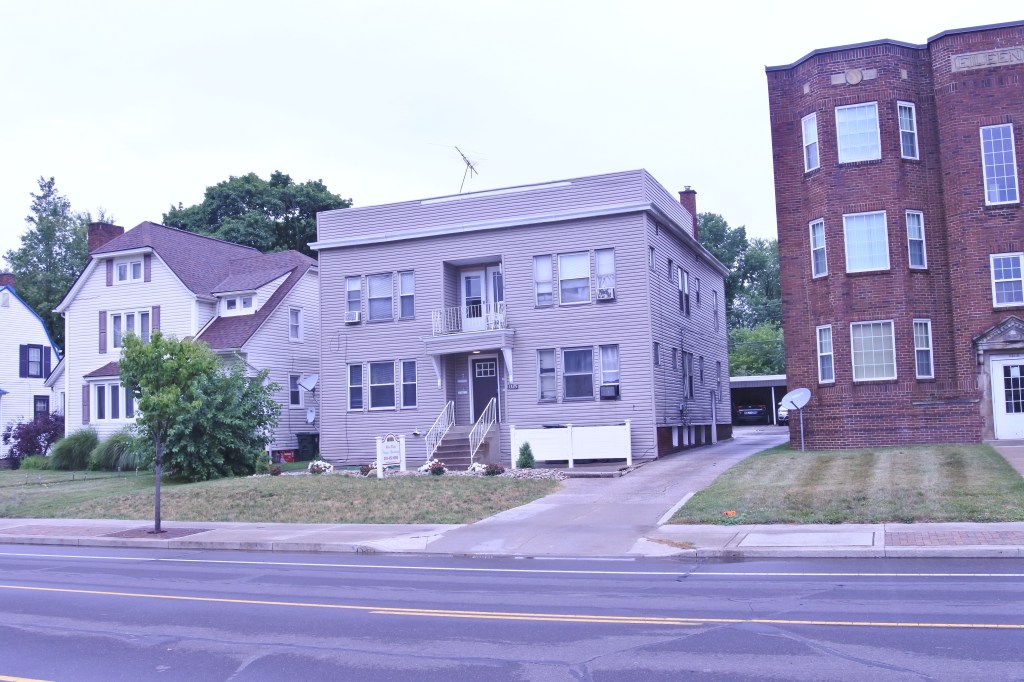
Grandview Heights was developed in the early 20th as a classic streetcar suburb and contains quality early 20th century housing stock, leafy and sometimes curvy streets, mix of SF and smaller MF development, and a nice walkable urban district along Grandview Avenue. The recent Grandview Yards development has given more density and important destination restaurants and bars in a previously underutilized industrial area.

Marble Cliff was one of the first suburbs of Columbus settled as a community in 1890 and incorporated as the “Hamlet of Marble Cliff” in 1901. It took its name from the Marble Cliff Quarry Co. (still in use today). Marble Cliff detached all land but its present area and the area that separated became Grandview Heights in 1906. Marble Clif was first called  “Arlington” which led its new neighbor to the north to name itself Upper Arlington. Further adding to its association with Grandview Heights most of the village’s public services are provided by contract with Grandview Heights. Marble Cliff’s population has hovered between 600-700 since 1960 now has hosts housing from pretty much every decade of the 1900s. The Village has a pretty pouch and exclusive vibe but is still tied into a decent urban grid with decent sidewalk and ADA curb infrastructure.

Given the communities close proximity to Dwtn Columbus and the continued growth and development pressures of the Columbus Metro, these communities need to continue to urbanize and allow for more housing. This is especially true along the main arterial through the communities (5th Avenue).
Click here to view my Grandview Heights and Marble Cliff Albums on Flickr

URBAN STRENGTHS:

* Quality urban commercial district along Grandview Avenue filled with walkable restaurants, bars, coffee houses, and local retailers.
* very in-tact and well kept early 20th century architecture (mix of wood frame and brick). 
* Major mix use development is being built from stretch, called Grandview Yards, is replacing a previously underutilized industrial area. Includes apartments, condos, entertainment businesses, office space, and parks.
* Quality park space throughout Grandview. 
* 2-3 miles from downtown and decent public transportation access.
* Many important amenities (i.e. grocery stories, larger retailers) within or adjacent to Grandview, but not always within walking distance. 

URBAN WEAKNESSES:

* Density is low for a quality urban area. Street life in many residential streets is more typical of suburban areas,
* Sales price is rising to the point that middle class families can’t buy in Grandview. Still many affordable rental options.
* The commercial districts on 5th Avenue and Olentangy as relatively auto centric; 5th Avenue shows signs of improvement with an urban overlay district requiring new construction to be at the street and allowing for multi-family- mixed use construction. 
Downtown Canton, OH

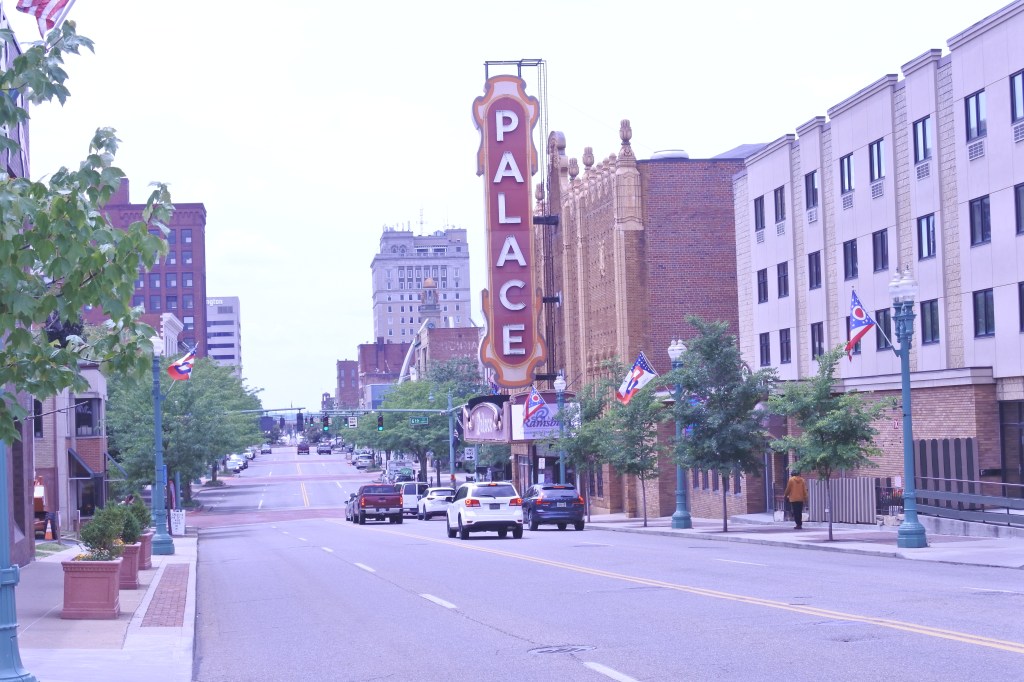
I loosely define Downtown Canton to be between McKinley to the west, Cherry to east and between north and south 6th Streets. One could argue that the North Market district running from North 6th to 12th street is also part of Downtown as it includes the main library and Canton’s Art Center.

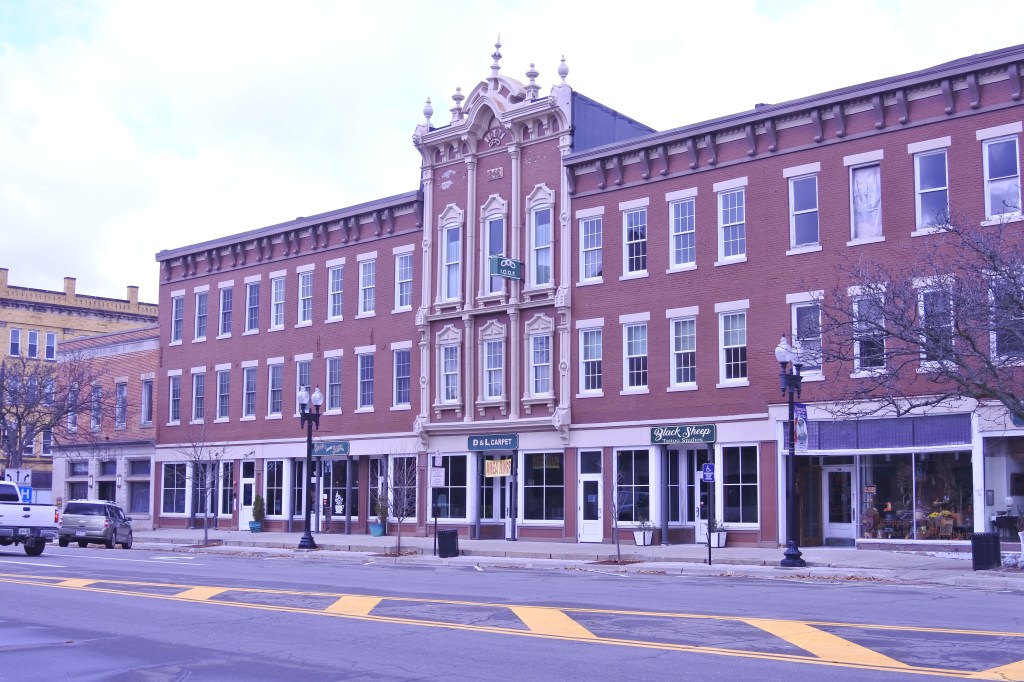
Downtown Canton’s also contains a couple notable subdistricts: 1) The Canton Arts District/Music block centered in the core of Dwtn along Cleveland Street where many 2-4 story historic mixed-use buildings still remain and are filled with retail and food & beverage/theater uses. This is where Canton’s historic building concentration is strongest. 2) The Warehouse District which runs between Market and Cherry Avenues where a scattering of historic warehouse remain standing yet most are underutilized. 3) Saxton Quarter is located south of Tuscarawas St. This is named after the Saxton McKinley House and feels like a marketing attempt to uplift a largely dead part of Downtown. Market Street is the main spine through Dwtn and contains its best architecture and the well designed and active Centennial Plaza. Tuscarawas  is the second main street Dwtn and runs east to west.

All in all for a midsized Midwestern Dwtn, Canton does pretty good thanks to the targeted investment in its core along Cleveland and Market Avenues north of Tuscarawas. Dwtn includes a decent # of local retail, solid cultural amenities, a well designed central plaza and even a semi-pedestrian street along the Court Street alleyway. To move to the next urban level, Canton needs a lot of Dwtn apartments and condos and new development south of Tuscarawas and on its edges to liven these dead areas. Targeted redevelopment of the warehouse district is probably the best place to start.

Click here to view my Dwtn Canton Album on Flickr

URBAN STRENGTHS:

* Good efforts have been made to stabilize dwtn with the focus on the arts, revitalization efforts along Cleveland and Market Avenues, an extensive semi-pedestrian alley along Court Street line with many businesses, and the well designed Centennial Plaza.
* Also decent mixed-use activity along N 6th Street and some along N. 2, 3, 4, and 5th Streets.
* Good cultural offerings including plenty of bars, restaurants, and cafes, a historic theater, several live music venues, many museums and historic sites, and a major cultural arts center.
* Generally good sidewalk and ADA curbs especially in the more invested parts of Dwtn.
* Good historic architecture and much of it is still preserved.
* Decent number of street trees.
* Decent retail amenities but no supermarket.

URBAN WEAKNESSES:

* Lots of dead spaces outside of the core of Dwtn especially the southern half south of Market.
* Tinken Steel’s career Campus on the western edge of Dwtn feels like a suburban community college artificially placed Dwtn.
* Only a handful of rentals and condos Dwtn.
* Only a couple of schools located dwtn and a small Stark County Community College presence.
* So so modern infill

Vassar Park- A Stable Pre-War II Neighborhood on Canton’s Northside

Vassar Park is one of Canton’s more stable and attractive districts with generally stable housing developed between the 1920s-1940s. Some post WWII housing mixed-in making this a newer district than neighboring West Park. Vassar Park also has some retail amenities mixed-in, very affordable housing, a decent amount of rentals, solid racial and economic diversity, and very convenient access to Dwtn.

What Vassar Park needs to be a quality urban district is more parks and retail amenities, improved public transit access, and better ADA infrastructure.

Click here to view my Vassar Park Album on Flickr

URBAN STRENGTHS:

* Housing stock in generally in stock with a mix of modest and larger homes.
* Solid tree cover.
* For sale housing is very affordable ranging from 35K-250K.
* Decent # of rentals and very affordable.
* Solid racial and economic diversity.
* Generally a very family oriented neighborhood.
* Very convenient access to Dwtn Canton, only 1.5 miles away.

URBAN WEAKNESSES:

* ADA curb cuts are limited. Generally good sidewalks.
* Some retail but not supermarket.
* So so public transit access.
* Access to a dedicated bike lane on the southeastern edge but that’s it.
* A handful of schools in Vassar Park and nearby.
* Not much diversity in price point for housing.
* Only a handful of parks although Vassar Park is a very nice centrally located community park.

Canton’s West Park Neighborhood- a relatively intact early 20th century urban district along McKinley Memorial Park

West Park is located between 12th and 30th Street and between Cleveland and McKinley Memorial Park. The district was developed mostly in the early 20th century with a mixture of grand Victorian and Turn-of-the Century houses and elegant apartment buildings along with smaller houses middle class homes. The neighborhood was pretty stable until the 1980s and 1990s when blight and vacancy crept into the district thanks to low real estate prices. Some effort has been made to stabilize the neighborhood and this has prevented widespread abandonment and a mixture of stable and less stable streets. West Park does have some commercial amenities that are pretty walkable along Fulton and Cleveland Avenue but many retail amenities like a supermarket are missing.

To advance West Park to what I would consider a quality urban district it needs more commercial amenities along Fulton & Cleveland, more higher end residential diversity, more stability, and better public transit access. Thankfully since the neighborhood is mostly intact this seems doable. 

Click here to view my West Park Album on Flickr

URBAN STRENGTHS:

* Generally a stable early 20th century middle class district but decent amount of blight mixed in. Very street by street.
* Decent amount of rentals mixed in.
* Generally good tree canopy, but depending on the socioeconomics of your particular street.
* Good sidewalk infrastructure. ADA curbs are good along the main streets but hit or miss on the residential streets.
* Several schools in the neighborhood but mixed ratings.
* For sale housing is very affordable ranging from 50K-250.
* Decent number of rentals and generally very affordable.
* Good racial diversity.
* Excellent access to Dwtn only 1 mile away.
* Decent access to two dedicated bike lanes.
* Great park access with McKinley Memorial park running down its western border and lots of neighborhood parks.

URBAN WEAKNESSES:

* Some retail along Fulton and more so Cleveland but missing a lot of important neighborhood services starting with a supermarket.
* Cleveland Ave is generally ugly and rather autocentric.
* About 1/3 of the West Park neighborhood lives in poverty and medium of income at 30K.
* Public transit access is so . 

The Ridgewood Historic District- Canton, Ohio’s Premiere Residential Neighborhood

Ridgewood  consists of well preserved American Revival Mansions built mostly from the 1920s -1940s. Its homes are architect-designed for the most part and demonstrate the enormous variations of shape, skin, and sensibility that characterize the European Revival styles favored in this period.  The district also boasts of a highly aestetically pleasing envrionment with large shade trees, original brick streets, and locally produced street lighting standards. Due to its historic architectural significance, the Ridgewood was added to the U.S. National Register of Historic Places in 1982 and has remained one of Canton’s most stable communities.

From an urbanist standpoint Ridgewood is really a suburban-urban hybrid. Yes it has consistent sidewalks, mature trees, and some public transit access. But most trips needs to be made by car as the nearest commercial district is rather amenity poor and not a plesant walk. Bike infrastructure is non-existant and rental housing options are limited.

Click here to view my Ridgewood Album on Flickr

URBAN STRENGTHS:

* Canton’s premiere pre WWII mansion district.
* Excellent tree canopy and brick streets. Beautif aesthetic.
* Good sidewalk infrasturcture.
* These mansions are a great value with most costs between 250K-400K. These homes would costs close a 1 M in the equivalent Cleveland neighborhood.
* Very convenient access to Dwtn Canton only 2 miles away. A 7 minute drive and 15 minute bus ride. 

URBAN WEAKNESSES:

* Curbcuts exist but ADA ramp are not up to modern standards.
* Very little mixed use in the district. The nearest commercial district is 0.7 miles away on Cleveland Ave, a pretty sad semi-autocentric commercial district.
* Transit access is pretty limited.
* No dedicated bike infrastructure.
* Rentals are limited but some product availabe on the edges of the district.
* Few walkable schools in the area.

Ravenna, OH- Historic Satellite Suburb of Akron, OH

This evaluation includes just the pre WWII urban fabric of Ravenna. That is more or less the entire with of the Town between the north and south railroad tracks.

Ravenna was founded in 1799 and is named after Ravenna, Italy. Ravenna grew pretty quickly in the 1800s reaching almost 2K residents by the Civic War. Historically it was know for producing some of the highest quality hearses in the Country, hired to escort Presidents McKinley and Garfield to their final resting place. Rail service arrived in Ravena via the Cleveland and Pittsburgh Railroad in 1851. In 1877, the Quaker Oats Company was established in Ravenna with the familiar Quaker Oats logo patented in in the City. The City reached 4K residents in 1900. Thanks to this decent sized population in the 1800s Ravenna hosts an Italianate styled heavy Commercial District. The City’s population continued to modestly climb in the 1900s reaching 7K in 1920 and 8.5K in 1940. Population peaked at 12K in 1990 and has since slowly declined to 11,300 souls. Ravenna is also well know for its Balloon Festival that occurs around mid- September.

Ravenna is a mixed-bag when it comes to quality urbanism. There is a good compact Downtown core along Main St and a couple blocks off, but the quality of Main Street quickly becomes auto centric outside the Dwtn core. Quality historic residential is also pretty limited and population density is very low. Ravenna does have solid retail and cultural amenities and a decent # of good walkable schools. The City, however, lacks quality public transit, bike amenities, housing diversity (esp. rentals), and is a very homogenous White community. 

Click here to view my Ravenna Album on Flickr

URBAN STRENGTHS:

* Decent grided and connected streets. Better in the core of Dwtn.
* Great economic diversity and decent generational diversity.
* Good # of schools and generally pretty well rated. High Schools is located a bit outside of Town and really isn’t very walkable.
* Some dedicated affordable housing in Ravenna.
* Good tree canopy.
* Lovely historic commercial bldgs. Residential is a bit uninspiring.
* Good urban massing in the Dwtn core but falls a part outside of the core along OH-59.
* Good cultural amenities including solid # and variety of food & beverage bizs, a major cineplex, a local dance and music school, a small conference center, and a couple local museums.
* Solid retail amenities including several supermarkets & drug stores, a couple dollar stores, lots of banks, plenty of boutiques, lots of gift shops, a couple antique stores, a toy store, a local hardware store, plenty of dessert shops, a couple gyms, a local library & post office, several churches, and a local hospital and lots of doctor’s offices sits just north of the Dwtn area. 

URBAN WEAKNESSES:

* Very low density for an urban area.
* So so sidewalk and ADA curb cuts.
* Pretty poor public transit.
* Some bus service to dwtn Akron but pretty  limited. Only a 20 min drive.
* Some nice regional recreational bike paths on the edges of Dwtn but nothing penetrates its.
* Poor racial diversity as this is over 90% White.
* For sale housing is pretty limited to affordable and moderately priced hsg. 2-beds sell btwn 50K-200K, 3 & 4 Beds btwn 85K-300K.
* Rentals are pretty limited but affordable.
* Limited modern infill and what does exist is very auto centric.

Grove City, OH- A Booming Columbus Suburban with an Attractive Historic Dwtn Core

This evaluation only includes the more walkable/historic part of Grove City. My boundaries broadly included Haughlin Rd/Orchard Ln to the East, Ross Ave to the North, Curtis & the Railroad tracks to the west and Kingston/Woodlawn Ave to the south.

By 1853, the newly formed village of Grove City had only 50 residents. The town founders named the village for the remaining groves of trees left standing after their initial clearing.  The City remained small in the 1800s reaching only 650 residents by 1900 and slowly growing in the early 20th century and hitting 1,800 souls in 1940. Like other Columbus satellite suburbs, the town exploded in the post War Era. Grove City officially become a City in 1958 on its path to reaching 14K residents in 1970, 27K in 2000 and 41K in 2020.

Fortunately the historic core, as small as it is has been pretty well preserved with an attractive main street (Broad Ave) with lots of locally owned shops, retailers, and food & beverage businesses. Dwtn Grove City also excels at a high level of safety, quality schools, good for sale housing diversity, quality park amenities, and pretty good ADA and sidewalk infrastructure. For Dwtn Grove City to become a great urban area it needs a lot more population and in-fill development, much better public transit and bike infrastructure, more rental options, better economic and racial diversity, and crucial retail amenities like a full service walkable supermarket.

Click here to view my Grove City album on Flickr

URBAN STRENGTHS:

* Only 15-20 minute drive to Dwtn Columbus.
* Generally good sidewalk and ADA infrastructure but about 25 of roads are missing sidewalks. ADA modern curbs are pretty consistant when there are sidewalks.
* Lots of family households with children here.
* High levels of safety here in line with most exclusive suburbs.
* Several well rated walkable public elementary and middle schools. High school is more on the outskirts of Grove City.
* Pretty good for sale diversity with a handful of 1-beds available selling in the 100Ks and low 200Ks. Plenty of 2-beds that sell btwn 150K-the low 300Ks, 3 and 4  beds sell btwn 200K- 500K.
* Solid parks and recreational in Dwtn Grove City leading with the expansive Windsor Park with all its ball fields. A couple of small/medium sized parks.
* Solid tree canopy.
* Good cultural amenities with a good # of good & beverage biz, a brewery, a couple night clubs and live music venues, a local performing arts theater, and a couple local museums.
* Decent retail amenities including a drug store, lots of boutiques/gift stores,  several locally owned businesses, dwtn public library, a couple antiques and home good stores.
* Solid architecture with quality historic homes and commercial and a decent amount of good urban in-fill.
* Pretty good urban form and streetscaping along Broadway Ave (the main street).

URBAN WEAKNESSES:

* Very low density for an urban area.
* Bike transit is pretty poor, although decent direct connection to Dwtn.
* Dwtn connectivity is so so.
* Some bike lanes in Grove City and the Dwtn area but none go through the heart of Dwtn nor connect it to the rest of Grive City. No dedicated bike stations.
* Poor economic and racial diversity.
* Some rentals Dwtn but more 2-beds than 1 beds. Moderately priced.
* Missing retail amenities include churches, doctor’s offices, post office, a supermarket, a hardware store, and larger retails.

Newport, KY- Wonderful Historic Urban Suburban Across the Ohio River from Cincinnati

For this evaluation I included just the northern half of Newport north of the railroad. While much of the southern half was development before WW II its often blight, disconnected, and the Monmouth St (the commercial district) becomes very auto centric.

Newport was established as a town in the late 18th and incorporated as a City in 1834 with a population of only about 1,000. The first bridge spanning the Ohio River to Cincinnati opened here in the mid 19th century and the John A. Roebling Suspension Bridge (the precursor to the Brooklyn Bridge). By that time Newport’s population was exploding reaching 10K residential in 1860, 20K in 1880 and 28K in 1900. The late 19th century also brought a large influx of German immigration. Population growth significantly slowed by the early 20th century and Newport reached its peak of 31K residents in 1950. The 20th century also brought  waves of “vice” to the City with liquor smuggling in the 1920s, gambling and racketeering in the 30s-1950s and sex clubs in the 60s-80s. In response the City demolished a significant part of the Downtown/waterfront area to create Newport on the Levee, a family friendly new urbanist development with a cineplex and a mall. This opened in 1999 but has lost much of its luster going into the 2020s.

South of the Newport on the Levee is a the Dwtn area, anchored along 4th & 5th Streets that have been ravaged by urban renewal and autocentric development. Fortunately the perpendicular street running up from the south (Monmouth St) is a fairly intact historic biz district with a good array of retail and cultural amenities. The eastern half of Historic Newport is Mansion Hill, filled with tree lined mid-late 19th century residential streets and a mix of grand and more modest homes. The western half is very working class historic stock. Newport also has solid public transit, great housing diversity, decent levels of safety, and solid walkable schools. For Newport to be a great urban district it needs more urban infill Downtown, along York and Monmouth, and other dead spots. There is a funny juxtaposition of great historic urban form and awful senseless post WW II development.

Click here to view my Newport, KY album on Flickr

URBAN STRENGTHS:

* Decent urban density
* Good sidewalk infrastructure. Modern ADA curb cuts are hit or miss. Most curb cuts in the business districts have been updated but less than 50% of residential areas.
* Excellent historic architecture especially in Mansion Hill and the Monmouth Biz district. The western half is more working class.
* Modern in fill is mixed bag. Decent urban infill at Newport on the Levee and Dwtn but a good amount of auto centric crab as well.
* Solid public transit and great access to Dwtn Cincinnati being just across the river.
* Good connectivity.
* Good number of walkable schools but public schools were generally rated poor to fair. Several Catholic schools also mixed in.
* Good diversity of for-sale hsg options with 1-beds selling anywhere btwn 85K-400K, 2-beds btwn 100K-500K with some riverfront condos selling for more. 3 & 4 beds sell btwn 150K-800K with some newer product selling for more.
* Good amount of rentals available and nice mix of new and old. 1-beds lease btwn 800K-1.5K, 2-beds anywhere in the 1Ks, 3-beds 1.5K-2.5K. Good amount of afford. hsg here.
* Generally a safe place but good amount of grit, some vacancy, and medium levels of crime.
* Decent parks including the riverfront levee park, excel public plaza at Newport on the Levee, the expansive Ralph Mussman Recreational Complex, and a handful of smaller pocket parks.
* Excellent cultural amenities including many food & beverage bizs, a major cineplex,  a performing arts center, several live music venues, a couple art galleries, the Aquarium & a couple other local museums, and several historic sites.
* Good retail amenities including a couple grocerias, several drug stores, lots of boutiques, lots of antiques and gift stores, plenty of consignment/clothing stores, the Newport Levee shopping mall (no name brands clothing currently), a couple book stores, many banks, plenty of gyms & dessert stores, local post office & public library, lots of churches. Kroger’s and Target sit just outside urban Newport and other stores in the Newport Pavilion.

URBAN WEAKNESSES:

* Bike  infrastructure including a dedicated bike lane along the levee and a few bike rentals at Newport on the Levee. But much improvement needed.
* Decent economic and generational diversity. Racial diversity is pretty limited.
* Tree canopy was pretty sparse in parts, esp. the more working class western half and dwtn area. Mansion Hill has good tree canopy.
* Some bad urban massing along 4th and 5th Ave but otherwise pretty good.

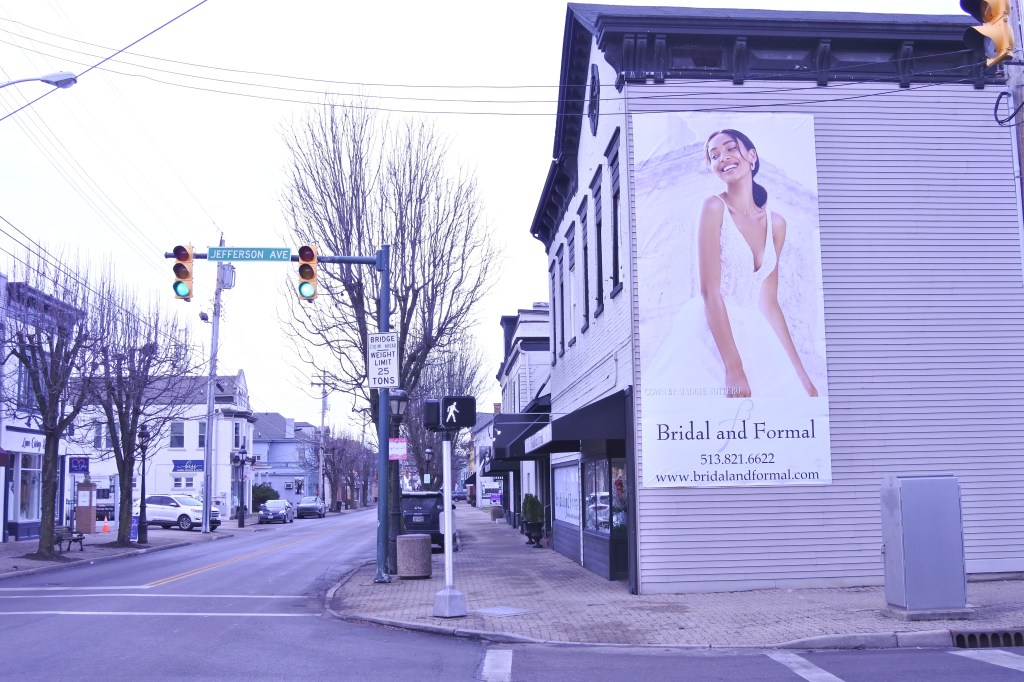
Reading, OH- Historic Cincinnati Surbub rebranding its Downtown as “The Bridal District”

This evaluation only reviews the walkable pre WW II portion of Reading in the western half of the town.

Between 1830 and 1880, Reading grew rapidly to become the largest village in Hamilton County. It was incorporated as a village in 1851 and reached 1K in 1860. The village’s major industry in the mid 19th century was clothing manufacturing. By the turn of the 20th century like other communities in the Mill Creek Valley, Reading’s economy centered around industry suppliers for nearby aerospace and automotive plants. Sadly Reading has some very ugly segregationist history as it was a sundown town, meaning that African Americans were prohibited from living within the city or remaining there after dark. The law led to few Blacks living in Reading until the 60s. On a more positive note, Reading has reinvested itself as The Bridal District along Benson Street bosting the claim of the highest concentration of wedding-related businesses in the United States.

Reading has fair pretty good for an older Cincinnati urban suburb losing only about 4K of its peak population of 14K and keeping much of its historic fabric and commercial district in tact. This is thanks to newer suburban growth in its easter half (not part of this evaluation), solid schools, decent parks, high level of safety, and reinvesting its Dwtn. For reading to become a solid urban district it needs more housing diversity, mixed-use development especially along the run down parts of Reading Rd., much better bike infrastructure, more trees, and some key missing retail amenities.

Click here to view my Reading, OH album on Flickr

URBAN STRENGTHS:

* Solid ADA infrastructure with consistent sidewalks and generally ADA curbs.
* Good economic and generational diversity and there are lots of families with children living here.
* Good ratings for the Reading schools. A elementary  &  middle school are located right in the Dwtn area. Catholic & public schools are in the more suburban eastern half of reading.
* Reading is overall a safe place.
* For sale housing is a mix of affordable and moderately priced housing with ok diversity. 1-bed homes available selling btwn 50K-100K, 2-beds sell btwn 85K-250K, 3 & 4 beds btwn 100K-300K.
* Decent park amenities with several ball fields, cemeteries and pocket parks.
* Good cultural amenities including lots of food & bev businesses, a couple art galleries and local museums, a couple night clubs and live music spots.
* Good retail amenities too including a drug store, a grocerias, a family dollar, an amazing concentration of bridal shops with supporting boutiques & salons, a couple banks & furniture/antique shops, several dessert joints, a couple doctor offices, a public library, and several churches.
* Attractive historic architecture esp. in the commercial district.
* Good urban massing along Benson Ave. Hit or miss along Reading and esp. auto centric south of Benson. Similar story with streetscaping.

URBAN WEAKNESSES:

* Pretty low density for an urban district.
* So so public transit access.
* Bike infrastructure is basically non-existent.
* Rental is pretty limited. Some 1-beds listed at moderate prices.
* Reading could use a full service supermarket, a hardware store, local post office, more creative (non wedding) stores, a book store, etc.
* Modern in-fill is non-existent except for some crummy auto centric bldgs.
* Tree canopy is so so.

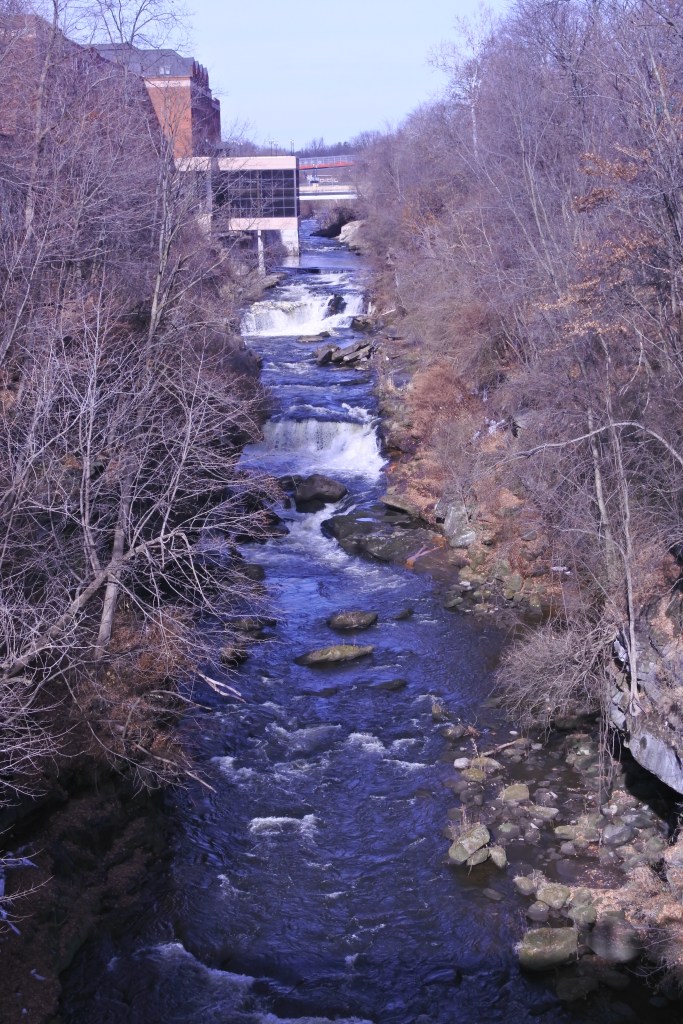
Cuyahoga Falls, OH- Historic Akron Suburb with Impressive Valley & Waterfalls

This evaluation includes Downtown Cuyahoga Falls and the historic Westside mostly developed before WW II. The boundaries I choose more or less match this framework but I admit it’s a bit imperfect. I used State for the Western border, the Cuyahoga River for the southern and Easter Border (route 8 is used as the eastern border north of Dwtn), and Silver Lake Ave as the northern border.

In 1812, Kelsey and Wilcox built a dam on the Cuyahoga River at a place where a railroad bridge crossed it in 1876. The town was incorporated in 1836. By the Civil War Cuyahoga Falls had 1,500 residents. It reached 3K in 1900, 10K in 1920, 30K by 1950, and peaked at 50K in 1970. In 1985, a referendum adding Northampton Township to the City, which helped negate a steep population loss in the 1970s. The City actually had modest population increase between 2010-2020 and now hosts 51K souls.

Downtown Cuyahoga Falls has seen a lot of investment centered along Front St and near Cuyahoga Falls. This has brought several new apartment buildings and townhouses, lots of restaurants, bars, and cafe and good cultural amenities. Unfortunately many of the Downtown side streets are auto oriented. Outside of Downtown are mostly medium density single family homes from the early 20th century. The closer one is to Dwtn the better the walkability. The secondary commercial district along State St is very auto oriented. Cuyahoga Falls scores well in my evaluation as it is very diverse but also does well with typically suburban amenities (i.e. quality schools, parks and high levels of safety). I don’t anticipate this happening anytime soon but it would be great to see a lot more urban in-fill Downtown and a conversion of State St into a more pedestrian friendly commercial corridor. Cuyahoga Falls also need better public transit and bike infrastructure.

Click here to view my Cuyahoga Falls Album on Flickr

URBAN STRENGTHS:

* ADA and sidewalk infrastructure is best Dwtn and pretty good in the residential areas.
* Convenient access to Dwtn Akron across all modes. A 10 minute drive and 30 min bus and bike ride.
* Good connectivity and street grid.
* Cuyahoga Falls does well across all diversity indicators.
* Decent # and diversity of schools and overall they are well rated.
* A decent # of rentals are available and generally very affordable. Few 1-beds lease btwn $700-$900, 2-beds btwn $800-the low 1KS, 3-beds in the mid 1Ks.
* Better for sale housing diversity. Some 1-bed condos selling btwn 100K-200K, 2-beds sell btwn 125K-300K, 3 & 4 beds sell btwn 125K-325K.
* Good park and recreational amenities including the Metro Parks along the Cuyahoga River, a couple plazas dwtn, several small-medium sized parks spread throughout at the large Recreation Center Dwtn.
* Good tree canopy throughout.
* Good cultural amenities concentrated Dwtn but also some along State Street. Lots of Food & Bev business Dwtn and along State Street. A decent # of breweries, art galleries, live music venues and local museums concentrated Dwtn. Also a cinema in the NW corner of this evaluation area.
* Pretty good retail amenities include a couple supermarkets along State St, several drug stores, plenty of banks, lots of boutiques/gift shops/creative stores Dwtn, a dwtn public library & post office, and a good # dessert joints, gyms, salons, churches spread throughout the neighborhood.
* Generally a very safe community.
* Nice historic homes and good # of historic Dwtn bldgs still intact.

URBAN WEAKNESSES:

* Public transit is fair to mediocre in Cuyahoga Falls.
* Bike infrastructure is very limited here.
* Pretty good urban form along several blocks of Front Street Dwtn, but this becomes auto centric pretty quickly especially along other Dwtn Streets. State Street is very auto oriented although still has sidewalks
* Some urban in-fill dwtn. Form is generally good but often tacky design. State street has a lot of auto centric crud.
* Pretty low density for an urban area.