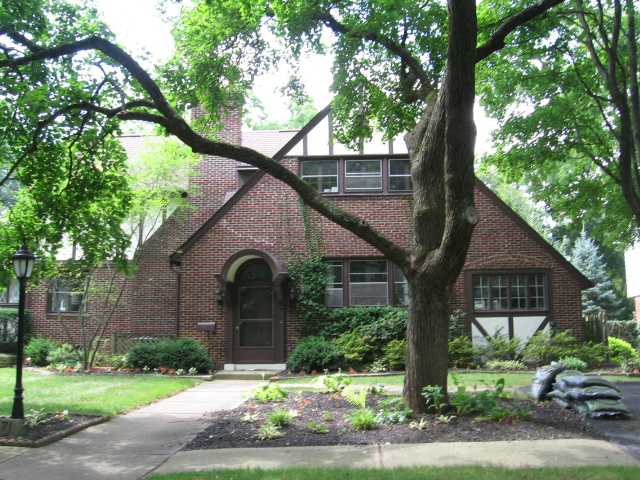
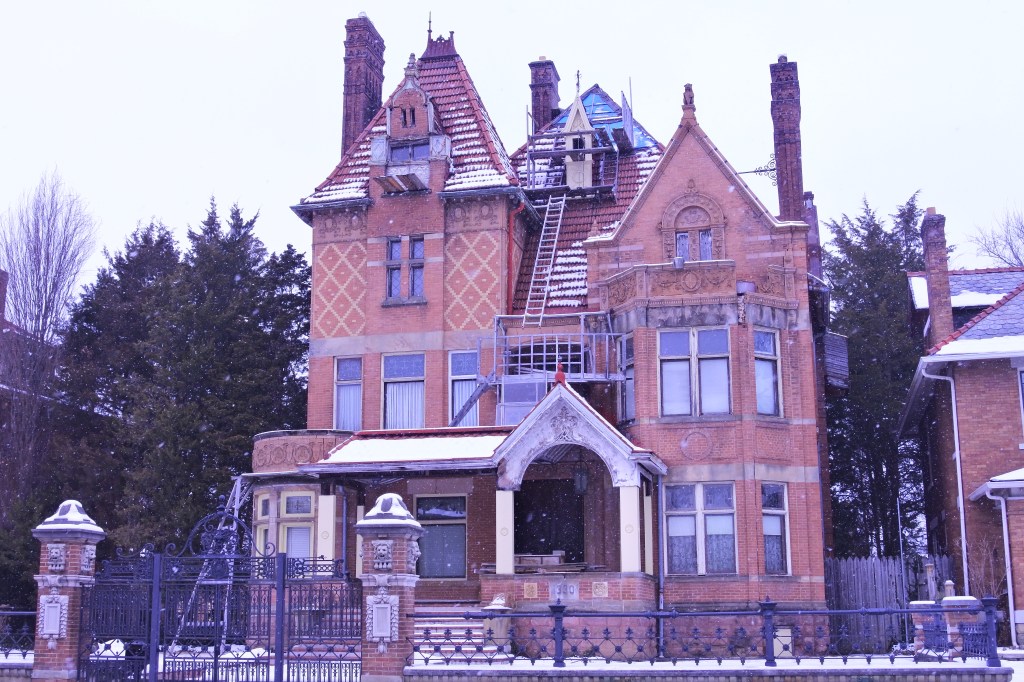
Shaker Square- A Transit Rich, Walkable, and Diverse Cleveland Community

Shaker Square is technically in Cleveland’s Buckeye-Shaker neighborhood but I carved out what is more considered the Shaker Square/Larchmere district. This includes the most stable portion of the Buckeye-Shaker neighborhood and even a sliver of Shaker Heights. It is the area between the western border of Shaker Heights and Moreland Blvd (in the southern half) and the area between Shaker Square-Fairfield Hill Drive and MLK Dr and Coventry Rd in the northern half. Shaker Square has lived on the edge of some of Cleveland’s most impoverished and blighted communities (i.e. Buckeye, Mt. Pleasant and Woodland Homes) since the 1960s. What has kept it stable is the success of the Larchmere and Shaker Square biz districts and the stability of the Shaker School district present in the eastern half of the neighborhood.

Development of Shaker Square as a American Colonial-Georgian Shopping Center began 1927. At completion, it was the second planned shopping Center in the US after the Country Club Plaza in Kansas City. Many attractive restaurants, shops, bars, art galleries, and unique shops line Shaker Square and Larchmere. The neighborhood is also anchored by a cinema & Dave’s Supermarket. Other urban amenities include great transit access, stable but affordable housing, a high level of walkability, great tree canopy, and attractive architecture especially the 1920s Tudor Apartment buildings. Shaker Square still suffers from perceived crime problems and this has really held the neighborhood back and kept it highly undervalued from a real estate perceptive. Most of this concern is mis-placed due to Shaker Square’s close proximity to poorer parts of Cleveland. The neighborhood also needs better park amenities, bike infrastructure, and better performing schools in the Cleveland School District portion of the community. There is certainly also room for more density which would increase neighborhood vibrancy and amenities.

Click here to view my Shaker Square Album on Flickr

URBAN STRENGTHS:

* Excellent transit access thanks to many bus lines and a dedicated rail line. This helps give Shaker Square solid access to Dwtn and University Circle.
* Great diversity across racial, economic, and generational lines. Over 50% of households are family households.
* Housing is generally affordable or moderately priced. Some 1-bedroom condos available mainly around Shaker Square selling in the low-mid 100Ks. 2-bedrooms condos, homes and townhouses sell from anywhere btwn 50K- low 200KS deepening on size and condition. Single Family 3-5 bedrooms sell anywhere between 50K-200K.
* Rentals are also very affordable. 1-beds lease for anywhere btwn 600K- the low 1Ks, 2-beds around $1,000s,  and 3 beds in the low $1,000s.
* There is also a decent amount of dedicated affordable housing.
* Great Tree canopy.
* Shaker Square hosts some good cultural amenities including many diverse restaurants, plenty of bars, cafes, and several art galleries. There is also a Cinema and dance studio.
* Retail amenities include a Dave’s Supermarket, Drug Store, a wonderful book store, nice array of boutiques, antiques, creative stores, and home good stores. There are also several dessert spots, a local post office & library, several gym, a specialty hospital, and indoor ice rink.
* Quality historic architecture, especially considering the Tudor apartments. Modern in-fill is generally quality too.
* Urban massing and streetscape is generally quite good other than a couple auto centric spots on Larchmere.

URBAN WEAKNESSES:

* Decent but not great density. A bit surprising considering all the apartment buildings in the neighborhood.
* Bike infrastructure is limited to only the dedicated bike lanes on MLK Boulevard.
* If anything there is not enough higher end luxury product in Shaker Square since the market is so soft.
* Schools are a mix of well performing schools in Shaker that some residents have access to and the poor performing schools in Cleveland. Fortunately in Cleveland there are a couple well performing charter schools and a good Catholic High School and Grade School.
* The neighborhood is generally safe, especially the areas next to Shaker Heights, Larchmere, and Shaker Square itself. Areas around Moreland and MLK Blvds can be a bit dodgy.
* Other than Ambler and Rockefeller park on the north edge, park space is pretty limited.
* Shaker Square sadly still suffers from perspective issue. This is mostly unjustified due to its close proximity to rougher parts of Cleveland. This largely holds the neighborhood’s potential back.
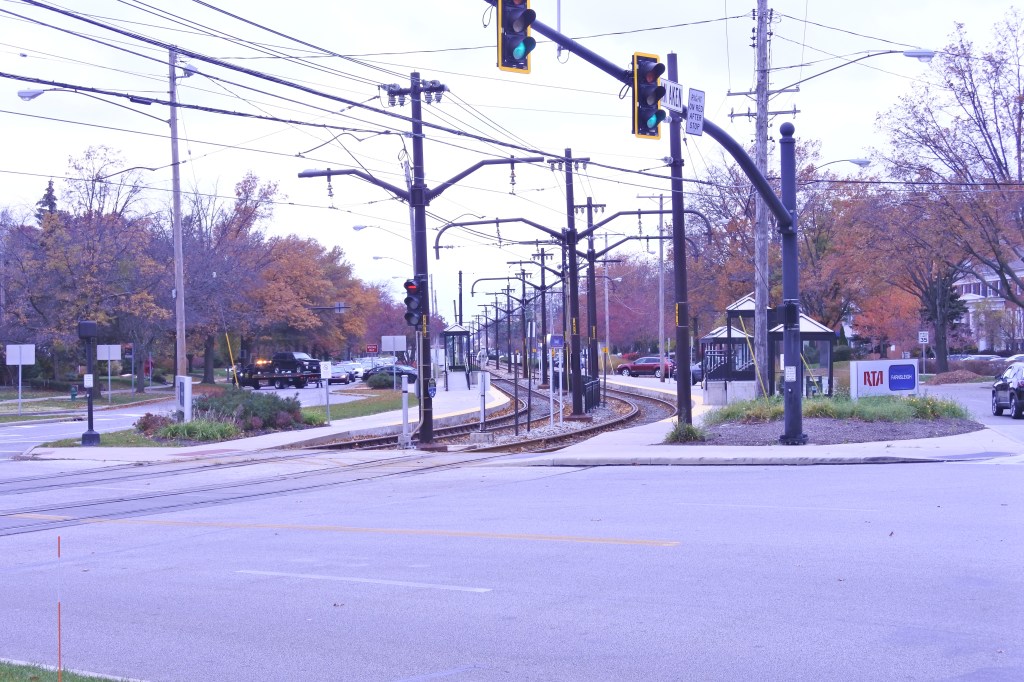
Shaker Heights- A well planned Cleveland inner Ring Suburb

In July 1911, a petition by property owners successfully detached Shaker Heights from Cleveland Heights. But Shaker Heights has a history that goes back almost 100 years before this. The community was originally established as the North Union Shaker Settlement in 1822 with just over 80 individuals of the infamous Unity Society of Believes “aka the Shakers”. The community peaked in the mid 1800s but fizzed out by the late 1800s. Modern day Shaker Heights was a planned community developed by the Van Sweringen brothers, railroad moguls who envisioned the community as a suburban retreat from the industrial inner city of Cleveland with a direct rail connection to Terminal Towner in Downtown. Development really picked up in the 1920s and Shaker filled in by about 1950.


Shaker Square was originally supposed to be within the Shaker Heights boundaries, but due to the founders’ wish to keep retail out of their community, it was given over to the city of Cleveland. This agreement also led to this portion of Cleveland remaining within the Shaker School District. Shaker Heights has been an attractive, amenity rich inner ring suburb since its founding characterized by stringent building codes/zoning laws, great park amenities, well rated schools, quality transit access, and good urban business districts. Like Cleveland Heights, Shaker made conscious efforts toward Black-White integration starting in the late 1950s. As a result, Shaker Heights avoided many of the problems created from practices such as blockbusting and white flight and now is a very integrated community, albeit still facing significant economic white-black disparities. To become a great urban community Shaker needs to relax its zoning and permit more density and mixed use development. It especially needs better urban development at the Van Aiken District and Lee & Van Aiken. This is also need for more bike infrastructure and cultural amenities.

Click here to view my Shaker Heights

URBAN STRENGTHS:

  • Excellent family diversity (65% Family households) and racial diversity.
  • Great transit access helped by have two light rail lines running through.
  • Very safe community overall.
  • Up to date ADA infrastructure was very consistant.
  • Excellent array of walkable public and private schools. Really impressed with the sheer number of elementary schools providing a walkable options to most residents of the City. Shaker is also home to a large concentration of expensive private high schools.
  • A decent # of rentals. 1-bedrooms are concentrated around Shaker Square and the Van Aiken District and lease for btwn $700 and the low $1,000s. 2-beds a bit more broadly distributed lease in the law $1,000s, and 3 bedrooms btwn the low 1Ks and low 2Ks.
  • Good for sale diversity. Cluster of 1-bed condos along Van Aiken selling btwn 30K-100K, 2-beds sell for anywhere btwn 30K-300K and can be a condo, small house or townhouse. 3-bed homes sell anywhere btwn 85K-400K. 4 & 5 beds is a bit more expensive but with the additional of mansions selling btwn 500K-1 M.
  • Excellent recreational amenities including a whole system of trails, woods, and lakes along Shaker’s natural streams. Instead of burying them (like most cities) Shaker made them assets. Also plenty of playgrounds, ballfields, and a swimming poor spreader throughout.
  • Culturally a decent amount of restaurants, bars, and cafes in Shakers 4 Commercial nodes (Shaker Square/Larchmere, Lee & Van Aiken, the Van Aiken District, and Fairmount Circle), several art galleries, the Shaker Square Cinema, and Shaker Historical Museum.
  • Retail amenities are good including 2 supermarkets, several drug stores, a wonderful bookstore, hardware store, lots of general retail, great array of boutiques and creative retail at Larchmere and the Van Aiken district, plenty of banks, dessert spots and gyms.
  • Excellent tree canopy.
  • Many gorgeous mansions but also lots of more modest mid century architecture.

URBAN WEAKNESSES:

* Poor urban density. Closer to that of an autocentric suburb than urban district.
* Street connectivity works in Shaker Heights but intentionally confusion. This certainly hurts Shaker’s imageability.
* A couple recreational/bike lanes but no dedicated bike lanes are strongly connected routes.
* Medium household income but still some decent diversity. 8.5% of population is under the poverty line.
* No community theaters, museums, or live music venues in Shaker.
* Mixed bag in terms of urban form with Shaker’s Biz district. Shaker Square (just outside of Shaker) is great and so is Larchmere. Lee & Van Aiken is mostly strip malls with parking in front, the Van Aiken District is quasi urban but a nice semi-lifestyle center, and Fairmount Circle is small but walkable.
* Having lots of auto centric biz districts obviously leads to some crummy modern in-fill. Good mixed-use infill at the Van Aiken District however.
* Outside of the business district, pedestrian activity is pretty sparse. 

Cleveland Heights [West]- An Affluent but Urban Cleveland Suburb

For evaluation purposes I divided Cleveland Heights around Superior Road. Southwest of Superior Road is what I consider to be West Cleveland Heights. This is the more affluent, urban, and amenity rich portion of Cleveland Heights that contains its best housing and the business districts of Cedar-Lee, Coventry, Cedar Fairmount, and Cedar Taylor.

Rockefeller was one of the first to come to Cleveland Heights at present day Forest Hills Park. More consequential development began with the Euclid Heights development in 1892. By the end of 1899 the streetcar reached Cleveland Heights along Mayfield Road to the old village of Fairmount. In 1910 Cleveland Heights had a population about 5,000 people and 15,400 by 1920, This tripled in the next decade and by 1960 the City hit its highwater mark of 61,813. Cleveland Heights is one of Cleveland’s most diverse urban areas. This first began in the 50s when the City saw a large influx of many Jewish people leaving Cleveland, particularly the Hough and Glenville neighborhoods. The City also dismantled its restrict covenants in the 1960s and encourage many African American families to move to the City helping the City move from only 1% Black population to its current representation around 40%.,

From an urban perspective West Cleveland Heights excels at having multiple concentrated urban business districts well distributed across its borders. It also has gorgeous historic architecture, high levels of cultural and retail amenities, convenient access to University Circle, excellent housing diversity, and is safe. Surprisingly Cleveland Heights has very low density. These leads to vibrant activity being concentrated in its biz nodes. There is also need for better schools, more bike infrastructure, and several autocentric areas along Mayfield Rd.

Click Here to view my Cleveland Heights [West] Album on Flickr

URBAN STRENGTHS:

* Generally very good ADA infrastructure minus some intersections without modern ADA infrastructure.
* Access to Dwtn Cleveland is pretty good but excellent access to University Circle an employment center of around 30K jobs.
* Excellent economic diversity but also racial and family diversity.
* Excellent diversity of for-sale housing. A good # of 1-bedroom condos selling anywhere btwn 80K to the low 200Ks; 2-bedrooms are either older condos selling in the 100Ks/low 200Ks or new townhomes selling in the 300Ks & 400Ks. Most 3 bedrooms sell between 75K-300K but some larger and newer townhouses sell around 400K & 500K.  4 & 5 bedrooms also have a great range. The large mansions sell btwn 500K and 1 M.
* Rentals are generally very moderately priced. 1 beds lease anywhere btwn &700 to low $1,000s, 2 beds btwn 800K and mid $1,000s, 3-beds in the low-mid $1,000s. 4 beds a bit more.
* Solid park spaces ring west Cleveland Heights including  Doan’s Broke (aka Shaker Lakes), Lake View Cemetery, Forest Hill Park, and Cumberland Park, and Cain Park/
* Culturally a good number of ethnic restaurants, bars, cafes, and breweries. Also a historic cinema that still operates, several local theaters and art galleries, and convenient access to all the museums and other cultural amenities of University Circle and Little Italy.
* Solid retail amenities as well including  3 full service supermarkets, drug store,  several book stores, a hardware store, banks, dessert joins, and plenty of boutiques and unique retail dispersed among Cleveland Heights several solid commercial nodes. There is also a public library, several top notch hospitals located 2-3 miles away in University Circle and many big box stores in Several & brand name retail in Severance Town Center 1 mile away.
* Excellent tree canopy.
* Great historic architecture and generally urban in-fill is good except for some auto centric bldgs here and there.

URBAN WEAKNESSES:

* Nice dedicated bike lane along the Shaker Lakes and a small one along Lee road but no dedicated bike stations.
* Poor density at just over 5,000 per square mile.
* Good pedestrian activity in the commercial nodes. Pretty dead in the residential streets, especially where the larger homes are located.
* Good array of walkable schools but rating are only okay.
* Generally a safe City but some rough spots, more in east Cleveland Heights however.

Downtown Columbus, OH

Downtown Columbus has many subdistricts  but the main three can be separated into:
– the Discovery District (eastern edge)
– the High Street Corridor (main north-south St.), also called the Uptown District
– the Riverfront along the Scioto River.
Other subdistricts include the Arena District (NW portion), Capitol Square (at High and Broad), and the Columbus Civic Center (along the River).

The City of Columbus began to develop in 1812 with the purpose of creating the state’s new capital. This was originally layer out across the river in Franklinton, but quickly shifted to Downtown Cbus. The current statehouse was built in 1857. By the turn of the 20th century, office and commercial activity was concentrated along High and Broad  in addition to Long and Gay Streets. Surrounding these areas was several mostly residential neighborhoods including German village to the South, Market Mohawk to the SE, large high-end mansions further east along Broad, and Fly town where the Arena District stands now.

The Post WWII era brought many modern high-rises  helping Dwtn attract more office jobs. Columbus also engaged in very intense urban renewal efforts leading to the wholesale removal of much of its southern southwestern, and eastern edges. This left behind large swaths of dead spots comprised of surface parking lots, and low rise buildings. Fortunately the character of Dwtn has slowly improved for the better the past two decades thanks to several new parks, the Arena District, revitalization of in-tact historic streets like High, Gay, and Long, and significant in-fill throughout. Dwtn has also invested much in its streetscaping and bike infrastructure.

The next stage in Dwtn Cbus’ urban growth evolution is to become a solid place to live. This requires more residents, in-fill projects on surface parking lots, and much more retail amenities like a full service grocery store, target, and small businesses. Hopefully with Columbus’s strong market this can become a reality soon.
Click here to view my Downtown Columbus Album on Flick

URBAN STRENGTHS:

* Nice set of dedicated bike lanes within Dwtn and especially out to the metro area via several trails along rivers. Dedicated bike lanes connections to City neighborhoods is not terribly comprehensive. Good dedicated bike coverage Dwtn and to many inner-city neighborhoods in Cbus.
* Very gridded Dwtn street network but plenty of wide 1-way streets. Fortunately many of these converted a parking lane to dedicated bike travel.
* Generally good ADA infrastructure depending on what part of Dwtn one is at.
* Lots of good urban in-fill being built Dwtn, helpful to offset some of the awful stuck built between the 1960s-1980s.
* While not to the level of Dwtn Cleve or Cincy, the buzz of Dwtn Cbus is improving.
* Culturally several modest  museums Dwtn including the Art, State House, the Cultural Arts Center, the Fire Museum , and several historic homes. The Veterans & COSI museums are just across the River in Franklinton. Good array of performing arts theaters mixing historic and new theaters, including many small theaters. Cbus also has an Opera and Ballet. Also a decent array of art galleries, restaurants, bars, nightclubs, and live music venues.
* Dwtn hosts both a NHL stadium , MLS team, and minor league baseball park in the Arena District. The Convention Center is on the border with the Short North.
* At 25%, pretty high pct of households are family households. Pretty good for Dwtn.
* Pretty good array of for-sale product, generally higher end but good diversity. 1-bed condos sale btwn 150K-350K. 2-beds are at a similar price but some higher end product in the 400Ks&500Ks especially when you include townhomes. Good array of 3-bed product selling btwn 500K-1M.
* Good amount of rental product, typically priced for American Dwtns. 1-bedrooms lease in the $1,000s, 2-bedrooms in the 1,000s& 2,000s. 3-bedrooms are pretty limited.
* Dwtn Cbus has come a long way with improving its parks Dwtn in the past decade building the Scioto Mile Promenade, Bicentennial Park, Columbus Commons, McFerson Commons in the Arena District, and North Bank Park Pavilion. This supplements older parks & plazas such as Sensenbrenner Park, Topiary Park, and the Ohio State House Grounds.
*  Solid Dwtn employment with over 85K jobs. Vacancies are average.
* High college enrollment with nearly 34K students attending school within Dwtn. 

URBAN WEAKNESSES:

*Overall transit service in Columbus is so . Probably about middle of the pack for a major American City. Fair amount of suburban areas are within the City.
* No bus connection between dwtn and the airport
* Density is so , but improving as more in-fill res. projects come to Dwtn.
* Some spots of good vibrancy but certainly plenty of dead spaces Dwtn.
* No strong civic plaza although one could argue its either the Statehouse or Bicentennial Park. Columbus Commons was meant to be this and has good programming but was a major disappointment from a design perspective.
* Two nice high schools downtown. Also a arts middles school but located outside of the Dwtn area.
* Decent Dwtn retail and neighborhood services but not on the same level as Dwtn Cleve or Cincy. No supermarket, shopping mall, nor major retailers. But Dwtn does offer several drug stores, a hospital, Dwtn library and post office, and some boutiques and clothing stores. Better shopping amenities located in adjacent inner city district of German Village and the Short North.
* Many surface parking lots have been built on, but Columbus certainly has plenty more to go especially in the eastern half of the district. Massing is often good in areas of density and form. But also areas of crummy 1960s-1980s low rise buildings often with auto centric orientation.

West Boulevard- A solid early 20th century district on Cleveland’s Westside ready to be noticed

West Boulevard developed around the turn of the 20th century as Cleveland’s streetcar system extended outwards, primarily along Lorain. W 105, Memphis, and Dennison were also built as mixed-use streets although they have experienced a good amount of blight and auto centric development. Large homes were built on set back lawns along the curvilinear West Blvd. This homes demand the highest prices in the neighborhood generally btwn 150K-200K.

West Boulevard started declining probably in the 70s but has retained most of its housing stock. (The portion of the district east of Dennison is the most blighted abutting Stockyards). Like Jefferson to the west it has remained static for decades, but households are less wealthy. This is also one of Cleveland’s most diverse districts hosting large Hispanic, Middle Eastern, Black, and Asian Populations. My hope is that the general revitalization of nearby Cleveland westside districts (Lakewood, Kamm’s Corner, and Detroit Shoreway) will arrive to West Boulevard. I’d love to see the Lorain Station commercial district (btwn West Boulevard and W. 90th) revitalize as it contains most of its attractive early 20th century 2 story fabric.

Click here to view my West Boulevard album on Flickr

URBAN STRENGTHS:

* Better urban form along Lorain between W 117th W 92nd especially in Lorain Station section.
 Many large stately homes from the early 20th century with massive years along West Boulevard.
* Excellent racial diversity and decent economic and generational diversity.
* Convenient access to Dwtn with solid public transit service.
* Good array of parks west od Dennison Street. Really no recreational spaces east of Dennison St.
* Indoor mountain bike park within an old industrial site.
* Very good ADA and sidewalks infrastructure.
* Some very nice homes especially the quasi-mansions along West Blvd. Also some crummy woodframe worker housing not maintained well, especially east of Dennison St.
* A good amount of school options K-8 mixing private, public, and charter options. Mixed however in terms of quality education. No walkable High Schools.
* Decent urban commercial massing especially along Lorain street where much of the historic commercial is still in-tact even with high vacancies. Recent streetscaping project along Lorain as well.
* Decent amount of retail amenities including a discount supermarket, many ethnic grocerias & markets, a drug store, public library, Shoppers World (like k-mart), Rainbows, a fabrics store, good array of banks, and several discount boutiques. 

URBAN WEAKNESSES:

* Moderate level of vacancies in commercial district and residential especially east of Denison.
* Limited bike infrastructure.
* Rentals are kinda limited but generally very reasonably priced.
* For Sale product is a mix of stable and standing but blighted. Majority of housing sells between 50K-100K. But some below 50K. Larger well maintained homes will sell between 100K-150. Some of the larger homes along West Blvd are pushing 200K. Sale prices are too low for any quality new in-fill. In-fill is generally crummy auto centric stuff.
* Good amount of rental product but all pretty inexpensive. Mix of decent and poorly maintained rentals.
* Cultural amenities are pretty limited but include a decent array of ethnic restaurants, lots of dive bars, and several cafes.

Jefferson- A stable working class neighborhood on Cleveland’s Westside

Jefferson is a staple middle/working class district on Cleveland’s Westside with relatively good occupancy and in tact urban form. It is also a very affordable neighborhood  attractive to immigrant groups and one of Cleveland’s most diverse areas. About 14% of the population is foreign born and over half of the population is a minority. One can find an array of ethnic restaurants, bakeries, markets, along Lorain and West 105th Street.

The district also excels at great transit access and park recreation. It has decent walkable schools. ADA infrastructure, historic homes, and connectivity. My hope is that the general revitalization of nearby Cleveland westside districts (Lakewood, Kamm’s Corner, and Detroit Shoreway) will arrive in Jefferson. The neighborhood has good urban form but has remained in a similar place for many decades leading to a static maintenance of existing homes and commercial fabric with very little new urban infill. The biggest urban areas to improve include: urban infill long Jefferson’s commercial districts and more cultural and neighborhood amenities.
 
Click here to view my Jefferson Album on Flickr

URBAN STRENGTHS:

* Highly diverse neighborhood including sizable Middle eastern and Hispanic community. Considered the center of Middle Eastern community at Lorain and West 117th in Cleveland. Also great economic and generation diversity. Lots of families here.
* Excellent public transportation access especially along Lorain and near the Red Line Transit Stations.
* Many attractive brick and wooded streets with solid owner occupancy.
* Recent streetscape investments on Lorain west of W. 117th including mid-block pedestrian crossing.
* Several great park assets pretty well distributed throughout the neighborhood including Gunning Park Recreation Center, Jefferson Park, Halloran Park (includes an indoor ice rink), Mohican, and Worthington Park.
* Pretty good pre WWII architecture mixing in brick and woodframe styles. Historic commercial is mostly 2 story brick structures.
* Good Tree canopy.
* While not all the schools are highly rated, good mix of walkable schools including several grade schools and the John Marshall High School focusing on engineering.
* Culturally a wonderful array of ethnic restaurants, several diverse bars, and some cafes. Not much else culturally.
* Good array of retail amenities although much of them are auto centric. This includes a target, office max, tons of ethnic grocerias, a couple supermarkets, several drug stores, post office,  a hardware store, and other typical neighborhood retail.

URBAN WEAKNESSES:

* Rentals are kinda limited but generally very reasonably priced.
* For Sale product is stable but pretty inexpensive. Most homes sell between 75K-150 and are 3 & 4 bedrooms with decent sized yards. Great neighborhood for a starter home. Some nicer product between 150-200K. But sale prices are too low for any quality new in-fill. In-fill is generally crummy auto centric stuff.
* Some blight in the neighborhood especially along the commercial districts where there is a fair amount of unoccupied store fronts
* Limited bike infrastructure.
* Urban form of commercial district is a mixed bag. Decent stretch along Lorain between W 136 and 117. The W 117 & Lorain node has the best form. Some very auto centric areas near Lorain and W 140th. parts of W 117th, Puritas, and W 150th. 

North Clintonville- A Columbus neighborhood that bridges the gap between American’s streetcar and autocentric eras

North Clintonville is the northern half of Clintonville north of Henderson/Cooke. It includes the sub-district of Old Beechwold, East Beechwold, and Sharon Heights. Old Beechwold is a historic development from the pre-WWII era that was developed after the failure of an early Columbus Zoo. Here, single family homes using stone, brick, and stucco are set on well canopied curvilinear streets. East Beechwold is a bit newer mixing homes from the 1920s-1950s. Sidewalks in both neighborhoods are hit or miss. Sharon Heights is consistently the most suburban of the sub-districts with housing squarely between the 1940s-1960s and limited sidewalks.

The Beechwold business district along High Street between Henderson and Morse Road is the most urban in North Clintonville. It has clusters of businesses with urban orientation and walkability but lacks consistently. Remaining commercial districts are pretty auto centric across the district.

North Clintonville excels in providing quality amenities such as good parks, quality housing, low crime, and good retail amenities, although often oriented towards cars. Because the neighborhood bridges the early 20th century streetcar era and the full auto centric era, it has a lot of suburban tendencies that prevent it from being a viable urban district. But with some intentional urban commercial overlays and densifications, North Clintonville could become a viable urban district. It certainly has the enough quality public transit access and connectivity to pull it off. 
Click here to view my Beechwold album on Flick

URBAN STRENGTHS:

* Some very nice stretches of historic homes old Beechwold and East Beechwold sub-districts. Nice 1920s-1940s brick housing with some older woodframe. Plenty of blah 1950s-1960s housing as well.
* Good access to Dwtn and surprisingly good transit access.
* A pair of north-south bike paths running along the western and  eastern edges of the district.
* Plenty of housing product selling between 200K-500K depending on condition and size. Vast majority of this are SF homes but some condos mixed in as well. Top of the market is larger SF homes selling btwn 500K-700K. The majority of these are in the Old Beechwold subdistrict.
* Several nice park and recreational amenities including the Olentangy River Trail, Beechwold Ravine, Overbrook Ravine, Kennedy Park, Broadmeadows Parks, Rush Run Park, and Sharon Meadows Park.
* Very safe neighborhood. Limited blight.
* Cultural amenities include a good array of restaurants (although many are fast food joints), bars, and some cafes.
* Good neighborhood amenities but most of them are auto centric. A couple supermarkets & drugstores, a post office, a couple bookstores, several boutiques, plenty of banks, a hardware store, a target, and other general retail especially in the Graceland Shopping center.
* Other than the Graceland Shopping Center and some WWII developments, great tree canopy in North Clintonville. 

URBAN WEAKNESSES:

* Poor Density. More similar to a suburb.
* Commercial districts are mostly auto centric but some climbs of good urban form along High Street between Cook and Morse Road.
* Some ADA infrastructure and sidewalks south of Morse but its really hit or miss. Sidewalks are mostly non-existent north of Morse in the Sharon Heights sub-district.
* No dedicated bike stations though in this portion of Clintonville.
* Some rentals but almost all of them are 2 & 3 bedrooms. s generally at moderate rents. Mix of moderate and more expensive rentals.
* Pedestrian traffic is pretty limited.
* Really no museums here although there are several old historic sites just north in Worthington. No theaters and limited live music and art galleries.
* Hospitals and library are located in adjacent districts, but one most drive there.
* Lots of quality schools south of Morse Street. Only one in North Clintonville.
* Some decent commercial infill built to the street but also lots of unattractive auto centric buildings. 

Clintonville- Columbus’ most white-collar urban district

Clintonville for much of the 1800s was the “empty space” between Old North Columbus and Worthington along the High Street stage coach route. In an attempt to draw others to the area the Bull family built businesses in the center of Clinton Township, along North High Street in the mid 1800s. By the early 1900s, downtown Columbus residents and Ohio State professors built summer homes here. Eventually, with the extension of streetcar lines into the neighborhood, Clintonville filled in.

Clintonville never really lost its market strength and luster the several decades after WWII. But High Street and Indianola lost much of their urban fabric due to miss guided auto centric development. Since the 2000s the Clintonville housing market has strengthened even more and now most homes sell in the 300ks and 400ks. Its high market value is due to Clintonville’s strong schools, great parks, large back yards, safety, and convenient access to Dwtn and Ohio State. There are several urban areas for Clintonville to improve including more quality urban infill along its commercial corridors, more density, better bike infrastructure, and more intentional affordable housing. Clintonville residents, while mostly liberal, can be rather Nimbyistic blocking quality urban in-fill and affordable housing projects.
Click here to view my Clintonville album on Flickr

URBAN STRENGTHS:

* Okay access to Dwtn but very convenient access to Ohio State, obviously another major jobs center.
* Good number of rentals generally at moderate rents. 1-bedrooms btwn 700-$1,000, 2-bedrooms btwn $800 and the low $1,000s, and 3-bedrooms generally in the mid $1,000s.
* Excellent tree canopy.
* Great park amenities including the Olentangy trail and several large adjacent green spaces, the expansive Columbus Park of Roses, several ravines and sports fields.
* Culturally Clintonville includes a nice diversity of restaurants, bars, & cafes, a local movie theater, a handful of art galleries, and the Columbus Civic Theater.
* Good neighborhood amenities, although often with more suburban form. This includes several full sized supermarket, a public library, a couple drug stores, several, book stores, a good array of boutiques, and other general retail services.
* This is a very safe community with limited blight.
* Great array of public/private schools well representing K-12. 

URBAN WEAKNESSES:

* Bike infrastructure is ok. A couple bike lanes and one dedicated bike station.
* For Sale housing is on the high side but still a decent amount of diversity. Good amount of modest SF housing selling in the 200Ks. Most product of 3 & 4 bedroom well maintained homes sell in the 300Ks & 400Ks. L
*Larger SF homes sell in the 500Ks & 600Ks.
* Ok racial and economic diversity.
* The urban form of Clintonville’s business districts is hit or miss. Some nice stretches of urban form along High Street (especially near Como) and a nice node on Indianola. But large primarily auto centric stretches on both streets, especially Indianola.
* Limited modern in-fill and what does exist is mostly autocentric. 

Merion Village- Another quality Columbus Urban Neighborhood on the Southside

I followed the traditional boundaries of Merion Village but exclude the industrial portion of the district west of High Street. Very few people live here.

The district is named after the Merion family who settled in Columbus in 1809 and purchased  1800 acres of land which became Merion Village. Development started in the district in the 1830s with the construction of local canals. The Merions made sure that their holdings near the Scioto river became the industrial hotbed of Columbus. The residential component of the neighborhood east of High Street (where this evaluation begins) developed generally after the Civil war starting along its northern edge abutting German Village and working its way south towards Hungarian village. Most of the neighborhood was developed around the turn of the 20th century.

Merion Village witnessed some disinvestment starting in the 60s & 70s but nowhere near the level experienced in Black majority districts like Olde Towne East or Driving Park. Its main commercial corridors (High and Parsons) experienced the most blight with these scars are still very visible today. Reinvestment has slowly moved southwards from its border with German Village since the 70s. As a general rule of thumb real estate prices are highest near German Village and lowest in the district’s southern border.

Overall Merion Village is a solid urban district, which will continue to improve as it receives more investment. The most important areas it can improve upon include: revitalizing its commercial corridors along High and Parsons, adding more bike lanes, attracting missing neighborhood retail amenities, and being attentive to providing affordable options as real estate prices climb. 
Click here to view my Merion Village album on Flickr

URBAN STRENGTHS:

* Overall public transit service is pretty good, but better closer to German Village. Still very convenient access to Downtown.
* Great connectivity and street grid.
* Great economic diverse, probably the best in all of Columbus.
* Diverse For Sale housing with un-renovated by solid homes selling in the 100Ks and low 200Ks. Modest but renovated homes selling between 225K-350K. Larger renovated homes selling generally btwn 350K-600K. But given the rapid rise in value in Cbus, low-moderate income residents will soon be priced out of homeownership.
* Decent array of rental product with higher end product closer to German Village and more moderate rates further south.
* Generally a safe neighborhood but still some blight and rough patched along Parsons and southern end of High Street.
* Convenient access to Shiller Park for most residents. This is one of Columbus’ best urban parks. Also a couple ballfields next to the elementary school and a nice green space at Moeller Park.
* Generally high quality sidewalks and consistent proper ADA infrastructure.
* High quality architecture especially the northern half near German Village which is mostly brick. Homes transition to mostly woodframe construction the further south one goes.
* Culturally Merion Village includes a nice array of restaurants, bars, and cafes esp. along Thurman and Whittier. Some stuff on High and Parsons. Also some nice live music venues.
* Neighborhood retail amenities include a supermarket, bakery, CVS, public library, a book store, a hardware store, a music shop, and the Columbus Community Hospital.
* Pretty good access to schools including two public elementary schools and South High School. Also a couple Christian schools as well.

URBAN WEAKNESSES:

* No bike lanes throughout Merion Village but there are several bike sharing stations.
*Racial and generational diversity is decent but not great.
* Some nice residential infill near German Village, but also plenty of newer suburban uses along Parsons and High Street.
* Really no art galleries, museums, or theaters in Merion Village. Although a couple theater companies are located to the north in German Village.
* Missing neighborhood amenities include a post office, retail banks, boutiques, and other clothing retailers.
* Urban massing and quality streetscaping is a mixed bag in Merion Village. Along the major commercial corridors (High and Parsons) is a mix of good urban blocks, auto centric blocks, and deterioration. There are also several very mixed-use nodes along Thurman, Whittier, and the 4th & Moler node where the urban form and streetscaping is quite good. 

Olde Towne East- Columbus’ best Victorian Architecture

Olde Towne East is one of Columbus’ oldest neighborhoods. Development started in the early 1800s with the neighborhood filling in mostly during its post Civil War boom. From this period comes the unique architectural style of Olde Towne East and a good deal of social mixing where rich and poor residents lived in close proximity to each other. Following World War II Olde Towne East went into decline and many of its grand homes of the late 1800s began to deteriorate or were subdivided into apartments and rooming houses.

Revitalization efforts started in the early 1970s as many parts of the neighborhood, particularly surrounding Bryant Street, were historically designated. This encouraged a slow but persistent restoration of these grand homes. By the early 2000s revitalization became more wide spread focusing on rebuilding the Parsons-Oak commercial node. And finally by the mid 2010s the whole district was revitalizing leading to new construction and sales prices extending into the 400Ks. Right now, the Olde Towne East has a nice range of for sale prices between 100K-500K but I fear this will not last, and the neighborhood will be out of reach for many low-moderate income households.

From an urban perspective Olde Towne East is well served by public transit and only 1-2 miles from Dwtn Columbus. It’s retail amenities are still fairly modest but improving (especially at the Oak and Parsons node). My hope is that its main Thorofare along Broad starts to see more development and large mixed-use infill. There are still many vacant lots and buildings to revitalize giving Olde Towne East a bright urban future. I also hope the city permits more mixed-use zoning along more diverse and creative uses to integrate with parts of the neighborhood removed from the Parsons-Oak Commercial node.
Click here to view my Olde Towne East Album on Flickr

URBAN STRENGTHS:

* Fantastic access to Dwtn Cbus being only 1 mile away. Solid public transit as well.
* Great racial and economic diversity. Decent generational diversity with 1/3 of households as family households.
* Good amount of rental housings moderately priced (i.e. 1 & 2 bedrooms around $1,000 and 3 & 4 bedrooms in the $1,000s).
* Good variety of for sale prices, although I do fear that the neighborhood’s rapid appreciating value will start to become cost prohibitive to many long term residents. Homes generally stay within 100K-600K. Modest or unrenovated homes sell between 100-250K. Renovated by smaller homes between 250-400K. Larger renovated homes sell in the 400Ks & 500Ks.
* While many still write up the neighborhood as dangerous there is most certainly a buzz here.
* Wonderful set of historic Victorian homes.
* Cultural amenities include a good set of restaurants, cafes, bars, and some live music venues & art galleries. Some nice museums in surrounding districts like the Kelton House Museum & Garden, and the Franklin Park Conservatory , the Columbus Art Museum, and Botanical Gardens.
* A handful of schools located with Olde Town East and several in nearby Franklin Park.
* Not a ton of urban in-fill but some nice Residential and mixed-use projects starting to arise. 

URBAN WEAKNESSES:

* Decent but not great density. Hopefully as the neighborhood fills in, this will improve.
* Bike infrastructure is decent with one dedicated north to south route and a couple bike station. The district needs an west to east route that connects to Dwtn.
* Still a fair amount of blight even if the neighborhood isn’t dangerous anymore.
* Parks and amenities are a bit limited but not bad. Parks include Blackburn Park, a Recreational Community Center, and a nice playground.
* Retail amenities are a bit limited as there are not supermarkets, drug stores, post office, banks nor library. But the neighborhood includes some nice boutiques, a wine store, a florist. Children’s hospital however is just south of the district and adjacent Dwtn also has some nice amenities.
* The urban commercial node at Parsons and Oak is attractive (with good urban form and streetscaping) but only extends a couple of blocks. Because of its location on the western edge of the neighborhood, commercial is limited in the middle and eastern section of Olde Towne East.