Dahlman- Omaha’s Historic Ethnic Enclave and Home to its Littly Itally District

Dahlman is the neighborhood just south of Dwtn and includes the Little Italy neighborhood which generally is located between 5th and 10th street just south of the historic Union Station. I expanded the traditional Dahlman boundaries to include 16th to the west and Martha St to the south.

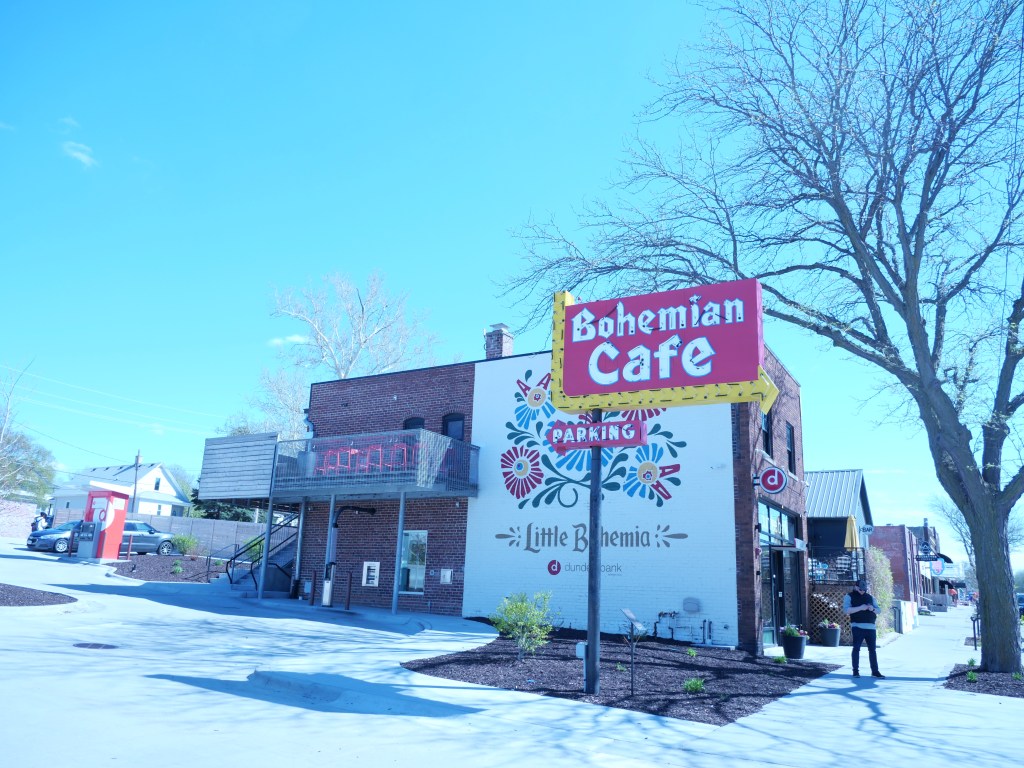
Dahlman is one of the oldest neighborhoods in the City. It was originally platted in 1856. Dahlan’s growth was spurred mostly from the Union Pacific railroad located just south of Dwtn and attracted Omaha’s largest early concentrated of immigrant enclaves including large Bohemian, German, Irish and finally Italian populations all building their own Ethnic Catholic Church. Sicilian immigrants began arriving in mass in the early 20th century concentrated along South 6th Street and South 10th Street and is an neighborhood officially recognized on Google maps.

From an urban perspective Dahlman has good mixed-use nodes at 13th & Hickory St and 10th St near the Historic Omaha Train station. Because of it mostly late 19th century development, many areas of Dahlman are mixed-use. It also has solid public transit and great access to Dwtn being only 1.5-2 miles away along with a great array of for-sale options. Dahlman does pretty well with cultural amenities, hosting many restaurants, bars & cafes but lacks important retail amenities (i.e. supermarket, pharmacy, public library, and other general retail amenities). For Dahlman to be a top notch urban district it needs a lot more density and infill development especially to fill in its dead spaces along the neighborhood’s 3 arterial roads (16th, 13th, and 10th). Urban planners should also work hard to incentivize development around the Union Station as this is a natural extension of the Old Market District to the North. I’d also like to see a lot more rental options here and more park amenities.
Click here to view my Dahlman album on Flickr

URBAN STRENGTHS:

  • Good public transit on the western half of Dahlman but quite mediocre in the eastern half.
  • Decent bike infrastructure including a lengthy dedicated north-south bike lane and a couple of bike share stations.
  • Good but not great ADA and sidewalk infrastructure. ADA curb cuts are present on 70% of all intersections and sidewalks are consistent except on the eastern edge of the neighborhood which honestly feels quasi-rural.
  • Very convenient access to Dwtn being 1-2 miles away. Only a 5 min drive, 14 min bike ride and 20 min bus ride.
  • Good diversity metrics especially economic and generational diversity.
  • Pretty good for sale diversity including a some 1-beds and condos selling anywhere from 100K-500, 2-beds for 75K-500K, 3 & 4 beds btwn 100K-500K. A couple 1 M townhouses.
  • Overall a pretty safe community but some blight in spots, especially the eastern half of the neighborhood.
  • Some good historic commercial architecture, especially on 16th. Dahlman also hosts the Art Deco Train Station and a couple other impressive warehouse buildings nearby.
  • Decent amount of urban in-fill (mostly townhouse but also some larger mixed-use buildings.
  • Pretty good food & beverage amenities. Other cultural amenities are limited to a modern performing arts theater, and a couple live music venues.
  • Good tree canopy throughout most of the district.
  • Thanks to the pre-zoning industrial legacy of the neighborhood it is quite mixed-use even with retail amenities being pretty limited.

URBAN WEAKNESSES:

  • Connectivity is hit or miss depending on whether there are railroads are old industrial areas in between. Also a lot of long blocks.
  • So so density.
  • Only one small Catholic Elementary school in the neighborhood.
  • A mix of rental price points but not a ton of product listed. A couple dedicated affordable apts.
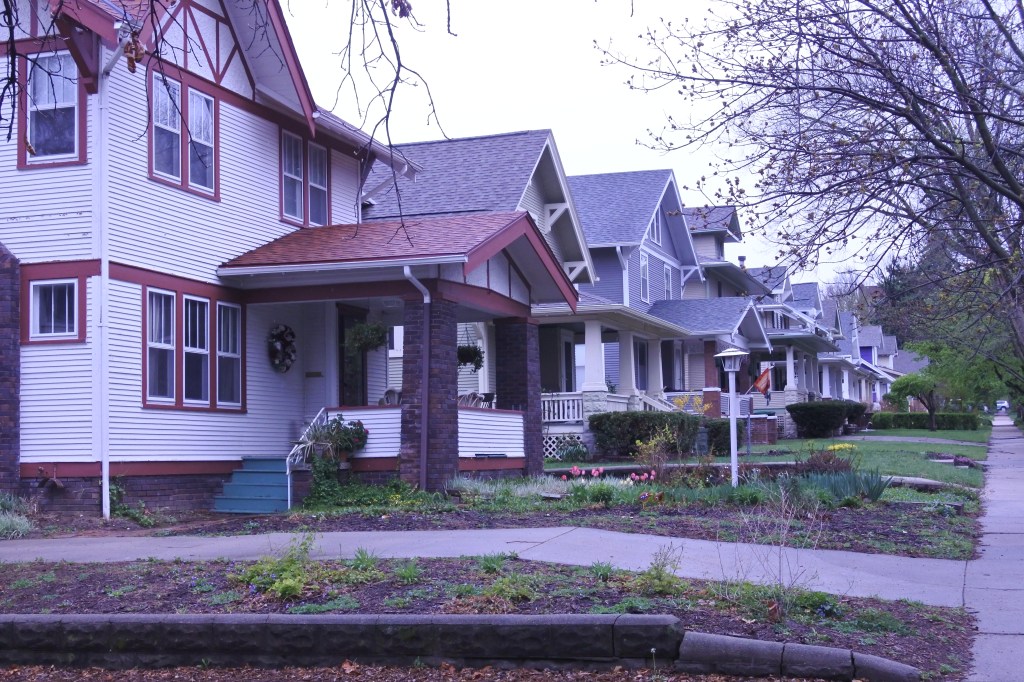
  • Historic residential architecture is generally unatornedworker housing but some more impressive larger homes on the northern edge especially on or near 10th.
  • Parks are limited to the medium sized Dahlman parks and the Lauritzen Botantic Gardens, while expansive is ticketed.
  • Fair number of amenities including a hardware store, a couple banks, several boutiques and gift stores concentrated on a couple blocks of 13th St. There is also a couple furniture stores, several bakeries, a coulpe gyms, the main post office on the northern edge of the district, several churches.
  • A couple good urban blocks along 13th between William & Hickory, at 10th at the Historic Train station and a couple blocks south but lots of surface parking ,auto centric uses, and underutilized buildings along the main streets of 16th, 13th, and 10th Streets.
  • Infrastructure is generally pretty dated and worn out along the main streets.”

Vinton Street- South Omaha Neighborhood with decent Main Street and large Mexico Population

Vinton Street developed in the late 19th and early 20th century neighborhood thanks to the growth of the Union Stockyards in South Omaha. In the early 20th century the neighborhood was filled with Irish, Poles, and Eastern European immigrants. Since the 1970s the neighborhood has increasing seen an influx of Mexican Immigrants although nowhere as concentrated as the CPL district south of here.

From an urban perspective Vinton St has a solid historic commercial district running for about 4 blocks. This is where the concentration of the neighborhood’s retail and cultural amenities are located. Also a couple ugly strip malls along 24th St and some commercial mixed into 13th Street. Vinton St also has great access to Dwtn across all modes of transportation and is generally a pretty safe community, albeit still struggling with some blight thanks to its post industrial legacy. For Vinton St to be a great urban district it needs to start with better schools, more density, and in-fill development (especially along the main streets). More park amenities is certainly needed as well.

Click here to view my Vinton Street album on Flickr

URBAN STRENGTHS:

* Decent urban density. 
* Solid public transit access. Convenient access to Dwtn across all modes: 5 mins by car, 25 by bus & 20 by bike. Nice bike lane running north directly to Dwtn and one bike station in the Vinton Street.
* ADA and sidewalk infrastructure is generally good on the main streets. About half the residential streets have ADA curbs and many of the sidewalks are very narrow.
* Good diversity metrics, especially economic. Hispanic population is probably around 50-60% but good White population too.
* Decent cultural amenities including several restaurants & bars, a couple night/dance clubs, a live music venue, a couple art galleries, a performing arts theater.
* Decent retail amenities as well including 2 large supermarkets, a couple grocerias,  a drug store, several clothing & dress stores, a couple of banks, a furniture store, a couple Mexican bakeries, a floral & plant store, several churches.
* Generally a pretty safe community but some blight is certainly pockets.
* Pretty good urban form along Vinton but some terrible autocentric blocks on 24th Street.

URBAN WEAKNESSES:

  • Only a handful of listed rental properties but generally affordable.
  • Only one poorly rate elementary school in the neighborhood. No other walkable schools really in around Vinton Street.
  • Not a lot of for sale housing variety as most options are modest working homes. 2-beds sell anywhere from 50K-230K 3 & 4 beds sell btwn 60K-300K.
  • Only a handful of smaller parks within Vinton but a couple larger parks on its bounders. Spring Lake and the Omaha Zoo are just to the south but divided by a highway.
  • No local public library or post office.
  • Historic housing is pretty underwhelming a mix of 1920s & 1940 working housing without much ornamentation. Historic commercial district is decent but nothing spectacular.
  • Not much in-fill and what does exist is generally strip malls and auto centric commercial.
  • Pretty good urban form along Vinton but some terrible autocentric blocks on 24th Street.”

CPL Inc- the Heart of Omaha’s Mexican Community

The CPL Inc neighborhood in Omaha, Nebraska, has a unique history characterized by its industrial roots especially the railroads. The neighborhood’s name, CPL Inc, is believed to be derived from a prominent company or industrial entity that played a significant role in its early days. By the mid 20th century the CPL district industrial and transitioned into an attractive walkable working class community with a thriving business district along 24th Street. By the 1970s there was a very established Mexican community in CPL and across the largest South Omaha community. The community is anchored by Our Lady of Guadalupe, which was founded in 1919. The influx of Mexican immigrants into the community helped stabilize the CPL neighborhood and prevent it from hallowing out as other working class communities had down in Omaha.

For CPL to became a top notch urban district is simply needs more population and in-fill development. I do not seen this in its near term future as housing prices are very affordable, not lending well to new construction. Listed rental options are very limited and green space is sparse other than several ball fields.

Click here to view my CPL Inc album on Flickr

URBAN STRENGTHS:

  • Pretty good access to Dwtn. 10 min drive, 25 minute bus ride, ok bike access but not via a bike lane.
  • Sidewalk and ADA infrastructure is generally good but a good number of intersections don’t have ADA curbs and some blocks are either missing sidewalks or have very narrow or disappearing sidewalks.
  • Excellent economic diversity here.
  • Decent school amenities with a public elementary & middle school and a couple private Christian school. Mixed ratings however.
  • My sense is the neighborhood is pretty safe. Some grit due to the industrial legacy of the community but the large influx of Hispanic residents has largely stabilized the community.
  • Excellent historic commercial architecture along 24th Street. Historic residential is generally plainer turn of the 20th century work housing but some detailing in the housing units.
  • Great urban form and streetscaping along 24th street, the main urban business district of CPL. Missouri and 13th Street are wider avenues but mainly residential. Some autocentric commercial stretches on Missouri but not terrible.
  • Decent amount of restaurants, bars, and other commercial mixed throughout the neighborhood.
  • Thick tree cover in the eastern half of the district. Limited in the western half where the 24th st biz district is located.
  • Good food and beverage amenities, several night clubs, a small Latino History Museum, but not much else culturally.
  • Good retail amenities including several Mexican grocerias, a drug store, dollar general, tons of clothing and boutiques, several salons, a florist, a hardware store, several banks, a couple furniture stores, several bakeries, a Catholic Church, a couple community health clinics, and a local post office.

URBAN WEAKNESSES:

  • The western half of CPL has good public transit. Ok access in the eastern half.
  • Ok urban density.
  • A couple of bike lane segments in CPL but not a direct connect to Dwtn nor to other areas. A couple bike stations as well.
  • Very large Hispanic population around 70% but that leads to not much racial diversity here.
  • Modern in-fill is very limited. A handful of urban apartment buildings and auto centric commercial.
  • Only a handful of listed rental options. All were pretty affordable.
  • Lots of affordable homes but not a ton of variety. 2-beds sell btwn 50K-200. 3 & 4 beds sell btwn 60K-250K.
  • Parks are limited to several ballfields and a sliver of Mt Vernon Gardens on the eastern edge of the neighborhood.”

Benson- An early 20th century streetcar suburb annexed into Omaha in the 1910s

The neighborhood is named after Erastus Benson a land speculator, investor and philanthropist who was an early investor in marketing Thomas Edison’s inventions. In the mid-to-late 1910s, Omaha embarked on a course of annexing its suburban communities to its north and west. In a shrewd move, Benson anticipating annexation, decided to build as many civic improvements as they could knowing that after annexation the City would be responsible for assuming these debts.

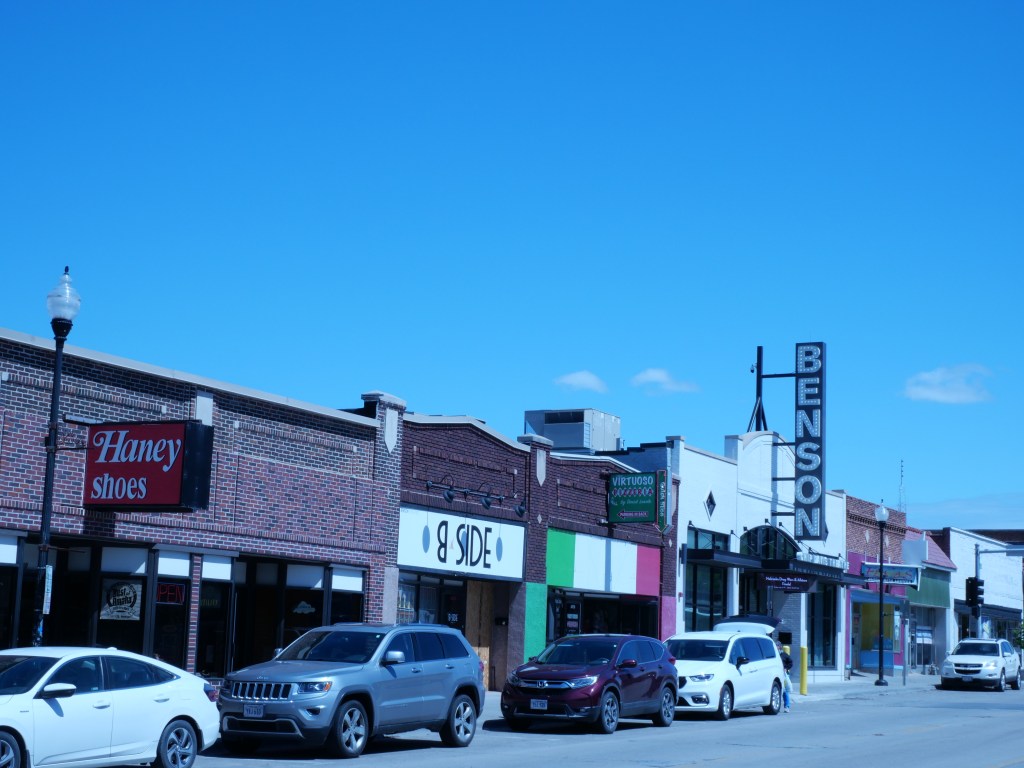
Benson’s best urban attribute is its in tact 4-block historic commercial district along Maple Street, now a designated Historic District. This brings a great array of walkable cultural amenities (esp. restaurants & bars) and plenty of locally owned retail. Benson also has solid public transit access, convenient access to Dwtn, several walkable schools, good housing diversity, lots of parks, decent tree canopy, and a high level of safety.

While there is a concentration of denser housing from the 1910s-1920s surrounding Maple street, much of Benson is medium density bland mid-century housing. Benson also has some awful stroad stretches along Radial Highway, 72nd Street, and the Western half of Maple Street. For Benson to be considered a top notch urban district it needs more density, urban in-fill along its stroads, more racial diversity, and much better bike network.

Click here to view my Benson album on Flickr

URBAN STRENGTHS:

  • Convenient access to dwtn being only a 10 min drive and 25 min bus ride.
  • Solid public transit access.
  • Good street connectivity that is well connect and generally has small blocks albeit there are some larger blocks on the southern edge of the neighborhood.
  • Excellent economic diversity and solid age diversity
  • Generally good sidewalks and curb cuts but a 1/3 of intersections without ADA curbs and some streets missing sidewalks in the Southwestern corner of the district.
  • Pretty good historic commercial architecture along Maple St.
  • While often poorly rated Benson has a lot of walkable schools for all ages and has several Catholic and private schools including a larger Jesuit High School.
  • Some 1 bed rentals that lease anywhere in the 1ks. More 2-bed options leasing anywhere from $800-2K. Good amount of 3-beds that lease close to 2K. A couple large affordable housing towers here.
  • Good for sale diversity including a decent # of 1-bed detach SF homes selling anywhere from 50K-150K. 2-beds sell btwn 75K-350K. 3 & 4 beds sell btwn 90K-550K with the most expensive housing concentrated in the Country Club District.
  • Overall a very safe area.
  • Good array of small and medium sized parks well dispersed throughout the district. Also a public swimming pool several ballfields and ball grounds and the large Benson Park just north of the neighborhood which includes a lake and extensive golf course.
  • Good tree canopy.
  • Retail and cultural amenities are overwhelming concentrated along Maple St especially the 4 block core between Radial & Military. Solid cultural amenities including plenty of food & beverage businesses, a couple breweries, lots of night clubs, a couple live music venues, plenty of galleries, and a performing arts center in a historic theater.
  • Good retail amenities including several groceries, a pharmacy, lots of boutiques, gift shops, and unique locally owned stores in the core of Maple, a comic store, a couple toy stores, several banks, plenty of dessert joints & gyms, some home good & furniture stores, a local post office and library, plenty of churches and a handful of medical office. A couple supermarkets and big box stores located on edges.”

URBAN WEAKNESSES:

* So so density for an urban area.  
* Limited bike lanes and really no direct bike connection to Dwtn.  A handful of dedicated bike stations in the neighborhood.
* Limited racial diversity as this is at least an 80% White district.
* About half of the housing stock is pretty bland mid-century post war housing or ranches. Best historic residential is in the County Club district. Also some good 20s and 30s modest homes concentrated around Maple Street the commercial district.
* Outside the core 4 blocks of Maple, the street becomes a mixture of residential, mixed use, and stroad. Streetscaping generally isn’t great outside of the Core of Maple. Radial Highway and 72nd are both poor quality stroads but at least have disinvested sidewalks.
* And a handful of urban infill apartments. Some autocentric infill as well on the stroads mentioned above.

Downtown Omaha, NE

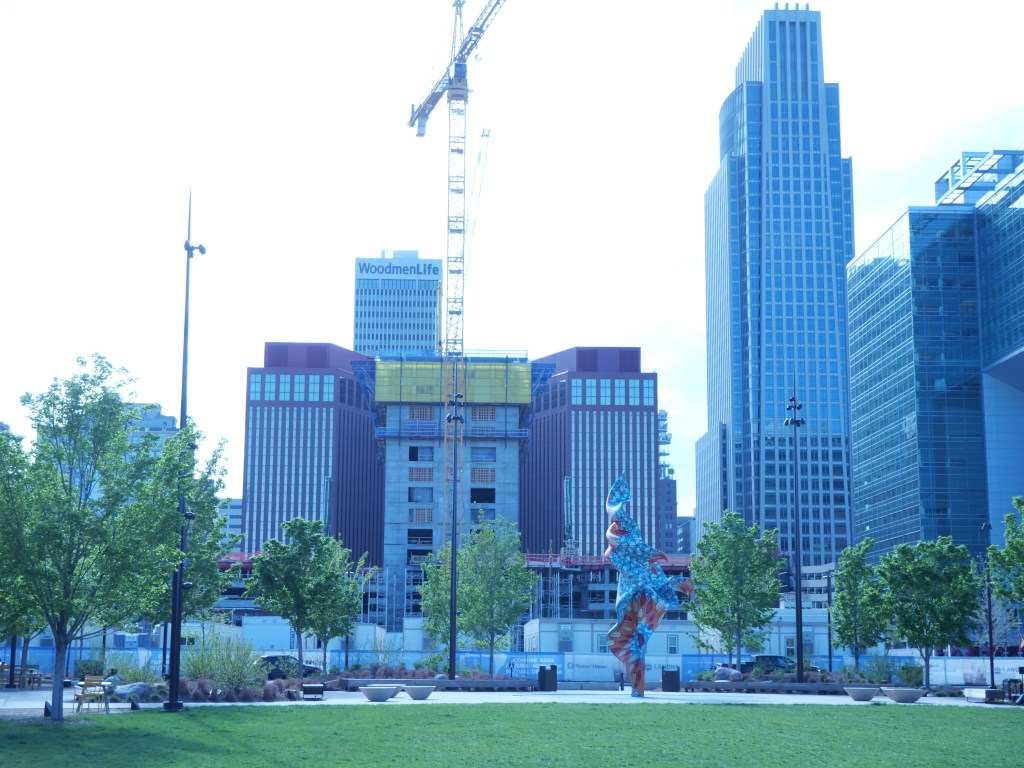
Downtown Omaha developed as the beginnings of Omaha in the 1850s. The Union Pacific Railroad was quickly headquartered here in 1862 and the town exploded. Downtown first developed north of the Union Pacific Railroad station in what is now called The Old Market. The warehouse district has mostly been preserved and is now a bustling walkable district and Omaha’s most important tourist area. Just Northeast of here was the Jobbers Canyon, a large area of massive warehouses. Sadly this was torn down in 1989 but thankfully much of the area has been transferred into high quality Dwtn park space. Another notable historic district was the Sporting District, famous for crime and prostitution in Omaha in the late 19th century and early 20th century. This historic area at 16th and Harney street has some of the best preserved buildings from the turn of the century in Dwtn. Much of the core of Dwtn has been transformed into the outstanding Gene Leahy Makk and the riverfront contains the expansive Heart of America Park and extensive riverfront park space. Lots of dead spaces on the western edge of Dwtn and especially north of I-80 (outside of Creighton University). But some good momentum building with lots of mixed-use development surrounding the ballpark and some good in-fill around Capitol Avenue.  The 20 -acre Mercantile development should break ground soon and will help fill in some of Omaha’s dead blocks near Central High School. Also some good momentum north of the Ballpark with the Millworks Commons development, which is a 50 acres urban redevelopment project.

Overall Omaha has 8 Billion dollars of redevelopment planned along with a new streetcar project to connect to Midtown. This will go a long way towards reenergizing its many dead spaces that have persisted for decades along the western and north edges of Dwtn. I wish more Downtowns had this level of ambition.

Click here to view my Downtown Omaha album on Flickr

URBAN STRENGTHS:

* Decent density for an urban district. Very vertical skyline for a City of this size.
* Generally solid sidewalks and ADA infrastructure. Some ADA curb missing on the edges of the Dwtn & the Old Market.
* Quality public transit in the Pre WWII part of Omaha and some of the post WWII development but really only with in the City limits. The western suburban third of Omaha has virtually not public transit options and similar situation in the suburbs with the except of some public transit service in Council Bluffs.
* Thankfully not a full inner belt around Dwtn Omaha but still two highways cutting on the edge of it.
* Pretty good Bike  share system across Omaha with especially good service in Dwtn and Midtown but decent service is several other neighborhoods.
* Great racial and economic diversity living in Dwtn.
* Decent # of activities for kids including Children’s & Science Museum. a minor league ballpark, and several large parks.
* Public elementary and high school within Dwtn and one elementary school located just north of Dwtn. All are poorly rated.
* Good array of rentals and generally very affordable. Studios lease for $600-1.4K, 1-beds anywhere from $700-2K, 2-beds for 1.1K-3K, and 3-beds are generally pretty limited. Decent for sale options. 1-bed sell btwn 200K-600, 2-beds for 400K-900K, and a decent # of 3-beds in a similar range with some 1M condos.
* Dwtn is generally safe but has the standard American Dwtn issues of homeless and drinkers. Plenty of dead, and gritty spaces on the edges of Dwtn that invite this.
* Dwtn has some World Class parks that many American cities should be envy of including the Heart of America Park with a lagoon, extensive riverfront park, Gene Leahy Mall with diverse amenities and a outdoor stage, Lewis & Clark Landing Park, Miller’s Landing Park and a handful of smaller plazas.
* Good student population thanks to the 8K students add ending Creighton located on the north edge of Dwtn. Not much else however.
* Solid amenities including plenty of food & beverage businesses, several art galleries & live music venues, good # of museums & historic sites, several performing arts centers including mostly modern ones. Other amenities include a ballpark, a couple arenas, a large convention center, and a modest Dwtn library.
* Decent retail amenities but mostly concentrated in the Old Market. This includes lots of boutiques, clothing stores, antiques, a couple bookstores and specialty stores. Also plenty of dessert joints & banks, and a couple gyms.
* Well preserved warehouse district in Old Town. Decent early 20th century mid rise buildings in the core esp. at 16th and Harney St.
* Nice wide sidewalks with pretty good streetscaping overall. Not as good north of 480.

URBAN WEAKNESSES:

* Generally nicely gridded streets but lots of wide one way pairs and blocks are pretty large.
* Decent Bike lanes within Dwtn but they don’t connect much to surrounding inner ring neighborhoods, which themselves lack bike lanes.  Solid bike system in the western suburbs and pretty good in Council Bluffs as well.
* Overwhelming downtown population is either students, young professionals or empty nesters.
* While Dwtn’s park amenities are great I would like to see more smaller parklettes and plazas spread throughout. They are very concentrated along the Riverfront and the Mall moving perpendicular from the riverfront.
* Maybe 30K jobs in Dwtn Omaha. An ok number and Civic leaders are really trying to add another 30K of jobs even after the pandemic.
* No supermarket or drug store dwtn. Only a couple churches dwtn. Limited retail options outside of OId Town especially non-food and beverage businesses.
* Lots of dead space Dwtn outside of Old Town and the Arena District. Eastern side of Capitol Ave is fortunately starting to fill in.
* Decent urban infill along parts of Capitol, surrounding the ballpark, and around Gene Leahy Mall. But most modern buildings are soulless mid-century towers with limited street life creating significant dead zones dwtn.
* Lots of surface parking lots Dwtn especially the western half of dwtn but even more so north of 480. 

Midtown Crossing/Blackstone- Some of Omaha’s Most Dynamic Urban Districts

This Midtown + neighborhood was developed during the turn of the 20th century and includes some of Omaha’s best urbanity. Farnam district is arguably Omaha’s best urban biz district and includes the modern Midtown Crossing’s district (Omaha’s New Urbanist town center), plenty of great urban in-fill, and the historic Blackstone biz district hosts some of Omaha’s best nightlife. Blackstone also host some great turn of the century mansions and there are several other decent mixed-use districts along Leavenworth and Grand Avenue. Medical Center anchors the western edge of the neighborhood and integrates pretty well into the rest of the district.

While this is a top Omaha urban district there is still plenty of room for improvement. Grand and Leavenworth host plenty of semi-autocentric stretches that need renewal and densification. There is also a lack of locally owned boutique businesses and a walkable post office or public library.

Click the links to view my Blackstone, Midtown Crossings, and Leavenworth Albums on Flickr

URBAN STREGNTHS:

* Decent urban density
* Solid ADA and sidewalk infrastructure.
* Excellent public transit access and good access to Dwtn across all modes. Decent bike infrastructure including many dedicated bike stations and a couple bike lanes with one that connected to Dwtn from the eastern edge of the neighborhood.
* Excellent diversity metrics.
* Good for sale diversity but overall product is a bit limited especially housing selling for 300K-500K.  Plenty of 1-bed condos selling anywhere btwn 100K-400K. 2-beds sell btwn range from 150K-500K depending on size and age. 3 & 4 beds sell btwn 150K-900K. Lots of larger condos and townhouses.
* Excellent array of rental product ranging anywhere from $700- the high 1Ks. 2-beds from $900-1.8K. 3-beds  anywhere in the 1Ks.
* Midtown is overall a pretty safe area with limited amounts of blight.
* Decent pedestrian activity. Better than most Omaha neighborhoods.
* Several decent medium sized parks with good amenities including Dewey Park, Turner Park, Leavenworth Park, and UNMC plaza space which includes an ice rink in the winter.
* Excellent food & beverage amenities in Midtown. Other cultural amenities include several art galleries & lots of night clubs, and a comedy club. Night life is concentrated on Farnam in Blackstone.
* Great array of housing styles from historic apartment buildings to modern infill along Farnam to smaller single family homes to large mansions.
* Excellent urban infill and urban form at Mid-town crossing and along Farnam in Blackstone.
* Good retail amenities including a couple supermarkets & grocerias, several drug stores, several banks, a couple dessert joints, a handful of clothing & boutiques., plenty of gyms, several salons, great access to University of Nebraska Hospital and plenty of doctor’s offices, and several churches.

URBAN WEAKNESSES:

  • Tree canopy is good in residential areas but limited in more commercial and hospital districts.
  • Only one poorly rated public school located within the neighborhood’s geography. Any other school is located at least a 1/2 from the neighborhood’s boundaries.
  • Urban form is hit or miss along Leavenworth and Dodge St.
  • Missing some key retail amenities including a post office, public library and much less boutiques and independent shops that one would expect for such a dynamic urban district.”

Gifford Park- Solid Omaha Urban District located on the Edge of Creighton University

“I expanded the boundaries of Gifford Park western ward to Saddle Creek to capture a small sub neighborhood of Midtown that is not well defined as a neighborhood.

The neighborhood is named after Gifford Park, which was a green space donated by Harold Gifford, who gave his property to the City in 1912. The park to this day is the heart of the community offering various recreational facilities, including tennis courts, a playground, and community gardens. The neighborhood was developed in the late 19th and early 20th century as Omaha expanded further and further out of Dwtn thanks to the streetcars. Gifford Park boast a nice array of architectural styles with larger and grander homes the further west you go. The intersection of 33rd and California was historically a busy commercial center. While nothing like it was in the past, this is a decent mixed-use commercial node in the present day and the best urban business district in Gifford Park. The other commercial districts (Cumming Street, Grand and Saddle Park) are much more autocentric. Gifford Park’s proximity to Creighton University and downtown Omaha makes it a desirable location for students.

Gifford Park also excels with quality public transit, excellent proximity to dwtn, great housing diversity with lots of affordable options, solid park amenities and decent retail and cultural amenities, albeit generally not located in a quality urban business district. For Gifford Park to become a great urban neighborhood it needs to densify and urbanize its stroads, create a legitimate bike network, and create more walkable school options.

Click here to view my Gifford Park Album on Flickr

URBAN STRENGTHS:

* Good urban density.
* Good ADA and sidewalk instructed throughout the district.
* Solid public transit access.
* Very convenient access to Dwtn being only about 2 mile away. One can even walk to Dwtn in 40 minutes.
* Overall good connectivity including plenty of short blocks, alleyways and even some pedestrian paths.
* Great economic and decent racial diversity. Lots of students and young adults live here so not a ton of generational diversity or that many family households.
* Nice for sale diversity. Decent number of 1-bed condos selling in the 100Ks, 2-beds for 100K-300K with nice diversity of housing types. 3 & 4 beds sell btwn 125K-500K.
* Lots of rentals as well leasing anywhere from $700 to the low 1Ks. 2-beds lease in the low-mid 1Ks, and plenty of 3-beds leasing anywhere from 1.5K-3K.
* Decent # of small-medium sized parks including Turner Park, Gifford Park, Bemis Park, and Clarkson Park.
* Overall a safe community with some grit along the eastern edge of the district.
* Decent but not great cultural amenities including a handful of restaurants, bars, & cafes, and a brewery. Lots of restaurants & bars a couple blocks south of Gifford Park in Midtown Crossing. Also a couple art galleries, a couple small neighborhood performing arts centers, and the Josyln Castle Historic home.
* Decent retail amenities but much of it is autocentric shopping malls and power centers along the western border of Saddle Creek Rd. This includes a Walmart, Ace Hardware store, a couple supermarkets, and a drug store.  Lots of retail in Midtown Crossing just south of Gifford. Within Gifford Park some retail along 33rd is a bike store, Mexican grocerias, and laundry mate. Other amenities include a bakery, a couple churches, several medical offices, a post office and a major hospital.
* More modest hoes on the eastern half. Grander historic homes on the western half.
* A couple decent blocks of mixed-use urban for centered on California and 33rd St.
* Good tree canopy throughout most of the neighborhood.

URBAN WEAKNESSES:

  • A couple good Catholic schools in Gifford Park but public schools are located on the edges of the neighborhood and generally not well rated.
  • Limited bike lanes and the segments that do existing on disconnected and not helpful towards building a larger bike network. A couple dedicated bike stations however.
  • Grand street is the largest commercial district in Gifford Park but is a pretty autocentric 5 lane street. Lots of in-fill here, a mix of quality urban infill and autocentric infill. Cumming Street on the northern is very much a 6 lane stroad with mostly residential but some commercial, which is mostly autocentric. The western edge of Gifford Park Saddle Park is the worse stroad in the neighborhood.”

The Dundee Happy Hollow Historic District- One of Omaha’s best urban districts and home of Warren Buffet

I expanded the evaluation area for Dundee slightly to cover some sections between Dundee and Midtown that are not well defined by neighborhood boundaries. I used the Happy Hollow Boulevard as the western border, Leavenworth the southern, Saddle Creak Rd the eastern, and Charles as the northern.

The heart of the Dundee Happy Hallow Historic District was laid out in 1880 centered around Underwood St, which eventually became the heart and central business district of the neighborhood. Dundee by many accounts became the first “suburb” of Omaha as the professional class looked to escape the  hustle and bustle of the City Center. The new lots took some time to sell and as a way to encourage their development 2,000 maple trees were planted and lots given away for free. The western and southern edges of the neighborhood filled in during the 1910s & 1920s and are laid out on larger lots along curvilinear streets. Dundee also hosts the long time home of Warren Buffet one of the richest men in the world whose house is located at the corner of Farnam and 55th. In line with his Thrifty character the house is very modest for a multi-billionaire’s home.

Thanks to its close proximity to Dwtn, qualify public transit service, housing diversity, excellent school amenities and decent walkability, Dundee is one of Omaha’s best urban districts. But I still would not qualify it as a top notch urban district as the density is modest, it lacks great bike amenities, it has several autocentric roads and one awful stroad and is missing some key walkable amenities.

Click here to view my Dundee Album on Flickr

URBAN STRENGTHS:

* Pretty good ADA infrastructure and Sidewalks but some curbs are missing ADA standard curb cuts.
* Solid public transit access.
* Convenient access to Dwtn across all modes.
* Some curvilinear streets on the southwestern edge of the district but overall very connected and often short blocks.
* Lots of families and young professionals living here. Decent racial and economic diversity but def a more upscale neighborhood.
* Several well rated public elementary schools within walking distance. A handful of private schools on the boundaries of Dundee.
* Lots of rentals and generally affordable. 1-bed lease btwn $600-1K, 2-beds lease btwn $800-2K, 3-beds lease for  btwn 1.5K-2.5 and a good number. Several dedicated affordable apt buildings.
* Good for sale options but only a handful of 1-bed condos. 2-beds sell btwn 170K-350K and 3 & 4 beds sell btwn 175K-900K.
* Really only a Cemetery and a couple small gardens within Dundee but a very expansive Memorial Park and golf course on the western edge, which includes a public pool.
* Excellent tree canopy through out.
* Good cultural amenities including diverse restaurants, plenty of bars & cafes, and historic theater that shows Indie films.
* Good retail amenities including a couple supermarkets and a Walmart on the neighborhood’s edge, a drug store, a couple banks, a hardware store, several salons, some clothing stores & gift shops, a couple florists, several dessert joints and the University of Nebraska is less than 1/2 away.
* Overall a very safe community with really no blight or abandonment except at points along Saddle Creek Rd.
* Attractive historic homes and quality historic commercial bldgs along Underwood. Underwood has excellent urban form and massing and is a great heart of the neighborhood.

URBAN WEAKNESSES:

  • Decent # of dedicated bike stations but only a handful of disconnected bike lane segments.
  • Missing any performing arts centers or theaters, gyms, churches, a post office, and public library.
  • So so density for an urban area.
  • Biz districts outside of Underwood are much more autocentric. Leavenworth and Dodge St are a mixed bag and Saddle Creek Rd is very much a Stroad with mostly strip malls and power centers along it.
  • Some good urban infill in parts but more autocentric in-fill overall.”