Spring Garden- A Stately District in North Philly

 The Spring Garden district is between Fairmount Ave and Spring Garden St, Fairmount Park and Broad Street. The district goes back to the early 1800s as estates close to Fairmount Park were subdivided up and filled in. The district really took off between 1850 to 1876 and grew to over 60K. The district is still dense but hosts about half this population. Thanks to its extensive history, Spring Garden hosts a diverse array of attractive historic styles including Italianate, Second Empire, Queen Anne, and Venetian Gothic. Most streets contain the classic Philly “terraced” set ups with small gardened plots, often raised, in the front of homes. Most rowhouses are of the denser 3+4 story variety highly conducive to single floor flats.

Spring Garden is only 1 mile from City Hall, the heart of Central City. This gives the district convenient access to the many amenities of Central City (e.g. great museums, culture & night life, job access, park amenities, and even good retail options. Spring Garden also has solid neighborhood retail and restaurant options along Fairmount Ave. and Spring Garden St., many walkable schools, and quality urban form. Because of its convenient access to Central City its not surprising how expensive Spring Garden is. The district has decent racial and income diversity, but poor generational diversity as few families reside here. Other than creating more affordable housing, my hopes for Spring Garden is that it’s eastern border along Broad St. fills in with quality mixed-use development. This would bring more amenities and vibrancy to the district.
Click here to view my Spring Garden album on Flickr

URBAN STRENGTHS:

* Excellent multi-model options and very walkable neighborhood. Dwtn less than a mile away.
* Nice park assets with convenient access to Fairmount Park. The Spring Gardens and Clemente Park also provides a diversity of recreational amenities right in the middle of the district.
* Solid tree cover, especially the western half of the district. 
* Maybe a bit gritty along Broad St. but otherwise a very safe district.
* Excellent historic architecture, especially the mid-late 19th century mansions near Fairmount Park.
* Nice array of walkable school options both public and private covering most age groups. Also good access to some quality school options dwtn as well.
* Solid urban form in the biz districts. Good streetscaping on Broad, decent on Fairmount, but uninspiring along Spring Garden.
* Solid cultural amenities when one also includes the amenities within 1 mile walk. Within the district  there are a decent # of restaurants, bars, and cafes especially along Fairmount and Spring Garden. The neighborhood also hosts the Jewish Museum of  Art, the Philadelphia Museum of art and the quirky Keen Collection. One also needs to include the many museums located on the district’s southern border (e.g. Museum of Art, Barnes Foundation, Rodin Museum, Franklin Institute, and much more).
* Good retail amenities. Supermarket’s include a couple local stores, ALDI’s and Wholefoods, several drug stores. Other amenities include:  a hardware store, bookstore, plenty of banks, a bike store, boutiques, and a decent amount of unique stores along Fairmount and a Target only 1/4 mile from the district. 

URBAN WEAKNESSES:

* Generally good ADA infrastructure but up to date ADA curb ramps are missing at most intersections.
* Majority of residents are young adults and limited family households.
* Median incomes are pretty high but still a decent diversity of incomes.
* For sale housing is pretty expensive but a good amount of moderately priced 1 & 2 bedroom condos selling in the 200Ks, 300Ks & 400Ks. Some 3-bedrooms in the 500Ks & 600ks but plenty more expensive. 4-bedrooms start around 700K and go up into the low 1 Millions.
* While there is a good amount of  rentals they are pretty expensive. 1-bedrooms going in the low to mid $1,000s. 2-bedrooms high $1,000s and low 2Ks. 3 beds in the $2,000s.
* Modern in-fill is pretty limited but some nice contextual historic infill and modern condos near Fairmount Park.

Fairmount- An attractive Philly neighborhood well on the road to recovery

There are several sub-districts in Fairmount. I decided for evaluation purposes, due to size and individual identity, to include Francisville in this eval but to exclude Spring Garden as a separate district. The neighborhood boundaries are therefore Spring Garden to the South, Popular/Girard to the north, Broad to the east, and Pennsylvania Ave. to the west.

Prominent city families established countryseats in Fairmount in the 1700s & 1800s especially along the Schuylkill River. The Eastern State Penitentiary was built further inland in 1829. Development really came in force in the mid-late 19th century with the construction of many rowhouses to support a growing number of factories and breweries in the area. Francisville likely was a separate village established along a stagecoach stop.

Historically  Fairmount was home to working class and middle class families. A divide occurred in the 1960s where the eastern  half of the district (generally east of Corinth), primarily centered on the Francisville sub-district,  fell into disrepair and blight. West of Corinth remained stable. Sadly this was largely along racial lines. South of Fairmount Ave is the Spring Garden district which historically was a high-end district with larger flats. The western half of Fairmount also gentrified first. It is only within the past decade that areas east of Corinth have seen significant investment. Because of the deep distress of the neighborhood, investment is bringing an explosion of in-fill and thankfully of a high urban quality.

Most of the commercial amenities are along Fairmount Ave. Ridge Ave and Broad Ave were historically thriving business districts but are taking longer to recover than near by residential areas. In 5 years I’m confident that Ridge Ave will once again be a thriving biz district resembling Northern Liberties in many ways. Hopefully the same is true for Broad Avenue. That street is just to well built and iconic to remain blighted and underutilized.
Click here to view my Fairmount and Francisville Neighborhood on Flickr

URBAN STRENGTHS:

* Great Density, transit access, and overall walkability.
* Fairmount sits only 1-1.5 miles from Downtown.
* Good bike access with a bike lane along Fairmount Ave and Pennsylvania Ave along with several bike stations.
* Very attractive rowhouses with a mix of higher end and worker housing. Very attractive historic commercial bldgs along Broad St.
* Generally West of 22nd Street is most White and east is mostly Black. But the with revitalization, the line is being more blurred. Median income follows very similar lines.
* About 50% of households are family, a high pct for the City.
* Excellent modern in-fill with a high level of urban form closely resembling the form of historic buildings.
* Great access to the main recreational amenities of Fairmount Park, esp. the western half of the neighborhood. Also a nice recreational amenities at Francisville Playground (Rec center, pool, playground, and ballfield). Really no other rec spaces in the district.
* Fairmount, Broad, and Ridge are the main comm. areas but also some businesses mixed into residential areas in the western half of the District.
* Generally good urban in the biz districts but some auto centric dead spots along Broad and Ridge. Hopefully with rapid redevelopment (esp. on Ridge) these wholes will be filled in with good form.
* Good of array of decently rated schools. Lots of private school options. Girard College is basically a boarding school for the underprivileged.
* Solid cultural amenities when one also includes the amenities within 1 mile walk. Within the district  there are a decent # of restaurants, bars, and cafes especially along Fairmount. A couple great live music venues including the Met Philadelphia, and the South jazz club is just south of Fairmount. The district also hosts Eastern State Penitentiary. One also needs to include the many museums located on the neighborhood’s boundaries or within a mile walk (e.g. Museum of Art, Barnes Foundation, Rodin Museum, Franklin Institute, and much more).
* Solid retail amenities esp. when you include stores in adjacent district but walkable. There is an Aldi’s & Whole foods on the neighborhood’s edge and a small grocery within it. Other amenities include: a couple drug stores, a hardware store, bookstore, plenty of banks, and a decent amount of unique stores along Fairmount. Target is 0.5-1 from the district depending were you live. 

URBAN WEAKNESSES:

* For-sale Housing getting expensive but still a good amount of moderately priced housing existing. 2-3 bedroom rowhouses selling in the 300Ks & 400Ks Larger/newer or more renovated homes selling between 500K-800K.
* Lots of rental options but also pretty expensive. 1-bedrooms leasing around $1,000s and 2-bedrooms in the mid 1,000s-$2,000. Some dedicated rentals mixed in.
* Decent tree cover in the western half of Fairmount not so great around Francisville. Sadly this matched closely race and wealth lines of the two areas.
* Generally a safe community although still some blighted areas and rough patches along the eastern edges of the district.
* Generally good ADA infrastructure but some missing sidewalks (sometimes due to development) in Francisville and not consistent ADA modern ramps, esp. in the res. streets.

Sheraden- A westside urban district with convenient access to Dwtn Pittsburgh

Originally incorporated as Sheraden Borough in 1894, Sheridan quickly grew and was annexed by the City of Pittsburgh in 1907. The neighborhood became a hub for Irish and German immigrants in the early 20th century. Like most European Ethnic groups most families moved to the suburbs in the 70s on the westside leaving a large African American population behind. 

Sheraden has struggled ever since shedding at least several thousand residents leading to many pockets of blight and disinvestment. The commercial districts along Chartiers and the Sheraden and Hillsboro node also suffered as well leaving a handful of bars and restaurants, a dollar store, and several convenience stores. Yet with the rise in interest and values in Pittsburgh since the 2000s, Sheradan has begun to slowly rebound, most visibly with a rise in price of its attractive turn of the century housing stock now selling in the high 100s and low 200s. There are also several pockets of stable 1950s housing in the Corliss sub district on the hill tops. With a great central park (Sheraden Park), busway access, and downtown only 3.5 miles away, I’m confident the neighborhood will stabilize and hopefully revitalize a couple nice urban business nodes. The speed of this work ready depends on how serious the City of Pittsburgh is about revitalizing its blight. 
Click here to view my Sheraden page on Flickr

URBAN STRENGTHS:

* Solid public transit access, especially with the West Bus Way running through the neighborhood.
* Great access to Dwtn via public transit and driving. Access to Oakland a bit challenging via public transit.
* Good racially diversity with a surprisingly large Asian population. Large Pct of family households and good age diversity.
* Large range in housing prices from 25K-the low 200KS depends on condition, size, and amount of blight in a particular section of the neighborhood.
* Sheraden Park is a large and amenity rich park located at the heart of the neighborhood. Several other nice smaller parks throughout.
* Pretty good historic architecture especially in the nicer streets of Sheridan.
* Decent tree cover on the residential streets, excellent along the hill sides and hollers.

URBAN WEAKNESSES:

* Density is pretty low but better than other Westside neighborhoods.
* Sidewalks are generally pretty consistant but ADA curbs missing in most intersections. Also plenty of sidewalks are not in great condition.
* Very high poverty rate (around 36%) but still decant economic diversity.
* Rental product (at least officially listed) is very low here.
* Retail and cultural amenities are limited to a couple restaurants & bars, a dollar general and several convenience stores. Downtown McKees Rocks has some good amenities a mile away though.
* Crime doesn’t appear to be a more issue here, but still a fair amount of blight.
* One elementary school located is the community is fair at best. A Middle school with a stem focus is located in adjacent Crafton Heights.
* Limited modern in-fill but at least there are some stable 1940-1950 homes on the hillside portions of the neighborhood.
* Decent urban form at the small biz node of Sheraden and Hillsboro. Chartiers is a tired early 20th century mixed-use Pittsburgh run with some good urban form but few open businesses.
* The streetscape is pretty underinvested and has been touched in decades.
* Pedestrian activity is fair at best.

Tarentum, PA- A well built but blighted rivertown 20 miles from Downtown Pittsburgh

Tarentum is located about 20 miles up the Allegheny River from Dwtn Pittsburgh. This rivertown developed after the Civil War, rapidly expanding in the late 19th century and reaching 5,400 residents in 1900. The borough peaked at nearly 10K souls in 1940. But like most Western PA river towns it has been on a steady population decline since WWII and now Tarentum has just over 4K residents.

Tarentum was a well built city and hosts a fairly expansive Dwtn with main street like buildings across several streets and several bulky historic mixed-use buildings (including a large abandonded Opera House). There is also a historic main street along Freeport in Western Tarentum that is largely in-tact but very blighted. Nice homes climb the hill north of Dwtn but most housing is historic worker housing. The oldest homes in Tarentum are near the Allegheny River, which also hosts a really nice riverfront park.

There is some hope for a revitalization of Tarentum. There is a small but dedicated group of local businesses downtown, many well built historic commercial buildings ripe for renovation and most of the housing stock is still in tact. It will be interesting to see if the slow drive of revitalization along 28 reaches Tarentum some day. 
Click here to view my Tarentum album on Flickr

URBAN STRENGTHS:

* Consistent sidewalks infrastructure, but modern ADA curbs are hit or miss. More within the biz districts.
* Some nice Dwtn Historic architecture. Mix of nice residential buildings (north of Dwtn) and gritty worker housing (West Tarentum).
* Lots of family households and decent economic diversity.
* Culturally Tarentum has a decent set of restaurants and bars, some live music venues,  a handful of cafes, a nice art gallery, a local museum.
* Crime is very low here but plenty of blight and abandonment. 
* Pretty good urban form remains in Dwtn Tarentum and even along Freeport in West Tarentum (although its a very gritty and underutilized biz district).

URBAN WEAKNESSES:

* No bike infrastructure.
* Transit access is so  but decent in the Dwtn Tarentum.
* Modern in-fill is limited. What does exist is mostly crummy autocentric uses.
* Rentals are very limited.
* For sale housing is inexpensive. Most product sells between 50K and low 100Ks. Some homes selling in the 100Ks but plenty below 50K.
* Tarentum has a very nice riverside park with multiple amenities but nothing else, meaning park space is not convenient to many of its residents.
* Some nice retail amenities downtown including a local pharmacy, family dollar, post office, a florist, a couple banks, jeweler, and several boutiques.
* Walkable schools limited to one public school.

Irwin, PA- Historic Town 30 miles east of Downtown Pittsburgh

I only included a small portion of Irwin in this evaluation. It’s the portion north of Penn Highway and west of Locust St. This is the older most walkable portion of Irwin where sidewalks are consistent.

Irwin was a very small community through most of the 1800s.  It began to take off in the late 1800s with the discovery of extensive  bituminous coal deposits and by 1900 had reached around 2,500 residents. Its population maxed out in 1980 with around 5,000 (thanks to some suburban annexation). Unfortunately Irwin has lost just over 1,000 residents since then. Fortunately Irwin is still pretty healthy, especially for Western PA standards. It has a vibrant main street with lots of shops and restaurants open and its residential fabric is mostly in-tact with a stable housing market.

My hope is that Irwin can stabilize its population decline soon, allowing it to grow more neighborhood serving retail and start to fill-in underutilized buildings and spaces. Other urban improvements include more walkable schools, better bike infrastructure, and public transit access. Irwin could also use some immigration not only to help stabilize its population but to add diversity to a place where Whites make 95% of the population. 
Click here to view my Irwin album on Flickr

Urban Strengths:

* Pretty good density.
* Nicely connected street grid, convenient for pedestrians.
* Stable housing market with most product selling in the 100Ks. Some lower end product btwn 50-100K. Some higher end product selling in the 200Ks.
* Consistant sidewalks in Irwin. Current ADA ramps typical in the downtown area but rare in the residential streets.
* Irwin Park is a very nice one with lots of amenities. But its the only park in Dwtn Irwin.
* Some nice cultural amenities including a  nice array of restaurants, bars & cafes, a community theater, a couple historic sites, and an art center.
* Good array of neighborhood amenities as well including a post office, lots of boutiques and locally owned stores, antique stores, a toy store, many churches, and other neighborhood retail.
* Very nice urban form in the Dwtn Irwin. Some surface parking lots but generally off the main street. Streetscaping is also pretty good. 

Urban Weaknesses:

* Pretty poor public transit access, although downtown Pittsburgh is only a 30-35 min drive.
* No bike infrastructure.
* Rentals are very limited.
* No walkable supermarkets or larger retailers.
* Only the Catholic grade school and music school are located within Dwtn Irwin. All other schools are located on the outskirts of Irwin and not walkable.
* Modern in-fill is very limited. 

Latrobe, PA- Childhood home of Mr. Rogers and Historic producer of Rolling Rock Beer.

Latrobe was founded in 1854 and quickly became a significant industrial hub due to its location along the Pennsylvania Railroad. Along with being the childhood of Mr. Rogers, Latrobe is famous for housing one of the largest breweries in the United States and the maker of Rolling Rock beer. Latrobe hit its population maximum in 1960 at 12K but is now down to just under 8K. This is actually a pretty manageable amount of decline for an old Pittsburgh steel town. Many are much worse off.

Latrobe has several nice blocks of in tact historic main street fabric along both Main St and Ligonier Ave. Certainly plenty of historic commercial buildings outside of this core area, but not great main street cohesion. Occupancy is spotty with some nice store fronts but plenty of vacancies or occupied 1st floor and vacant floors above.  Latrobe’s most stable housing market is east of Lincoln Ave where most homes sell well into the 100ks. The rest of Latrobe is mostly working housing selling between 50K and the low 100Ks.

To become a quality urban area again Latrobe should start with a Main St. revitalization focus reoccupying its storefronts and upper floors. This would certainly foster vibrancy and interest in the city. Other improvements include more walkable schools, better bike infrastructure, consistant ADA infrastructure, more rental options, and a hub for immigrants. Latrobe needs to more population and lacks diversity. With cheap housing, it is well poised to attract immigrants.
Click here to view my Latrobe album on Flickr

URBAN STRENGTHS:

* While there is certainly some blight in Latrobe crime is low.
* Very healthy medium income and a low poverty rate. High percentage of family households as well (nearly 60%).
* Solid park recreations well distributed throughout the borough.
* Decent walkable retail/neighborhood amenities including a Shop’n’Save, drug store, a library, post office, bakery, a dollar general, several boutiques, toystore, and a hospital.
* Some very nice historic architecture along Main St. and larger early 20th century historic homes on the east side of town.
* Decent urban form along Main St. for a couple blocks but it quickly breaks down to a semi-autocentric form. Ligonier also has a couple good blocks but then transitions into a gritty mixed-use street.

URBAN WEAKNESSES:

* Pretty poor density for an urban area.
* Generally consistent sidewalks and curb cuts but few ADA standard infrastructure.
* Limited bike infrastructure but a very nice recreational trail along the Lincoln and short path along the river.
* This a very white community (~96%) with limited racial diversity.
* Homes are very affordable but a stable market. Most homes sell between 50-200K. Some large mansions selling between 200K-300K.
* Rentals are very affordable but also limited.
* Cultural amenities limited to a handful of restaurants, bars, cafes, the Latrobe historic society, the Latrobe Art Center, and a couple other small art galleries.
* Walkable schools are limited to a public elementary, Catholic school and community college. The middle and high school are located out on the edges of Latrobe.

Mt. Oliver, PA Pittsburgh’s most Urban Suburb

The borough is surrounded entirely by the city of Pittsburgh, having resisted annexations by the City. I equate the urban form and level of blight and disinvestment with Mt. Oliver to be very similar to its neighbor, Knoxville, part of the City of Pittsburgh. This is a streetcar suburb that developed in the turn of the century maxing out at 7,000 people in 1930. Currently just over 3,000 residents remain in Mt. Oliver, but the Borough still retains pretty good density and quality urban form along Brownsville Road.

But similar to Knoxville, Mt. Oliver is plagued with disinvestment and shuttered stormfronts. They both share the same main street along Brownsville Rd. Residential streets, while at similar price points to Knoxville, are more in tact and stable than Knoxville overall. Mt. Oliver has great potential to become a viable walkable urban neighborhood with concerted reinvestment and attention. Other areas that could improve its livability include bike infrastructure, better park amenities, and new restaurants, retail, and creative storefronts along Brownsville road. A supermarket would be a huge benefit, but that may be down the road. There is at least a Shop’ n Save near the borough’s southern border. 
Click here to view the entire Mt. Oliver album on my Flickr Page

URBAN STRENGTHS:

* Consistent sidewalks throughout but current ADA infrastructure is absent from most residentials streets. Common along the commercial corridor, Brownsville Rd.
* Good tree canopy due to the terrain but limited street trees along the Brownsville Corridor.
* Convenient access to Dwtn via both driving and public transit.
* Good connectivity in the street grid.
* Great ethnically diversity in Mt. Oliver.
* While blighted, Brownsville is a pretty in tact urban businesses district with attractive architecture. Some attention was made the its streetscape several decades ago.
* Good density, especially for a Pittsburgh community that has seen significant disinvestment

URBAN WEAKNESSES:

* No bike infrastructure.
* Very high poverty here (around 35%) but a decent middle class population.
*  For Sale Market is still pretty depressed with most homes selling below 50K. Stable well maintained stocks transacting btwn 50K-160K. Decent rental product with a mix of cheap and middle market prices..
* Cultural amenities are pretty limited to a handful of restaurants &  bars. Most residents are still within walking distance to Warrington in Allentown which has many amenities.
* Retail amenities are a bit better including a public library, hardware store, post office, banks, a family dollar, drug store, and hair salons.
* Still safety issues in Mt. Oliver and a fair about of blight along Brownsville and residential pockets.
* An elementary school is within the Mt. Oliver boundaries. Middle and Highschool are not walkable.
* Urban in-fill is pretty limited.
* Park amenities include the medium sized Transverse Park and a cemetery. 

Bridgewater, PA Historic town at the Confluence of the Beaver and Ohio Rivers

This small borough is one of the oldest communities in Beaver County. By 1870 it had a population of just over 1,000. That population grew slowly until 1930 where it maxed out at 1,800. Now about 800 residents remain in the Borough. Yet due to its historic development, Bridgewater has some nice urban attributes including a small but vibrant urban biz district along Bridge St., some nice historic homes laid out on a street grid, and some quality recreational amenities. To improve it urbanity Bridgewater needs to fill in the gaps of its historic main street with some quality mixed-use infill and additional residential to increase its low density. Bridgewater Commons on the Borough’s southern tip where the Beaver and Ohio Rivers meet includes several multi-family buildings set within a quality new park. More projects like this would go a long way to making Bridgewater a quality urban town.

Click here to view my Bridgewater album on Flickr

URBAN STRENGTHS:

* This is a solid middle class community with only a 7% poverty rate and medium income slightly above the state average.
* Median age is pretty high but 50% of households are family households.
* Some blight throughout Bridgewater but pretty low crime rates in the past 5 years.
* Stable for sale market with most housing selling in the 100K. Some product above 200 and below 100K.
* Park amenities included Bridgewater Riverside Park complete with a waterfront trail and amphitheater and the new acre Bridgewater Crossing.
* Nice historic building including lots of architecture from the mid to late 1800s.
* Quality urban form on the northside of Bridge St but mostly parking lots on the southside. 

URBAN WEAKNESSES:

* While a lot of intersections have current ADA infrastructure, especially in the commercial district on Bridge St. sidewalks in the residential streets are hit or miss.
* Bridgewater has a country feel to it with its lack of infrastructure and low density.
* Bike infrastructure is limited to a  small disconnected all purpose path along the Beaver River.
* Racial diversity pretty limited. Over 92% White.
* Rental stock is pretty limited here, although the new Bridgewater Commons apartment complex should help with this.
* Cultural amenities include several nice restaurants and bars along Bridge St. Not much else although the quality cultural amenities of Beaver are nearby.
* In additional to restaurants and bars some nice stores along Bridge St including several boutiques and some neighborhood retail. No post office or library in the borough.
* No schools within the Bridgewater Borough limits but a catholic elementary just west of town in Beaver. Also several decent public schools within a 5-10 minute drive.

Connellsville, PA Historic Coke Capital of the World

Most of the City was included in my evaluation except the western and southern extremes south of Green St and west of 9th Street. Connellsville was officially founded as a township in 1793. By 1870 the town had more than 1,000 residents. Population got a boast in 1909, when balloting in New Haven and Connellsville merged the  two adjacent boroughs. New Haven was to the west of the Youghiogheny River and Connellsville to the east. Due to the city’s location in the center of the Connellsville Coalfield, coal mining, coke production became the City’s major sources of employment. Connellsville became known at the “Coke Capital of the World” due to the amount and quality of coke produced in its many beehive ovens. Connellsville also has the distinction of 5 railroads running through it. Many of these historic train stations remain. But like most Western Pennsylvania towns Connellsville has less than half of its historic population, which peaked in 1920 with just under 14,000 souls.

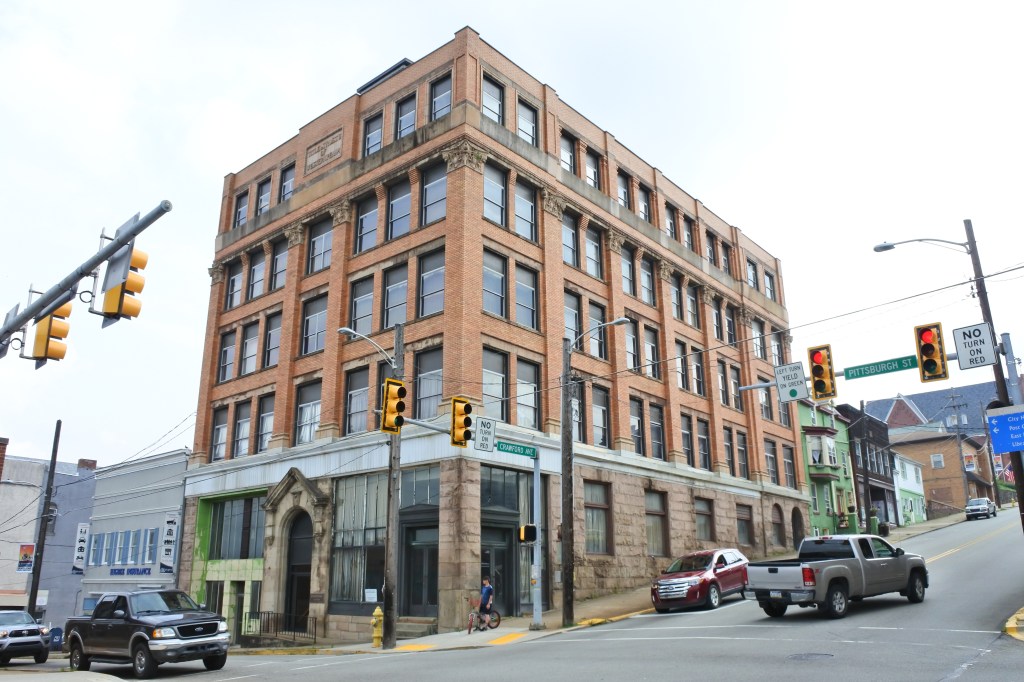
From an urban perspective Connellsville is well built but the scars of deindustrialization and poverty are highly visible. Historic main streets cover a large area along E Crawford Ave (historic Connellsville dwtn), W Crawford Ave (historic New Haven dwtn), Pittsburgh and Apple Streets. Lots of great buildings but only some of them have been stabilized. The Connellsville Redevelopment Authority has done some work to stabilize buildings and bring in new businesses. But there is certainly much more investment needed to make this a viable urban area once again. 
Click here to view my full Connellsville album on Flickr

URBAN STRENGTHS:

* Sidewalks are pretty consistent throughout the City. Also ADA curbs are pretty prevalent as well especially in commercial areas.
* Dedicated bike trail passes through the westside of town, part of the larger Great Allegheny Passage.
* Over 50% of households are family households and decent generational diversity in Connellsville.
* Several ballfield sprinkled through but other nice recreational spaces including the bike trail along the Youghiogheny River, the multi-faceted East Park complete with a lake, and a couple other smaller parks.
* Excellent but underinvested historic architecture especially in the historic dwtn. Residential architecture is hit or miss.
* Generally pretty good urban form even with missing teeth and vacant buildings. Several commercial streets spanning both sides of the river.
* Good array of retail throughout Connellsville several main street areas, but never great concentration in one area. Amenities include several drug stores, a public library and post office, a hardware store, nice array of antique stores, and some boutiques, banks, Highlands Hospital, and a full-service supermarket but in a strip mall plaza. 

URBAN WEAKNESSES:

* Poverty is pretty high topping 20%. This helps drive down medium income to just over 30K. Racial diversity is also limited as over 90% of the population is White.
* Limited rental housing. For sale housing is a bit better. Half of available housing goes for less than 50K. Still plenty of stable options selling from 75K-200K. Limited product in the 200Ks.
* Cultural amenities consist of several restaurants & bars (mostly Americana and Italian), the art community center (Appalachian Creativity Center), a community theater, and a couple local museums.
* Lots of blight and abandonment here and crime is higher than the Nat. average.
* Decent access to walkable schools with both the Catholic grade school and high school with the City limits. Connellsville public middle & high school are also located within town but located in the extra Northeastern corner in an auto centric part of town. 

Zelienople a charming Western PA town with lots of history

I only evaluated the urban portion of Zelienople I include areas north of McKim/Beaver and excluded the industrial portions of the city along the Connoquenessing Creek.

This quaint historic town was named after its founder’s (Baron Dettmar Basse) eldest daughter. He arrived to modern day Zelienople in 1802.  The village remained small with only 387 people in 1870 but development picked up a bit with the construction of a commuter line in 1879. The town never really saw a great period of decline. In fact, in the 1970s & 1980s it grew due to the construction of the Passavant retirement community. Just over 3,600 souls now reside here. With the construction of 1-79 Zelienople has become more of a bedroom community for upper middle class families enjoying the town’s walkable charm and high quality public education. Main street runs along Perry’s Highway filled with lots of local specially stores, the Strand historic Theater and much more. The town’s housing stock also includes many attractive historic homes.

Areas that Zelienople could improve from an urban perspective include: the addition of dedicated bike lanes, better racial diversity, a walkable supermarket, and more modern in-fill to built upon the few surface parking lots. 
Click here to view my Zelienople album on my Flickr page

URBAN STRENGTHS:

* Solid street grid and connectivity.
* Poverty is low here with a good mix of middle-upper middle class residents.
* 50% of households are family ones but a pretty high medium age due to a large retirement community here.
* Stable housing market with a nice mix of for-sale homes between 100K-350K. A handful of high end homes above 350K.
* Most streets have sidewalks and about half have ADA current ramps. Very good streetscape along Perry Highway.
* Zelienople Community Park holds some excellent recreational amenities (pool, playground, sport facilities, open greenspace, and trails). There is also cemetery and underutilized town square here.
* Cultural amenities include a great array of restaurants, bars, cafes, & brewpubs along with the Strand theater, Zelienople Historic Museum and an art gallery.
* Retail amenities include a good array of boutiques and creative stores, a hardware and drug store, library, post office, banks, and other general retail stores.
* Limited blight and low crime rate here.
* Walkable schools include a Catholic and public grade school. Public school system is highly rated. Middle and Highschool located outside the Borough’s limits.
* Nice historic architecture.
* Good tree canopy throughout although they could add more street trees to their main street. 

URBAN WEAKNESSES:

* While it’s a 30-35 minute drive to Downtown Pittsburgh Zelienople’s only public transit is a couple commuter buses a day to Downtown.
* No bike infrastructure.
* Very Poor racial diversity. Whites make up 97% of the population.
* Rental housing options are limited.
* No Supermarket or hospital within the Zelienople boundaries.
* Limited modern in-fill but some good stuff in the historic main street.