Carnegie, PA a historic Steele town names in honor of Andrea himself

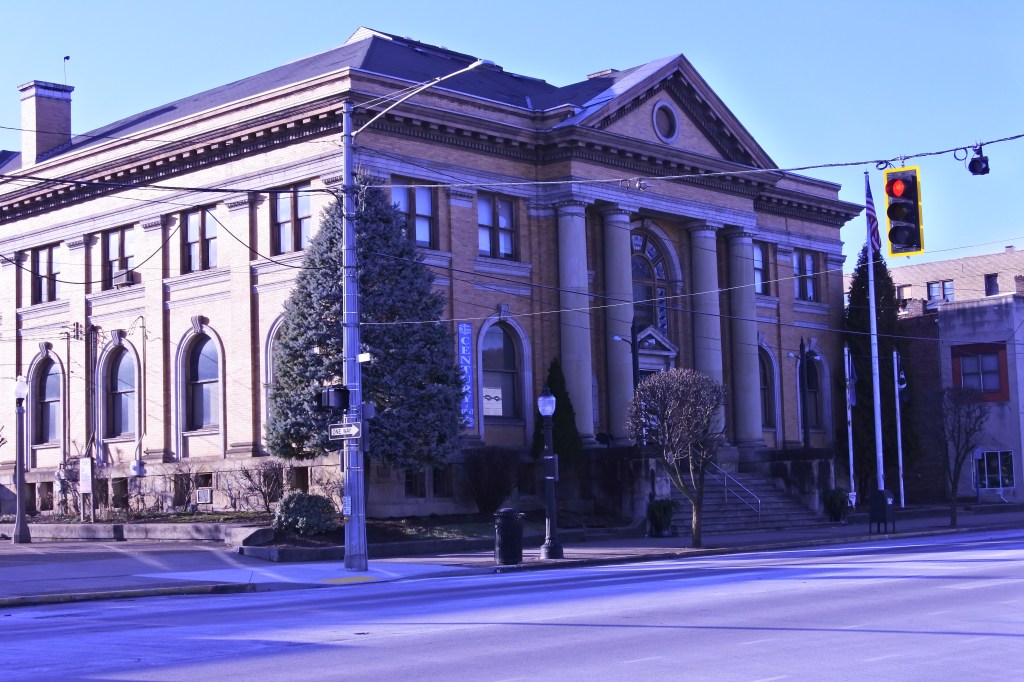
Carnegie Borough is named after Andrew Carnegie, who donated one of his libraries for the gesture. It was incorporated  in the late 1800s. The main employers in the turn of the century were several steel mills such as Superior Steel and Union Electric Steel. Like many Steel towns, Carnegie saw significant decline in the 1970s, but it didn’t decline as much as other steel towns and has seen a stabilization of its housing and main street. Main Street is now bustling with many new restaurants and small businesses.

Carnegie also has convenient access to Downtown Pittsburgh, quality public schools, and a good cultural scene with lots of live music, and community theaters. Areas that Carnegie can improve include dedicated bike lanes, more neighborhood parks and plazas, and better ADA and sidewalk infrastructure. I would also love for urban infill to start to line the largely auto centric Mainfield Avenue.
Click here to view the full Carnegie album on my Flickr page

URBAN STRENGTHS:

* Carnegie has very convenient access to downtown couple with decent
 overall transit access. One can drive to dwtn in 10 minutes or get there in 20 via the bus.
* Great economic and generational diversity with over 50% of households being family households.
* Nice array of for-sale housing ranging between 50K-200K. Some housing selling for over 200K. Decent amount of rentals going for middle of the market rate.
* Culturally a good amount restaurants, bars, and cafes, a surprising large number small theater community and local stages, a couple art galleries.
* Nice neighborhood amenities including several banks, a couple drugstores, a Carnegie library, post office, many boutiques, a ,much more. There is also an Aldi grocery on the southern edge of the Borough.
* Carnegie hosts a decent Elementary and High school that are very walkable.
* Great streetscape along the main street but a bit dated so ADA infrastructure is old. Mainfield is a pretty crummy auto centric street only a couple blocks away from Main Street. 

URBAN WEAKNESSES:

* No bike infrastructure in Carnegie.
 * Carnegie Park is high quality multi-faceted recreational space but located on the suburban edge of Carnegie. No other parks in the borough.
* Carnegie certainly has its grit and some vacancy, but this is a pretty safe community.
* Sidewalks and ADA infrastructure is hit or miss in the residential streets.
* Not much modern in-fill but does exist is generally auto centric. 

California, PA- named after the 49ers but still in Pennsylvania

I used Pennsylvania as the southern boundary and included the university. The rest of the urban boundaries are pretty intuitive. When founded in 1849, the town was aptly named after the California Gold rush. Ironically this also began as a mining town, but of the Anthracite kind. California was once home to the largest soft coal mine in the world by the late 19th century.

Fortunately those coal mining days are over and California’s new economy is based around a state run college, California University bosting just under 5,000 students. From an urban perspective the historic core of California is a bit lackluster. Decent urban main street on Wood St. but not extensive and limited retail. The residential areas host decent architecture but the urban form feels a bit countrylike. I guess that makes sense as California is deep in the Mon valley. The college campus of California University is nice and makes up somewhat for the town’s urban flatness.

Not sure how California can conceivably improve its urban form with a Pennsylvania rivertown economy, but more diversity of retail is a good place to start. Certainly plenty of opportunities for high quality infill that perhaps could attract some of the commuting students to live on campus. 
Click here to view my California album on Flickr

URBAN STRENGTHS:

* Good economic diversity largely thanks to California University.
* Several modest parks spread throughout California but nothing special. The best green space is California University.
* California is a bit gritty but generally safe.
* Decent architecture on the main street and very nice at California University.
* Good urban form and streetscape on Wood. Hit or miss on 3rd street.
* Tree canopy good in the university but decent in the town.

URBAN WEAKNESSES:

* Poor public transit and access to major employment center in the Pittsburgh Metro, although California College itself is a solid employment center, especially for the Mon River Valley.
* ADA and sidewalk infrastructure is a mixed bag. Some areas don’t really have them or are in terrible shape.
* Limited racial diversity. Not great age diversity due to student’s dominance.
* Rentals are more limited than you’d expect for a college town and very cheap. For sale product is generally cheaper with most product selling below 100K. Some product selling in the 100Ks.
* Other than the performing arts at the University, cultural amenities are pretty limited in the Borough other than a handful of restaurants and bars.
* Neighborhood amenities include a drug store, post office, library, and some other neighborhood retail. Limited specialty stores. Hospital is on the edge of the borough.
* No walkable schools. All are located out on the edges of town.
* Modern in-fill is limited to the University.
* Sidewalks and ADA infrastructure is very hood in the university but hit or miss in the neighborhood. 

Pittsburgh’s Brookline, another solid Urban Neighborhood in the South Hills

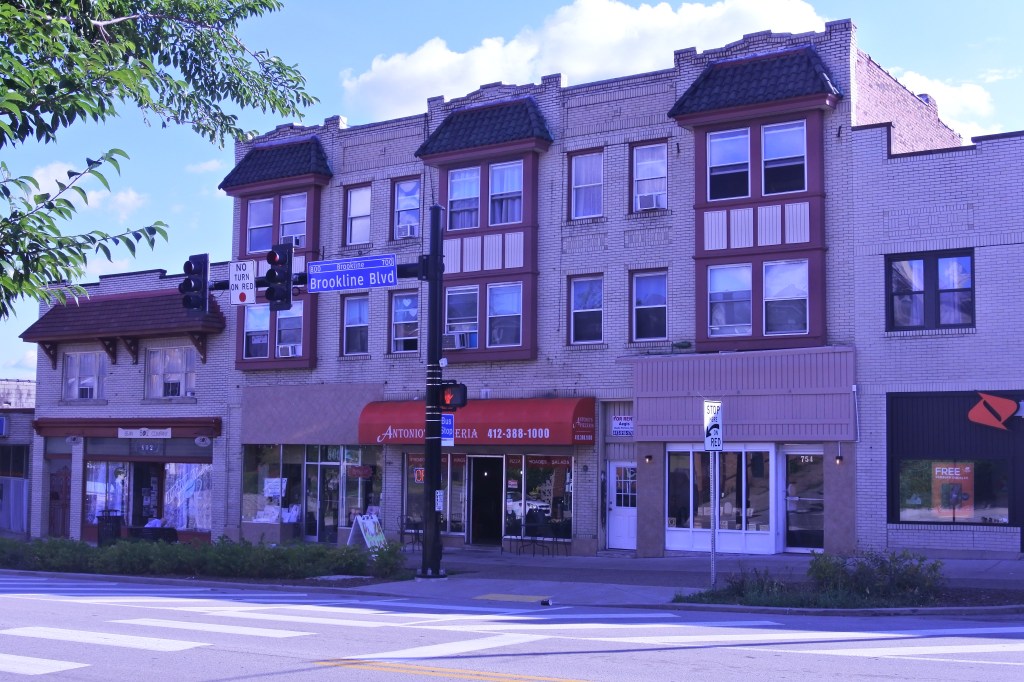
Brookline was linked by streetcar to downtown Pittsburgh in 1905 by Pittsburgh Railways who built a single line south along West Liberty Avenue (the district western edge). The neighborhood continued developing and mostly filled in by WWII.  The soul of the Brookline is built around its main street on Brookline Blvd. The community has successfully stabilized its main street through a streetscaping program and incentives to bring many new businesses. Brookline also has a stable housing stock but moderately priced making it an ideal place for young families to settle. With a light rail line and decent bus service, Brookline is also served by good public transit. Areas Brookline could improve include doubling down on sidewalks, ADA modernizations, and bring bike lanes and bike stations to the community. It would also be nice to see more apartments in the neighborhood. 
Click here to view the entire Brookline Album on Flickr

URBAN STRENGTHS:

* Solid public transit access including a light rail line running along the eastern edge of the neighborhood.
* Only about a 10-20 minute drive to dwtn and a 30-45 min commute via public transit.
* Excellent economic  and generational diversity and decent racially diversity.
* Nice array of 2 & 3 bedroom rentals at reasonable rates. Limited 1-bedrooms. Stable for-sale housing generally ranging btwn 130-280K depending on size and condition.
* Good array of neighborhood amenities mostly focused along Brookline Ave including several ethnic grocers, a drug store, public library, post office, a florist,  and much more. Other retail amenities along Liberty Avenue but this is very auto centric.
* This is a very safe community overall.
* 3 solid elementary schools within Brookline and a Catholic High School just south of the neighborhoods.
* Good urban form & streetscape along Brookline, terrible along Liberty.

URBAN WEAKNESSES:

* No bike infrastructure in Brookline.
* Only two parks in Brookline, but what exist have strong amenities including a recreational center, tennis courts, a swimming pool, and recreational fields.
* Culturally Brookline includes a nice array of restaurants & bars and a local theater.
* ADA infrastructure is hit or miss due to the neighborhood’s terrain. Sometimes its completely missing but along Brookline and other flatter streets its very good.

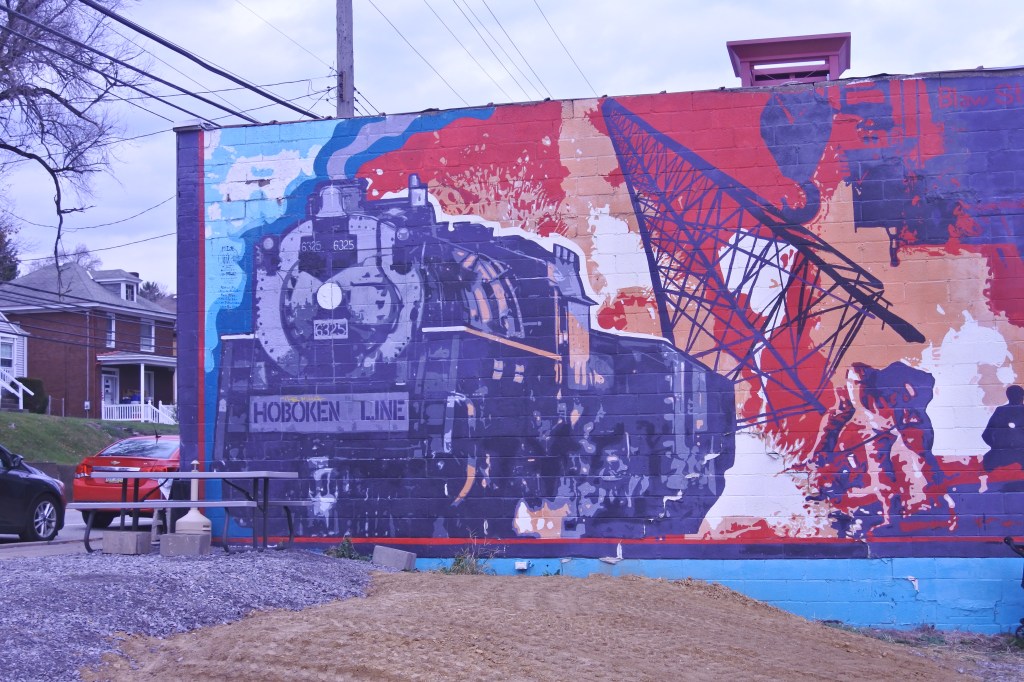
Blawnox, another Pittsburgh Rivertown built on Steel.

The town was founded in the late 18th century, with the name Hoboken. Steel was the community’s major industry, with the area being home to the Blaw Steel Co., Knox Welded, and Pressed Steel Co. The City changed its name in the early 20th century to Blawnox Borough to reflect the Blaw Steek Co. The town peaked at around  2,200 people in  1950. Now the population is down to  around 1,400. Not a terrible population loss for an old Pittsburgh steel towns. Part of the reason is likely because the steel mill is still open along with Blawnox being in the coveted Fox Chapel School District.

Urban wise Blawnox’s strengths include a nice main street with several restaurants, bars, and shops along with a strong for-sale housing market. Blawnox is also only a 20 minutes drive to Downtown and a 30 minute bus ride. To improve from an urban perspective it would be great to see better sidewalk and bike infrastructure, and urban infill along with a supermarket and drug store. Hopefully Freeport will see more new businesses and eventually new urban infill to bolster its urban form.
Click here to view my full Blawnox Album on Flickr

URBAN STRENGTHS:

* Good access to downtown via both private car and public transit. Public transit to other parts of the region are pretty limited.
* Very good middle class neighborhood with goo economic diversity.
* Blaxnox has a surprisingly strong housing market. Plenty of for-sale homes selling in the 100Ks and 200Ks. Some more rundown homes sell below 100K.
* Decent neighborhood retail including  several vintage & antiques,  shops, a bank, and hair salons.
* Generally a pretty safe community but a bit gritty.
* Some nice historic buildings especially along the historic main street on Freeport. Also good urban fabric and streetscape.

URBAN WEAKNESSES:

* Outside of the main street of Freeport sidewalks are pretty hit and miss. Also no bike infrastructure in the Borough.
* Not a very diverse community. Over 90% of the population is White.
* Rental houses are pretty inexpensive but limited.
* Park spaces are limited to really just a ballfield.
* Cultural amenities are limited to some restaurant, bars, and cafe.
* No supermarket, drug stores, or larger retail.
* Blawnox does not have any schools within the Blawnox Borough limits but it is in the coveted Fox Chapel School District.

Beaver Falls, the Historic Heart of Beaver Valley

I included in the evaluation the downtown core and the area around Geneva County. Beaver Falls is located about 30 miles from Downtown Pittsburgh thus this Rivertown Borough is both part of the Pittsburgh metro but also separate as part of the micro region of the Beaver Valley area. Beaver Falls was founded in 1870 and soon after waters Geneva College was founded in 1880. The town was built around the college and industry along the Beaver River. But like most industrial towns in the region, the population has declined significantly since WWII.

Beaver Halls certainly hasn’t had the same level of reinvestment as it neighbor Beaver, but still a good amount of urban fabric and downtown retail here. Generally the historic housing is gritty with mostly worker housing. What the town needs to improve from an urban perspective is simply more investment and new businesses. Not sure this will happen anytime soon given the economy of Beaver Valley, so this type of reinvestment would need to be more grass roots oriented.
Click here to view the entire Beaver Falls album on Flickr

URBAN STRENGTHS:

* Decent historic architecture on the main Street. Residential is generally pretty plain.
* Culturally Beaver Falls has a community arts Center,  a couple of art galleries,  several low key restaurants & cafes,  & bars. Geneva College also bring a fair amount of performing arts and live music.
* Neighborhood activities includes several drug stores, a supermarket and local fruit & veggie stands. Also an interesting mix of antiques, furniture stores, and clothing stores. Other neighborhood amenities include a paint store, historic library, post office, and medical centers.
* Several walkable schools but mixed ratings.

URBAN WEAKNESSES:

* Sidewalks are Ok and generally there are curb cuts, but most don’t have the modern ADA infrastructure.
* Public transit is pretty limited and access to dwtn is at least a 45 min drive.
* Very limited bike infrastructure.
* Some rentals but all very inexpensive. For sale housing is very inexpensive, mostly below 100,000. Some housing in the 100Ks.
* Recreation space limited to sports fields surrounding the City’s schools. Some nice green space in Geneva College.
* Pretty gritty but not necessarily any dangerous spots.
* modern in-fill is limited, but what exists is generally pretty crummy.
* Tree cover isn’t great.
* Buzz is not great here. 

Aspinwall, a well off Pittsburgh Historic Suburb

My evaluation excluded the more suburban portion of Aspinall north of state route 28. Aspinwall began as an upper middle class river town for those who wished to be close to Downtown for commuting but away from the craziness and pollution of the City. But unlike Sewickley this was mostly younger families with children. Aspinwall has maintained its stability even with dropping from 4,000 to 2,700 residents since WWII. This is aided by its attractive historic housing, nice village feel with attractive neighborhood retail, location in the prized Fox Chapel School District, and convenience to the Water works shopping district.

Areas that Aspinwall could improve from an urban perspective include more bike infrastructure, racial diversity, and walkable schools within the borough boundaries (as opposed to being in surrounding suburban communities). A large multi-family, mixed-use development along the river would be a nice population boast to the borough as well, but not sure if this is possible with the flood plain.
Click here to view the entire Aspinwall photo album on my Flickr page

URBAN STRENGTHS:

* Convenient access to Downtown via transit and an easy 15-20 minute drive/
* Very walkable village feel with compact residential streets and several streets with neighborhood restaurants, bars and some retail.
* Pretty Dense community.
* Pretty good age diversity and large percentage of family households.
* For sale housing generally on the high end but pretty good diversity. 2-bedrooms in the 200ks low 300ks, 3-bedrooms 300Ks and low 400ks, & 4-bedrooms 300K-600Ks.
* Recreational amenities include a very interesting riverfront park and the Aspinwall Recreation area.
* Culturally Aspinwall has a nice mix of restaurants, bars, and cafes, and a few art galleries but not much else.
* Lots of locally owned boutiques, unique shops, and a bookstore. Plenty of retail amenities just outside of Aspinwall but in a strip mall (i.e. a movie theater, hospital, supermarket, banks, a Walmart, staples, and several chain retail stores).
* Very safe community.
* Attractive historic housing.
* Generally good ADA infrastructure. Up to date ADA curb cuts is hit or miss.

URBAN WEAKNESSES:

* Limited bike infrastructure.
* Very white community (90%). Some economic diversity.
* Rentals are pretty limited but what exists is generally medium prized.
* Only the Catholic Elementary school is within Aspinwall. But Aspinwall is part of the prized Fox Chapel School District, all of which are in suburban, auto centric areas.
* Limited modern in-fill. What does exist is hit or miss.

Observatory Hill- Pittsburgh’s Highest Point

Observatory Hill or Perry Hilltop was named both in honor of Commodore Perry and the Historic Allegheny Observatory, the City’s first astronomy building gracing the top of Riverview Park. The district also hosts the highest elevation in the City of Pittsburgh at 1,370 feet at the Brashear Reservoir and WPNT-FM  Radio Tower.

This North Hills district has remained a middle class strong hold in the northside and thus retained much of its historic housing and fabric. Riverview Park was a large factor in the neighborhood’s success. Observatory’s urban business district along Perrysville Ave has not fared as well and is littered with vacancies and limited retail amenities. Cultural amenities are also very limited. Building up the Perrysville Avenue business district should be the # 1 revitalization priority for the neighborhood. Secondary priorities include installing bike infrastructure, permanent affordable housing, opening new high quality schools, and improving pedestrian and ADA infrastructure.
Click here to view the full Observatory Hill Album on Flicker

URBAN STRENGTHS:

* Convenient access to downtown especially via the car but decent transit and biking routes.
* This is a very diverse neighborhood among all measures.
* Very diverse for-sale price points starting at around 50K for a modest fixture upper to the 200Ks for a large historic home and everything in-between.
* Riverview Park is accessible to all in the neighborhood and holds almost any recreational amenity one needs.
* Overall pretty safe district, although some blight still remains.
* Lots of high quality historic architecture.
* The urban form of the business district is good but very small.
* Great tree cover.

URBAN WEAKNESSES

* Streets generally connect but are very curvilinear due to the district’s extreme terrain.
* Other than bike lanes in Riverview, Bike infrastructure is non-existent.
 * Not a ton of rental product but generally affordable. 1-bedrroms run between $500-$700, 2-bedrooms btwn $700-$1,100, and 3-bedrooms to the low to mid $1,000s.
* One deli and no restaurants or bars.
* Cultural amenities are basically non-existent. One needs to travel several miles south to the Allegheny Commons district and Downtown.
* Low-Medium density.
* Other than a couple convenience stores there is a bank, hair salon, thrift store, but not much else in the way of retail here.
* Perry High School is located here but rated poorly. No other schools within Observatory Hill.
* Most roads host sidewalks and ramps but ADA infrastructure is often missing.

Marshall-Shadeland, a Northside Pittsburgh Community with great Urban Potential

Marshall-Shadeland is a largely residential area that was annexed by Allegheny City in 1870. Growth followed and the neighborhood filled in by the early 20th century. Most housing was constructed for workers but some larger homes reside along Brighton and Woodland along with 1920s and 1930s in-fill in the north edge of the district. Decline probably began shortly after WWII and accelerated in the 70s and 80s.

Fortunately much of the urban fabric remains and there is hope that the district will once again become a thriving urban community given its convenient access to downtown and proximity to other stable districts (i.e. Brighton Heights, Mexicantown, West Allegheny, and increasingly Manchester). Recent renovations have occurred resulting in home sales in the 100Ks. Yet much blight remains and there is a lack of neighborhood retail and cultural amenities.

Click here to view the entire Marshal-Shadeland Album on my Flickr Page.

URBAN STRENGTHS

* Good access to downtown vial all modes of transportation.
* While there are no bike stations here dedicated bike lanes run down Brighton Rd and along the river.
* Great generational and ethnic diversity here.
* Fair amount of rental product at moderate prices. 1-bedrooms go for around $600-$800 and 2 & 3-bedrooms between $900-$1,100.
*For sale housing is very affordable with prices ranging anywhere from 30K to 180K depending on size and quality.
* Decent park amenities including two ballfields, a parkette, several cemeteries, and decent access to Riverview Park.
* Because of the hills and ravines there is overall great tree canopy. The neighborhood could use more street trees however.
* What does exist of Marshall-Shadeland’s business district (node at Marshall and Woods Run) is pretty urban. But its rough and there the streetscape is lackluster.

URBAN WEAKNESSES

* Some economic diversity, but pretty low-income area.
* Lots of vacancies throughout district.
* There is still a perception of crime here.
* Some retail amenities including a Kuhn’s Supermarket, Dollar Store, Wine & Spirits, a Café-restaurant, and several low key restaurants and bars.
* Very little nightlife in the district other than a couple restaurants and bars but Marshall-Shadeland does have convenient access to other vibrant areas such in the northside (Mexican War Street, West Allegheny, etc.).
* Even with some recent revitalization successes Marshall-Shadeland still retains a pretty negative perception.
* ADA is a mixed-bag here. The main streets and flat areas are well served by ADA infrastructure. Hilly and more obscure streets often have limited ADA or no sidewalks.
* A couple specialty schools within the district but nothing else. Several schools lie in adjacent districts but generally not well rated.
* Really no cultural amenities within Marshall-Shadeland but convenient access to what lies in West Allegheny and Mexicantown districts.

Spring Hill- One of Pittsburgh’s Great “View” Neighborhoods

Spring Hill was named for the abundance of springs near the site. Germans immigrated there from 1850 to 1920, giving the neighborhood a very Bavarian atmosphere reflected in its local streets (i.e. Rhine, Woessner, Haslage, Zoller and Goehring). The population of Spring Hill peak in 1940 around 8,000 and has stabilized down to around 2,500. Spring Hill Garden used to host around 4,000 and now is just under 1,000.

This is a very typical hillside Pittsburgh community, which has seem a drastic population loss but has managed to “right size” through losing population often in the most steep terrain and maintaining generations of families. Spring Hill and Spring Garden are beginning to see modest real estate interest given its close proximity to downtown and other revitalizing communities such as Deutchtown and Mexican War Streets. The old warehouses of Spring Garden are beginning to see new life through modern craft outfits, distilleries, and fitness centers. To elevate this district to a viable urban community continued real estate investment, new bike paths, improved public transit connections, and a walkable neighborhood amenities are needed. But this is certainly possible given the neighborhood’s good urban bones, proximity to downtown, and beautiful views and generous yards.
View the full Flick Albums for Spring Hill and Spring Gardens

URBAN STRENGTHS

* Good access to downtown especially by car, but decent public transit access. One could even walk to downtown in 30-45 minutes if they can handle the terrain. Getting to Oakland is much harder by transit by easy by car.
* All around great diversity in Spring Hill.
* For sale housing is very affordable with prices ranging anywhere from 25K to 150K depending on size and quality.
* Great tree cover thanks to all the steep terrain and hillsides.

URBAN WEAKNESSES

* Very low density for an urban district due to the extreme topography and steep population decline.
* No bike infrastructure across the district.
* Not much rental product in the neighborhood and what exist is very modest.
* There are a couple parks hosting ballfields, playgrounds, and the Lutheran cemetery.
* Sidewalks are often missing and very steep terrain, so ADA infrastructure isn’t great.
* Commercial is very limited (a brewery within the Spring Hill district but some neighborhood amenities existing on Spring Garden Road (i.e. pharmacy, family dollar, some light manufacturing, a cider house, and a couple of bars and restaurants.
* Very limited cultural amenities within the district, but the rich cultural of the northside and downtown is only 2 miles away.
* There is a poorly rated elementary school but not much else. 

Pittsburgh’s Troy- the Plateau that looks over the City

Originally called the village of New Troy, the neighborhood was originally settled by German immigrants who worked in the mills, tanneries, breweries and railroads that lined the Allegheny river (including the Heinz Ketchup factory). Migration up to Troy Hill began when a Catholic church opened a small cemetery in 1842. Gradually the neighborhood filled in by the early 20th century and remained a stable working class community to the present day.

While Troy Hill lost a significant amount of its historic population, dropping from a historic high of 7,000 to around 2,000, it has retained much of its urban fabric due to the removal of many hillside dwellings and smaller families. The neighborhood has stabilized and seen recent investment with many younger families renovating modest rowhouses. Given the districts incredible access to downtown, the Strip District, and Allegheny Commons, it is a surprise the market has not taken off even more here. Hopefully more and more amenities move to Troy Hill without it becoming too expensive for its current population. The neighborhood is one of the most economically diverse in the City of Pittsburgh.

Click here to view my full Troy Hill album on Flickr

URBAN STRENGTHS

* Pretty easy access to downtown especially for cars, but decent public transit access. Due to the hikes, bike commuting is challenging.
* Housing is pretty affordable here. Most homes selling in the $100s but some outdated product selling between 50-100K and larger resent renovations selling in the 200Ks. 1-bedroom rentals going anywhere between $700-$1,200 and 2-3 bedrooms in the low to mid $1,000s.
* Good recreational amenities with several ballfields, a few playgrounds, and a spray park.
* Streetscape and urban form pretty solid in the heart of Troy Hill along Lowrie St, but pretty weak along Spring Garden Rd. (the district’s northern edge).
* Good tree cover due to the many dense groves along the hill sides. 

URBAN WEAKNESSES
* No bike lanes through the hard of Troy Hill nor any bike stations, but a dedicated lane along 28.
* Culture amenities are decent but not great in Troy Hill. The neighborhood hosts a couple of restaurants, a café, two breweries, and several bars. This is also the home of St. Anthony (the largest collection of relics.
* Some neighborhood retail including several delis, a drug store, a fitness center, and several banks.
* Three schools within or in adjacent districts, but overall low ratings.