Stillwater, MN- One of Minnesota’s First Settlements and Major Tourist Destination for Twin City Residents

The name derives from the St. Croix River’s calmness near the town center. Stillwater was one of the first settlements in Minnesota witnessing newcomers in the 1830s. And its official founding was in 1843. Stillwater was also the site for the selection of the State Capital and the University of Minnesota.  Stillwater’s initial population boom was due to its strategic location to significant forest to the north along the St. Croix River.  The settlement grew to 4K in 1870, 12K in 1900, but then began a rare population decline in the early 20th century, likely due to the collapse of the lumber industry in Minnesota. By 1940 Stillwater had contracted to just 7K residents. This, however, was not to last as Stillwater became an attract suburb in the Post War area. After significant suburb growth & annexation, along with becoming a popular tourist destination, Stillwater now has a population of nearly 20K whose daytime population swells in the height of the tourism season.

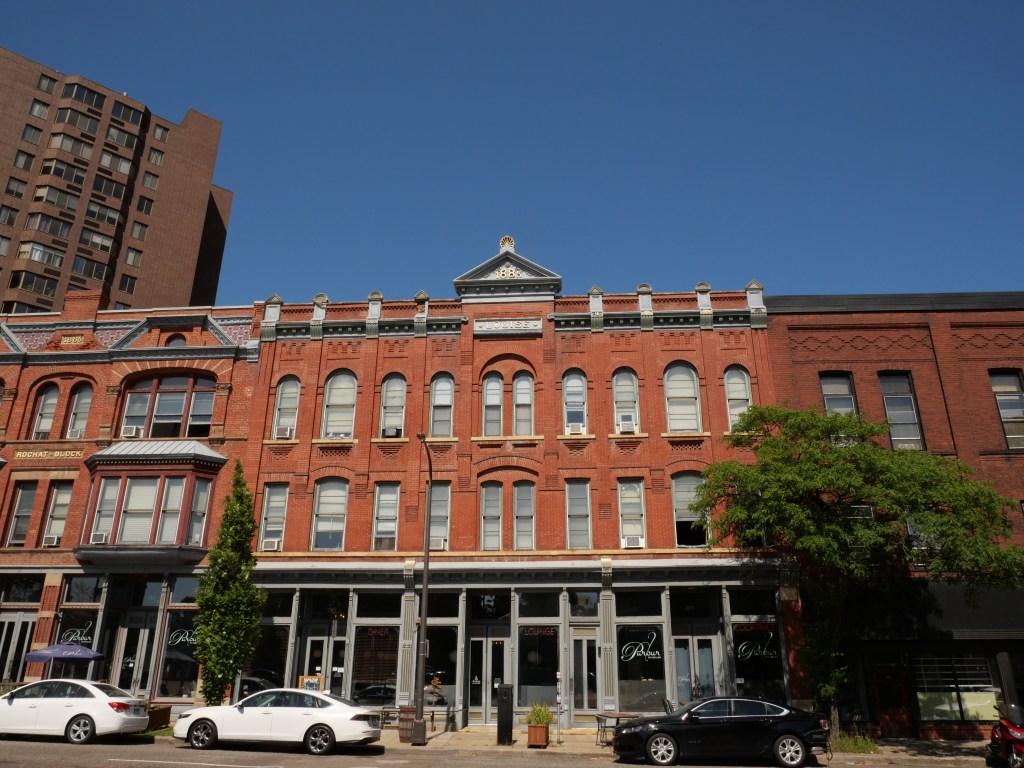
From an urbanist perspective Stillwater has a very intact Dwtn core, mainly focused on the St. Croix Scenic Byway. Several nearby blocks also have attractive historic commercial buildings as well. The surrounding residential streets are generally attractive late 19th and early 20th century single family housing and more and more denser apartments and luxury condos and townhomes are being built on the edge of Dwtn. Stillwater has a great array of local retail and boutiques and also contains many restaurants, bars and cafes. Stillwater has become a pretty exclusive place if one wishes to live here. Rentals are limited, for sale housing is pretty expensive and the bulk of the population is higher earning White families. Given its low density, I would like to see a lot more dense housing built, especially rentals available to working people. Schools are also generally located outside of the City core, and transit service is very limited.

Click here to view my Stillwater album on Flickr

URBAN STRENGTHS:

* Overall very good sidewalk and ADA infrastructure. Just a handful of streets on the edge of this evaluation area lack sidewalks.
* Excellent tree canopy.
* Decent for sale options with a handful of 1-bed homes that sell in the 200KS & 300Ks, 2-beds sell btwn 200K-800K with higher end product concentrated in newer townhomes in Dwtn Stillwater. 3 & 4 beds sell btwn 300K-1M.
* Excellent waterfront trail and park space. Other than this are a couple of smaller parklettes, several ballparks, a public golf course, and cemetery.
* Great cultural amenities including tons of restaurants, bars & cafes. Also a handful of art galleries, a couple museums & live music venues, and several historic sites.
* Good retail amenities including a Co-op, a great array of locally owned boutiques, antiques, &  gift shops, a couple bookstores. a local florists, plenty of dessert joints & bakeries, a couple gyms, a public library, several churches, and a local hospital.
* Overall Stillwater is a very a safe community.
* Good historic architecture, especially the commercial buildings along St. Croix Trail. Modern-infill is limited but some pretty urban apartments and townhomes in the Dwtn area.
* Great pedestrian activity in Dwtn Stillwater. Much quieter in the residential areas.

URBAN WEAKNESSES:

  • Some buses travel to Dwtn St. Paul and Minneapolis (40 mins and 60 mins) but other than that public transit is limited. One can still drive to Dwtn St Paul in 25 mins and 35 mins to Dwtn Minneapolis.
  • Very low density for an urban district but this is still a town seperated from the Twin Cities.
  • A couple scenic bike trails crossing St. Croix river or running alongside it but not terribly practical.
  • Not great diversity indicators.
  • Only a couple small schools within the walkable part of Stillwater but both a large public elementary and middle school sit just west of the Stillwater core.
  • Rentals are pretty limited in Stillwater.”

Downtown Saint Paul, MN

1841, Father Lucien Galtier established a Catholic chapel (near present-day Second Street and Cedar Street), on the bluffs above the Lower landing naming it in honor of his favorite saint. This is essentially where Saint Paul’s development first began although the Upper Landing Development near modern day Irvine Park was established soon over. Downtown Saint Paul naturally grew out of the Lower Landing site evaluating into the Lowertown District as shipping and commerce grew thanks to this being the first port of access to the Twin Cities. By the 1870s Lower landing grew into a major shipping and rail yard with more and more warehouses. Eventually by the late 19th century commercial buildings incrementally filled in the rest of current day Dwtn St. Paul. The next major development in Downtown was the creation of the Minnesota State House which was completed in 1905. The early 1950s saw the creation of the expansive State  mall that currently surrounds the Capitol. This was in reality a major urban renewal project that razing several blocks of a deemed undesirable neighborhood north of Dwtn. This coupled with extensive highway and innerbelt construction left Downtown St. Paul with a significant amount of dead and underutilized spaces. Like Downtown Minneapolis, Downtown Saint Paul adopted an extensive skyway system consisting of 40 bridges and experienced a skyscraper-building boom beginning in the 1970s.  Interestingly, because the  City Center is directly beneath the flight path into the airport across the river there is a height restriction for all construction.

The scares of Saint Paul’s extensive highway and urban renewal projects are still very visible today and have left Dwtn with a low level of vibrancy on its streets. Nevertheless Downtown has seen a resurgence of Dwtn living and has grown from 5K to 10K between 2010 and 2020. Like most American dwtn’s Saint Paul also has a solid concentration of theaters and cultural/regional amenities, decent park spaces, plenty of Museums, a supermarket, and decent retail amenities. Dwtn hosts around 60K office workers (pre-pandemic), is a solid hub for transit and biking access across the City. But for this to be a great Dwtn, it needs not only more population but an improved urban realm erasing many of the mid-century development mistakes. Significant attention should be made to redeveloping dead spaces surrounding the Capitol Complex, adding more retail amenities, and creating a better sense of place Dwtn. Given St. Paul’s relatively modest size, I think this is a very doable proposition. 

Click here to view my Dwtn St. Paul album on Flickr

URBAN STRENGTHS:

  • Excellent ADA infrastructure. Good wide sidewalks and nearly every Dwtn intersection has modern ADA curbs.
  • “* Good density for a Dwtn area.
  • Solid public transit access throughout most of Saint Paul and especially good Dwtn and the surrounding neighborhoods. Decent transit service only extends a couple miles out to the suburbs north and south of the City.
  • Good amount of attractive historic architecture but less than most mid-western cities.
  • While Saint Paul only has a dockless bike share system Citywide it has a good array of bike lane connections including a couple lane seperated options within Dwtn, good connections to city neighborhood (especially to the west and north), and decent bike connections to the suburbs, especially to the south. Suburban connections are pretty fractured north and east of the City thanks to all the Minnesota lakes.
  • Cultural amenities include a good number of museums including family friend options like the Children’s Museum & Science Center.
  • Good diversity indicators among residents living dwtn and pretty friendly place for families to visit.
  • Decent skyline thanks to a good cluster of medium sized skyscrapers. Not many distinctive skyscrapers however.
  • Solid park amenities including Rice Park & Mears Park, which serve as Dwtn’s Civic Plazas, some decent riverfront parks along the water and up on the bluff, a couple small plazas, the extensive but dead mall space Infront of the Capitol Bldg, and Bruce Vento Nature Sanctuary, an extensive reclaimed industrial sight now run by NPS.
  • Excellent dwtn mark that is open on the weekends. This has been part of St Paul’s history for 165 years.
  • Solid # of rental options including plenty of studios leasing generally in low 1KS, 1-beds lease in the 1Ks, 2-beds btwn 1.5Ks-2.5Ks. Decent amount of dedicated affordable rentals as well dwtn.
  • Pretty good number of for-sale options that are generally moderately priced. 1-bed condos sell btwn 100K-350K, good diversity with 2-bed condos selling btwn 150K-600K, and some 3-bed condos selling btwn 330K-700K.
  • Solid cultural/regional amenities including a decent # of restaurants & bars, plenty of cafes, good array of Dwtn museums and a couple art galleries, a minor league sports arena/convention center & ballpark, a couple night clubs & live music venues, and several theaters mostly located near each other. Good concentration of governmental buildings Dwtn augment by all the state offices surrounding the Capitol Building.
  • Pre-pandemic Dwtn hosted around 60K, a respectable # considering Minneapolis hosted over 100K in a metro of 3.7 M
  • Decent retail amenities include a supermarket, a couple drug stores, some boutiques & gift shops, a couple book stores, a major Dwtn public library & historic post office, plenty of banks, several dessert joints & a couple gyms, a major hospital & several doctor’s offices.

URBAN WEAKNESSES:

  • Not a fan of much of Dwtn St. Paul’s modern in-fill. There is limited mixed-use residential and plenty of bland office towers and auto centric uses.
  • While there is a decent dwtn population, Dwtn Saint Paul feels pretty dead. This is likely due to a lower amount of cultural & retail dwtn amenities as most American Dwtn, lots of bland office towers, parking lots, and more autocentric urban renewal uses, and a local a strong civic center to Dwtn.
  • Dwtn grid is fine but too many boulevards and large 1-way streets. Its way too easy to drive to Downtown St. Paul.
  • Neither Mears Park or Rice Park are strong Civic Spaces. While they do a fair amount of programming they generally feel pretty dead and the design is nothing special.
  • Excellent Performing Arts High School Dwtn. But not much else schoolwide other than a couple small charter school and underperforming public middle school.
  • Two community colleges on the edges of Dwtn (St. Paul College and Metropolitan State) with a combined enrollment of about 7K. Given these are commuter colleges and not well connected to Dwtn, not sure if they add much vibrancy to Dwtn.
  • 3-bed rentals are very limited.

Frogtown- Saint Paul’s most Diverse Neighborhood and home to America’s largest concentration of people of Hmong Descent

The name “Frogtown” dates back to the 1860s and 1870s, when the area had numerous marshes and swamps. The neighborhood was first settled 1860–1880 as  Downtown outgrew its borders and the neighborhood has easy access to many blue collar jobs in the nearby railyards along the northern edge of the district. Residential development moved westward through the neighborhood as Polish, Scandinavian, German, and Irish immigrants moved in. They built modest wood frame and brick houses on small lots. Urban renewal sadly wiped much of the neighborhood and led to a good about of decline and abandonment. Fortunately the next wave of immigrants moved in during the 1970s as immigrants of European decent moved out keeping Frogtown relatively intact.  The largest concentrations of new immigrants were of  Vietnamese, Hmong and East African descent seeking to escape strife at home. This created the largest concentration of Vietnamese & Hmong immigrants in the United Stated. These immigrant communities continue to thrive but the neighborhood is becoming more and more attractive to young professional priced out of other more expensive neighborhoods causing increasing gentrification concerns.

There are many areas along Frogtown’s commercial corridors (University Avenue, Como Ave, Minnehaha, and the extensive urban renewal areas concentrated in the Capitol and Mt Airy subdistricts) in need to quality urban infill. But the great challenge in Frogtown is how to reurbanize the district but also help low-term residents and immigrant families remain in the neighborhood. Significant affordable rentals have been built recently to help address this concern, but more attention needs to be placed on provide affordable homeownership opportunities. 

Click here to view my Frogtown album on Flickr

URBAN STRENGTHS:

  • Decent urban density.
  • Sidewalk infrastructure is generally good but less than half the intersections have ADA curb cuts.
  • Very convenient access to Dwtn only 2 miles away. 15 minute bus or bike ride. Several dedicated bike lanes through the neighborhood with good connections to Dwtn.
  • Outside of the Capitol District, the neighborhood hosts a very cohesive grid.
  • Excellent diversity, this has to be one of the most diversity neighborhoods in the US. Pretty good economic diversity too but more on the middle class to lower middle class side.
  • For sale options are generally on the affordable end, but still some good options for middle class and professional families. Some small 1-bed homes that sell btwn 80K-160K, 2-beds sell btwn 100K-300K, 3 & 4 beds btwn 100K-400K.
  • Decent rental options (at least listed) and generally affordable. 1-beds lease for $900- low 1Ks, 2-beds in the low-mid 1Ks, and 3-beds in the mid 1Ks- low 1Ks. Good amount of dedicated affordable housing in the neighborhood.
  • Decent cultural amenities including plenty of ethnic restaurants, several bars, the Hmong Cultural Center, Minnesota Transportation Museum, Capitol Building, a couple performing Arts Theaters, and convenient access to Dwtn’s cultural amenities.
  • There is no full size supermarkets but plenty of Asian/ethnic grocery stores and informal outdoor markets and vendors filled with recent immigrants to the neighborhood. The most formal of these is the Hmongtown Market Place but many are located along University Avenue, There are also a couple drug stores, a Target just west of the neighborhood, plenty of salons, a couple dessert joints, several consignment stores, a couple churches, a local public library, and Region’s Hospital is located on the eastern edge of the district.

URBAN WEAKNESSES:

  • Safety concerns remain in Frogtown, although the neighborhood is much safer than it was between the 1970s-2000s. Homes values are beginning to stabilize as more and more young professions move into the neighborhood draw by its relatively cheaper housing prices.
  • Decent number of walkable schools but the public schools are generally not rated well.
  • Decent but not great park amenities. Several smaller parks, the medium sized Frogtown Park, and a local recreation center and the Frogtown Community Center.
  • Most of the housing is historic but not very attractive worker housing. Some good urban mixed-use infill is being built along University Avenue but there is still a significant amount of unattractive autocentric uses and surface parking lots.
  • Decent tree canopy but not as good as most Saint Paul neighborhoods.

West Seventh- Historic Saint Paul Immigrant Neighborhood just Southwest of Downtown

7th Street, of which the neighborhood is named after, follows a historic Native American and fur trader path along the river from downtown Saint Paul to Fort Snelling.  The neighborhood first developed around Irvine Park in the mid 19th century after it was donated to the City. Wealthy citizens first built homes here and thankfully this subdistrict remains largely in-tact. The rest of the West 7th Street neighborhood was built out between the late 19th and early 20th centuries experiencing wave after wave of immigrants drawn by the breweries and factories along the Mississippi River. The first wave was mostly Germans in the 1860s, then Poles and Czechs in the 1870s. Large numbers  Irish, German, Czech and Scandinavian immigrants moved  to West 7th in the 1880s and by the turn of the century the neighborhood hand transitioned mostly to Italian immigrants. They settled mostly in the old Polish levee underneath the High Bridge (name called Smith Bridge). This subdistrict has mostly been abandoned due to constant flooding and the construction of Shepard Road. The most recent wave of immigrants welcomed into West 7th Street has been Mexicans although must of the neighborhood, especially close to Downtown is beginning to gentrify.

7th Street provides a solid urban commercial district running down the spine of the neighborhood providing plenty of walkable restaurants, bars, & cafes and some retail amenities as well. The street is a patch work of residential, retail, and old industrial uses. Many of the old breweries have been reopened as breweries, event spaces, lofts, and offices and many large industrial areas along the river have been redeveloped into new housing. Randolph is also a nice smaller business district with some amenities running along several blocks of the Western edge of the neighborhood. For Seven 7th Seventh Street to become a great urban district it needs to super charge development along 7th Street adding a much large population base,  which will help grow the neighborhood’s retail and cultural amenities. There is also need for more schools, better tree canopy, and a refresh of the neighborhood’s tired looking streetscaping.

Click here to view my West 7th Street Album on Flickr

URBAN STRENGTHS:

  • Urban form is a mixed-bag. Mixture of urban massing and auto-centric uses along Fort Road with better urban form closer to Dwtn. Plenty of redeveloped industrial sites which or more or less urban depending on when they were redeveloped.
  • Consistent sidewalks but ADA curb cuts are mostly reserved for the main streets (i.e. Fort Rd & Randolph Ave).
  • Some very attractive historic commercial along Fort Rd, especially closer to Dwtn.
  • Good urban in-fill near Dwtn but plenty of autocentric uses along Fort Rd.
  • West Seventh is generally pretty safe and still has some grit.
  • Good public transit access throughout but certainly much better closer to Dwtn.
  • Solid economic diversity with good representation among all economic classes.
  • Two main bike lanes along the edges of West Seventh terminating Dwtn.
  • Excellent access to Dwtn only 20 minutes by bus and bike.
  • Pretty extensive park running along the Mississippi River that’s part of the Mississippi Recreational Area along with a recreational path running along the highway. Several smaller neighborhood parks spread throughout the neighborhood as well.
  • Good # of rental options in the low 1Ks, 1-beds lease btwn $900- the mid 1Ks, not as many 2-beds. These lease generally in the mid 1Ks to the low 2Ks, and only a handful of 3-beds.
  • Plenty of affordable for sale options. Good number of 1-bed for sale options (mostly SF homes), plenty of 2-bed inventory of small SF homes generally selling btwn 150K-350K, some high-end 2-bed town homes along the river selling btwn 500K-800K, 3 & 4 bed homes generally sell btwn 200K-500K. Only a handful of more expensive luxury townhomes.
  • Great cultural amenities including tons of restaurants, bars & cafes, several breweries, a couple art galleries & historic homes, and a couple night clubs and music venues. Great access to the cultural amenities of Dwtn.
  • Decent retail amenities including a Trader Joe’s, Co-op & Asian food store, a couple drug stores, several vintage stores, plenty of salons, several dessert joints, a local post office & public library, plenty of churches and United Hospital.

URBAN WEAKNESSES:

  • Streetscaping could use a lift in most parts of the neighborhood.
  • So so density for an urban district.
  • Historic residential is generally more basic worker housing. Mixture of eras from the late 19th century to the 1940s.
  • Poor tree canopy near dwtn and in industrial areas but pretty good on the western half of the neighborhood.
  • Majority White neighborhood with some racial diversity. Decent age diversity but few family households.
  • A handful of well-rated schools in the western half of the district, but plenty of smaller schools. Residents living near Dwtn don’t really have walkable school options.
  • Has few local creative stores, limited gyms & clothing stores.”

Highland Park- Affluent West Saint Paul Neighborhood and now home to City’s largest Jewish Population

 Much of the current day Highland Park neighborhood was compassed by the Fort Snelling reservation but by the mid 1850s the government opened up the  land for sale. Highland Park was part of  Reserve Township until 1887 when it was purchased by the City of Saint Paul. Highland Park however was one of the last Saint Paul neighborhoods to be densely populated, which began in the 1920s thanks to the opening of the Twin Cities Assembly Ford Plant. Following World War II, Highland Park experienced another population boom. This was also the time that Highland Park became the City’s primary Jewish neighborhood after most of the Jewish population moved out of Summit-University neighborhood. The most recent major development has been the redevelopment of the old Ford Plant, which closed in 2011, called Highland Bridge. The development will include up to 4,000 new housing units along with significant recreational amenities, some office, and mixed use town centers.

Highland Park also excellent at typical suburban amenities including great parks (including two of the oldest and largest parks in Saint Paul parks along the Mississippi River), good schools, great tree canopy, and one of Saint Paul’s safest communities. The bulk of walkable retail amenities are located at the intersection of Cleveland and Ford Parkway,  but will soon expand into the nearby Highland Bridge development. Much of the residential areas of Highland Park are disconnected from walkable retail & cultural amenities, especially the newer sections along the southern half of the neighborhood.

As the density of Highland Park is more similar to suburban densities, I hope to see more and more urban infill here. The new Highland Bridge development will certainly help but there are plenty of low-density areas of the neighborhood needing denser housing. Public transit is also sub-par in the southern half of Highland Park and Ford Pwky, Randolph, and Snelling have extensive autocentric areas.

Click here to view my Highland Park Album on Flickr

URBAN STRENGTHS:

  • One of St. Paul’s safest communities.
  • Generally good sidewalks throughout except the post-war developments along the southern edge of the district often have streets without sidewalks. ADA curb cuts are consistent in the large roads and Pkwys but hit or miss on residential streets.
  • Quality urban development at Highland Bridge, the location of the old Ford Plant.
  • Solid tree canopy throughout the neighborhood.
  • Some very nice 1920s-1930s single family homes with plenty of tudors mixed in. Historic Commercial is generally bland except foot the Historic Movie Theater.
  • High percentage of family households here.
  • Excellent recreational trails along the parks adjacent to the Mississippi River. Also some east to west routes cutting through the neighborhood. Still a 50 min commute by bike to Dwtn.
  • Extensive regional park ringing Highland Park’s western and southern borders along the Mississippi River. Dawson Park is a nice off spout penetrating much of the neighborhood. Lots of smaller parks spread throughout the neighborhood along with a Recreational Center that contains a pool.
  • Good array of public & private schools covering all ages with generally good ratings. But because Highland Park is so large not everyone is within walking distance to a school.
  • Decent number of rentals. Plenty of 1-beds leasing btwn $950-1Ks, 2-beds range in the1Ks & 2ks, and plenty of 3 beds.
  • For sale options are often expensive but still a good amount moderately priced options. Good # of 1-bed condos ranging anywhere btwn the low 100Ks to the 300Ks, 2-beds sell anywhere btwn 200K-600K with a nice mix of SF homes and condos, 3-beds generally range btwn 200K-900K with some condo options and more expensive luxury townhomes.
  • Good retail options mainly concentrated near the intersection of Cleveland & Ford Pwky. This includes several supermarkets & drug stores, a target, a hardware store, several clothing stores, a couple bookstores, a bike shop, several dessert joins/bakeries & gyms, a local post office & public library, plenty of churches and medical offices. Much of the neighborhood is not walkable to these amenities.
  • Decent cultural amenities includes several restaurants, bars & cafes, a couple breweries, a performing arts theater at Saint Catherine’s University, and a historic movie house.

URBAN WEAKNESSES:

  • Not great pedestrian activity.
  • So so density for an urban district.
  • Good amount of bland post war housing especially along the southern edge of the district and autocentric uses running along Ford Pwky and more of a mixed-bag along Randolph and Snelling Blvd.
  • Public transit access is spotty with the best service along the western edge of the district.
  • Majority White neighborhood with some racial diversity. Slightly better economic diversity.
  • Decent access to Dwtn but still a 40 min transit ride.”

Summit Hill- Historically Home to Saint Paul’s Wealthiest Citizens and Retains one of the Largest Collections of Victorian Homes in America

Summit Hill developed in the late 19th century and early 20th century and is best known for having one of the best preserved collections of old, Victorian homes in the United States concentrated along Summit Avenue and the eastern edge of the neighborhood. Summit Hill also hosts one of the best and intact urban business districts running along many blocks of Grand Avenue. Thanks to the high incomes of the neighborhood there are many great shops, restaurants, and bars along Grand. Plenty of early 3-story brick apartments and condo mixed into much of the neighborhood too.

Unlike Summit-University to the north, Summit Hill never experienced any major urban renewal or disruptive highway projects and was able to retain its wealthy and Caucasian populations. Thanks to this, most of Summit Hill is in tact from its pre-WWII days and Grand Avenue has seen limited autocentric infill.  I would certainly like to more racial and economic diversity in Summit Hill with a focus of targeted densification along Grand Ave and affordable housing contraction. Summit Hill could use more dedicated bike lanes and more schools and park amenities.

Click here to view my University Hill album on Flickr

URBAN STRENGTHS:

  • Decent public transit, especially the northern half of the district.
  • Center of the Summit Hill is only 2.5 Miles from Dwtn St. Paul. Only a 20 minute bus/bike ride or 10 minute drive. However other than by Car, its pretty difficult to get to Central Minneapolis.
  • Good ADA curbs along the Grand Ave (the biz district). More hit or miss on residential streets but good sidewalks are throughout all the district.
  • Pretty consistent high quality of historic homes. Homes are a bit more most along Summit Hill western edge but still nice. Nothing specially about the commercial architecture along Grand.
  • Solid tree canopy throughout.
  • Some urban infill along Grand mixed of urban and autocentric form.
  • Very safe neighborhood. One of the safest in Saint Paul.
  • Pretty good for sale diversity. Some 1-bed condos that sell btwn 150K-350K, 2-beds are mostly condos/townhomes and sell anywhere from 200K-1M, 3 & 4 beds sell 200K-1 M. Plenty of SF homes selling in the western edge of the neighborhood.
  • A good # of rentals with studios & 1-beds leasing btwn 900K-2K, 2-beds in the 1Ks. 3-bed rentals are limited.
  • Decent Cultural amenities include a good number of restaurants, bars, & cafes, a dance club, a couple historic houses, including good access to Dwtn’s cultural amenities.
  • Great retail amenities mostly focused on Grand St. Plenty of boutiques and gift shops, a couple book stores, a couple toy stores a hardware store, plenty of bakeries & dessert joints, several gyms, a major hospital just southeast of Summit Hill. One supermarket on the western edge of the district and a couple drug stores

URBAN WEAKNESSES:

  • So so bike access. Nice east-west bike lane along Summit. But not north-south route.
  • Decent but not great urban density.
  • Generally a White and affluent neighborhood. Not great diversity indicators in Summit Hill.
  • Only a handful of schools in Summit Hill with mixed ratings.
  • Linwood is a nice park and has a recreation center but only a handful of other small parks throughout.
  • Missing churches, a post office, public library, and only a handful of doctor offices.”

Summit-University: Home to Saint Paul’s Historic African American Community “Rondo”

Summit-University was settled in the 1880s and 1890s with a nice mixed single family houses, duplexes,  apartment building mansions concentrated along Summit Avenue and the southern half of Cathedral Hill just north of Summitt Avenue. Further west are more modest-larger single family homes mixed in duplexes, triplexes, and quads. Closer to University Avenue housing is more working class. The wealthiest families started to leave the neighborhood in the 1920s with the advent of the automobile. The great mansions along Summit  declined somewhat but were fortunately subdivided and mostly remain to this day. In the 1950s-1960s Summit-University experienced several disruptive highway and urban renewal projects greatly disrupting the urban form of the neighborhood and leading to thousands of displaced African-Americans from the Rondo enclave. The highway in fact obliterated the Rondo Avenue business district, a once vibrant African American center in Saint Paul.  These projects also accelerated White Flight from Summit-University and led to decline in many parts of the neighborhood especially the western and northern areas.  But because of the White Flight of the western and north edges of the neighborhood Summit-University became Saint Paul’s most diverse neighborhood welcoming a large Hmong community, other Asian groups, and Hispanics. Many African American families have also remained in the neighborhood and all in all areas affected by White Flight and Urban Renewal are in decent condition and starting to benefit from the gentrification of Summit Hill and Catedral Hill. ReConnect Rondo, a neighborhood CDC, has also done a great job keeping this historic Black Neighborhood in tact and helping local residents open up businesses along Shelby Ave.

For Summit-University to be a top tear urban district it needs to re-urbanize its northern edge most affected by Urban Renewal along University Avenue and abutting Capitol District. Just to the northeast of the neighborhood is an nearly abandonded Mall that marks a great opportunity for quality urban in-fill and a way to better connect the neighborhood to Dwtn. Summit-University could also use more bike lanes, much more urban-infill along University Ave, and better schools. 

Click here to view my Summit-University Album on my Flickr page

URBAN STRENGTHS:

  • Excellent access to Dwtn St. Paul only 1.5 Miles away. Only a 20-15 minute bus/bike ride or 8 minute drive. Central Minneapolis is 45 minutes by transit & 15-20 minute drive.
  • Solid Urban Density.
  • Solid public transit access throughout all of the district.
  • Generally consistent sidewalks by ADA curb cuts are hit or miss.
  • Generally good urban form along Shelby and for most of the district.
  • Some incredible historic homes especially with the large mansions in the Cathedral Hill section of the neighborhood. Some excellent historic buildings along the main portion of Shelby Ave. More modest historic homes along the eastern half of Summit-University in the Rondo portion of the neighborhood.
  • Solid tree canopy in most of the district.
  • Generally a pretty safe area. Safety has appeared to improve the past decade in some of the historically rougher patches of the neighborhood (Rondo and along University Ave).
  • Good for sale housing diversity. Lots of 1-bed condo options selling btwn 100K & 200Ks, tons of 2-bed options including condos, townhouses, and SF homes selling btwn 150K-700K, 3 & 4 beds sell btwn 200K-1 M . A good amount of 3-beds are condos and town homes and plenty of single family homes selling in the 300KS in the western edge of the neighborhood.
  • Tons of rentals with studios & 1-beds leasing btwn 800K-1.6K, 2-beds btwn 1.5K-3K. Decent number of 3-bed rentals too. Lots of affordable housing options.
  • Lots of small & medium parks well distributed throughout the neighborhood. Also two recreational centers and an indoor pool.
  • Good Cultural amenities include a good number of restaurants, bars, & cafes, a community performing arts theater, a couple art galleries, a couple historic houses and museums, and good access to Dwtn’s cultural amenities and Grand Ave in Summit Hill.
  • Good retail amenities including tons of ethnic groceries along University Ave, an Aldi’s, a Co-op, a couple drug stores, a couple boutiques & gift shops, a couple bookstores, plenty of bakeries & dessert joints, tons of salons, several gyms, tons of churches, a couple public libraries.

URBAN WEAKNESSES:

  • Large autocentric stretches along University Ave. Slowly this is getting better with mixed-use infill but new development is slow to this stretch of University.
  • So so bike access. Nice east-west bike lane along Summit. But not north-south route.
  • The Northeaster corner of the neighborhood has seen a lot of urban renewal resulting in bland mid-century buildings, Saint Paul College (commuter school). project housing, and lots of autocentric uses.
  • Some good urban in-fill along Shelby but lots of autocentric infill along University Ave.
  • Excellent racial and economic diversity with both large minority white and black populations. Decent Asian and Hispanic populations too.
  • Okay access to schools. Several private schools but they are small. Some public schools but generally not rated well except Central Senior High School.
  • Missing a local post office, major supermarket, only a handful of doctor offices”

Macalester-Groveland- Affluent Early 20th century Neighborhood in the Westside of Saint Paul

Macalester-Groveland began to develop in the 1890s as streetcars were extended into the area. The neighborhood filled out in the 1920s with more autocentric friendly development as the Twin Cities continued to grow. Tangletown is the most suburban subdistrict with large single family homes situated on curvilinear streets. Charles Schulz , created of Peanuts, also grew up in the neighborhood.

Macalester-Groveland is similar to many Saint Paul neighborhoods. A comfortable leafy early 20th century neighborhood with mostly single family homes, some apartment buildings, and pockets of urban commercial. The best urban business district runs along Grand Avenue, which also serves as the business district for Macalester College. The neighborhood is generally affluent and Caucasian and has convenient access to Dwtn Saint Paul across all modes of transportation.

To elevate Macalester-Groveland into a high quality urban district it needs more density and in-fill housing especially along the more autocentric stretches of Snellings and Randolph Streets. The southern half of the district could also use more frequent public transit access.

Click here to view my Macalester-Groveland Album on Flickr

URBAN STRENGTHS:

  • Convenient access to Dwtn St. Paul. Only 10 min drive and 30 min bike/transit trip. Dwtn Minneapolis is still pretty conveninet too..
  • Good generation diversity thanks to the Unversity of St. Thomas students and plenty of family households
  • Good dedicated bike lanes but not protected.
  • Great connectivity. Very good sidewalks and ADA standard curb cuts on about 65% of all intersections
  • Decent for-sale options but on the expensive side. A handful of 1-bedrooms that sell in the 100K & 200K, 2-bedrooms sell btwn 200K-550K and 3 & 4 beds sell between 300K-1M. Some mansions sell btwn 1-2 M.
  • Good number of apts and pretty moderately priced. 1-bed rent btwn $900-1.7K, 2-bed lease in the 1Ks, and some 3-beds that lease btwn 1.5K-3K.
  • Great riverfront park along the Mississippi running the north to south length of the neighborhood. Several smaller parks pretty well dispersed throughout the neighborhood and a couple recreation Center including a pool.
  • Cultural amenities include a good number of restaurants, bars & cafes, the Macalester College Art Musuem and Performing Arts Center, and a historic movie theater.
  • Very safe community.
  • Execellent early 20th century historic homes. Urban infill is limited, a mixture of decent mixed-use & autocentric developments.
  • Okay retail amenities including several supermarkets, several boutiques, plenty of salons, a Patagonia store, a butcher, a couple drug stores, a hardware store, a couple bookstores, a floristist, several bakeries, a local post office and library, several churches.
  • Good urban massing and streetscaping along Grand Avenue.

URBAN WEAKNESSES:

  • Only a handful of schools and mixed ratings.
  • So so economic and racial diversity.
  • Dedicated affordable housing seems very limited.
  • Good public transit access in the northern half of the district but so so in the southern half.
  • Decent urban density but not great.
  • No local public library of post office.
  • Mix of good and autocentric urban form along the biz districts outside of Grand Ave (Snellings & Randolph).
  • So so pedestrian activity.

Union Park- One of Saint Paul’s First Streetcar Suburbs

Union Park was created as a merger of several historic neighborhoods including Merriam Park, Snelling-Hamline, Parts of Midway, Densoyer Park, and Lexington-Hamline in 2007. The original Union Park was a large amusement park located at the intersection of University and Lyndhurst Avenues. This also included  Lake Iris, which still exists today. Merriam Park was one of the City’s first street suburbs. The area developed as a home for businessmen and professional workers and their families and has a great mixed income feel. A large Catholic community grew up around St. Mark’s Church in the early 20th, which helped spawn the nearby University of Saint Thomas. Union Park weathered the mid-century decline pretty well thanks to its White and Middle Class demographics. While highway I-94 was still ultimately built, it was less detrimental to the neighborhood’s community as neighboring Rondo and Prospect Park to the East, important African American enclaves in Saint Paul.

Union Park has several distinct areas. On the northern edge of the district runs University Avenue lined with a mix of autocentric, industrial and newer mixed-use housing. This is also where Allianz Field and a massive strip mall are located. The Historic Union Park amusement park is located in the Northwest corner of the district. South of the highways is where the bulk of the neighborhood is located with a mix of Large and modest single family homes and apartment buildings line the larger streets. To become a great urban district Union Avenue needs to continue to redevelopment the autocentric/industrial land uses between University Ave & I-94 into much friendlier pedestrian urban environments. Snelling also has large autocentric stretches in need of redevelopment. But overall Union Park needs more density to both improve its walkability but also to create much needed housing in this desirable district.

Click here to view my Union Park album on Flickr

URBAN STRENGTHS:

* Solid public transit access. Good system of dedicated bike lanes.
* Convenient access to Dwtn St. Paul. Only 10 min drive and 30 min bike/transit trip. Dwtn Minneapolis is still pretty convenient too.
* Good connectivity outside of the more industrial area btwn I-94 & University  Ave.
* Very good sidewalks and ADA standard curb cuts on about 65% of all intersections
* Good generation diversity thanks to the University of St. Thomas students and plenty of family households.
* Great apartment diversity including plenty of studios which lease btwn $700-1.2K, 1-beds for $900-1.5K, 2-beds btwn $900-2K, 3-beds btwn the high 1Ks to low 2Ks.
* Good for-sale options. A handful of 1-bedrooms that sell in the 200K & 300K, 2-bedrooms sell btwn 150K-500K and 3 & 4 beds sell between 200K-1M.
* Great riverfront park along the Mississippi running the north to south length of the neighborhood. Lots of ballfields and quads with the two universities located here (University of Saint Thomas & Concordia) but not necessarily open to the public. Several smaller parks well dispersed throughout the district and the Merriam Park Recreation Center, which includes a pool.
* Cultural amenities include a good number of restaurants, bars & cafes, the St. Thomas Art Museum, Concordia Performing Arts Center, the St. Paul Conservatory of Music, and a historic movie theater.
* Generally high quality historic homes. Modest more mid-century homes in the NW corner. Some great mixed-use bldgs at Spellings and Selby but some very autocentric development along University Ave.
* Pretty good retail amenities including a Wholefoods, Target, and two other supermarkets, antique stores, vintage clothing stores, a couple drug stores, a couple college bookstores, a florist, plenty of salons, several bakeries/dessert stores & a couple of gyms, a local post office and library, a major hospital & several doctor offices, and record stores.
* Great urban node at Snelling & Shelby and some good urban stretches along Shelby and University Ave.

URBAN WEAKNESSES:

  • Decent number of schools but generally not great ratings.
  • So so economic and racial diversity.
  • Pretty mediocre density for a City neighborhood.
  • Only a handful of churches.
  • Okay pedestrian activity.
  • Some pretty autocentric stretches along Snelling and University Ave.
  • So so density for an urban area.”

Como Park- Home to the Saint Paul Zoo and Conservatory and an attractive early 20th century Neighborhood

The area around Como Lake was originally swamp and oak savannas. But in 1873 the City of Saint Paul acquired the 300 acres of land around Como Lake and quickly turned it into a park. Incrementally major cultural amenities came to the park including the Saint Paul Zoo in 1897 and then the Marjorie McNeely Conservatory in  1915. The park remained on the periphery of Saint Paul for many decades and it wasn’t until the 1920s that the neighborhood around the park was really developed. The Como Park neighborhood filled in by WWII but unfortunately a historic business district just serving Como Park was never really created. Eventually several strip malls were built at the intersection of Lexington & Larpenteur but it is very autocentric.

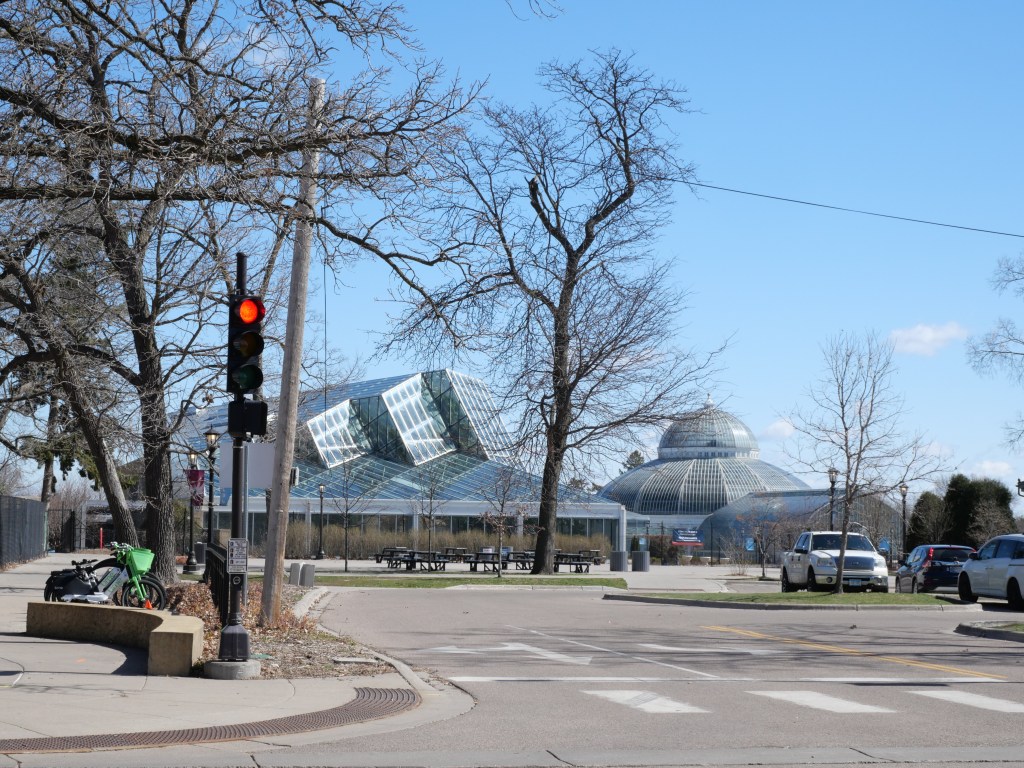
Como Park however excels at providing amenities typical for more suburban areas including great parks, good schools, a wide array of for-sale housing options, and a high level of safety. The neighborhood stills has some walkability thanks to its gridded streets, sidewalks, bike infrastructure, decent public transit service, and convenient access to Dwtn. Como Park also has a decent amount of rental options good cultural amenities thanks to the Zoo and conservatory. But for Como Park to become a great urban district it needs a lot more density, more mixed-use buildings, a couple of strong walkable urban commercial nodes, and a lot more retail amenities.

Click here to view my album on Flickr

URBAN STRENGTHS:

* Solid sidewalk infrastructure but only about 40% of the intersections are ADA standard.
* Good public transit access but better in the southern half of the neighborhood.
* Good access to Dwtn across all modes. Only a 10 minute drive and 25 mins bike  or transit. Bike and transit to Dwtn Minneapolis is about 45 mins.
* 4 dedicated east to west bike routes, all connecting nicely to Como Park, which has great bike access itself.
* One of St. Paul’s safest districts.
* Mixture of plain and more ornate pre-WWII homes. Construction is mostly btwn the 1920s-1940s.
* Ok cultural amenities including a handful of food & beverage amenities but some major cultural amenities in Como park including the Botanical Gardens, Conservatory, Zoo, a kiddie park, and an outdoor amphitheater.
* Good walkable school diversity and generally good ratings.
* Very good for sale diversity. A handful of 1-bed options selling in the 100K & 200ks, 2-beds sell btwn 150K-450, 3 & 4 beds sell btwn 150K-700K.
* Decent rental options w/ studios leasing btwn 800K-1.4K, 2-beds btwn 1K-2K. Some 3-beds as well for a bit more.
* Excellent park amenities thanks to the expansive Como Park located in the heart of the community. The Park includes a large lake, a zoo, golf course, a major regional pool, and plenty of sports fields. But also 3 recreational centers set in small parks, and several cemeteries on the edge of Como Park’s borders.
* Solid tree canopy throughout.

URBAN WEAKNESSES

* Pretty low density for an urban area. 
* Pretty white neighborhood but some racial diversity.
* Most of the Post WW II construction is autocentric commercial.
* Pedestrian activity is pretty low.
* The park is a great center point to the district but really no distinctive business districts here.
* Retail amenities are limited within the neighborhood to an Aldi’s, drug store, a dollar store, a bike store, a couple salons, a hardware store, a couple antiques stores, a couple dessert joints & gyms, plenty of churches, and a couple doctor’s offices. Most of the retail is located in two decent size strip malls where Lexington & Larpenteur intersect.
* No cohesive urban district. The most retail is where Lexington & Larpenteur intersect and this is very autocentric. A couple wide car centric boulevards throughout.