Uptown- Minneapolis’ Premiere Urban Neighborhood and where Prince got his Musical Start

I generally follow the standard boundaries for Uptown but adjusted them a bit for evaluation purposes. I used 31st as the southern boundary, Lyndale as the eastern boundary, W 24th St as the northern and the lake as the western.

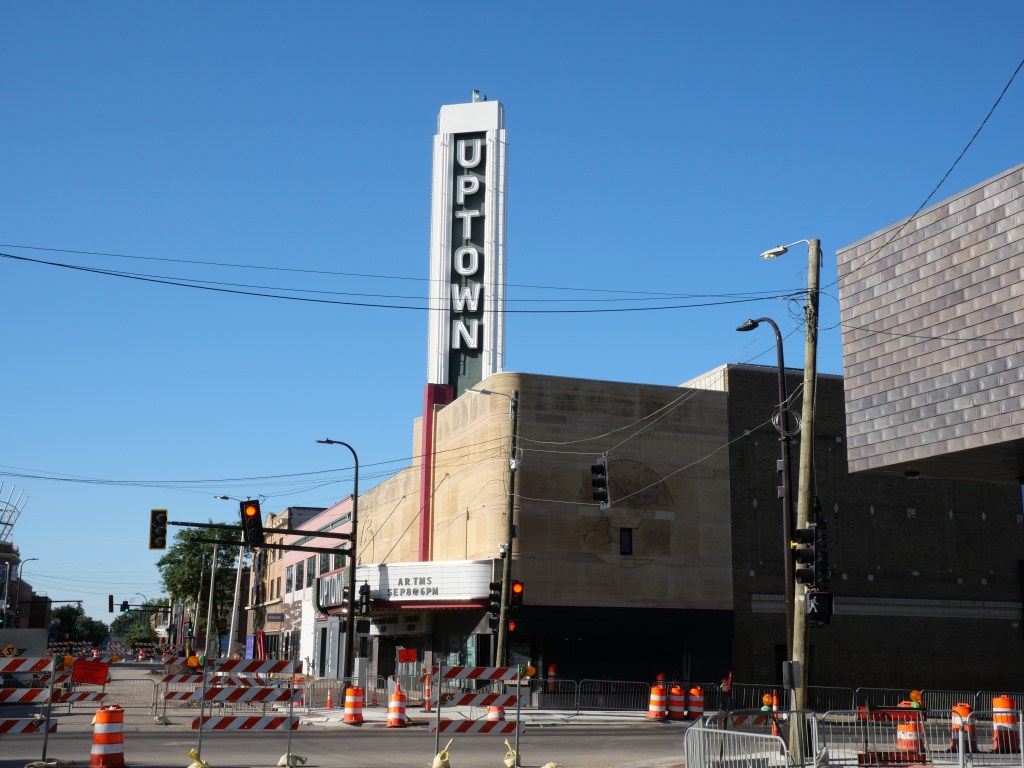
Uptown historically grew out of the intersection of Hennepin Avenue and West Lake Street and several  surrounding more residential neighborhoods (i.e. Lowry Hill East, East Bde Maka Ska, South Uptown and East Calhoun Isles neighborhoods). The name really began in 1939 when a new theater called “the Uptown Theater” went up near this intersections and the business community started to use it in their branding efforts. At the time Chicago’s Uptown District was well known and a Midwestern Cultural hub several miles north of the Loop. Up to this point, Uptown was a stable turn of the century neighborhood but like most inner city Minneapolis neighborhoods it experienced disinvestment in the post WWII era but nothing like Black majority neighborhoods in Northwestern Minneapolis. in the 70s and 80s Uptown became a hub for artists and musicians participating in the countercultural movements. Uptown was also where Music Artist “Prince” got his start evidenced by several of his songs referencing the neighborhood.  Starting in the 80s revitalization efforts accelerated and Uptown’s retail began to see a renaissance most demonstrated by the opening of the Calhoun Square Shopping mall. By the 1990s Uptown had turned the corner and was in full blown gentrification mood. But thanks to Minneapolis’ overall affordable housing market, rentals and even small condos and homes are still within the reach of many middle-class families.

Uptown is arguably Minneapolis’ premiere urban district thanks to its extensive urban commercial districts running along Hennepin, Lake, and Lyndale  This provides extensive retail and cultural amenities. Uptown is also served by several miles of lakefront recreational trails, has great array of housing options & price points, is very multi-model and well served by transit & bike infrastructure, has a great array of historic and in-fill options, and a great sense of place thanks to a strong node at Lake & Hennepin Avenue. The pandemic and a major reconstruction of Lake & Hennepin Avenue has brought significant strain to the retail community resulting in the closure of Target and many name brand retail chains. But given the existing urban strength of Uptown, I’m hopeful that these empty retail spaces will fill out and the neighborhood will reinvest itself again.
Click here to view my Uptown album on Flickr

URBAN STRENGTHS:

  • Also excellent access to Dwtn. Only a 20 min bike ride, 25 min transit trip and 12 mins by car.
  • Solid density at 17 K per square mile. Good access to really all modes of transportation. Very walkable neighborhood.
  • Overall a very safe communities. Some struggles in their commercial district after the Pandemic.
  • A handful of studio condos selling around 100K, good diversity of 1-bed condo selling anywhere btwn 100K-325K, great diverse 2-bed options ranging for dated condos to modern condos, townhomes, and SF homes. Most sell between 100K-600K but some super luxury condos selling for 1.5 M. Good diversity for 3 & 4 beds selling between 200K-1.5M with some mansions selling for even more.
  • Great rental diversity w/ tons of studios leasing btwn 800K-1.3K, 1-beds btwn $800-1.7K, 2-beds lease btwn the mid-high 1Ks, and good # of 3-beds leasing btwn 1.5K-3K. Even some 4-beds as well.
  • Great sidewalks amenities but modern ADA curb cuts cover maybe 60% of all intersections.
  • Great sense of place thanks to all the business districts and the “”dwtn”” Uptown at Lake Avenue and Hennepin.
  • Great architecture all around. Lots of quality recent apartments bldgs as well.
  • Good pedestrian activity along the biz districts but a bit sleepy in the SF residential streets.
  • Good cultural amenities including plenty of food & beverage bizs, a Indie movie house, a several live music venues and art galleries.
  • Uptown retail took a major hit during the Pandemic leading to closure of Target and several other brand name clothing stores, but solid retail amenities still remain. This includes 4 supermarkets & drug stores, a couple bookstores, several clothing stores, Calhoun Square (currently undergoing redevelopment), several banks, a hardware store, plenty of gyms & dessert joints, a bowling alley, several furniture stores, plenty of salons, a local library, and a couple of medical offices.
  • Several miles of lakefront recreational paths here and great access to a couple lakes. No large parks in Uptown but several well dispersed smaller parks including a local pool. Good tree canopy*
  • Urban form is generally solid along the biz districts but some auto centric spots along Lyndale and the northern reaches of Hennepin. Major reconstruction of Hennepin & Lake that will leave a much improve streetscaping environment.

URBAN WEAKNESSES:

  • Only a couple of schools within the Uptown footprint and they are not rated well. A couple decent schools several blocks outside of the neighborhood with mixed ratings.
  • Limited churches and not neighborhood post office.
  • So so diversity metrics. Decent amount of economic and racial diversity east of Hennepin. West of here is high income and generally White.
  • So so access to walkable schools. The 3 public schools aren’t rated well and only a couple private schools. At least all grades are represented.”
Harrisburg’s Uptown District- a turn of the 20th Century District with Good Urban Bones Experiencing a Resurgence

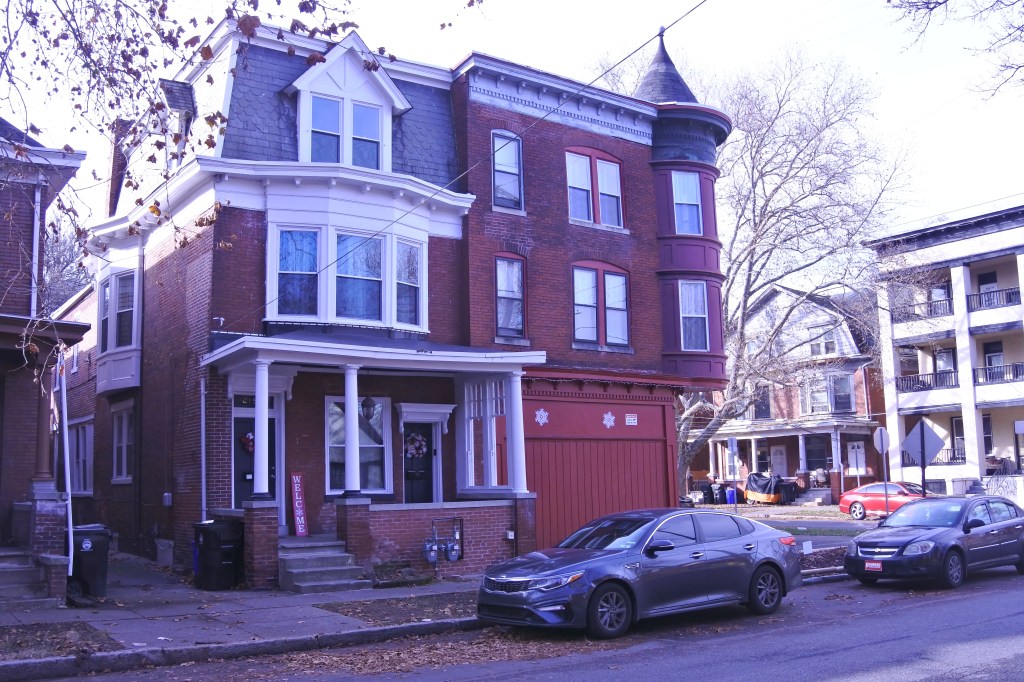
The Uptown neighborhood began as a natural outgrowth of Harrisburg in the late 19th century as the wealthy built homes away from the congestion and pollution of the central City. The oldest parts of the district are located in its southern border near MacClay St where most of the homes are typical east coast rowhouses (except the detached mansions near the river). As one travels northward in Uptown the typology transition to lower density with more single family and duplexes. This transition turns completely to single family homes once you reach Italian Park, a wonderful urban park centered on a large manmade pond. Hurricane Agnes in 1972 caused significant flooding and damage to Uptown and created a great wealth divide in the neighborhood. Areas west of 4th avenue and north of Italian Park maintained their wealth and stability but blocks east of 4th Avenue where more working housing was construction and industrial uses were concentrated slipped into poverty and disinvestment. It is not until recent decades that blighted blocks  have begun to recover and there is still a lot of reinvestment needed in Uptown.

Uptown has good urban bones especially south of Italian Park with its rowhouse and gridded urban fabric. Sadly due to the disinvestment of the neighborhood and lack of a cohesive urban business district, Uptown really lacks retail and cultural amenities. Uptown hosts a lot of attractive housing that is relatively affordable and decent amount of rental stock. The neighborhood also hosts quality park amenities but could use more dedicated bike paths. What Uptown needs is more investment, especially mixed-use development east of 4th Avenue. This would go a long way in returning this district into the vibrant walkable community it historically was.

Click here to view my Uptown album on Flickr

URBAN STRENGTHS:

* Very convenient access to Dwtn. Only a 5-10 min drive, 10 min bike ride, and 20 minute bus ride.
* Great connectivity thanks to a grid and small blocks.
* Nice recreational drive and dedicated bike lane along the river but not much else from a bike infrastructure standpoint.
* Great economic and racial diversity .
* Really no 1-bed condos. For-sale housing is rather inexpensive especially considering this is an east coast City. Plenty of 2-bed rowhouses that sell anywhere from 50K-250, 3 & 4 beds sell between 60K-350. Some of the larger mansions sell around 500K.
* Decent number of rentals but also on the affordable side. Lots of 2 & 3 beds generally leasing in the low to mid 1Ks. But limited studio and 1-bed apartments. Good amount of dedicated affordable housing here.
* Decent parks including the charming Italian Park with its man made pond, recreation trail and sports fields; 7th & Randor Sports Park, a couple playgrounds, and the recreational trail along the Susquehanna River.
* Good tree canopy but certainly disparities between the wealth and poorer pockets of the neighborhood.
* ADA infrastructure is good in parts of Uptown especially closer to the Dwtn. The northern edge of the district often lacks curb cuts all together but there are always sidewalks here.
* Lots of attractive historic houses especially  the single family homes along the river and around Italian Park. Lots of good rowhouses especially that ones that are well maintained.

URBAN WEAKNESSES:

  • Only one walkable public elementary school within Uptown and a bunch of small private schools. Also a couple decent public schools in the adjacent Midtown district which is walkable to some Uptown residents.
  • Public transit is certainly not as good as it should be for a pretty dense inner city neighborhood.
  • Safety is a mixed bag in Uptown depending on whether you live in the stable or poorer parts of the neighborhood. Lots of blighted housing and vacant lots east of 4th Street but the City has done a decent job implementing a clean and green strategy for the vacant lots.
  • There isn’t a strong business district in Uptown. Instead retail is often low end (think convenience and dollar stores) and generally spread out or located with the Uptown Plaza Strip Mall. Retail amenities including a Save a Lot, plenty of groceries, a couple pharmacies, a couple clothing stores, several salons and barber shops, a couple gyms, a local library and post office.
  • Cultural amenities is very limited in Uptown. Within the neighborhood there is an art gallery and a couple bars… that’s it! All the cultural amenities are located in the adjacent Midtown district, which is walkable to some Uptown residents.
  • In fill is limited to several quality in-fill rowhouse projects but also some unattractive auto centric strip malls and industrial uses along 7th Ave.
  • Buz in Uptown has been historically poor but seems to be improving.”

West Riverside- Stable riverside neighborhood in New Orleans’ Uptown District

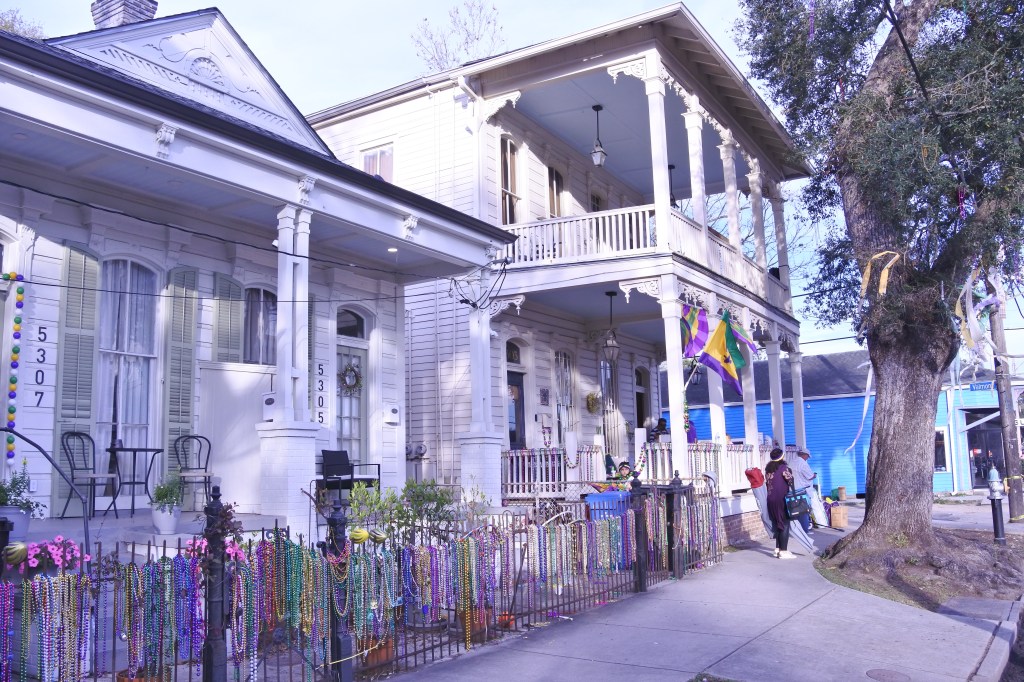
The West Riverside name is a modern invention by NOLA’s City Planning department to break up the vast Uptown/Carrollton Area. Not sure if locals even use the “West Riverside” name to refer to the neighborhood. Being along the river the West Riverside neighborhood really stops at Tchoupitoulas. South of here to the Mississippi River is a pretty inaccessible industrial area. The topology of the housing stock is mostly more modest shot guns and bungalows with some more regal Uptown housing mixed in. Housing prices, however, are almost as high as surrounding neighborhoods like Audubon and Uptown, which do have larger southern mansions.

West Riverside has a high level of walkability with convenient access to the lengthy Magazine business district, lots of bars, restaurants, & cafes mixed throughout the neighborhood, and good public transit access. There are several areas for improvement that prevent West Riverside from being a top NOLA neighborhood. That includes limited access to park and recreational space, mediocre schools, limited bike infrastructure,  a spotty tree canopy, and a rather autocentric/industrial corridor running down Tchoupitoulas Street. Like other Uptown neighborhoods, West Riverside could use more affordable housing options and racial diversity. 

Click here to view my New Orleans Album on Flickr

URBAN STRENGTHS:

* Decent urban density.
* Good public transit and solid access to Dwtn via biking, driving, and public transport.
* Highly efficient and gridded street grid.
* Good walkability thanks to hosting the Magazine commercial district throughout its entire length. Lots of mixed-use development through the district.
* Solid generational diversity with good age diversity and about 35% of households with kids.
* Good # of rentals, generally on the pricy side, but some more moderately priced options. 1-beds lease anywhere btwn 1K-2K, 2-beds rent btwn the low 1Ks to low 2Ks, also some 3-beds that lease anywhere btwn 2K-4K.
* ADA curb cuts exist on about 50% of all intersections. Generally good sidewalks but some bad spots in parts.
* Attractive historic housing but more modest that other Uptown neighborhoods with all the shot gun river houses here.
*Overall a very safe community.
* Good cultural amenities including a lots of good & bev bizs, several cafes and night clubs, and several live music venues.
* Solid retail amenities with 3 full service supermarkets, a couple drug stores, plenty of boutiques, gift shops & salons along Magazine Street, a couple book stores, a toy store, a couple banks, several florists, plenty of dessert shops, and a couple gyms. Also a public library, and a children’s hospital.
* Generally good urban massing along Magazine Street.

URBAN WEAKNESSES:

* Dedicated bike lanes along Napoleon but nowhere else. West Riverside is unfortunately outside of the dedicated bike share zone.
* Economic diversity is pretty limited as this is a solid upper middle class neighborhood.
* For sale hsg is generally pretty expensive but some more modestly priced smaller options. 1-bed homes sell anywhere btwn 200K- 600K. 2-beds sell btwn 350K-850K. 3 & 4 beds sell anywhere btwn 450K-1.3M.
* Really no dedicated affordable hsg in the neighborhood.
* Parks amenities are so so . Great access to Audubon Park in the western age of the neighborhood. Pretty limited park access in the eastern half of the district.
* A decent # of schools within West Riverside and nearby mixing a several private and public/charter schools. Public/charter schools are not ranked well.
* Missing a local post office, few churches here, only a handful of medical offices, and o chain clothing or department stores.
* Modern architecture is mainly limited to crummy strip malls along Tchoupitoulas St and Magazine St. Some good infill homes. Tchoupitoulas is has some pretty bad autocentric stretches.
* Tree canopy is so so.

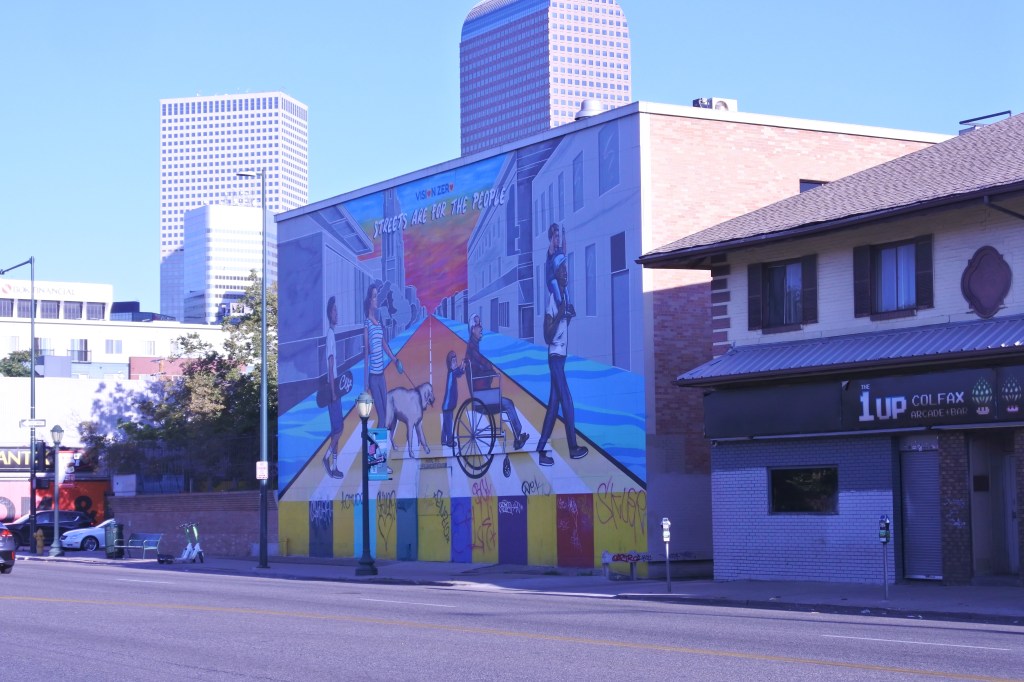
North Capitol Hill, Denver- Part Downtown and Part Urban Neighborhood

North Capitol Park is often referred to as Uptown. This district along with Capitol Hill was one of the first neighborhoods where the wealthy of the City settled in the 1870s and 1880s. But similar to Capitol Hill it experienced a downturn after WWII and many historic homes where either demolished or converted into rentals. The edge of the district near Dwtn also got more or less incorporated in the  CBD with some office buildings but also a lot of surface parking lots and underutilized space.

Currently, North Capitol Park is undergoing significant redevelopment and gentrification, with many young residents and transplants moving here. This is largely due to its proximity to Dwtn, walkability, and significant cultural amenities and night life.

For North Capitol Park to become a great neighborhood lots of in-fill development is needed in the western half of the district. Because of all the surface parking lots here it lacks great urban cohesion. Parks of Colfax Avenue are also pretty auto centric. The district also needs more parks and trees.

Click here to view my North Capitol Hill Album on Flickr

URBAN STRENGTHS:

* Great urban density.
* Walkable access to Dwtn. Also great transit service and bike infrastructure here.
* Good but not great ADA infrastructure as many curbs are missing modern ADA cuts.
* Pretty good access to walkable schools within or near North Capitol Park. Generally good ratings.
* Hsg on the pricey but a ton of moderately price condos. 1 beds sell anywhere btwn 300K-600K, 2-beds 350K-1M, 3 & 4 beds btwn 500-1.3M with condos being on the cheaper end.
* Tons of rentals and comparatively moderately priced comparted to other Denver neighborhoods. Studios 1-beds lease anywhere in the 1Ks, 2-beds 1.5K to 3K, 3-beds are limited. It seems there are a good amount of affordable hsg here.
* Great cultural amenities including many restaurants, bars, nightclubs & cafes. Also several art galleries, a couple live music venues,. Also great access to all the many cultural assets Dwtn and in the Golden Triangle.
* Good retail amenities including several gourmet super markets, a home depot a couple drug stores, some boutiques , home good and creative stores, tons of banks, a bookstore, several desserts shops & gyms, and plenty of churches. Also walkable access to the many retail options along 16th street (Dwtn) including a Target.
* Nice historic homes on the eastern half of the district. Some very spectacular bldg.

URBAN WEAKNESSES:

* Generally a safe area. Some sketchy stretches along Colfax and some lingering crime issues.
* Park Amenities are limited to the small Benedict Fountain Park and Civic Center Plaza.
* Ok tree canopy better on the eastern half.
* Good # of surface parking lots, esp. on the western half close to dwtn.  Weird mix of infill, historic bldgs and parking lots here.
* Colfax avenue is a mix of good and poor urban form.

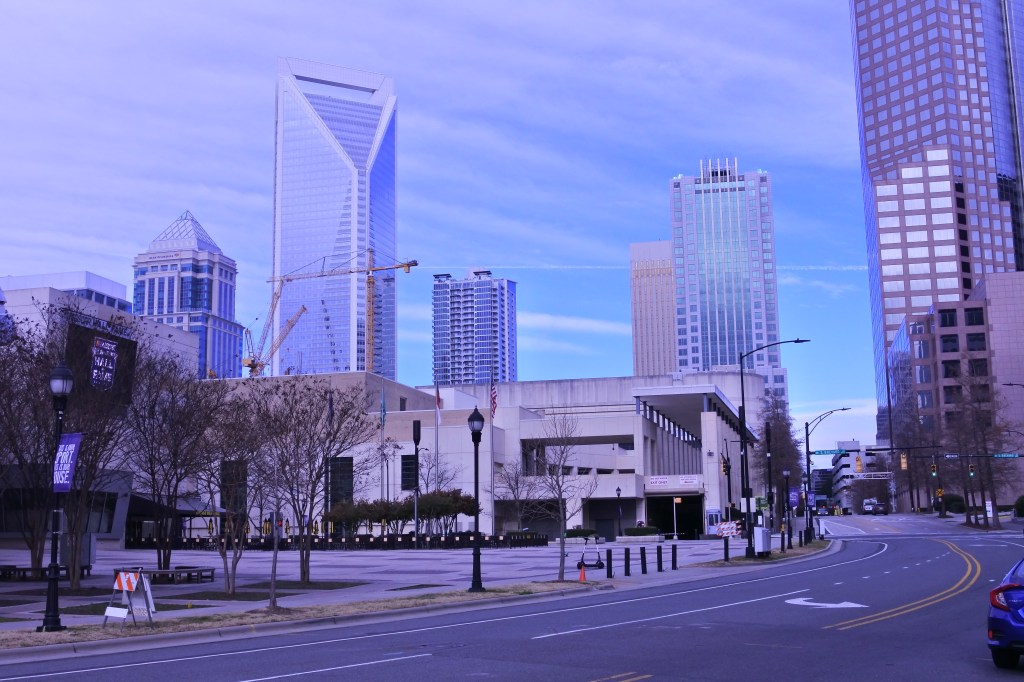
Charlotte’s Uptown- the largest CBD of the Carolinas

Uptown Charlotte is split into four wards intersected by the crossroads of Trade and Tryon Streets. I used the borders of Interstate 277 and the railroad (to the north). Traditionally Dwtn extends all the way north to 277 but this area feels like a separate district to me. The term “Uptown” referring to the geographic location of Tryon and Trade Street, sitting at a higher elevation than the rest of the city. Much deliberation went into whether to use Uptown or Downtown or even City Center. Uptown eventually won out with City Center meaning Uptown and surrounding inner city neighborhoods.

The 1st Ward , once considered one of the most dangerous areas in Charlotte, has been redeveloped thanks to a HUD Hope VI grant into a mixed income district. Urban form here is ok as all housing is new. Not really mixed-use, but some good urbanism near Tyron and First Ward Park is attractive. The 2nd Ward  was formerly the location of the predominantly black neighborhood, Brooklyn, before urban renewal took over. Probably one of the biggest tragedies in Charlotte resulting in a uninspiring modernist environment.  Uptown’s third ward hosts the bulk of “Dwtn fabric” surrounding a streetcar line and Tyron Street. Lots of good mixed-use development, skyscrapers, cultural assets, sport stadiums, and the attractive Romare Bearden Park. The 4th Ward   can be considered a stand alone neighborhood as well but is integrated seamlessly with Dwtn. It contains Charlotte’s best Victorian turn of the century architecture with sensible modern in-fill and many great mixed-use amenities.

With the under development of the 1st & 2nd Wards, Uptown Charlotte has plenty of areas that need further urban development and infill to have the complete Dwtn package of vibrancy and walkability. Given the furious pace of new construction, I’m hopeful this will eventually occur. 
Click here to view my Uptown Album on Flickr

URBAN STRENGTHS:

* Great ADA infrastructure and generally good sidewalks, but street can be very wide and auto centric making it uncomfortable to be a pedestrian.
* Good population density in Charlotte but often pretty spreadout. 4th Ward has excellent density.
* With all most all the building being new its fortunately that much of it is quality design and good form. Generally the best architecture is concentrated in the core (Tyron & Trade) and in the 4th Ward. The 2nd Ward is spread out with unattractive buildings and the first ward is a mix of decent residential bldgs.
* Public transit is better is Charlotte than one would expect providing excellent service to Dwtn and to surrounding inner city neighborhoods. A couple miles out transit service is so , but limited outside of the City (keep in mind that Charlotte includes lots of suburban areas.)
* Great connectivity but lots of high traffic one way streets.
* Great dedicated bike lanes Dwtn and to inner ring districts. Decent connect out to the post WW II districts. Bike sharing system is limited to Dwtn and a handful of inner city neighborhoods.
* While almost exclusively modern, Charlotte has a great skyline lots of concentrated high rise towers.
* Great array of for sale housing Dwtn with a fair amount of moderately priced options. 1-bedrooms generally sell in the 200Ks, 2-bedrooms are generally 300K-400K but more expensively luxury product, good amount of 3 bedrooms but generally very expensive. Nice array of rentals priced similarly to most Dwtns… 1-bedrooms in the $1,000s. 2 bedrooms btwn 1.5K & 3K,  and a good array of 3 bedrooms.
* Culturally a good amount of restaurants & bars but pretty average for American Dwtns, lots of theaters (only one is historic), an Imax, several live music clubs, a handful of art galleries, and a great array of museums. Regional amenities include the convention center, a wonderful dwtn library, several stadiums hosts a professional football, basketball, hockey, and minor league baseball.
* Several high quality recreational spaces & parks along with many small corporate plazas. But no definitive civic gather spot.
* Schools include a couple elementary schools, a high school, and school for children w/ cognitive disabilities. Pretty good college presence with several dwtn only campus enrolling 6-7K students and Piedmont Community College located just outside of Dwtn.

URBAN WEAKNESSES:

* Next to Las Vegas, Dwtn Charlotte has the least amount of historic architecture. Certainly a feeling of sterileness with all of its newness and lack of character.
* Uptown has a very strong office market with high rents and low vacancies. Total jobs is 70K, still much lower than comparable cities like Cleveland or Cincy, but trends are certainly good.
* Dwtn retail amenities is still lackluster. While there is a  supermarket, several drug stores, plenty of banks, only a handful of boutiques and creative stores. No bookstore.
* Solid urban form along the main streets of Tyron and Trade but pretty poor in the southern half of Dwtn (1st & 2nd Wards)