Kensington- the Epitomy of a Brooklyn Neighborhood to me

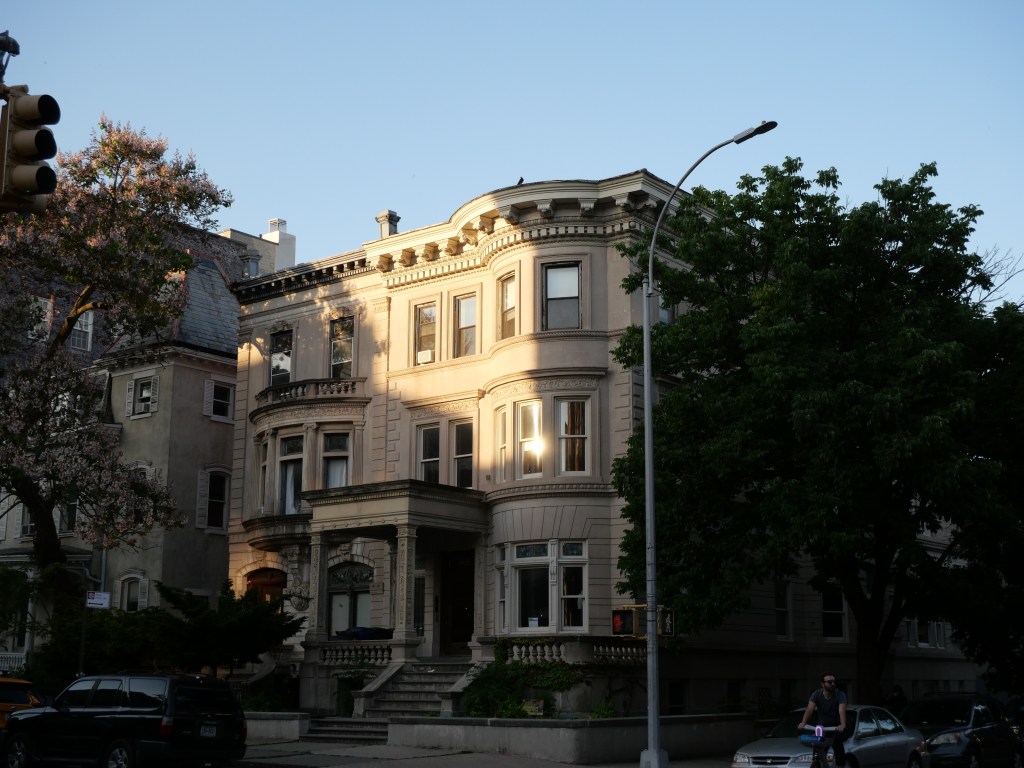
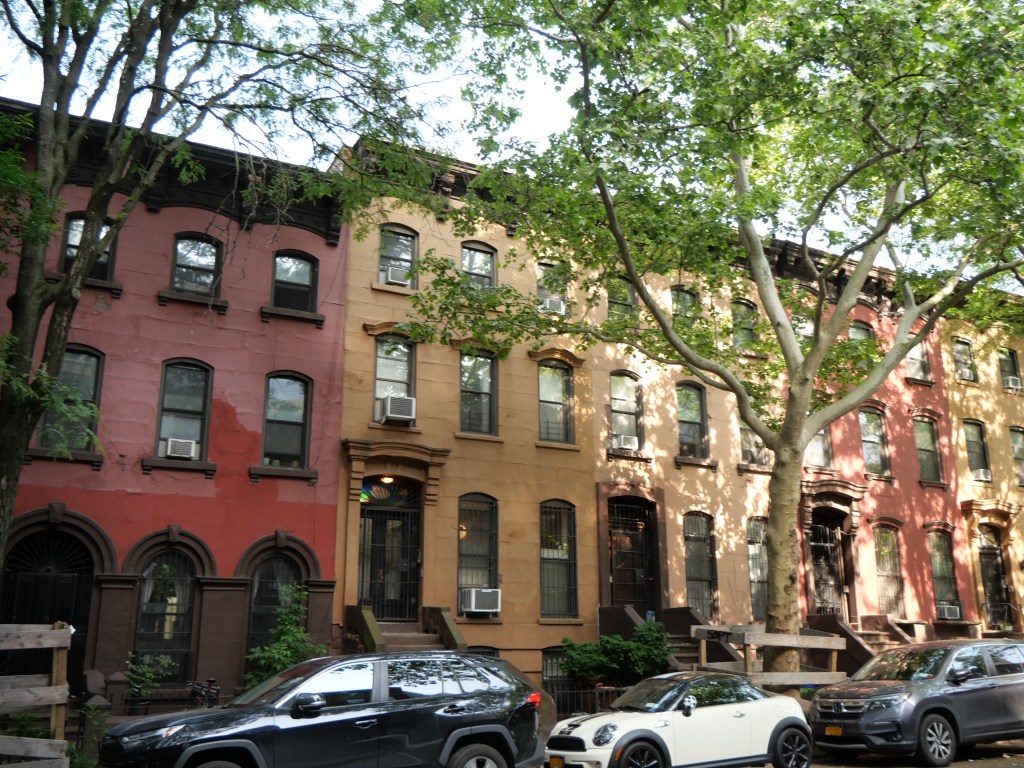
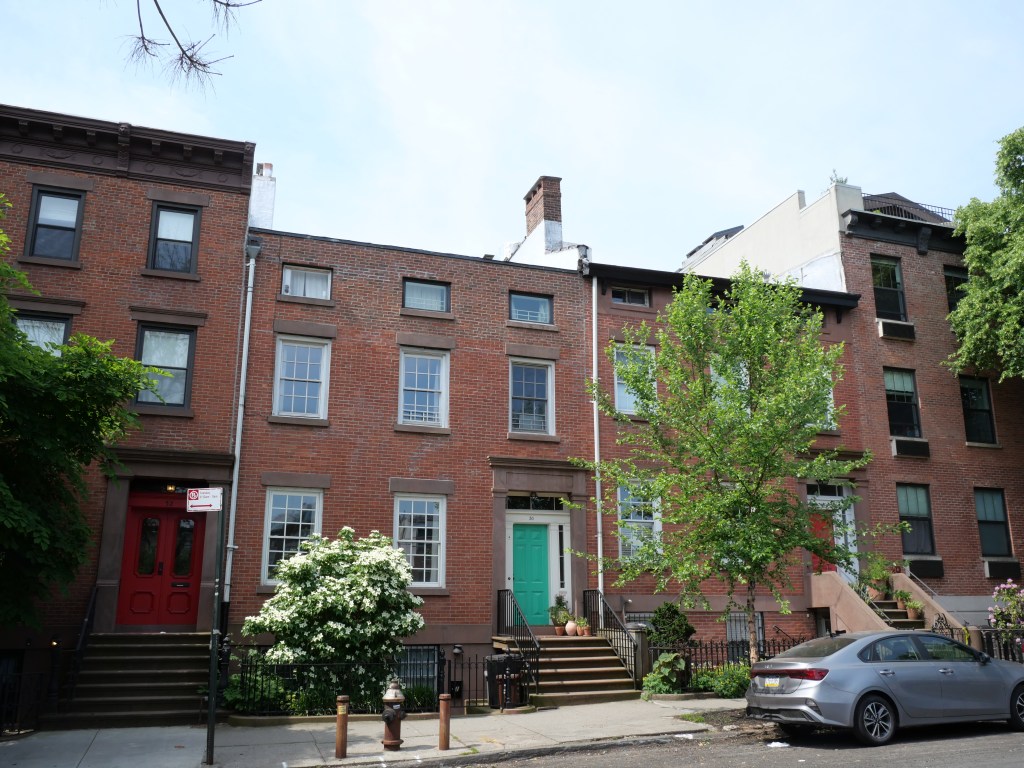
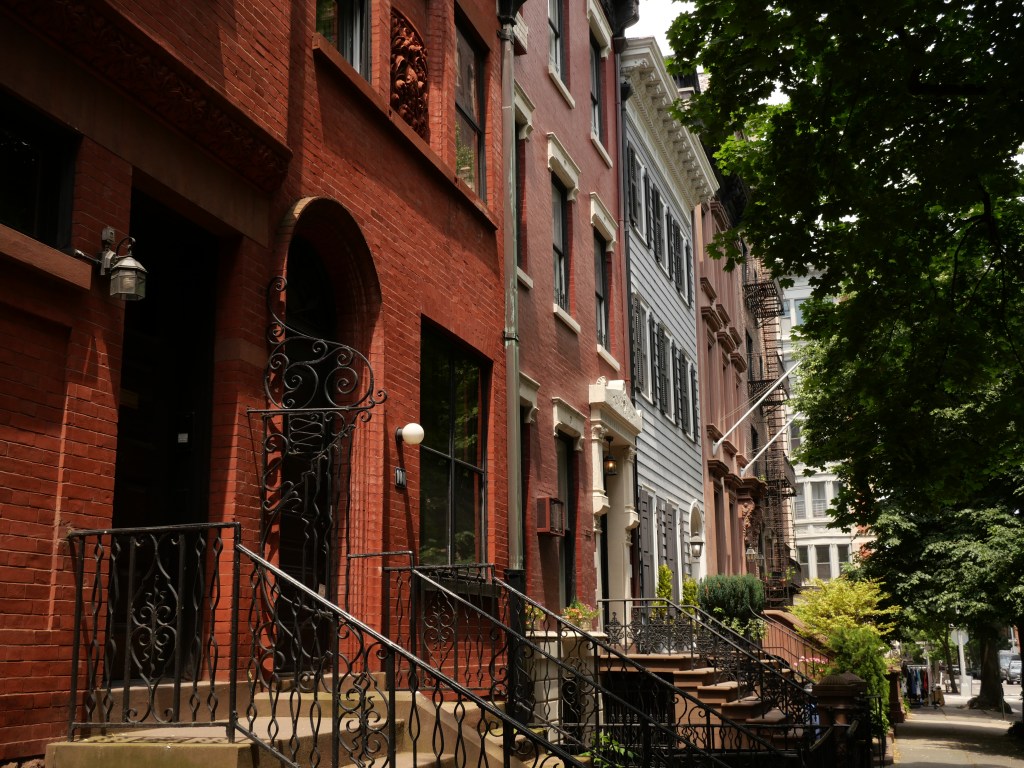
When I think of Brooklyn, Kensington in many ways epitomizes what I picture Brooklyn to be… ethnically diverse but with a large Orthodox Population, dense walkable neighborhood served by great subway access (even an elevated heavy rail line), and turn of the century neighborhood with an eclectic mix of housing including single family homes, duplexes, brick rowhouses from basically every decade of the first half of the 20th Century, some late 19th century brownstones, and of course plenty of large 1920s brick apartment buildings. The main commercial streets of Kensington are Coney Island Avenue, Church Avenue, Ditmas Avenue, and McDonald Avenue. Ocean Parkway bisects the neighborhood from north to south with two lovely pedestrian promenade running down the center.  Kensington was first developed in 1885 after the completion of Ocean Parkway, named after the famous West London neighborhood.  Kensington was first built up during the turn of the 20th century as a mixture of attached rowhouses, single family woodframe homes, duplex’s, and small apartment buildings. But when the subway line came in the 1920s the area was rezoned allowing large apartment buildings to be built, especially along Ocean Parkway and on the neighborhood’s periphery between the 1920s-1940s. My sense is zoning made it difficult to continue building apartment buildings in the post War Area although some were still built along Ocean Parkway in the 50s and 60s. Throughout the first half of the 20th century, Kensington was considered to be West Flatbush. But this changed in the 1950s as eastern Flatbush became increasingly populated by African American and Afro-Caribbean families. Kensington adopted its new name as a way of distinguishing it from eastern Flatbush. Yet this name change did not completely insulate Kensington from the effects of urban decline and White Flight. By the mid-70s Kensington’s allure had waned as many young professionals choose the suburbs instead. Yet this era of decline was relatively shorted lived for Kensington as the area became in demand by the 1980s welcoming young professionals displaced by gentrifying lower Manhattan and Inner Brooklyn and many Orthodox Jews, African Americans and Hispanic and Latino Americans spilled over from Borough Park. New apartments and mixed-use buildings have incrementally been built since the 1990s across the neighborhood. More recently Kensington has welcome large numbers of  immigrants from Bangladesh and Pakistan. Even with its resurgence Kensington has managed to be a relatively affordable neighborhood compared to other more gentrifying Brooklyn neighborhoods to the north and north west.

One can still buy an attractive 1-bed condo for 400K or rent even a 2-bed in the 2Ks. Kensington is also one of Brooklyn’s safest communities and has a plethora of well rated walkable schools. For this to be a top notch Brooklyn community Kensington needs better urban infill is needed along Coney Island Ave & McDonald filling in lots of autocentric uses. I would also like to see more bike infrastructure, more cultural amenities and the road dieting of the excessively wide Ocean Parkway.

Click here to view my Kensington album on Flickr

URBAN STRENGTHS:

* Excellent density around 60K sq miles per person.
* Overall excellent connectivity and street grid.
* Good access to Dwtn Brooklyn and Lower Manhattan being 40 mins by train and about 45-50 mins to Midtown.
* Great diversity metrics especially racial and economic. There is a White minority of about 44% and large Hispanic and Asian populations here. Good number of families as well.
* Very safe community. One of the safest in Brooklyn. Some grit, esp. along Coney Island but not too bad.
* Solid ADA and sidewalk infrastructure. Some missing ADA curb cuts but not too bad.
* Decent historic architecture but certainly more plain than Inner Brooklyn neighborhoods.
* Solid tree canopy but certainly some holes.
* Good walkable schools with well rated public schools. Not much private school diversity as they are almost all Orthodox Jewish Institutions.
* Good park access in the northern half of Kensington with walkable access to the southern edge of Prospect Park and Greenwood Cemetery.  A handful of smaller parks throughout the neighborhood but would like to see more.
* Solid retail amenities including several supermarkets especially Kosher ones and ethnic grocerias, plenty drug stores and hardware stores, a decent # of clothing/home goods/furniture stores, a couple bookstores,  some gyms and dessert joints, a couple bike shops, tons of salons & barber shops a  public library and  post office. No hospital here but plenty of doctor’s offices and medical centers. Lots of other more working class serving stores like 99 c stores, laundromats, mobile stores, etc.
* Good # of rentals  and pretty affordable for Brooklyn standards. Studios, 1 beds, and 2-beds all lease in the 2Ks,  and a decent # of 3 -bed rentals hat lease in the 3Ks. Decent amount of the rental supply is dedicated affordable rentals or rent stabilized as 4/5s of rental product lease under 2K.
 * Lots of modestly priced smaller condos. Good # of studios that sell btwn  200K-400K, tons of 1-bed condos that sell btwn 200K-600K , 2-beds condos range btwn 300K-1.2M. 3-beds btwn 550K- 2M. 4&5  beds range anywhere btwn 1M and 2M. 

URBAN WEAKNESSES:

  • Urban in-fill is a mixed bag. Some good urban mixed-use buildings but not a ton of it. Decent amount of autocentric infill along Coney Island Ave., McDonald Ave, and 36th St.
  • Dedicated bike stations are only located on the northern half of the neighborhood and not enough east to west dedicated bike lanes.
  • Decent but not great cultural amenities, at least for Brooklyn standards. Good number of restaurants (esp. ethnic restaurants), bars, and cafes. Also a cinema located just south of the neighborhood, but not much else.
  • Lots of unattractive auto serving uses along Coney Island. Also limited boutiques and higher end specialized gift stores. Likely a sign that Kensington has not gentrified like other inner city Brooklyn neighborhoods.

Flatbush- A very Diverse Brooklyn Neighborhood Located south of Prospect Park and containg New York’s Little Haiti

Flatbush remained primarily a Dutch town with rural character until the latter half of the 19th century, when increasing rail and road connectivity to other parts of New York made it an attractive suburb. A stream of Irish and some German immigrants first arrived to the area, in the 1860s. Flatbush built a Town Hall in 1875  but only remained an independent town until it consolidated into the City of Greater New York in 1898 and was further connected to the rest of the city by the New York City Subway in the early 20th century. Flatbush’s population really took off in the 1890s and was largely built out by 1915. A significant amount of single family homes and rowhouses were rebuilt with larger apartments in the 1920s and 30s. After WW II Flatbush underwent tremendous demographic shifts, becoming home to increasing numbers of immigrants from the Caribbean, Asia, and Puerto Rico and saw a large influx of African Americans. This was especially the case along the  Nostrand Avenue corridor where the subway offered access to job opportunities, while middle-class African Americans bought up row houses to the west. Modern day Nostrand hosts New York’s largest Haitian Community.  The population of the neighborhood shifted from 89% white in 1970 to 30% white in 1980 accelerated by racists blockbusting practices. Parts of the neighborhood in the west and to the south of Prospect Park remain stable thanks to the large detached SF homes that attracted a sizable number of wealthier homeowners. By the mid-1980s Flatbush however, had numerous abandoned  buildings and the eastern parts of Flatbush were particularly affected by poverty and the crack epidemic. Yet by the late 20th century and 21st century Flatbush began to change its poor reputation as more affluent renters and buyers were attracted by its cheaper prices, attractive housing stock, and convenient walkability and accessibility to Manhattan and other parts of Brooklyn.

The Ditmas Park subdistrict is used to describe several neighborhoods comprising the larger area of Victorian Flatbush. It is an eight-block historic district consists of 2,000 to 2,500 residential restrictions built  between 1902 and 1914.  Prospect Park South also contains a large Historic District of freestanding homes exceeding 3,500 square feet. South & West Midwood is on the southern edge of Flatbush and is mostly filled with early 20th century structures including a mix of single family homes. attached brick rowhouses and large apartment buildings. While Flatbush has certainly gentrified is retains a good number of affordable stabilized rentals and reasonably priced for-sale options. Given its good walkability, access to Prospect Park, quality schools, and general safety, its a good value in Brooklyn.

Click here to view my Flatbush Album and here to view my Little Carribean album

URBAN STRENGTHS:

* Very large and dense Brooklyn neighborhood containing around 150K people at 65K per square mile.
* Overall good sidewalk and ADA curb cut infrastructure but a good number of intersections (say 40%) are out of date.
* Solid access to Dwtn Brooklyn, Lower Manhattan and Midtown only 30-45 Mins by subway.
* Good bike infrastructure as well with plenty of dedicated bike lanes and a solid bike sharing system but the southern edge of the neighborhood is without dedicated bike stations.
* Goo diversity indicators especially economic but also solid racial diversity as about 1/2 the population is Black with large White, Hispanic, & Asian populations and a good # of families live here.
* Decent range of rentals although listed rentals are very expensive. Studios lease btwn 1.8K-2.8K, 1 beds lease btwn 1.8K-3.6K, 2-beds btwn 2.5-5K, and plenty of 3-beds leasing btwn 2.8K-5K. Good amount of the rental supply is dedicated affordable rentals or rent stabilized as 4/5s of rental product lease under 2K. Most expensive rents are the northern edge. Rents in the southern half of Flatbush are pretty modest for Brooklyn.
* Solid schools with generally well rated public schools and good age diversity. Schools along the eastern edge of Flatbush in the more Caribbean section are not as well rated. Good number of private and charter schools as well.
* Great architectural diversity including your typically Brooklyn mi of large 1920 apartments and late 19th century rowhouse. But also many large single family homes in the subdistricts of Midwood, Ditkas Park, and Prospect Park South. East of Nostrand Ave there is an even more eclectic mix of 2-story Italianate rowhouses, brick duplexes, and more modest SF homes.
* As the neighborhood gentrified there is more and more quality urban infill especially in Prospect Park South but also increasingly along Flatbush Ave.
* Solid Tree canopy throughout the district, especially in the Single Family subdistricts.
* Good pedestrian activity but a touch sleepier than other Brooklyn neighborhood’s due to the large SF areas.
* Great park amenities for those on the Northern edge of Flatbush with good access to Prospect Park and the countless sport fields on the Parade grounds. However park amenities are a bit sparse for residents of Flatbush living more than a 10 minute walk to Prospect Park  limited to a handful of playgrounds, basketball courts, a YMCA and small parks.
* Solid cultural amenities but a bit underwhelming compared to other nearby neighborhood. Large # of restaurants, bars, and cafes, a couple art galleries, several performing arts theaters (including the historic King Theater), and a couple night clubs.
* Solid retail amenities including several supermarkets and a handful of ethnic grocerias, 2 targets, several brand named clothing stores, plenty drug stores and hardware stores, a decent # of boutiques/clothing/gift stores, a couple bookstores, several home goods and furniture stores, plenty of gyms and dessert joints, a couple libraries  post offices, several churches, NYC Hospital sits on the NE corner of Flatbush and many doctor’s offices.

URBAN WEAKNESSES:

* Flatbush is generally a pretty safe community but with some gritty and sketchier areas starting at Ocean after and moving east ward towards Flatbush Avenue and Nostrand Ave. Coney Island Ave the western border is pretty gritty and autocentric at times but doesn’t feel dangerous.  Neighborhood certainly seems safer than it was a decade ago due to continued gentrification pressure.
* Flatbush still suffers from some negative perception from those who are stuck in the 1990s and early 2000s when Flatbush was legitimately a more dangerous place.
* A handful of autocentric spots and more industrial uses along the eastern edges of Flatbush but not terrible.
* Streetscaping on Flatbush’s business districts is functional but feels dated and gritty.
* For sale housing are expensive but much more reasonable that many other Brooklyn neighborhoods. There are some moderately priced studios selling btwn 300K-450K, plenty of moderately priced 1-beds selling btwn 250K-750K, Really good diversity of 2-beds condos ranging btwn 250K-1.2M with good representation in each price range. 3-beds btwn 450K- 2M including a good mix of condos, attached homes, and rowhouses. 4 beds range anywhere btwn 600K and 2M. Plenty of 5 bed options too thanks to all the SF homes. Top of the market is 3.5M.
* Limited live music options

Prospect Heights- Dense Brooklyn Neighborhood just North of Prospect Park and host of the Famous West Indie Day Parade

To better line up with the NYC Times Neighborhood survey I extend Prospect Slopes eastern boundaries to Grand Avenue. The neighborhood name Prospect Heights can be traced as far back as 1889. The neighborhood is a small sliver between the larger neighborhoods of Park Slope to the West, Clinton Hill to the north, and Crown Heights to the east. In general the interior portion of the neighborhood consists mostly of brownstone-style residential rowhouse buildings built mostly in the 1890s and blocks just north of the Eastern Parkway and south of Steering consist of a solid blocks of larger multi-unit apartment buildings built in the 1910s and 1920s. A prosperous commercial district developed along Vanderbilt Ave, which cuts through the heart of the neighborhood. Prospect Heights became a diverse ethnic neighborhood in the 1910s through the 1960s, combining Italian, Irish, Jewish, German, and  Greek residents. After WWII Prospect Heights welcomed a large number of African Americans and Caribbean immigrants as the neighborhood became a spill over for these populations from neighboring Crown Heights, Clinton Hill, and Bed Stuy. Since the 2000s Prospect Heights has been on a gentrification track as residents seeking lower rent spilled over from the affluent Park Slope and Clinton Hill neighborhoods. The neighborhood currently has a decent mix of black and white residents and still hosts the famous West Indian Day Parade.  Thanks to the resident gentrification there are a good number of quality in-fill condos and apartments especially along the neighborhood’s northern and eastern edges. Defunct bakeries and factory spaces concentrated along the districts eastern edge are being renovated and converted into lofts. Along the southern boundary, Eastern Parkway, is Brooklyn’s version of Manhattans Fifth Avenue  “Museum Mile” as the Brooklyn Library, Brooklyn Museum, and Brooklyn Botanical Garden are all concentrated here.

From an urban perspective not much to complain about other than some autocentric uses concentrated along Atlantic, Grand, and Washington Avenues. As the gentrification process depends Prospect Heights is slowly loosing its racial and economic diversity. There needs to be strong attempts to built permanent affordable housing to keep the neighborhood’s rich diversity. Overall Prospect Heights is a wonderful urban neighborhood with one of Brooklyn’s densest populations, great access to several subway lines, great bike infrastructure, and convenient park, retail, and cultural amenities all within a 10 minute walk. Most of the stylish late 19th century brownstones remain, and the neighborhood hosts solid well rated walkable schools and a high level of safety.

Click here o view my Prospect Heights Album on Flickr

URBAN STRENGTHS:

* One of the denser neighborhoods in Brooklyn at nearly 70K people per square mile.
* Excellent public transit and great access to Dwtn Brookly and Lower Manhattan only 25-30 mins but subway and 40 mins to Midtown.
* Great street grid and connectivity throughout Prospect Heights.
* Some narrow sidewalks and missing ADA curbs along Atlantic and Washington Ave but overall great sidewalk infrastructure.
* Great bike infrastructure with several bike lanes and plenty of dedicated bike stations.
* Solid tree canopy esp. for such a dense urban neighborhood.
* Excellent urban architecture including attractive late 19th century brownstones still to Park Slopes and a lot of attractive urban infill, espeically along Atlantic and Washington Ave. Large more basic 1920s apartments near Prospect Park and more warehouses along the eastern border along Grand Ave.
* Overall a very safe community. Along a touch of blight along the eastern edge of the neighborhood along Washington and Grand Aves.
* Solid urban form and streetscaping.
* Great access to Prospect Park no more than a 8 minute walk from any portion of Prospect Heights. A couple smaller parks within the neighborhood and a private pool. Convenient access to the Brooklyn Botanical Garden and Zoo as well.
* Decent range of rentals although listed rentals are very expensive. Studios lease btwn 2.3K-3.8K, 1-beds btwn 3K-4.8K, 2-beds btwn 4.5K-7.8K, and plenty of 3-beds leasing btwn 4.5-8K. Good amount of the rental supply is dedicated affordable rentals or rent stabilized as 2/3s of rental product lease under 2K.
* Solid schools that are well rated but smaller and less umbiquitous than other surrounding Brooklyn neighborhoods.
* Great array of cultural amenities including tons of bars, restaurants & cafes. a handful of art galleries, several live music venues, a couple performing arts theaters, the Brooklyn Museum, and the Barclay Center, Botanical Gardens are nearby, and Brooklyn Academy of Music with a Cinema & several theaters are in walkable nearby areas.
* Excellent retail amenities many small and medium grocerias (no supermarekts within Prospect Heights), several drug stores,  good # of boutiques/gift stores,/home good stores, a couple book stores and  hardware stores, several gyms, a good # of dessert joints, a couple bike shops and florists, several churches, the main Brooklyn Library, a local post offices, several doctor’s offices and medical centers. On the northern edge there is a Target & Marshall’s, Best Buy, Burlington, and many other stores in the Atlantic Terminal Mall.

URBAN WEAKNESSES:

  • Decent racial diversity. Less economic diversity as the neighborhood is pretty affluent.
  • Some autocentric uses along Atlantic, Grand and Washington Avenues.
  • Decent #s of family households her but also a disproportiant # of young adults.
  • For sale housing is expensive but decent # of moderrately priced studios and 1-beds. Studios and 1-bed condos sell btwn 300K-1.3M, 2-beds range btwn 600K-2.6M, 3-beds btwn 850K-4M. A handful of 4-beds sell for more than 4M.”

Clinton Hill- home to Pratt Institute and one of Inner Brooklyn’s best Urban Neighborhoods

Clinton Hill received its name  in honor of New York Governor DeWitt Clinton and due to its slight elevation above the surrounding area. Clinton Hill’s European roots began with the Dutch who cultivated tobacco plantations in the 1640s The area remained largely rural until the 1830s when the tree-lined Clinton Avenue was laid out as a boulevard along the crest of the hill in 1832. By the 1840s, Clinton Hill and neighboring Fort Greene had become fashionable neighborhoods for those who could commute to Manhattan by way of a stage coach to the Fulton Ferry. By the 1880s Clinton Hill was largely built out with mostly rowhouses attracting middle class professionals and more and more working class families. Oil executive Charles Pratt founded the Pratt Institute in 1887 as a private college which remains to this day. By 1920 several apartment buildings were built on Clinton Avenue and Washington Avenues. The1940s-1950 brought the construction of several affordable high rises raising the blocks surrounding the Platt Institute. Fortunately Clinton Hill retained its urban cohesion and most of its browntowns and rowhouses in time for the 1970s preservation movement, which lead to the restoration of many of these gems. In 1985 a significant portion of the neighborhood was included in the Clinton Hill Historic District.

From an urban perspective this is a top tier urban district with excellent walkability thanks to the neighborhood’s robust public transit and bike infrastructure, retail and cultural amenities running along Fulton, Myrtle, and Atlantic. Clinton Hill also has convenient access to 3 major Dwtns in New York, great schools, dense tree canopy, and a high level of safety. While the neighborhood has certainly gentrified in the last several decades, it has managed to hold on to much of its economic and racial diversity thanks to a sizable number of affordable housing and rental units. But as always there are still small ways the neighborhood could improve. More infill and road dieting is needed to tame the autocentric thoroughfares of Atlantic and Flushing Avenues. Significant effort should also good towards maintaining affordable rentals and creating new affordable condos likely through a Community Land Trust structure.
 

Click here to view my Clinton Hill album on Flickr

URBAN STRENGTHS:

* Solid urban density at around 53K per square mile.
* Great access to 3 top CBDs including a 15 min subway ride to Dwtn Brooklyn and 30 mins to both Lower Manhattan & Midtown. Quicker to bike to Dwtn Brooklyn and Lower Manhattan in most cases.
* Other than the Brooklyn-Queens Expressway running along the north edge of the neighborhood, connectivity is nearly perfect.
* Solid ADA Curb and sidewalk infrastructure throughout but about 40% of intersections have outdated ADA curbs.
* Excellent bike infrastructure including several dedicated bike lanes and a good number of share stations, although not as many as most Inner Brooklyn neighborhoods.
* Solid urban architecture with a nice variety of styles ranging from mid-late century rowhouses & brownstones, SF mansions, 1920s brick apartment buildings and modern in-fill. Other than the crummy autocentric/industrial uses along Flushing and Atlantic urban-infill is pretty good.
* Pretty excellent tree canopy for an urban neighborhood.
* Generally a very safe community.
* Great economic diversity and racial diversity.  Also solid age diversity and lots of families here.
* Great walkable schools really across all categories but a mix of ratings for the public schools are well rated. Just north of Clinton Hill are tons of private Jewish Schools.
* Excellent retail amenities including a supermarket & several groceries, a couple drug stores, several  boutiques/gift stores,/furniture stores, a couple  a  hardware stores, several gyms and a couple of dessert joints, a bike shops, a couple florists, several churches a public library, a couple post offices, plenty of doctor’s offices and a couple hospitals in nearby Clinton Hill and Bedford Styuy.
* Solid cultural amenities including plenty of restaurants, bars & cafes, a couple breweries, tons of art galleries, a performing arts theaters, a couple live music venues, and a couple local museums.
* Good amount of rental product especially along the western boarder with Dwtn Brooklyn. But market rentals are very expensive. Studios lease btwn n the 2.5K-3.5K,1-beds btwn 3.5K-4.5K, 2-beds btwn 3K-6K. Not a ton of 3-bed product. Good number of rental stabilized units however and the number of rentals below 2K exceeds far exceeds the # above 2K.

URBAN WEAKNESSES:

* Missing any bookstores or big box stores.
* Good array of several small playgrounds and ball fields but not major parks or public pools.
* Flushing’s and Atlantic are both wide boulevards with a fair amount of unattractive and autocentric uses along them. Also a good amount of industrial uses along the Brooklyn-Queens Highway along the north edge of the neighborhood.
* A lot of for sale condo product and while expensive more moderately priced condo options that other Inner Brooklyn neighborhoods. Decent # of studios that sale btwn 400K-800K, tons of 1-beds with great range of prices btwn  but plenty of 1-beds selling btwn 350K-1.5M. Most 2-beds product sells btwn 500K-2.5M. Good # of 3-beds with most product selling btwn 600K-3M.  Some 4-bed product too but selling in the same price range.

Fort Greene- Brooklyn’s Historic African American District and now Top Tier Urban Neighborhood

Fort Greene was named after an American Revolutionary War era fort built in 1776 under the supervision of General Nathanael Greene.  Fort Greene Park, originally called “Washington Park”, is Brooklyn’s first park and in 1864 was redesigned by none other than Frederick Law Olmsted and Calvert Vaux.  In the 1850s, Fort Greene’s growth spread out from stagecoach lines along Myrtle Avenue and Fulton Street and became home to many prosperous professionals, second only to Brooklyn Heights in prestige. The mid 19th century brought many  Italianate brick and brownstone row houses as Fort Greene continued to grow. The neighborhood is also the historic African-American heart of Brooklyn where many professional Black families began to settle in the mid-19th century. By 1870, more than half of Brooklyn’s Black population lived in Fort Greene, most north of the Park.   By the 1870s, Fort Greene was virtually built out but slowly densified and transportation connections improved. Fort Greene is also  a haven of the arts thanks to the relocation of the Brooklyn Academy of Music in 1908. Increasingly in the 20th century Fort Greene lost its prestige as more and more wealthy families moved further east. The New York City Housing Authority also built 35 brick project housing in the 1940s and by the 1960s Fort Greene struggled with issues of poverty, crime, and the eventually the crack epidemic in the 1980s. Yet by the late 1980s artists, preservationists and Black professionals began to claim and restore the neighborhood and by the early 2000s Fort Greene was welcoming many new residents & businesses and was well on its way to gentrification. Sadly this partially resulted in a significant drop in the neighborhood’s Black population which decreased from 42% in 2000 to 23% in 2020. While the neighborhood has welcomed more and more affluent White families it has also grown in its Hispanic and Asian Population, which both now comprise about 11% of the population. Fortunately much of the economic diversity has been preserved thanks to a large number of dedicated affordable units and stabilized rentals.

Given its proximity just east to Dwtn Brooklyn, a 25 min subway ride to both Lower Manhattan and Midtown, and excellent walkability and urban amenities, this is a top tier American urban district lined with gorgeous historic brownstones. Fort Greene also has excellent park, retail, and cultural amenities, great schools, and is one of Brooklyn’s safest communities.  The only areas to improve the neighborhood is to encourage more urban infill and road dieting along the autocentric thoroughfares of Atlantic and Flushing Avenues. Significant effort should also good towards maintaining affordable rentals and creating new affordable condos likely through a Community Land Trust structure.
 

Click here to view my Fort Greene Album on Flickr

URBAN STRENGTHS:

* Solid urban density at 50K per square mile.
* Excellent access to CBDs being just east of Dwtn Brooklyn a 25 min subway ride to Lower Manhattan and 30 mins to Midtown.
* Greet ADA Curb and sidewalk infrastructure throughout. About 15-20% of intersections have outdated ADA curbs.
* Solid connectivity  and urban grid as well including some diagonal streets too providing smaller blocks. The street grid gets disrupted a bit on the norther edge thanks to the Brooklyn-Queens Expressway and several housing projects.
* Excellent bike infrastructure including several dedicated bike lanes and tons of bike share stations.
* Excellent urban architecture including an extensive amount of stately late 19th century  Brooklyn rowhouses along most residential streets, a handful of good urban infill buildings, quality Dwtn modern infill along the western edge. The only poor architecture is along the Brooklyn-Queens Expressway there is a large unattractive mid-century project and a some low quality industrial uses.
* Very thick tree canopy for such a dense and urban district.
* Other than a couple throughfares (Flushing’s & Atlantic) urban form and streetscaping is excellent.
* Very safe community, one of Brooklyn’s safest.
* Good economic diversity and even better racial diversity. Also solid age diversity and lots of families here.
* Great walkable schools really across all categories and most of the public schools are well rated.
* Solid cultural amenities including plenty of restaurants, bars & cafes, a couple art galleries, several performing arts theaters (mostly included within the Brooklyn Academy of Music), a couple Indie Movie Theaters, the Barclay Center, a couple live music venues, and a couple local museums.
* Solid retail amenities including several supermarket, grocerias, and co-ops, several drug stores,  several # of boutiques/gift stores, a couple book stores and hardware stores, a couple gyms and several dessert joints, a couple of florists, 3 public libraries, a local  post offices & public library, and a major hospital,  On the southern edge of Fort Green there is a Target & Marshall’s, Best Buy, Burlington, and many other stores in the Atlantic Terminal Mall.
* Solid park amenities including the expansive & historic Ft. Greene Park, several well dispersed playgrounds, ball courts, and parklettes, and a public pool.
* Good amount of rental product especially along the western boarder with Dwtn Brooklyn. But market rentals are very expensive. Studios  lease btwn n the 2.5K-4.0K,1-beds btwn 2.5K-5.5K, 2-beds btwn 3K-7 K. Not a ton of 3-bed product. Good number of rental stabilized units however and the number of rentals below 2K exceeds far exceeds the # above 2K. 

URBAN WEAKNESSES:

  • Few churches here.
  • Flushing’s and Atlantic are both wide boulevards with a fair amount of unattractive and autocentric uses along them.
  • A lot of for sale condo product but generally very expensive. Limited # of studios but plenty of 1-beds selling btwn 500K-2M. . 2-beds range btwn 650K-2.5M with most units selling btwn 1.2M–2.5M. Decent # of 3-beds but very expensive ranging anywhere from 850K-3.5M. Lots of 4-bed townhouses generally selling btwn 2M-4M.”

DUMBO/Vinegar Hill- Historic Brooklyn Docklands & Warehousing Distict now one of NYC’s most Inclusive Neighborhoods

Dumbo has historically been known by several names, including Gairville, Rapailie, Olympia, and Walentasville. The area was originally a ferry landing, characterized by 19th- and early 20th-century industrial and warehouse buildings, and Belgian block streets. In the 1890s, the western portion of the neighborhood was known as Fulton Landing, after the ferry stop that connected it to Manhattan before the Brooklyn Bridge opened. With the deindustrialization of New York City in the 1970s, Dumbo attracted many artists and other young homesteaders seeking large and inexpensive loft apartment spaces.  The acronym “Dumbo”, which simply stands for [Down Under the Manhattan Bridge Overpass) arose in 1978, when fearful new residents coined it in the hope that such an unattractive name would help deter developers. This worked for some time as DUMBO became one of New York’s best arts scenes while maintaining its gritty edge into the late 90s. But eventually a large number of buildings in Dumbo were bought by developer David Walentas and his company Two Trees Management who remade the neighborhood into an upscale residential and commercial community—first becoming a haven for art galleries, and currently a center for technology startups. Dumbo eventually earned the nickname “the center of the Brooklyn Tech Triangle”. DUMBO has also become Brooklyn’s most affluent neighborhood and the fourth-wealthiest community in New York City. Just east of DUMBO lies the remains of the historic Vinegar Hill neighborhood named after the Battle of Vinegar Hill in an attempt to attract Irish Immigrants By the early 19th century large numbers of Irish families settled here to be close to jobs at the Brooklyn Dockyards and other nearby factories. Most of the neighborhood’s rowhouses were built out by the mid-19th century in the  Federal Style and Greek Revival styles. Much of Vinegar Hill was removed by the construction of  the Manhattan Bridge in the 1900s. This likely led to the decline of the neighborhood’s Irish population and by 1930 75% of the neighborhood were Lithuanian Immigrants. Before the construction of the Brooklyn-Queens Expressway in the 1950s Vinegar Hill extended south to the area now called Bridge Plaza. This sits on the edge of Dwtn Brooklyn and still hosts many mid-19th century rowhouses.

DUMBO/Vinegar Hill are amenity rich walkable communities with incredible convenient access to Dwtn Brooklyn, Lower Manhattan, and Midtown. There are also great park amenities, decent access to walkable schools and solid bike amenities. The biggest downside is a lack of economic diversity and affordable housing options. Unlike other Brooklyn neighborhoods few apartments are rent stabilized not allowing the gentrification of the neighborhood to coincide with a decent working & middle class presence. When the neighborhood redeveloped in the early 2000s, affordable housing preservation was not top of mind for civic and community leaders.

Click here for my DUMBO Album & here for my Vinegar Hill Album on Flickr

URBAN STRENGTHS:

* Solid density especially for a post industrial area.
* Great access to CBDs being just north of Dwtn Brooklyn, 1.5 miles across the river from Lower Manhattan, and a 20 min subway ride to Midtown.
* Plenty of dedicated bike stations. Bike lane connections to Manhattan on both the Brooklyn and Manhattan Bridges. Only a couple bike lane connections outside of the neighborhood to Brooklyn.
* Generally good sidewalks and most intersections have modern ADA curb cuts.
* Great urban architecture overall including tons of tastefully converted warehouses, quality urban infill, and cobble stone streets. Some unattractive Industrial use in spots and a bland mid-century public housing complex.
* Lots of pedestrians especially in DUMBO. Crowed in the more touristy spots.
* While this is some grit in spots, especially the eastern edge of Vinegar Hill, this is a very safe area.
* Solid access to schools including a couple public elementary schools, several smaller private and charter schools, and several specialized high schools in Dwtn Brooklyn.
* Solid park access including a public beach and several waterfront parks along the East River. Also a nice recreational trail running along the river connecting Dumbo to the Pier parks below Brooklyn Heights and several other small pocket parks and plazas.
* Excellent cultural amenities including a ton of restaurants, a food hall,  bars, cafes, and art galleries, a couple local museums, several night clubs, a couple music venues, lots of event venues, and a performing arts enters. Dumbo certainly hosts more amenities than Vinegar Hill. Also convenient access to all the cultural amenities Dwtn.
* Good retail amenities including several supermarkets, a couple drug stores, a hardware store, tons of boutiques/clothing stores, home good/gift shops , antiques/furniture stores. a couple bookstores & toystore, plenty of gyms and dessert joints, Also a the Brooklyn Flee Market is open on the weekends.

URBAN WEAKNESSES:

* Some racial diversity but the neighborhood is filled with high earning young professionals with little else.
* No churches in the neighborhood but plenty nearby. Also not hospital located here but a fair amount of doctor’s offices. No department stores but Macy’s and other departments stores concentrated on Fulton Street are only a mile walk.
* Good amount of rentals but very expensive and Dumbo/Vinegar Hill have maybe 15-20% of their housing as rental stabilized, which is low for Brooklyn. Studios lease in the 3Ks, 1-beds lease btwn 4-5K, 2-beds btwn 6-7K, and a few 3-beds for 7-9K.
* For sale options are also very pricey. Decent amount of 1-bed condos that sell btwn 750K- 2.1M, 2-beds btwn 1.3M-2.7M, 3-beds btwn 2M-4.5M.   

Park Slope- One of America’s Best Urban Communities Sitting on the edge of Olmsted’s Prospect Park

I used the expanded Google Map Boundaries for Park Slope. There is also a smaller South Slope District on the southern edge of Park Slope starting by most accounts at 15th Street and running south across the Prospect Expressway. This likely predated the highway. For simplicity sake I am breaking this up in my evaluations between Park Slope and Greenwood Heights. Sadly the highway has kinda obliterated this historic neighborhood running right through the middle of it.

Generally, the neighborhood is divided into three sections from north to south: North Slope, Center Slope, and South Slope. The neighborhood takes its name from its location on the western slope of neighboring Prospect Park. The area was mostly farms and woods until the early 19th century, when the land was subdivided into rectangular parcels. The western section of Park Slope was occupied in the mid-19th century, being located near the industrial Gowanus Canal and ferries. After the completion of Prospect Park, numerous mansions and rowhouses were developed in Park Slope’s eastern section in the 1880s. By 1883, with the opening of the Brooklyn Bridge, Park Slope continued to boom and subsequent brick and brownstone structures pushed the neighborhood’s borders farther. The 1890 census showed Park Slope to be the richest community in the United States.  Park Slope gradually became a more working class neighborhood. Large and opulent brownstones were subdivided and large apartment buildings were constructed. Park Slope experienced decline for a couple decades after WWII but this was not to last as the an influx of young professionals recognized the value and beauty of its brownstones and rowhouses. In 1973  much of the neighborhood was included in the Park Slope Historic District. The neighborhood quickly popularized and once again the upper class of Manhattan began moving back into Park Slope. However this time Park Slope has a wider variety of housing types as many small apartments and condos still remain and many  units are stabilized rentals, allowing a good number of working and middle class residents to continue living here.
From an urban perspective this is likely one of American’s top 5 urban neighborhoods thanks to its proximity to the expansive Prospect Park, perfectly gridded streets, excellent subway and bike access & infrastructure, 30 min subway ride to Dwtn Brooklyn, Lower Manhanttan, and Midtown, great schools, top notch cultural & retail amenities, and several biz districts cutting thru the neighborhood (4th, 5th, & 7th Aves, 9th St, and Flatbush Ave).  The biggest area for improvement is more racial and economic diversity. This can mainly be achieved through providing more affordable housing. In order to achieve this, the Park Slope Historic District regulations need to be loosening a bit to allow new denser development.

Click here to view my Park Slope neighborhood on Flickr

URBAN STRENGTHS:

* Excellent residential density at just over 60K residents.
* Convenient access to 3 NYC CBDs. 30 mins subway to Dwtn Brooklyn and 40 mins to Midtown & Lower Manhattan.
* Nearby perfect street grid besides a couple blocks on the southern edge of the neighborhood.
* Great public transit access with several subway lines servicing the neighborhood. Also outstanding bike infrastructure include many dedicated bikes lanes and several of them are protected. Great access to bike share stations as well.
* Park Slope is one of the safest communities in Brooklyn with only a touch of blight along Flatbush and 4th Avenue.
* Good ADA and Sidewalk in structure but a good 35% have outdated curb cuts.
* Excellent historic architecture. Really only a handful of American neighborhoods are better.
* Some modern-infill (especially along 4th Ave). Generally of very high urban quality except for a couple of blocks along 4th Avenue that still have some autocentric/industrial uses where Park Slope borders Gowanus.
* Solid tree canopy especially as one moved further from Gowanus.
* Good # of young families living here and pretty good age diversity.
* Excellent array of walkable schools including a good mixed of private & public and generally highly rated public schools. Also a good mix of elementary, middle and high schools.
* The massive Prospect Park itself provides Park Slope excellent and varied park amenities including the Brooklyn Botanical Garden and Prospect Park Zoo to name a few. Also several small parks within the neighborhood a community pool and the expansive Greenwood Cemetery to the south.
* Great array of cultural amenities including tons of bars, restaurants & cafes. several art galleries, several live music venues, a couple performing arts theaters, an Indie Theater, and the Brooklyn Museum, Barclay Center, and Botanical Gardens are nearby.
* Excellent retail amenities including several supermarket, grocerias, and co-ops, several drug stores,  great # of boutiques/gift stores,/home good stores, several book stores and hardware stores, several gyms and tons of dessert joints, several bike shops and florists, tons of churches, 3 public libraries, a couple post offices, an ambulatory center is located within Cobble Hill and  a major hospital and many doctor’s offices nearby. On the northern edge there is a Target & Marshall’s, Best Buy, Burlington, and many other stores in the Atlantic Terminal Mall.
* Good amount of rental product as well but also very expensive. Studios 2.5K-3.5K, 1-beds btwn 2.5K-6K  2-beds btwn 6K-7.5K. Some 3-beds. ranging btwn 4K-9K. Good number of rental stabilized units however and the number of rentals below 2K exceeds the # above 2K. 

URBAN WEAKNESSES:

* Not great racial diversity and so so economic diversity but still a good # of rent stabilized units. Likely close to 50% of all units.
* A lot of for sale condo product but generally very expensive. A good number of studios selling anywhere btwn 250K-1M, an extraordinary number of  1-beds selling btwn 400K-3M. But most of these units sell btwn 400K-2M. 2-beds range btwn 650K-4M with most units selling btwn 850M–2.5M. Good # of 3-beds but very expensive ranging anywhere from 500K-5M with most product selling btwn 1.25M-3 M. A lot 4-bed product generally selling btwn 1M-7M. I saw some under market sales as well which makes me think there is likely a Community Land Trust operating in the Neighborhood on a small $ of units.

Carroll Gardens- Historic Home to Irish & Italian Immigrants and now a Gentrified Inner Brooklyn Neighborhood with Distintive Setback Brownstones

The Carroll Gardens  neighborhood was named after Charles Carroll, the only Roman Catholic signer of the who immigrated from Ireland. As the neighborhood witnessed a large influx of Irish Immigrants in the mid-19th century this was a good fit. Irish Immigrants were followed by Norwegian immigrants later in the 19th century. The development of South Brooklyn was spurred in the 1840s with the creation of the Green-wood Cemetery and the desire to connect the cemetery to Manhattan.. Ferry lines and streetcar lines were built to achieve such a connection and this began the neighborhood’s development centered around Carroll Park Brooklyn’s third-oldest park. At this time building codes required several streets south of Carroll Gardens to be set back further from the street than was common in Brooklyn. With the draining of the Gowanus Creek, surrounding swampland, and the creation of Gowanus Canal development boomed in the neighborhood as the Carroll Gardens Historic District was born with the large set backs. These set back brownstones were included in a Historic District in the early 1960s and is concentrated between 1st Place and 5th Place.  By the late 19th century Italian immigrants began migrating into the neighborhood drawn by jobs at the nearby Brooklyn Navy Yards. The Irish and Italian clans were often at odds but by the 1950s most of the Irish population left the neighborhood. The creation of the Brooklyn-Queens Expressway helped give Carroll Gardens a  separate character separating it distinctively from Red Hook, a deeply working class Italian neighborhood. By the 1960s young middle-class professionals began to move to Carroll Garden and this began the neighborhood’s gentrification process. The  Italian population remained strong through much of the 20th century but by 1980 it started to drop off decreasing to only 22 %  by 2012. More recently  French immigrants have moved into the neighborhood opening lots of French bakeries and restaurants.

This is a very solid neighborhood from an urban perspective with great retail and cultural amenities, great public transit and bike amenities, good schools, high level of safety and in general an ideal walkable neighborhood. Expensive housing, especially for-sale options, is the biggest challenge facing the neighborhood. I would like to see the north half of the neighborhood (outside of the Carroll Historic District) opened up for new development with large affordable requirements. There is very limited modern in-fill in the neighborhood. The neighborhood could also use some park amenities, an additional supermarket, and more name brand retail.


Click here to view by Carroll Gardens Album on my Flickr Page

URBAN STRENGTHS:

* Excellent density at 54k people per square mile.
* Great public transit access.
* Great ADA and sidewalk infrastructure. A handful of intersections are without updated ADA curb cuts.
* Good tree canopy but lessens on the eastern edge with Gowanus.
* Generally excellent urban form except along the eastern edge of the neighborhood along Smith St where some industrial uses remain. Solid urban streetscaping as well.
* Great access to CBD’s being a 10-15 minute train ride to Dwtn Brooklyn and 30 minute train ride to Lower Manhattan and Midtown. Also excellent bike infrastructure including several dedicated bike lanes and bike share stations.
* Very safe community.
* Decent number of families living here.
* Good walkable schools including several well rating public grade schools. Also plenty of decent sized private schools that are K-8. Several high schools as well but generally specialty ones.
* Good amount of rental product as well but also very expensive. Studios & 1-beds lease btwn n the 2.5K-4.5K, 2-beds btwn 3K-5.5K. Some 3-beds. ranging btwn 3K-6K. Good number of rental stabilized units however and the number of rentals below 2K exceeds the # above 2K.
* Tons of restaurants, bars, & cafes and a handful of breweries. Only a handful of non-food & beverage cultural amenities including some art galleries & night clubs, a performing arts theater and indie theater, a couple local museums.
* Excellent retail amenities including a supermarket & several groceries, a couple drug stores,  great # of boutiques/gift stores,/home good stores, a couple book stores, a  hardware stores, several gyms and tons of dessert joints, a couple bike shops, several florists, some churches a public library, an ambulatory center is located within Cobble Hill and  a major hospital & lots is only 10-15 min walk.

URBAN WEAKNESSES:

* Very limited urban in-fill but the very newer buildings that do exist are of sound urban design. This lack for in-fill is not really a detriment to the urbanity of Carroll Gardens.
* Not great racial diversity as over 70% of the residents are white but better economic diversity.
* A lot of for sale condo product but generally very expensive. Limited # of studios but plenty of 1-beds selling btwn 600K-3M. But most of these units sell btwn 750K-1.5M. 2-beds range btwn 850K-4M with most units selling btwn 1.2M–2.5M. Good # of 3-beds but very expensive ranging anywhere from 750K-4.5M with most product selling btwn 1.8M-3.5 M. A lot 4-bed product generally selling btwn 1.6M-4.8M.
* Decent park access including several small but efficient parks..
* Community post office is just south of the neighborhood. Also no walkable access to any Department stores, Home Depots or the big box chain stores. 

Gowanus- Historic Dumping Grounds of Brooklyn now being Cleaned up and becoming one of Brooklyn’s most Trendy Neighborhoods

The neighborhood is named after a local Native American and became the site of the first settlement by Dutch farmers. The ponds of Gowanus meadowlands served to drive early settlers’ tide-powered gristmills. In the 1860s, the Gowanus Creek was turned into the Gowanus Canal, and the area became a hub for manufacturing and shipping. However, intensive industrial development and  a combined sewer system dumped waste water directly into a designated outflow at the head of the canal. By the late 19th century the neighborhood quickly became one of the most polluted areas of New York. By the mid 20th century with the decline of shipping at the port of Red Hook and manufacturing around New York, Gowanus lost its industrial edge and fell into neglect and decline. In the late 1940s, the neighborhood also became the site of several NYCHA housing projects built to house returning WWII veterans.  These projects remain in the neighborhood’s northern edge.  In 2010, the EPA designated the Gowanus Canal as a Superfund site and allocated 1/2 Billion dollars to cleanup the decades of industrial pollution and sewage contamination. This lead to renewed interest to redevelopment the area, adjacent to the long gentrified inner Brooklyn neighborhoods. For years, new development was hindered by the industrial zoning and the problems of the sewage overflow through the canal water. The City Planning department has been working with local residents for years on a Gowanus Neighborhood Development Land Use Plan with the goal of thoughtfully adjusting local zoning to direct development in appropriate parts of the neighborhood while also building a significant amount of affordable units through inclusionary zoning laws and creating new park space along the Gowanus Canal. Already there are thousands of new apartments and condos in Gowanus along the eastern  and north edges of the neighborhoods. There will likely be an additional 10K units by 2035 with a significant # of them as permanent affordable housing.

The industrial uses of Gowanus, especially in the Southeastern edge of the district certainly reduce its urban viability but Gowanus still remains a pretty dense and very mixed use neighborhood with good public transit & bike infrastructure making it a very walkable neighborhood. Gowanus also has a excellent Cultural amenities as it is one of Brooklyn hippest places for night life and good retail amenities including several big box stores, a Whole Foods, and a good amount of local retail mostly concentrated along 3rd & 4th Avenues and Union Street. With the thoughtful Gowanus Neighborhood Development Land Use plan and EPA Superfund well underway I feel confident that Gowanus will continue to redevelop in a productive way adding a good of affordable units alongside market housing, creating more park spaces, and remediating industrial uses and waste sits. Gowanus has the potential to be an very interesting urban district.


Click here to view my Gowanus Album on Flickr

URBAN STRENGTHS

* Solid density at 24K residents per square mile but a bit low for Brooklyn.
* Great public transit access. Also solid bike infrastructure including several bike lanes and plenty of dedicated bike shares.
* Solid access to 3 NYC CBDs including a 30 minute subway ride to Dwtn Brooklyn, Lower Manhattan, and Midtown.
* Gowanus is overall a very safe community but has a lot of grit thanks to the past and present of Industry in the neighborhood.
* Modern in-fill from the past 15 years is some often urban in-fill. Decent amount of autocentric/industrial crap still around, especially in the southeastern quadrant of the neighborhood.
* Solid walkable school access within and nearby Gowanus. Thanks to Gowanus’ proximity to Carroll Gardens and Park Gardens it has convenient access to several well rated public elementary and middle schools Good # of private schools too. But walkable high school options are pretty limited.
* Good amount of rental product and the market rate units are certainly  very expensive. Because of all the new construction Gowanus has some higher price points than surrounding districts that have extensive historic districts. But Gowanus has a very high % of dedicated affordable and rent stabilized units. There are several large projects were constructed on the north edge of the neighborhood. The number of units below 2K is 4 times more than the number above 2K.  Studios lease in the 2Ks 1-beds btwn 2.5K-5.3K, 2-beds btwn 3K-7K. Some 3-beds. ranging btwn 4K-9K.
* While there are not large parks decent# of small and medium sized parks within or on the edge of Gowanus including a public pool and even some modest waterfront parks running along the Gowanus Canal.
* Good array of restaurants, bars, cafes, and breweries especially in the Northeast gentrified quadrant of Gowanus near Union Street. Also tons of art galleries taking advantage of all the industrial bldgs, a couple local museums, a couple live music venues and night clubs, and several local performing arts theaters.
* Good retail amenities including a Wholefoods, a couple of other supermarkets and small grocerias. Also a Home Depot & a Lowes along with several hardware stores, a Staples, a couple pharmacies, decent # of home goods/antiques/gift stores, handful of clothing/boutiques, a couple bookstores & bike shops, good # of bakeries & dessert joints, plenty of gyms, some churches, and a local post office.

URBAN WEAKNESSES:

* Overall sidewalk infrastructure is good but only about 50% of all intersections have proper ADA curb cuts and a fair amount of the sidewalks are weathered thanks to all the industrial issues present and historical.
* Good amount of surface parking lots and autocentric uses in the Southeastern quadrant of Gowanus that remains very industrial still.
* Not surprisingly tree canopy isn’t that great. Ok along the more residential streets however.
* Pretty consistent grid but connectivity gets disconnected out points due to the Gowanus Cannel and industrial uses.
* Pretty historically negative perception as the neighborhood was literally the sea spool of Brooklyn. But more and more people are finding this an attractive place to live as more and more factories close and the area cleans up.
* Historic rowhouses are generally very working class and therefore pretty plain and often gritty. Plenty of historic warehouses here too.
* Much less pedestrian activity than other surrounding Brooklyn neighborhoods but pretty good in spots (western edge and northern edges).
* A lot of for sale condo product but generally very expensive. Limited studios. Some 1-beds esp. along 4th Ave that sell btwn 650K-1.1M. 2-beds range btwn 850K-2.8M with most units selling btwn 950K-1.5M. Decent # of 3-bedselling btwn 1.3M-2.8M with most product selling btwn 1.8M-3 M. Even more 4-bed product selling anywhere from 1.3K-3.8K. Still a decent #  of “cheaper” rowhouses.
* Only a handful of medical offices, but a major hospital is only 1/2 east of Gowanus, no post office,  

Brooklyn Heights- New York’s First Commuter Suburb, First Historic Preservation District, and home to many of the City’s Leading Abolitionists

Originally referred to as Brooklyn Village, Brooklyn Heights has been a prominent area of Brooklyn since the early 19th century. It was the first part of Brooklyn to see major residential development and became New York’s First commuter suburb with the establishment of regular ferry service making it an easier commute to Lower Manhattan than from the Upper West and East sides. By the Civil War there were over six hundred brownstones built and by 1890 the neighborhood was completely built out. Brooklyn Heights contains the largest concentration of Anti-Bellum housing in New York with the majority of such structures concentrated in the northern edge. The neighborhood also became a hot spot of leading abolitionist leaders and major stop along the underground railroad.  By the early 20th century, Brooklyn Heights was well connected by subways going into Manhattan and the neighborhood lost its specialness, which lead it to transition from a more exclusive neighborhood to one welcoming more and more working and middle class families as most mansions were divided up into  apartments and boarding houses. Artists and writers began to move into the neighborhood and large hotels sprung up in the 1920s. During the 1940s and 1950s Robert Moses forced his Brooklyn-Queens Expressway along the western and northwestern edges of the neighborhood removing a significant chunk of Brooklyn Heights’ oldest Brownstones. The Cadman Plaza development along the eastern edge in 1960 displaced 1,200 residents but at least provided modest rental and co-op housing. Neighborhood opposition led the Brooklyn-Queens expressway to be routed from the heart of the neighborhood to the bluff and helped created the Brooklyn Heights Promenade. Brooklyn Heights also hosted the City’s first major preservation movement leading to the City’s first Historic District in 1965 protecting a large chunk of the neighborhood’s historic character. This helped lead to Brooklyn Heights being one the first Brooklyn neighborhoods to gentrify in the 1970s & 80s.  The 2010 brought the extensive Brooklyn Promenade and Pier parks giving the neighborhood excellent park amenities.

Brooklyn heights contains main business districts: Montague, Atlantic, and several blocks of Henry. The Eastern edge of the Brooklyn Heights is the Downtown transitional zone along Court Street and a block of Montague. From a urban perspective there area only a few areas of improvement I see. Brooklyn Heights needs a lot more affordable housing units, which can only be built if the historic preservation designation is relaxed. This would help add much needed economic and racial diversity. The district could also use a sprucing up of its streetscaping as well and more schools and larger affordable housing units to welcome more families.

Click here to view my Brooklyn Heights Album on Flickr

URBAN STRENGTHS:

* Great density at just over 70K per square mile.
* Top notch transit access and excellent access to Dwtn Brooklyn just to the east and only a 15-20 min train ride to Downtown Manhattan and Midtown.
* Connectivity is great except for the fact that I-278 cuts through the northern and western edge of the neighborhood.
* Excellent bike infrastructure including several dedicated bike lanes and good access to bike rentals.
* Overall a very safe community.
* Excellent historic architecture. A great mix of mid-late 19th century rowhouses & brownstones and early 20th century apartment bldgs.
* Great tree canopy especially considering how dense the neighborhood is. Feel more like a tree canopy in Paris.
* Good amount of rental product as well but also very expensive. Studios lease btwn 2.5K-4K, 1-beds btwn 3K-4.5K, 2-beds btwn 4K-8K. Only a handful of 3-beds. However, there are a fair amount of rent stabilized units as Medium rent is around 3K and half the units rent below 2K.
* Excellent park amenities thanks to the new and extensive Brooklyn Bridge and Pier parks developed along the East River between 2010-2021. The parks include roller rinks, pickle ball courts, recreational trails, large lawns with great views of Lower Manhattan, playgrounds, dog parks, beaches, basketball courts, soccer fields, marinas & more. Up the hill is the Brooklyn Heights Promenade was created in the 1950s above the Robert Moses designed Brooklyn-Queens Expressway. The Cadman & Columbus Plazas also sit on the neighborhood’s eastern edge.
* Pretty good school access including a well rated public and private grad school, a couple specialty public high schools and several other well rated private or specialty public schools in surrounding districts.
* Very vibrant foot traffic but not overwhelming like in Midtown.
* Excellent retail amenities including several supermarkets & drug stores, a Marshall’s Mitchell’s, Five Below and easy access to all the Department and name brand clothing stores in Dwtn Brooklyn, good # of boutiques/gift stores,/home good stores, a couple book stores, a couple hardware stores, several gyms and dessert joints, plenty of churches, a major hospital & lots of doctor offices, plenty of salons, and  Dwtn library & post office.
* Good cultural amenities including plenty of restaurants, bars & cafes, a couple live music venues & night clubs, a couple museums on the edge of Dwtn Brooklyn, a couple performing arts theaters, and convenient access to the indie theater in Dwtn and its cultural amenities.

URBAN WEAKNESSES:

  • Not much modern in-fill other than a handful of buildings along the neighborhood’s eastern edge with Dwtn but this doesn’t negatively impact much the urban quality of the neighborhood.
  • Overall not great diversity as this is a majority white neighborhood. But a decent amount of lower-middle class households likely thanks to rent stabilization.
  • A lot of for sale condo product but generally pretty expensive. Fair amount of studios and 1-beds selling btwn 300K-500K. But most of these units sell btwn 500K-1M. 2-beds range btwn 600K-2M with most units selling btwn 900K-1.3M. Good # of 3-beds but very expensive ranging anywhere from 850K-4.3M with most product selling btwn 1.5M-3.5M. Some 4-bed product generally selling for a couple Million more.
  • Some of the streetscaping looks a bit tired and some intersections have outdated ADA curb cuts.”