Providence’s West End- A Historically Struggling Inner City Neighborhood Showing Signs of Life & Reinvestment

In the 19th century, the West End Area developed industrially and residentially with several factories built near the now-filled Long Pond. Development began to fill in in earnest in the Mid-19th century. The neighborhood was historically broken up by the section  Northland South of Cranston Street. North of Cranston Street became a white middle-class subdistrict of the neighborhood characterized by one and two family houses, while south of Cranson became double and triple decker houses built to accommodate increasing numbers of working class  Irish, French Canadians, and African-Americans families. This division in the neighborhood still holds today and the sub-section of the West End north of Cranston is significantly more affluent with more attractive and well maintained homes.  Following the urban decline of the 1930s, the West End ended a slow decaying period where more and for middle class residents replaced by larger numbers of working class families, especially Hispanic and African American. In past decade however, the West End has begun to revitalize as increasing numbers of affluent households (generally White) have invested in homes bringing new life to the attractive historic houses north of Cranston  but also converting many older houses into affordable rentals. While the revitalization are most evident north of Cranston, it has begun to spill out into other areas of the neighborhood. There is even new urban infill along Westminster (the north border of the district).

From an urban perspective West End has solid urban bones with a good walkable grid, solid public transit, excellent access to Dwtn, decent park & recreation amenities, and lots of solid walkable school options. There are lots of diverse housing options with prices cheaper than Federal Hill to the north. But the neighborhood still lacks the retail and cultural amenities of Federal Hill, a sign of the long rebuilding effort need to erase its many decades of decline. I hope that the West End can find a way to rebuilt without significant displacement of its many working class households. Given the neighborhood’s many vacant lots and underutilized space I’m hopeful it can find a way to do this, but attention will need to be paid to intentionally create affordable housing as reinvestment comes.

Click here to view my West End Album on Flickr

URBAN STRENGTHS:

* Solid density even with a decent amount of vacant lots.
* Pretty good ADA and sidewalks infrastructure but ADA standard curb cuts are in place on about 2/3s of all curbs.
* Convenient access to Dwtn only 1.5-2 Miles away 8 mins by car, 12 mins by bus, and 15 by bike.
* This is a major Hispanic neighborhood but still good diversity with large White, Black, and modest Asian population. A Quarter of the population is in poverty but still good income diversity.
* Many family households likely  due to the large Hispanic population.
* Not a ton of private schools but plenty of public ones and generally high ratings.
* Good # of rentals and more reasonably priced than neighboring Federal Hill. 1-beds lease btwn 1.3K-2.3K, 2-beds btwn 1.3K-3K, and a decent # of 3 & 4 beds btwn 2K-4K. A large # of affordable housing rentals here.
* Good # for-sale options including and cheaper than Federal Hill but still a pretty strong market. Some 1-bed condos that sell btwn 150K-300K, 2-bed btwn 150K-500K, and 3 & 4 beds btwn 250K-700K with a handful of more expensive options.
* Pretty good # of small and medium sized parks well distributed throughout. Also the West End Recreation center.
* Mix of attractive late 19th century wood frame homes of various styles concentrated around Dexter Field but most of the other houses and more working class structures.
* Decent cultural amenities including some restaurants, a couple live music venues and salsa clubs, a couple breweries, and the impressive Cranston Steel Armory. Good access to the cultural amenities in nearby Broadway at Federal Hill.

URBAN WEAKNESSES:

  • Decent # of vacant lots throughout the district although few vacant bldgs.
  • Okay amenities include a Co-op, plenty of ethnic grocerias and butchers, a drug store, a family dollar, plenty of salons & barber shops, several bakeries, a public library, plenty of churches, and a couple doctor’s office and decent access to the Rhode Island Hospital.
  • Really a lack of bike infrastructure other than some dockless bikes.
  • Tree canopy is so so. Generally better in the wealthier sections along the northern edge of the West End.
  • Historically West End was a pretty rough neighborhood but it has come a long way since the early 2000s with reinvestment and much less violent crimes. While vacant bldgs are limited, there are plenty of vacant lot and underutilized autocentric uses, a legacy of the neighborhood’s disinvestment.
  • Not much modern in-fill but some decent projects along Westminster. A good amount of autocentric junk on the Cranston and Elmwood Biz districts.
  • Urban massing is really hit or miss along Cranston, Elmwood, and Westminster. Getting better along Westminster thanks to recent in-fill projects. Some residential in-fill near the stronger parks of the district around Dexter Field.
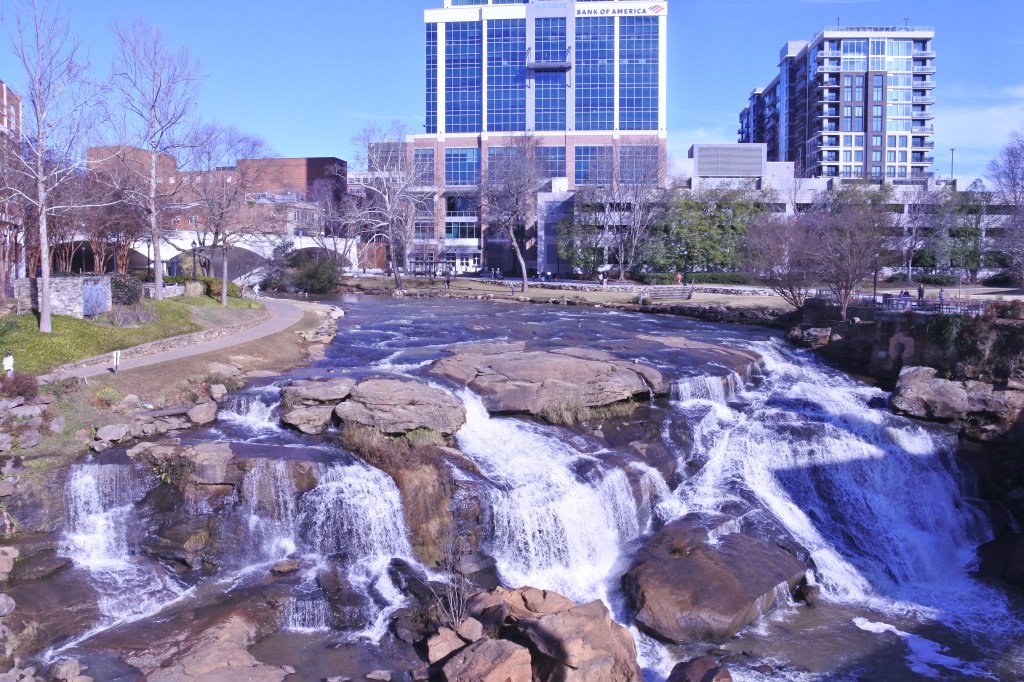
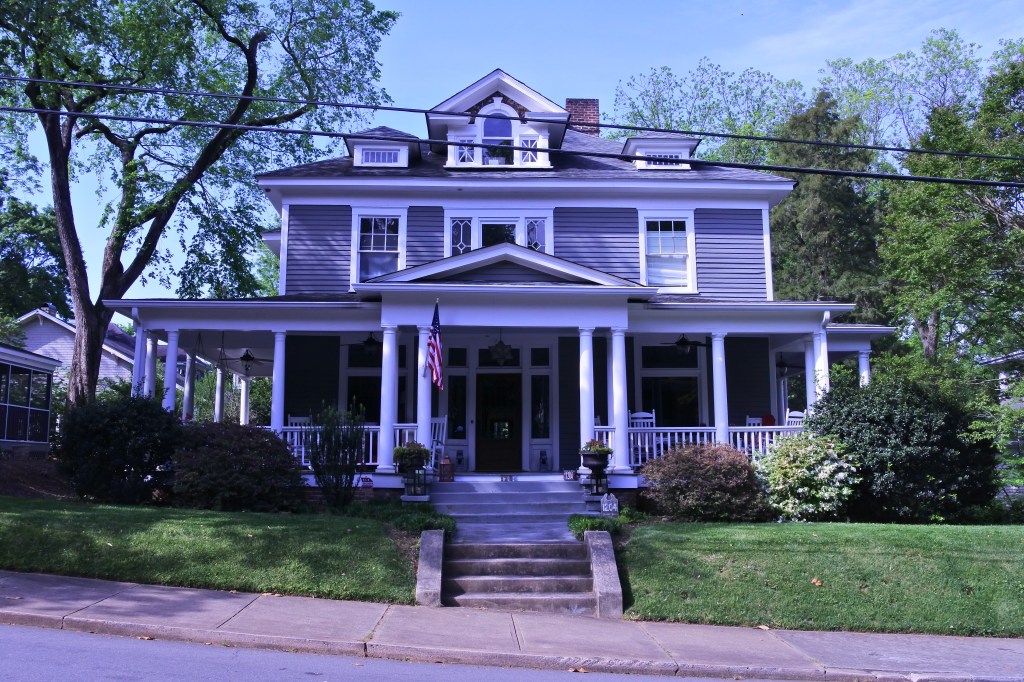
Greenville’s West End- the City’s best Urban District located right next to Downtown

The West End was originally known for hosting Furman University which was established in 1852. But unfortunately the university moved to a more suburban location several miles outside of Dwtn. This could have been a great asset to Dwtn given its close proximity to the West End. After the turn of the twentieth century, many textile mills moved into the area. The neighborhood feel into disrepair soon afterwards. But the West End benefited greatly from Civic Leader’s focus on renovating downtown and the Reedy Riverfront as much of this revitalization work occurred in the West End since the 1970s. The District is now Greenville’s best urban district (by a long shot) and the arts and entertainment center of the city.

From an urban perspective, I most appreciated how well the West End ties in seamlessly to Dwtn thanks to the Reedy River Recreation trails and Falls Park, the short bridge between the two and the vibrant commercial districts along Main Street and Augusta that tie seemly to Dwtn. West End has great cultural and retail amenities and is ground zero for Greenville’s urban apartment boom. The neighborhood is also very safe, has great schools, and is buzzing with pedestrians and tourists. For the West End neighborhood to be truly a great urban district it still needs more density, better residential in-fill and development in its low-density streets, better bike infrastructure, and a full service supermarket.

Click here to view my West End Album on Flickr

URBAN STRENGTHS:

* Excellent Access to Dwtn being just to the west of it.
 * Generally good ADA infrastructure but plenty of intersections without modern ADA curb cuts.
* Good economic diversity but limited racial diversity as the neighborhood is 77% white.
* Several solid public schools representing all grades surround the edges of the West End. Also a Catholic grade school nearby.
* Lots of modern apartments. Studios and 1-beds lease in the low to high 1Ks. Tons of 2-beds as well that lease in the 2Ks.  Only a handful of 3-beds.
* Overall the neighborhood is very safe.
* Quality historic commercial but limited historic residential remains.
* Lots of modern apartment and mixed-use in-fill but of varying urban quality and design. This is the south so parking often takes the driver’s seat in terms of design and layout.
* Pretty good urban form along Augusta and Main, especially near dwtn. Still a good amount of surface parking. Overall good streetscaping.
* Good pedestrian activity especially along Main Street and the Falls park.
* Very popular district with a lot of buzz.
* Great access to the Falls Park on Reedy and river trail on the Reedy. But really not other parks in the neighborhood leaving the western edges of Payne-Logan about 1/2 mile from any parks.
* Excellent cultural amenities here including a wide array of food & bev businesses, several live music venues, a couple theaters, several art galleries, and a minor league ball park. Walkable access to many Downtown cultural amenities as well.
* Good retail amenities including lots of boutiques/clothing/gift stores, a drug store, several banks, plenty of dessert joints, a couple churches, and a major hospital is only 1/2 mile from Payne-Logan. 

URBAN WEAKNESSES:

  • lots a breaks and lack of connections for a typically urban neighborhood street grid.
  • Mediocre density for an urban neighborhood.
  • So so public transit access. A couple dedicated bike stares and small dedicated bike lane segments.
  • Few households with children here. Median age is pretty diverse however.
  • Other than a handful of the older SF homes that remain, for-sale housing is very expensive. 1-bed condos general sell in the 700Ks-800Ks. Lotso of 2-bed condos and townhouses but they sell between 650K-1.3M. 3 & 4 bed sell anywhere from 350K-1.5 M depending on size and age. Handful of affordable housing options in the West End.
  • Missing some key retail amenities (i.e. supermarket, post office, public library)”

West End- Winston-Salem best urban district

There is no well defined boundaries for the West End neighborhood but my sense is that it extents north of the highway, between Hanes Park and Broad Street, and south of Northwest Blvd.

West End was planned as a picturesque streetcar suburb developed at the turn of the 20th century and including some structures from the late 19th century. Because of its mixed-use character, multi-model transportation, and access to Dwtn, this is by far Winston-Salem’s best urban community.

Yet like most southern urban neighborhoods West End also has a lot of urban deficiencies including a low density, limited bike infrastructure, hit or miss urban massing in the biz districts, and lack of important amenities such as a supermarket or drug store. Hopefully West End will continue to densify with quality urban form. Still plenty of lots to build on.

Click here to view my West End Flickr Album

URBAN STRENGTHS:

* Great access to Dwtn via all moods of transportation.
* ADA ramps are consistant in commercial districts but largely missing in residential areas. Sidewalks are consistant though.
* Great economic diversity and decent racial diversity.
* Nice diversity is size and price for for-sale options. Plenty of 1 &2 bedroom condos selling for around 200K and 300K, respectively. Large SF homes selling in between 400K-650K, small SF homes selling in the 200Ks.
*Very nice Park along Peter’s Creek, a multi-functional park with lots of rec fields. Also a nice neighborhood park (Grace Court).
* Culturally a decent # of restaurants bars, & breweries, a cafe, a couple live music venues. Convenient access to all the cultural amenities Dwtn as well.
* Several public schools with decent ratings line the western edge of the West End.
* This appears to be a very safe community with limited blight.
* Good array of historic architecture. Also pretty decent modern infill.

URBAN WEAKNESSES:

* Density is pretty poor for an urban district.
* Bike infrastructure is pretty weak. There is a dedicated bike lane on Northwest but that’s the northern edge of the neighborhood. No dedicate bike share stations, although there may be dockless bikes available.
* Family households make up less than 25% of the population. Most residents are young adults here.
* Rentals are pretty limited. Seems to be a nice price diversity of 2-bedrooms but limited 1-bedroom options.
* Other than restaurants and bars retail amenities are a bit light. There are several banks, salons, and a nice array of home goods, furniture stores, & consignment stores. Good amount of services close by in Downtown but no supermarket or major retail.
* Urban massing of commercial district is a mixed bag. Limited investment in streetscaping.

West End/Elliot- West Pittsburgh’s most urban neighborhoods

West End Village (originally named Temperanceville) was founded in 1860 as a dry town. It was annexed into the City of Pittsburgh in 1874. The village was founded on the valley floor through which Saw Mill Run flows toward the Ohio River and between the Coal Hill end of Mt. Washington and River Hill. This is a very curious spot hidden in what I would call a Pittsburgh “holler” yet only 2 miles from Downtown Pittsburgh. It also is located in a flood plain. This along with being a victim of blight and abandonment have nearly decimated the village’s historically high population of 2,000 residents in 1940. Now just over 200 souls remain here. Fortunately, much of the neighborhood’s historic commercial remains in-tact forming a decent main street. Some businesses have set up shop here but much vacancy still remains.

Just up the hill from the West End westwards along the Ohio River is the Elliot Neighborhood. It was annexed into the City of Pittsburgh in the early 20th century. The neighborhood grew rapidly in the early 20th century  due to its proximity to downtown Pittsburgh and direct access to several arterial roads and streetcar lines into a pretty dense and walkable community. Sadly like many districts in Pittsburgh, it faced decline following WWII and has never really recovered. But unlike other distressed Pittsburgh communities, Elliott’s housing stock is mostly in-tact and boasts high densities, albeit without the walkable amenities it used to have.

Given their very convenient access to Downtown via transit and of course driving, there’s no reason these two urban communities should remain stagnant. Hopefully the City of Pittsburgh gets its act together in cleaning up the blight of these neighborhoods. Elliott could easily become a walkable community again with a decent mixed use district along Chartiers Ave. With appropriate investment the West End Business district could be thriving again but with dense housing surrounding it.
Click here for my West End Album and here for my Elliott Album

URBAN STRENGTHS:

* Excellent public transit access and very convenient to Dwtn and Oakland via bus and car.
* Very high level of family households and solid racial and economic diversity.
* Good park access with several small parks well dispersed in the community. Westend Overlook provides excellent views of Downtown.
* Excellent tree canopy due to all the hills and valleys.
* Good historic architecture in the West End biz district. The residential architecture is blander worker housing.
* Pretty good massing in the West End’s urban biz district.

URBAN WEAKNESSES:

* Decent bike connection into the West End via the West End bridge, but limited bike infrastructure outside of this.
* Housing is very cheap. High end of the market is in the low 100s. Fair amount of housing selling below 50K.
* Rentals are pretty limited and generally pretty cheap.
* Cultural amenities are limited but some good stuff including a local theater, a handful of restaurants and bars, a cafe, a couple art galleries. While not walkable the plethora of cultural amenities downtown and in the side are nearby.
*Some nice retail amenities (mostly in West End). This includes a post office, library, hardware store, a handful of boutiques, and lots of construction supply stores. No grocery or drug store nearby.
* While most structures are still standing  (esp. in Elliot) lots of vacancy and blight.
* No schools within the district and only a handful in nearby neighborhoods.
* Sidewalks are largely in tact but current ADA ramps is rare except in the core biz district of the Westend.
* Streetscaping is pretty uninspiring and outdated but not terrible.

Maine’s Victorian Jewel… the West End of Portland

The neighborhood is home to many historic homes  from all decades of the 19th century. Its considered one of the best preserved Victorian neighborhoods in the country.  Other great qualities to Portland’s West End include its convenient access to Downtown and Old Port, strong walkability, safety, mixed use and dense character, and expansive Western Promenade Park hugging its western edge.

The major downside to the neighborhood is its expensive housing where for-sale options start at 200K for a modest condo and generally exceed 400K for a SF home. Surprisingly the neighborhood manages to have great economic diversity likely indicating a large cost burdened population. This is certainly not a great district for modern architecture lovers as its almost non-existent. 
Click here to view my entire West End Album on my Flickr Page

URBAN STRENGTHS

* Very convenient access to Downtown.
* Expansive bike system connect the district to downtown and other adjacent areas.
* Great economic diversity.
* Nice array of smaller diverse parks and the expansive Western Promenade
* Great Tree Canopy.
* Gorgeous brick sidewalks fill most of the neighborhoods.
* Very safe district.
* Culturally many historic houses, convenient access to several Dwtn museums, music venues and cinemas; also many restaurants and some cafes and bars.
* Neighborhood amenities includes a couple smaller groceries, several drug stores, and a good amount of boutiques, and several book stores. The Congress Biz District is nearby and contains a good amount of retail amenities as well.
* North Light Mercy Hospital located here.
* Gorgeous historic architecture from all decades of the 19th century.
* Urban massing is generally good throughout except the Commercial St. on the West End’s southern border. 

URBAN WEAKNESSES

* Public transit is decent but not great.
* Limited racial and generational diversity.
* Rentals are plentiful but generally expensive. One-bedrooms range in the $1,000s. 2-bedrooms in the high $1,000s and low $2,000s.
* 1-bedroom condos generally sell in the $200ks, 2-bedroom condos often in the $200s but plenty of product in the 300ks. 3-bedrooms homes anywhere from 300Ks-600Ks. Larger homes are easily over 600K.
* Curbs cuts at all intersections but generally not ADA standard.
* No art galleries in the district
* Modern architecture is very limited here.