Piedmont- Historic Inner City Worester Neighborhood with plenty of Grit but also plenty of Character

Piedmont is an inner city Worcester neighborhood that developed in the mid-late 19th century. Like Main-South the neighborhood began to decline in the post War Era but it has pockets of stability and investment that generally correspond to the several small historic districts located within Piedmont i.e. Oxford–Crown- The district contains Mid 19th Century Revival, Greek Revival, and Renaissance architecture;  The Elm Street- Historic District encompasses a collection of high-style Queen Anne Victorian three-decker houses; Lincoln Estate-Elm Park- The District is a mix of large 19th century mansions of various styles.

For most of the 19th century, Piedmont and the larger west side of Worcester’s west side was the preferred neighborhood for the City’s fashionable and upper-class residents. With the development of the trolley network in the late 19th century working and middle class housing and often apartments came to the neighborhood leading to the departure of the upper classes but in my opinion becoming a more dynamic urban district.  The Piedmont has several historic districts of various stability. Pleasant St and several blocks of Main St have the best cohesion and urban feel; Highland St isn’t bad but feels grittier and Chandler feels very autocentric. Piedmont doesn’t have the best retail  & cultural amenities located within it, but makes up for this a bit with its convenient access to Dwtn (esp. cultural amenities). Rentals are plentiful but still pretty expensive and for-sale housing are reasonably priced but not plentiful. Piedmont also has solid park amenities, good tree canopy, and overall good urban bones and density. For Piedmont to become more of a top tier urban district it needs more income diversity which would fuel more retail & cultural amenities and urban in-fil especially along its business districts. There are still lingering crime issues here and school ratings are less than desirable.
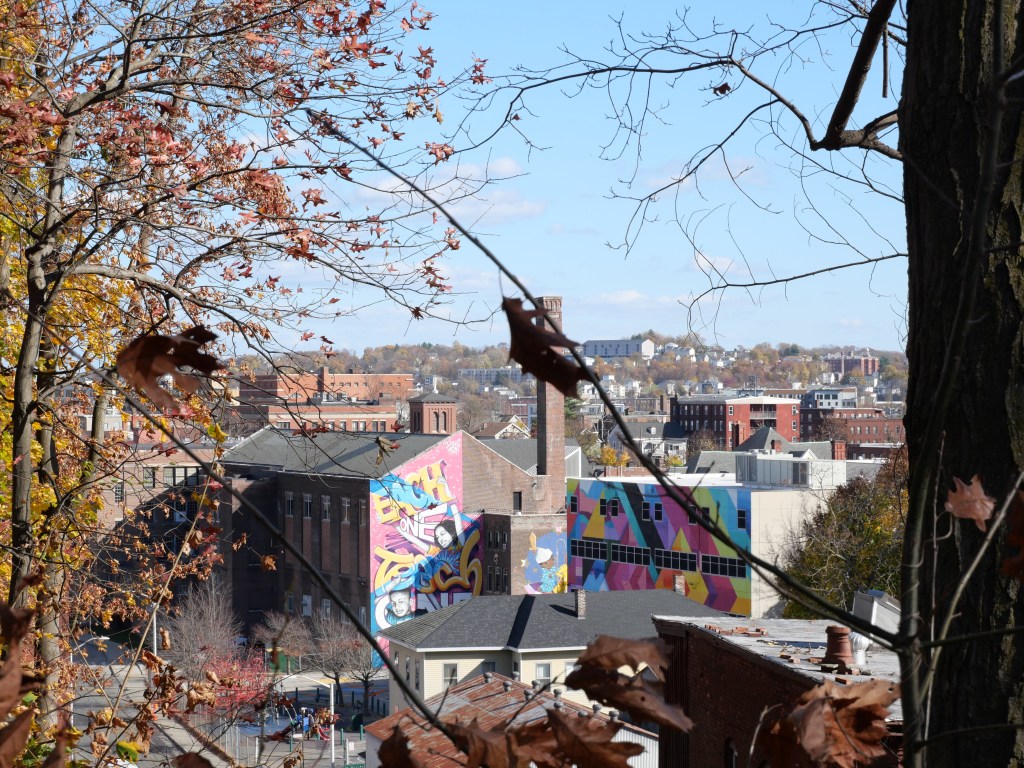

Click here to view my Piedmont Album on Flickr

URBAN STRENGTHS:

* Solid urban density at just over 18K residents per Sq Mile
* Good racial diversity with large White & Hispanic populations. Decent Black & Asian households as well.
* Good sidewalk infrastructure with most intersections as modern ADA curb cuts.
* A couple smaller parks mixed throughout Piedmont in addition to the historic Elm Park (one of the earliest public parks in the country), and Beaver Brook Park, Newton Hill Cemetery, and several ball fields on the wester edge of Piedmont.  Also a YMCA branch complete with an indoor pool.
* Decent Tree canopy.
* Good concentrated are pretty and well maintained historic homes in the Lincoln Estate- Elm Historic District just south of Highland St. South of Pleasant St is more of a mixed-bag with plenty of shabby triple decker apts.
* Decent urban form and street scaping along Pleasant and Highland. Chandler feels like the more autocentric stroad between the 3 business districts.  Generally good urban form along the portion of Main St that forms Piedmonts south eastern border.
* Good # of rentals but pricey. Plenty of studios that lease in the low to mid 1Ks, 1-beds  lease in the 1Ks, 2-bed in the high 1Ks to low 2K, 1.5K-2.3K. Plenty of 3 bed options in the 2Ks generally. Lots of dedicated affordable rentals in Piedmont.
* Decent for sale options and relatively affordable for the East coast. 1-bed condo options selling in the high 100Ks and low 200Ks, more 2-beds condos that sell btwn 150K-400K, 3 & 4 beds btwn 250K-500K.
* Decent retail amenities including a couple grocerias & pharmacies, a full service supermarket, a couple boutiques, tons salons & barber shops, several banks, a couple gift stores & florists, several dessert joints & bakeries, several churches, a small hospital w/ several doctor’s offices, a couple dollar stores and convenient access to Dwtn retail amenities. 

URBAN WEAKNESSES:

  • High rates of poverty and lower income households in Piedmont. Not a ton of economic diversity.
  • Really no good bike infrastructure.
  • Safety is a mixed bag in Piedmont as some residents feel its it’s a bit “”dicey”” due to the presence of people struggling with addiction or mental illness, and lots of shabby triple decker apartments esp. in the southern half of the district. But violent crime seems manageable here and residents don’t necessarily feel unsafe.
  • Modern infill is largely non-existent besides a handful of autocentric businesses.
  • Some walkable schools in Piedmont but a mix of poor and medium ratings.
  • Cultural amenities located in Piedmont itself are limited to a handful of bars, cafes, & restaurants but convenient access to the many cultural amenities dwtn and the Worcester Art Museum and several smaller museums located just north of Highland St.”
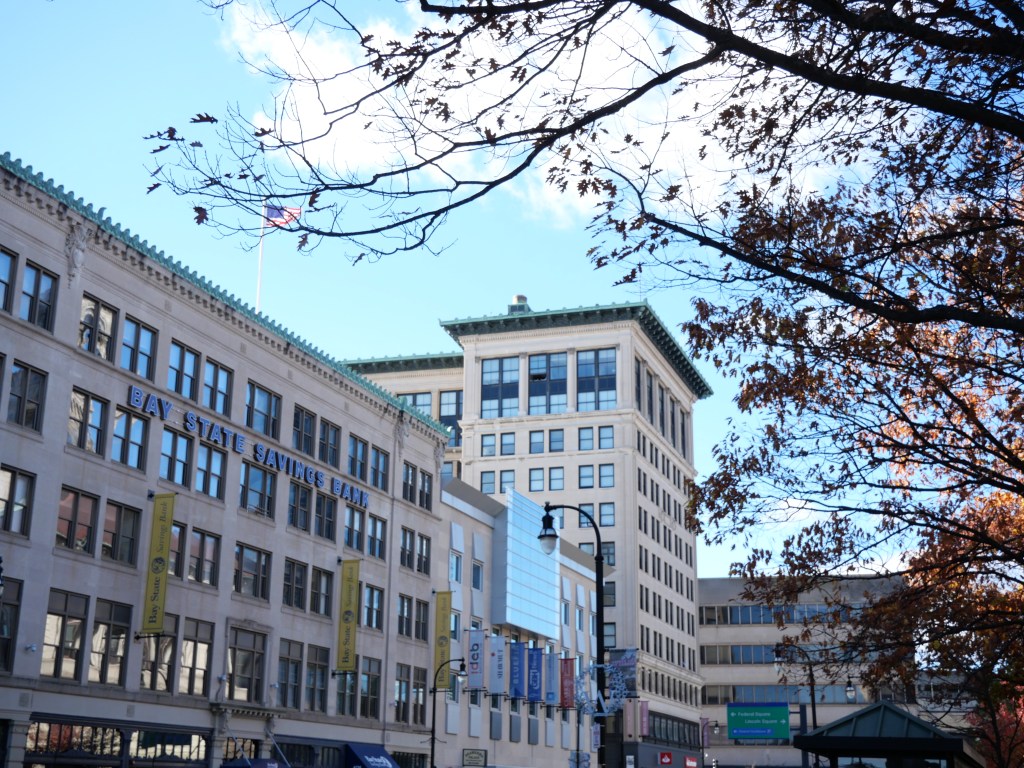
Downtown Worcester, MA

Downtown Worcester likely began as a wholesaling district in the mid 19th century centered around Main Street and expanded eastwards, especially along Franklin St., until it hit the railroad tracks and Worcester’s Warehousing district. Like most American Dwtns, Downtown Worcester experienced profound changes and disinvestment in the post War era. A huge portion of downtown Worcester was demolished for new office towers and the Worcester Center Galleria shopping mall. This occurred in the eastern portion of Downtown between the railroad tracks and a block east of Main Street. The result was an environment filled with many parking garages and lots and a very dead and soulless environment. After only 30 years, the Galleria would be demolished and become a redeveloped City Square, an improved but still not spectacular new urbanist development in the early 2000s. This area also brought other major investments to Dwtn including a new Convention Center, the DCU Arena, Polar Park home to the AAA Woosoxs, the renovation of Worcester’s Union Station reopened and more recently the creation of the Worcester Public Market in 2020.

My favorite part of Downtown Worcester is the historic western edge centered along Main Street. The street is filled with gorgeous historic mid to late 19th century 5-15 story historic bldgs, many historic theaters, prominent civic buildings, the historic Worcester Commons, and a great pedestrian friendly streetscaping project along Main St. But along with the soulless urban renewal portion of  Downtown, there are also some glaring deficiencies including a complete lack of bike infrastructure within Dwtn and throughout the City, limited park amenities, limited Dwtn workforce, limited K-12 schools, pricy rentals, and limited tree canopy. Dwtn Worcester has a decent population based and cultural & retail amenities. It just needs to better enliven its downtown and fix these key areas to become a thriving and competitive American Dwtn.

Click here to view my Downtown Worcester Album on Flickr

URBAN STRENGTHS:

* Excellent density esp. for a mid sized City
* Most intersection are up to ADA standard and good investments in the Streetscaping, esp. Main St which is very friendly to pedestrians.
* * Good public transit Dwtn and to the inner City neighborhood. So  transit access outside of these inner city neighborhoods and very limited transit service to the suburbs unless you are along one of the Massachusetts transit stops.
* Good racial & economic diversity living dwtn.
* Good mix of students, young professionals and older adults. While unsurprisingly there are few family households here there are at least two sports venues for more family activities.
* A good amount of homelessness exists dwtn but overall its pretty safe.
* Excellent set of historic office buildings especially along or near Main Street and warehouses along and near Green Street.
* Generally good form along Main St and Green St but lots of open space and urban infill with poor urban form in-between.
* Good food & beverage businesses especially craft breweries. Also several museums and art galleries, several theaters including some really gorgeous historic ones that also double as live music venues. For regional amenities there is a minor league ballpark, arena, & convention center.
* Pretty good retail amenities including a Supermarket located just south of Dwtn, the Worcester public market, a couple pharmacies, a decent # of clothing stores, several furniture & gift stores (concentrated in Green Island), a book store, several dessert joints, a couple gyms, a dtwn public library & post office, some banks, a couple major hospitals accompanied by several doctor’s offices, and several churches.

URBAN WEAKNESSES:

  • Weird mix of typical narrow chaotic New England street grid in the western half of Dwtn and wide Blvds in the eastern half.
  • Pretty terrible bike infrastructure with only a handful of short bike lanes segments in the City or region and not bike sharing system. The only bike path of note is the Black Stone Bike trail running along the southern portion of the City and just below it.
  • No K-12 schools within Dwtn although there are some decent options in nearby neighborhoods.
  • Worcester has a large college population but not right in dwtn. Only a small satellite campus dwtn. Worcester Polytechnic Institute is about 1/2 from Dwtn with an enrollment of 7K. Clark University, Worcester State, and Holy Cross are a couple miles away.
  • Good # of rentals but pricey. Studios lease btwn 1.3K-2K, 2-bed btwn 1.8K-3K but really no 3-bed options.
  • Condos are more reasonably priced but limited. 1 & 2 bedrooms range from 150K-300K.
  • Skyline doesn’t have any particularly tall or unique buildings but at least has a good concentration of bldgs with a similar 10-20 story range.
  • Only a couple parks in Dwtn but they are pretty solid Civic Spaces (Franklin Square), especially Worcester Common.
  • Not great tree canopy.
  • Some modern infill and mixed urban quality.
  • Only about 5K people work in Dwtn which is one of the lowest dwtn employment concentrations I’ve encountered esp. for a metro of 860K.”