Fountain Square- One of Indianapolis’ trendiest Neighborhoods with plenty of room to grow

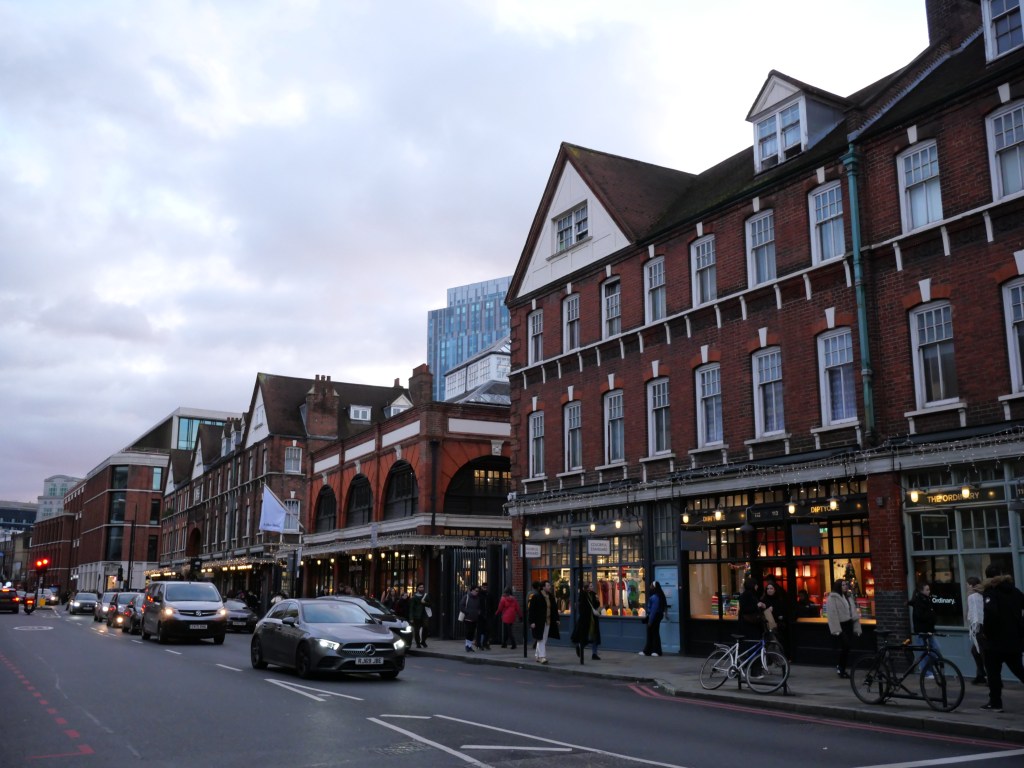
Fountain Square is located just southeast of the inner belt with the core of the neighborhood located where Prospect and Virginia Ave intersect. The neighborhood derives its name from the successive fountains that have been prominently featured at the intersection of Virginia Avenue, East Prospect Street, and Shelby Street. The neighborhood developed primarily by German-American immigrants who established a strong German character on the city’s southside. The ethnic mix diversified near the turn of the 20th century as Fountain Square saw an influx of many Eastern and Southern European immigrants. From the 1920s to the 1950s, Fountain Square was the City’s main entertainment district  with several theaters gracing its streets at one time, which is unusual as most city’s entertainment districts are located downtown or on the edge of it. Fountain Square hit a high point of 27K residents in 1950 but like most inner city Indianapolis neighborhoods it declined rapidly after WWII.  After decades of population decline, Fountain Squar lost almost 2/3s of its population and now has just under 10K residents. While the population has still not stabilized, Fountains Square’s revitalization efforts began in the 1980s with the creation of three designated national historic districts (Laurel and Prospect, State and Prospect, and the Virginia Avenue Districts). Serious revitalization efforts really got going in the 1990s focused on stabilizing the historic Commercial District of Fountain Square at Prospect and Virginia. This momentum has continued to the present day as reinvested commercial blocks continue to slowly expand down Prospect and Shelby Street and more and more residential streets stabilize with renovations and new construction. 

While Fountain Square is considered one of Indy’s trendiest neighborhoods and one of the City’s 7 cultural districts there is still a lot of stabilization needed here outside of the core blocks surrounding Virginia & Prospect and in the residential streets especially in the eastern half of the neighborhood.

Click here to view my Fountain Square album on Flickr

URBAN STRENGTHS:

* Convenient access to Dwtn being about 2-3 miles away from Fountain Square.
* Good dedicated bike lane system including an off road bike lane running along Virginia to the heart of Dwtn.
* Fountain Square has decent racial diversity at about 65% White and the rest a mix of Black & Hispanic families. Wide divergence in incomes between the more gentrified area in the heart of Fountain Square (closer to Dwtn) and along the edges of the district. Solid generation diversity with a good mix of family households and young professionals.
* Safety in Fountain Square has come a long way since the mid-90s when this was a pretty dangerous neighborhood. Overall the neighborhood is now pretty safe but some crime in pockets of the district likely along the less gentrified edges. Still a good amount of grit and vacant lots remain in these areas.
* Excellent concentration of attractive early 20th century commercial bldgs in the core of Fountain Square. The residential areas are a mix of more detailed homes that have been fixed up and underinvested working housing.
* Solid urban infill in the core of Fountain Square and generally good residential infill.
* Good park amenities including several small parks well distributed across the neighborhood, a couple medium sized parks, the Pleasant Run Trail running the southern edge of the district, and Willard Park, which is a good sized park just to the NE of Fountain Square with a public pool.
* Solid cultural amenities esp. a high concentration of restaurants, bars, cafes, night clubs, live music venues, & art galleries, concentrated at Fountain Square’s heart (Prospect & Viriginia). Limited food & beverage amenities outside of this core.
* Great urban form and esp. Streetscaping at Fountain Square’s heart (Prospect & Virginia).
*  Decent retail amenities mostly concentrated at Prospect & Virginia. This includes a Mexican Grocery Store, good array of boutiques & gift stores, tons of salons, a couple book stores, several dessert joints & bakeries, a couple gyms, a record store. several doctor’s offices and plenty of churches.
* Great array of rentals albeit on the pricier side. Studios lease in the low 1Ks, 1 & 2 beds lease anywhere from $850-2K, and a good # of 3-beds that lease btwn the high 1Ks-3K.
* Significant decent for-sale diversity with a good # of small 1 beds SF homes selling in the 100Ks, plenty of 2-beds selling anywhere from 150K-450K including a mix of condos and SF. 3 & 4 beds sell btwn 150K-750K

URBAN WEAKNESSES:

  • Quality Urban form quickly diminishes as you move away from Prospect & Virginia along Prospect and Shelby. The core of Fountain Square does appear to be slowly creeping down these corridors with quality urban infill. Pretty poor urban form & streetscaping along Prospect Park’s other Arterials (Washington & Southeastern). Lots of industrial uses along these streets.
  • At 5K residents per square mile this is a pretty low density for an urban neighborhood. Significant amount of vacant lots and underutilized commercial/industrial space remain in the neighborhood.
  • Decent access to walkable schools including several k-8 schools of mixed ratings and types.
  • Sidewalks infrastructure is good but not excellent. Less than half of all intersections at ADA standard.”

Fletcher Place- Inner city Indianpolis Neighborhood just SW of Mile Square

Fletcher Place is an inner city Indianapolis neighborhood located just southwest of Mile Square (downtown). The district was developed starting in the mid 19th century and was most filled in by the 1920s. Historically Fletcher Place  didn’t suffer the same wholesale disinvestment of other inner city neighborhoods but there was a fair amount of post WWII blight, urban renewal, and industrial development that have created grey zones on the edges of the district. Like other inner city district within the Innerbelt, Fletcher Place has seen significant reinvestment starting with the creation of the Fletcher Place Historic District in the 1980s and newer hip businesses sprouting up along Virginia Avenue within the last 10-15 years.

The biggest next step for making the Fletcher Place neighborhood whole again is the redevelopment of its western and north edges, which were ravaged by urban renewal, industrial development, and disinvestment. There are however some signs of life along the north edge with new apartment buildings spilling over from the Cole-Noble District. This would add density to an already medium density community helping add needed retail amenities and hopefully created enough school age children to build new walkable schools in the neighborhood. Fletcher Place also needs more parks and better tree canopy.

Click here to view my Fletcher Place album on Flickr

URBAN STRENGTHS:

* Decent density but a bit underwhelming for a district located adjacent to Dwtn.
* Solid overall sidewalk and ADA infrastructure but a decent amount of curbs are not up to ADA standards.
* Excellent access to Dwtn being 1 mile on average and accessible across all modes of transit. Decent bike infrastructure including two bike lanes that feed right into dwtn and a handful of bike share stations.
* Overall great racial diversity, solid economic diversity. Few families here however and the district is largely childless young professionals.
* Within Fletcher place there are solid good & bev amenities including a good array of restaurants, bars, cafes, & a couple breweries. One needs to go to adjacent district (dwtn, Fountain Square, & Lockerbie Square) for higher cultural amenities like museums, art galleries, live music, and theaters/cinemas.
* Overall a safe community.
* Significant decent for-sale diversity with a handful of 1 beds and decent # of 2-beds selling anywhere from 200K-500K including a mix of condos and SF. 3 & 4 beds sell btwn 250K-800K
* Good # of rentals  with studios & 1-beds leasing in the low-mid 1Ks, 2-beds generally in the mid-high 1Ks. 3-beds are very limited.
* Good amount of attractive historic homes tucked on the residential streets and some attractive historic commercial along Virginia Ave.
* Some good urban infill especially along Virginia and with new SF construction in the neighborhood.

URBAN WEAKNESSES:

  • Only a small Catholic school located within Fletcher Place but some decent schools in neighboring Fountain Square.
  • So so access to parks including a couple small & medium parks and Idle Park which is in the middle of the I-65-70 inner belt.
  • Good amount of urban renewal occurred along East St and the north 1/3 of Fletcher Place. Newer dense apartments are starting to improve the north edge but limited urban projects along East St. Still some holes to fill along Virginia Ave.
  • Decent tree canopy along the residential streets but pretty poor along East St and the North 1/3 of the district.
  • So so retail amenities within Fletcher Place including a Wholefoods located just north of the neighborhood, a couple banks, a handful of boutiques & gift stores, a handful of barber shops/salons, a local bakery, a handful of doctor’s offices nearby, and a couple churches. More walkable retail amenities in neighboring communities (dwtn, Fountain Square, and Lockerbie Square).”

Graview Heights & Marble Cliff, OH- Desirable Streetcar Suburbs located just Northwest of Downtown Columbus

Grandview is one of Columbus’ more attractive inner ring suburbs located just 2-3 to the northwest of downtown. I include all of Grandview in this evaluation except the random block between Star and Farview Avenue between 3rd and 5th Ave. This a simply included with in my evaluation of the Columbus neighborhood of Fifth by Northwest. Marble Cliff is also included in this evaluation as it is a very small independent community that acts as an appendage to Grandview.

Grandview Heights was developed in the early 20th as a classic streetcar suburb and contains quality early 20th century housing stock, leafy and sometimes curvy streets, mix of SF and smaller MF development, and a nice walkable urban district along Grandview Avenue. The recent Grandview Yards development has given more density and important destination restaurants and bars in a previously underutilized industrial area.

Marble Cliff was one of the first suburbs of Columbus settled as a community in 1890 and incorporated as the “Hamlet of Marble Cliff” in 1901. It took its name from the Marble Cliff Quarry Co. (still in use today). Marble Cliff detached all land but its present area and the area that separated became Grandview Heights in 1906. Marble Clif was first called  “Arlington” which led its new neighbor to the north to name itself Upper Arlington. Further adding to its association with Grandview Heights most of the village’s public services are provided by contract with Grandview Heights. Marble Cliff’s population has hovered between 600-700 since 1960 now has hosts housing from pretty much every decade of the 1900s. The Village has a pretty pouch and exclusive vibe but is still tied into a decent urban grid with decent sidewalk and ADA curb infrastructure.

Given the communities close proximity to Dwtn Columbus and the continued growth and development pressures of the Columbus Metro, these communities need to continue to urbanize and allow for more housing. This is especially true along the main arterial through the communities (5th Avenue).

Click here to view my Grandview Heights and Marble Cliff Albums on Flickr

URBAN STRENGTHS:

* Quality urban commercial district along Grandview Avenue filled with walkable restaurants, bars, coffee houses, and local retailers.
* very in-tact and well kept early 20th century architecture (mix of wood frame and brick). 
* Major mix use development is being built from stretch, called Grandview Yards, is replacing a previously underutilized industrial area. Includes apartments, condos, entertainment businesses, office space, and parks.
* Quality park space throughout Grandview. 
* 2-3 miles from downtown and decent public transportation access.
* Many important amenities (i.e. grocery stories, larger retailers) within or adjacent to Grandview, but not always within walking distance. 

URBAN WEAKNESSES:

* Density is low for a quality urban area. Street life in many residential streets is more typical of suburban areas,
* Sales price is rising to the point that middle class families can’t buy in Grandview. Still many affordable rental options.
* The commercial districts on 5th Avenue and Olentangy as relatively auto centric; 5th Avenue shows signs of improvement with an urban overlay district requiring new construction to be at the street and allowing for multi-family- mixed use construction. 

Medford, MA- Urban Boston Suburb hosting Tuffs University and Benefiting from Boston’s Gentrifying Urban Core

Medford was settled in 1630 by English colonists as part of Charlestown. The land south of the Mystic River, present-day South Medford, was originally known as “Mistic Field”. It was the first portion of modern day Medford transferred from Charlestown in 1754 and Upper Medford was transferred from Charlestown in 1850.  After 1880, the population of Medford  rapidly expanded, reaching 18,244 by 1900. Medford reached its historic high in 1950 with 66K residents and gradually fell to 55K by 2000. Medford did not see the same level of disinvestment as more inner city parts of Boston and Somerville. Most of the population lost can be attributed to smaller families. Since then Medford has been slowly densifying and now host around 60K souls and has taken advantage of urban Boston’s general rise in popularity and rent prices.

From an urban perspective Medford is on a lower pitch from neighboring Somerville and Cambridge. This is mostly due to its lower density, less walkable commercial districts and lower amounts of transit service and bike infrastructure. But Medford still has a lot of positive attractive attributes including well rated walkable schools, great parks, high levels of safety, diversity in housing stock, good access to Dwtn Boston and good retail and cultural amenities. For Medford to move into the same league with places like Somerville & Cambridge it would need to double its density, urbanize the currently autocentric Mystic Avenue, continue to build out its commercial nodes along Boston, Main, Salem, and High and improve its bike infrastructure and ideally get connected into an expanded red line.

Click here to view my Medford Album on Flickr

URBAN STRENGTHS:

* Solid urban density but a bit low for Boston Standards.
* Some good urban commercial blocks along Boston, Main, Salem, & High but also lots of residential blocks mixed in them. Very urban node is Dwtn Medford, which feels like a classic historic New England town.
* Sidewalks are generally good other than a couple streets of the Norther half of Medford where sidewalks are missing or only one  side of the street. ADA standard curbs installed on about 40-50% of all intersections.
* Attractive historic homes are mostly located north of the Mystic river with the oldest mansions running along Governor St. Attractive first half of the 20th century homes for most of the Northern Medford. Southern Medford is much more working class hsg with limited adornment. Tuffs University also has lovely historic collegient architecture.
* Better access to Dwtn Boston from the southern half of Medford via transit. One can get to dwtn via train in 30 mins as opposed to 45 min. Less difference with car and bike modes. Only a 15 min drive with limited traffic.
* Solid racial diversity.
* Good array of walkable schools including pretty well rated public schools and many Catholic schools. Schools are located in the more walkable sections of Medford.
* Overall a very safe community.
* Good # of rental units but nothing like neighboring Somerville or other Boston neighborhoods but rent is also cheaper in Medford than these placed. Studios & 1 bed range btwn 1.8K-3K, 2-beds 2.2K-4.2K, Plenty of 3 & 4-beds as well renting from btwn 2.6K-5.5K. Medford has its own Housing Authority that manages about 850 units. Another 300 units are managed by the Somerville Community Corporation.
* Excellent park amenities including many small/medium parks well dispersed throughout Medford but also great recreational trails along the Mystic River and the expansive multi-faceted Middlesex Fells Reservation which even includes a zoo and several lakes.
* Good tree canopy in Medford but clearly much fuller in the northern half of Medford which the neighborhoods are historically more affluent than the working class neighborhoods south of the Mystic River.
* Good cultural amenities including several bars, restaurants, & cafes cluster along the biz nodes spread throughout Medford. Also several local museums & plenty of historic sites, a community arts center, several local performing arts venues along with cultural options from Tufts University, a music venue in a historic theater, and several breweries.
* Solid large format retail amenities including Whole Foods, a couple supermarkets, a target, A Kohls, Marshalls, and Dicks. Only a handful of boutiques & gift shops and a couple book stores. Other retail amenities include: plenty of banks, a bike shop, several florists, plenty of dessert joins & gyms, 3 local post office, a dwtn public library, plenty of churches, a local hospital & plenty of doctor’s offices.

URBAN WEAKNESSES:

* Mystic Avenue is very autocentric.
* Bike lane system is a bit limited esp. compared to neighboring community. Pretty good bike share system however.
* Limited economic diversity and ok generational diversity.
* Expensive for sale options but lots of small condos options ranging from  300K-650K, 2-beds btwn 300K-900K with a nice mix of condos and small homes, 3 & 4 beds btwn 500K-1.6M.

Somerville, MA- Successful Urban Suburb located due North of Cambridge Mass

Somerville was established as a town in 1842, when it was separated from Charlestown. Somerville remain a small town until  the mid-19th when transportation improvements and industrialization in Boston fostered significant grown. By 1850 the population reached 3,500. The Late Industrial Period (1870–1915) was a time of phenomenal growth for Somerville with the  population growing exponentially from 15,000 to 90,000.  Additionally, Somerville’s location adjacent to Boston and proximity to rail and road transportation made it an ideal location for distribution facilities. Between 1915 and 1930 population growth slowed reaching the city’s high point of 103K. At this time Somerville was filled with recent immigrant working in the City’s warehouses and factories. 70% of Somerville residents were born either outside of the United States or had parents who were. The population was then estimated to be 60% Catholic. Although Union Square and Davis Square continued to be the largest commercial areas during the first decades of the 20th century, smaller, less-developed squares grew as well including Ball Square, Magoun Square and Teele Square. Somerville continue for a couple decades as a successful urban city but like most of Inner City Boston it fell into a period of decline from the 60s-80s.  This was also a period where Somerville lacked any passenger rail service making it harder for residents to conveniently travel to Dwtn. By the mid-80s Somerville began to turn the corner along with many other urban areas in Boston. As the same time the Red Line Northwest was extended to Davis Square in 1984 and Boston’s telecommunication and biotechnology booms was in full swing. Somerville is now considered to comprise one of Boston’s Brain Power Triangle thanks to Tufts’ University location within the City and Harvard University and MIT which sit just outside of it.

From an urban perspective Somerville excels at being a comfortable walkable urban district with great transit and bike access, only a 20 minute train ride to Dwtn, solid walkable schools & parks, good retail & cultural amenities and solid urban form and historic architecture. The biggest downside of Somerville is its high cost of housing, especially for-sale options but it is still not among the most expensive Boston communities. For Somerville to be an elite Boston neighborhood it would need to densify and built up its commercial corridors.

Click here to view my Somerville, MA album on Flickr

URBAN STRENGTHS:

* Lots of great commercial nodes including Davis Square, Teele Square, Ball Square, Magoun Square, Union Square. Broadway, Highland, & Somerville are the longest arterial streets with lots of nice lots of nice-mixed use fabric and small commercial nodes running along them. Broadway in East Somerville is a concentrated biz district for several blocks. Also as major new urbanist site at Assembly Square which used to be industrial development.
* Solid urban form in most of the business district but a couple sections with a fair amount of autocentric uses.
* Good sidewalks throughout Somerville but only about 50% of all curb cuts are ADA standard.
* Some nice historic architecture pockets in Somerville esp. around Davis & Union Square but a lot of historic working class hsg with limited adornment.
* Excellent public transit including 4 subway lines running through it. Somerville also has great bike infrastructure with several dedicated lanes passing through the City and connecting to Dwtn and Cambridge. This creates a very convenient commute to Dwtn and surrounding neighborhoods via all modes of transport.
* Very high levels of safety in Somerville.
* No large parks in Somerville but lots of well dispersed small and medium sized parks include a YMCA indoor pool and public outdoor pool.
* Good tree canopy but not as impressive as many other Boston neighborhoods.
* Solid walkable school options with pretty well rated public school options. Several parochial elementary schools but not much else on the private side.
* Cultural amenities are pretty plentiful including lots of restaurants, bars, cafe and several breweries, a couple local museums & historic homes, a couple community performing arts theaters, an indie theater and a couple live music venues.
* Solid retail amenities including several grocery stores (including a TJ & Whole Foods) and plenty of grocerias, plenty of drug stores, two targets & TJ Max, great concentration of name brand clothing stores in Assembly square, some boutiques and clothing stores, a couple hardware stores and Home Depot, a hand full of book stores, a toy store and a couple bike shops, several banks, tons of dessert joints, bakeries & gyms, 3 public libraries & several  post offices, plenty of churches, a general hospital and several medical & doctor’s offices.
* Rental units are plentiful but very expensive. Studios & 1 bed range btwn 2K-3.5K, 2-beds 2.5K-5K, Plenty of 3 & 4-beds as well renting from btwn 2.5K-6K. Brookline does at least have its own Housing Authority that manages about 1.5K units. Another 300 units are managed by the Somerville Community Corporation.

URBAN WEAKNESSES:

* Expensive for sale options but lots of small condos options ranging from  300K-900K, 2-beds btwn 400K-1.5M with most of the in MF buildings, 3 & 4 beds btwn 600K-2.5M.
* Limited economic diversity. Could use better generation diversity.

Brookline, MA- Exclusive Boston Inner Ring Suburb and home to Historic JFK and Fredrick Law Olmsted Homesteads

I included most of Brookline in this evaluation but excluded most of the southern portion of Brookline south of the Boston-Worcester Pike as this area is low density with more or less suburban development. I did include the High Street Hill  District south of the Pike westward to Chestnut as this is a pretty compact sub-district.

Brookline was incorporated as a separate town with the name of Brookline in 1705. The town was very small for many years having only reached 2,500 by 1850. But by the late 19th century Boston was rapidly expanding and annexed neighboring Brighton and West Roxbury in the 1870s. Brookline resisted this development pressure and voted to remain independent from Boston in 1874. By 1912 Roxbury was completely surrounded by Boston on 3 sides. Given its desire to remain exclusive and separate from Boston, its not surprising that the town had a strong history of racial discrimination in zoning and mult-family housing in turn of the 20th century, which  led to a disproportionately wealthy population, and present day Black population of only 2.5%.  By the mid 20th century Brookline began to diversify becoming a major Jewish and Irish hub in Boston and by the 20th century a major concentration of Asian families. Brookline north of route 9 is pretty dense at around 20K residents per sq mile similar to other older Boston suburbs like Cambridge, Somerville, and Chelsea.  Density drops significantly south of route 9 and is mostly single family homes on large lots and curvilinear roads.

From an urban perspective Brookline is a solid urban suburb with great transit access to Dwtn (including three branches of the Green line), great cultural and retail amenities, plenty of well rated walkable schools, good bike amenities, an amazing tree canopy and plentiful parks and wonderful array of historic homes and early 20th century apartment bldgs (although no triple decker housing as that was banned).  For Brookline to become a top tier Boston district it needs to urbanize and better tame traffic along Brighton Ave and Route 9, install more consistent ADA curb cuts, and densify adding much needed housing stock to the community.

Click here to view my Brookline Album on Flickr

URBAN STRENGTHS:

  • Excellent urban form along Beacon street with many 3-7 story townhouses and apartment bldgs with areas of commercial nodes mixed in. Harvard is the main and most consistent biz district in Brookline and generally has great form with only a handful of autocentric blocks.
  • Solid density at just over 18K people per square mile.
  • Solid public transit access thanks to the 3 green line spurs running through the neighborhood.
  • Excellent bike lane coverage for most of this evaluation area except the low density SW corner. Solid bike sharing station coverage but not as good as inner city Boston districts.
  • Great tree canopy esp. for such a dense urban district.
  • Excellent park amenities with many well dispersed small & medium parks along with the part of the Emerald Necklace on the eastern edge and the Brookline Reservoir Park. Also a public indoor pool.
  • Excellent historic housing including a great mix of turn of the 20th century attractive single family housing and stately historic brick apartment bldgs. Lots of mid century apartment bldgs with solid urban form. Some modern autocentric uses but not a ton.
  • Very low rates of crime.
  • Rental units are plentiful but very expensive. Studios & 1 bed range btwn 2K-5K, 2-beds 2.8K-7K, Plenty of 3 & 4-beds as well renting from btwn 3K-10K. Brookline does at least have its own Housing Authority that manages about 1K units.
  • Well rated public schools with most of the located in the walkable part of Brookline. Good # of private schools as well but many of them are small Orthodox Jewish schools or located in the less walkable part of Brookline.
  • Cultural amenities: Good number of bars, cafes & restaurants concentrated along Harvard and Beacon, some art galleries, several community performing arts centers, an Indie Movie theater, plenty of historic sites (includes a couple NPS sites) and some local museums.
  • Great retail amenities including several grocery stores and plenty of grocerias, plenty of drug stores, a target & TJ Max, a couple hardware stores, good # of boutiques, gift shops & clothing stores, several book stores, a toy store and a couple bike shops, plenty of banks, tons of dessert joints, bakeries & gyms, a couple public libraries & a post office, plenty of churches, a Children’s hospital, several medical & doctor’s offices and plenty of major hospitals on the edges of Brookline.”

URBAN WEAKNESSES:

  • Sidewalks and curb cuts are consistent but ADA standard curbs are really only 60% of all intersections and there are lots of narrow and curvilinear sidewalks.
  • Brighton Ave and Route 9 are pretty high traffic streets with a good amount of auto centric uses along them.
  • Expensive for sale options but some moderately price 1-bed condos ranging from 300K-!MK, 2-beds btwn 400K-2M, 3 & 4 beds btwn 500K-4M”

Mission Hill- Interesting Hillside Neighborhood in the Heart of Boston’s Beating Eds and Meds District

Development really didn’t come to Mission Hill until the early 19th century with the creation of several breweries at the foot of Park Hill in the 1820s. By the 1870s beer production was the main industry in Mission Hill, and many breweries lined Stony Brook (now a culvert running along the Southwest Corridor). Residential development began in earnest in the mid-19th century with the neighborhood filling in more or less by 1900. By 1894 the electric streetcar was in operation along Huntington Avenue. By this time Mission Hill felt pretty urban with the construction of many  triple-deckers throughout the neighborhood. The neighborhood welcomed large numbers of  immigrant descent in the turn of the 20th century, mostly Irish, but also Germans, Italians, and others. After the 1950s, the combined effects of urban renewal, white flight, and institutional growth caused many to flee Mission Hill and by the early 1970s, the neighborhood was considered dangerous. This allowed many of the homes to be bought by slum lords and converted into rental (often student) housing. By the 1990s however, many past concerns of safety and disinvestment began to fade and the neighborhood began to gentrify in pockets, especially those designated as Historic Districts.

Current day Mission Hill has really be divided into two half: The Hill part of Mission Hill south of Tremont which is mostly historically in-tact, contains the neighborhood’s largest concentration of homeowners (although still contains plenty of student housing), and host New England Baptist Hospital on top of the Hill. The portion of Mission Hill north of Tremont has been mostly rebuilt during the urban renewal area into low income housing and institutional uses (i.e. Wentworth Institution of Technology). Mission Hill is practically surrounded by hospitals and universities on all sides, especially along Huntington Ave. Tremont St is the neighborhood’s best commercial district and retains most of its historic fabric. Because of its high concentration of institutional uses Mission Hill has limited commercial  space resulting in a neighborhood with relatively impoverished retail amenities compared it neighboring Boston districts. Mission Hill excels from an urban perspective with excellent public transit access, amazing access to jobs and dwtn Boston, high levels of safety, good income diversity thanks to the 35% of rental units that are income reserved, good walkable schools and solid cultural and park amenities. But for Mission Hill to become a top tier Boston district it needs more retail amenities, better bike infrastructure, more for sale options, and more homeowners.

Click here to view my Mission Hill Album on Flicker

URBAN STRENGTHS:

  • Good density at nearly 25K people per sq mile but not as high as the top Boston neighborhoods.
  • Solid sidewalk and ADA infrastructure.
  • Excellent public transit even with a hill in the middle of the district thanks to the two T lines that practically surround the neighborhood.
  • Good access to Dwtn but still 4 miles away and a 30 min subway ride. Only 20 min T ride to the Prudential center (Boston’s 2nd Dwtn).
  • Great diversity, esp. for a Boston neighborhood with about 50% Caucasians and 15% Black, Asian & Hispanic.
  • Overall a safe community.
  • Several nice small and medium sized parks including Fitzgerald Park with great views of the City and convenient access to Leveret Pond and Olmsted park. But not as good of park amenities as other Boston districts.
  • Solid tree canopy largely thanks to the hill in the middle of the neighborhood.
  • Largely aesthetically pleasing historic architecture. Some great historic commercial bldgs with the iconic Boston bay windows and most historical residential bldgs are attractive
  • Some excellent commercial and mixed-use infill along Tremont and Huntington Ave. Pretty large urban renewal/projects near Ruggles that isn’t very aesthetically placing and so so from an urban form stand point.
  • Good urban form overall, esp. outside for the affordable housing project near Ruggls.
  • Decent number of walkable schools but generally good ratings and good mix of grade levels and private vs public options.
    Good cultural amenities including plenty of restaurants, bars, and cafes and a couple historic houses.
  • Rental units are plentiful but expensive. Studios & 1 bed range btwn 2K-4K, 2-beds 2.5K-5K, Plenty of 3 & 4-beds as well renting from btwn 4K-8K. Fortunately 35% of units are income restricted.

URBAN WEAKNESSES:

  • Very large student populations which certainly dominates the demographics. Also not a lot of family households.
  • Good bike infrastructure but not excellent like other Inner City Boston neighborhoods. Bike stations and lanes are typically on the edges of the neighborhood.
  • Decent retail amenities but not great for an inner city Boston neighborhood. This includes one major supermarket and a couple grocerias, a couple banks, a couple gyms, a couple salons & barbers, a local post office & public library, several churches, several hospitals either within or near Mission Hill and this comes with plenty of doctor’s offices.
  • Expensive for sale options but some moderately price 1-bed condos ranging from 250K-500K, 2-beds btwn 500K-900K, 3 & 4 beds btwn 500K-2M. Not a ton of for sale inventory.”

South Boston- A Gentrifying Inner City Neighborhood and Historic Home to Boston’s Irish Community

After being annexed to the city of Boston in 1804 two bridges were built connecting South Boston it to the South End and downtown. This lead to rapid industrialization of the neighborhood and expansion of its working class district. From the 1820s onwards, the Irish have been Southie’s dominant immigrant group. The Irish Potato Famine in the 1840s and displacement from the Boston’s Great fire of 1872 led to waves and wave of Irish immigrants who settled mainly in the Lower End section of Southie between A and F Streets, where they worked as laborers and dockworkers. The neighborhood also attracted a large number of Canadians from the Maritime Provinces, and smaller groups of German immigrants, Polish, Lithuanian, Russian Jews, and Italian immigrants in the late 19th century. Southie maintained its Irish dominance (more so than any other Boston neighborhoods) for a couple reasons :1) its enviable location on the waterfront and its sizeable landmass which allowed generations of Irish American families to move up from the crowded triple deckers of the Lower End to the more fashionable homes in City Point avoiding the need to move to the suburbs; 2) It’s fierce determination to protect Southie from newcomers, especially African Americans. This was most clearly manifested in their  opposition to desegregation and busing in the 1970s. This racial animus deterred both African Americans and new immigrants from settling into Southie resulting in the neighborhood’s foreign born population dropping from 14% in 1970 to just 6% in 1990.

Southie’s isolation started to change in the 1990s as gentrification and the desegregation of the Old Colony and D Street public housing projects resulted in new immigrants from Dominicans, Chinese, and Albanians. While South’s Boston’s Irish is still strong, the neighborhood has seen an uptick of non-Irish affluent White households drawn to the neighborhood’s convenient location to Downtown and strong walkability.  This is a solid urban district with good retail, cultural, & recreation amenities, generally good schools and while not as expensive as Boston’s premiere neighborhoods (i.e. Back Bay, Beacon Hill, North End, & South) rents and for sale product are more expensive than the average in Boston. At least 18& of all rental units are restricted for affordability. For South Boston to become a premiere urban district in Boston it needs to redevelopment the industrial and unattractive Dorchester Ave on its western edge, create more bike infrastructure, improve its economic & racial diversity, and  improve its schools and retail amenities a bit.

Click here to view my South Boston Album on Flickr

URBAN STRENGTHS:

  • Great sidewalks and ADA curb cuts.
  • Solid density at 17.5K people per square mile. Closer to 30-40K in the core of the neighborhood. The western edge along I-93 is more sparsely populated.
  • Convenient access to dwtn across all modes of transportation being only 2 miles away.
  • Generally a very clear grid (esp. for Boston Standards) with nice small blocks.
  • Overall a very safe community.
  • Solid historic and modern in-fill. Historic housing lacks the detail of other inner city neighborhoods as the neighborhood was built up in the early-mid 19th century as a working class district.
  • Overall very good urban form throughout except along Dorchester Ave.
  • Plenty of food & bev businesses, a major cineplex, and several historic sites. South Boston is also adjacent about 1.5-2 miles from lots of Museums, Theaters, and live music venues in the Theater District and Fort Point.
  • Good but not amazing retail amenities. No major supermarkets but plenty of gourmet and grocerias, several drug stores, plenty of boutiques & clothing stores, several floral shops, a couple furniture stores, tons of gyms, several churches and dessert joints, a couple health centers, a local post office & public library, and the Boston Convention Center is located just north of the neighborhood.
  • Solid park amenities including plenty of small and medium sized parks well dispersed throughout South Boston, two beaches, and park spaces doubling as major historic sites such as Thomas Park and Fort Independence.
  • Good number of walkable private & public schools but ratings are more mixed esp. the two public high schools.
  • Rental units are plentiful but very expensive. Studios & 1 bed range btwn 1.7K-4K, 2-beds 2.5K-6K, Plenty of 3 & 4-beds as well renting from btwn 3.5K-8K. 19% of units are income restricted.

URBAN WEAKNESSES:

  • Solid public transit but not as well connected by the T than most Boston inner city neighborhoods as the Red line only runs along the western side of the neighborhood.
  • Dorchester Ave is a very industrial and unpleasant street.
  • Decent but not excellent bike lane coverage with a handful of dedicated bike lanes and several bike stations but less bike infrastructure than most Inner City Boston Districts.
  • So so diversity metrics with diversity being the best but still a white majority neighborhood.
  • Thanks to hosting 20% income restricted units South Boston has a decent # of very low-low income households. But very little working class and even middle class households.
  • Okay Tree canopy.
  • Expensive for sale options but lots of more moderately price 1-bed condos ranging from 275K-800K, 2-beds btwn 300K-1.5M, 3 & 4 beds btwn 600K-3M.

Jamaica Plain- Vibrant Southwest Boston Urban Community located in the heart of the Emerald Necklace

Jamaica Plain was first settled by Puritans seeking farmland to the south away from the City. The community was part of Roxbury, then west Roxbury and by 1874 was annexed into the City of Boston. By 1850, the once agricultural community had seen significant population change with more and more development and an influx of Irish immigrants. By the late 19th century Jamaica Plain became one of American’s first streetcar suburbs and was graced with a significant portion of Boston’s Emerald Necklace. Large breweries also set up shop in the Egleston Square subdistrict taking advantage of a large influx of German immigrants into the area. While most of the breweries have long shuttered the historic Boston Beer Company now hosts a major production facility for the ubiquitous Sam Adams Beer Company. By the early 20th century, most streets of Jamaica Plain were filled in, except for the western edge which saw a significant amount of development occur in the post War Era. By the turn of the century Jamaica Plain also welcomed many Canadians immigrants from the Maritime Provinces and large Italian populations. The neighborhood continued to maintain a nice mix of working class and white color residents until the destabilizing period of the 1970s. By this time central Jamaica Plain was considered to be in a state of decline and proposals were made to ram I-95 right through the heart of the community. Thankfully this event garnered significant opposition in the community and mobilized a community crafted counter campaign to stop the highway construction and counter act redlining effects from Boston Banks. By the 1980s this effort bore fruit with stabilized real estate prices and mortgages flowing back into the community.  A comprehensive master plan was also created to redevelop the proposed highway route (as much demolition occurred before the project was killed) and the neighborhood as a whole. By the 1980s Jamaica Plain had a reputation for progressive politics, a bourgeoning LGBT community, and strong community organizing. By the 1990s the neighborhood had became a hub for artists, local  bookstores, and several flourishing arts centers. More recently Puerto Rico and Dominican families have stabilized themselves in the Hyde, Jackson, and Egleston Squares sub neighborhoods and the areas has been officially branded as the Latin Quarter.

Jamaica Plain is now a very stable and in demand Boston urban community with generally high rents and expensive home prices. But this generally makes sense as it is a highly walkable community with great park, retail, and cultural amenities along with low crime rates and solid school options. Centre Avenue is the most cohesive main street forming the heart of soul of the Jamaica Plain community complimented with generally good urban commercial district fabric along Washington, South St., and Columbus Ave. For Jamaica Plain to become a premiere urban community, however,  it will need to better urbanize its very suburban feeling western edge, redevelop some autocentric blocks along South, Washington, and Columbus, and provide more afforded for sale options. At least 20% of all rentals are rent stabilized but few affordable buying options exist here with limited Community Land Trust options.

Click here to view my Jamaica Plain album on Flickr

URBAN STRENGTHS:

* Solid Sidewalk and ADA infrastructure with consistent ADA curb cuts on all business districts & arterials. Generally good ADA curbs in residential streets but some outdated curb cuts and the SW section of the neighborhood has almost suburb style streets missing ADA curbs generally.
* Good density but less than most Boston’s neighborhoods thanks to its low density wester quarter and lots of parks space.
* Solid access to dwtn but not as good as Dorchester or Roxbury.
* Several dedicated bike paths including a couple that run parallel to streets thanks to the extensive park and parkways in Jamaica Plain. Good bike station coverage too.
* Excellent economic and solid racial diversity with about 50% of the population is White and large Black and Hispanic households.
* Overall this is a very safe community.
* Solid walkable school options. Public high schools are not rated well but Elementary and middle schools generally have good ratings.
* Lots of rental options but very expensive for National standards although pretty average for Boston standards. Studios lease btwn 2-3K, 1-beds btwn 2K-3.5K, 2-beds btwn 2K-4.5K, and plenty of 3 & 4 beds that lease btwn 2.8K-7K.  Good number of income restricted units at about 20% (near Boston’s average).
* Several very impressive parks spaces in Jamaica Plain that are part of Boston’s Emerald Necklace including Jamaica Pond, Leverett Park, Olmsted Park, the Harvard Arboretum, Franklin Park & Zoo, a large chunk of the SW Corridor Park, and Forest Hills Cemetery. Plenty of small and medium parks spread throughout and a couple rec centers as well.
* Solid tree canopy except a couple spots particularly around Washington Ave.
* Two main biz districts running through Jamaica Plain (Centre, Washington, Columbus Ave and South). Centre is the primary commercial corridor and runs through most of Jamaica Plain and is generally very cohesive. South and Washington less so with some major autocentric stretches.
* Very diverse housing stock ranging from mid 19th century to even some post war housing. Lots of colorful triple Deckers but also plenty of SF homes and large apartments of all eras. Some in-fill housing that is generally good urban quality.
* Solid cultural amenities including plenty of bars, cafes, & restaurants, lots community-based performing arts venues, a couple live music venues, a couple art galleries, the Franklin Park Zoo, a major Arboretum, several historic homes, and a couple breweries (including the Sam Adams Brewery).
* Good retail amenities including a Wholefoods, a couple discount supermarkets,  lots of groceries, several drug stores, a couple hardware stores, a couple bookstores, a toy store, lots of banks, plenty of boutiques/clothing stores, some boutiques & floral shops, tons of dessert joints, several gyms, a couple bike shops, a local post office & public library, plenty of churches, two major hospitals, and plenty of doctor’s offices and medical clinics.

URBAN WEAKNESSES:

  • Decent street grid until you get to the western quarter of Jamaica Plain which is almost suburban in road network. ADA curb cuts are largely missing in this section and even some streets without sidewalkS.
  • For sale housing is very expensive too much some smaller more reasonably priced condo options even for 3-bedrooms. 1-beds selling anywhere btwn 200K-800K, 2-beds btwn 350K-1.2M. 3 & 4 beds sell btwn 450K- the 2M with a handful of more expensive options. The Community Land Trust of Boston doesn’t appear to be very active in Jamaica Plain.

Dorchester- Boston’s largest and most populated Neighborhood

Dorchester was founded in 1630 and is actually a  few months older than the founding of Boston. When annexed to Boston in 1870, Dorchester was still a primarily rural town and had a population of 12,000. This rapidly changed in the late 19th century with the construction of railroad and several commuter streetcar lines. By 1920 Dorchester hosted 150,000 quickly filled by 1st and 2nd generation European immigrants from Ireland, Germany, Italy, and Poland. During the 1960s–1980s, the ethnic landscape of Dorchester changed dramatically. High amounts of White flight and blockbusting occurred esp. in the Blue Hill section of Dorchester. During this period new immigrants (i.e. Vietnamese, Caribbean, and Cape Verdeans) began replacing White families settling here in the older housing. By the 1980s the Blue Hill Section of Dorchester had become predominately a Black and Caribbean district and large numbers of Vietnamese’s settled around Dorchester Ave. The generally rule of thumb racially for Dorchester is the western edge is more African & Caribbean and the Eastern half is more Vietnam, Irish, & Italian. There is a large Cape Verdean pocked in Upham’s Corner and the northern edge of Dorchester abutting South Boston hosts a large Polish concentration.

Not surprisingly there are several major Commercial Districts in Dorchester (Washington, Dorchester, Blue Hill, Upham’s Corner). Augmenting this are tons of smaller commercial nodes spread throughout the neighborhood. As you can imagine from its population size and period of development, Dorchester is a solid walkable district with great public transit access, convenience to Dwtn and solid retail and cultural amenities. The neighborhood has been on a steady comeback since the 2000s (after several decades of decline) and has little remaining blocks of blight and crime hotspots. There are also great park amenities here, many walkable schools, and a very diverse mix of races and economic incomes. Thanks to around 20% of all rental units being income restricted, the affects of gentrification are slower here than other parts of Boston. For Dorchester to become a top tier Urban District in American it could still use higher density which would facilitate even more retail amenities and better cultural activities.

Click here to view my Dorchester Album on Flickr

URBAN STRENGTHS:

* About 17% of Dorchester residents were school age children in 2015, higher than the citywide share of 11%. The neighborhood is also not over saturated by college students.
* Very diverse community w/ 40% of Dorchester residents as Black/African-American and 1/3 Foreign Born, 20% White, 18% Hispanic & 10% Asian.
* Solid Density Numbers at just over 20K per square mile.
* Very healthy economic diversity. The Medium income is a bit lower than the City as a whole but poverty is around 18% a good mix of all incomes.
* Several business districts and lots of mixed-use nodes throughout the neighborhood.
* Good ADA infrastructure and sidewalks but about 80% of intersections are up to ADA standards.
* Nice mix of historic styles from the late 19th to early 20th century including mostly wood frame. Nothing spectacular but not a lot of working housing junk.
* Two public transit wit two light rails running through
* Good number of public & private walkable schools but with mixed rating.
* Solid access to Dwtn largely due to  the two rail lines that run through the neighborhood.
* Good coverage with Boston’s bike sharing system and decent dedicated bike lane system with good connections to Dwtn.
* Lots of rental options but expensive for National standards although certainly cheaper than more gentrified Boston districts and cheaper than Roxbury. Studios lease around 2K, 1-beds in the 2Ks, 2-beds btwn 2K-4.5K, and plenty of 3 & 4 beds that lease btwn 2.5K-6K. A sizable # of units at 20% are income restricted. Much less than Dorchester however.
* For sale housing is expensive but lots of smaller more reasonably priced condo options even for 3-bedrooms. 1-beds selling anywhere btwn 200K-600K, 2-beds btwn 250K-1M. 3 & 4 beds sell btwn 300K- the low 1.4M with a handful of more expensive options.. There is also an active Community Land Trust in Dorchester keeping some for sale homes affordable.
* Dorchester host a great array of well dispersed small and medium sized parks throughout and the larger Franklin Park and Dorchester Park. Also plenty of pools and recreation/Community centers.
* Decent amount of modern in-fill generally of good quality.  Solid urban form throughout most stretches of Dorchester’s Commercial Districts accompanied by good streetscaping.
* Good retail including a Target, a couple full service supermarkets and plenty of smaller grocerias, several drug stores &  banks, several clothing stores/boutiques, a book store, plenty of salons, plenty of bakeries and dessert joints, a couple public libraries and several post offices, plenty of churches, several doctor’s offices & health clinics. The AMC South Bay Center , suburban power center, on the northern edge of Dorchester, complete with a Macy’s Best Buy, Home Depot, Target and Cineplex.

URBAN WEAKNESSES:

 * Some pockets of higher crime and blight but increasingly becoming far and between.
* Connectivity of blocks is pretty good in Dorchester but the lack of a solid grit makes navigation complicated. But better than Roxbury.
* Good but underwhelming cultural amenities for Boston. This includes plenty of food & beverage bizs, including many ethnic restaurants, a couple live music venues and local theaters, a cineplex, and several historic sites.