Old Brooklyn- Home of the Cleveland Zoo and a stable community for middle class families

I excluded the suburban part of Old Brooklyn east of I-176 (Jennings Freeway). During the late 1880s farmers in the Old Brooklyn neighborhood were among the first in the Midwest to use greenhouses to cultivate vegetables and by the 1920s the neighborhood was one of the nation’s leading producers of greenhouse vegetables.

Development started to replace the farmsteads by the late 1800s and early 20th century and Brooklyn became another Cleveland streetcar neighborhood completely annexed into the City by 1927. There is also some housing on the edges developed btwn the 30s-50s. Old Brooklyn is also blessed with several commercial districts. Pearl, Broadview, and State roads were vibrant biz districts btwn the 1920s-1960s and were followed, after WWII , by  shopping plazas at  Memphis-Fulton, Broadview-Brook park, and Pearl-Brookpark. Old Brooklyn’s most notable landmark, the Cleveland Metroparks Zoo, created in 1907 after relocating from University Circle.

From an urban perspective this is one of Cleveland’s more stable residential areas and historically has been a place where middle class families who wanted to live in the City would consider purchasing an affordable home. There is some walkability here with many schools, decent transit and good access to dwtn, lots of parks, and some retail and cultural amenities. But there are still some iffy spots throughout and many vacant store fronts limiting the vibrancy of the biz district and retail options. Bike lanes are also limited. A major push to activate Brooklyn’s biz district and build mixed-use apartments along them would do wonders to the neighborhood from an urban perspective.

Click here to view my album on Flickr

URBAN STRENGTHS:

* Consistent sidewalks and curb cuts throughout. 50-50 with modern ADA curb infrastructure and generally concentrated in the more upscale parts of the neighborhood.
* Convenient access to dwtn.  Only 15 minute drive and 30 min bus ride.
* Good diversity across all measures, especially economic.
* Good tree canopy.
* Overall good parks, especially the Cleveland Metro Parks around the Zoo, the expansive Loew Park, and Harmody Park which follows the creek. Several other small parks pretty well distributed throughout Old Brooklyn and several cemeteries.
* Culturally, decent restaurants & bars, several cafes, a couple art galleries, night clubs, and live music venues the Cleveland Zoo, and a couple of local museums.
* Good number of walkable schools across all ages but mixed ratings.
* An ok # of rentals but very affordable. 1-beds lease for $600-800, 2-beds btwn 700K into the low 1Ks, and a handful of 3-beds in the $1,000s.
* For sale is also very inexpensive. Small  1-beds sell btwn 50K-100K, 2 beds btwn 50K-200, 3 & 4-beds  btwn 75-350K.

URBAN WEAKNESSES:

* Bike lanes are patchy and not consistent. Not dedicated bike stations here.
* While housing is relatively inexpensive there is  limited higher end product (both rental and for-sale) .
* Ok retail amenities with a discount supermarket, a butcher & cheese shops, several drug stores, a large greenhouse in the middle of the district, a couple bike stores, a couple thrift stores, several dessert stores & bakeries, several banks, a public library & post office, a good # of churches, and a hospital.
* Urban form is good in chucks but often large auto centric breaks and consistent limited renovated stretches.
* Generally a safe area but with crime hot spots here and there. Also a good amount of vacant store fronts.
* In-fill is generally pretty limited but most of it crummy autocentric bldgs. But some decent mid-centric apartment bldgs with good urban form.
* Pedestrian activity is pretty low.
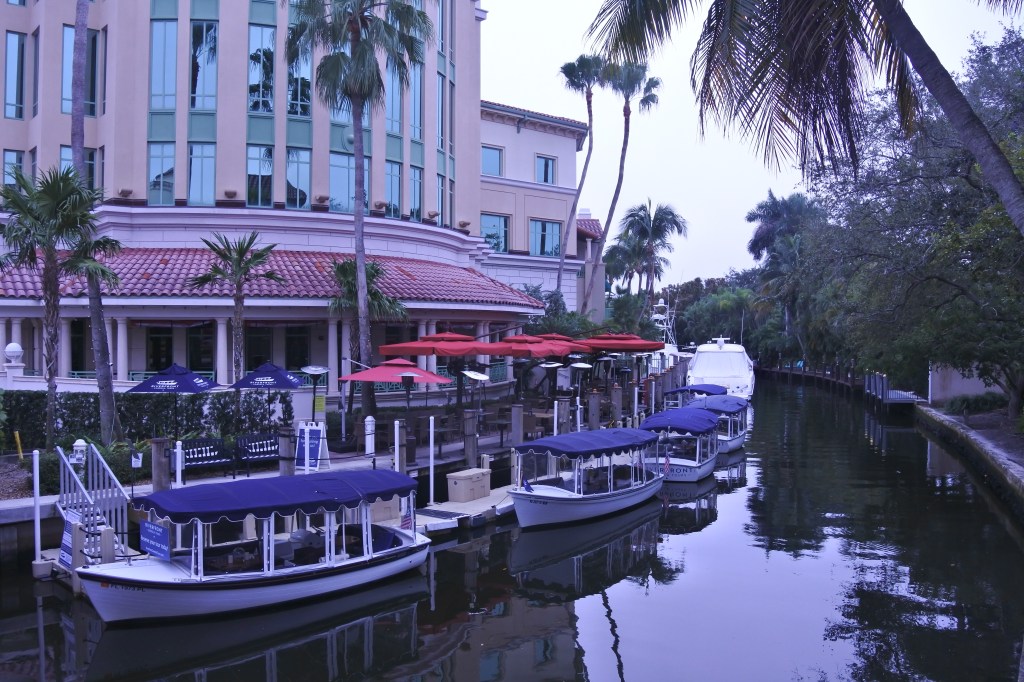
Beverly Heights/Colee Hamock- Ft. Lauderdale’s best urban neighborhoods

Beverly Heights and Colee Hamock are small inner city neighborhoods just east of Ft. Lauderdale. Both  were built up between the 1920s- 1940s and share the Las Olas Blvd, a good urban biz district with lots of shoppings, restaurants and bars. Colee has a good array of cute historic homes and Beverly Heights is mostly newly homes that have been built pretty well into the existing urban form of the neighborhood.

Both neighborhoods have decent walkability, great cultural and retail amenities, convenient access to Dwtn, and pretty good vibrancy. But lots of urban holes remain here including so-so public transit access, low density, frequent missing sidewalks and ADA curb cuts, limited bike infrastructure, limited diversity, few parks, no schools, and expensive housing. There is certainly the potential here for a great urban district, but those important aspects to urban life would need to be improved.

Click here to view my Album on Flickr

URBAN STRENGTHS:

* Great access to dwtn with decent public transit access. But for an inner ring suburb public transit is pretty limited.
* Good Tree canopy.
* Good cultural amenities including many restaurants, bars & cafes, several art galleries. Also convenient access to the Dwtn cultural amenities.
* Good retail amenities This includes a drug store, lots of clothing and boutique stores, some jewelry and home good stores, a post office, a couple of gyms, plenty of dessert shops, and also a hospital. A supermarket is nearby in Dwtn.
* Generally good architecture esp. modern. Modern infill is plentiful and generally with good urban form and of good quality. What exists of historic architecture is good but not a ton of it.
* Thanks to the many shops along Las Olas, there is decent vibrancy.
* Strong business district along Las Olas Blvd and a western border along Dwtn provides strong neighborhood imageability.

URBAN WEAKNESSES:

* Density is pretty low for an inner city neighborhood.
* ADA and sidewalk infrastructure is decent but not great. Some streets without sidewalks and about 50% of intersection have modern ADA infrastructure.
* Dedicated bike infrastructure is limited to 1 dedicated bike station and a small dedicate bike lane along Las Olas.
* Racial diversity is ok. Limited economic and generational diversity. Lots of younger, childless households.
* Only two parks here. One small and the other medium sized.
* Walkable schools include a pair of quality elementary schools but not much else nearby.
* Rental hsg is pretty expensive. 1-bed generally lease in the 2 & 3 Ks but some in the mid 1Ks. 2-beds lease anywhere btwn 2K-4K, 3-beds lease in the 4Ks & 5Ks.
* For sale hsg is also pretty expensive but some modest priced condos. 1-beds sell btwn 150K-300K, 2-bed condos and homes sell btwn 400K-800K, 3-beds SF btwn 800K-1.5 M. 4-beds sell for a bit more.
* There doesn’t appear to be much affordable housing here.
* Missing retail includes banks, a public library.
* No schools within the neighborhood. A couple quasi-walkable schools in the area but of mixed ratings.

Hollywood, FL- A decent Miami suburb with a large urban core

Hollywood was founded by a Joseph Young in the 1920s who poured millions into its development. Hollywood quickly become a destination for snowbirds and grew to 2,600 by 1930 and 6,000 by 1940 helping to create a decent walkable dwtn along W. Hollywood Blvd. The City’s population really grew after WW II growing to 14K by 1950, 35K by 1960, and exploding to 106K by 1970.

West Hollywood and Harrison Streets (btwn the Circle and Dixie Hwy) form the core of Dwtn Hollywood and the best walkable and mixed- district. There are also lots of nice MF buildings along the Circle. But the urban core is actually quite extensive (for Florida standards) as West Hollywood blvd has decent urban form all the way to 1-95 and a good amount of streets with homes from the 1930-1950 with sidewalks. Like most Florida dwtn suburbs, Hollywood has good cultural and decent retail amenities. This is also one of suburban Miami’s most diverse suburbs with relatively affordable housing. There are also good schools here and well dispersed park amenities. What Central Hollywood really needs to move from a decent urban district to a good one is quality mixed-use buildings along all its business corridors, more density, more retail amenities, safer bike lanes, and better public transit.

Click here to view my Album on Flickr

URBAN STRENGTHS:

* Nice connectivity in Dwtn Delray Beach
* A pair of dedicated bike lanes run thru dwtn but no dedicated bike stations.
* Overall pretty good diversity especially racial and generational.
* Delay has a decent amount of affordable housing thanks to having their own Housing Authority.
* Culturally a great array of restaurants, bars, & cafes, tons of art galleries, a couple of museums, a cineplex, a performing arts center and a couple other theaters, and several live music venues.
* Also good retail amenities with tons of boutiques and brand name clothing stores, a couple drug stores, a bookstore, tons of dessert stores, a couple gyms, plenty of salons & barbers, a post office and dwtn public library .
* Good urban form along most of Atlantic Ave and ne 2nd Ave.
* Dwtn Delray is generally feels safe but has a pretty high crime rate.
* Overall pretty good modern infill with decent design and quality urban form.

URBAN WEAKNESSES:

* Density not great but pretty average for a Florida suburban dwtn.
* Not great access to Dwtns. About 30-40 min drive to dwtn West Palm Beach and Ft. Lauderdale and 1 hr. to Dwtn Miami. About 1 hr. + via train to either Dwtn.
* For sale housing is pretty expensive but some moderately priced condos. 1-bed condos sell btwn 275K-500K, 2-beds sell anywhere btwn 400K-1M, and wide variety with 3 & 4 beds selling anywhere btwn 500K- 2M.
* Rentals are even more expensive with studios leasing in the 2KS, 1-beds btwn mid 2Ks-5Ks, 2-beds btwn 3K-7K, 3-beds btwn 5K-12K.
* Parks are limited to the Old School Square (a nice centrally located park) and the small Veterans Park.
* Dwtn is missing a supermarket.
* No schools within the Dwtn area. Some private schools nearby but pretty small.
* Some historic hsg on the more SF streets but not a ton. Biz districts is all modern in-fill.

Lake Worth, FL- One of Southeast Florida’s most diverse suburbs

Lake worth stood at only  38 residents in 1912. But this quickly  changed as the town grew rapidly benefitting from the Florida land boom in the 1920s. Lake Worth’s population more than quintupling from 1,106 in 1920 to nearly 6,000 in 1930. Sadly the 1928 Okeechobee hurricane devastated Lake Worth. The storm, combined with the Great Depression led to a severe economic decline within the community. Yet Lake Worth saw rebirth after WWII  growing to 7,406 in 1940. The 1970s-1990s was a period of neglect for Downtown and the inner-city neighborhoods and Lake Worth gained notoriety as the “skin-flick capital of the country”. But cheap real estate brought many immigrants to Lake Worth greatly diversifying the City. Most immigrants came from Central America and the Caribbean. By the late 1990s dwtn began to revitalize and Central Lake Worth is more or less a stable place with some seedy and disinvested pockets remaining. 

Unlike other suburbs between Miami and West Palm Beach with urban Dwtns, Lake Worth has great connectively, bike infrastructure, and solid public transit. It is also much more diverse and affordable than its comparable suburbs. Lake worth also has solid cultural and retail amenities located mostly on Lake and Lucerne Aves. But to truly be a good urban district, Lake Worth needs more urban infill along Lake and Luceren Avenues, a total urban rehaul of Dixie Hwy, which is very auto centric right now, more park space, and more retail amenities.


Click here to view my Lake Worth Album on Flickr

URBAN STRENGTHS:

* Pretty good density, especially for a Miami suburb.
* Generally sidewalks and ADA curbs are in place but few up to date ADA curb cuts.
* Solid public transit access and only a 30 min train ride to dwtn West Palm Beach. 50 Min train to Ft. Lauderdale.
* Great connectivity and great bike lanes system Dwtn.
* Great racial and economic diversity here.
* Rentals are moderately priced, especially for Miami Standards. 1-beds rent in the 1Ks, 2-beds in the 2 & 3Ks, 3-beds are slightly more expensive.
* Also a decent amount of moderately priced for sale housing. 1-bed condos sell anywhere btwn 50K-800K depending on size and condition. 2-beds btwn 150K-800K, 3 & 4 beds anywhere btwn 200K-1M.
* There also seems to be a fair amount of voucher hsg available too.
* Decent cultural amenities with a good array of restaurants (esp. Hispanic), bars, and cafes. Also a couple live music venues, a theater company, plenty of art galleries, and several local museums.
* Retail amenities include a Publix supermarket and many grocerias, plenty of drug stores, a decent # of boutiques and banks, several antique and home good stores, a book store & record shop, tons of consignment stores, several dessert joints, a dwtn post office and public library, and a couple of gyms.
* Quality historic homes and a good amount of quality historic commercial remains.

URBAN WEAKNESSES:

* Park space is limited to a Dwtn plaza and decent waterfront park.
* No hospital near dwtn and few medical offices.
* Dwtn Lake Worth is generally pretty safe but has its issues and a fair amount of blight that remains for its disinvestment btwn the 70s-90s.
* In-fill is a mixed bag. Some decent stuff along Lake Ave the biz district but lots of crummy autocentric bldgs along Dixie Hwy.
* Urban mass is bad along Dixie and a mix-bag along Lake and Lucerne Ave.

Delray Beach, FL- Another attractive SE Florida beach town

Delray Beach was limited to a couple hundred souls until Henry Flagler extended his Florida East Coast Railroad south from West Palm Beach in 1896. This fostered a small historic dwtn built on surrounding agriculture for the next couple decades. But in the 20s more and more vacationers came fueled by the Florida Land boom came. By 1930 its population had grown to 2K.  Delray was also the largest town between West Palm Beach and Fort Lauderdale and attracted seasonal Artists and Writers who were not welcomed in Palm Beach. Sadly Delray had a history of excluding Jews from purchasing homes well into the 60s. In the 1970s, Interstate 95 was fully completed and suburban development west of the city limits exploded. Delray grew to 20K residents by 1970 and 50K in 1990. This sadly left Dwtn Delray and surrounding inner city neighborhoods in economic decline. Thankfully Dwtn Delray has experienced a rebirth in the past 2 decades and is a rather happening place. But many of the residential streets around Dwtn still bear the historic scares of disinvestment.

From an urban perspective Delray Beach has good urban form along most of its biz corridors (i.e. Atlantic Ave. and NE 2nd St), great cultural and retail amenities, and good urban infill. Sadly its historic decline meant that almost all historic commercial bldgs were leveled. Dwtn Delray also does not have great access to Dwtn Miami, Ft. Lauderdale, nor West Palm Beach, is very expensive, and has limited schools and park amenities.

Click here to view my Delray Beach Album on Flickr

URBAN STRENGTHS:

* Nice connectivity in Dwtn Delray Beach
* A pair of dedicated bike lanes run thru dwtn but no dedicated bike stations.
* Overall pretty good diversity especially racial and generational.
* Delay has a decent amount of affordable housing thanks to having their own Housing Authority.
* Culturally a great array of restaurants, bars, & cafes, tons of art galleries, a couple of museums, a cineplex, a performing arts center and a couple other theaters, and several live music venues.
* Also good retail amenities with tons of boutiques and brand name clothing stores, a couple drug stores, a bookstore, tons of dessert stores, a couple gyms, plenty of salons & barbers, a post office and dwtn public library .
* Good urban form along most of Atlantic Ave and ne 2nd Ave.
* Dwtn Delray is generally feels safe but has a pretty high crime rate.
* Overall pretty good modern infill with decent design and quality urban form.

URBAN WEAKNESSES:

* Density not great but pretty average for a Florida suburban dwtn.
* Not great access to Dwtns. About 30-40 min drive to dwtn West Palm Beach and Ft. Lauderdale and 1 hr. to Dwtn Miami. About 1 hr. + via train to either Dwtn.
* For sale housing is pretty expensive but some moderately priced condos. 1-bed condos sell btwn 275K-500K, 2-beds sell anywhere btwn 400K-1M, and wide variety with 3 & 4 beds selling anywhere btwn 500K- 2M.
* Rentals are even more expensive with studios leasing in the 2KS, 1-beds btwn mid 2Ks-5Ks, 2-beds btwn 3K-7K, 3-beds btwn 5K-12K.
* Parks are limited to the Old School Square (a nice centrally located park) and the small Veterans Park.
* Dwtn is missing a supermarket.
* No schools within the Dwtn area. Some private schools nearby but pretty small.
* Some historic hsg on the more SF streets but not a ton. Biz districts is all modern in-fill.

Boca Raton- another Ritzy Miami Suburb with a small downtown

Boca Raton was incorporated in 1924 but remained very small until after WWII. This was largely due to a major hurricane in the late 20s and the bankruptcy of its developer and founder Mizner. Mizner had grand ambitions for Boca Raton and I assume if they were realized Boca Raton would have been more similar to Coral Gables in character. Boca Raton did pick up steam moving from only had 1,000 residents in 1950 to 7,000 in 1960 and 50K by 1980. But due to its later development most of the City is suburban with a small walkable Dwtn core of only 0.5 Sq. Miles, which often feels like a strong urban/suburban hybrid.

Downtown Boca Raton has established itself as a lifestyle and entertainment hub with tons of shopping, food & beverage retail, cultural amenities, good walkable amenities, but a so  urban form. Because of their desire to make parking convenient, many surface lots and strip malls are mixed in with quality urban mixed-use buildings and plazas. Interestingly a strict development code for the size and types of commercial buildings exists in the City. I  guess they forgot to pass different laws to make downtown truly urban. Throw in some tacky Mediterranean and Spanish Colonial Revival Architecture and you have a very strong hodgepodge of a place. The most consistant urban form is the colonnade buildings around Plaza Real and quality mixed-use buildings along most of E. Palmetto Blvd. Other areas for improvement in Dwtn Boca Raton include more affordable housing, better diversity across all metrics, and much higher density. In a city of 30 square miles creating a truly dense, walkable, and urban dwtn of 1 sq. mile shouldn’t be a controversial.

Click here to view my Album on Flickr

URBAN STRENGTHS:

* ADA infrastructure is good in the Dwtn area but hit or miss in the residential portion of the eval area east of Mizner Blvd.
* Several dedicated bike lanes running thru dwtn. Not dedicated bike stations however.
* Several very nice downtown plazas most notably that elongated Plaza Real which includes an amphitheater. Sandborn Park is also pretty nice. Not much else other than a couple smaller parks.
* Downtown Boca is a very safe place.
* Several good schools but none of them are Dwtn, all quasi-walkable west of Dixie Highway.
* Culturally Boca Raton has a good array of restaurants, bars, cafes, several breweries and art galleries, lots of live music venues, several local theaters, a cineplex, and several museums.
* Retail amenities include 4 supermarkets, a couple drug stores, many boutiques, lots of stores at the Minzer Park Shopping Mall, many gift shops, several home goods stores & consignment shops, tons of dessert shops/bakeries, and gyms, and a dwtn library and post office.
* The urban form of Boca Raton’s in-fill is generally good but I say that with some qualifications. The design is pretty tacky and there is still a lot of strip malls and surface parking lots throughout dwtn. In-fill along E. Palmetto Blvd and Plaza Real is the best.

URBAN WEAKNESSES:

* Density is pretty low more like a suburb.
* Not great access to Dwtns. About 30-40 min drive to dwtn West Palm Beach and Ft. Lauderdale and 1 hr. to Dwtn Miami. About 50-1hr via train to either Dwtn.
* Diversity is pretty poor here especially economic and family.
* Rentals are expensive with 1-beds leasing in the 2K & 3Ks, 2-beds btwn 3K-6K, 3-beds 4K-8K. Pretty good supply.
* More moderate hsg with for-sale options. 1-bed Condos sell btwn 200K-600K, 2-beds sell at a wide variety btwn 300K-2 M, 3 & 4 beds 700K-3M.
* Only a little bit of historic architecture in the residential pocket of Boca Raton east of Dixie Hwy. None to speak of in Dwtn and along E Palmetto Blvd.

Sailboat Bend- an decent urban district just west of Downtown Ft. Lauderdale

Sailboat bend is a decent urban district just west of Downtown. Much of the pre-WWII housing is still in place here including some of the City’s oldest housing along Nugent Street. The eastern edge of Sailboat Bend feels more Downtown in character and hosts a food and beverage night life district along 2nd Street and several museums and performing arts theaters nearby. 2nd Avenue, however, has very limited non-food and beverage retail. The other business district along Broward Blvd is very auto centric. Most of the residential streets further west are line with heavy tree canopy and a mix of comfortable single family homes and small apartments and townhouses. Many residential streets, however, lack sidewalks and ADA compliant curbs. But due to its location next to Dwtn there is good public transit here and decent walkability in Sailboat Bend.

Click here to view my Album on Flickr

URBAN STRENGTHS:

* Great access to Dwtn with good public transit access.
* Decent bike access with one dedicated bike station and a dedicate bike lane on Broward St.
* Excellent economic diversity and decent racial diversity. Generational diversity somewhat lacking.
* Very safe community.
* Pretty good diverse for sale price points. Decent # of 1-bed condos selling btwn 200K-400K, 2-beds sell btwn 275K-700K, 3 & 4 beds sell btwn 350K-900K.
* Cultural amenities include many restaurants and bars, several cafes, several museums, a major performing arts center, a couple live music theaters, and several historic houses. Most cultural amenities are concentrated on the eastern edge near dwtn. The neighborhood also has convenient access to Dwtn amenities.
* Decent architecture. Some good historic homes throughout and quality urban in-fill along the eastern edge. Broward Blvd is a very auto centric biz district.

URBAN WEAKNESSES:

* Many residents streets are without sidewalks. Those with sidewalks generally have ADA infrastructure.
* Park space is a bit limited. Esplanade Park is a nice waterfront park connected to a bike lane. A couple other pocket parked in the neighborhood.
* Rentals are pretty limited and expensive. 1-beds lease anywhere from the upper 1Ks to the 2Ks, 2-beds 2K-3Ks, 3-beds are even more expensive but also very limited.
* Non-food and beverage retail amenities are pretty limited in Sailboat. There is a drug store, a couple boutiques and pretty good access to dwtn amenities like a post office, public library, banks, and other shops. But that’s really only convenient to residents living in the eastern edge of Sailboat Bend.

Grandview Heights- West Palm Beach’s best Urban Neighborhood

In this Grandview Heights+  evaluation I also included the small but connected neighborhoods of Flamingo Parks, Sunshine Park, and Pineapple Park. Each of these neighborhoods individually are very small. This includes the area between Belvedere Rd, Dixie Highway, and Okeechobee Blvd. and the river.

Grandview Heights is one of the City’s oldest neighborhoods built between 1910 to 1925. The neighborhood has one of the City’s best collection of early craftsman-style bungalows, as well as some modest, Mediterranean revival-style homes. After several decades of decline, Grandview Heights has been restored to a stable somewhat walkable mixed-use neighborhood composed of  mostly single family homes, modern townhomes, and some apartments. Grandview Height’s also hosts the City’s largest urban park, Howard Park. There is also a good amount of historic homes in the other neighborhoods apart from this evaluation.

Grandview Heights + also has great access to Dwtn, decent public transit access, pretty good cultural amenities, decent retail amenities, and is overall a very safe district. But there are many urban areas where it can improve including more density and vibrancy, better bike infrastructure, missing retail amenities, and significant auto centric stretches in its biz districts, esp. along Belvedere. Dixie Hwy is a mixed bag. This can easily be rectified with a strong push for quality urban mixed-use infill along Belvedere and Dixie Hwy and more housing. 

Click here to view Grandview Hghts Album on Flickr

URBAN STRENGTHS:

* Pretty good ADA and sidewalk infrastructure but the biz district, while having sidewalks, are very auto dominated.
* Very good access to Dwtn being only about 1.5 SW of it.
* Howard Park is a large multi-faceted park on the neighborhood’s western edge. There is also a large cemetery here.
* Decent number of diverse restaurants and cafes along Belvedere and Dixie Highway. Also a good number of art galleries, the Norton Museum of Art & a couple other smaller museums. Also decent access to the many cultural amenities just north in Dwtn.
* Decent retail amenities including a supermarket, several grocerias,  include a decent amount of boutiques, a couple home good stores, a bike shop, several gyms, a post office, and a Cleveland Clinic hospital is located at the border with Dwtn. unfortunately much of this retail is along rather autocentric roads. Some very good retail amenities just north in the new City Place Development.
* Some very nice historic homes here. Not many interesting historic commercial bldgs.
* Overall a very safe neighborhood.

URBAN WEAKNESSES:

* Pretty low density.
* Public transit is ok, but pretty poor for an inner city neighborhood.
* Bike infrastructure is limited to one dedicated bike station.
* A very good public high school just north of Grandview Heights but only a couple other small private schools with the neighborhood.
* For Sale housing is generally pretty expensive but some are moderately priced. 1-bed condos and small houses sell btwn 235K-500K. 2-beds 300K-900k, 3 & 4 beds generally btwn 350K-1M, but some sell in the millions.
* Rentals are pretty limited. Sell anywhere btwn 1.5K-4K, 2-beds lease for 3K-4K, and some 3-beds lease for even more.
* Not a lot of affordable hsg here. That’s mostly north of Dwtn.
* No drug stores, only a couple banks, few dessert joints, and no public library here.
* Much of the infill is unattractive auto centric bldgs especially along Belvedere. Some nicer mixed-use in-fill adjacent to Dwtn. Dixie Hwy is a mixed bag.
* Not a ton of pedestrian activity.

Palm Beach, FL- Home to many Billionaires including Donald Trump

Development in Palm Beach really got started with the completion of the Florida East Coast Railway  here in 1894. A hotel boom for the wealthy quickly ensued. Flager himself built a massive Beaux-Art Mansion in Palm Beach called Whitehall. The population of Palm Beach slowly grew reaching  just over 1,000 by 1910, 1,700 by 1930 and around 4,000 by 1940. On a sad note Palm beach used to host a couple thousand African Americans in the Styx section of town. They were forcibly evicted in 1912. Some other notable history includes JFK’s location of his Winter White House here at La Querida.  General Foods and Post Cereals heiress Marjorie Merriweather Post lived in the Mar-a-Largo estate (just south of Dwtn). This was sold to Donald Trump in 1985.

The area has remained a haven for the rich and those wintering here. Fortunately a rather attractive and walkable Dwtn with tons of shopping options developed around Worth Street and County Rd. To the north several other attractive biz districts were created (i.e. Main Street, Sunset Ave, and Country Rd). Royal Palm Way is the main entrance into Dwtn Palm Beach sitting at the end of Royal Palm Bridge, a boulevard lined with magnificent Royal Palms. But while Palm Beach tends to have good walkability it fails in many other important urban categories; public transit isn’t good, there is limited bike infrastructure, schools are limited, housing is very expensive, and there is limited diversity across all categories. Given the general desire for status quo among the wealthy, I doubt Palm Beach will improve in any measurable way in these areas. 

Click here to view my Album on Flickr

URBAN STRENGTHS:

* ADA and sidewalk infrastructure is generally good but about 1/3 of intersections are without ADA curb cuts and some streets without sidewalks.
* Convenient access to Dwtn West Palm Beach being only 2 miles away, but transit frequency isn’t great. Not convenient access to Dwtn. Ft. Lauderdale nor Dwtn Miami across any form of transit.
* Very safe community.
* Great tree canopy.
* Decent park amenities with several nice beaches, a couple plazas dwtn, and a couple medium sized parks, and a nice bike trail along the intercoastal side.
* Good cultural amenities including many restaurants, cafes, and some bars. Also many art galleries and several good museums.
* Lots of shopping here: tons of boutiques, high end stores but also good # of medium end shopping that are locally owned and gift shops. There are also 3 bookstores, some dessert stores, plenty of homes good stores, plenty of banks, a Sakes 5th  a couple supermarkets, several drug stores, a public library, and a couple post offices.
* Generally both historic and modern in-fill is of a good quality with urban form. Some tacky modern architect and Country Rd can get auto centric in spots, especially north of Main St.
* Several nice biz districts with good shopping and urban form including Worth Ave, Country Rd, Sunset Ave, and Main Street.

URBAN WEAKNESSES:

* Very low density similar to a suburb.
* public transit isn’t great.
* Only one dedicated bike lane along the inlet.
* Very limited economic diversity, racial and generational diversity. This is a very wealthy, white, and retiree community.
* One good public grade school in Dwtn Palm Beach but nothing else that’s walkable. Downtown West Palm Beach have some decent schools but this is across the inner coastal.
* Only a handful of churches, limited gyms, and no hospitals in Palm Beach.
* Housing is very expensive but some moderately priced small condos. Studios sell from anywhere btwn 200K-700K, 1 beds sell btwn 200K-900K, 2-bed condos sell btwn 400K 1.5M,  3 bed condos generally sell btwn 1M-5M, 3 & bed SF homes sell btwn 3M-10M , and 4 beds a bit more on average.
* Rentals seem even more expensive. Studios lease btwn 3K-5K, 1-beds 5K on average, 2-beds 10K on average and 3-beds 25+. Not much rental product. Also does not appear to be any dedicated affordable hsg here.

South Beach- Miami’s Urban and Architectural Gem

South Beach first started developing around the 1910s, due to the development of several founding fathers. It was the construction of the Collins Bridge in 1915 that really got the City’s development moving. Quickly the town of Miami Beach was incorporated in 1920, and a land boom ensued. This coincided well with the Art Deco styling of the 1930s and South Beach quickly saw the construction of hundreds of Art Deco hotels and apartment buildings. But in South Beach this styling took on the unique pastel color palette of South Florida. South Beach claims the world’s largest collection of Streamline Modern Art Deco architecture. By the 1950s South Beach was primarily a New York Jewish enclave and boasted a population of around 30K. Between the mid 60s and 80s South Beach slowly declined. Slowly drug traffic came into the City and accelerated the City’s decline. Fortunately a grouped of dedicated preservationist activist led by Barbara Baer Capitman saw organized to save the City’s Art Deco gems and managed to create several historic districts to preserve their future. This helped stabilize Miami Beach and elevate its popularity leading to significant investment into the City starting in the late 80s and early 90s. Lincoln Road (now a wonderful pedestrian mall) was also revitalized during this time period.

South Beach continued its revitalization through the 90s and 2000s and is now a national destination for cultural, nightlife, beaches, and architecture. But thanks to its great urban bones it’s also Miami’s best urban environment boasting good density, great walkability, several attractive business districts, and has retained a good amount of affordable and moderately housing thanks to the plethora of small condos and many affordable housing developments run by the local Housing Authority. Areas to improve for South Beach include the continued construction of more affordable housing options as prices continue to rise. There is also need for more schools, quality urban infill along the Alton and 5th Ave corridors, and more family friendly amenities.

Click here to view my South Beach Album on Flickr

URBAN STRENGTHS:

* Great Density at 20K per mile, but actually the 3rd most dense neighborhood in Miami.
* Good but not great access to Dwtn. The island really make a difference.
* Great bike infrastructure with plenty dedicated bike lanes and bike stations.
* Very diverse economically (somewhat surprisingly), and good racial diversity.
* Good number of affordable hsg in Miami Beach thanks to having their own Housing Authority.
* Lots of small and medium size parks providing residents with very convenient access to park amenities. Lummus Park and Flamingo are larger.
* Cultural amenities include tons of restaurants, bars, cafes, nightclubs, there are also several breweries, several movie theaters, a full cineplex, and performing art theaters. There are also lots of art galleries, several live music venues, and lots of museums. This is one of the best night life spots in America.
* Excellent historic architecture including 20s Mediterranean, Art Deco, and Art Modern.
* In-fill is generally a high quality except for a couple auto centric spots around Alton Rd.
* ADA curbs and infrastructure is generally good but a good # of older curbs without modern ADA standards.
* Urban massing is generally very good in the biz districts of Collins, the 16th Street (ped. street), Ocean Dr., Washington Street, and 5th St.. Alton is a mixed bag.
* Great retail amenities including 7-8 supermarkets, a target, numerous drug stores, a hardware store, a Macy’s, Marshall’s, all kinds of clothing stores, a decent # of boutiques, banks, tons of gyms and dessert joints, a couple bookstores, several home good stores, a couple post offices & public library, and several medical centers but no walkable hospital.

URBAN WEAKNESSES:

* 3-4 public schools generally well rate and a couple Hebrew schools.
* Rentals are expensive but more moderate than other parts of Miami. Studios lease in the mid 1Ks-low 2Ks, 1-beds in the 2Ks & 3Ks, most 2-beds are 2.5K-5K but plenty more expensive, 3-beds are most 10K+ but some in the 3-5K range.
* Hsg is pretty pricy but lots of inexpensive condos. Most studios sell btwn 100K-300K, 1-beds cons sell anywhere btwn 150K-600K, great variety in 2-beds condos btwn 200K-1M. Some luxury condos selling in the multi-millions. 3-beds most sell btwn 500K and the low 1Ms. Some btwn 300K-500K and plenty above 1.5M. 4 & 5 beds sell in the Millions.
* Generally safe but a good # of petty thefts.