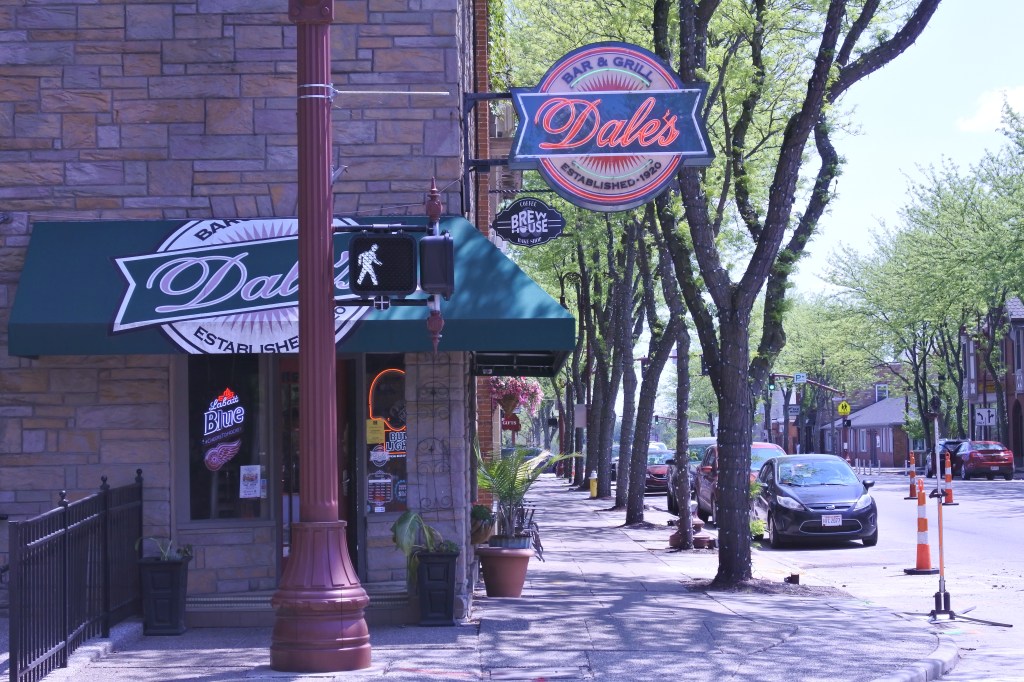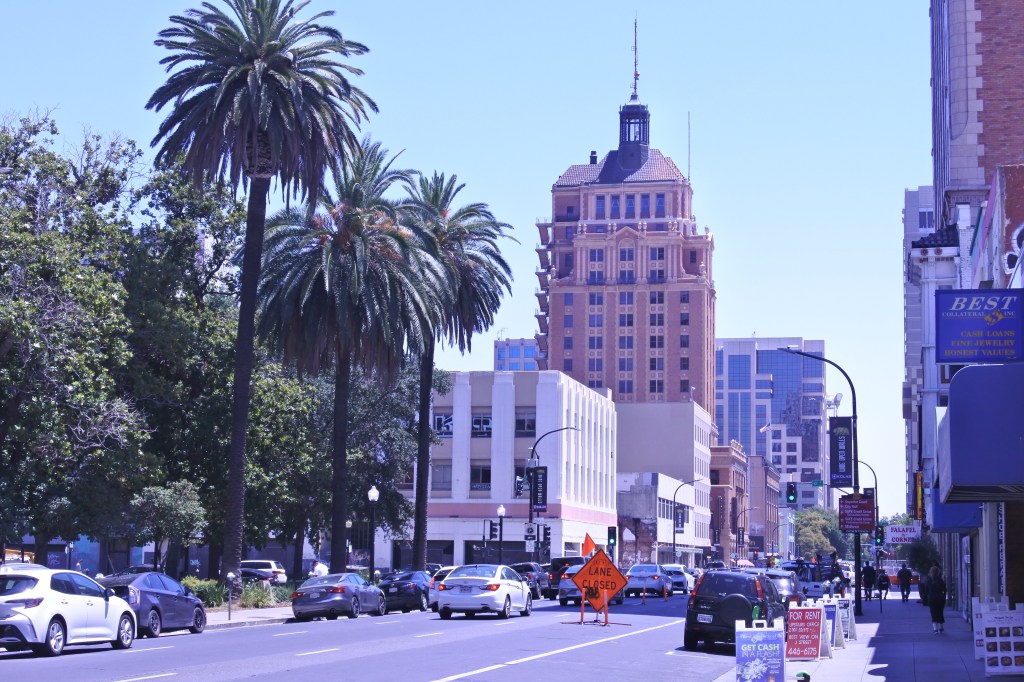
Redlands, CA- Historic Citrus Growing Center of Southern California

Its difficult to pick out precisely the urban core of Redlands but I did my best using San Mateo and Center St. as the western border, Highland Ave as the southern, Brookside and Lugonia as the northern, and University and Redlands as the eastern.

Development of Redlands started in the 1880s with the arrival of the Southern Pacific and Atchison, Topeka and Santa Fe Railroads, connecting Southern California to San Francisco and Salt Lake. Immigrants quickly discovered the area with its hot, dry climate and ready access to water was the ideal center for citrus production. The City was named “Redlands” after the color of the adobe soil. The Pacific Electric Railway completed an interurban connection between Los Angeles and San Bernardino in 1914, providing a convenient, speedy connection to the fast-growing city of Los Angeles. Redlands reached 2,000 people by 1890 and 10,500 by 1910, 14K in 1940 and population steadily grew as it continued to sprawl. Redlands now hosts just over 71K souls.

Downtown is pretty spreadout centered along State Street, a very intact main street. Orange St also has some nice Dwtn fabric. The rest of Dtwn is a hodgepodge of urban and auto centric blocks. Also included in this rather large evaluation area is the gorgeous residential Smiley Park Historic District with especially beautiful Victorians along Highland Avenue. North of  I-10 is a more modest district with a mix of attractive 1920s-1940s homes and gritty areas. This is also where Redland University is located. Really no urban biz district of note in this sub-district. Redland does very well, from an urban perspective, with racial and economic diversity, a decent amount of dedicated affordable hsg, good parks and schools, good cultural and retail amenities. The main areas for Dwtn Redlands to improve is more density, better public transit access, more affordable housing, better tree cover in areas outside of the Smiley Park Historic District, and better urban in-fill in the Dwtn area.

Click here to view my Redlands Album on Flickr

URBAN STRENGTHS:

* Several decent bike trails but no dedicated bike stations here.
* Great racial and economic diversity and good generational diversity as well.
* Good array of walkable schools in central Redlands with generally good ratings.
* A couple sections of Central Redlands are a bit rough north of the highway but generally a safe community.
* A decent amount of dedicated affordable hsg sites in Redlands.
* Several solid parks in Central Redlands and pretty well distributed.
* Cultural amenities include a good # of restaurants, bars, and cafes, several art galleries, several performing arts theaters (including Redland University), a local cinema, a couple local museums, several live music venues & night clubs. Most of these amenities are concentrated Dwtn.
* Retail amenities include several supermarkets & drug stores, plenty of boutiques/consignment stores, several antique stores, banks, a couple bookstores, plenty of gyms & dessert joints. Also within Dwtn is a post office, office depot, public library. The Mountain Grove Shopping Center (a healthy power center complete with several dept. store and lots of retail) is just NW of the evaluation area. Much of this retail is auto oriented.
* State Street hosts the best urban form, followed by Orange St. Redlands Blvd is very auto centric.
* Excellent pockets of historic architecture in central Redlands, esp. in the Smiley Park Historic District. Other areas are so .

URBAN WEAKNESSES:

* Density isn’t that great.
* Sidewalks are generally there. Up to date ADA infrastructure is hit or miss.
* Public transit is so .
* Decent access to Dwtn Riverside as its only a 20 min drive but only ~10-15KK work in Dwtn Riverside. Also terrible public transit connection. A drive to Dwtn LA is 1 Hr. + and 2 HR+ by transit.
* Not a ton of rental product but what exist is pretty expensive, although not too bad for California standards. 1-beds lease btwn 1.5K-2K, 2-beds anywhere btwn 1.5K-2.5K, 3-beds in the 2Ks & 3KS.
* For sale is also expensive but some moderately priced options. 1-bed condos/small homes sell anywhere btwn 200K-500K, 2-beds anywhere btwn 300K-800K, 3 & 4 beds btwn 400K-1 M with some higher end product reaching the mid 1 Ms.
* Modern in-fill is mostly unattractive in-fill architecture.
* Tree cover is good in the Smiley Park Historic District. Not so good Dwtn or north of Dwtn. 

Palm Springs- California’s Desert Resort

Palm Springs became a fashionable resort town starting in the early 1900s when health tourists arrived here. It received another boast in popularity when movie stars began to buy second homes here in the 1930s helping to create the ultra exclusive Movie Colony, Tahquitz River Estates, and Las Palmas neighborhoods sitting just outside of Downtown. Palm Spring also built California’s first self-contained shopping center “La Plaza”, which still stands today. The 1950s brought architectural modernists and the blossoming of the arts and cultural.  Many argue that Palm Springs became the model for mass-produced suburban housing, especially in the Southwest. The 1970s brought more and more year round residents to Palm Springs as many retirees began to live here fulltime. Since the 2000s much effort has gone into building up and urbanizing Dwtn especially along the main drag (S Palm Canyon Dr.) and surrounding blocks.

Not surprisingly Dwtn Palm Springs hosts great cultural and shopping amenities, very interesting architecture from the 1920s-1950s, and several very walkable blocks. But the eastern half of Dwtn has many dead spaces and plenty of vacant lots or self-enclosed apartments and subdivisions. These areas need to urbanized for Dwtn Palm Springs to be a quality urban area. There is also need for more affordable housing, better connectivity, bike  infrastructure, and better walkable schools.

Click here to view my Dwtn Palm Dessert Album on Flickr

URBAN STRENGTHS:

* Other than some outdated curb cuts the ADA infrastructure is very good in Palm Springs.
* Poor access to Job centers and Dwtn. Residents are a 1 hr. drive to Dwtn Riverside and 2.5 hrs. by bus. Dwtn LA and Anaheim and even further.
* Surprisingly very good racial and economic diversity.
* Park amenities just got a lot better with the construction of the expansive and multi-faceted Downtown Park. Frances Stevens Park is another nice one with a couple other pocket parks. Dwtn Palm Springs also has access to get hiking and trails with the mountain practically hoping right up to it.
* Great culturally assets including many restaurants, bars, and cafes, tons of art galleries, several performing art galleries, several museums, and many night clubs.
* Retail amenities are also great and include a discount supermarket, a couple gourmet grocerias, a couple drug store, tons of boutiques and clothing store with a good mix of name brands and locally owned, many gift shops, a couple bookstores, a couple gyms, many dessert joints, and a dwtn public library.
* Vey safe dwtn.
* Interesting 1920s/1930s and mid century architecture especially along the core of Dwtn. The eastern edge is mostly modern in-fill and pretty bland. Good urban in-fill in the core as well.
* Great urban massing and streetscaping along S Palm Canyon Dr., decent massing along Indian Canyon Dr. and the western half of Tahquitz Canyon Way.

URBAN WEAKNESSES:

* Density is more similar to a suburb.
* A couple dedicated bike lanes but no bike stations dwtn.
* Not surprisingly the medium age is about 60 and few children households here.
* Only a couple schools within walking distance to Dwtn Palm Springs.
* For sale hsg is on the expensive side but a decent # of moderately 1-bed condos in older bldgs selling btwn 200K-500K. A good # of 2-bed condos sell btwn 300K-500K. Also plenty selling btwn 500K-1M. 3 & 4 beds go for anywhere btwn 500K-1.5 M. Multi-Million $ hsg exists just outside of Dwtn.
* Not a ton of rentals available. They are also expensive with 1-beds renting btwn high 1Ks-3K, 2-beds 2K-4K, and 3-beds a very rare.
* Dwtn is missing a dwtn post office, only has a handful of churches, and a major hospital is about 1 mile north of Dwtn.
* A couple dead/gritty parts of Dwtn on the eastern edge.
* Connectivity is good in the western half of Dwtn (the core) but not so great in the eastern half. Lots of private developments. Lots of open vacant lots here too and urban massing is very good.

DC’s Near Northeast Neighborhood- Devasted by the 68′ riots but has seen new life

There is some ambiguity and crossover between Near Northeast and NOMA & Stanton Park. To avoid overlap in this evaluation I included the areas between 4th Street NE, Florida Ave., H Street (from 4th NE-8th NE) and Maryland Ave. (from 8th NE to Florida Ave).

The Near Northeast remained undeveloped and sparsely populated through the end of the 19th century. Development picked up in the 1890s with the construction of a streetcar line down H Street. Commercial development then began to fill in incrementally during the early 20th century.  Demographically the Near Northeast evolved into a mixed ethnic district becoming a major center Afircan American center of DC. The district also attracted many  immigrants form Ireland, Germany, Greece, Italy, Jews from Eastern Europe. Sadly the Near Northeast was devastated by the race riots that ripped Washington for three days following the death of MLK in April 1968. It experienced some of the worst looting, vandalism, and arson in the City. This setback the neighborhood for several decades as it become a very poor African American enclave. Things began to improve in the Near Northeast in the early 2000s starting with the revitalization of H Street followed by increasing residential rehabs. By 2020 most of the district had been stabilized other than a couple missing teeth and vacant storefronts on H Street.

From an urban perspective this is another solid DC neighborhood with good density, walkability, great public transit access, convenience to Dwtn, and wonderful bike infrastructure. Improvements certainly include more affordability but the neighborhood could use more park amenities, and a local public library and post office.

Click here to view my Near Northeast Neighborhood on Flickr

URBAN STRENGTHS:

* Good density and public transit access.
* Convenient access to Downtown among all modes. Great bike infrastructure.
* Excellent connectivity and less confusing diagonal roads than most DC neighborhoods.
* Great racial diversity and decent economic.
* A fair amount of public housing remains in Near Northeast.
* Good cultural amenities in Near Northeast include a great array of bars, decent # of restaurants & cafes, a couple live music venues, a performing arts center in an old Art Deco theater, a handful of art galleries, a couple of local museums, and the cultural amenities available at Gallaudet University.
* Good retail amenities including 3 full-service grocerias, Union Market vendors, a couple drug stores, several boutiques & consignment stores, a book store, several banks, many gyms & dessert joints.
* Good array of many well rated schools.
* Solid historic and modern-infill architecture. More ornate historic bldgs on the neighborhood’s western and southern borders.
* Great tree canopy.

URBAN WEAKNESSES:

* Not many families with Children here.
* For sale housing is expensive but still some moderate priced hsg. Lots of 1-bed flats sell btwn 350-500K. Also some more expensive. 2-beds sell anywhere btwn 450K-1 M but some product is more expensive. 3-beds generally sell btwn 750K-1.5M. 4 & 5 beds sell for a bit more, maxing out at around 2M.
* Studios lease in the high 1Ks, 1-beds high 1Ks and 2Ks, 2-beds lease btwn the high 2Ks-4K, and 3-beds lease for 3-4s. Some 4-bed product leasing in the 4 & 5Ks.
* Good access to many small parks/parkettes and a recreation center. But no medium or large parks here.
* No public library of local post office, several churches. No local hospitals either.
* Generally a safe neighborhood but some gritty spots remain along H Street and eastern edge of the district.

NoMa- DC’s boomtown neighborhood

My evaluation for NoMa includes both the Sursum Corda and Union Market subdistricts. Thus I used New Jersey Ave as the western border, Massachusetts Ave as the southern, 4th St as the eastern and New York/Florida/Penn St as the northern.

“NoMa” is a moniker for the area North of Massachusetts Avenue located north and east of Union Station. Historically NoMa was a mix of the Sursum Corda projects, Union Market, industrial/warehousing uses around the rail lines, the Union Station area, and historic DC rowhouse fabric. NoMa was created in the 2000s after significant planning for its redevelopment and the opening of the  NoMa-Gallaudet U station in 2004. These set in motion the rapid redevelopment and densification of the neighborhood. By 2020 the NoMa district was mostly filled in and is a hot district for young professionals to reside. Fortunately the redevelopment of NoMa has come with great urban form, mixed-use development, and some affordable housing set asides (although probably not enough). It is poised to become a great DC neighborhood although it has a couple missing pieces before it becomes one of DC’s best districts. These pieces include a lack of park and plaza space, a central hub to the district, and more affordable housing. Other than that I’m very pleased with how NoMa has developed. 

Click here to view my NoMa album on Flickr

URBAN STRENGTHS:

* Excellent public transit service here and highly convenient access to Dwtn.
* Very good bye infrastructure including several dedicated bike lanes and many dedicated bike stations including both electric and non-electric. Overall great walkability here.
* Great racial diversity and decent economic diversity.
* Fortunately a decent # of new units in NoMa are being developed affordably.
* Lots of walkable schools across all grades and generally good ratings.
* Lots of modern in-fill and of a very high and urban quality.
* Culturally lots of good restaurants, bars, cafes, the Union Market,  several breweries & art galleries, a small independent theater,  a live music venue,  a couple night clubs, and several federal museums in Noma’s SW corner. Also easy access to all the Smithsonian’s museums on the mall.
* Good retail amenities including several supermarkets, clothing and food vendors at Union Market,  an REI Store, an urban Walmart, several drug stores, a small shopping mall within Union Station, plenty of banks, a couple book stores, decent # of boutiques & home good stores,  plenty of gyms, a local post office and public library, and a decent # of churches.
* This is generally a very safe area.
* Very good urban form and massing throughout all of the district except Sursum Corda (the old projects site undergoing redevelopment).

URBAN WEAKNESSES:

* Good but not great connectivity largely thanks to the extensive urban renewal that occurred in NoMa.
* Very families live here.
* Rentals are expensive but lots of supply and some moderate smaller units. Studios lease from the mid 1Ks to low 2Ks, 1-beds in the high 1Ks and low 2Ks, 2-beds btwn mid 2Ks and mid 3Ks, and some 3-beds lease in the 4K & 5Ks.
* For sale condos are expensive too. Some 1-beds sell in the 200Ks but most in the 400Ks & 500s, 2-beds sell generally btwn 600K-800K but a few older ones sell btwn 300K-400K, 3-beds also sell btwn 600K-800K.
* Historic in-fill is limited to the Eastern Edge of NOMA. What is exists is attractive.
* Park space limited to a couple small plazas within NoMa but some larger Mall space south of the district.
* Tree canopy is decent for a very dense area without much grass.

McDonald, PA- A small borough located on the Allegheny/Washington County Line

Like many small boroughs in Western Pennsylvania, McDonald was established in the late 1880s around light manufacturing. By 1900 the town hosted 2,400 residents and peaked at 3,500 in 1950s. Since then the population has declined by nearly half and just over 2,000 souls resident in McDonald.

While McDonald is in the Pittsburgh MSA, it feels pretty disconnected to the Pittsburgh Metro. There is no Port Authority Service here and its surrounded by woods and farmland. But McDonald is only a 1/2 hour drive to Downtown Pittsburgh. This is one of the less developed sides of the Pittsburgh Metro. From an urban perspective McDonald has stable housing, largely in-tact but gritty and often vacant commercial buildings. The community does have several important amenities including a Giant Eagle, a local library and post office, a handful of shops and restaurants, good parks, and overall a pretty safe community. The only way for this to become a thriving urban area is more people. But without a major wave of immigrants I don’t see McDonald changing much (other than continuing its slow decline) anytime soon.

Click here to view my album on Flickr

URBAN STRENGTHS:

* Decent connectivity.
* Excellent economic and generational diversity.
* Lots of affordable and moderately priced SF homes with prices ranging anywhere btwn 75K-335K
* Pretty good tree canopy.
* McDonald hosts a pair of medium sized parks (Heritage and East End Parks) with good recreational and sports amenities.
* Overall a pretty safe community.
* A set of very nice historic business buildings and pretty good historic homes as well.
* Good urban form in the core of Dwtn. But it drops off outside of the core and becomes pretty auto centric.

URBAN WEAKNESSES:

* Pretty low density for an urban center.
* Very limited public transit here.
* Driving to Dwtn and Oakland only takes about an hour but very limited public transit options.
* ADA compliant ramps is hit or miss. Sidewalks missing on about 1/3 of streets.
* Nice recreational bike trail cutting through town, but other than that no other bike amenities.
* Limited racial diversity as McDonald’s population is 90% White.
* Rental options are very limited.
* Several well rated schools are a 10-15 minute drive. But none of them are walkable.
* Cultural amenities are limited to a handful of restaurants & bars, a historic theater (now an event space), and the Calwell Historic Home (now an B&B).
* McDonald has some retail amenities including a Giant Eagle, a couple pharmacies, a couple banks, several salons/barber shops, a local post office, a couple antique and home good stores, a gym, a local public library, and several churches.
* Very limited modern in-fill and what does exist is generally crummy auto centric bldgs.

Washington, PA- Heart of the Whiskey Rebellion

Washington PA has a long history going back to colonial times. Washington was first settled by colonists around 1768 by mostly Northern Irish and Scottish immigrants. It is not surprisingly then that an open rebellion broke out when the new US government decided to tax the Whiskey production in Western PA. This resulted in the well known ‘Whiskey Rebellion’ of 1791. Fortunately things settled down in Washington and the Washington & Jefferson (a small liberal arts college) was established and the town was incorporated as a borough in 1810. Washington is also located along the Marcellus Shale  formation and had several oil booms in its history including the turn of the 19th century and more recently.  Washington’s population peaked in 1950 at 26K souls but has decreased in half to only 13K today. Fortunately its decline slowed significantly between 2010 and 2020.

Given its significant population decline its not surprising there are many blighted areas of Washington, but it has not completely lost its form and many of the Downtown buildings (especially along Main St) are still in-tact. There are some signs of rebirth as population decline is slowing and new food and beverage businesses are opening again downtown. Washington also has several walkable schools with decent ratings, lots of affordable housing, and decent cultural and retail amenities. To become a quality urban environment again Washington needs more people and businesses. The City also suffers from a lack of any bike infrastructure, limited public transit access and park spaces, and a pretty high crime rate.

Click here to view my Album on Flickr

URBAN STRENGTHS:

* Good generational diversity (thanks in large part to the college) and economic diversity.
* Several walkable schools with decent ratings.
* Some rentals available and very affordable.1 & 2 -beds lease btwn 700K-1,000, and 3-beds btwn 1K-1.5K
* For sale is also very affordable . Very limited 1-bed product selling btwn 40K-75K. 2-beds btwn 50K-250K, 3 & 4 beds is similar but with some product selling btwn 250K-300K.
* ADA infrastructure is very good in parts and pretty bad in others.
* Culturally a decent # of restaurants & bars, a couple cafes breweries & art galleries, a couple local museums and local theaters. Washington also has a local symphony and good performing arts coming from Washing & Jefferson College.
* Decent but not great retail amenities including a Shop n Save and large Mexican grocerias & local farmer’s market, several dollar stores, a couple drug stores, several consignment shops & gift stores, a couple antique stores, several banks, a dwtn library & post office, a local hospital, and plenty of churches.
* Urban form and streetscaping is good in Dwtn but pretty poor outside of Dwtn. 

URBAN WEAKNESSES:

* Density is pretty low.
* There is a local; Washington Co transit system and a commuter bus to Dwtn but I sense its pretty limited. Commute takes over an hr to Dwtn. To drive to Dwtn Pittsburgh is 40 mins.
* No bike infrastructure here.
* Only one park within my evaluation area although there are several on the edges of the City. Pretty limited park amenities overall.
* Crime is high in spots but overall not terrible in Washington. Certainly areas of blight still remain.

Berea, OH- Home to Baldwin Wallace University and lots of History

I include pre-WII development of Berea in this evaluation using Eastland Rd as the eastern border, the bottom of Coe Lake Park as the southern, Valley Parkway as the western, and the railroad as the northern border.

Berea was established in 1836 when educator John Baldwin joined forces with 2  Methodist circuit preachers to form an ideal Christian community. The town’s name was divinely decided by a flip of a coin between Tabor and Berea. The utopian Christian community didn’t last long but Baldwin tried to create Lyceum  Seminary instead. At same time Baldwin started making grindstones from sandstone in the nearby creek bed of the Rocky River and a quarrying industry arose in Berea. In 1845, Baldwin created an innovated new school, providing education to all, regardless of sex, race, religious creed, or ability to pay. It was renamed Baldwin University. In 1913, the current name Baldwin-Wallace University was established after the merger of two schools. Since then the town of Berea  has slowly grown around the college starting as a satellite community of Cleveland and eventually becoming a fully connected suburb after WW II.  Berea now hosts the Brown’s training facility and the Cuyahoga County Fairgrounds.

Berea’s central biz district is located at Front and Center St. This is close to the heart of the Historic Balwin-Wallace Campus and the Berea Quarry (now Coe Lake). Attractive late 19th and early 20th century homes are nearby as well. Berea excels with plentiful affordable for-sale hsg, a safety, great park amenities, and decent cultural and retail amenities. To become a great urban community it needs more density, better transit access to dwtn, more walkable schools, more rental options, better bike infrastructure, and more mixed-use buildings along Front Street. 

Click here to view my album on Flickr

URBAN STRENTHS:

* Pretty good ADA infrastructure.
* Great economic diversity thanks to the large student population.
* For sale hsg is very affordable in Berea. Several condos bldgs where 1-beds sell btwn 50K and the low 100Ks. 2-bed sell btwn 100K-200K. 3 & 4 beds btwn 100K- the low 300Ks.
* Great tree canopy.
* Great park amenities including the Berea Recreation Center, the extensive Metro Park Trails, Lake Abraham Metro Reserve, Coe Lake, Baldin Creek trails, and green space on Baldin Wallace’s Quads.
* This a very safe community.
* Decent cultural amenities with several restaurants, cafes, and bars, a local arts center, a couple local museums, and the vibrant music program at Baldin Wallace.
* Decent retail amenities as Dwtn Berea host a supermarket, a couple drug stores, a handful of boutiques and home good stores, a couple banks, a dwtn library & post office, several dessert joints, a couple gyms, several churches, a couple doctor offices, and good access to Southwest General just east of Dwtn.
* Good historic architecture with lots of attractive homes from the late 1800s, historic University bldgs, and some good early 20th architecture in the biz district.

URBAN WEAKNESSES:

* Poor density.
* Pretty convenient drive to Dwtn but poor transit connection. It takes about 1 hr. to take the bus into dwtn.
* Overall transit connection is pretty poor in Berea.
* Nice bike lanes along the Metroparks but none on City streets.
* Limited racial diversity and esp. family diversity as much of the population is students.
* Only a high school and Catholic grade school are located within Dwtn Berea. 2 other schools are semi walkable in the more suburban half of Berea. Also schools are rated well.
* Not sure where all the students live but rentals are very limited but inexpensive. Few 1-beds available. 2 & 3 beds lease in the 1Ks.
* Good ped activity in Baldin Wallace and around Coe Lake but pretty limited elsewhere.
* Not much urban in-fill but a decent mixed-use bldg and several 1960s in-fill condos and townhouses. Also some unattractive auto centric in-fill.
* Some good urban massing at the core Biz district at Front and Center. But the rest of Front and Bagley are a mixed-bag and often pretty desolate.

Old Brooklyn- Home of the Cleveland Zoo and a stable community for middle class families

I excluded the suburban part of Old Brooklyn east of I-176 (Jennings Freeway). During the late 1880s farmers in the Old Brooklyn neighborhood were among the first in the Midwest to use greenhouses to cultivate vegetables and by the 1920s the neighborhood was one of the nation’s leading producers of greenhouse vegetables.

Development started to replace the farmsteads by the late 1800s and early 20th century and Brooklyn became another Cleveland streetcar neighborhood completely annexed into the City by 1927. There is also some housing on the edges developed btwn the 30s-50s. Old Brooklyn is also blessed with several commercial districts. Pearl, Broadview, and State roads were vibrant biz districts btwn the 1920s-1960s and were followed, after WWII , by  shopping plazas at  Memphis-Fulton, Broadview-Brook park, and Pearl-Brookpark. Old Brooklyn’s most notable landmark, the Cleveland Metroparks Zoo, created in 1907 after relocating from University Circle.

From an urban perspective this is one of Cleveland’s more stable residential areas and historically has been a place where middle class families who wanted to live in the City would consider purchasing an affordable home. There is some walkability here with many schools, decent transit and good access to dwtn, lots of parks, and some retail and cultural amenities. But there are still some iffy spots throughout and many vacant store fronts limiting the vibrancy of the biz district and retail options. Bike lanes are also limited. A major push to activate Brooklyn’s biz district and build mixed-use apartments along them would do wonders to the neighborhood from an urban perspective.

Click here to view my album on Flickr

URBAN STRENGTHS:

* Consistent sidewalks and curb cuts throughout. 50-50 with modern ADA curb infrastructure and generally concentrated in the more upscale parts of the neighborhood.
* Convenient access to dwtn.  Only 15 minute drive and 30 min bus ride.
* Good diversity across all measures, especially economic.
* Good tree canopy.
* Overall good parks, especially the Cleveland Metro Parks around the Zoo, the expansive Loew Park, and Harmody Park which follows the creek. Several other small parks pretty well distributed throughout Old Brooklyn and several cemeteries.
* Culturally, decent restaurants & bars, several cafes, a couple art galleries, night clubs, and live music venues the Cleveland Zoo, and a couple of local museums.
* Good number of walkable schools across all ages but mixed ratings.
* An ok # of rentals but very affordable. 1-beds lease for $600-800, 2-beds btwn 700K into the low 1Ks, and a handful of 3-beds in the $1,000s.
* For sale is also very inexpensive. Small  1-beds sell btwn 50K-100K, 2 beds btwn 50K-200, 3 & 4-beds  btwn 75-350K.

URBAN WEAKNESSES:

* Bike lanes are patchy and not consistent. Not dedicated bike stations here.
* While housing is relatively inexpensive there is  limited higher end product (both rental and for-sale) .
* Ok retail amenities with a discount supermarket, a butcher & cheese shops, several drug stores, a large greenhouse in the middle of the district, a couple bike stores, a couple thrift stores, several dessert stores & bakeries, several banks, a public library & post office, a good # of churches, and a hospital.
* Urban form is good in chucks but often large auto centric breaks and consistent limited renovated stretches.
* Generally a safe area but with crime hot spots here and there. Also a good amount of vacant store fronts.
* In-fill is generally pretty limited but most of it crummy autocentric bldgs. But some decent mid-centric apartment bldgs with good urban form.
* Pedestrian activity is pretty low.

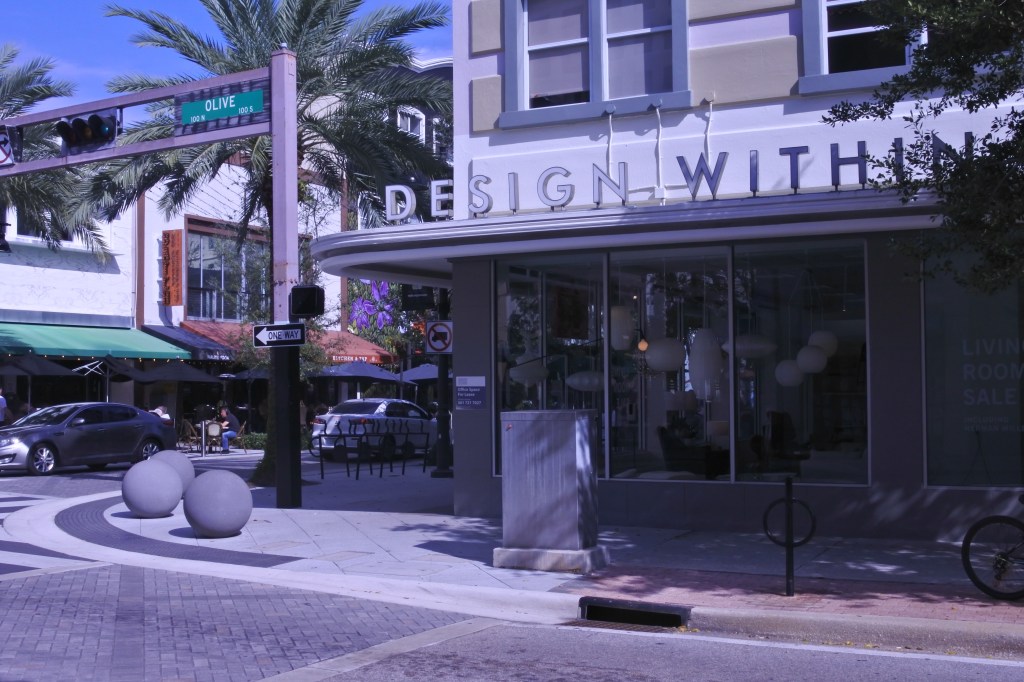
Beverly Heights/Colee Hamock- Ft. Lauderdale’s best urban neighborhoods

Beverly Heights and Colee Hamock are small inner city neighborhoods just east of Ft. Lauderdale. Both  were built up between the 1920s- 1940s and share the Las Olas Blvd, a good urban biz district with lots of shoppings, restaurants and bars. Colee has a good array of cute historic homes and Beverly Heights is mostly newly homes that have been built pretty well into the existing urban form of the neighborhood.

Both neighborhoods have decent walkability, great cultural and retail amenities, convenient access to Dwtn, and pretty good vibrancy. But lots of urban holes remain here including so-so public transit access, low density, frequent missing sidewalks and ADA curb cuts, limited bike infrastructure, limited diversity, few parks, no schools, and expensive housing. There is certainly the potential here for a great urban district, but those important aspects to urban life would need to be improved.

Click here to view my Album on Flickr

URBAN STRENGTHS:

* Great access to dwtn with decent public transit access. But for an inner ring suburb public transit is pretty limited.
* Good Tree canopy.
* Good cultural amenities including many restaurants, bars & cafes, several art galleries. Also convenient access to the Dwtn cultural amenities.
* Good retail amenities This includes a drug store, lots of clothing and boutique stores, some jewelry and home good stores, a post office, a couple of gyms, plenty of dessert shops, and also a hospital. A supermarket is nearby in Dwtn.
* Generally good architecture esp. modern. Modern infill is plentiful and generally with good urban form and of good quality. What exists of historic architecture is good but not a ton of it.
* Thanks to the many shops along Las Olas, there is decent vibrancy.
* Strong business district along Las Olas Blvd and a western border along Dwtn provides strong neighborhood imageability.

URBAN WEAKNESSES:

* Density is pretty low for an inner city neighborhood.
* ADA and sidewalk infrastructure is decent but not great. Some streets without sidewalks and about 50% of intersection have modern ADA infrastructure.
* Dedicated bike infrastructure is limited to 1 dedicated bike station and a small dedicate bike lane along Las Olas.
* Racial diversity is ok. Limited economic and generational diversity. Lots of younger, childless households.
* Only two parks here. One small and the other medium sized.
* Walkable schools include a pair of quality elementary schools but not much else nearby.
* Rental hsg is pretty expensive. 1-bed generally lease in the 2 & 3 Ks but some in the mid 1Ks. 2-beds lease anywhere btwn 2K-4K, 3-beds lease in the 4Ks & 5Ks.
* For sale hsg is also pretty expensive but some modest priced condos. 1-beds sell btwn 150K-300K, 2-bed condos and homes sell btwn 400K-800K, 3-beds SF btwn 800K-1.5 M. 4-beds sell for a bit more.
* There doesn’t appear to be much affordable housing here.
* Missing retail includes banks, a public library.
* No schools within the neighborhood. A couple quasi-walkable schools in the area but of mixed ratings.

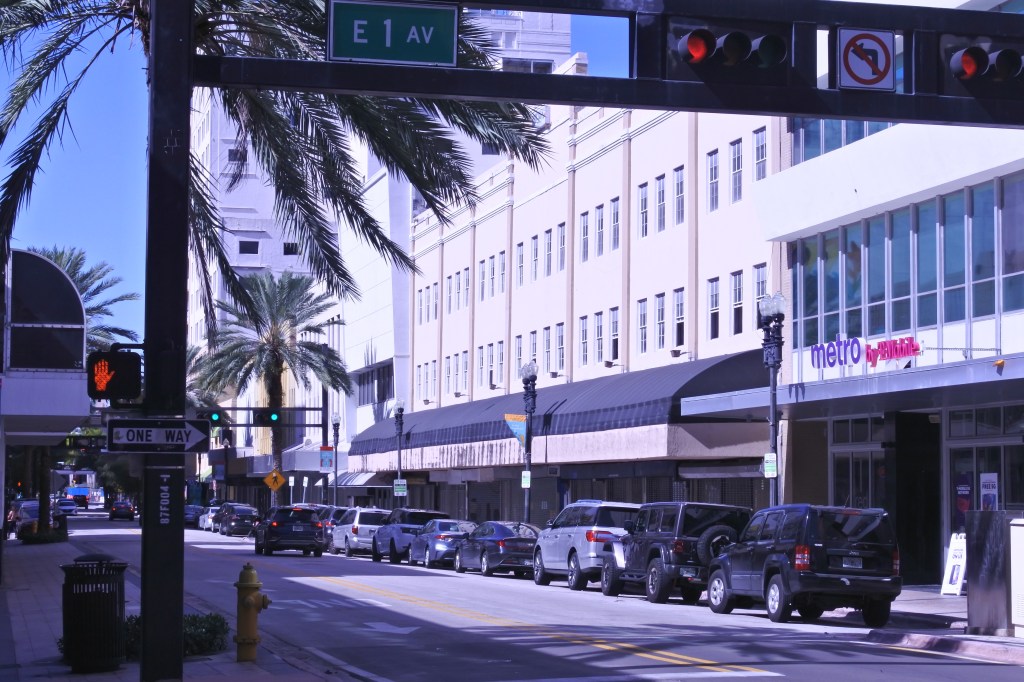
Hollywood, FL- A decent Miami suburb with a large urban core

Hollywood was founded by a Joseph Young in the 1920s who poured millions into its development. Hollywood quickly become a destination for snowbirds and grew to 2,600 by 1930 and 6,000 by 1940 helping to create a decent walkable dwtn along W. Hollywood Blvd. The City’s population really grew after WW II growing to 14K by 1950, 35K by 1960, and exploding to 106K by 1970.

West Hollywood and Harrison Streets (btwn the Circle and Dixie Hwy) form the core of Dwtn Hollywood and the best walkable and mixed- district. There are also lots of nice MF buildings along the Circle. But the urban core is actually quite extensive (for Florida standards) as West Hollywood blvd has decent urban form all the way to 1-95 and a good amount of streets with homes from the 1930-1950 with sidewalks. Like most Florida dwtn suburbs, Hollywood has good cultural and decent retail amenities. This is also one of suburban Miami’s most diverse suburbs with relatively affordable housing. There are also good schools here and well dispersed park amenities. What Central Hollywood really needs to move from a decent urban district to a good one is quality mixed-use buildings along all its business corridors, more density, more retail amenities, safer bike lanes, and better public transit.

Click here to view my Album on Flickr

URBAN STRENGTHS:

* Nice connectivity in Dwtn Delray Beach
* A pair of dedicated bike lanes run thru dwtn but no dedicated bike stations.
* Overall pretty good diversity especially racial and generational.
* Delay has a decent amount of affordable housing thanks to having their own Housing Authority.
* Culturally a great array of restaurants, bars, & cafes, tons of art galleries, a couple of museums, a cineplex, a performing arts center and a couple other theaters, and several live music venues.
* Also good retail amenities with tons of boutiques and brand name clothing stores, a couple drug stores, a bookstore, tons of dessert stores, a couple gyms, plenty of salons & barbers, a post office and dwtn public library .
* Good urban form along most of Atlantic Ave and ne 2nd Ave.
* Dwtn Delray is generally feels safe but has a pretty high crime rate.
* Overall pretty good modern infill with decent design and quality urban form.

URBAN WEAKNESSES:

* Density not great but pretty average for a Florida suburban dwtn.
* Not great access to Dwtns. About 30-40 min drive to dwtn West Palm Beach and Ft. Lauderdale and 1 hr. to Dwtn Miami. About 1 hr. + via train to either Dwtn.
* For sale housing is pretty expensive but some moderately priced condos. 1-bed condos sell btwn 275K-500K, 2-beds sell anywhere btwn 400K-1M, and wide variety with 3 & 4 beds selling anywhere btwn 500K- 2M.
* Rentals are even more expensive with studios leasing in the 2KS, 1-beds btwn mid 2Ks-5Ks, 2-beds btwn 3K-7K, 3-beds btwn 5K-12K.
* Parks are limited to the Old School Square (a nice centrally located park) and the small Veterans Park.
* Dwtn is missing a supermarket.
* No schools within the Dwtn area. Some private schools nearby but pretty small.
* Some historic hsg on the more SF streets but not a ton. Biz districts is all modern in-fill.