Clintonville- Columbus’ most white-collar urban district

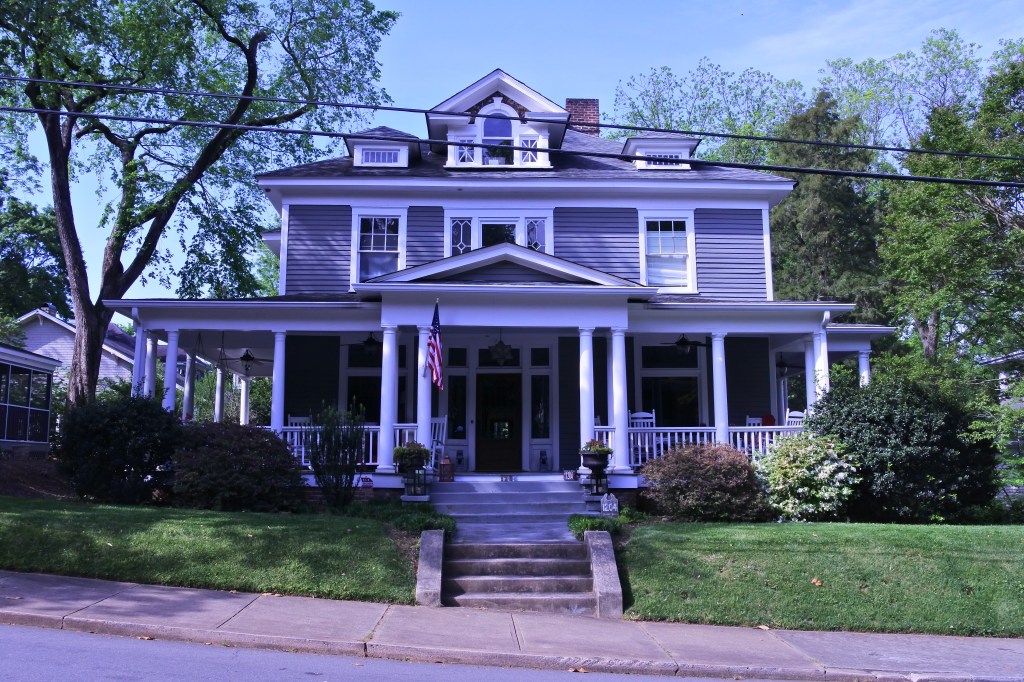
Clintonville for much of the 1800s was the “empty space” between Old North Columbus and Worthington along the High Street stage coach route. In an attempt to draw others to the area the Bull family built businesses in the center of Clinton Township, along North High Street in the mid 1800s. By the early 1900s, downtown Columbus residents and Ohio State professors built summer homes here. Eventually, with the extension of streetcar lines into the neighborhood, Clintonville filled in.

Clintonville never really lost its market strength and luster the several decades after WWII. But High Street and Indianola lost much of their urban fabric due to miss guided auto centric development. Since the 2000s the Clintonville housing market has strengthened even more and now most homes sell in the 300ks and 400ks. Its high market value is due to Clintonville’s strong schools, great parks, large back yards, safety, and convenient access to Dwtn and Ohio State. There are several urban areas for Clintonville to improve including more quality urban infill along its commercial corridors, more density, better bike infrastructure, and more intentional affordable housing. Clintonville residents, while mostly liberal, can be rather Nimbyistic blocking quality urban in-fill and affordable housing projects.
Click here to view my Clintonville album on Flickr

URBAN STRENGTHS:

* Okay access to Dwtn but very convenient access to Ohio State, obviously another major jobs center.
* Good number of rentals generally at moderate rents. 1-bedrooms btwn 700-$1,000, 2-bedrooms btwn $800 and the low $1,000s, and 3-bedrooms generally in the mid $1,000s.
* Excellent tree canopy.
* Great park amenities including the Olentangy trail and several large adjacent green spaces, the expansive Columbus Park of Roses, several ravines and sports fields.
* Culturally Clintonville includes a nice diversity of restaurants, bars, & cafes, a local movie theater, a handful of art galleries, and the Columbus Civic Theater.
* Good neighborhood amenities, although often with more suburban form. This includes several full sized supermarket, a public library, a couple drug stores, several, book stores, a good array of boutiques, and other general retail services.
* This is a very safe community with limited blight.
* Great array of public/private schools well representing K-12. 

URBAN WEAKNESSES:

* Bike infrastructure is ok. A couple bike lanes and one dedicated bike station.
* For Sale housing is on the high side but still a decent amount of diversity. Good amount of modest SF housing selling in the 200Ks. Most product of 3 & 4 bedroom well maintained homes sell in the 300Ks & 400Ks. L
*Larger SF homes sell in the 500Ks & 600Ks.
* Ok racial and economic diversity.
* The urban form of Clintonville’s business districts is hit or miss. Some nice stretches of urban form along High Street (especially near Como) and a nice node on Indianola. But large primarily auto centric stretches on both streets, especially Indianola.
* Limited modern in-fill and what does exist is mostly autocentric. 

Merion Village- Another quality Columbus Urban Neighborhood on the Southside

I followed the traditional boundaries of Merion Village but exclude the industrial portion of the district west of High Street. Very few people live here.

The district is named after the Merion family who settled in Columbus in 1809 and purchased  1800 acres of land which became Merion Village. Development started in the district in the 1830s with the construction of local canals. The Merions made sure that their holdings near the Scioto river became the industrial hotbed of Columbus. The residential component of the neighborhood east of High Street (where this evaluation begins) developed generally after the Civil war starting along its northern edge abutting German Village and working its way south towards Hungarian village. Most of the neighborhood was developed around the turn of the 20th century.

Merion Village witnessed some disinvestment starting in the 60s & 70s but nowhere near the level experienced in Black majority districts like Olde Towne East or Driving Park. Its main commercial corridors (High and Parsons) experienced the most blight with these scars are still very visible today. Reinvestment has slowly moved southwards from its border with German Village since the 70s. As a general rule of thumb real estate prices are highest near German Village and lowest in the district’s southern border.

Overall Merion Village is a solid urban district, which will continue to improve as it receives more investment. The most important areas it can improve upon include: revitalizing its commercial corridors along High and Parsons, adding more bike lanes, attracting missing neighborhood retail amenities, and being attentive to providing affordable options as real estate prices climb. 
Click here to view my Merion Village album on Flickr

URBAN STRENGTHS:

* Overall public transit service is pretty good, but better closer to German Village. Still very convenient access to Downtown.
* Great connectivity and street grid.
* Great economic diverse, probably the best in all of Columbus.
* Diverse For Sale housing with un-renovated by solid homes selling in the 100Ks and low 200Ks. Modest but renovated homes selling between 225K-350K. Larger renovated homes selling generally btwn 350K-600K. But given the rapid rise in value in Cbus, low-moderate income residents will soon be priced out of homeownership.
* Decent array of rental product with higher end product closer to German Village and more moderate rates further south.
* Generally a safe neighborhood but still some blight and rough patched along Parsons and southern end of High Street.
* Convenient access to Shiller Park for most residents. This is one of Columbus’ best urban parks. Also a couple ballfields next to the elementary school and a nice green space at Moeller Park.
* Generally high quality sidewalks and consistent proper ADA infrastructure.
* High quality architecture especially the northern half near German Village which is mostly brick. Homes transition to mostly woodframe construction the further south one goes.
* Culturally Merion Village includes a nice array of restaurants, bars, and cafes esp. along Thurman and Whittier. Some stuff on High and Parsons. Also some nice live music venues.
* Neighborhood retail amenities include a supermarket, bakery, CVS, public library, a book store, a hardware store, a music shop, and the Columbus Community Hospital.
* Pretty good access to schools including two public elementary schools and South High School. Also a couple Christian schools as well.

URBAN WEAKNESSES:

* No bike lanes throughout Merion Village but there are several bike sharing stations.
*Racial and generational diversity is decent but not great.
* Some nice residential infill near German Village, but also plenty of newer suburban uses along Parsons and High Street.
* Really no art galleries, museums, or theaters in Merion Village. Although a couple theater companies are located to the north in German Village.
* Missing neighborhood amenities include a post office, retail banks, boutiques, and other clothing retailers.
* Urban massing and quality streetscaping is a mixed bag in Merion Village. Along the major commercial corridors (High and Parsons) is a mix of good urban blocks, auto centric blocks, and deterioration. There are also several very mixed-use nodes along Thurman, Whittier, and the 4th & Moler node where the urban form and streetscaping is quite good. 

Olde Towne East- Columbus’ best Victorian Architecture

Olde Towne East is one of Columbus’ oldest neighborhoods. Development started in the early 1800s with the neighborhood filling in mostly during its post Civil War boom. From this period comes the unique architectural style of Olde Towne East and a good deal of social mixing where rich and poor residents lived in close proximity to each other. Following World War II Olde Towne East went into decline and many of its grand homes of the late 1800s began to deteriorate or were subdivided into apartments and rooming houses.

Revitalization efforts started in the early 1970s as many parts of the neighborhood, particularly surrounding Bryant Street, were historically designated. This encouraged a slow but persistent restoration of these grand homes. By the early 2000s revitalization became more wide spread focusing on rebuilding the Parsons-Oak commercial node. And finally by the mid 2010s the whole district was revitalizing leading to new construction and sales prices extending into the 400Ks. Right now, the Olde Towne East has a nice range of for sale prices between 100K-500K but I fear this will not last, and the neighborhood will be out of reach for many low-moderate income households.

From an urban perspective Olde Towne East is well served by public transit and only 1-2 miles from Dwtn Columbus. It’s retail amenities are still fairly modest but improving (especially at the Oak and Parsons node). My hope is that its main Thorofare along Broad starts to see more development and large mixed-use infill. There are still many vacant lots and buildings to revitalize giving Olde Towne East a bright urban future. I also hope the city permits more mixed-use zoning along more diverse and creative uses to integrate with parts of the neighborhood removed from the Parsons-Oak Commercial node.
Click here to view my Olde Towne East Album on Flickr

URBAN STRENGTHS:

* Fantastic access to Dwtn Cbus being only 1 mile away. Solid public transit as well.
* Great racial and economic diversity. Decent generational diversity with 1/3 of households as family households.
* Good amount of rental housings moderately priced (i.e. 1 & 2 bedrooms around $1,000 and 3 & 4 bedrooms in the $1,000s).
* Good variety of for sale prices, although I do fear that the neighborhood’s rapid appreciating value will start to become cost prohibitive to many long term residents. Homes generally stay within 100K-600K. Modest or unrenovated homes sell between 100-250K. Renovated by smaller homes between 250-400K. Larger renovated homes sell in the 400Ks & 500Ks.
* While many still write up the neighborhood as dangerous there is most certainly a buzz here.
* Wonderful set of historic Victorian homes.
* Cultural amenities include a good set of restaurants, cafes, bars, and some live music venues & art galleries. Some nice museums in surrounding districts like the Kelton House Museum & Garden, and the Franklin Park Conservatory , the Columbus Art Museum, and Botanical Gardens.
* A handful of schools located with Olde Town East and several in nearby Franklin Park.
* Not a ton of urban in-fill but some nice Residential and mixed-use projects starting to arise. 

URBAN WEAKNESSES:

* Decent but not great density. Hopefully as the neighborhood fills in, this will improve.
* Bike infrastructure is decent with one dedicated north to south route and a couple bike station. The district needs an west to east route that connects to Dwtn.
* Still a fair amount of blight even if the neighborhood isn’t dangerous anymore.
* Parks and amenities are a bit limited but not bad. Parks include Blackburn Park, a Recreational Community Center, and a nice playground.
* Retail amenities are a bit limited as there are not supermarkets, drug stores, post office, banks nor library. But the neighborhood includes some nice boutiques, a wine store, a florist. Children’s hospital however is just south of the district and adjacent Dwtn also has some nice amenities.
* The urban commercial node at Parsons and Oak is attractive (with good urban form and streetscaping) but only extends a couple of blocks. Because of its location on the western edge of the neighborhood, commercial is limited in the middle and eastern section of Olde Towne East.

Dennison Place/South Campus- The often forgotten neighborhood between Columbus’s Victorian Village and Ohio State

The district stretches between 5th to Ohio State to the north. This includes several smaller sub-neighborhoods of Dennison Place, the Circles, Necko, and South Campus.

Dennison Place and Necko was mostly built out by 1900 with great historic Victorian style homes. The area began to decline in the 1930s as Columbus expanded and people began to move to the suburbs. By the time decline bottomed out in the 1970s, many of the original homes were converted to rooming houses or knocked down to make room for modern apartment buildings, or simply abandoned and boarded up. This sparked neighborhood preservation policies and new zoning to prevent further destruction.  By the 1980s, the revitalization of Dennison Place/Necko started with the restoration of its historic Victorians. Now these homes sell between 500K-1 Million. The fate of South Campus was more like the University District. A post WWII demand for housing led to new apartment buildings and larger homes being transitioned into multi-family. The area is still a heavily students. High Street has seen significant revitalization including a slue of new mixed-use infill buildings.

Areas where the neighborhood could improve from an urban perspective include: more for-sale housing diversity, better park and recreational spaces, and walkable schools.
Click here to view my Dennison Place Album on Flickr

URBAN STRENGTHS:

* Great population density.
* Good historic architecture especially in the Dennison Place/Circles and Necko section.
* Great access to job centers across all modes. 1 mile to OSU and 3 to Dwtn Cbus.
* Good coverage by the City’s bike sharing system.
* Decent racial diversity thanks to the large international population at OSU.
* Lots of rental options and most of them moderately priced. Some higher end rentals as well.
* Cultural amenities include a good amount of restaurants, bars, and cafes, a cineplex, several live music venues and art galleries, and convenient proximity to OSU’s cultural activities.
* Quality retail amenities a supermarket, several drug stores, a Barnes & Nobles bookstore, a public library, several boutiques, banks and other neighborhood serving retail. Parts of High St in OSU and the Short North are also walkable to residents living here. This includes the OSU Target.
* Great urban massing and streetscaping along High Street. Also a quality urban node at Neil and 10th. A couple other nice mixed use blocks sprinkled throughout. 

URBAN WEAKNESSES:

* Surprisingly the Olentangy recreation trail is the only dedicated bike path in the neighborhood. This does, however, provide a nice safe route to Dwtn.
* For sale housing is generally expensive but some more modest options with 1-2 townhome condos selling in the 200Ks. Smaller SF homes or less updated ones selling btwn 300K-500K. Larger renovated historic homes selling anywhere from 500K-1 M primarily in the Dennison Place/Necko section.
* Parks are pretty limited within the district although the Thompson Park (complete with a community center) sits on the district’s southern edge, OSU’s open space is nearby, and the Olentangy Recreational Trail on the western edge.
* No schools within Dennison Place/South Campus but some in surrounding neighborhoods.
* Modern in-fill is mixed bag. Some good off campus housing built by OSU are Neil and 11th Street and more and more quality mixed-use in-fill filling in along High Street. But plenty of post WWII garbage apartments in South Campus area.

Old North Columbus- A quality historic community north of Ohio State University

Old North Columbus was founded in 1847 as a stand-alone city. North Columbus in its early years was a major stage coach stop between Columbus and Worthington to the north and had a history of thriving saloon and speakeasy scene. North Columbus was also the site of a large  factory and a mill along the banks of the Olentangy River. The establishment of Ohio State in 1871 brought a major boom to the neighborhood and helped fill it in by the 1920s.

Old North Columbus never saw the level of disinvestment as places like Weinland park after WWII nor wholesale take over of students as occurred in the University District to the south. While students comprise a large portion of the neighborhood, there is still a sizable homeownership community here. High Street has also held on to much of its late 19th century commercial architecture and hosts a great array of ethnic restaurants and decent amount of neighborhood serving businesses. Also a quality urban node at Summit and Hudson and a pair of attractive boulevard streets and ravines north of here. Neighborhood branding signs were installed in the early 2000s along High Street to bolster the community’s identity. The biggest area for improvement is new quality urban in-fill along High street and Lane Ave. redeveloping surface parking lots and low-rise auto centric uses. Given the development pressures nearby in OSU, I’m confident this will come soon. The neighborhood also desperately needs walkable schools within the community to attract more generational diversity and long term homeowners. 
Click here to view my Old North Columbus Album on Flickr

URBAN STRENTHS:

* Solid multi-model access with good transit and public infrastructure access.
* Good economic diversity and only decent racial diversity.
* Great array of rental options generally renting at moderate rates.
* A lot more for sale housing here than other districts surrounding OSU.
* Pretty safe district with only a little bit of blight.
* Great park amenities including the extensive Tuttle Park which includes extensive woods, a swimming pool, recreational center. Glen Echo Park follows the Glenn Echo Stream with recreational trails and bike trail along the Olentangy River.
* Good tree canopy thanks to the large amount of park space here.
* Culturally a great array of ethnic restaurants, plenty of bars & cafes, lots of live music venues, and convenient access to cultural amenities of OSU.
* Decent retail amenities, especially along High Street, a drug store, hardware store, bike shop, several record stores, and some other neighborhood retail. Supermarkets located on the edges of the neighborhood along with a Lowes Improvement Store and Target.
* Quality historic commercial along High Street with good historic residential helped with a fair amount of late 19th century architecture.
* High street and Lane Ave’s urban form is a mixed bag. Another nice urban node at Summit and Hudson.

URBAN WEAKNESSES:

* Limited generational diversity but more family households than other student heavy districts around OSU.
* Modern in-fill is a mixed bag. Some nice dense mixed-use infill along High, with plenty of auto centric buildings remaining. Plenty of blah post WWII apartments throughout.
* No schools within Old North Columbus but some in surrounding neighborhoods.

Columbus’ University District- home to the City’s largest off-campus student haven

For the purposes of this evaluation I define the University District/Indianola Terrace as the area between Lane/Northwood and 11th street and between High Street and the railroad tracks. University District is actually a much broader area by most standards encompassing North Old Columbus and South Campus. Indianola Terrace is east of Summit Street.

Like much of north Columbus, the University District grew on a similar track with Ohio State, which opened in 1870 but didn’t really start to expand until the early 20th century. To people’s surprise the neighborhood was a fashionable “suburb” in the first half of the 20th century with a mix of brick rowhouses and large SF homes. Several curved roads and ravines lie between 16th and Lane Ave. The influx of servicemen into the neighborhood after WWII seeking housing lead to a population boom and the construction of new apartments and conversion of many SF homes to MF.  Perceived problems of vehicular congestion, crime, and litter resulted from this quick rise in density and the University Area Commission was created in 1972 to address them.

Its difficult for me to say whether I view the change of University District post WWII as necessarily an urban “negative”. On the one hand it most certainly rapidly altered the neighborhood creating a more transient less cared after place. On the other hand, it created a density level helpful in fostering vibrancy, mixed-use, and significant retail on Hight Street. In hindsight it probably would have been wise to rezone parts of the neighborhood closest to campus for high density apartments, and try to preserve homeownership heavy pockets east of Summit Street. Fortunately the University District feels more invested in than before, less gritty, attracting more homeownership, and hosts a dense mixed-use corridor along High Street. Hopefully the neighborhood can continue to attract a more diverse demographic (non-students) and become the vibrant and diverse place it could always become. I see many parallels to the University District with Pittsburgh’s Oakland or Cincinnati’s CUF and Corryville.
Click here to view my University District album on Flickr

URBAN STRENGTHS:

* Good but not great transit access. Overall convenient access to lots of jobs with OSU and Dwtn.
* Great bike infrastructure with several dedicated bike lanes and good bike station coverage. 
* Quality historic architecture, but would be even better if the bldgs didn’t take a beating as student housing.
* Great ADA and sidewalks infrastructure.
* Not much modern in-fill within the neighborhood but lots of quality urban mixed-use infill along High Street.
* Decent racial diversity thanks to OSU diverse student body.
* A high level of density thanks to students being packed into rental housing.
* Not surprisingly tons of rents here and generally at pretty modest prices.
* High Street has very good urban massing and streetscape especially with its recent extensive urban in fill.  
* Cultural amenities include a great array of ethnic restaurants, lots of college bars & cafes, several live music venues, and the OSU cultural activities.
* The University District hosts a full service target,  2 CVS, several chain retailers, lots of banks, a handful of boutiques, and a cineplex and Barnes & Nobles on its southern border. 

URBAN WEAKNESSES:

* Lots of students living here which greatly reduces the University district’s economic and generational diversity.
* For sale housing is mostly limited to student rental. But some SF and duplexes in good shape selling in the 200Ks & 300Ks. You certainly get a lot of house for your money here.
* Park space is limited here to the nice but modest Luka Ravine park and the ballfields behind the Indianola Middle School. But park asset is probably OSU quads and green space.
* The neighborhood is a bit rough in spots (especially in Indianola Terrace and has a fair amount of grid but by no means a dangerous place.
* The neighborhood only hosts a small privet grade-middle schools. A couple others in adjacent districts. 

Weinland Park- A Revitalizing Neighborhood in between Columbus’ Short North and Ohio State

Weinland Park mainly developed in the early 20th century as a street car suburb fueled by jobs in several factories, such as Columbus Coated Fabrics and the Jeffrey Manufacturing Company (now a large redevelopment site). Like many  inner city American neighborhoods, Weinland Park experienced decline starting in the 60s and was plagued by drug problems in the 1980s. Fortunately with its location between the Short North and OSU, reinvestment and development eventually came starting in the mid-2000s with the Gateway South Development and affordable single family construction. Now quality homes easily sell in the 300Ks and new construction is fetching prices around 1/2 Million. High street has also seen many quality urban in-fill projects replacing auto centric uses and 1 story commercial. Pretty soon the entire High Street corridor will be filled in. The once rough 5th Ave is also seeing significant mixed-use renovations and new construction.

Main urban deficiencies in Weinland Park include limited economic and generation diversity thanks to its large student population, limited park amenities, a lack of quality walkable schools, and lingering blight issues. But many other these deficiencies will be alleviated as the neighborhood continues to improve. What will become more of a lasting issue is the district’s high home sales prices.
Click here to view my Weinland Park Album on Flickr

URBAN STRENGTHS:

* Good Density at around 12K residents per square mile.
* Very convenient access to Downtown via all modes of transportation.
* Great racial diversity.
* Large supply of rental housing priced modestly. Much of it is geared towards students.
* For sale market has increased drastically in the past 5 years. Right now its a healthy mix of modest homes selling in the 200s, and larger new or updated homes selling btwn 300K-500K. I can see the neighborhood gentrifying rapidly however.
* Solid but not spectacular architecture. The highlights being the historic rowhouse courts and quality SF in-fill throughout the neighborhood and mixed-use in-fill along High St, especially at South Gateway.
* Excellent current ADA infrastructure and good sidewalk infrastructure throughout.
* Much of High Streets recent parking lots and auto centric uses have been developed into quality urban infill. The Streetscape on High also received an infrastructure overhaul.
* Solid cultural amenities including a good array of restaurants, bars, breweries & cafes. Also some art galleries, a community theater, cineplex, and convenient access to OSU’s and the Short North’s cultural amenities.
* Neighborhood retail amenities include a supermarket, several drug stores, public library, post office, a Barnes & Nobles, and some retail & boutiques.

URBAN WEAKNESSES:

* Lots of students living here which greatly reduces Weinland Park’s economic and generational diversity.
* Weinland Park is nice providing good amenities, but limited park space outside of this. South Gateway has some nice plaza space.
* Crime and blight were major issues for Weinland Park for many years, but both have dropped precipitously in the past decade.
* Schools are pretty limited but the neighborhood does hosts Weinland Elementary, along with a private middle school and a couple small specialty schools nearby.

Daytona Beach FL, supposed home to the World’s “Most Famous” Beach

East Daytona is the historic beach portion of the City along the barrier island. This and Downtown Dayton, which runs along Beach Ave on the west side of the Halifax River, are probably the oldest parts of the City developed mainly in the early 20th century. I view the core of Historic East Daytona lying in between University Blvd to the north and the E International Speedway to the South.

The City was named in honor of  Mathias Day Jr. of Mansfield, Ohio, who purchased the former Orange Grove Plantation in 1871 on the westside of the Halifax River. He built a hotel spurring the creation of the town. By 1886 the St. Johns & Halifax River Railway arrived in Daytona but it wasn’t until the 1920s that development took off. By 1930s Daytona Beach had a population of 16K.  Daytona’s wide beachs of smooth, compacted sand attracted automobile and motorcycle races in the early 20th century. This led to many land record attempts and the first stock car races in 1936.  In 1958, William France Sr. and NASCAR created the Daytona International Speedway to replace the beach course and the rest is history! Population steadily continued to grow in Daytona Beach. The City reached 30K residents in 1950 and 64 K in 2000. Population dipped a bit in the 2000s but they seem to have rebounded.

East Daytona’s grid and general walkability make it by far the best urban area in Daytona Beach. But there are many areas for improvement including better neighborhood amenities, quality urban in-fill to replace auto centric strips and surface parking lots, and much more density. 
Click here to view my Daytona Beach album on Flickr

URBAN STRENGTHS:

* Quality transit service. Probably some of the best in the Daytona Beach region.
* Convenient access to many tourist jobs at Daytona Beach and only 2 miles to Dwtn Daytona. Convenient bike and bus access to Dwtn.
* Great economic diversity here.
* Decent array of rental product at moderate prices. 1-bedrooms rent in the low $1,000s. 2-bedrooms in the low to mid $1,000s.
* Nice variety of for sale options including 1-2 bedrooms condos selling around 100K, modest SF homes selling in the $100Ks, and larger homes selling in the 200Ks & 300ks.
* Park and recreational spaces are concentrated along the shoreline. This includes the beach, pier, Breakers, Ocean Park, and the amphitheater plaza. Really no parks within the neighborhood of East Daytona.
* Plenty of attractive early 20th century Florida homes. Much of commercial district is modern.
* Nice array of schools in East Ormond Beach.
* Pretty good urban form along Seabreeze Blvd and Main Street but pretty autocentric along Atlantic Ave. Unfortunately there are many surface parking lots west of Atlantic Ave.
* Culturally a good array of restaurants, bars, & cafes,  lots of live music venues, a cineplex. and a handful of historic museums. The cultural amenities of Dwtn Daytona are also only 2 miles away.

URBAN WEAKNESSES:

* Limited racial and especially generational diversity due to East Daytona’s concentration of retirees. Very few families living here.
* ADA and sidewalk infrastructure is a mixed bag. Generally consistent sidewalks throughout but update to date ADA curbs are 50-50.
* East Daytona generally feels pretty safe but still some abandonded lots and gritty areas. Much of the touristy waterfront has seen better days and needs some reinvestment.
* Modern infill in Daytona is hit or miss.
* Pretty low density in East Daytona.
* Good vibrancy on the beach and in the commercial districts but pretty dead in the rest of East Daytona.
* Much of East Daytona’s Beach’ infill has decent urban form, but the architecture styles can be very tacky.
* Its generally pretty safe in East Daytona but there are quite a few vacant lots and some vacant bldgs.
* East Daytona’ night life can be a liability sometimes with all the rowdy tourists that roll into town.
* Some neighborhood services amenities including a post office, a drug store, tons of touristy gift shops, a handful of boutiques, and the Ocean  Walks Shoppes (mostly just restaurants and gift shops).
* No walkable supermarket or library, 

Downtown Columbia, SC

I kept the Dwtn evaluation area pretty tight to include the Statehouse but not any part of South Carolina University. Using this criteria the borders were Gervais St. to the south (with the exception of the statehouse complex), the railroad/Assembly/Park St. to the west, Elmwood to the north, and Bull St to the east.

Downtown Columbia has two focal points… Main Street which runs north to south and terminates at the State house and Congaree Vista along west Gervais St, home to many of the City’s oldest buildings (a mix of warehouses and storefronts). Modern high rises are focused along Main Street and surround the statehouse.  These two commercial nodes have seen significant reinvestment since the 1990s but are not well connected. Outside of these two nodes Downtown Columbia is generally an uninspiring mix of modernist buildings, large surface parking lots and parking garages, suburban low rise retail, and disconnected historic housing.

Hopefully there is enough momentum dwtn to continue attracting new mixed-use housing, office jobs, and retail to expand quality urban fabric throughout Downtown Columbia and to eliminate dead spots. 
Click here to view my Downtown Columbia Album on Flickr

URBAN STRENGTHS:

* Sold ADA and sidewalk infrastructure, but not always comfortable to be a pedestrian due to the fast traffic.
* Transit access is good Dwtn and decent in the surrounding inner ring neighborhood. The rest of Columbia is pretty so and so and limited transit access to the suburbs. Convenient transit access to the airport, but it’s only a regional airport.
* Great street grid and connectivity, but more streets have high cars traffic and aren’t comfortable for pedestrians.
* Great economic diversity and solid racial diversity among Dwtn residents.
* Decent set of parks including Finlay Park, Memorial Park, the statehouse grounds, and Boyd Plaza. Boyd Plaza is the closest space I’d associated with a Civic Plaza. Its run by the Art Museum and has some events.
* Culturally a nice array of restaurants, cafes, breweries, & bars, art galleries, museums, and a handful of theaters, live music venues, and an independent cinema. Regional amenities include a convention center, and dwtn library.
* Dwtn has a business improvement district.
* Most retail amenities concentrated along Main Street and western Gervais St. (aka Congaree Vista). Along with lots of food & beverage amenities these nodes include a lot of boutiques, clothing stores, banks, and creative stores. Limited retail amenities in the dead spots of Dwtn. A public supermarket/drug store sits on the western edge of Dwtn. Main St also hosts weekly outdoor markets every Sat on the street.
* Great college present within and around Dwtn including around 30K students at USC and a Clemson Law School campus.

URBAN WEAKNESSES:

* Density isn’t great in Dwtn. Still need for a lot more residential options.
* decent dedicated bike share system dwtn and surrounding districts but dedicated bike lanes is pretty limited in Dwtn and across the Columbia Region.
* Generational Diversity is pretty limited Dwtn, but fair amount of attractions (mainly museums) for families.
* For sale housing is pretty limited Dwtn but affordable. 1-bedroom condos sell in the 100K-200Ks and 2-bedrooms in the 200K&300Ks. Some 3-bedroom product selling in the 300Ks & 400Ks.
* Rentals are pretty limited too and moderately priced. 2-bedrooms lease in the $1,000s and 1-bedrooms around $1,000s.
* Sports stadiums limited to the Colonial Life Arena, primarily used by South Carolina University.
* Dwtn employment is only about 20,000. Jobs seem to be growing, but this is a pretty low amount of Dwtn employment for a region population just over 800K.
* Decent K-12 school options include a handful of elementary schools.
* Skyline is so .

Charlotte’s Uptown- the largest CBD of the Carolinas

Uptown Charlotte is split into four wards intersected by the crossroads of Trade and Tryon Streets. I used the borders of Interstate 277 and the railroad (to the north). Traditionally Dwtn extends all the way north to 277 but this area feels like a separate district to me. The term “Uptown” referring to the geographic location of Tryon and Trade Street, sitting at a higher elevation than the rest of the city. Much deliberation went into whether to use Uptown or Downtown or even City Center. Uptown eventually won out with City Center meaning Uptown and surrounding inner city neighborhoods.

The 1st Ward , once considered one of the most dangerous areas in Charlotte, has been redeveloped thanks to a HUD Hope VI grant into a mixed income district. Urban form here is ok as all housing is new. Not really mixed-use, but some good urbanism near Tyron and First Ward Park is attractive. The 2nd Ward  was formerly the location of the predominantly black neighborhood, Brooklyn, before urban renewal took over. Probably one of the biggest tragedies in Charlotte resulting in a uninspiring modernist environment.  Uptown’s third ward hosts the bulk of “Dwtn fabric” surrounding a streetcar line and Tyron Street. Lots of good mixed-use development, skyscrapers, cultural assets, sport stadiums, and the attractive Romare Bearden Park. The 4th Ward   can be considered a stand alone neighborhood as well but is integrated seamlessly with Dwtn. It contains Charlotte’s best Victorian turn of the century architecture with sensible modern in-fill and many great mixed-use amenities.

With the under development of the 1st & 2nd Wards, Uptown Charlotte has plenty of areas that need further urban development and infill to have the complete Dwtn package of vibrancy and walkability. Given the furious pace of new construction, I’m hopeful this will eventually occur. 
Click here to view my Uptown Album on Flickr

URBAN STRENGTHS:

* Great ADA infrastructure and generally good sidewalks, but street can be very wide and auto centric making it uncomfortable to be a pedestrian.
* Good population density in Charlotte but often pretty spreadout. 4th Ward has excellent density.
* With all most all the building being new its fortunately that much of it is quality design and good form. Generally the best architecture is concentrated in the core (Tyron & Trade) and in the 4th Ward. The 2nd Ward is spread out with unattractive buildings and the first ward is a mix of decent residential bldgs.
* Public transit is better is Charlotte than one would expect providing excellent service to Dwtn and to surrounding inner city neighborhoods. A couple miles out transit service is so , but limited outside of the City (keep in mind that Charlotte includes lots of suburban areas.)
* Great connectivity but lots of high traffic one way streets.
* Great dedicated bike lanes Dwtn and to inner ring districts. Decent connect out to the post WW II districts. Bike sharing system is limited to Dwtn and a handful of inner city neighborhoods.
* While almost exclusively modern, Charlotte has a great skyline lots of concentrated high rise towers.
* Great array of for sale housing Dwtn with a fair amount of moderately priced options. 1-bedrooms generally sell in the 200Ks, 2-bedrooms are generally 300K-400K but more expensively luxury product, good amount of 3 bedrooms but generally very expensive. Nice array of rentals priced similarly to most Dwtns… 1-bedrooms in the $1,000s. 2 bedrooms btwn 1.5K & 3K,  and a good array of 3 bedrooms.
* Culturally a good amount of restaurants & bars but pretty average for American Dwtns, lots of theaters (only one is historic), an Imax, several live music clubs, a handful of art galleries, and a great array of museums. Regional amenities include the convention center, a wonderful dwtn library, several stadiums hosts a professional football, basketball, hockey, and minor league baseball.
* Several high quality recreational spaces & parks along with many small corporate plazas. But no definitive civic gather spot.
* Schools include a couple elementary schools, a high school, and school for children w/ cognitive disabilities. Pretty good college presence with several dwtn only campus enrolling 6-7K students and Piedmont Community College located just outside of Dwtn.

URBAN WEAKNESSES:

* Next to Las Vegas, Dwtn Charlotte has the least amount of historic architecture. Certainly a feeling of sterileness with all of its newness and lack of character.
* Uptown has a very strong office market with high rents and low vacancies. Total jobs is 70K, still much lower than comparable cities like Cleveland or Cincy, but trends are certainly good.
* Dwtn retail amenities is still lackluster. While there is a  supermarket, several drug stores, plenty of banks, only a handful of boutiques and creative stores. No bookstore.
* Solid urban form along the main streets of Tyron and Trade but pretty poor in the southern half of Dwtn (1st & 2nd Wards)