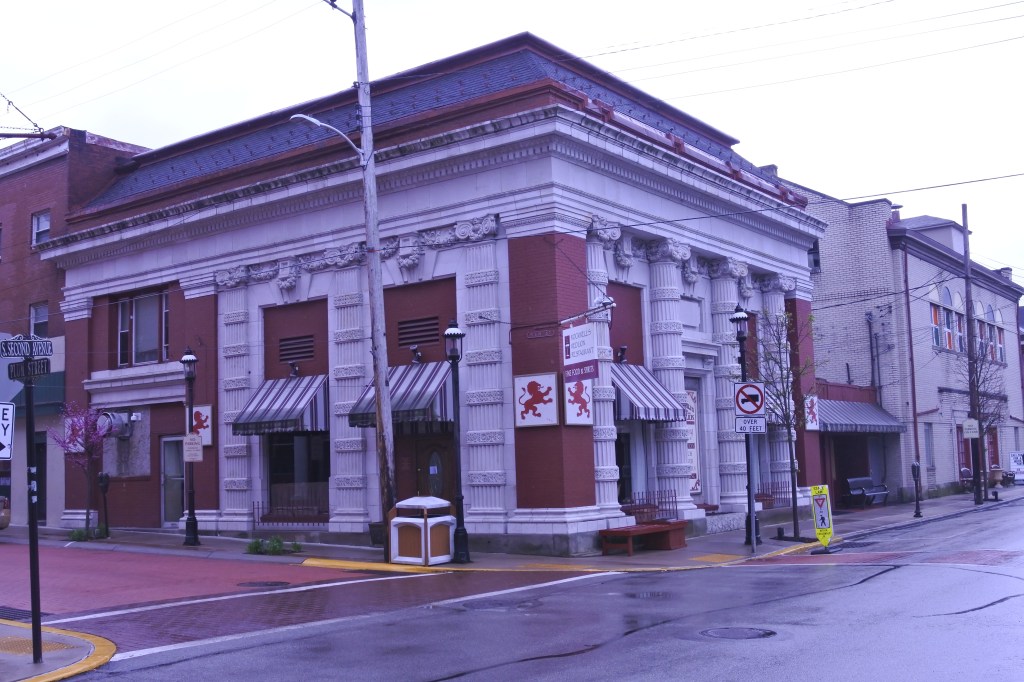
Monessen, PA named after Essen Germany with a Mon Valley Twist

I included the western half of Monessen in my evaluation as this portion of the borough was primarily developed before WWII and therefore has the best urban fabric. I used Parente Blvd and Cemetery Street as the boundaries.

Monessen, named for the Monongahela River and the industrial German city of Essen, was established as a borough in 1898 quickly becoming a major steel producing City. Like many rust belt cities in the Pittsburg area, Monessen fell on hard times in the starting in the 60s with the last major plant closing in 1987. The population is about 1/3 of its original size at just under 8,000 residents.

The urban fabric of Monessen is in rough shape with scattered demolitions through most of the borough, except for newer development built after the 1920s. The historic downtown runs along Donner St. While Donner has high vacancy, some retail remains, and the main street retains some of its urban form. A recent streetscaping project has certainly spruced up its appearance as well. I don’t believe Monessen will reverse its population decline anytime soon, but a more comprehensive strategy towards stabilization is needed with strategic investments and a major clean and green campaign. Investing in the downtown, which has some semblance of place, is certainly a good place to start. 
Click here to view my entire Monessen album on Flickr

URBAN STRENGTHS:

* High percentage of family households but population skews very old.
* Decent economic and racial diversity.
* The housing market is pretty depressed with the majority of sales slipping under 50K. Some sales of newer 30s-50s housing in the southern portions of the borough selling between 70K-150K. Listed rentals are hard to find.
* The Historic business district runs mostly along Donner Ave with some remaining fabric along Schoomaker. Plenty to of blight and vacancy here but still some assemblance of urban form and stores that remain open including a Rite Aid, supermarket, several banks, a post office, the public library, and some more unique stores.
* Donner St was rebuilt in 2019 drastically upgrading its streetscaping and ADA infrastructure. 
* Quality tree canopy thanks to the many hillsides and valleys. Limited street trees in along Donner Ave.

URBAN WEAKNESSES:

* Public transit is decent along the Mon River but none existent once one moves inland in the borough.
* Poor public transit and access to major employment center in the Pittsburgh Metro.
* No bike infrastructure here.
* Significant amount of blight here but crime rates cover just above US average.
* Recreational amenities are limited to the medium sized 9th street park and Grandview Cemetery.
* Cultural amenities limited to several Italian restaurants, dive bar and the Monessen Heritage Museum.
* Generally sidewalks but rarely up to date ADA curbs.
* Only an elementary schools in up within the boundaries of this eval.

Millvale, PA One of Pittsburgh’s hottest Rivertown Communities

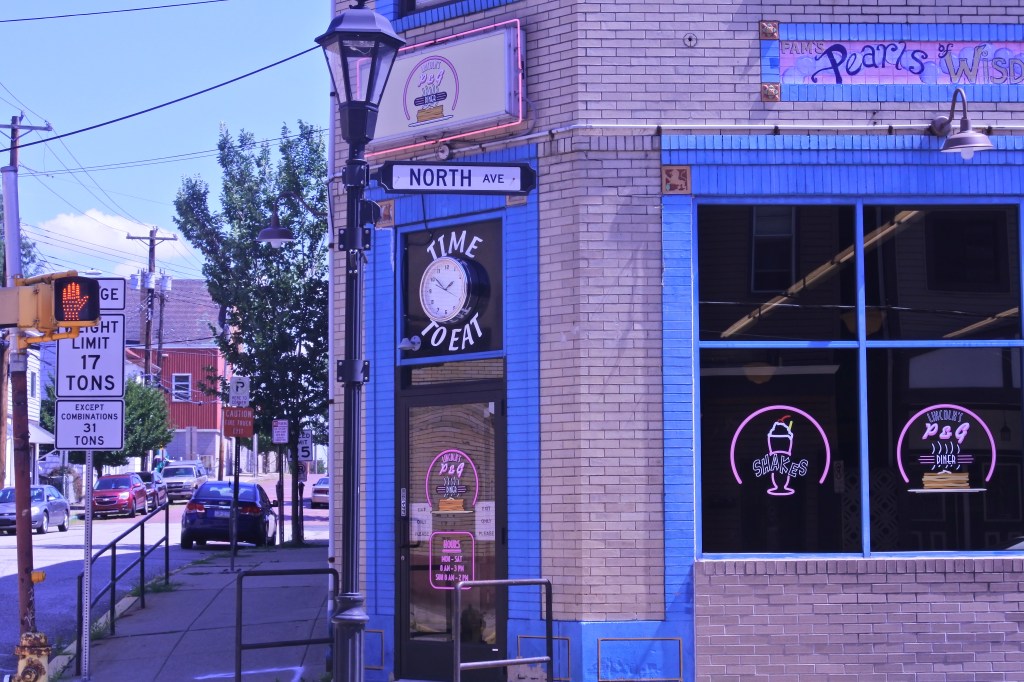
Millvale was formed around iron manufacturers, saw works and many other industries at the mouth of Girtys Run starting mainly after the Civil War. Population peaked around 8,000 residents in the 1930s. This number has been cut down by more than half, typical of many Pittsburgh manufacturing towns. But Millvale has retained much of its historic fabric, especially its historic main street fabric along Grant and North Avenues.

Due to its location as a water collection point into the Allegheny River for many upstream north hill communities, Millvale has received more than its fair share of flooding. In response the community became an EcoDistrict to integrate sustainability goals (especially improved storm water systems) into its revitalization strategy. This coupled with overflow market from nearby gentrifying communities like Lawrenceville has put Millvale on the map as an attractive urban alternative to live or hang out.

To further improve its recent urban regeneration, Millvale needs to continue building more recreational spaces, increasing its tree canopy, and attracting new population, businesses, and eventually quality urban in-fill. A tougher challenge is to re-introduce walkable schools into the borough. 
Click here to view the entire Millvale album on my Flickr page

URBAN STRENGTHS:

* Millvale is very close and convenient to Downtown Pittsburgh but more could be desired from its public transit access.
* Nice bike connection to Lawrenceville via the 40th street bridge and the Three Rivers Heritage Trail.
* Economically a pretty high poverty rate but a good amount of income diversity here. Solid generational diversity with near 50% family households.
* Decent amount of rental product that generally skews low.
* Nice diversity of for-sale housing. Half of the sold product is fixer uppers scaling below 50K but plenty of stable product selling in the 100Ks and some in the 200Ks.
* Nice cultural amenities including a nice array of restaurants, bars/breweries & cafes, a performing arts space, and the Ton Pottery Ceramic Center. Good to keep in mind that amenities of Lawrenceville are only a 20-30 minute walk as well.
* Diverse array of neighborhood amenities as well: public library, post office, several local drug stores, a record store, bakery, florist, and lots of other creative stores. Unfortunately no walkable supermarket or other larger retailers in the Borough.
* ADA infrastructure is of high quality along the biz district of Grant and North. More hit or miss on residential streets.
* Good imageability with the dual main streets and landmark buildings. High quality urban form and streetscape here as well.

URBAN WEAKNESSES:

* Racial diversity is pretty limited in Millvale as around 90% of the population is White
* Park and recreational space is a bit limited but several small pocket parks and gardens exist in the borough along with an attractive waterfront park and trail.
* Walkable schools within the Borough is limited St. Anthony School for children with down syndrome. There is a elementary school in adjacent Reserve Township. Other schools are pretty far.
* Great tree canopy on the edges of the borough along the hillsides but not great within the town.

McKees Rock, PA another Historically Significant Pittsburgh Steeltown

In the past, the McKees Rocks was a major manufacturing City  known for its extensive iron and steel production. It also was an Indian settlement with one of the largest Indian mounds in the state, built by the Adena and Hopewell peoples. The town incorporated In 1892 and quickly grew to 18,000 people in 1930. But like many Pennsylvania steel towns, McKees Rock has around 1/3 of its peak population now with just under 6,000 souls.

Still some quality urban form here, an ode to its historic significance. Efforts have been underway for over a decade to revitalize the Downtown area led by the McKees Rocks CDC centered on Chartiers Avenue leading to the renovation of historic theater, Chartiers Trust Company, and several other historic buildings. Residential areas is a mixed bag of stability and blight. Hopefully positive momentum can continue in rebuilding the downtown core and a well throughout revitalization/triage plan can stabilize its residential areas.
Click here to review the full McKees Rock Album on my Flick Page

URBAN STRENGTHS:

* Convenient access to Downtown with decent public transit service.
* Good economic diversity.
* High number of family households (50%) and decent age diversity.
* Parks aren’t spectacular but a nice dispersal of small and mediums sized ones throughout McKees Rocks.
* Cultural amenities consist of several restaurants, bars, and cafes. Nice cafe has taken over the old Chartiers Trust Company. There was also a recent renovation of a historic theater Roxian Live (now a live music venue) and the Father Ryan Arts Center that supports a children’s theater, dance studios, cafe, and art gallery.
* Very nice historic architecture in the downtown.
* Good tree canopy throughout McKees Rocks due to the hillsides but limited street trees Dwtn. 

URBAN WEAKNESSES:

* No biking infrastructure.
* Pretty high poverty town with a quarter of McKeesport residents living under the poverty line.
* For sale housing is generally in expensive with about 80% of the housing stocks selling below 100K. Some attractive brought selling in the 100Ks. Not a ton of rental product, and what exists is very cheap.
* Neighborhood retail is concentrated in the traditional Dwtn on Chartiers Ave, which is starting to see new life and new stores and the strip mall (Shops at Chartiers Crossing) down the street. The strip mall hosts a Ace Hardware, Aldi’s Some other retail sprinkled throughout McKees Rocks on Broadway Ave, Island Ave, and further down Chartiers but not much.
* High Crime rate about 3 times the US average. Plenty of blight throughout as well.
* No schools within the McKees Rocks borough limits, some decent schools in neighboring Stowe Township which is walkable to some McKees Rock residents.
* Really not modern in-fill other than strip malls.

Ligonier, PA where the Pittsburgh Elite Summered.

Ligonier was settled in the 1760s and was the site of  Fort Ligonier, involved in the French and Indian War. The town sputtered in the mid 1800s until it was connected to the Ligonier Valley Railroad in 1877. This enabled lumber, coal, and quarried stone to be transported out of the Ligonier Valley and linked it to Pittsburgh. Thus Ligonier also became a summer resort town. The surrounding countryside became strongly associated with the Mellon banking family.

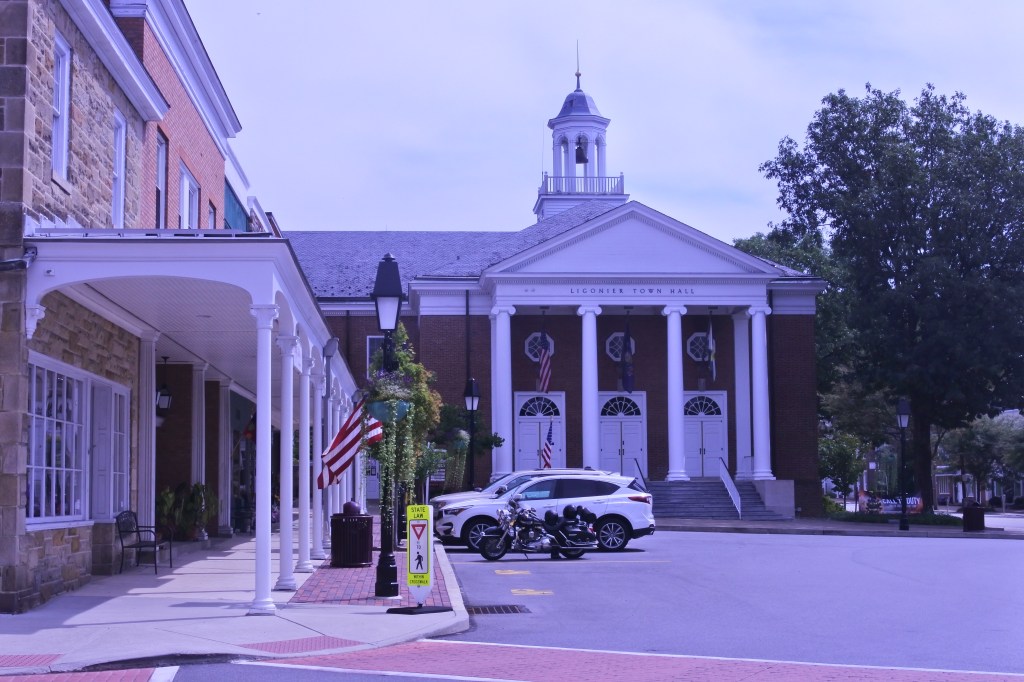
From an urban perspective Ligonier has a vibrant heart with many restaurants, bars and cultural amenities. It also has great historic architecture and quality parks and recreational amenities. The biggest urban downside for Ligonier is its low density, lack of biking infrastructure, limited rental supply, and suburban schools (none are located within the borough boundaries). While there is great economic diversity where townees and retirees mix, very little racial diversity here.
Click here to view ,y full Ligonier album on Flickr

URBAN STRENGTHS:

* Great historic architecture throughout.
* ADA and sidewalk infrastructure generally good. Residential streets on the north edges are newer and feel more like the country and therefore are often missing sidewalks. Dwtn has up to date ADA ramps.
* Excellent economic diversity here where wealthy retirees and local mingle. Also many family households but high median age due to retirees.
* Nice array of price points with homes ranging from 70K to the high 300s.
* Highly attractive core business district surrounding “The Diamond”.
* Good park amenities including the mult-faceted Friendship Park, Mellon Park, a YMCA, and of course the Ligonier Diamond Roundabout.
* Great cultural amenities including many restaurants, cafes, & bars, several local museums, art galleries,  and a local cinema.
* Good neighborhood amenities as well including a ton of boutiques and creative local stores, a pharmacy, supermarket, banks, a local library & post office, and a bookstore.
* Very safe community.
* Well rated schools but all are located just outside of the Ligonier boundaries.

URBAN WEAKNESSES:

* Poor Density
* Poor access to any major jobs centers as Downtown Pittsburgh and Oakland are 1 hour away by car and public transit access is very poor.
* No biking infrastructure.
* Terrible racial diversity. 98% White.
* Rentals are very limited here. 

Knoxville- a Pittsburgh Neighborhood with Great Urban Potential

Knoxville Borough was incorporated in 1877. Its location on the second ridge from the Monongahela River, was a desirable local as it was shielded from the smoke emanating from the factories and mills of the South Side. Knoxville became accessible from the South Side with the opening of an incline in the 1870s. It quickly  attracted many middle managers of the South Side mills as residents. Eventually the Borough was annexed by the City in 1927.

Because it developed mostly in the final decades of the 19th century, Knoxville is dense and retains much of its urban form. Even with its disinvestment and poverty, the majority of its residential homes and commercial buildings along Brownsville Rd remain standing. Knoxville has great potential to become a viable walkable urban neighborhood with concerted reinvestment and attention. Other areas that could improve its livability include bike infrastructure, several new neighborhood parks, and new restaurants, retail, and creative storefronts along Brownsville road. A supermarket would be a huge benefit, but that may be down the road. 
Click here to view my full Knoxville album on Flickr

URBAN STRENGTHS:

* Consistent sidewalks throughout but current ADA infrastructure is absent from most residentials streets. Common along the commercial corridor, Brownsville Rd.
* Good tree canopy due to the terrain but limited street trees along the Brownsville Corridor.
* Convenient access to Dwtn via both driving and public transit.
* Good connectivity in the street grid.
* On of the most ethnically diverse neighborhoods in Pittsburgh.
* Many family households.
* No parks within the Knoxville borders but the expensive McKinley Park is on its western edge along with several cemeteries.
* While blighted, Brownsville is a pretty in tact urban businesses district with attractive architecture. Some attention was made the its streetscape several decades ago. 
* Good density, especially for a Pittsburgh neighborhood that has seen significant disinvestment

URBAN WEAKNESSES:

* No bike infrastructure.
* Very high poverty here (around 35%) but a decent middle class population.
*  For Sale Market is still pretty depressed with most homes selling below 50K. Stable well maintained stocks transacting btwn 50K-130K. Some rental product but inexpensive.
* Cultural amenities are pretty limited to a handful of restaurants &  bars. Most residents are still within walking distance to Warrington in Allentown which has many amenities.
* Retail amenities are a bit better including a public library, hardware store, post office, banks, a family dollar, drug store, and hair salons.
* Still some safety issues in Knoxville and a fair about of blight along Brownsville and the northern section of the residential areas.
* No schools within or even near the Knoxville borders. Some in adjacent neighborhoods but not walkable.
* Urban in-fill is pretty limited

Forest Hills, PA an attractive Pittsburgh bedroom Community

I included the pre WWII portion of Forest which starts at Vine Valley and moves towards the eastern border. I also excluded anything south of Lincoln Hwy. The borough was named after Forest Hills Queens New York.

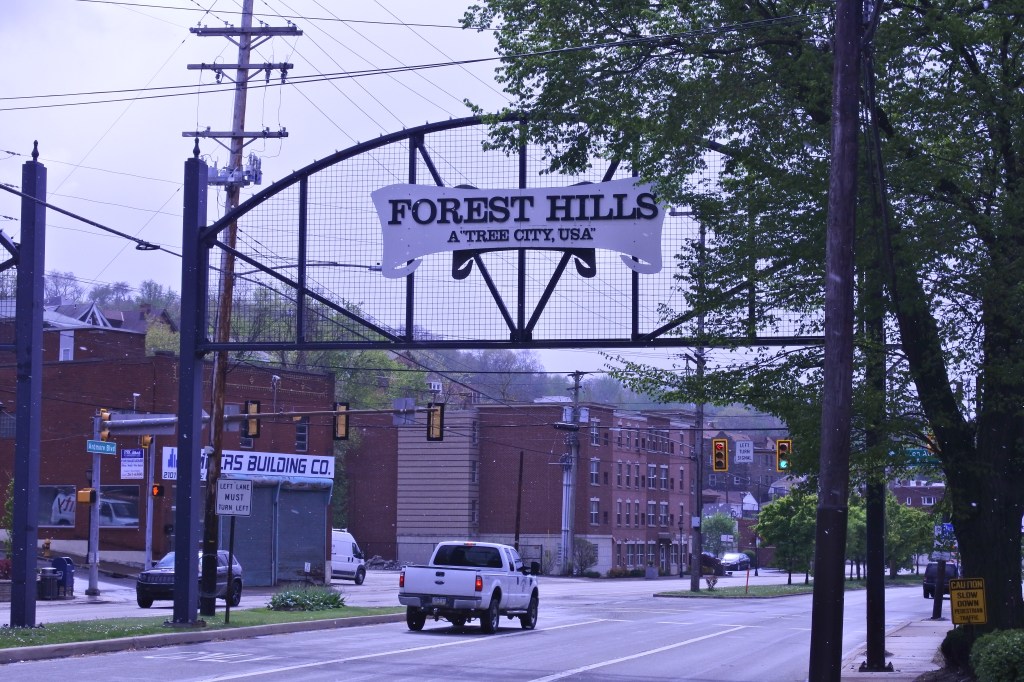
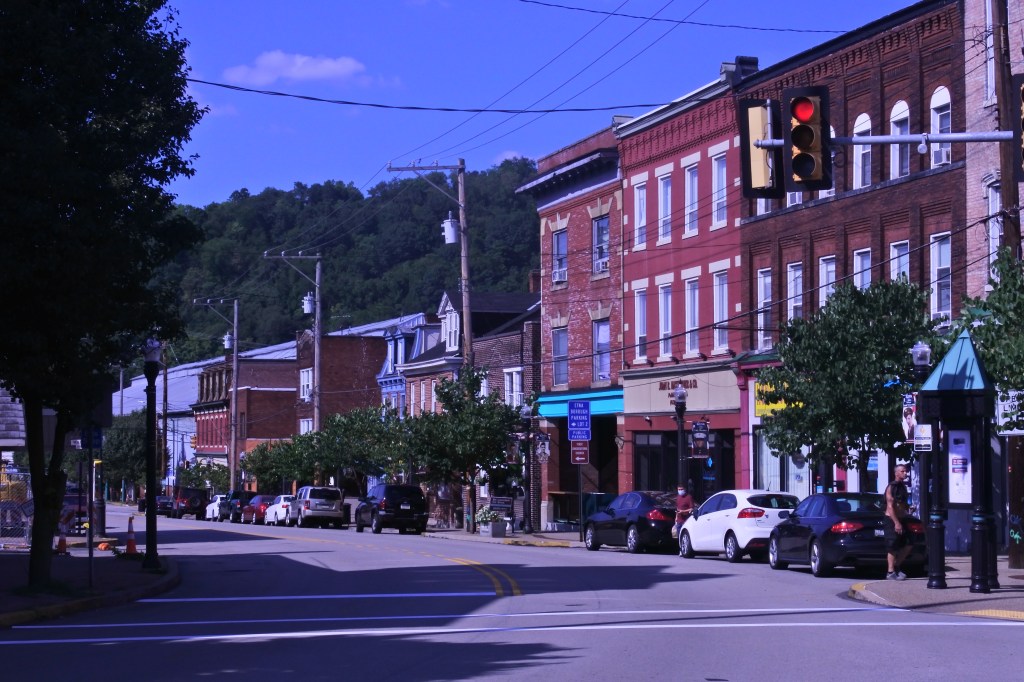
This is an attractive bedroom community where half of the Borough developed before WWII (the portion I am evaluating) and the other half developed primarily in the 50s & 60s. While Lincoln Highway is mostly auto centric, it hosts a couple blocks of cohesive urban commercial with several diverse store fronts. Unfortunately there are no traffic calming features here to provide a more pleasant experience for pedestrians who are forced right up to the curb. Other attractions to Forest Hills are its affordable homeownership quality parks & recreation, and convenient access to Downtown and Oakland.

Other than improving the quality of its modest commercial district I ‘d love to see more bike and retail amenities in Forest Hills. It would be great if a concerted effort went into expanding the existing urban commercial area with quality in-fill. This could be a very attractive urban node. 
Click here to view my full Forest Hill album on Flickr

URBAN STRENGTHS:

* Good access to downtown about a 20 minute drive and 40-45 bus ride. About the same distance to Oakland.
* Mostly middle class households here but good economic diversity. Over 50% of households are families but very old median age.
* Lots of affordable for sale options here ranging from 50K to the low 200Ks.
* Excellent tree cover.
* Decent parks and recreation including a playground. several ball fields. Lots of recreational amenities on the periphery of this study area as well.
* Pretty safe community overall with limited blight.
* Sidewalks are pretty consistent throughout but up to date ADA curb ramps is rare.
* Attractive historic retail and residential architecture.

URBAN WEAKNESSES:

* Bike infrastructure in Forest Hills.
* Racial diversity it limited.
* Some rentals available and generally pretty affordable.
* Cultural amenities are limited to a handful of restaurants and bars, and the Eastside Gallery.
* Retail amenities is a bit better with a modest array of amenities along the two block urban business district on Lincoln Hwy. Chain amenities further down in the Ardmore strip mall (Aldi’s, drug store, bank, Sherwin-Williams etc.). Also a public library in Forest Hills.
* No schools within walking distance of the urban portion of Forest Hills. There are however several schools within a 5-10 minute drive.
* While there are a couple blocks of decent urban form along Lincoln Highway sidewalks are right next to a highspeed Blvd. The blvd quickly becomes autocentric outside of this two block area. 

Etna, PA an Ode to the fiery furnaces of Mt. Etna Italy

I excluded most of the undeveloped and industrial areas from my evaluation area when assessing Etna.  Etna was named after the volcano Mount Etna, an allusion to the blast furnaces, steel mills, galvanized-pipe works, and other manufacturers located there.

Etna is another example of the many steel towns in the Pittsburgh metro hugging either the Monongahela, Allegheny, or Ohio Rivers.  Etna’s population peaked in 1930 near 7,500 souls. But like most steel towns, it now has less than half of that at 3,300. Yet there is much hope for this community’s rejuvenation and much progress has already been made. Etna boasts a mostly in-tact main street where more and more businesses are opening up. It’s housing market has stabilized with plenty of attractive product selling in the 100Ks and low 200Ks. It has convenient access to Downtown Pittsburgh and boasts decent density allowing many activities to be walk.

There are several areas were Etna could improve helping solidify itself as a viable urban community… bike infrastructure is sorely needed and more recreation space and parks (this may be changing soon with plans for a riverfront park). There is also need for a walkable school to locate within the borough limits. One day, hopefully the market will be strong enough to support tasteful in-fill construction. 
Click here to view the full Etna album on my Flickr Page

URBAN STRENGTHS:

* ADA infrastructure is great in the downtown Etna along Butler Street. Sidewalks are consistent in the residential streets but ADA curbs are limited.
* Easy access to dwtn via the automobile. Ok access via public transit.
* Great economic diversity. Good generational diversity as 50% of households are family households.
* Nice diversity of for-sale housing ranging from 50K-250K depending on condition and size. Rentals are pretty limited but inexpensive.
* Great tree canopy due to the hill sides and creeks.
* Etna has two medium sized parks (Shaler Crest Park & Dougherty) but not much else. There are plans for a sizable riverfront park. Hopefully these come to fruition!
* Cultural amenities include several restaurants & bars, and cafes, and a couple art galleries.
* Some  neighborhood retail (i.e. hardware store, candy shop, boutiques, game store, etc.), post office and an Aldi’s and shop & save on the edge of town.
* Good historic architecture especially in the urban biz district.
* Etna’s urban form is solid and the streetscape is generally good until you go north of the downtown area. 

URBAN WEAKNESSES:

* No bike infrastructure in Etna
* Poor racial diversity as Etna is more than 90% White.
* Some grit remains but overall a safe community.
* Sadly no schools within the Etna limits. But it is in a the solid Shaler School Districts with drivable options.
* Really no urban in-fill here.

Elizabeth, PA- an attractive historic Mon Valley Town

This is an old town for Mon Valley standards. It was incorporated in 1834 as a borough and had a population of 1,120 in 1850. Elizabeth maxed its population in 1940 at just under 3,000. Currently the Borough retains about half of its population, not terrible for a Mon Valley community as most have lost 66%. Early Elizabeth specialized in glass making, steamboat building, and ship building.

The center of Elizabeth has seen a fair amount of reinvestment with repurposed buildings and an attractive streetscape on 2nd and 3rd Avenues. Also some nicely preserved mid-late 19th century housing just SW of Dwtn. To become a viable urban place Elizabeth needs more stores and revitalized buildings, bike infrastructure, at least a couple walkable schools within the borough limits, and better parks. 
Click here to view the entire Elizabeth album on Flickr.

URBAN STRENGTHS:

* Great tree cover and a fair amount of street trees as well.
* Good connectivity with gridded streets.
* Good economic diversity here with a slightly above average poverty rate.
* Population skews old but high percentage of family households (60%).
* Decent mix of for-sale housing 30K and the upper 100Ks, but certainly skews lower market.
* Pretty good neighborhood amenities including a post office, a drug store, dollar general, bakery, florist, a supermarket on the edge of town, and some nice boutiques and local stores.
* While there is some blight in the industrial waterfront and residential areas, not bad for the Mon valley. This seems like a pretty safe place.
* Excellent streetscape in Elizabeth’s modest dwtn. Good urban form as well helped by its mid-late 19th century fabric.
* Attractive historic buildings especially in the center of town. 

URBAN WEAKNESSES:

* Low density.
* No bike infrastructure.
* Decent access to Oakland & Downtown Pittsburgh as they are only a 30-40 minute drive. But public transit access is pretty limited.
* Not very racially diverse at the population is about 90% White.
* Rentals are limited but inexpensive.
* 3 modest parks exist in Elizabeth. None of them are spectacular.
* Cultural amenities include two community theaters and a handful of restaurants, cafes, and bars.
* No schools located within the borough all out in the outskirts.
* Really no modern in-fill here. 

Donora, PA home to Baseball Legends and the Smog of 48′

Donora was incorporated in 1901 and gets its name from the combination of William Donner and Nora Mellon, banker Andrew W. Mellon’s wife. The City of was a US Steel town and quickly grew to 14K residents by 1920.  The borough’s nickname is “The Home of Champions”, because of all the famous athletes that originate from here including Ken Griffy Sr & Jr and Stan Musial. Sadly the town was made more famous as the scene of the infamous Donora Smog of 1948. An air inversion incident trapped air pollution from the American Steel and Wire plant and Donora Zinc Works causing almost 100 deaths of thousands of injuries. Donora also has an interesting historic district called Cement City. The homes were built completely out of pre-formed and poured concrete.

Similar To Charleroi, Donora has seen about a 2/3 drop in its population. It was at 14K in 1920 and now around 4,500 souls reside here. But Donora has not seem the same level and revitalization in its main street as Charleroi even with having higher overall incomes in the borough. The historic main street McKean Ave has changed much since the 60s & 70s other than deteriorating. Surprisingly most of the historic building are still in-tact, leaving a decent urban form in place, but most are empty. Residential streets are a mix of blight and stable areas. Housing is also cheaper here than Charleroi as the vast majority of homes are selling below 50K. Sadly I don’t see Donora revitalizing anytime soon and becoming a viable urban place. But at least money can be spent to stabilizing the town through an aggressive clean and green program. Commercial buildings can be mothballed or demolished when appropriate and hopefully some concerted effort can be placed into bring more live into the main street.
Click here to view my entire Donora album on Flickr

URBAN STRENGTHS:

* Good street grid and connectivity.
* Poverty is still pretty high (around 20%) but income seem to be raising and is now 45K. 
* Large percentage of family households around 60%.
* Attractive but blighted commercial architecture.
* High level of “city imageability” with a well defined main street, iconic historic buildings, and strong street grid.
* Most of the historic form and fabric of the business district remains, even if much of it is blighted.
* Good tree cover helped by all the undeveloped hills and ridges. Limited street trees on the main street.

URBAN WEAKNESSES:

* Poor public transit and access to major employment center in the Pittsburgh Metro.
* Some racial diversity. Around 78% of population is White, 15% Black, and some Hispanic. 
* Rentals are limited but inexpensive. For sale housing is cheap. Most homes selling below 50K. Limited between 50-100K. And a select few in the 100Ks. These are mostly newer suburban homes on the edges of Donora.
* No bike infrastructure.
* Cultural amenities are very limited to only a couple bars, restaurants, and the Smog Museum.
* Some neighborhood retail along McKean Ave… a pharmacy, several banks, the post office, public library, a florist and some antiques. But no supermarket or any boutiques or creative retail.
* Really no modern infill here.
* Park amenities include several ballfields (one call Ken Griffey Field) medium size wooded park called Cascade Park, and the extensive multi-purpose Palmer park.
* No supermarkets, larger retailers, or hospitals within the borough limits.
* Lots of blight throughout most of the Borough. The main street feels stuck in time since the 60s and has received very little investment.
* Sadly no significant schools within the Donora borders. They are all in neighboring, mostly suburban municipalities.

Charleroi, PA- A Mon Valley town, with a Strong Historic Heart

Charleroi got its name from the Belgian city of Charleroi an ode to the many Belgian immigrants in the Monongahela area at the end of the 19th century, many of whom were glass makers. The Pittsburgh Plate Glass Company, today PPG Industries, had a large manufacturing plant in the borough at one point employing around a thousand employees. This made it one of the largest glass factories in the world . Today the borough is home to Corelle Brands, which makes Pyrex. Charleroi has seen significant population decline and is currently reduced to 1/3 of its maximum population of 11,500 in 1920. Keep in mind that the town was founded around 1900!

Charleroi has not declined as drastically as other Mon Valley communities (e.g. Duquesne, Clairton, McKeesport, or Glassport). Part of this is likely due to its racial make up (90% white). But it is also apparent that there has been a concerted effort to stabilize the borough, especially its main street heart spanning 7 blocks along both McKean and Fallowfield Avenues. Not surprisingly this is oversized for its currently population which is why significant vacancy co-exists with many stores. My hope is that more buildings can transition to residential use, work/live space, co-working offices, or other creative uses. Other areas Charleroi can improve to become a more viable urban area include moving its schools into the borough, installing bike lanes, attracting a supermarket, and continuing to mediate blight and attract immigrants. 
Click here to view my entire Charleroi album on Flickr

URBAN STRENGTHS:

* Great street grid and connectivity.
* Large percentage of family households around 50%.
* Great historic commercial architecture.
* ADA and sidewalk infrastructure is great in the businesses district including some thought newer streetscaping. The residential areas up the hill has decent ADA infrastructure.
* The urban business district hosts a nice array of neighborhood amenities including about 10 restaurants, a cafe, several bars & a brewery, a post office, library, drug store, and good array of boutiques/specialty stores and general retail.
* Other than restaurants & bars cultural amenities are limited to an escape room and a couple art galleries.
* High level of “city imageability” with a well defined main street, iconic historic buildings, and strong street grid.
* Most of the historic form and fabric of the business district remains, even if much of it is blighted.

URBAN WEAKNESSES:

* Poor public transit and access to major employment center in the Pittsburgh Metro.
* High poverty city with about 25% below the poverty line. But incomes seem to be rising. Median household income was around 23K in 2000 and now is closer to 40K.
* Limited racial diversity. Around 90% of population is White. The rest is a mix of Asians, Blacks, and Hispanics.
* Rentals are limited but inexpensive. For sale housing is cheap. Most homes selling below 50K. Some between 50-100K. And a few in the 100Ks.
* No bike infrastructure.
* Really no modern infill here.
* Park amenities include several ballfields by the river and a couple smaller neighborhood parks in the residential areas.
* No supermarkets, larger retailers, or hospitals within the borough limits.
* Still lots of blight in the commercial district even with many occupied businesses. Some blight in residential areas, especially near town. The residential area up the hill is actually pretty stable.
* Sadly no significant schools within the Charleroi borders. They are north of borough in the outskirts.