Dayton Ohio’s Oregon District- the city’s premier urban neighborhood

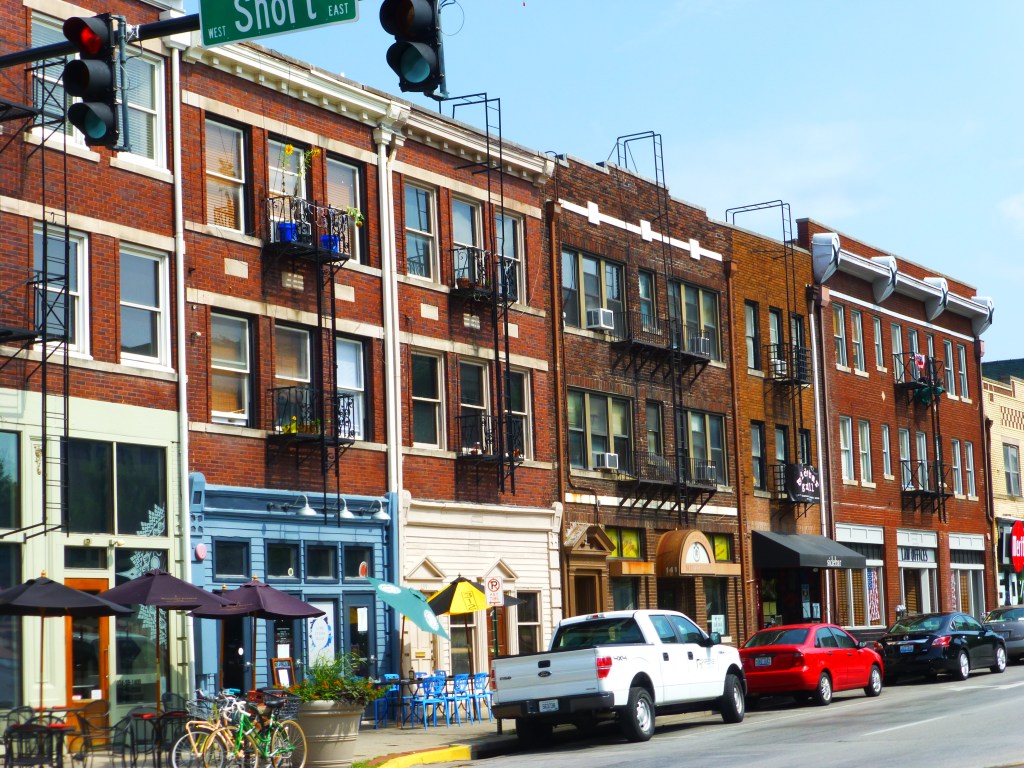
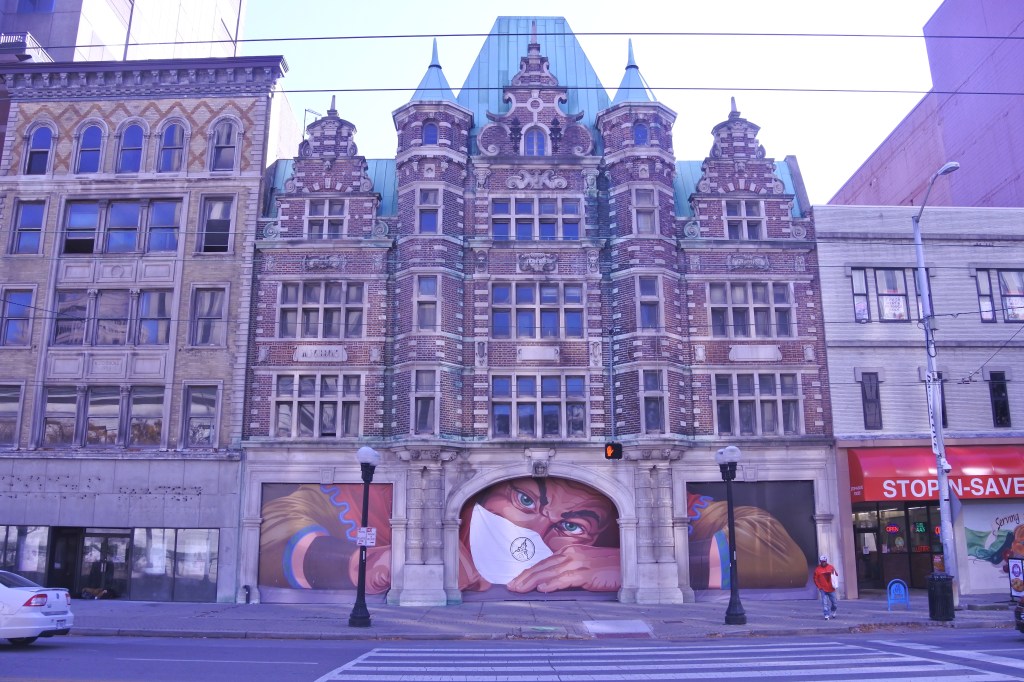
The Oregon District lies to the east of Downtown and is Dayton’s most complete neighborhood. It is know for two things: excellent architecture protected through a local historic district and a lively commercial district along 5th Ave that can be rowdy at times. The Oregon Historic District includes one of the earliest surviving combinations of commercial and residential architecture in Dayton ranging from 1820 to 1915. Many streets are also the original red brick.

Yet there are still many areas the neighborhood needs to improve upon before it becomes a premiere district in the same category of other great Ohio urban neighborhoods like Ohio City, the Short North, and Over-the-Rhine. It needs a better variety of retail amenities especially a grocery store, more market rate rental housing, more population in general, and in-fill development along its north and eastern edges where there is still a fair amount of blighted or auto centric uses. 
Click here to view my Oregon District album on Flickr

URBAN STRENGTHS:

* Pretty good bike infrastructure including several bike stations and a dedicated bike lane.
* Great access to dwtn being just southeast of it.
* Good racial diversity and pretty good economic diversity although high poverty rates around 40% live alongside upper middle class households.
* Also good generational diversity with 45% family households and a nice mix of young adults, and boomers.
* Good mix of for sale housing product with 2 & 3-bedrooms selling btwn 150K-350K. 4 bedrooms generally selling in the 300Ks.
* Several public housing developments located in the Oregon District provided affordable housing in a good neighborhood.
* Tree canopy is great in the residential portion of Oregon but pretty terrible in the north and eastern edges with most industrial uses.
* Newcome Park is a nice historic park located in the heart of the Oregon District. Bomberger Park is located on the eastern edge of the district. Not much else park amenity wise.
* Culturally the Oregon District has a nice array of restaurants, bars, cafes, several night clubs, a comedy club, walkable access to the Neon Indie Theater & Black Box Improv Theater in nearby districts. Many of Downtown’s cultural amenities are also walkable to the Oregon District.
* Retail wise lots of boutiques and creative stores, a bookstore, post office, and walkable access to Dwtn’s retail amenities like the public library, drug store and banks.
* Generally a pretty safe area but still blighted areas in the north and eastern edges.
* No schools within the Oregon District but two excellent high schools within walking distance. Also several elementary schools in Downtown Dayton. 

URBAN WEAKNESSES:

* Urban form not great in the eastern and north edges of the Oregon District. Hit or miss along Wayne Ave. Fair amount of industrial blight along the district’s northern edge.
* Density is only so .
* Rental product is a bit limited but nice mix of market and affordable. Market 1-bedrooms generally rent near or below $1,000 and 2 bedrooms in the low $1,000s.
* No walkable supermarket, 

Webster Station- Dayton’s historic warehouse district

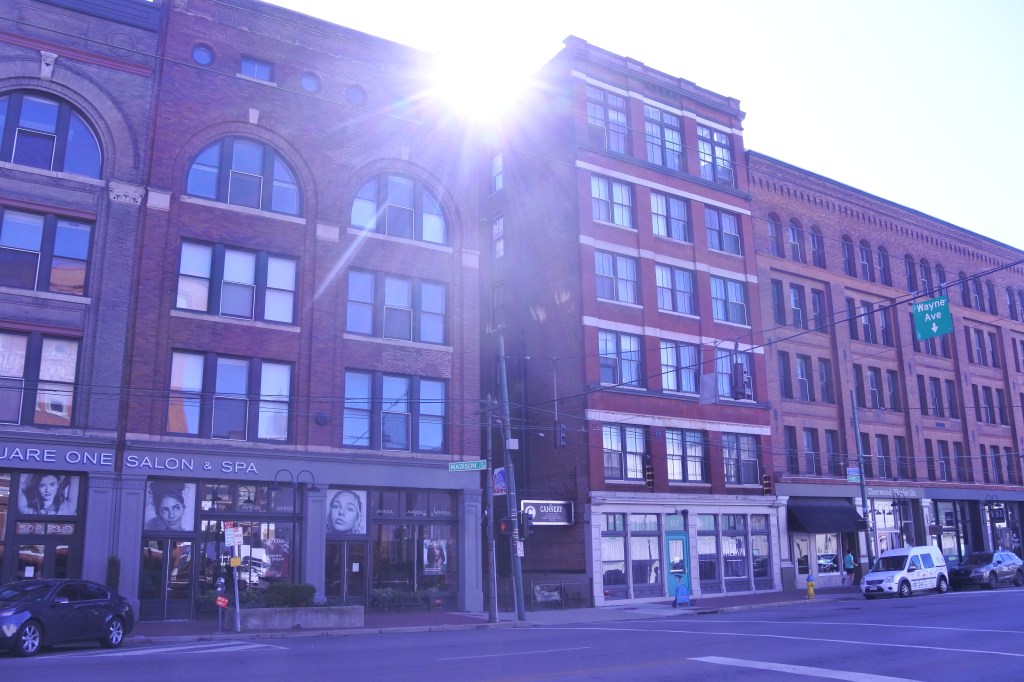
Webster Station historically was a warehousing/manufacturing district with some housing and apartment buildings. Now the district has been transformed into one of Dayton’s best nightlife and residential loft districts anchored by the Dayton Dragons minor league ballpark. Webster Station also hosts Dayton’s only remaining public market.

The future is bright for Webster Station as many new apartments and condo buildings are in the works. Still lots of surface parking lots and blight to remove so hopefully new development is quality urban infill. 
Click here to view my Webster Station album on Flickr

URBAN STRENTHS:

* Some very nice warehouse architecture but also a lot of really gritty buildings too.
* Located just east of Dwtn, Webster station has excellent job access. One can easily walk, bike, or take a short bus ride to Dwtn.
* Good biking infrastructure including access to two waterfront bike trails and several dedicated bike stations.
* Not good numbers on from City Data on Webster station so difficult to determine its demographics.
* Decent park amenities with convenient access Riverspace park. Dwtn’s plaza spaces are mostly within a 10 minute walk.
* Cultural amenities include a nice range of food & beverage businesses, several nightclubs, a minor league ballpark and convenient access to all the cultural amenities of Dwtn.
* Retail amenities include the Dayton Public Market (hosts a nice mix of restaurants, food vendors, and hand crafted goods), a couple furniture stores and appliance stores, a couple banks, a fitness center, a florist, and several salons.
* Plenty of grit here but pretty safe area. 

URBAN WEAKNESSES:

* Very low density but this is getting better as lots of new development comes.
* Rentals are a bit limited and generally lease for around $1,000s.
* Decent mix of condo product. Limited 1-bedrooms, 2-bedrooms selling btwn 200K to the high 300s, and 3-bedrooms in the 300Ks & 400Ks.
* Tree canopy good in spots but overall not great.
* Lots of industrial and surface parking lot remain but get urban form when there are buildings.
* No schools within Webster Station but several quality ones in surrounding districts.

Deland, FL- Home to Florida’s oldest private college Stetson University

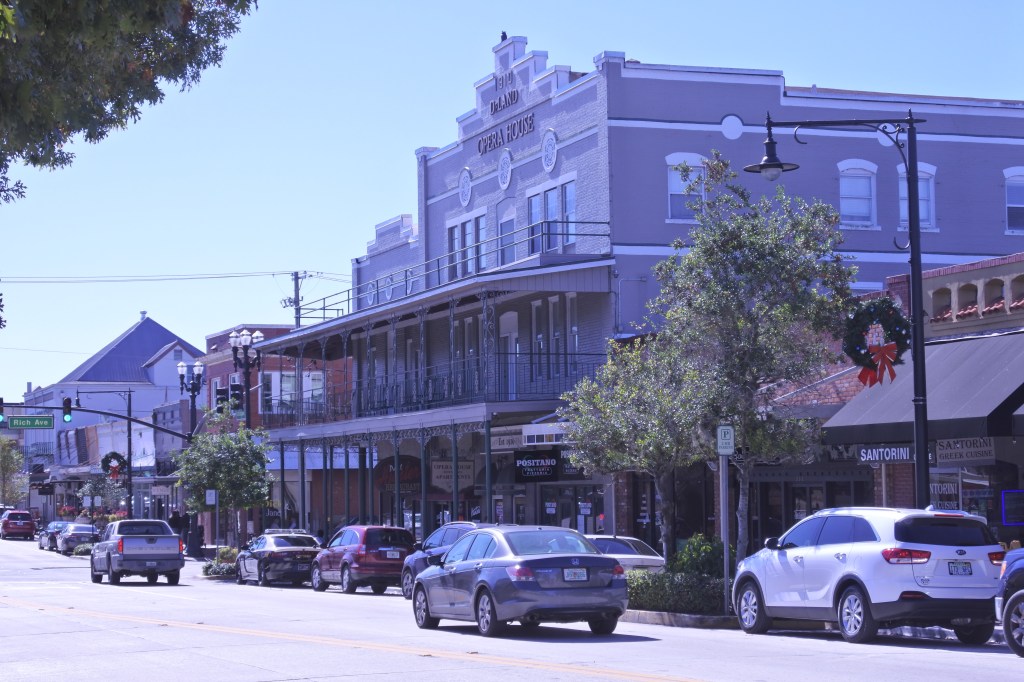
Deland was founded in 1876, and was named for its founder, Henry DeLand who also founded Stetson University, Florida’s oldest private college. After a killing freeze destroyed the central Florida’s orange crop, DeLand entrusted the academy to his friend John B. Stetson, a wealthy hat manufacturer from Philadelphia. The Town steadily grew and reached 7,000 residents by 1940. Deland hosts some great historic architecture, especially stucco Mediterranean Revival architecture often designed by native architect Medwin Peek.

Historic Deland has held up well even with rapid suburban growth on its fringes. The city now has over 30,000 souls. Much investment has gone into main street and downtown helping to create an attractive and vibrant core. Major areas for Deland to improve from an urban perspective include better density, public transit access, and converting transitioning its more auto centric commercial districts to be pedestrian friendly. 
Click here to view my Deland album on Flickr

URBAN STRENGTHS:

* Well invested Dwtn area complete with filled storefronts and great streetscaping.
* Great historic architecture especially Dwtn.
* Sidewalks and ADA Infrastructure is great  in Dwtn and Stetson University. Hit or miss in the historic residential streets where sidewalks are often missing and curb ramps are not up to ADA standards.
* Excellent street connectivity.
* Nice dedicated bike lane running the lengths of Historic Deland. No bike sharing system.
* Great generational diversity with around 60% family households. Excellent racial and economic diversity as well.
* Good supply of rentals with one-bedrooms leasing btwn $800-$1,000, 2-bedrooms in the low $1,000s, and 3-bedrooms in the high $1,000s.
* Great diversity of for-sale prices points starting around 50K all the way to 500K.
* Good mix of parks and amenities including several nice Downtown plazas, a major sports complex, Christholm Center, Painter Bond, the Bill Deggors Museum Complex, and the greenspaces of Stetson University.
* Culturally a great array of restaurants, cafes, and bars Dwtn, art galleries, the Athens historic theater and good array of local museums including Deland House Museum, Gillespie Science Museum, Museum of Art-Deland, African American Arts Museum, and the Bill” Dreggors Historic Site.
* Good array of neighborhood retails esp. Dwtn including a hardware store, several grocery stores and smaller ethnic grocers, public library, banks, a couple bookstores, and lots of boutiques and specialty stores.
* Mix of quality private and public schools within the historic core.
* Great tree canopy throughout Deland. 

URBAN WEAKNESSES:

* Pretty low density for an urban area, but this is pretty typical for the south.
* Outside of Downtown the commercial corridors are semi-auto centric. Amelia Street is primarily auto centric.
* Dwtn is vibrant but the rest of Deland is pretty quiet due to its low density
* Poor public transit.
* Decent amount of jobs in Deland as it is a county seat and hosts Stetson University. 30 minute drive (50 min bus ride) to Dayton Beach and 45 drive to Orland.
* Crime a bit above the National average and still plenty of blight throughout.

South Pittsburg, TN- a historic coal mining town 40 minutes outside of Chattanooga

The area I included for this review was the historic core of South Pittsburgh ranging from 1st to 7th Ave from north to south and Cedar Ave as the eastern border and the Birch/Counter Ave to the West.

What is now South Pittsburg remained a primarily agrarian area until the construction of a branch line of the Nashville and Chattanooga Railroad in the late 1860s. The name of the community became “South Pittsburg” in hopes that the city would one day grow to become a great iron manufacturing center. This never really materialized, as South Pittsburg remained a small coal and manufacturing town.  Population grew to 1,000 by 1870 and only 2,200 by 1940. Currently just over 3,000 residents live here thanks to suburban growth outside the historic core.

Current day South Pittsburg is a sleepy Appalachian town with most of its historic fabric in tact and an attractive main street with a fair amount of retail. I don’t envision South Pittsburg changing much in my lifetime but some key areas it could improve from an urban perspective include: better bike infrastructure, new residents with quality in-fill, and a shuttle connection to Dwtn Chattanooga. 
Click here to view my South Pittsburg Album on Flickr

URBAN STRENGTHS:

* Quality streetscape along the traditional main street.
* Good generational diversity with 60% family households.
* Very low crime rate but still a fair amount of blight remaining in town.
* Several walkable parks in town. Mix of greenspace, playgrounds, and ballparks.
* Some cultural amenities along Cedar Ave including several restaurants & bars, a coffee shop, the South Pittsburg Historic Museum, and the Princess Movie Theater.
* Good array of walkable retail amenities including several clothing & antiques stores, a pharmacy, supermarket, music store, Post office, library, and several banks.
* Both the public elementary and high school are in the historic core.
* Quality tree canopy throughout the town.

URBAN WEAKNESSES:

* Low density. Feels very much like its out in the country.
* ADA infrastructure is of a high level along Cedar and limited in the residential areas where sidewalks are often missing.
* 40 minute drive to Dwtn Chattanooga and no transit access. In fact there is not transit access in the town period.
* No bike infrastructure. 
* For sale housing in generally pretty cheap but some price diversity ranging from 25K to 225K. Rental product is very limited. 

Danbury, CT- Historic hat making capital of America

I restricted my evaluation to Dwtn Danbury which a linear area center around Main street between South St and Garamella Blvd.

Danbury is nicknamed the “Hat City” as it was the center of the American hat industry during the 19th and early 20th centuries. Its name comes from English city of Danbury in Essex. Danbury was originally settled by colonists in 1685. When it incorporated in 1822 it had  4,000 residents. By 1900 it grew to a sizable city of 20,000 and 30,000 by WWII.

Center City Danbury is basically a main street with several larger public and religious buildings surrounded by some residential streets. Main Street experienced several decades of decline but fortunately its urban form remained mostly in tact. Grassroots efforts are well underway to revitalize Center City Danbury with an organized Downtown Business District, new shops, and public investment. Some new residential has also been constructed since 2000 but not enough to create a vibrant downtown. Other areas Center City could improve include better park and recreation space, bike infrastructure, and more retail and cultural amenities.
Click here to view my Danbury, CT album on Flickr

URBAN STRENTHS:

* Quality sidewalks throughout. Up to date ADA infrastructure is a mixed bag.
* Good local transit along with access to the east coast’s regional lines.
* Great racial diversity and good generational diversity with lots of family households.
* Some blight but crime is below national averages.
* Dwtn cultural amenities are a bit limited but include several diverse restaurants, handful of bars & cafes, the historic Palace Danbury, and a couple historic sites. Ives College is also down the street and brings some good performing arts.
* Retail amenities a public library and post office, good array of boutiques, several ethnic grocerias, and other general retail.
* Several public and catholic elementary schools within are near Center City Danbury. 

URBAN WEAKNESSES:

* Some jobs in Danbury. Commuting to larger Cities in the Stamford Metro, New Haven, or Hartford are all btwn 45- 1 hr.
* No bike infrastructure. 
* Some economic diversity but median income is on the low side.
* Rental product is pretty limited but average price. For sale product also limited but diverse price ranging from 100K-350K.
* Some park space dwtn including the Danbury City Green (nice pavilion and lawn) and Elmwood Park.
* Street grid is very curvy and easy making it easy to get disoriented in Center City Danbury

Downtown Troy, NY- one of American’s most beautiful Downtowns

Troy has a long history going back to the late 18th century when it was formally incorporated. Due to its access to the Erie Canal it quickly became a prosperous city. In 1824 the nation’s oldest private engineering institute opened here, the Renesselaer Polytechnic Institute. The industrial revolution continued to spur industrial and economic growth to the City helping Troy become the fourth wealthiest city in America around the turn of the 20th century. This wealth translated into amazing architecture, especially in Downtown  including many elaborate Victorian and Italianate rowhouses and brownstones along with several great churches containing Tiffany stained glass windows, Troy Music Hall,  Troy Public Library, and much more.

Like most industrial cities, Troy witnessed significant blight and disinvestment. Yet, unlike Albany, most of its historic building stock remains in tact. With new interest and reinvestment this become a great asset for Troy creating one of the most beautiful American Downtowns with great urban form and a truly live/work district. Many restaurants, bars, locally owned retail have opened the past couple decades. While not a major employment hub, Dwtn troy excels as a business incubator as it can provide cheap spaces in an attractive urban districts.

Areas that Dwtn can improve include removal of remaining blighted areas, new condos (for-sale housing is only rowhouses), walkable downtown schools, more bike lanes within the Downtown District, and a full service grocery store. 
Click here to view my Downtown Troy album on Flickr

URBAN STRENGTHS:

*Great density for a Dwtn especially a mid-sized city. Much larger residential population in Dwtn Troy than Dwtn Albany.
* Wonderful historic architecture. Arguably the best preserved historic downtown in the United States.
* Good street tree coverage especially for a Downtown area.
* Overall a very comfortable pedestrian environment where most curb cuts have up to date ADA infrastructure.
* High quality transit service Dwtn and extending to all of Troy and connecting to Albany. In fact the entire Capitol Region transit system is quite good.
* The bike share system in place in Albany, Troy, Schenectady provides great coverage to all these cities. Several regional bike trails come close but don’t quite connect with Dwtn. Still easy to bike the last 1/2-1 mile without a fully dedicated bike lane.
* Wonderful street grid and connectivity. * Good racial diversity.
* Most for-sale housing options are larger rowhomes. One can purchase a 2-4 bedroom in the 100Ks & 200Ks. Plenty of options in the 300Ks-600Ks depending on size and value. This is great if you want to live Dwtn with a family. Condos are certainly a missing market here.
* Decent array of rental options too. Pretty in-expensive for a dwtn. 1-bedrooms lease btwn $800-$1,400, 2-bedrooms in the $1,000s and low 2Ks, 3-bedrooms in the $2,000s.
* Parks spaces consist of Chamberlin Waterfront Park, sage park, and Monument Square- the modest civic heart of Dwtn in the middle of an ambitious re-design. The extensive Prospect Park is located just SE of Dwtn.
* Good college population within or near Dwtn with Sage College and Renesselaer  Polytechnic Institute (8,500 students).
* Excellent urban form and massing. Surface parking lots are pretty limited in Dwtn Troy.
* Dwtn has an active BID charged with clean up, beautification, and special events.
* Culturally dwtn excells at in the food & beverage industry, several art galleries, several historic theaters, and great cultural amenities from its colleges.
* Retail amenities include a wonderful array of local, creative stores, bookstores,  boutiques, a hardware store, drug store, dwtn post office & library, a small organic grocer, and nearby hospital.

URBAN WEAKNESSES:


* No convention center or sport facilities downtown
* IF you include the universities total employment dwtn is only about 10K. But there are positives in the office market. Troy has lots of small start up companies and trend is very positive. They are attracted by Downtown’s cheap rents (around $12-$15 a square foot). There is also limited vacancy too.
* Portion of Dowtn north of Federal Street and east of 5th Ave is still pretty blighted. But reinvestment seems to be arriving quickly.
* Limited post WW II in-fill but some nice medium sized mixed-income buildings starting to pop up, a sign of Dwtn’s success. Bland mid century infill located north of Federal St. due to some haphazard urban renewal efforts. Lucky this was limited.
* No direct public transit connection between Dwtn and the airport. One needs to pass transfer at Dwtn Albany.
* Incomes generally pretty low in dwtn Troy (30% poverty rate) but this seems to be improving as more young professionals move here. 
* Family households account for 30% of the pop, while this is low note bad for a dwtn area. Also plenty of 3 bedroom + options with all of Dwtn’s rowhouses.
* Crime rate in Troy overall is pretty high. But dwtn generally feels safer other than a few sketchy and blighted spots.
* Without any modern skyscrapers, no traditional American skyline here. Kind of nice though as the historic bldgs and churches still form the skyline.
* No schools located within Dwtn but a couple good options a mile away.
* Given its historic blight and safety concerns, Dwtn Troy still struggles with aa unjustified negative perception.
* Streetscape is generally attractive but uneven in terms of investment.
* No full-service supermarket and large retailer dwtn. 

Saratoga Springs, NY- Historic Vacation Grounds for New Yorkers

Lots of great history at Saratoga Springs. The community was  incorporated as a village in 1826 and quickly became a tourism destination after the arrival of the Saratoga Schenectady Railroad. Its mineral springs and eventually horse racing & gambling led to an explosion of large hotels. By 1900 the town had a fulltime population of 12,000, which grew to 15,000 by 1950. Following WWII, Saratoga had a couple decades of decline but quickly rebounded in the 1970s as a major destination but also attracted lots new housing and quality mixed-use infill.

Saratoga Springs has some major of urban weaknesses that prevent it from being a great urban area… expensive housing, lack of residential density, limited bike infrastructure, limited public transit access. 
Click here to view my Saratoga Springs album on Flickr

URBAN STRENGTHS:

* Good generational diversity and half of all households are family ones.
* Congress Park is a wonderful recreational amenity near Downtown. Several other nice park & recreational spaces in Saratoga Springs. Really wonderful in-fill development as well. Not just in Downtown but also in the residential streets.
* Vibrant downtown packed with great shopping and cultural amenities.
* Generally quality sidewalks and ADA curb cuts but lots out of date curb cuts.
* Low crime rate and limited blight through Saratoga Springs.
* Great urban form and streetscaping along Broadway.
* Schools are highly rated and most are located within the historic core.
* Great cultural amenities including ton of restaurants, bars, and cafes, several live music venues, Skidmore College theater, a cineplex, a good array of art galleries, museums and historic sites. 
* Retail amenities include a dwtn supermarket, lots of smaller specialty grocers, great array of boutiques & independent stores, some brand name retail, a couple drug stores, bookstores, public library, post office, Saratoga Hospital. Only retail amenities missing is a target and department stores.

URBAN WEAKNESSES:

* Density not great.
* Decent local public transit but limited access to downtown Albany or Dwtn Troy. There are a fair amount of jobs in Saratoga Springs with it local tourism, the arts and Skidmore College
* 40-45 minute drive to either downtown.
* Bike infrastructure limited inside historic Saratoga Springs.
* Generational high incomes here but some economic diversity. Racial diversity on the other hand is very limited.
* For sale housing is runs expensive but decent diversity in price and type (mix of townhouses, condos, and SF). Starter homes run in the 200Ks. Better 3-bedrooms generally 300-400K. Nice 3 & 4 bedrooms between 400K-700K. Large homes and luxury product generally selling between 700K and 1 M.
* Lots of rental product but pretty expensive. 1-bedrooms leasing in the $1,000s and low $2,000s, 2-bedrooms in the mid $1,000s and $2,00s

Kent, OH- hosts a quality historic downtown as state university near Akron

Difficult to decipher exactly what to include in this Kent evaluation as the pre-WWII fabric extents pretty far and inconsistently outside of the downtown center. I included all of Kent University and used a mixture of block groups and historic fabric to set the boundaries of this evaluation.

Kent was originally founded as part of the Connecticut Western Reserve and settled in 1805. It attracted settles due to its location along the Cuyahoga River which spurred water-power mills and eventually the Ohio canal. By the time Kent State was founded in 1910 the City already had a population of 4,500. Kent State was built on the eastern edge of the City and doesn’t fully integrate with the historic town. While there are several quality historic buildings, most of Kent State is unattractive 1950s-1970s  buildings. Major redevelopment initiatives came to Downtown Kent in 2008 with a $110 Million dollar mixed-use development across several blocks.

Like most college towns, Kent has a good array of main street retail and cultural amenities. Park and recreational space are extensive along the Cuyahoga River adjacent to Downtown. Areas that Kent could improve from an urban perspective include a  downtown supermarket and target, more consistent ADA infrastructure, and a better sense of place at Kent State University. There is also a fair amount of blight in the historic residential portions of the City. 
Click here to view the Kent album on my Flickr Page

URBAN STRENGTHS:

* Convenient access to lots of University jobs at Kent.
* Pretty good local transit access in the downtown core and university areas of Kent.
* Good bike access on Kent State’s campus and along the Cuyahoga River. No dedicated bike shares.
* Pretty good economic diversity.
* Crime rate is very low but still some blight in the residentials portion of Kent.
* Great tree canopy throughout most of Kent.
* Park and recreation highlights include the extensive and diversity park space surrounding the Cuyahoga River and quads at Kent State along with an attractive plaza space at Acorn Alley.
* Quality cultural amenities include many restaurants, bars & cafes, several live music venues & art gallery spaces, a couple local breweries, some local museums (Kent State University Museum and Kent Historic Society) and the performing arts hosted at Kent State University.
* Nice retail amenities as well including many boutiques and local businesses, local bookstores, a couple drug stores, several banks, along with a post office and library.
* Several good elementary schools within the historic core. The public middle and high school is just north of the historic core.
* Kent did a nice job rebuilding its downtown with quality urban in-fill. 

URBAN WEAKNESSES:

* Decent driving access to Dwtn Akron (25 minutes) and Dwtn Cleveland (45) but limited public transit connections.
* Limited racial and generational diversity.
* Local grocery store located in a strip mall just south of the historic core of Kent.
* Sidewalk infrastructure generally good but modern ADA infrastructure inconsistent.
* Most of Kent State University is ugly 60s & 70s towers. While there is attractive green space and quads, likes of parking lots spread throughout campus diminishing its sense of place.
* Historic housing is ok. Some nice historic commercial buildings in Downtown Kent. 

Hudson, OH great historic town and childhood home of abolitionist John Brown

My evaluation of Hudson is very nuanced guided by the walkable pre-WW II fabric of the town. This included Western Reserve Academy to the north, the new urbanist shopping center built around  First and Main Green to the west, Ravenna St to the south, and Oviatt St. to the east.

There is a lot of great history o this town. Hudson is named after its founder, David Hudson, who settled there from Connecticut in 1799, when it was part of the Connecticut Western Reserve. Western Reserve College and Preparatory School was founded in 1826 and but now exists as only a private high school (the college moved to Cleveland and is now Case Western Reserve).  John Brown grew up in Hudson in a very anti slavery town and congregation in the early 1800s creating the seeds of his more radical actions. Historically Hudson was a always a small town. In 1870 there were 868 residents and 1940 1,400. Suburbanization, however, lead to an explosion of residents and the town now has over 20K souls.

Hudson is one of the wealthiest enclaves in the Akron metro likely drawn by its quality schools, history, and historic main street. Several attractive historic residential streets also surround Main Street with homes from every decade of the 19th century. In 2004 an attractive new urbanist retail development (1st & main) was built as a nice extension of Main Street, 
Click here to view my Hudson album on my Flickr page

URBAN STRENGTHS:

* Great historic architecture spanning many decades before WWII in the main street, residential streets, and Western Reserve Academy. Quality urban in-fill with a nice new-urbanist district west of the historic main street.
* Pretty easy drive to Downtown Akron (only 20 minutes). 45 minute drive to Dwtn Cleveland.
* Very high family households around 85%.
* Great tree canopy and street tree coverage on the main street.
* Grand public square park amenities, a nice trail park extending SE from dwtn, and some quality green spaces at Western Reserve Academy.
* Good cultural amenities including lots of bars, restaurants & cafes, several art galleries, a performing arts theater, and several historic homes.
* Lots of walkable retail including a nice array of boutiques, clothing stores, a supermarket, bookstore, post office, and library. Several other strip malls just west of the walkable core as well.
* Very low crime rates in Hudson. Some years there are no violent crimes. 
* Several well rated public schools located on the eastern edge of Hudson Dwtn. Western Reserve Academy located on the north edge was well.
* Quality sidewalk and ADA infrastructure. Up to date ADA curb ramps are common near Western Reserve, main street and the new urbanism shopping center, but limited in the historic residential areas. 

URBAN WEAKNESSES:

* Poor public transit access. Although there is some commuter buses to downtown Akron.
* Limited Bike infrastructure.
* Very high household medium income around $125K but some income diversity here. Also limited racial diversity as central Hudson is around 90% white.
* Most for-sale options are expensive ranging between 300K-1 Million. Some more modest product selling in the 200Ks.  Rental housing is limited.

Highland Square- Akron’s most urban neighborhood

Like most Akron neighborhoods, Highland Square was built as a early 20th century streetcar suburb with medium density and a mix of SF homes and apartment buildings. Highland Square stands as the most urban Akron neighborhoods due to several decent urban commercial nodes along Market Street and quality walkable retail & cultural amenities. Most Akron commercial corridors are auto centric. Highland  Square is culturally also Akron’s most liberal and urbanite district.

For Highland Square to become a great urban district it needs to work to eliminate its remaining blight, encourage urban in-fill along Market to eliminate more auto centric stretches of the corridor, attract more neighborhood retail, and add more families and park amenities. Given its proximity to Downtown Akron, Highland Square should have much better transit service as well. This is more of a Citywide issue though.
Click here to review my Highland Square album on Flickr
URBAN STRENGTHS:

* Good early 20th century wood frame residential architecture with some mansions concentrated in the NW corner of the district.
* Good sidewalks and ADA infrastructure but most intersections don’t have current ADA curb cuts. Better along Market Street.
* Convenient access to Dwtn Akron but only so  public transit.
* Really nice bike path along the Little Cuyahoga River providing a great commuter path to Dwtn.
* Great racial diversity and economic diversity.
* Great variety of for sale SF housing price points ranging from 25K to 400K depending on size and condition. This is attributable to the mix of blighted and stable housing stock throughout Highland Square.
* Decent cultural amenities including a good array of restaurants, bars, and cafes, a historic movie theater,
* Retail amenities include a supermarket, post office, library, pharmacy and nice array of boutiques and local stores.
* Nice array of public and private schools.
* Great Tree Canopy
URBAN WEAKNESSES:

* No bike share stations in the neighborhood.
* Only 33% Family households but decent adult diversity.
* Decent amount of rental options but all are pretty inexpensive. No luxury apartments in Highland Square.
* Park and recreation space a bit limited. Only a handful of small parks within Highland Square along with several cemeteries. Schneider and Elm Hill Park are medium size but just west of the district’s borders.
* Still some crime issues and a fair amount of blight in Highland Square especially in the southern half of the district.
* Urban commercial district massing is hit or miss including some solid commercial nodes along Market like at Portage Path and some more auto centric areas closer to Dwtn.