Crystal/Pentagon City- Arlington’s best New Urbanist Center

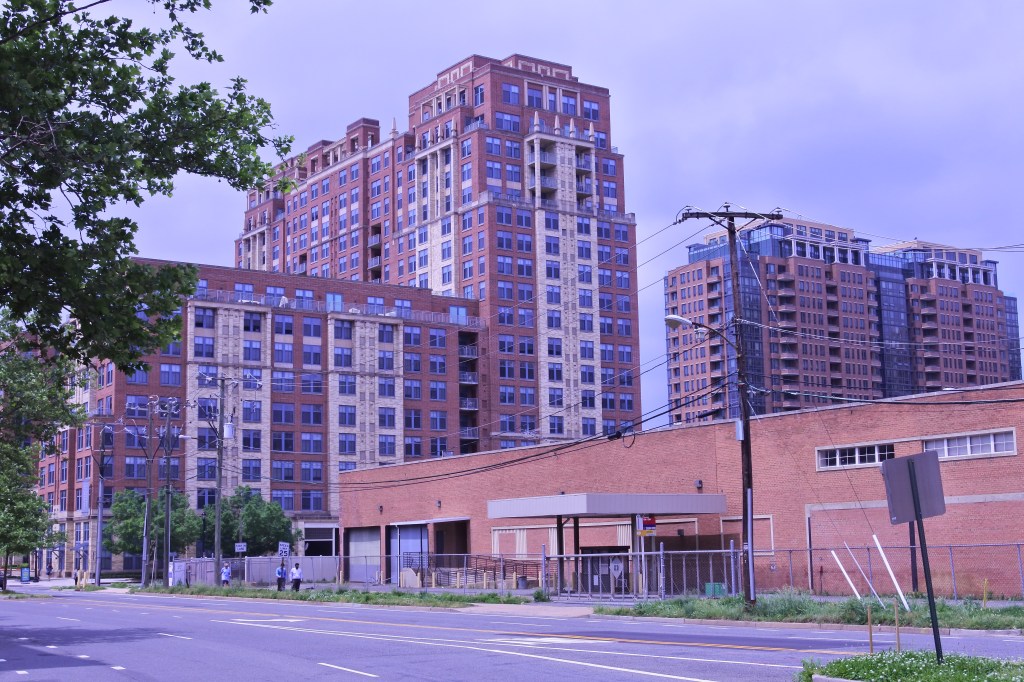
Arlington’s Pentagon City and Crystal City is a great example of how to built a relatively urban environment in the auto age. This is a rare American example where cars, pedestrians, public transit and bike modes are relatively. I can’t say I love the design and set back of the original buildings built in Crystal/Pentagon City in the 70s & 80s but their multi-model design was certainly ahead of its time. More recent in-fill developers have been much better from an architecture and urban design standpoint. The neighborhood is also a great example of how park and recreation space can be better integrated into the urban fabric when urban planners are given a clean slate.

Already Crystal/Pentagon City is a quality jobs hub with around 35-50K jobs. Amazon will bring over 25K jobs to Crystal in the next decade. The main areas to improve from an urban perspective is making Crystal/Pentagon City more family friendly. To achieve this more walkable schools are needed along with affordable 3-bedroom condos & townhouses. I fully anticipate future in-fill will continue to be built with quality urban design helping solidify Crystal/Pentagon City as a quality mixed-use district in Arlington. 
Click to view my Pentagon City and Crystal City albums on Flickr

URBAN STRENGTHS:

* Many quality examples of modern in-fill. The design of in-fill buildings are better since 2000 but even the older stuff from the 70s & 80s has decent urban design.
* Consistent quality sidewalk and ADA infrastructure network. Sometimes sidewalks are uncomfortable due to high traffic boulevards.
* While there are probably around 50K jobs in Crystal/Pentagon City, it also has very convenient access to Downtown DC and other Arlington Nodes.
* Great public transit access and bike infrastructure including many dedicated bike lanes and good bike share access.
* Good racial diversity.
* Lots of rental options but generally pretty expensive. Studios and 1-bedrooms rent in the $1,000s, 2-bedrooms in the 2Ks & 3Ks, and 3-bedrooms in the $2,000s-$4,000s. Fortunately there is some affordable housing options here.
* Great array of parks and amenities well dispersed throughout Crystal/Arlington City.
* Cultural amenities include a great array of restaurants, bars & cafes, two performing arts theaters, a couple local museums, many art galleries, and an upscale movie theater.
* With at least 4 shopping malls, several department stores, countless brand name stores, several grocery stores, neighborhood retail, and a good about of boutiques and creative stores, its hard to get better retail amenities than here.
* Very safe neighborhood with really no blight (partially due to age of development). 

URBAN WEAKNESSES:

* No historic architecture in Crystal/Pentagon City.
* Connecting is decent but rather confusing with the city’s curvilinear street grid.
* Generally very high incomes but some economic diversity more so in Crystal City.
* Age wise the neighborhood skews towards the young professional but about 35-40% family households here.
* For sale condos are kind of limited and expensive. 1-bedrooms general sell in the 300Ks and 400Ks, 2-bedrooms 500Ks & 600Ks, and 3-bedrooms 700Ks-1 Million.
* No schools within the Crystal/Pentagon neighborhood boundaries, some elementary and middle schools about 1 mile away. 

Rockville, MD another Washington D.C. suburb hosting a quality Urban Town Center

Downtown Rockville is really just a TOD plopped into the center of a mid century suburb. I included the entire new urbanist Rockville Town Square along with several other adjacent urban blocks. Jefferson St forms the southern border, Van Buren Street to the west, Dawson to the north, and the Metro line to the east.

Rockville, along with neighboring Gaithersburg and Bethesda, is at the core of the I-270 Technology Corridor, home to numerous software & biotechnology companies. Rockville remained a very small town until after WWII after it was connected via I 270. It had only 2,000 residents in 1940 and by 1970 was over 40,000. That being said Rockville’s historic urban core has always been pretty small. Yet this modest historic downtown was mostly wiped clean with ambitious urban renewal efforts  in the 1960s. The Rockville mall replaced it but for only three decades before it too was demolished. A new urbanist town center “Rockville Town Center” replaced this in 2009. This mixed use center works well with the nearby metro station built in 1984.

Because of Downtown Rockville’s demolition happy past, the lay out and urban form outside of the Rockville Town Center is haphazard and uncomfortable for pedestrians. The worse example of this is the auto centric Rockville Pike running along the eastern side of dwtn. Thankfully city leaders got it right with Rockville Town Center and created a high quality urban base for downtown to work from. It is well laid out, holds a great civic center, mixes retail, entertainment, and residential options (that are actually reasonably priced). Hopefully the City continues to construct quality in-fill projects in-line with the same spirit of the Rockville Town Center.
Click here to view the entire Rockville album on my Flickr page

URBAN STRENTHS:

* With the Metro and quality bus service dwtn Rockville has great public transit service. As good as most inner city neighborhoods.
* That helps provide good access to Dwtn where a metro ride is only 30 minutes. Driving on the other hand is 45-1 hr.
* Fair amount of dedicated bike lanes and several bike stations but doesn’t really connect to a larger system.
* Incomes are high but decent income diversity in Dwtn Rockville including a 15% poverty rate. Solid racial diversity as well.
* For sale options are mostly condos but reasonable prices. One can purchase a 1-bedroom condos in the 100Ks, 2-bedrooms in the 200Ks. Limited 3-bedroom product.
* Excellent example of how to build urban infill from scratch, especially at Rockville Town Center. Some crummy 1950s-1980 mid sized towers as well along Rockville Pike.
* ADA infrastructure and sidewalks is high quality but some streets have high traffic making it uncomfortable to walk.
* Cultural amenities include a great array of restaurants, bars, and cafes, a cineplex,  several live music venues, a community arts center, and a handful of art galleries and local historic museums.
* Excellent retail amenities as well include a supermarket, a couple pharmacies, a dwtn library, bookstores, and a bunch of clothing and neighborhood stores.
* Several walkable well rated schools are located on the border of Dwtn Rockville (i.e. Catholic grade school, public elementary & high school).

URBAN WEAKNESSES:

* Rockville Pike which flanks dwtn Rockville to the east is a basically a local highway. It has sidewalks but not a pleasant pedestrian experience.
* Good amount of rentals but on the high end. Rents start for a 1-bedroom at 1.5K, 2-bedrooms around $2,000. Limited 3-bedroom product.
* Park space is pretty limited within Downtown besides the excellent new urbanist plaza in the middle of Rockville Town Center. Welsh Park is also only 1/2 away and hosts a ton of park amenities.

Fredrick, MD a satellite city with great History and Urban Environment

Fredrick is a City with a ton of history. Its location where the Catoctin Mountains meet the rolling hills of the Piedmont region made Frederick a crossroads even before European explorers arrived. The town was platted in 1745 and early settlement beginning in the late 1700s. Many of the first settlers were German reformers and Lutherans. Fredrick quicky became the county seat for Western Maryland and an important market town. It was also the center of the young nation’s leading mining area in the early 19th century. As a major crossroads, Frederick saw considerable action during the American Civil War. Fredrick’s population grew slowly after the Civil War and into the 20th century hitting 9,000 in 1900 and 16,000 after WWII. Suburban growth from DC  fueled explosive growth since WWII and Fredrick now tops 70,000.

The Downtown portion of Fedrick is the best part of the City complete with gorgeous 19th century architecture, especially the Italianate styles, a great main street along Market Street and several blocks of Patrick St. Recent interest in the town from DC residents looking for a quality walkable environment but cheaper housing has led to a renaissance for Dwtn Fredrick. This has sparked a great food & beverage scene, cultural arts, new recreational spaces, and lots of retail and independent stores. The next step to improving downtown Fredrick’s urban environment is investing in the gritty edges of town. Still room for quality urban in-fill here. Downtown also needs a supermarket. Some larger retailers would also be nice.

Click here to view my photo Album on Flickr

URBAN STRENGTHS:

* Wonderful historic 19th century architecture mixing Georgian, federalist, and Italianate styles.
* Infill limited overall but some great new construction in the NW section of downtown reflecting historic styles and massing.
* Quality local transit service.
* Great connectivity and street grid.
* Nice bike path along the Carroll Creek greenway. No bike sharing stations yet.
* Highly walkable neighborhood.
* Great economic diversity in Dwtn Fredrick.
* For sale housing is good mix of price points and cheap compared to DC prices. One bedrooms condos/rowhouses sell between 150-300K. 2-bedrooms 150K-450K depending on condition, 3 & 4 bedrooms between 200K-500K. Some higher end product selling for over 500K.
* Rental options pretty reasonable as well. 1-bedrooms rent in the low $1,000s. 2-bedrooms in the mid $1,000s. Limited 3-bedroom rentals. Generally above 2K. Some affordable rentals downtown as well.
* Carroll Creek provides great park & recreational amenities including a bike trail, playground, sport fields, a bandstand, and green space. Some smaller parks spread throughout dwtn Fredrick as well.
* Culturally dwtn hosts a great array of restaurants, cafes, & bars, many museums & historic sites, several theater company and an Arts Center, live music venues, and a plethora of art galleries.
* Retail options include a great variety of boutiques, creative stores, bookstores, Dwtn library & post office, a couple drug stores, and other general retail.
* Blighted limited to the edges of Dwtn. Crime rates in Fredrick near national average.
* Schools are well rated in Fredrick. 2 walkable elementary schools sit just outside of dwtn. The middle & high school ae located about a 2 miles away. 
URBAN WEAKNESSES:

* ADA infrastructure and sidewalks and generally good but ADA compliant ramps are limited and much of the sidewalks are brick due to historic preservation requirements.
* Not convenient to the District as its an hour drive (on a good day) and 1.5 transit trip. But lots of jobs nearby along I-270.
* Limited racial diversity. A mostly white population.
* Supermarket is located about 1 mile outside of dwtn.
* Very inconvenient assess to Downtown DC. Most jobs lie along 270 and are only accessible by car. 

Woodley Park, a high-end DC neighborhood next to the National Zoo

Straddling Connecticut Avenue south of the National Zoo is Woodley Park a high end district developed mostly in the early 20th century. The eastern half of the neighborhood is mostly rowhouses fabric, at least in the residential streets. Connecticut Ave has been mostly replaced with large apartment buildings between the 1910s and 1950s. The western half of Woodley Park is mostly high priced single family homes. There are two urban commercial nodes along Connecticut, the smaller one at the western gate of the National Zoo and the larger one at Calvert Street.

Overall this a pleasant but not spectacular urban district. It lacks the commercial district and mixed-use development to an elite DC urban neighborhood. Neighborhood strengths include its metro access, quality parks and walkable schools, and decent bike infrastructure. Along with being a wealthy enclave, many embassies have claimed the neighborhood’s large historic mansions. Like most of DC, Woodley Park needs more affordable housing options. It also has limited family households and retail and cultural amenities are a bit lacking (at least compared to adjacent DC neighborhoods).
Click here to view the Woodley Park album on my Flickr page

URBAN STRENGTHS:

* Very convenient access to DC with a metro ride of no more than 20 minutes, easy bike ride, or short car trip.
* Bike infrastructure is good, but not as good as other central DC districts.
* Good density likely due to the high concentration of large apartment buildings here.
* Great racial diversity here helped by the high concentration of embassies in the district. 
* Very safe neighborhood with really no blight.
* Good Park amenities with Rock Creek Park wrapping around the southern edge of the district and the Tergaron Conservatory to the north and some athletic fields associated with neighborhood schools. No really neighborhood parks though.
* Great tree canopy including lots of street trees.
* Nice mix of historic SF homes, rowhouses, and large apartment buildings from the 1910s-1940s. Urban in-fill is of a good quality as well.
* Good but not great cultural amenities including a nice cluster of Diverse restaurants, bars, and cafes along Connecticut Avenue. The biggest attraction is the Smithsonian Nat Zoo on the district’s eastern edge.
* Retail amenities is similar including a pharmacy, a hardware store, bookstore, and some creative retail and boutiques. No grocery store, library, post office, or larger retailer. All of these amenities are in the adjacent Cleveland Park district walkable to half of Woodley Park residents.
* Nice mix of walkable private, public schools within Woodley Park. 

URBAN WEAKNESSES:

* Medium income is over 100K but some economic diversity in Woodley Park.
* Only about 1/4 of households have children.
* Great concentration of rentals but expensive. Studios start in the low $1,000s and 1-bedrooms rent btwn 1.5K-2.5K, 2-bedrooms generally in the $2,000s and 3-bedrooms over $3,000s.
* For-sale options also expensive. The lower end are studio condos starting in the 200Ks. Most 1-bedroom condos sell for 300-400K, 2-bedroom condos range from 400K into the low millions depending if its luxury. Any 3 or 4 bedroom option selling over 1 Million. 5 bedroom generally over 2 Million. 

Downtown Bethesda, MD- a lesson on how to transform a mid-century American suburb into a thriving urban district

My evaluation for Downtown Bethesda included the dense Bethesda core along with the more urban pre WWII neighborhoods surrounding it. My main criteria was good connectivity to the dwtn and sidewalks. I also used block groups as a general guide to create the boundaries. The boundaries generally include Maple Street and the Columbia Country Club to the east, Chestnut St. to the north, Cluster & Fairfax Rd to the west, and Little Falls Pkwy and Norwood Park to the South. This includes several Chevy Chase neighborhoods (i.e. West Chevy Chase Heights and Chevy Chase Terrace).

Bethesda remained a small crossroads village through the 19th century. A streetcar line was established in 1890 and suburbanization increased in the early 1900s. Bethesda’s population really didn’t explode until the 1920s with the advent of the automobile. Following WWII Bethesda saw several major employers move to the City with the establishment of  National Naval Medical Center and NIH Clinical Center. Rigorous Dwtn growth filled the expansion of the Metrorail into Bethesda in 1984. DC’s height limits also encouraged mid and high-rises to come to Bethesda. Downtown Bethesda’s most recent urban project is the Bethesda Row mall, a well planned new urbanist mixed-use shopping center that integrates well into the Downtown Fabric. There are also several residential subdistricts surrounding Downtown, a mix of large single family homes and apartment/condo buildings.

Downtown Bethesda really excels at creating an retail & cultural amenity rich but walkable environments. It also has good schools, quality parks, great bike infrastructure and convenient transit access. The major area for improve here is more affordable housing. That also drives a lack a racial and economic diversity in the City. 
Click here to view my Bethesda album on Flickr

URBAN STRENGTHS:

* Convenient access to Dwtn DC with only a 25 minute metro ride. Car access is also pretty good if traffic is reasonable. The Capital Crescent Trail is a dedicated bike trail that can connects to dwtn in only about an hour.
* Several other bike paths in Bethesda and good bike station coverage in Dwtn.
* Over 50% of households are family households, a very high number for DC. Median age is a bit high. 
* Some affordable housing exists here thanks to progressive Montgomery Co policies, but still not enough.
* Excellent tree canopy including lots of street trees in the core of Dwtn.
* Great mix of parks and recreational amenities including well dispersed urban parks, dwtn plazas, trails, a public pool, recreational centers, and sport fields.
* Great cultural amenities including diverse restaurants, tons of bars, cafes, and live music venues, several theaters including some historic ones, a cineplex, many art galleries and a modest Children’s museum.
* Dwtn Bethesda is also well served retail amenities including several supermarkets & pharmacies, a dwtn target & staples, Bethesda Row (a well integrated urban mall with tons of shops and clothing stores), a post office & Library, and good array of locally owned boutiques, bookstores, and antiques. Several Hospitals are also located a mile north.
* Very safe community with limited blight.
* Solid walkable access to several highly rates public elementary schools and the Chevy Chase High Schools.
* High quality sidewalks and ADA access. A couple spots that are more stingy with sidewalks due to historic suburban layout.
* Very urban and well design in-fill. Less attractive 60-80s buildings remain but have decent urban form. 

URBAN WEAKNESSES:

* Street grid is connected but can be confusing at times as many curvilinear roads meet with standard gridded streets.
* Diversity is surprisingly limited in Bethesda (about 82% white). This is also a very wealthy area (Medium income is 150K). Only 2.5% of population lives in poverty.
* Good diversity of For-Sale housing product with a mix of condos and SF homes. But very expensive. 1-bedroom condos sale 250K-500 and 2-bedrooms 350K-600K although new product can be more. 3-bedroom start at 650K and go up into the low Millions. 4-bedrooms above 1-million.
* Rentals start in the 1,000s for Studios, 1-bedrooms start in the high $1,000s, and 3 bedrooms start in the high $2,000s. Lots of product. 

North Berkeley, CA- home of the Berkeley Rose Garden

I included both North Berkeley and the smaller Northside district in this evaluation. North Berkeley is the district just north of Central Berkeley, Downtown, and the Northside. While not as dense or urban as Central Berkeley, North Berkeley is still a high quality urban environment built between the 1900s-1930s. It has several commercial nodes including a couple blocks on Euclid Ave, a long stretch of Shattuck Ave, and several small commercial nodes along MLK way. Its a nice mix of SF, duplexes, triplex, and small multi-family. Larger apartment buildings near Euclid Ave. Walkability is very high in North Berkeley as it is well served by quality public transit and good bike infrastructure.

Like Central Berkeley, housing is very expensive here. There are also limited family households and curb cuts are not always up to current ADA standards. I guess another improvement would be more density and multi-family housing to help alleviate the district’s high housing costs. But that kind of upzoning is best done on a citywide or regional level to avoid creating higher costs through speculation. 
Click here to view my North Berkeley album on Flickr

URBAN STRENGTHS:

* Solid urban density allowing most trips to be convenient by foot or bike.
* Much of North Berkeley can still be reached on foot from Downtown Berkeley. Convenient access to Downtown Oakland, and solid access to downtown San Francisco as the BART skirts the southern edge of the neighborhood. Challenging to travel to San Jose or the Silicon Valley where other major employers are concentrated.
* Good  bike infrastructure with plenty of stations but not as many dedicated bike lanes as most Berkeley neighborhoods.
* High percentage of affordable housing options, which helps mitigate the City’s crazy high housing costs. 
* Several high amenities parks and recreational spaces well spread through North Berkeley. Also convenient access to the Cal U campus.
* Lots of small-medium sized museums within Downtown Berkeley or University of California. Good access to museums offered in Oakland and San Francisco. 
* North Berkeley holds a great concentration restaurants, bars, and cafe. Also a good array of art galleries, a community theater, and a couple museums. Still walkable to most North Berkeley residents are all the cultural amenities of  Central Berkeley and Cal U.
* The neighborhood is also well served by walkable retail including a nice mix of independent and chain stores (dwtn targets). There are also a couple service grocery stores and pharmacies. The Target and other important retail conveniences dwtn and walkable to most residents in North Berkeley.
* High quality schools and walkable to almost every Berkeley resident.

URBAN WEAKNESSES:

* Family households are pretty limited. But good age diversity amongst adults with a mix of students and established households.
* Very wealth off economically but students and young professionals add some nice diversity.
* Good offering of rental product but very expensive here in Berkeley. Most studios start at around 2K and most 2-bedrooms start at 3 K. Most for-sale options start at 650K.
* Great sidewalks and solid curb cuts. Modern ADA curbs are often missing at intersections however.
* Berkeley certainly feels very safe and has very little blight but crime rate is higher than the Nat. average. This may be partially attributable to its  homeless situation.
* Some less attractive modern construction from the 60s-80s but generally still good urban form.

Central Berkeley, CA- Home to UC Berkeley and a Great Urban Environment

Overall, Berkeley lives up to the hype from a city planning and urbanist perspective. Central Berkeley was mostly built out by the 1920s after an explosion of growth following the San Francisco earthquake of 1906. There is quality urbanism on almost every corner of the City supported by medium density typically-10-20K individuals per square mile. Central Berkeley in particular excels from an urban perspective and is in the same class of neighborhood in my opinion as the best of Manhattan, Central Philly, Boston, and Washington DC. Central Berkeley boast great density, access to several subway stops,  excellent cultural and retail amenities, bike convenience, great parks, and UC Berkeley right on its doorstep. The best parallel to Central Berkeley once you throw in a University is probably the portion of Cambridge surrounding Harvard.

Yet like even the best of urban environments, there are still areas that Central Berekely can improve upon. The most important is creating more affordable housing. 1-bedrooms apartments start at $2,000 and small for-sale condos around 500K. There is also a homeless problem in Berkeley, which may be driving the City’s higher than average crime rate.
Click here to view my full Downtown Berkeley album on Flickr

URBAN STRENGTHS:

* Great density on bar with many inner San Francisco neighborhoods.
* Central Berkeley has walkable access to a decent amount of jobs in Dwtn Berekely and Cal U. But also great access to Downtown Oakland, and solid access to downtown San Francisco via Bart. Challenging to travel to San Jose or the Silicon Valley where other major employers are concentrated.
* Central Berkeley is highly walkable with great public transit access and dense bike infrastructure.
* High percentage of affordable housing options, which helps mitigate the City’s crazy high housing costs. 
* Nice mix and distribution of small and medium parks Central Berkeley including Ohlone Greenway, MLK Central Park, People’s Park. Also convenient access to all the green space of Cal University.
* Lots of small-medium sized museums within Downtown Berkeley or University of California. Good access to museums offered in Oakland and San Francisco. 
* Great concentration of cultural amenities in Central Berkeley including an extensive range of ethnic restaurants, cafe culture, eclectic live music venues, and many community theaters and several independent movie theaters. 
* Central Berkeley is well served by walkable retail including a nice mix of independent and chain stores (dwtn targets). There are also several service grocery stores and pharmacies. Only thing really missing is a department store.
* High quality schools and walkable to almost every Berkeley resident.
* Curb cuts at all intersections almost always with modern ADA curbs.

URBAN WEAKNESSES:

* Some less attractive modern construction from the 60s-80s but generally still good urban form.
* Great offering of rental product but very expensive here in Berkeley. Most studios start at around 2K and most 2-bedrooms start at 3 K. Most for-sale options start at 800K. Some smaller studios available in the 400K & 500K but not enough. 
* Crime is relatively low in Berkeley but the homeless situation may increase the perception of crime unfortunately. 

Mt. Oliver, PA Pittsburgh’s most Urban Suburb

The borough is surrounded entirely by the city of Pittsburgh, having resisted annexations by the City. I equate the urban form and level of blight and disinvestment with Mt. Oliver to be very similar to its neighbor, Knoxville, part of the City of Pittsburgh. This is a streetcar suburb that developed in the turn of the century maxing out at 7,000 people in 1930. Currently just over 3,000 residents remain in Mt. Oliver, but the Borough still retains pretty good density and quality urban form along Brownsville Road.

But similar to Knoxville, Mt. Oliver is plagued with disinvestment and shuttered stormfronts. They both share the same main street along Brownsville Rd. Residential streets, while at similar price points to Knoxville, are more in tact and stable than Knoxville overall. Mt. Oliver has great potential to become a viable walkable urban neighborhood with concerted reinvestment and attention. Other areas that could improve its livability include bike infrastructure, better park amenities, and new restaurants, retail, and creative storefronts along Brownsville road. A supermarket would be a huge benefit, but that may be down the road. There is at least a Shop’ n Save near the borough’s southern border. 
Click here to view the entire Mt. Oliver album on my Flickr Page

URBAN STRENGTHS:

* Consistent sidewalks throughout but current ADA infrastructure is absent from most residentials streets. Common along the commercial corridor, Brownsville Rd.
* Good tree canopy due to the terrain but limited street trees along the Brownsville Corridor.
* Convenient access to Dwtn via both driving and public transit.
* Good connectivity in the street grid.
* Great ethnically diversity in Mt. Oliver.
* While blighted, Brownsville is a pretty in tact urban businesses district with attractive architecture. Some attention was made the its streetscape several decades ago.
* Good density, especially for a Pittsburgh community that has seen significant disinvestment

URBAN WEAKNESSES:

* No bike infrastructure.
* Very high poverty here (around 35%) but a decent middle class population.
*  For Sale Market is still pretty depressed with most homes selling below 50K. Stable well maintained stocks transacting btwn 50K-160K. Decent rental product with a mix of cheap and middle market prices..
* Cultural amenities are pretty limited to a handful of restaurants &  bars. Most residents are still within walking distance to Warrington in Allentown which has many amenities.
* Retail amenities are a bit better including a public library, hardware store, post office, banks, a family dollar, drug store, and hair salons.
* Still safety issues in Mt. Oliver and a fair about of blight along Brownsville and residential pockets.
* An elementary school is within the Mt. Oliver boundaries. Middle and Highschool are not walkable.
* Urban in-fill is pretty limited.
* Park amenities include the medium sized Transverse Park and a cemetery. 

Bridgewater, PA Historic town at the Confluence of the Beaver and Ohio Rivers

This small borough is one of the oldest communities in Beaver County. By 1870 it had a population of just over 1,000. That population grew slowly until 1930 where it maxed out at 1,800. Now about 800 residents remain in the Borough. Yet due to its historic development, Bridgewater has some nice urban attributes including a small but vibrant urban biz district along Bridge St., some nice historic homes laid out on a street grid, and some quality recreational amenities. To improve it urbanity Bridgewater needs to fill in the gaps of its historic main street with some quality mixed-use infill and additional residential to increase its low density. Bridgewater Commons on the Borough’s southern tip where the Beaver and Ohio Rivers meet includes several multi-family buildings set within a quality new park. More projects like this would go a long way to making Bridgewater a quality urban town.

Click here to view my Bridgewater album on Flickr

URBAN STRENGTHS:

* This is a solid middle class community with only a 7% poverty rate and medium income slightly above the state average.
* Median age is pretty high but 50% of households are family households.
* Some blight throughout Bridgewater but pretty low crime rates in the past 5 years.
* Stable for sale market with most housing selling in the 100K. Some product above 200 and below 100K.
* Park amenities included Bridgewater Riverside Park complete with a waterfront trail and amphitheater and the new acre Bridgewater Crossing.
* Nice historic building including lots of architecture from the mid to late 1800s.
* Quality urban form on the northside of Bridge St but mostly parking lots on the southside. 

URBAN WEAKNESSES:

* While a lot of intersections have current ADA infrastructure, especially in the commercial district on Bridge St. sidewalks in the residential streets are hit or miss.
* Bridgewater has a country feel to it with its lack of infrastructure and low density.
* Bike infrastructure is limited to a  small disconnected all purpose path along the Beaver River.
* Racial diversity pretty limited. Over 92% White.
* Rental stock is pretty limited here, although the new Bridgewater Commons apartment complex should help with this.
* Cultural amenities include several nice restaurants and bars along Bridge St. Not much else although the quality cultural amenities of Beaver are nearby.
* In additional to restaurants and bars some nice stores along Bridge St including several boutiques and some neighborhood retail. No post office or library in the borough.
* No schools within the Bridgewater Borough limits but a catholic elementary just west of town in Beaver. Also several decent public schools within a 5-10 minute drive.

Connellsville, PA Historic Coke Capital of the World

Most of the City was included in my evaluation except the western and southern extremes south of Green St and west of 9th Street. Connellsville was officially founded as a township in 1793. By 1870 the town had more than 1,000 residents. Population got a boast in 1909, when balloting in New Haven and Connellsville merged the  two adjacent boroughs. New Haven was to the west of the Youghiogheny River and Connellsville to the east. Due to the city’s location in the center of the Connellsville Coalfield, coal mining, coke production became the City’s major sources of employment. Connellsville became known at the “Coke Capital of the World” due to the amount and quality of coke produced in its many beehive ovens. Connellsville also has the distinction of 5 railroads running through it. Many of these historic train stations remain. But like most Western Pennsylvania towns Connellsville has less than half of its historic population, which peaked in 1920 with just under 14,000 souls.

From an urban perspective Connellsville is well built but the scars of deindustrialization and poverty are highly visible. Historic main streets cover a large area along E Crawford Ave (historic Connellsville dwtn), W Crawford Ave (historic New Haven dwtn), Pittsburgh and Apple Streets. Lots of great buildings but only some of them have been stabilized. The Connellsville Redevelopment Authority has done some work to stabilize buildings and bring in new businesses. But there is certainly much more investment needed to make this a viable urban area once again. 
Click here to view my full Connellsville album on Flickr

URBAN STRENGTHS:

* Sidewalks are pretty consistent throughout the City. Also ADA curbs are pretty prevalent as well especially in commercial areas.
* Dedicated bike trail passes through the westside of town, part of the larger Great Allegheny Passage.
* Over 50% of households are family households and decent generational diversity in Connellsville.
* Several ballfield sprinkled through but other nice recreational spaces including the bike trail along the Youghiogheny River, the multi-faceted East Park complete with a lake, and a couple other smaller parks.
* Excellent but underinvested historic architecture especially in the historic dwtn. Residential architecture is hit or miss.
* Generally pretty good urban form even with missing teeth and vacant buildings. Several commercial streets spanning both sides of the river.
* Good array of retail throughout Connellsville several main street areas, but never great concentration in one area. Amenities include several drug stores, a public library and post office, a hardware store, nice array of antique stores, and some boutiques, banks, Highlands Hospital, and a full-service supermarket but in a strip mall plaza. 

URBAN WEAKNESSES:

* Poverty is pretty high topping 20%. This helps drive down medium income to just over 30K. Racial diversity is also limited as over 90% of the population is White.
* Limited rental housing. For sale housing is a bit better. Half of available housing goes for less than 50K. Still plenty of stable options selling from 75K-200K. Limited product in the 200Ks.
* Cultural amenities consist of several restaurants & bars (mostly Americana and Italian), the art community center (Appalachian Creativity Center), a community theater, and a couple local museums.
* Lots of blight and abandonment here and crime is higher than the Nat. average.
* Decent access to walkable schools with both the Catholic grade school and high school with the City limits. Connellsville public middle & high school are also located within town but located in the extra Northeastern corner in an auto centric part of town.