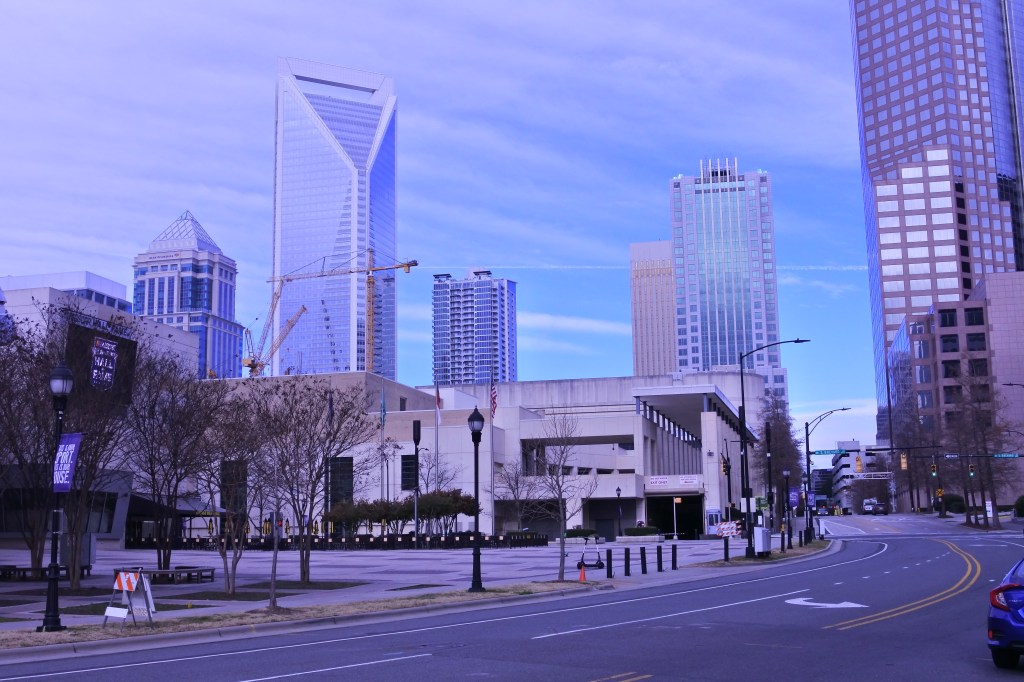
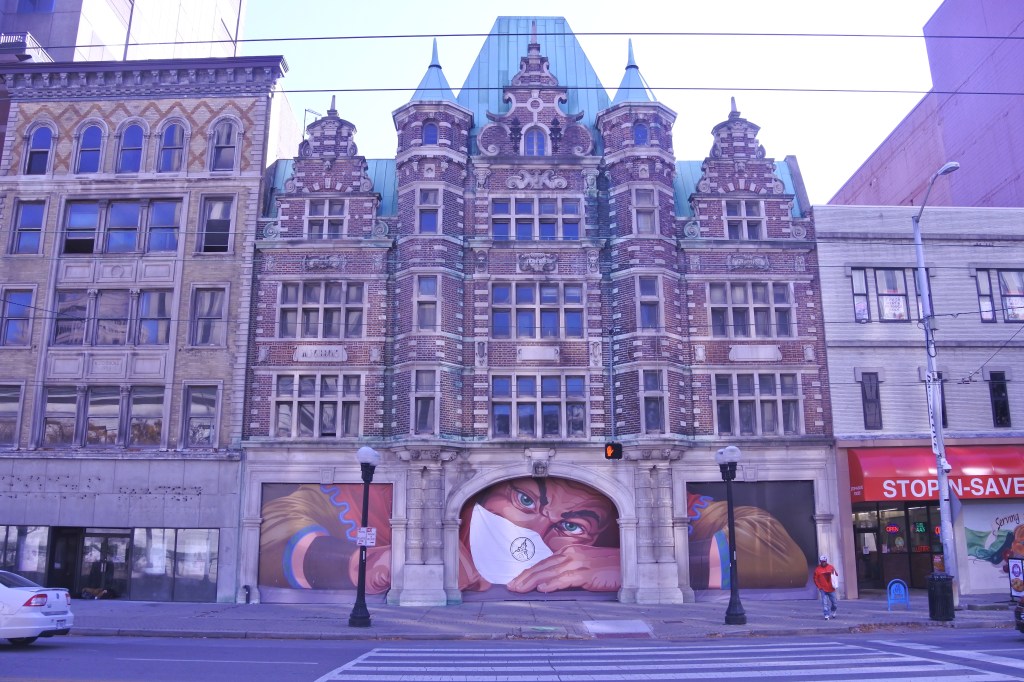
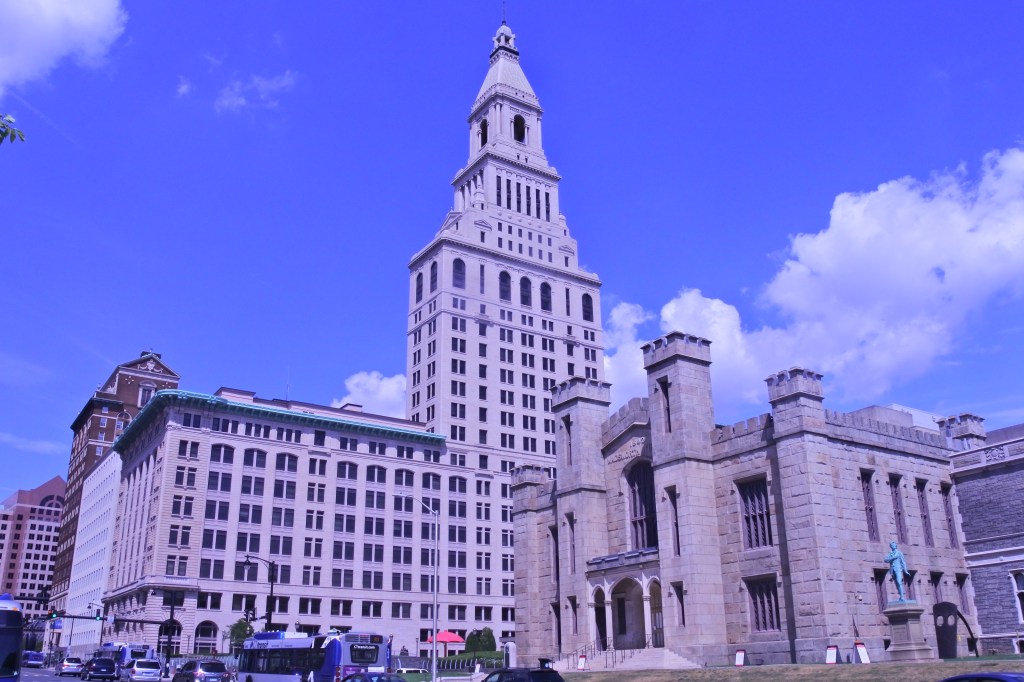
Downtown Wilmington, Delaware

Downtown is really an inverted L shape with Walnut clearly forming the eastern boundary. The western border is a bit fuzzier but from the south its Tatnal, West St., Jefferson, and the western down 11th street to  202. The northern border is the Brandywine Creek and the southern border Christina River with the inclusion of the Riverfront development down to New Sweden St. I like to subdivide Downtown into three districts: Midtown-Brandywine- centered along 11th & 12th streets up to Brandywine Creak; Historic Market Street- running north to South; Riverfront- newer development on the west bank of the Christina River.

Downtown Wilmington is dominated by corporations in many ways. The City has become a national financial center for the credit card industry, largely due to regulations enacted by former Governor Pierre S. du Pont, IV in 1981. Legislation eliminated the usury laws enacted by most states, thereby removing the cap on interest rates that banks may legally charge customers. Major credit card issuers such as Barclays Bank of Delaware, are headquartered in Wilmington.

Historic Market Street was the commercial center of the city between roughly 1870 and 1968 and is the most historically intact part of Dwtn with great architecture, the best being the Grand Opera House. Many restaurants, bars, and retail are here but the district seems to still struggle with vacancies. Surrounding Streets are often uninspiring modern offices with lots of surface parking . Brandywine-Midtown is a mix of early 20th century and modern office towners along 11th and 12th Streets. Between 12th and Brandywine is a lovely late 19th century historic rowhouse district. The Riverfront District was formerly a hub for manufacturing and the city’s shipbuilding industry. Rapid urban renewal efforts, driven by the state, changed the district in the late 1990s. A nice riverfront trail, many new office buildings and entertainment venues were born from these efforts. Unfortunately little attention was paid to urban design and the district feels rather dead and soulless with all its surface parking.

There are certainly good assets in Downtown Delaware and blocks of attractive historic buildings. What is needed is a focus on livability, walkability, and connectiveness to counteract decades of catering to suburban/autocentric corporate thinking. There are just too many surface parking lots, dead spaces, and large soulless modern corporate towers. My visit to Wilmington during the pandemic showed how dead Downtown Wilmington can feel when its not filled with office workers. Hopefully this leads City leaders to rethink their Downtown.

Click here to view my Flickr album for Downtown Wilmington, DE

URBAN STRENGTHS:

* Solid transit access throughout most of the City of Wilmington. Hit or miss in the suburbs depending on how old the suburb is and whether its connected to a rail line that flows through Wilmington and Philadelphia. Only 20 minutes from Dwtn Wilmington to Dwtn Philly on rail but over an hour to the Philly airport due to an indirect connection. Convenient access to Dwtn DE airport but not many flights out of there.
* Excellent economic and racial diversity among the population living Dwtn.
* Dwtn for sale housing is very reasonably priced. Nice pocket of rowhomes in the Mid-Town/Brandywine subdistrict selling between 200K-400K. Some even selling in the 100s just east of King Street. Newer/higher end townhomes and condos selling in the Waterfront district anywhere between 200K-450K.
* Dwtn hosts nice riverside parks and trails along especially along the Brandywine Creek but especially the Christina River.
* Cultural amenities include a decent array of restaurants, bars & cafes, several theaters (including the beautiful Grand Opera House), a indie theater and full cineplex, the Children’s Museum, the Delaware Sports Museum, & Contemporary Art Museum, several historic sites & buildings, the convention center, a minor league baseball park, and a decent array of art galleries. Dwtn also has an attractive historic library,
* Probably about 25K-30K jobs in Dwtn Wilmington, a good number considering the City has only 70K people. Very large corporate presence here.
* Large Biz Improvement District Dwtn helping with safety and cleanliness.
* Some good areas of historic architecture especially along Market but also 11th/12th Streets.
* Great concentration of schools Dwtn across all grade levels but many of them are ranked poorly. Still many perform highly making Dwtn an ideal place to walk to school.
* Good tree canopy for a Dwtn area.
* Streetscaping is overall of a good quality throughout Dwtn.

URBAN WEAKNESSES:

* Dedicated bike paths within dwtn and the City of Delaware and are pretty limited. A handful of nice paths along the Brandywine and Christina Rivers that feed into dwtn. Nice array of bike paths in the Wilmington Region however, but mostly disconnected with dwtn. No dedicated bike stations.
* Highly gridded and connected streets dwtn, but many wide one-lane roads exclusive to moving car traffic..
* Rentals are modestly priced. 1-bedrooms leasing in the low-mid $1,000s and 2-bedrooms in the $2,000s. Overall product is pretty limited and very few 3-bedrooms.
* Most plaza spaces dwtn are pretty unaspiring and small. But there are a couple decent ones…Tubman Garret River Park and Rodney Square. Both have decent programming and events Rodney Square is pretty centrally located and its Dwtn Civic plaza.
* Limited sporting venues and activities dwtn. No large Dwtn post office.
* Dwtn neighborhood services are kinda limited. No dedicated grocery. But Dwtn does have a couple of drug stores, plenty of banks. many discount clothing stores, a handful of boutiques, and tons of salons and barbershops. The Wilmington Hospital is also on the western edge of Dwtn.
* The skyline is rather short and state but well concentrated along Market and 11th/12th. Modern towers are very bland but some good historic ones.
* Some better newer infill in the waterfront but still pretty bland.
* Not great pedestrian activity, especially considering how dense the districts are around it. There just seems to be a lack of buzz Dwtn even though there are a decent amount of activities going on.
* Only a handful of satellite campuses dwtn amounting to now more than 2K students.
* Urban form is a mixed bag. Good along Market, decent in the Mid-Town-Brandywine district but pretty awesome at the River front where parking lots abound and along edges of Dwtn. Lots of dead space here due to corporate nature of Dwtn. 
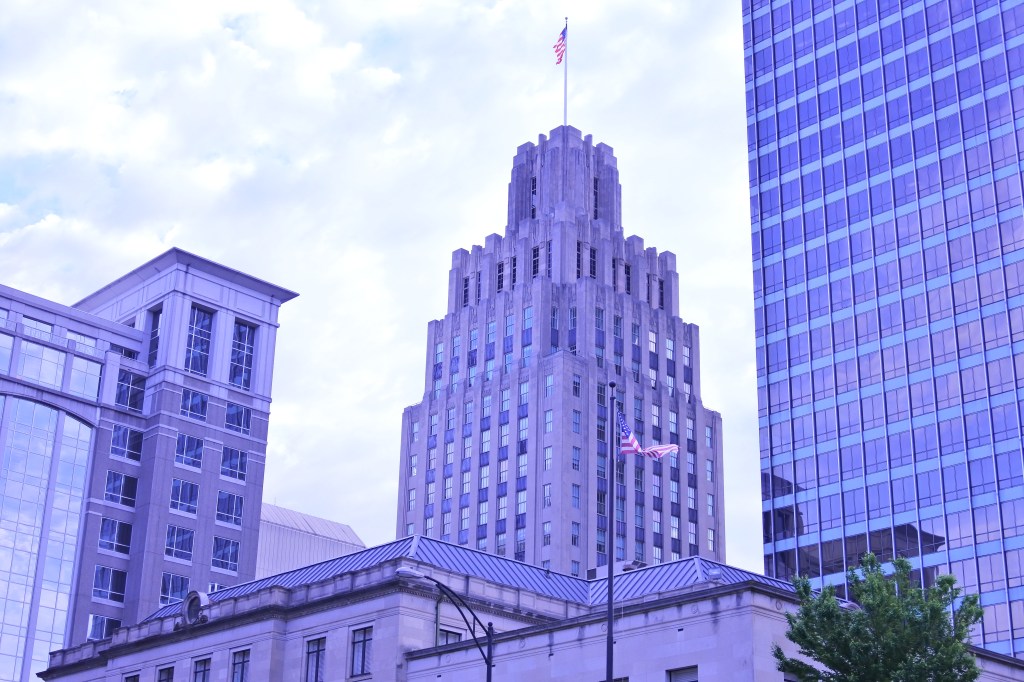
Downtown Winston-Salem

Downtown boundaries are a bit fuzzy. I used the boundaries of: Broad Ave to the west, 421 to the south, the railroad to the east and 6th/MLK BLVD to the north.

For southern cities of its size, Winston-Salem scores in the middle of the pack in my evaluation. On a positive note it has seen a resurgence in buzz and residential living recently helping to create three strong nodes: 4th street with its historic main street and theatre district. the Arts District centered along Trade, and the Innovation District (primary composed of old tobacco buildings). Dwtn also transitions pretty seamlessly to the West End neighborhood to the west. 

In-between these Dwtn nodes is mostly dead spaces mixing parking garages & lots and large office buildings. Like other southern downtowns, Winston-Salem does not provide good transit and bike connections to the broader metro area, nor is to a major jobs hub for the region. Another large deficiency is a lack of parks and a civic heart. The Innovation District’s Bailey Park helps with this somewhat, but it is located on the eastern edge of Dwtn. Downtown also needs a significant increase in neighborhood serving retail and uses, although access to quality schools is certainly strong here.

URBAN STRENGTHS:

* Generally good racial and economic diversity Dwtn.
* The grid functions very well but lots of autocentric one-way streets through Dwtn.
* For sale prices are generally on the high end but good diversity in price points (high 100s-800K) and llots of 2-bedroom and even 3-bedroom townhouses. Rental inventory is a bit limited but moderate for Dwtns with 1-bedrooms renting in the low $1,000s and 2-bedrooms closer to 2K.
* Culturally a good array of restaurants, bars, and live music venues. There is also a thriving arts sub-district Dwtn hosting many galleries. Dwtn also hosts a nice set of theaters (movie, performing, community theater, and historic concernt hall).
* Typical gov’t bldgs and a nice convention center are located Dwtn.
* Host Dwtn safety and clean ambassadors.
* Nice array of boutiques and unique stores esp. along Trade St. in the Arts District. Also a couple drug stores.
* Solid historic architecture.
* Nice skyline, esp. for a mid-sized city.
* Distinct subdistricts (Arts and Innovation District) give Dwtn some good imagability. But certainly plenty of blah spaces Dwtn.
* Several quality schools located Dwtn. The public high school located just east of Dwtn. 

URBAN WEAKNESSES:

* Solid public transit access downtown and in immediately adjacent neighborhoods, but becomes mediocre pretty quickly. Also no transit access to the airport.
* Bike infrastructure is limited to several small bike lanes segments and dedicated bike stations only in Dwtn. Across the City/region only large segments of bike lanes in parts of South Winston-Salem.
* Family activities pretty limited.
* ADA infrastructure is a mixed bag throughout Dwtn.
* Parks are pretty limited. The best one is the new Bailey Park, part of the Innovation District. This is very active and has lots of events. The other two are tired looking modernist plazas.
* Bailey Park fucntions as the best Civic Plaza but not centrally located.
* Limited musuems and only one sports stadium located on the western edge of Dwtn.
* Total jobs Dwtn is only about 20-25K, pretty low for a region of this size.
* No supermarkets and certainly no Department stores.
* Much of the modern architecture is bland modern towers. Some nice post modern skyscrapers.
* Urban form solid along Trade St and 4th St and some surrounding streets and in the Innovation District. Much of Dwtn are either autocentric and filled with skyscrapers not relating well to the street.
* Only a small medicine college located Dwtn, but Winston State University (5K students) is lcoated just SE of Dwtn. 

Downtown Columbus, OH

Downtown Columbus has many subdistricts  but the main three can be separated into:
– the Discovery District (eastern edge)
– the High Street Corridor (main north-south St.), also called the Uptown District
– the Riverfront along the Scioto River.
Other subdistricts include the Arena District (NW portion), Capitol Square (at High and Broad), and the Columbus Civic Center (along the River).

The City of Columbus began to develop in 1812 with the purpose of creating the state’s new capital. This was originally layer out across the river in Franklinton, but quickly shifted to Downtown Cbus. The current statehouse was built in 1857. By the turn of the 20th century, office and commercial activity was concentrated along High and Broad  in addition to Long and Gay Streets. Surrounding these areas was several mostly residential neighborhoods including German village to the South, Market Mohawk to the SE, large high-end mansions further east along Broad, and Fly town where the Arena District stands now.

The Post WWII era brought many modern high-rises  helping Dwtn attract more office jobs. Columbus also engaged in very intense urban renewal efforts leading to the wholesale removal of much of its southern southwestern, and eastern edges. This left behind large swaths of dead spots comprised of surface parking lots, and low rise buildings. Fortunately the character of Dwtn has slowly improved for the better the past two decades thanks to several new parks, the Arena District, revitalization of in-tact historic streets like High, Gay, and Long, and significant in-fill throughout. Dwtn has also invested much in its streetscaping and bike infrastructure.

The next stage in Dwtn Cbus’ urban growth evolution is to become a solid place to live. This requires more residents, in-fill projects on surface parking lots, and much more retail amenities like a full service grocery store, target, and small businesses. Hopefully with Columbus’s strong market this can become a reality soon.
Click here to view my Downtown Columbus Album on Flick

URBAN STRENGTHS:

* Nice set of dedicated bike lanes within Dwtn and especially out to the metro area via several trails along rivers. Dedicated bike lanes connections to City neighborhoods is not terribly comprehensive. Good dedicated bike coverage Dwtn and to many inner-city neighborhoods in Cbus.
* Very gridded Dwtn street network but plenty of wide 1-way streets. Fortunately many of these converted a parking lane to dedicated bike travel.
* Generally good ADA infrastructure depending on what part of Dwtn one is at.
* Lots of good urban in-fill being built Dwtn, helpful to offset some of the awful stuck built between the 1960s-1980s.
* While not to the level of Dwtn Cleve or Cincy, the buzz of Dwtn Cbus is improving.
* Culturally several modest  museums Dwtn including the Art, State House, the Cultural Arts Center, the Fire Museum , and several historic homes. The Veterans & COSI museums are just across the River in Franklinton. Good array of performing arts theaters mixing historic and new theaters, including many small theaters. Cbus also has an Opera and Ballet. Also a decent array of art galleries, restaurants, bars, nightclubs, and live music venues.
* Dwtn hosts both a NHL stadium , MLS team, and minor league baseball park in the Arena District. The Convention Center is on the border with the Short North.
* At 25%, pretty high pct of households are family households. Pretty good for Dwtn.
* Pretty good array of for-sale product, generally higher end but good diversity. 1-bed condos sale btwn 150K-350K. 2-beds are at a similar price but some higher end product in the 400Ks&500Ks especially when you include townhomes. Good array of 3-bed product selling btwn 500K-1M.
* Good amount of rental product, typically priced for American Dwtns. 1-bedrooms lease in the $1,000s, 2-bedrooms in the 1,000s& 2,000s. 3-bedrooms are pretty limited.
* Dwtn Cbus has come a long way with improving its parks Dwtn in the past decade building the Scioto Mile Promenade, Bicentennial Park, Columbus Commons, McFerson Commons in the Arena District, and North Bank Park Pavilion. This supplements older parks & plazas such as Sensenbrenner Park, Topiary Park, and the Ohio State House Grounds.
*  Solid Dwtn employment with over 85K jobs. Vacancies are average.
* High college enrollment with nearly 34K students attending school within Dwtn. 

URBAN WEAKNESSES:

*Overall transit service in Columbus is so . Probably about middle of the pack for a major American City. Fair amount of suburban areas are within the City.
* No bus connection between dwtn and the airport
* Density is so , but improving as more in-fill res. projects come to Dwtn.
* Some spots of good vibrancy but certainly plenty of dead spaces Dwtn.
* No strong civic plaza although one could argue its either the Statehouse or Bicentennial Park. Columbus Commons was meant to be this and has good programming but was a major disappointment from a design perspective.
* Two nice high schools downtown. Also a arts middles school but located outside of the Dwtn area.
* Decent Dwtn retail and neighborhood services but not on the same level as Dwtn Cleve or Cincy. No supermarket, shopping mall, nor major retailers. But Dwtn does offer several drug stores, a hospital, Dwtn library and post office, and some boutiques and clothing stores. Better shopping amenities located in adjacent inner city district of German Village and the Short North.
* Many surface parking lots have been built on, but Columbus certainly has plenty more to go especially in the eastern half of the district. Massing is often good in areas of density and form. But also areas of crummy 1960s-1980s low rise buildings often with auto centric orientation.

Downtown Columbia, SC

I kept the Dwtn evaluation area pretty tight to include the Statehouse but not any part of South Carolina University. Using this criteria the borders were Gervais St. to the south (with the exception of the statehouse complex), the railroad/Assembly/Park St. to the west, Elmwood to the north, and Bull St to the east.

Downtown Columbia has two focal points… Main Street which runs north to south and terminates at the State house and Congaree Vista along west Gervais St, home to many of the City’s oldest buildings (a mix of warehouses and storefronts). Modern high rises are focused along Main Street and surround the statehouse.  These two commercial nodes have seen significant reinvestment since the 1990s but are not well connected. Outside of these two nodes Downtown Columbia is generally an uninspiring mix of modernist buildings, large surface parking lots and parking garages, suburban low rise retail, and disconnected historic housing.

Hopefully there is enough momentum dwtn to continue attracting new mixed-use housing, office jobs, and retail to expand quality urban fabric throughout Downtown Columbia and to eliminate dead spots. 
Click here to view my Downtown Columbia Album on Flickr

URBAN STRENGTHS:

* Sold ADA and sidewalk infrastructure, but not always comfortable to be a pedestrian due to the fast traffic.
* Transit access is good Dwtn and decent in the surrounding inner ring neighborhood. The rest of Columbia is pretty so and so and limited transit access to the suburbs. Convenient transit access to the airport, but it’s only a regional airport.
* Great street grid and connectivity, but more streets have high cars traffic and aren’t comfortable for pedestrians.
* Great economic diversity and solid racial diversity among Dwtn residents.
* Decent set of parks including Finlay Park, Memorial Park, the statehouse grounds, and Boyd Plaza. Boyd Plaza is the closest space I’d associated with a Civic Plaza. Its run by the Art Museum and has some events.
* Culturally a nice array of restaurants, cafes, breweries, & bars, art galleries, museums, and a handful of theaters, live music venues, and an independent cinema. Regional amenities include a convention center, and dwtn library.
* Dwtn has a business improvement district.
* Most retail amenities concentrated along Main Street and western Gervais St. (aka Congaree Vista). Along with lots of food & beverage amenities these nodes include a lot of boutiques, clothing stores, banks, and creative stores. Limited retail amenities in the dead spots of Dwtn. A public supermarket/drug store sits on the western edge of Dwtn. Main St also hosts weekly outdoor markets every Sat on the street.
* Great college present within and around Dwtn including around 30K students at USC and a Clemson Law School campus.

URBAN WEAKNESSES:

* Density isn’t great in Dwtn. Still need for a lot more residential options.
* decent dedicated bike share system dwtn and surrounding districts but dedicated bike lanes is pretty limited in Dwtn and across the Columbia Region.
* Generational Diversity is pretty limited Dwtn, but fair amount of attractions (mainly museums) for families.
* For sale housing is pretty limited Dwtn but affordable. 1-bedroom condos sell in the 100K-200Ks and 2-bedrooms in the 200K&300Ks. Some 3-bedroom product selling in the 300Ks & 400Ks.
* Rentals are pretty limited too and moderately priced. 2-bedrooms lease in the $1,000s and 1-bedrooms around $1,000s.
* Sports stadiums limited to the Colonial Life Arena, primarily used by South Carolina University.
* Dwtn employment is only about 20,000. Jobs seem to be growing, but this is a pretty low amount of Dwtn employment for a region population just over 800K.
* Decent K-12 school options include a handful of elementary schools.
* Skyline is so .

Charlotte’s Uptown- the largest CBD of the Carolinas

Uptown Charlotte is split into four wards intersected by the crossroads of Trade and Tryon Streets. I used the borders of Interstate 277 and the railroad (to the north). Traditionally Dwtn extends all the way north to 277 but this area feels like a separate district to me. The term “Uptown” referring to the geographic location of Tryon and Trade Street, sitting at a higher elevation than the rest of the city. Much deliberation went into whether to use Uptown or Downtown or even City Center. Uptown eventually won out with City Center meaning Uptown and surrounding inner city neighborhoods.

The 1st Ward , once considered one of the most dangerous areas in Charlotte, has been redeveloped thanks to a HUD Hope VI grant into a mixed income district. Urban form here is ok as all housing is new. Not really mixed-use, but some good urbanism near Tyron and First Ward Park is attractive. The 2nd Ward  was formerly the location of the predominantly black neighborhood, Brooklyn, before urban renewal took over. Probably one of the biggest tragedies in Charlotte resulting in a uninspiring modernist environment.  Uptown’s third ward hosts the bulk of “Dwtn fabric” surrounding a streetcar line and Tyron Street. Lots of good mixed-use development, skyscrapers, cultural assets, sport stadiums, and the attractive Romare Bearden Park. The 4th Ward   can be considered a stand alone neighborhood as well but is integrated seamlessly with Dwtn. It contains Charlotte’s best Victorian turn of the century architecture with sensible modern in-fill and many great mixed-use amenities.

With the under development of the 1st & 2nd Wards, Uptown Charlotte has plenty of areas that need further urban development and infill to have the complete Dwtn package of vibrancy and walkability. Given the furious pace of new construction, I’m hopeful this will eventually occur. 
Click here to view my Uptown Album on Flickr

URBAN STRENGTHS:

* Great ADA infrastructure and generally good sidewalks, but street can be very wide and auto centric making it uncomfortable to be a pedestrian.
* Good population density in Charlotte but often pretty spreadout. 4th Ward has excellent density.
* With all most all the building being new its fortunately that much of it is quality design and good form. Generally the best architecture is concentrated in the core (Tyron & Trade) and in the 4th Ward. The 2nd Ward is spread out with unattractive buildings and the first ward is a mix of decent residential bldgs.
* Public transit is better is Charlotte than one would expect providing excellent service to Dwtn and to surrounding inner city neighborhoods. A couple miles out transit service is so , but limited outside of the City (keep in mind that Charlotte includes lots of suburban areas.)
* Great connectivity but lots of high traffic one way streets.
* Great dedicated bike lanes Dwtn and to inner ring districts. Decent connect out to the post WW II districts. Bike sharing system is limited to Dwtn and a handful of inner city neighborhoods.
* While almost exclusively modern, Charlotte has a great skyline lots of concentrated high rise towers.
* Great array of for sale housing Dwtn with a fair amount of moderately priced options. 1-bedrooms generally sell in the 200Ks, 2-bedrooms are generally 300K-400K but more expensively luxury product, good amount of 3 bedrooms but generally very expensive. Nice array of rentals priced similarly to most Dwtns… 1-bedrooms in the $1,000s. 2 bedrooms btwn 1.5K & 3K,  and a good array of 3 bedrooms.
* Culturally a good amount of restaurants & bars but pretty average for American Dwtns, lots of theaters (only one is historic), an Imax, several live music clubs, a handful of art galleries, and a great array of museums. Regional amenities include the convention center, a wonderful dwtn library, several stadiums hosts a professional football, basketball, hockey, and minor league baseball.
* Several high quality recreational spaces & parks along with many small corporate plazas. But no definitive civic gather spot.
* Schools include a couple elementary schools, a high school, and school for children w/ cognitive disabilities. Pretty good college presence with several dwtn only campus enrolling 6-7K students and Piedmont Community College located just outside of Dwtn.

URBAN WEAKNESSES:

* Next to Las Vegas, Dwtn Charlotte has the least amount of historic architecture. Certainly a feeling of sterileness with all of its newness and lack of character.
* Uptown has a very strong office market with high rents and low vacancies. Total jobs is 70K, still much lower than comparable cities like Cleveland or Cincy, but trends are certainly good.
* Dwtn retail amenities is still lackluster. While there is a  supermarket, several drug stores, plenty of banks, only a handful of boutiques and creative stores. No bookstore.
* Solid urban form along the main streets of Tyron and Trade but pretty poor in the southern half of Dwtn (1st & 2nd Wards)

Downtown Youngstown, OH- a struggling downtown that has made great strides towards remaking itself

Downtown Youngstown is a historically well built center for a once thriving mid-sized American City. The skyline is filled with wonderful mid-sized early 20th century towers cladded in gorgeous detailing. But one will notice that no modern high-rises grace their presence  here. This is due to the economic collapse that afflicted Youngstown in the 1970s and 1980s. Dwtn Youngstown like many other American cities also experienced competition from suburban malls. City leaders tried to combat this through creating a pedestrian mall along Federal Street, its largest retail center. Unfortunately this backfired and helped fueled high vacancies.

The early 2000s brought renewed efforts from civic leaders to revitalized Dwtn. They first re-opened Federal Street, built a new sport’s arena, and began investing in the renovation of their vast supply of underutilized historic towners into new office space and apartments.

I wouldn’t call Dwtn Youngstown vibrant, but the revitalization efforts of the past two decades have certainly removed the worse blight and decline and stabilized Dwtn. Current efforts are to improve the streetscaping, make Dwtn more multi-model, and better connect it to Youngstown State. The new Riverfront Park and Amphitheater was also a great addition to Dwtn as there were almost no park/plaza spaces Dwtn previously. 
Click here to view my Downtown Youngstown Album on Flickr

URBAN STRENGTHS:

* Great historic architecture.
* Generally good ADA and sidewalk infrastructure but some crumbling sidewalks on the edges of Dwtn and curb cuts not up to date with ADA.
* No great public transit. Ok within Dwtn and YSU but mediocre ant best even in Youngstown’s inner city neighborhoods.
* Great racial diversity.
* Large student population attending within or close to Dwtn. 12K students attend YSU just north of Dwtn and a couple thousand more at Eastern Gateway Comm. College.
* While no modern towers are here, Dwtn Youngstown has a decent skyline composed to consisted mid-sized 1900-1930s towers.
* While there are a fair about of parking lots dwtn, especially along the edges, solid urban from along Federal and Wick/ Market.
* Very challenging to understanding the # of jobs in Dwtn Youngstown. My sense is that its a decent # (say 25-40K) but still riddled with high vacancy and low lease rates. Positive momentum seems to be  bldg. though.
* Good amenities Dwtn including a sports arena, good amount of restaurants, bars, & cafes, the DeYor Performing Arts Center, the outdoor amphitheater at the Riverfront Park,  several nice museums, a Dwtn post office and library.

URBAN WEAKNESSES:

* Bike infrastructure is very limited within the City and most of the Metro. Best bike trail in the City is in Mill’s Creek. Some larger trails in the metro.
* Very high poverty rate but some diversity with new market rate propping up.
* Really not family households in Dwtn but some adult age diversity.
* Some decent rentals but housing product is very limited especially for sale (condos).
* The large sidewalks and blvd square at Market and Federal is the only park or plaza space in Dwtn Youngstown. Very surprising.
* Dwtn is a bit rough on the edges with a fair amount of homeless but its generally safe.
* Youngstown Early College School is a solid college prep option just north of Dwtn. Some elementary schools abouts 1 mile south of Dwtn. Not much else.
* Some decent new apartments on the north edge of Dwtn next to YSU, but not modern high-rises.
* Pretty dead during off work hours, especially outside of Federal Street.
* Park space had been limited to just the small plaza at Federal & Wick for a long time. Fortunately the expansive Riverfront and amphitheater were recently constructed. This also functions as Youngtown’s civic heart even though its not a plaza space.
* No Convention Center Downtown and limited sport facilities.
* Some dwtn retail including the 20 Federal Place mall, several boutiques, and some locally owned creative retail. No supermarket nor pharmacy however. 

Downtown Portland, ME- great urban core for an underrated city

Downtown boundaries are a bit convoluted and debatable. I simply followed what Google Maps provided.

Downtown Portland is typical in many ways for a New England Dwtn. Great historic architecture dense, vibrant, and lots of retail remains. Streets are also a bit windy and confusing but much more legible here than Dwtn Boston. Dwtn Portland certainly experienced its own period of blight akin to most American Dwtns with the construction of the suburban Maine Mall  in the 1970s. Yet this didn’t last too long and Dwtn Portland was largely sparred from major urban renewal efforts. Revitalization really started in the adjacent Old Port district with tourist and lots of local businesses blossoming. Since Dwtn and Old Port are so intertwined, Dwtn quickly began to see spill over revitalization as well. The industrial bayside district to the north of Dwtn has also seen lots of new development including a Trader Joe’s Wholefoods, and lots of higher end housing.

While statistically a very safe place, Dwtn still feels a bit rough around the edges partially due to its large homeless population, but also because there are some dead spots and underutilized buildings, especially in the eastern half of Dwtn. Dwtn could also use a better college age presence along with more affordable housing. Its also not a huge employment hub, but this may be a difficult deficiency to overcome given the fact that the City of Portland only has 66,000 residents even if the region is over 600K. But I like Dwtn Portland, ME overall and feel its a very comfortable and walkable place tying in nicely to several great adjacent urban districts. This is a very underrated urban place, that only New Englanders seems to know. 
Click here to view my Downtown Portland, ME album on Flickr

URBAN STRENGTHS:

* Great density for an American Dwtn and well integrated into several surrounding urban districts.
* High quality architecture, especially historic. In-fill is good as well generally with good urban form. Some of the 60s-80 buildings are pretty ugly though.
* Good transit service within Dwtn and surrounding neighborhood. Decent service to the rest of the City. Some service to inner ring suburbs.
* Good system of bike lanes Dwtn and out to Portland Neighborhoods. Some connections out to the suburbs and larger Metro. Dockless bike share system is in its pilot year.
* Great economic diversity Dwtn. Okay racial diversity.
* No larger parks or recreational spaces Dwtn but lots of nice small and medium sized plazas.
* Congress Sq Park is I would consider Dwtn’s best civic space. This is the most dynamic space with lots of events and even a “friends of Congress Sq Park”.
* Generally a pretty safe Dwtn but a fair amount of homelessness helping it to feel a bit edgy.
* Generally great urban form but a handful of surface parking lots on the eastern edge. Also good urban street form.
* Great cultural amenities include a nice array of restaurants, bars, & cafes, great array of theaters and music halls including (a cineplex, indie film theater, and several performing arts theaters), lots of art galleries, the Portland Art Museum, and several smaller museums and historic houses.
* Other Dwtn amenities include a dwtn library and post office, the Cross Arena, and plenty of courts and government buildings.
* Downtown has a safety ambassador program
* Great retail amenities Dwtn, especially if you include adjacent neighborhoods that are walkable… Trader Joe’s, Wholefoods & several smaller grocers, a drug store, good array of boutiques and unique stores, several bookstores, plenty of bank branches, and lots of home good stores.

URBAN WEAKNESSES:

* Decent amount of rental product but generally runs expensive. 1-bedrooms lease anywhere in the $1,000s, 2-bedrooms in the 1K&2Ks, no 3-bedroom product available.
* Similar situation for for-sale product. Most are condos selling anywhere between 350-800K. Some cheaper condos selling in the 200Ks. Decent amount of affordable rentals dwtn.
* No much of a skyline but some nice historic mid-sized towers and chapels.
* Portland’s main high school is located Dwtn and several others walkable to Dwtn like Baxter Academy for Technology & Science. A couple others about a mile out.
* Only a small Art College Dwtn. University of Southern Main is about a mile away with around 5,000 students.
* No convention center and only one sporting center, the Cross Arena.
* Difficult to find any hard numbers but I don’t sense that Downtown Portland is a huge employment hub. Probably 10-20K jobs especially if you include the great Dwtn area.
* No Target or other larger retailers. 

Downtown New Haven, CT- one of my favorite American Downtowns

Downtown New Haven was originally laid out as nine squares in 1638. This includes modern day New Haven Green, the immediate surrounding central business district, as well as a significant portion of the Yale University campus.

Dwtn New Haven has become one of the  most residential mid-size city downtown helping to support downtown businesses and retail extending even to secondary streets. Its vibrancy, mixed-use development, cultural amenities, and strong walkability make it one of the best Dwtns in the United States.

But as always there are still areas that could be improved from an urban perspective including more rental product and affordable housing, a larger office population and several key retail amenities (i.e. supermarket and a department store).
Click here to view my full Downtown New Haven album on Flickr

URBAN STRENGTHS:

* Excellent public transit access Dwtn and throughout the full New Haven City. Good transit access to surrounding inner ring suburbs.
* Pretty good bike infrastructure within Dwtn including several dedicated bike lanes and a bike sharing system within Dtwn and inner ring neighborhoods. Limited bike lanes out to the suburbs other than a lengthy lane going to the north.
* Excellent racial and economic diversity helped certainly by Yale.
* Pretty nice mix of for-sale options with condos selling between 100K-500K, and larger townhouse and rowhouses selling between 500K-800K.
* Good vibrancy Dwtn.
* Great historic architecture especially with Yale University buildings. Solid urban infill as well.
* Wonderful urban form and streetscape in Dwtn as well. Some surface parking lots on the eastern edge of Dwtn.
* Nothing spectacular with the skyline but some nine consistently with the midrise building and some very nice Yale University towers.
* Great imageability with numerous historic landmarks, New Haven Green, and well laid out streets.
* New Haven Green is a wonderful civic space located in the middle of Dwtn and Yale. Lots of programming here. Other greenspace include plenty of gorgeous quads in Yale University but this is still public space. Some nice rec spaces just outside dwtn as well.
* Generally very walkable infrastructure but good amount of ADA current curbs missing.
* Good array of public and private schools generally forming a ring about 1/2 mile outside of dwtn. Rankings are ok but very walkable schools.
* Large student population in Dwtn including over 12,000 at Yale, 7,000 at Gateway Community College.
* Lots of cultural amenities including a movie theater, several community theaters and live music venues, tons of restaurants, bars, & cafes, several art galleries, and a great array of museums. Many of these amenities are run by Yale.
* New Haven has a dwtn improvement district and safety ambassador program.
* Good array of retail amenities including several small grocerias, great array of clothing stores, many banks, several books stores, several pharmacies, and a dwtn post office and library

URBAN WEAKNESSES:

* 25% of households are family. Pretty decent for a Dwtn, but limited age diversity as most residents are students.
* Rental product is a bit limited and expensive.
* No large convention center dwtn, although there are plenty of small ones. No major sporting arenas.
* Not a ton of office jobs in Dwtn by Yale University itself brings 15,000 jobs. Probably 25,000 total jobs in Dwtn New Haven, an okay number for a metro of  862K.
* Very low vacancy rates though, speaking to the demand of office space dwtn.
* Large supermarket is about 1 mile outside of dwtn.

Downtown Dayton, OH

Downtown Dayton is probably one of the better mid-sized American Downtowns thanks to its extensive remaining historic fabric, good transit network, great bike infrastructure, and quality parks. Downtown also holds a large college population attending school at Sinclair Community College (18,000 students) and is a major employment hub for the Dayton Region, even with the departures of several major fortunate 500 companies to the south.

I find that its easiest to divide Downtown Dayton into two halves. West and East of Ludlow Street. West of  Ludlow is  where the majority of Downtown’s urban renewal efforts occurred. It includes Sinclair Community College, the Montgomery jail and court complexes, some bland modern office towers, and a lot of surface parking lots. Not a lot of life and vitality on this side of Downtown. East of Ludlow  holds the bulk of Dayton’s historic fabric and architecture along with its better modern high raises, theaters, bus hub, public library, Riverscape Park, and the Courthouse Square. It is the more interesting and vibrant half of Downtown, seeing the bulk of new housing and development. Main Street forms the main spine of Downtown Dayton where the convention center, historic arcade, Courthouse Square, several theaters, and Dwtn’s best skyscrapers  are all locate.

My hope for Downtown Dayton is continued civic focus and investment as this could be a very special urban environment. Blight and dead space is what is holding Downtown back the most. It will be interesting to see if the opening of the renovated Dayton Arcade is the spark needed to set this all in motion. 
Click here to view my Downtown Dayton album on Flickr

URBAN STRENGTHS:

* Dwtn has a good public transit itself. But transit service is a bit disappointing across the City of Dayton. Decent  service to many of the Dayton  suburbs depending on their age.
* Great bike infrastructure including a bike share system dwtn and to surrounding inner city neighborhoods and wonderful bike lane coverage within Dwtn and connecting to Dwtn throughout the City and region.
* Generally good racial and economic diversity dwtn both represented in its residential and daytime population.
* For sale product is a bit  limited and concentrated along the eastern edge of Dwtn near Webster Station. Good diversity of price points. 1-bedrooms range from 100K-350K. More 2-bedrooms available ranging from 125K-400K. 3-bedroom condos go between 400K-650K.
* Great of array of quality historic architecture.
* Over quality parks in Dwtn Dayton including the new Riverscape Metro Park, Courthouse Square (a decent well programmed civic plaza), and several other decent plazas spread throughout.
* Excellent ADA infrastructure throughout Dwtn.
* Good array of public & private elementary and high schools in and around Dwtn.
* Great college population dwtn with 18K students enrolled at Sinclair. 
* Pretty good streetscaping especially along the more investment parts of Dwtn. Helps that the City has streetscape guides for Dwtn.
* Pretty impressive employment hub with around 50K jobs. Generally positive outlook for Downtown with recent job growth but still low rents and high office vacancy rates.
* Cultural amenities include: a modern &  historic theater, two specialty movie theaters, several local museums (and the art museum across the river), a couple live music venues and nightclubs, and cultural amenities of Sinclair College.
* Other important amenities dwtn include the Dayton Convention Center, concentration of courthouses, City hall, Dwtn post office & library. 

URBAN WEAKNESSES:

* Dwtn rentals are a bit limited but modest price point. 1-bedrooms lease in the low $1,000s and 2-bedrooms anywhere in the $1,000s.
* Decent skyline but certainly nothing spectacular.
 * The majority of infill is ugly 60s-80s bldgs on Sinclair College. Some decent modern skyscrapers and newer apartment in-fill.
* The western half of Dwtn where Sinclair College is located was part of a pretty extensive urban renewal campaign. This part of Dwtn is pretty lifeless, uninspiring, and filled with lots of surface parking lots.
* Tree canopy is ok. Dwtn could use more street trees.
* Dwtn residential density is pretty low. Plenty of room for an expanded Dwtn population.
* Downtown Dayton still seems to have an image problem even with its quality form and decent amenities. This should continue to get better especially with the opening of the renovated Dayton Arcade.
* Some bars, restaurants and cafes dwtn but pretty limited for a Downtown. Only a handful of art galleries. The only major sports arena is the minor league ballpark in adjacent Webster Square district.
* While dwtn hosts a small discount grocery store and CVS pharmacy retail is pretty limited to a handful of boutiques, a couple bookstores, and neighborhood retail. 

Downtown Hartford, CT- More than just the Insurance Capitol of the World

I used pretty standard boundaries to measure Downtown Hartford, but excluded Downtown North of it is a mostly vacated district.

Downtown Hartford is similar to other east coast midsized cities like Syracuse, Albany, Scranton, Allenton… compact with great historic architecture, but still struggling to rebound from disinvestment. Yet Hartford still excels as a major employment hub hosting over 80K jobs bolstered by being the state capital and hosting many corporate headquarters. Insurance is one of Hartford’s strengths earning it the nickname the “Insurance Capital of the World”.

Dwtn Hartford also contains many great cultural amenities including a gorgeous statehouse, Fredric Olmsted designed park located right in its heart, a gorgeous historic train station and many museums including the Wadsworth Atheneum, the oldest public art museum in the US. Some live, work, play momentum has come within the last decade adding more vibrancy and night life. But dwtn Hartford still has a ways to go before being a truly mixed-use center. Plenty of parking lots in the NW section of Dwtn to in-fill with dense apartment buildings to help make this happen.

Other urban attributes Dwtn Hartford could improve upon include better bike infrastructure, more economic & racial diversity among its residents, a real civic gathering space, and more neighborhood amenities like a supermarket and larger format retail.
Click here to view my Downtown Hartford album on Flickr

URBAN STRENGTHS:

* Excellent public transit within Dwtn, Hartford City Limits, and well out the Hartford Metro area. Decent access btwn dwtn and the airport via an express bus line.
* For sale condos and flats are a bit limited but good diversity in price. 1-bedrooms sell in the 100Ks & low 200Ks. 2-bedrooms go for anywhere btwn 150K-400ks. 3-bedrooms are limited and diverse in price.
* Rentals are more plentiful generally pretty reasonable in price, esp. for an east cost town. Studios start around a $1,000, 1-bedrooms in the $1,000s, 2-bedrooms in the high $1,000s. 3-bedrooms are very limited. 
* Dwtn Hartford have their very owned Olmsted designed park (Bushnell Park) which in the middle of Downtown, This transitions into the statehouse grounds. Several other plazas in dwtn but most of them or pretty dead or bland modern plazas. None of these are viable civic plazas. Bushnell Park fulfills this role.
* Culturally a nice array of historic and boutique theaters, plenty of music venues, and a small theater. Also plenty of restaurants & bars, lots of museums, and some art galleries. 
* Most dwtn amenities are here including the main post office & library, convention center, and many governmental offices esp. as this is dwtn.
* Dwtn is very high for the size of the metro at 80K and it is the largest employment center in CT.
* Office vacancy rates are high though hovering around  18%.
* Pretty good retail amenities with boutiques and neighborhood amenities.
* Great historic architecture and one of my favorite statehouses.
* Curb cuts fill every intersection but a mix of current and date ADA infrastructure.
* Great good urban streetscape but dependent on whether the street has seen major investment.
* While not terribly vertical, this is a nice compact skyline.

URBAN WEAKNESSES:

* Hartford’s bike share system is generally disjointed and in small bits and pieces. Yes there are several large regional bike paths that pass through the Metro, but they aren’t built for commuters. A bike Share system appears to be in the works as of 2020.
* Downtown residential population definitively skews white and young professional.
* Sport venues are limited to a minor league baseball stadium.
* No department stores or supermarkets.
* Dwtn feels sketch in parts but generally pretty safe.
* Plenty of schools kind of within walking district west and south of dwtn but generally not well rated.
* Decent college enrollment dwtn with about 4,000 students at the community college and a dwtn branch of UConn.
* Modern architecture not bad but generally modern office bldgs with so  urban form.
* Tree canopy is so  but great coverage in Bushnell Park.
* Fair amount of surface parking lots in the NW section of Dwtn but good urban form in the rest of dwtn.
* Dwtn Hartford still has an image problem but this seems to be getting better.