Earl’s Court is an iconic late 19th century London district made possible by the rapid expansion of the Tube system, in particular the Metropolitan District Railway and Piccadilly line in 1860. The neighborhood is bordered by the rail tracks of the West London line and District line separating it from the ancient borough of Fulham to the west. Earl’s Court gets its name from the now defunct pleasure grounds and the Earls Court Exhibition Centre, which served as one of England largest indoor arenas and concert venues. The Exhibition Centre is currently being redeveloped as a major mixed-use entertainment district which should tie in well to the Earl Court and West Brompton metro station.
The Earl’s Court neighborhood was built a bit latter than Kensington with all development coming in the 1870s & 1880s rapidly transforming the neighborhood from a loosely populated suburb to a dense London urban district. In its early years, Earl’s Court was a solid middle class neighborhood but with some poor pockets. After World War II, the area lost its luster hosting a large number of transient residents. By the late 20th century, Earl’s Court transitioned into a large immigrant community with nearly half of its residents being born outside of the Country. However, in the first couple of decades of 2000s Earl’s Court has risen in value, like the rest of West London, and become a major district for hotels and hostels given its convenient location to several tube lines.
From an urban perspective Earl’s Court thrives as one of London’s densest district’s, well connected to the tube system and buzzing with life thanks to a mix of fulltime and large tourist population. Earl’s Court Rd and Hogarth are the primary commercial districts providing excellent retail amenities esp. for a less affluent working class population. The redeveloped Exhibition Centre should further improve the district’s retail amenities. Earl Court lacks serious cultural amenities beyond restaurants, bars and cafes. It also lacks park space open to the public, has a limited bike infrastructure system, and has the autocentric Cromwell Road as its northern border.
Click here to view my Earl’s Court Album on Flickr
URBAN STREGNTHS:
* Nice biz district and pedestrian lane along Hogarth. Earls Ct Rd is also a great urban commercial district than runs the entire north to south length of Earl’s Court.
* Good tree canopy similar to Kensington.
* Great subway access including 4 stations and lines either within or nearby Earl’s Court.
* One of London’s most dense communities at just under 50K residents per square mile.
* Great food & beverage businesses. Also a couple live music venues & art galleries.
* Solid retail amenities concentrated mostly along Earl’s Court Rd & Hogarth. More retail amenities accessible to working class households than most Westend Districts.
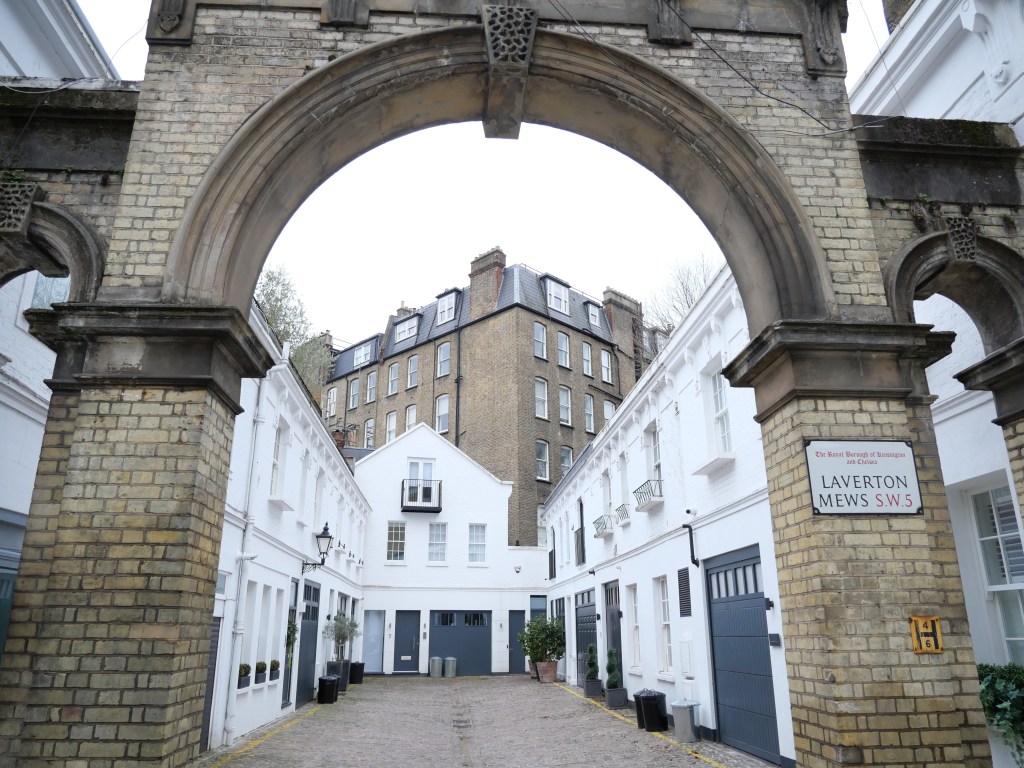
* Attractive mix of late 19th century architecture styles including Regency, Gothic brick revival, and mew rowhouse architecture.
URBAN WEAKNESSES:
- Not that much mixed-use development outside of the commercial corridors.
- Plenty of intimate gardens and squares but sadly almost all of them are private reserved for the terraced housing that surrounds them.
- Dedicated bike lanes are pretty fragmented.
- A couple pretty wide arterials that are borderline stroads (Notting Hill Gate, Kensington High, Holland Rd, and Cromwell Road).

