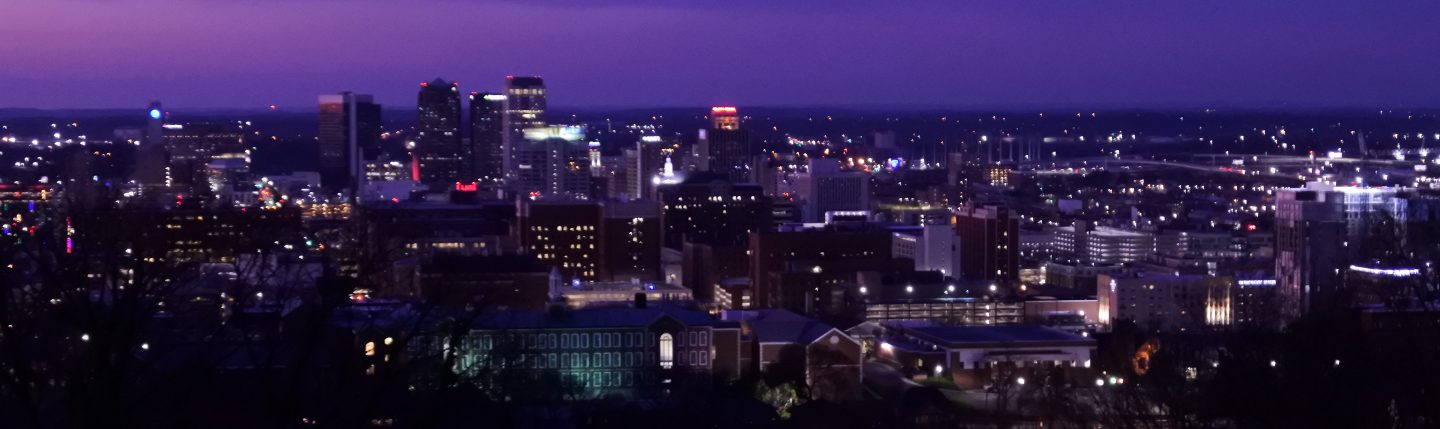
Kensington- West London District where Queen Victoria Grew up and an Upscale District Emerged during Her Reign

It was during the late 17th century when Kensington began rising to prominence, with William III and Mary II transforming the modest Nottingham House, into Kensington Palace. This was also where Queen Victoria was born, the last sovereign who lived here before the royal court moved to Buckingham Palace. Thanks to the location of Kensington Palace, the neighborhood saw sporadic suburban style development spring up housing the British nobility during the Georgian Era mostly in the 18th century. This consisted of the standard housing of the time for the nobility (Georgian terraced houses built around squares and gardens). Kensington Square and Campden Hill Square are good examples of this. Most of Kensington was built up during the Victorian period with the neighborhood filling in pretty quickly during the 1860s & 1870s. This rapid development was permitted of course by London’s rapidly expanding rail system populated by the City’s growing upper middle class hoping to exit London’s crowded central city. In addition to typical terrace housing from 1860s-1870s, Kensington also saw a good amount of late 19th Century Edwardian housing built characterized by more duplexes, mansion homes, and smaller scale rowhouses. This is most common along the western edges of Kensington.

Kensington really has never lost its luster and remains an extremely affluent area. The area has some of London’s most expensive streets and garden squares. The district’s commercial heart is Kensington High Street, running on an east–west axis. Several other impressive commercial districts crisscross their way across Kensington including (Gloucester, Old Brompton,  Fulham,  Kensington Church, and Notting Hill Gate) leaving few Kensington residents further than a 5 minutes walk from a solid biz district. The area around the South Kensington Station is a wonderful commercial node with a small pedestrian block on Thurloe. Just north of here is one of London’s best museum/university districts housing Imperial College London, the Royal College of Music, the Royal Albert Hall, Natural History Museum, Victoria & Albert Museum, and Science Museum. The area is also home to many embassies and consulates. From an urban perspective Kensington is a better district thanks to better access to subway lines and stations, better access to large park spaces (Hyde Park and Holland Park) incredible concentration of museums clustered around South Kensington Station and Kensington Garden. But Kensington does have some areas where it should improve. I’d like to see the neighborhood double its density from 20K to 40K residents given how in demand the neighborhood is and how expensive housing in general is in London. Kensington also deserves better bike infrastructure and access to more of the smaller squares and gardens that are reserved for the wealthy. 
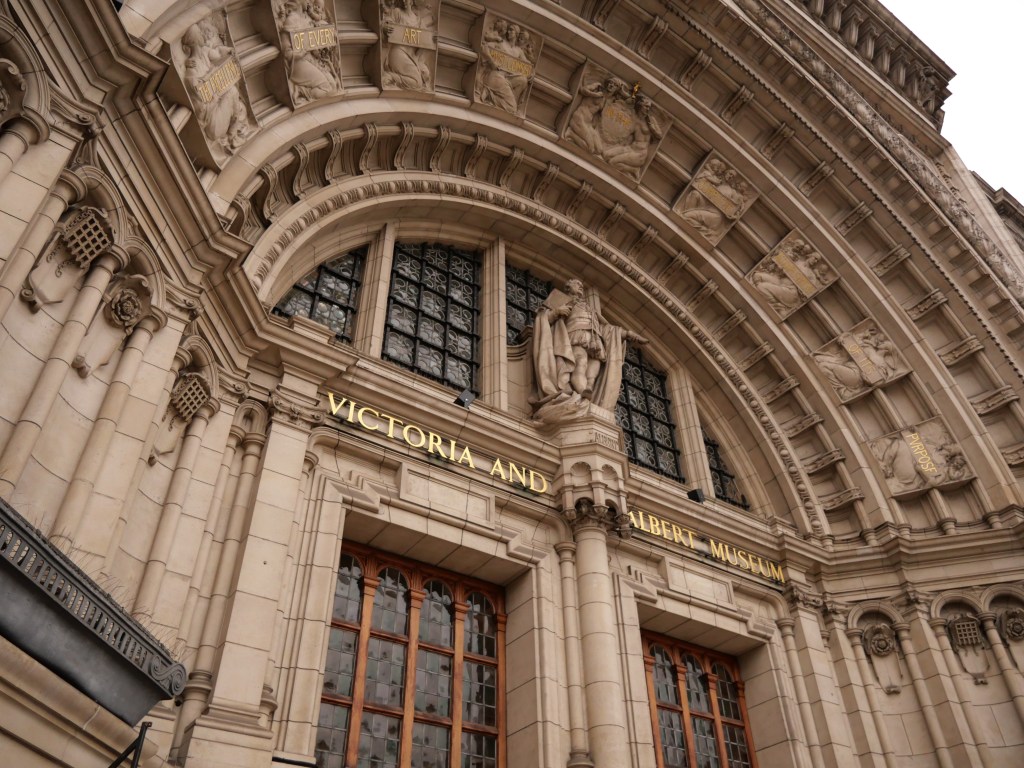
Click here to view my Kensington Album on Flickr

URBAN STRENGTHS:

* Several solid urban biz districts (i.e.  Gloucester, Old Brompton,  Fulham, Kensington High, Kensington Church, and Notting Hill Gate).
* South Kensington is a great TOD nod with a plaza space at Exhibition Rd and a pedestrian block on Thurloe.
* Major landmarks include: Royal Albert Hall, Kensington Palace, Royal College of Music,  and Nat. History Museum,
* Several great park spaces including Kensington Gardens & Hyde Park, Hollard Gardens, the expansive Brompton Cemetery,
* Solid mid-19th West London architecture. Nice mix of earlier brick Georgian styles, more ornate terraced housing, and cute mew style housing. Also some nice late 19th century Victorian style brick apartments and a good amount of smaller scaled rowhouses and attached townhomes.
* Pretty good tree canopy. Much better than neighboring Chelsea and older West London Districts.
* Decent density at around 22K residents per square mile but lower than older West London and Central London neighborhoods.
* Good metro coverage with 9 stations and 7/8 subway lines but there are still parts of Kensington (around Holland and Fulham rd. that are a pretty long walk from a station).
* Solid recent amenities with the best concentration of clothing, department stores & boutiques along Kensington Rd & Kensington Church St. Also a couple of shopping malls.
* Cultural amenities include numerous museums (including several world renowned ones), several performing arts & live music venues and plenty of food and beverage locals.
* Even with his high concentration of high-end housing about 20% of Kensington’s units are reserved as Social Housing. 

URBAN WEAKNESSES:

* A couple of pretty wide arterials that are borderline stroads (Notting Hill Gate, Kensington High, Holland Rd, and Cromwell Road).
* Not that much mixed-use development outside of the commercial corridors.
* Plenty of intimate gardens and squares but sadly almost all of them are private reserved for the terraced housing that surrounds them.
* Dedicated bike lanes are pretty fragmented.
* Given how in demand this neighborhood is, it should be a lot denser. 

Kensington- the Epitomy of a Brooklyn Neighborhood to me

When I think of Brooklyn, Kensington in many ways epitomizes what I picture Brooklyn to be… ethnically diverse but with a large Orthodox Population, dense walkable neighborhood served by great subway access (even an elevated heavy rail line), and turn of the century neighborhood with an eclectic mix of housing including single family homes, duplexes, brick rowhouses from basically every decade of the first half of the 20th Century, some late 19th century brownstones, and of course plenty of large 1920s brick apartment buildings. The main commercial streets of Kensington are Coney Island Avenue, Church Avenue, Ditmas Avenue, and McDonald Avenue. Ocean Parkway bisects the neighborhood from north to south with two lovely pedestrian promenade running down the center.  Kensington was first developed in 1885 after the completion of Ocean Parkway, named after the famous West London neighborhood.  Kensington was first built up during the turn of the 20th century as a mixture of attached rowhouses, single family woodframe homes, duplex’s, and small apartment buildings. But when the subway line came in the 1920s the area was rezoned allowing large apartment buildings to be built, especially along Ocean Parkway and on the neighborhood’s periphery between the 1920s-1940s. My sense is zoning made it difficult to continue building apartment buildings in the post War Area although some were still built along Ocean Parkway in the 50s and 60s. Throughout the first half of the 20th century, Kensington was considered to be West Flatbush. But this changed in the 1950s as eastern Flatbush became increasingly populated by African American and Afro-Caribbean families. Kensington adopted its new name as a way of distinguishing it from eastern Flatbush. Yet this name change did not completely insulate Kensington from the effects of urban decline and White Flight. By the mid-70s Kensington’s allure had waned as many young professionals choose the suburbs instead. Yet this era of decline was relatively shorted lived for Kensington as the area became in demand by the 1980s welcoming young professionals displaced by gentrifying lower Manhattan and Inner Brooklyn and many Orthodox Jews, African Americans and Hispanic and Latino Americans spilled over from Borough Park. New apartments and mixed-use buildings have incrementally been built since the 1990s across the neighborhood. More recently Kensington has welcome large numbers of  immigrants from Bangladesh and Pakistan. Even with its resurgence Kensington has managed to be a relatively affordable neighborhood compared to other more gentrifying Brooklyn neighborhoods to the north and north west.

One can still buy an attractive 1-bed condo for 400K or rent even a 2-bed in the 2Ks. Kensington is also one of Brooklyn’s safest communities and has a plethora of well rated walkable schools. For this to be a top notch Brooklyn community Kensington needs better urban infill is needed along Coney Island Ave & McDonald filling in lots of autocentric uses. I would also like to see more bike infrastructure, more cultural amenities and the road dieting of the excessively wide Ocean Parkway.

Click here to view my Kensington album on Flickr

URBAN STRENGTHS:

* Excellent density around 60K sq miles per person.
* Overall excellent connectivity and street grid.
* Good access to Dwtn Brooklyn and Lower Manhattan being 40 mins by train and about 45-50 mins to Midtown.
* Great diversity metrics especially racial and economic. There is a White minority of about 44% and large Hispanic and Asian populations here. Good number of families as well.
* Very safe community. One of the safest in Brooklyn. Some grit, esp. along Coney Island but not too bad.
* Solid ADA and sidewalk infrastructure. Some missing ADA curb cuts but not too bad.
* Decent historic architecture but certainly more plain than Inner Brooklyn neighborhoods.
* Solid tree canopy but certainly some holes.
* Good walkable schools with well rated public schools. Not much private school diversity as they are almost all Orthodox Jewish Institutions.
* Good park access in the northern half of Kensington with walkable access to the southern edge of Prospect Park and Greenwood Cemetery.  A handful of smaller parks throughout the neighborhood but would like to see more.
* Solid retail amenities including several supermarkets especially Kosher ones and ethnic grocerias, plenty drug stores and hardware stores, a decent # of clothing/home goods/furniture stores, a couple bookstores,  some gyms and dessert joints, a couple bike shops, tons of salons & barber shops a  public library and  post office. No hospital here but plenty of doctor’s offices and medical centers. Lots of other more working class serving stores like 99 c stores, laundromats, mobile stores, etc.
* Good # of rentals  and pretty affordable for Brooklyn standards. Studios, 1 beds, and 2-beds all lease in the 2Ks,  and a decent # of 3 -bed rentals hat lease in the 3Ks. Decent amount of the rental supply is dedicated affordable rentals or rent stabilized as 4/5s of rental product lease under 2K.
 * Lots of modestly priced smaller condos. Good # of studios that sell btwn  200K-400K, tons of 1-bed condos that sell btwn 200K-600K , 2-beds condos range btwn 300K-1.2M. 3-beds btwn 550K- 2M. 4&5  beds range anywhere btwn 1M and 2M. 

URBAN WEAKNESSES:

  • Urban in-fill is a mixed bag. Some good urban mixed-use buildings but not a ton of it. Decent amount of autocentric infill along Coney Island Ave., McDonald Ave, and 36th St.
  • Dedicated bike stations are only located on the northern half of the neighborhood and not enough east to west dedicated bike lanes.
  • Decent but not great cultural amenities, at least for Brooklyn standards. Good number of restaurants (esp. ethnic restaurants), bars, and cafes. Also a cinema located just south of the neighborhood, but not much else.
  • Lots of unattractive auto serving uses along Coney Island. Also limited boutiques and higher end specialized gift stores. Likely a sign that Kensington has not gentrified like other inner city Brooklyn neighborhoods.