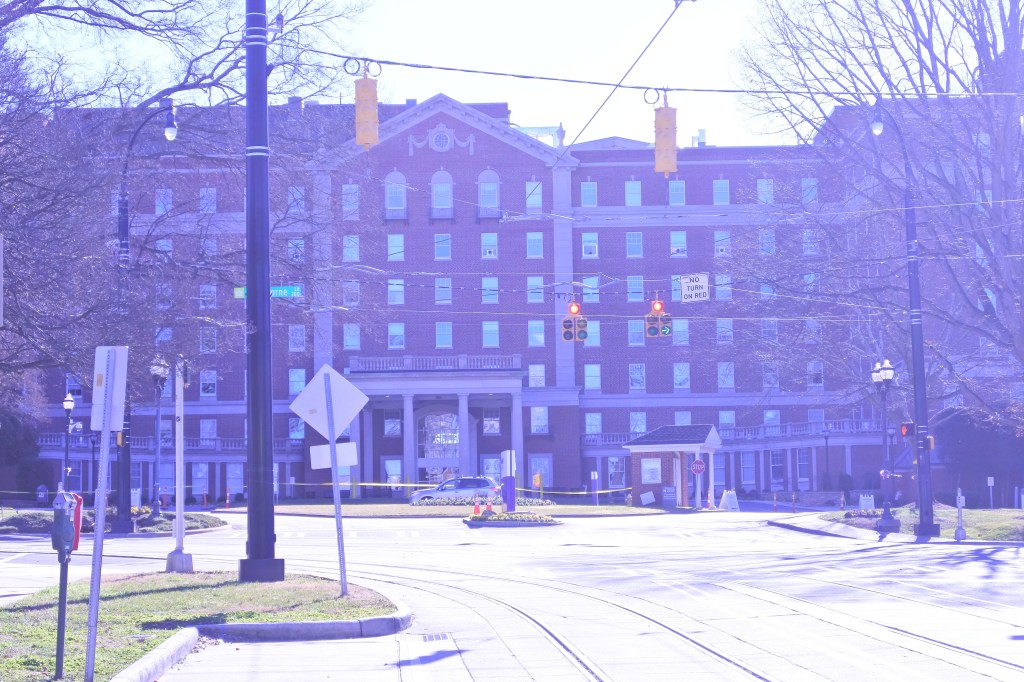
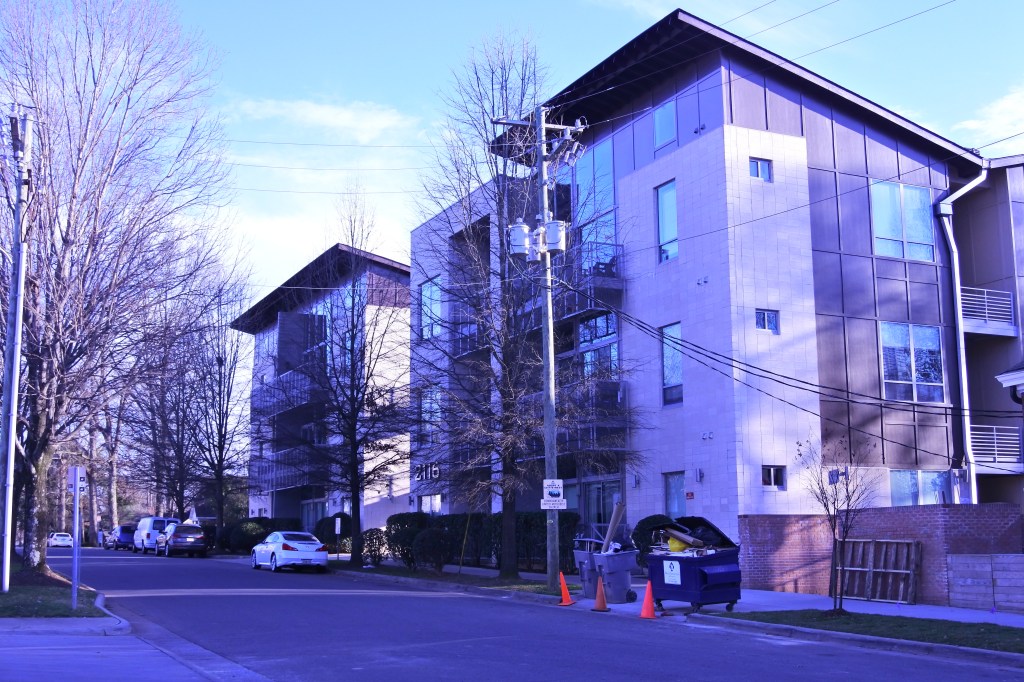
NoDa- Charlotte’s successful arts based revitalization story

I didn’t include the portion of NoDa between the railroad tracks and route 29 as it contains limited urban fabric.

NoDa is short for “North Davidson”. The area began as a self contained industrial village and development began in the early 1900s leapfrogging over undeveloped parts of the City. The main industry was mill and textile manufacturing. Worker’s housing was provided by the companies in small by sturdy bungalows and arts and craft homes. Things begin to deteriorate after WWII with the closing the mills and textile industries.  By the 1970s housing were deteriorating and many storefronts were vacant. Fortunately revitalization began in the 1990s fueled by an arts based renovation strategy. Investment continued over the past decades and its now safe to say that NoDa has been stabilized with most homes selling between 300-600K. This also brought back the historic commercial district at Davidson and 36th Street. NoDa now hosts Charlotte’s largest historic business district.

But there are plenty of areas that NoDa can improve. For one, there is only one school in the entire neighborhood, sidewalks are missing on many streets, and the Plaza Ave business district along NoDa eastern edge is pretty blighted and auto centric. There is also need for more density which could help provide more neighborhood amenities and vibrancy. 
Click here to view my NoDa album on Flickr

URBAN STRENGTHS:

* Excellent public transit access including a light rail line running thorough and convenience access to Dwtn .
* Sidewalks are spotty as many residential streets don’t have them but where they do existing ADA infrastructure is current.
* Nice dedicated bike lane cutting down 36th thru the heart of Noda but no bike sharing stations.
* Excellent economic diversity and good racial and generational diversity.
* Large supply of rental housing generally skewing expensive. 1-bedrooms lease btwn $1,000-$1,500, 2-bedrooms in the $1,000s, and 3-bedrooms in the low $2,000s.
* Good tree canopy.
* Attractive historic archiecture and great urban infill.
* Great array of restaurants, bars, cafes, and breweries. Also lots of live music venues including a converted historic theater, and a few art galleries. Theneighborhood hosts regular gallery crawls.
* Retail amenities include  two supermarkets, a drugstore, many boutiques and creative stores.
* Generally a pretty safe district but certain still blight esp. along the eastern edge.
* Noda hosts the best historic neighborhood business districts in the city at 36th and Davidson St. extending several blocks. The Plaza Ave biz district along the eastern edge of the neighborhood is very auto centric and pretty blighted.

URBAN WEAKNESSES:

* Street grid is good in the core of Noda but its great along edges of the neighborhood.
* For Sale housing is pretty expensive. Some for sale product reasonably priced in the 200K and low 300Ks. This include modest SF homes and 1-2 bedroom townhomes/condos. Most homes selling btwn 300K-500K. High end product selling btwn 600K-800K.
* decent recreation amenities including two neighborhood parks and the larger North Charlotte Park.
*  No museums, or historic sites.
* Missing a bookstore, public library, post office, and the nearest hospital is 10 minute drive. No major retailers here either.
* Schools limited to a Montessori an a couple of pre schools.
* Nice amount of pedestria activity at 36th and Davidson, but pretty quite otherwise. 

Elizabeth- Charlotte’s main urban Institutional District

* Great access to Dwtn and high quality transit service including a light rail line that runs through the district.
* Dedicated bike lanes and bike sharing stations are concentrated in the north section of the district.
* ADA and sidewalk infrastructure is generally good but can be uncomfortable for pedestrians to cross several busy streets.
* Lots of attractive historic Pre WWII Single family homes in the residential areas of Elizabeth.
* Quality tree canopy, especially in the residential portion of the district.
* Large supply of rental housing generally skewing expensive. 1-bedrooms lease btwn $1,000-$1,500, 2-bedrooms in the $1,000s to the low $2,000s, and 3-bedrooms in the high $1,000s and $2,000s.
* Independence Park is an expansive, centrally located park with lots of recreational amenities. Other parks in Elizabeth include: Chantilly Park, Colonial Park, Elizabeth Park (more of an urban plaza), and convenient access to Little Sugar Creek bike & recreational path.
* Culturally a nice array of restaurants, bars, & cafes, several live music venues, live performances at Central Piedmont Community College, and a couple art galleries.
* Good retail amenities including convenient access to several supermarkets, a target, drug stores, a handful of boutiques & creative stores, a public library, lots of bank branches, and several hospitals- some of the best in the regional are located here. The Midtown shopping district is adjacent to Elizabeth and includes a Target, Marshall’s, BestBuy, West Elm, and much more.
Click here to view my Elizabeth Album on Flickr

URBAN STRENGTHS:

* Decent racial diversity but limited economic and generational diversity. Large student population here and only 1/4 of households have children.
* For Sale housing is almost as expensive as Dilworth. Some for sale product reasonably priced. 1-bedroom condos sell in the high 100s & 300Ks. Modest SF homes sell btwn 400L-800K,  larger homes 800K to 1.25 Million.
*  No museums, Historic theaters or historic sites, but good access to museums located Dwtn.
* Schools are limited to an elementary. Some schools nearby in adjacent districts.
* Urban infill is a mixed bag. More recent in-fill has decent design and good urban form but lots of ugly auto friendly institutional bldgs from the 60s-90s.
* Urban massing of commercial districts and mixed-use bldgs is also a mixed bag. Lots of surface parking and vacant lots here around the institutions (esp. hospitals).
* Decent vibrant at commercial nodes (10th Street, 7th & Pecan/Hawthorne, and Elizabeth Ave) but lots of dead zones.

URBAN WEAKNESSES:

Some overlap btwn my evaluation areas of Elizabeth and Commonwealth along 10th Street.

Elizabeth began to rapidly developed after 1902, when a trolley line was completed. The neighborhood was annexed into Charlotte in 1907. The district is home to the City’s first public park (Independence Park) and home to many large early 20th century single family homes which sale generally close to 1 Million. Elizabeth can be divided into two halves: the primarily institutional north (home to Central Piedmont Community College,  Novant Health Presbyterian, Atrium Health Mercy, and many churches); and the primarily residential southern half. Several quality urban pockets stand out in this semi-autocentric neighborhood (i.e. 10th Street, 7th St & Pecan, & Elizabeth Ave).

The most important area for Elizabeth to improve is filling in with dense mixed-use development the many surface parking lots and vacant lot surrounding the large institutions. This could help create a wonderful urban district connecting seamlessly to Downtown and other inner ring neighborhoods. Improved urban massing is also needed along the major commercial corridors mentioned above. All this would help boast density, making Elizabeth more walkable and amenity rich. 

Dilworth- Charlotte’s most Exclusive Urban District

Dilworth was Charlotte’s first true streetcar suburb established in the 1890s to allure upper middle class residents through stately trees, curvilinear streets, convenient access to parks, and large homes.  Commercial development is concentrated along South Blvd and East Blvd with a mix of urban and suburban orientated buildings. Recent in-fill has generally improved the urban form of existing commercial nodes especially at East Blvd & Kenilworth and South Blvd adjacent to the light rail line and across from the dense development of the South End.

A major area for Dilworth to improve in order to become a premiere urban district is more density. Its current density of 5,000 souls per square mile is more akin to a post War II suburb. Higher density could facilitate more walkable schools and retail amenities. The district is also pretty exclusive and needs more diversity.
Click here to view my Dilworth Album on Flickr

URBAN STRENGTHS:

* Good public transit and very convenient access to Dwtn.
* Solid ADA and sidewalk infrastructure.
* Great dedicated bike lane system but only a couple bike share along the northern edge of the district. 
* Large supply of rental housing generally skewing expensive. 1-bedrooms lease btwn $1,000-$1,500, 2-bedrooms from $1,000s to the low $2,000s, and 3-bedrooms btwn 2K-4K.
* Great park amenities with the expansive Freedom park on Dilworth southern edge with its extensive recreational path and the multi-faceted Sedgefield and Latta Park. Also a nice bike path on the northern edge of the district.
* Very safe district with really no blight.
* Culturally Dilworth hosts a great array of restaurants, bars, cafes, art galleries, and a handful of live music venues,
* Quality urban amenities although some are pretty auto centric. Several full service supermarkets,  including a supermarket, drug store, public library, post office, good array of chain retailers at the Atherton Mill and many other higher end retailers, plenty of boutiques,  a couple book store, and Charlotte’s largest hospital sits alongside the district’s southern border.
* Great early 20th century SF historic architecture. Modern in-fill is good as well with a nice mix of urban townhomes, MF, and historic looking SF homes.
* Excellent Tree canopy. 

URBAN WEAKNESSES:

* Racial, economic, and generational diversity are
 all fair.
* This is one of Charlotte’s most expensive urban districts, but still some for sale product reasonably priced. 1-bedroom condos sell in the high 100s & 200Ks, 2-bedroom condos btwn 250K-500K, modest SF homes btwn 500K-800K, larger homes 800K to 1.5 Million.
*  No museums, theaters or historic sites.
* Schools are limited to a highly rated elementary.
* Urban form of the business districts (South End & East Blvd) is a mixed bag.
* Good vibrancy at commercial nodes (South End & East Blvd and East Blvd & Scott Ave) but plenty of dead spots.

Charlotte’s Commonwealth District- One of the City’s best Commercial Nodes

I included the traditional boundary for the Common Wealth district and expanded it west to include the sliver of land south of 10th St. The Commonwealth district is a historic crossroads of Charlotte where Central and Pecan Avenue meet. This district hosts lots of restaurants, bars, cafes, and neighborhood retail service along with many live music venues. The commercial district spans several blocks mixing historic and modern buildings but with mixed urban form. Also lots of new apartments, condos, and townhomes here generally with good urban form. Still many areas of historic pre WWII fabric remain comprised of pleasant 1920s-1940 single family homes.

Plenty areas to improve in the Commonwealth District from an urban perspective. Most importantly is increasing the neighborhood’s very low density, and replacing autocentric commercial. The neighborhood also has limited access to schools and affordable for sale housing.
Click here to view my Commonwealth album on Flickr

URBAN STRENGTHS:

* Very convenient access to Dwtn (only 2 miles) across all modes.
* Decent Bike infrastructure includes a couple dedicated bike lanes and handful of bike sharing station.
* Great ADA infrastructure but areas of uncomfortable sidewalks crossing through strip walls and located too close to busy routes.
* Good middle income diversity although very limited % of residents living in poverty.
* Good amount of rentals and a nice diversity of price points. 1-bedrooms generally lease in the low $1,000s, 2-bedrooms in the high $1,000s and $2,000s, 3-bedrooms in the $3,000s.
* Nice large park (Veterans Memorial) Located in the center of the neighborhood. Includes tennis courts, ballfields and playgrounds.
* Good cultural amenities including a great array of restaurants, bars, cafes, and small breweries, lots of live music venues, and a couple art galleries.
* Quality urban amenities although some located in strip malls including a supermarket, drug store, public library, post office, a book store, many boutiques, several antiques, and several hospitals in the adjacent district.
* Overall a very safe district.
* Lot of urban in-fill and most of it is pretty good. 

URBAN WEAKNESSES:

* Density is very low. More similar to a suburb.
* Decent racial and economic diversity.
* For sale options are generally expensive but good diversity. Bottom of the market are small homes in the high 200Ks. Most properties selling between 300K-700K. Some larger mansions sell over 700K. Plenty of new townhomes and condos in the mix.
* Good tree canopy.
* No museums or historic sites.
* A public middle school is located in the neighborhood but little else.
* Quality urban massing in the urban biz districts (i.e. Central & Pecan Ave) is a mixed bag of auto centric strip malls & parking lots and quality form. Form falls apart further east along Centre.
 

Belmont- A quality inner ring neighborhood in Charlotte North Carolina

Belmont is a typical Charlotte medium density neighborhood built up built between the 1910s-1930s. It appears the neighborhood experienced some blighted after the 60s but gentrified significantly over the past couple of decades. Quality urban attributes include convenient access to dwtn, good public transit, great ADA infrastructure, and good parks and recreational amenities.

Important areas to improve before Belmont becomes a great urban district include significantly more density, creation of a cohesive urban business district helping to create a better sense of place, and more affordable housing.
Click here to view my Belmont neighborhood on Flickr

URBAN STRENTHS:

* Very convenient access to Dwtn (only 1.5-2 miles) across all modes. Bike infrastructure includes several dedicated bike lanes and one bike sharing station.
* Some sidewalks missing but overall excellent ADA infrastructure and curb cuts.
* Great racial, economic, and generational diversity. 
 For Sale hsg is generally expensive but good diversity. Some smaller unrenovated options selling in the 200Ks & 300Ks. Most homes selling between 300K-500K. Larger, luxurious product selling between 500K-800K. Mix of SF home, condos, and townhomes.
* Great tree canopy.
* Lots of great park amenities along Little Sugar Creak including a lengthy bike trail, sports fields, open space, and a public pool.

URBAN WEAKNESSES:

* Due to its low density and lack of a cohesive commercial district, vibrancy is lacking here.
* Rental options are generally expensive but very limited.
* Cultural amenities are limited to a several restaurants & bars, a couple cafés & breweries. But surrounding neighborhoods have good amenities.
* Neighborhood retails are also pretty limited to a couple boutiques, Good cluster of retail amenities nearby in Commonwealth.
* Historically a pretty high crime area, now closer to the national average.
* Only a couple middle schools located within the neighborhood and convenient access to other schools in adjacent districts.
* Imageability is not great with not definitively urban biz district and pretty spreadout housing.